Cessna 210 – wheels up
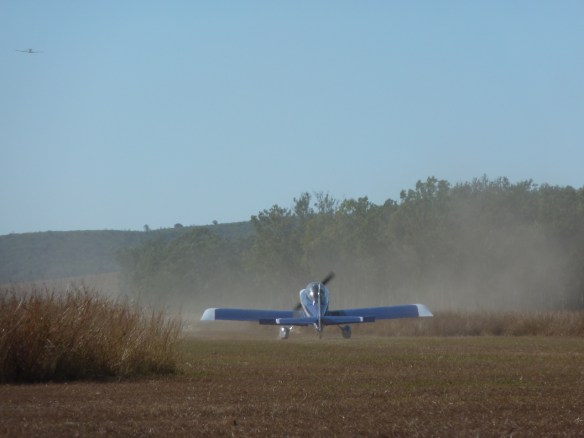
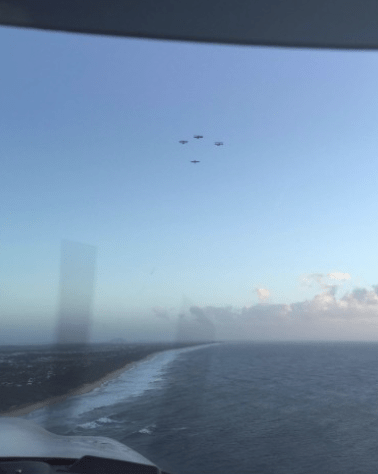
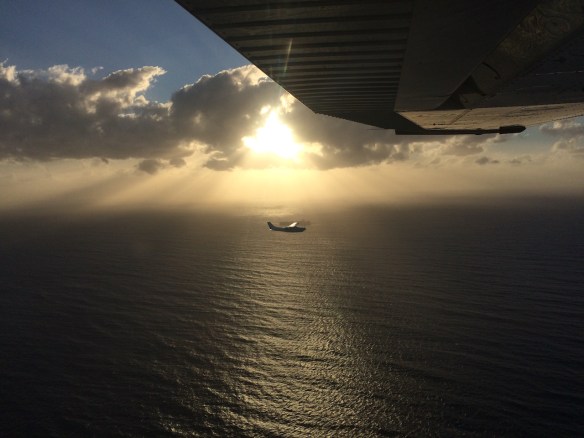
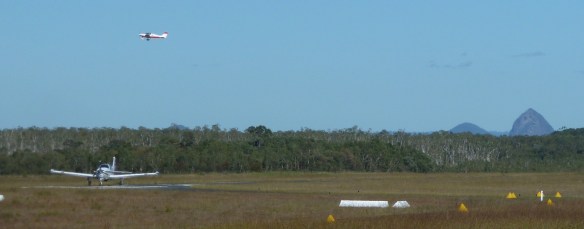
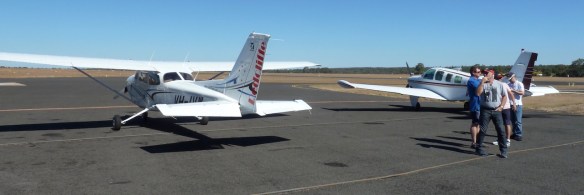
Another milestone was achieved in May 2016 when I passed my RUC (Retractable UnderCarriage) endorsement. All the aircraft I’d flown previously had been fixed undercarriage. The wheels on those basically hang below the aircraft and provide considerable air resistance and additional drag as we fly reducing our airspeed and limiting our range. If we want to progress to faster machines to travel longer distances we can move to aircraft that have a system that lifts the undercarriage out of the way. I had to learn how to retract the undercarriage on take off and, somewhat more importantly, how to extend it again before landing. Not terribly difficult but it did involve taking a somewhat larger plane, a 6 seater Cessna 210, which has an 8 cylinder engine and 300 hp. It cruises at 160 knots, so considerably faster than the 182 which is more like 130 knots. The lucky instructor was Mal McAdam. We had to head over to the training area at Bribie Island for a few manoeuvres and exercises before doing some circuits at Redcliffe. The aircraft (call sign Echo Lima Sierra) is shown below. The main wheels fold back up into the slots in the bottom of the fuselage, while the nose wheel folds forward.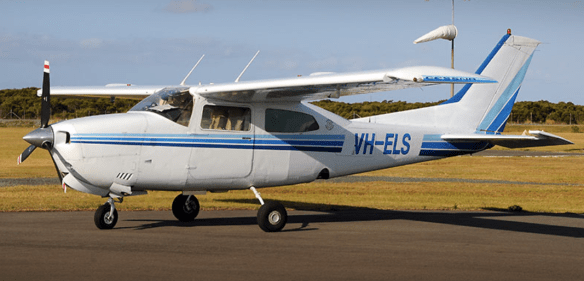
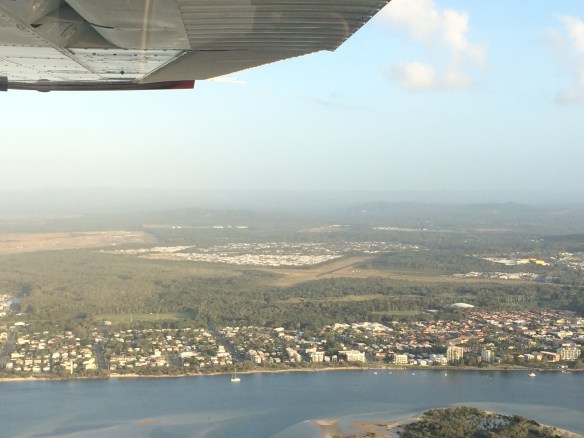
First Mal took me through a preflight briefing, inspecting the system and how the hydraulic power pack and associated pump functions. We checked the hydraulic fluid level and discussed how the system can be debugged while flying. Then it was off to runway 07 for take off. It’s Saturday afternoon and all is quiet. The Saturday morning rush is over and we’re on our own. The sky is blue and all is good. I open the throttle and we hurtle down the runway. This is certainly the first plane I’ve flown that I’ve actually felt pressed back in the seat on acceleration. The big engine has some power all right. We accelerate to 65 knots, rotate, lift off, weather cock into wind with rudder (there’s a reasonable cross wind from the right) fly over the end of the runway, touch the brakes, select undercarriage up, wait for the red light (1..2…3….4….5), then power back to top of the greens, prop back to 2500rpm, flaps up and climb to 500ft, start the turn to the left and continue climbing to 1000ft, then level out and head for Beachmere. And what do you know? We’re halfway across the bay already! This plane moves!
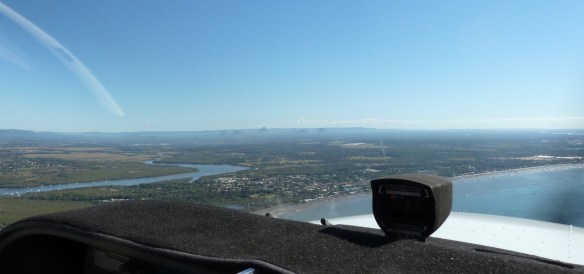
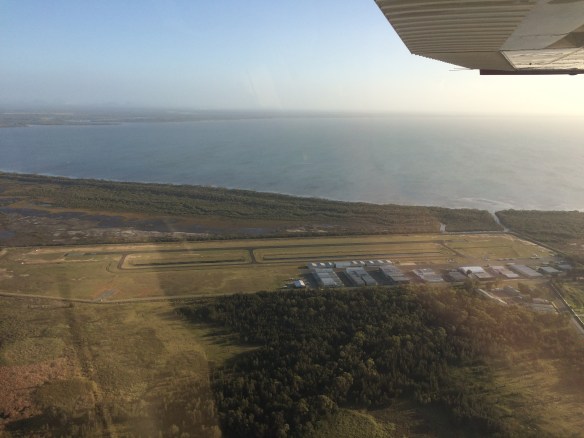
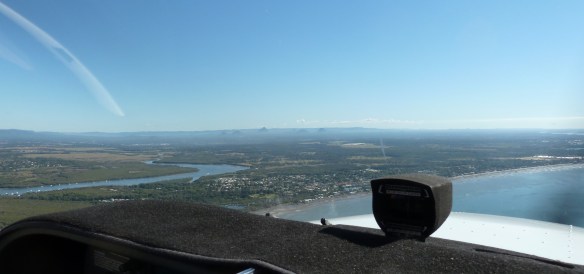
I make the Redcliffe departure call then abeam Beachmere change to Caboolture CTAF and let them know we’re on our way to central Bribie for some aerial work between 2500 and 3500ft. Over Bribie it’s time to get a feel for the plane with a few steep turns, dodging some clouds as we go. Then trim at 3000ft, cut the power and hold altitude by gradually lifting the nose. Pull back, pull back. We carry out a couple of clean stalls and recover to 3000ft. Practise extending the undercarriage, wait for the green light to come on, check the main wheels are visible, and then retract. Extend again and extend full flaps then practise stalls with flaps and gear extended. Wow the nose goes high before it stalls! Stall warning sounds, the nose drops, power on and level out again at 3000. Now just need to practise manual lowering of the undercarriage. Just in case the electric power pack for the hydraulics were to fail, there’s a hand operated pump with a handle between the seats. So Mal pulls the circuit breaker, I select wheels down and start pumping. After about 30 pumps it starts to get difficult and then the green light comes on. Success! That wasn’t so hard. Circuit breaker in again and retract the wheels again.
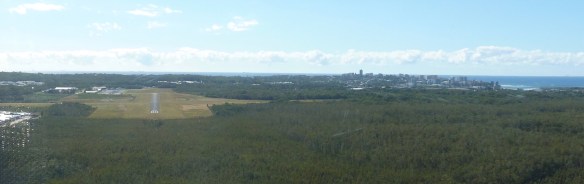
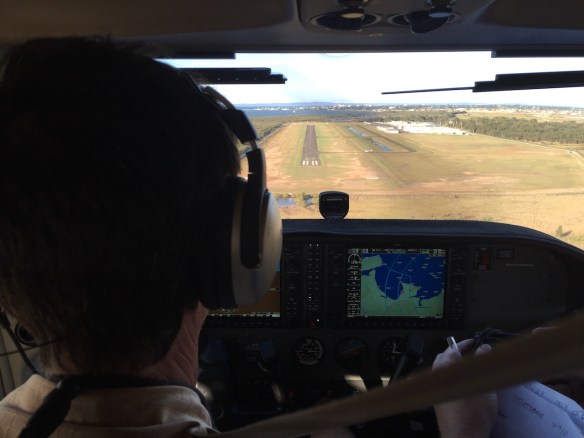
 Now it’s back to Redcliffe for a few circuits. It doesn’t take long in the 210. Mal scolds me for cutting the power back for descent. No need in this plane – just point the nose down and off we go. Before long I’m making the inbound call and head into a very quiet Redcliffe circuit.
A few rusty circuits later Mal suggests we do a full stop and get a bit more fuel. This seems a good chance to have a break and discuss what needs to be improved. We land and taxi to the bowser. Just then it starts to rain, a brief shower, so we take the opportunity to discuss what I need to do better to improve the circuits. It all seems a lot more understandable on the ground while I’m not simultaneously flying the plane. So with this new found perspective and the rain stopped, we put 100L in each wing and then taxi back out to the runway.
This time they are much better circuits and it all seems so much smoother. Climb out, touch the brakes, wheels up, top of the greens, flaps up, turn and climb to 1000ft, level out, trim, manifold pressure back to 20 inches, trim, “brakes ok, check speed, undercarriage down” (1…2….3….4….5) green light on and main wheels visible, “and locked, mixture rich, fuel’s on and sufficient, hatches and harnesses ok”. Abeam the threshold check speed, 10 degrees flap, hold 1000ft, let the speed fall away, aim for 90knots, make the turn onto base and check speed, 20 degrees flap. Descend on base, trim for 85 knots, watch the rate of descent and trim, don’t turn too early given the head wind, then turn onto final and select 30 degrees flap, trim for 75knots and the aim point. Do the PUFF check (Prop fine, Undercarriage down and locked, Flaps at 30, cowl Flaps open. Adjust the power to keep on glide slope to the aim point until we cross the fence then retard the throttle and look down the end of the runway. Keep pulling back and flare as we near the ground, then touchdown, slowly lower the nose, retract the flaps, power on again and off we go for another circuit.
After three more good ones Mal calls it a day and we do a full stop and head back to the hangar. All good. All makes sense. I have the endorsement. Now, what next? Must be a trip to a cattle station. NDP is the aircraft of choice – a Cessna 182RG (Retractable Gear).









 PrivatierAir