
Stalls – Spins – Steep Turns – Unusual attitudes
In January 2024 CASA inserted a “safety pilot” restriction on my aviation medical after I’d been diagnosed with Atrial Fibrillation. This meant that I couldn’t fly solo until the restriction was lifted. I had to either fly with another pilot who was qualified to fly in the aircraft I was piloting or with an instructor. We hadn’t planned on doing any big trips in 2024 anyway so I wasn’t too bothered but I was keen to keep my skills up as they tend to deteriorate if you don’t practise regularly. My next biennial flight review was due in August 2024 and I knew that one of the things I’d have to demonstrate would be stalls. This wasn’t a big deal but I still felt a bit of hesitation about practising stalls so was looking for ways to improve my stall recovery technique. I reasoned that this would not only help me in the flight review but, more importantly, may actually save my life (and those of my passengers) if I ever got into a situation where an unintentional stall occurred.
For those who don’t know, stalls are not related to an aircraft’s engine. What we’re talking about here is a “wing stall”. The aircraft’s wings produce lift and keep it flying. Lift is produced by the aerodynamic shape of the wing and the amount of lift produced is related to the angle between the wing and the passage of surrounding air. As the angle between the airflow and the wing increases from zero (parallel to) the amount of lift steadily increases until you reach a critical angle at which it starts to decrease again. If you pull back on the stick/yoke past that point while you’re flying level, you’ll exceed that critical (or stall) angle and the wing will no longer provide as much lift and the aircraft will descend.
Stalls are taught to all student pilots early in their training, but often by instructors who are also not very experienced with stalling technique and they can pass their uncertainty and hesitation on to their students. That occurred to me in my early training. We went off and practised stalls without me fully comprehending why we were doing stalls, which seemed unnecessary and foolhardy to me (why would you purposely put the plane into an undesired state?) So the reason for doing them and the way the stalls occur wasn’t fully explained beforehand. I had the impression that as you pulled back on the stick and a stall occurred that one of the wings would drop and you’d plummet to the ground and very quickly kill yourself. I was told I had to respond really quickly before it developed into a spin. What wasn’t explained was that it’s more important to respond correctly than respond quickly. And that the best way to break the stall was simply to relax the backward pressure on the yoke. So I did what so many other student pilots do and over corrected, pushing the yoke way too far and giving myself and various instructors a bit of a shock as we appeared to hurtle towards the ground. As a result I was slightly traumatised by the process. Later, while training in the Cirrus I learned that you can hold the plane in a stall for an extended time (10-20 seconds) without losing control (as long as you are high enough to start with – don’t practise this at 500ft AGL!). Sure the plane descends more quickly than normal but not really quickly. The wings don’t lose all the lift, it just decreases somewhat.
When I did my commercial pilot licence I had to get the stall monkey off my back so spent a few training hours just doing stalls over and over until they became second nature.
Not long after that I did a gliding course and that was the first chance I had to actually do a spin. Most light aircraft these days are not certified for spins so you can’t train in doing any recovery from them but in gliders you still can. Practising spin recovery was one of the best parts of my glider training course, especially as it all happened rather slowly, allowing time to carry out the correct procedure without rushing anything. You can learn more about the gliding course at most post here:
Time passed, and by 2024 it was time for another flight review so I thought it’d be good to practise some more stalls before I actually did the review flight. This time I decided to train with a specialist who focussed on stalls, spins and other types of upset recoveries. Given that loss of control in flight is a major cause of light aircraft accidents and most of them are caused by some sort of upset it seemed sensible to practise how to recover from a range of upsets including stalls and spins. I asked around and someone told me to look up UPRT at Archerfield. UPRT, or Upset Prevention and Recovery Training, specialise in this particular skill and are considered among the best in Australia. Pilots come from all over Australia to learn from them. Given that they are just around the corner in Archerfield I decided I’d give them a try. I was not disappointed.
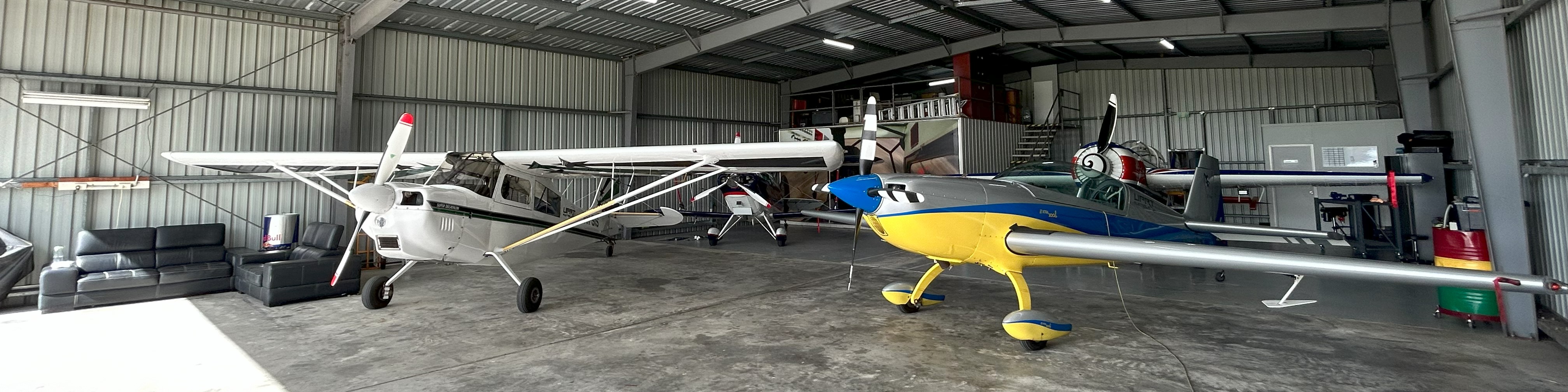
The 3 day course was held over Wednesday 8th to Friday 10th May. My instructor was Rob Crass, a former Qantas 737 captain who had become one of Qantas’ training managers and wrote numerous training manuals for them, including ones on upset recoveries. I headed out to Archerfield on the Wednesday and met Rob along with Jeremy Miller, one of the UPRT owners, at 8am. I had been a bit nervous about the course, given my past experience with various instructors but Rob immediately set me at ease. It was clear he was a very experienced instructor who did it for the love of it unlike so many others who do it as a way of building hours to become an airline pilot. Rob has all that behind him and does this because he loves to fly. He has his own PItts Special aerobatic biplane that is hangered at Watts Bridge and is president of the Queensland chapter of the Australian Aerobatic Club.
We started with a morning of theory, covering the causes of LOC-I (Loss of Control – In flight) and aerodynamics. We talked about slow flight, the approach to stalls and how to recognise it and recover from them. Also how to feel the g forces you’ll encounter in upset recoveries, flight path management and then the details about steep turns, and various upsets including nose high, nose low, spins and spiral dives and how to recover from all of them.
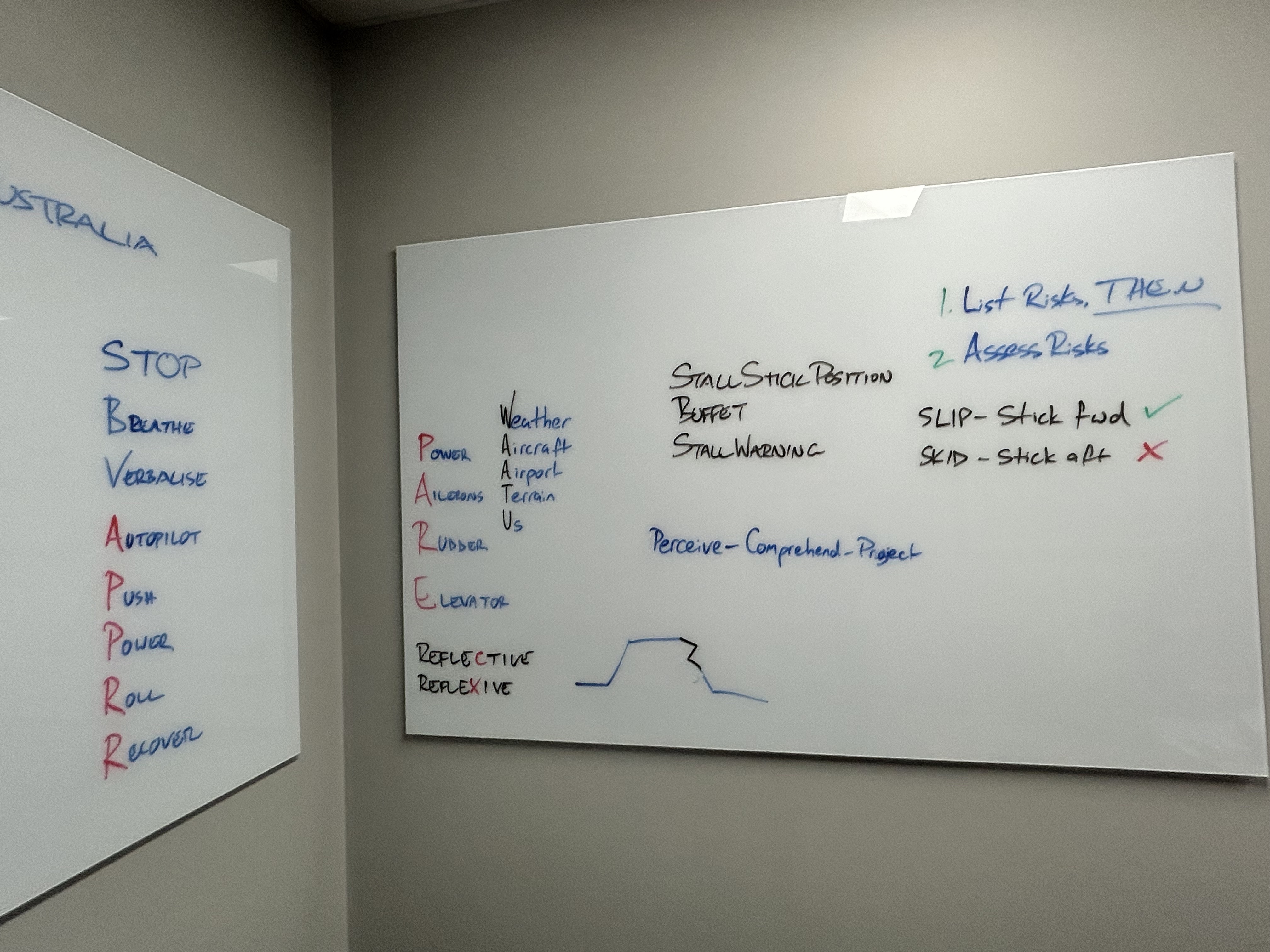
Rob emphasised the need to stop and breathe then verbalise what you are doing before responding to an upset condition. For example, the UPRT mantra for recovery from a stall is “STALL!, autopilot off, push, power, roll, recover”. So first identify the unusual condition, turn off the autopilot if it’s on, push the stick forward (or relax pressure) to lower the nose, apply power to reduce the loss of height, once the wing is flying again roll the wings level, then recover to a safe altitude by pulling gently back on the stick. This was the way I’d have to verbalise my actions in the flights.
It was a pretty full morning. After lunch there was a bit more theory and then we headed out to the hangar to preflight the aircraft that we were going to take flying.
Rob had told me we couldn’t take anything with us, as things tend to fly around when you’re doing aerobatic type manoeuvres and can become dangerous projectiles. So I left my phone, keys and iPad in the office.
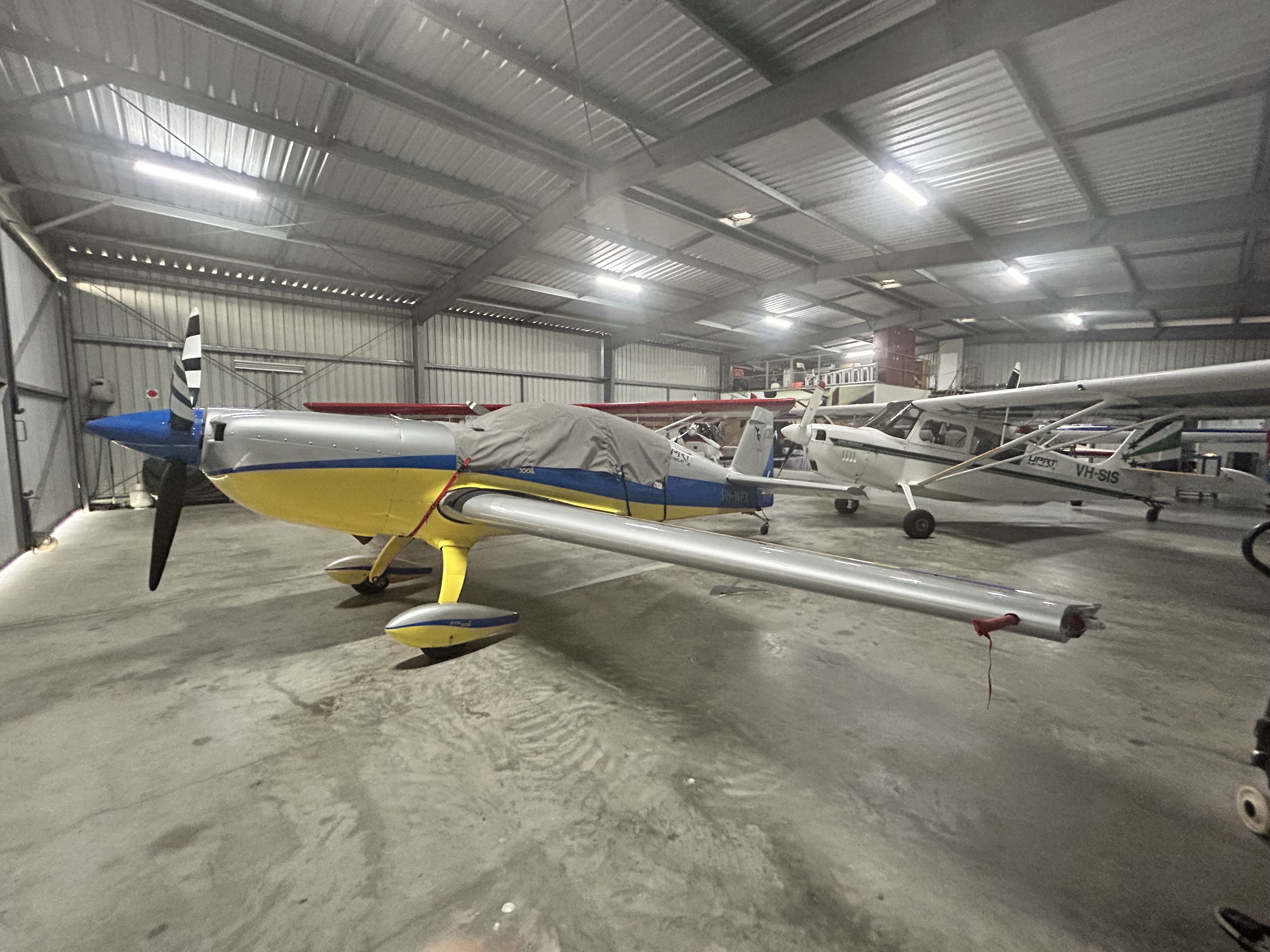


The Extra 300L is a German aircraft and capable of a whole range of aerobatic manoeuvres. It’s tandem so the instructor sits in the back seat and the student in front. There are lots more instruments for the instructor to play with but the student has an air speed indicator and an altimeter so what more do you need?
Once Rob had completed the preflight we both donned a parachute. UPRT are very particular about safety and so even thought they’ve never had to jump out of a plane they insist that all pilots wear parachutes just in case. A bit like glider pilots. I was instructed how to extricate myself from the plane if Rob were to shout “evacuate! evacuate! evacuate!” while we were in the air. Rob would open the canopy, I’d then have to remove my headset, unclip the seat harness (not the parachute harness!), climb out of the plane and launch myself into the air away from it, then when clear identify the parachute release handle, and push it away from me, then let the parachute do the rest. Oh, and remember to bend my legs on landing. With the parachute deployment instruction complete we climbed aboard went through our checklists.

Soon we were starting up and taxiing to the run up bay.
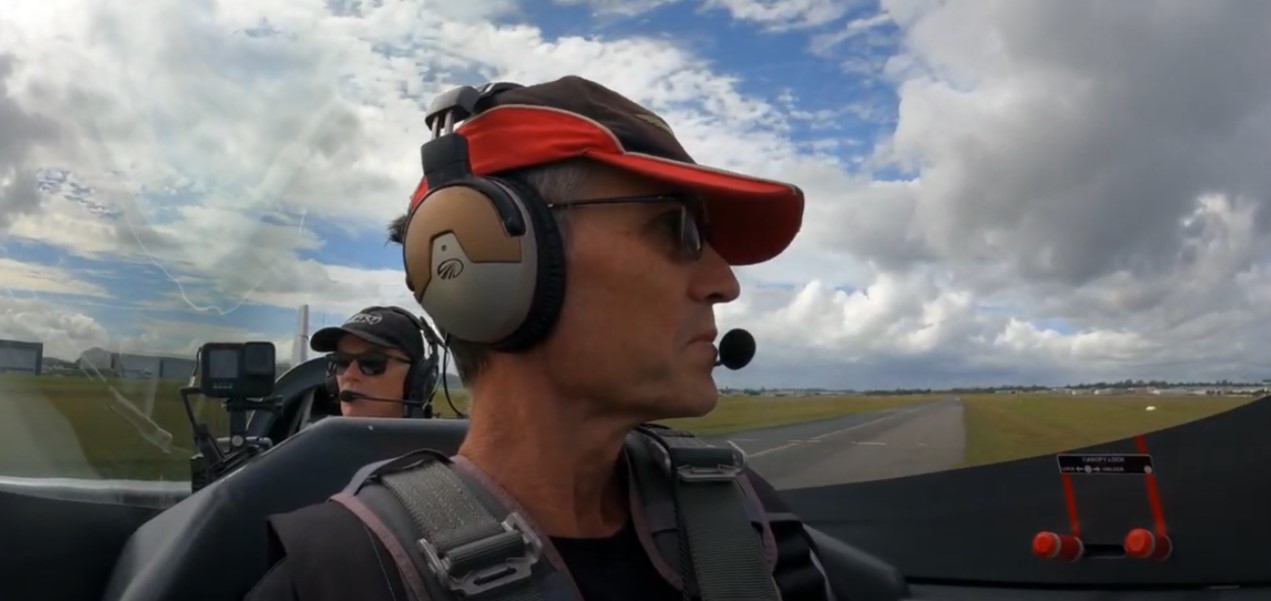
I’d never been to the 28L run up bay as in my previous flight in and out of Archerfield we’d always approached the runways from the north. UPRT’s hangar is on the southern side of the runway so very close to the runways, making for a quick getaway. Rob let the engine oil temperature increase to 120degC before doing the run ups and checking the engine was in good condition.
Our first flight was to be in the training area over the southern end of Moreton Bay so we taxied to RWY10L and were cleared for an eastern departure. Rob had explained that he’d take off and land and I could fly the plane the rest of the time except when he was demonstrating a procedure. A Cessna Citation took off before us so we gave him a bit of time to climb out to avoid his wake turbulence. Then Rob applied power and I was pushed back in the seat as the plane accelerated and climbed away. We rotated prior to the Citations’s rotation point and climbed at about 20 degrees so we’d remain above his flight path and wake.
On the way out to the training area Rob let me take over and told me to practise some “Dutch Rolls” using coordinated aileron and rudder to roll around a fixed point ahead of us.


On the way out to the training area Rob let me take over and told me to practise some “Dutch Rolls” using coordinated aileron and rudder to roll around a fixed point ahead of us. Once out over the bay he demonstrated some slow flight and the onset of stalls, then the stalls themselves then let me have a go. It was fairly benign with no wing drop to speak of. I then practised a couple of steep turns at 60 degrees to experience 2g acceleration and a zoom up and over the top to experience negative g. It was a great first flight without too much aerobatic flight so easy on the stomach. Just about one hour after takeoff we were back on the ground and had a debrief followed by a bit more theory before calling it a day.

On Thursday morning I arrived at 8am again and we settled into a bit more theory about human factors and threat and error management. These subjects had been covered in my CPL training but it was covered in a better way here. The CASA syllabus is a bit strange in this area where they seem to get tangled up in semantics and I found it quite frustrating. So it was good to talk about real world threats and errors and how to deal with them without having to worry too much about the exactly what type of threat or errors (according to CASA definitions) we were talking about.
Rob decided to go for our next flight before lunch so around 10am we headed out to the hangar once again, did the preflight, donned our parachutes and climbed aboard.
Soon we were off to the threshold of RWY28R, this time for the southern training area towards Beaudesert and Rob requested a “Greenbank Departure”. This entailed flying over the Greenbank army firing range so after taking off and turning right we maintained 1500ft until we left the Archerfield control zone. Rob handed over to me and I climbed quickly to 2300ft before we reached the edge of the firing range. Apparently their bullets can only reach 2000ft so we’d be fine at 2300 if they were firing!
Soon we were passing over a high tension power line that indicated the point where the controlled airspace ceiling increased to 4500ft and we could climb higher. Once we reached Lake Wyaralong we were in the 7500 foot controlled airspace ceiling so were able to climb to 6000 feet, giving us plenty of room for manoeuvres.
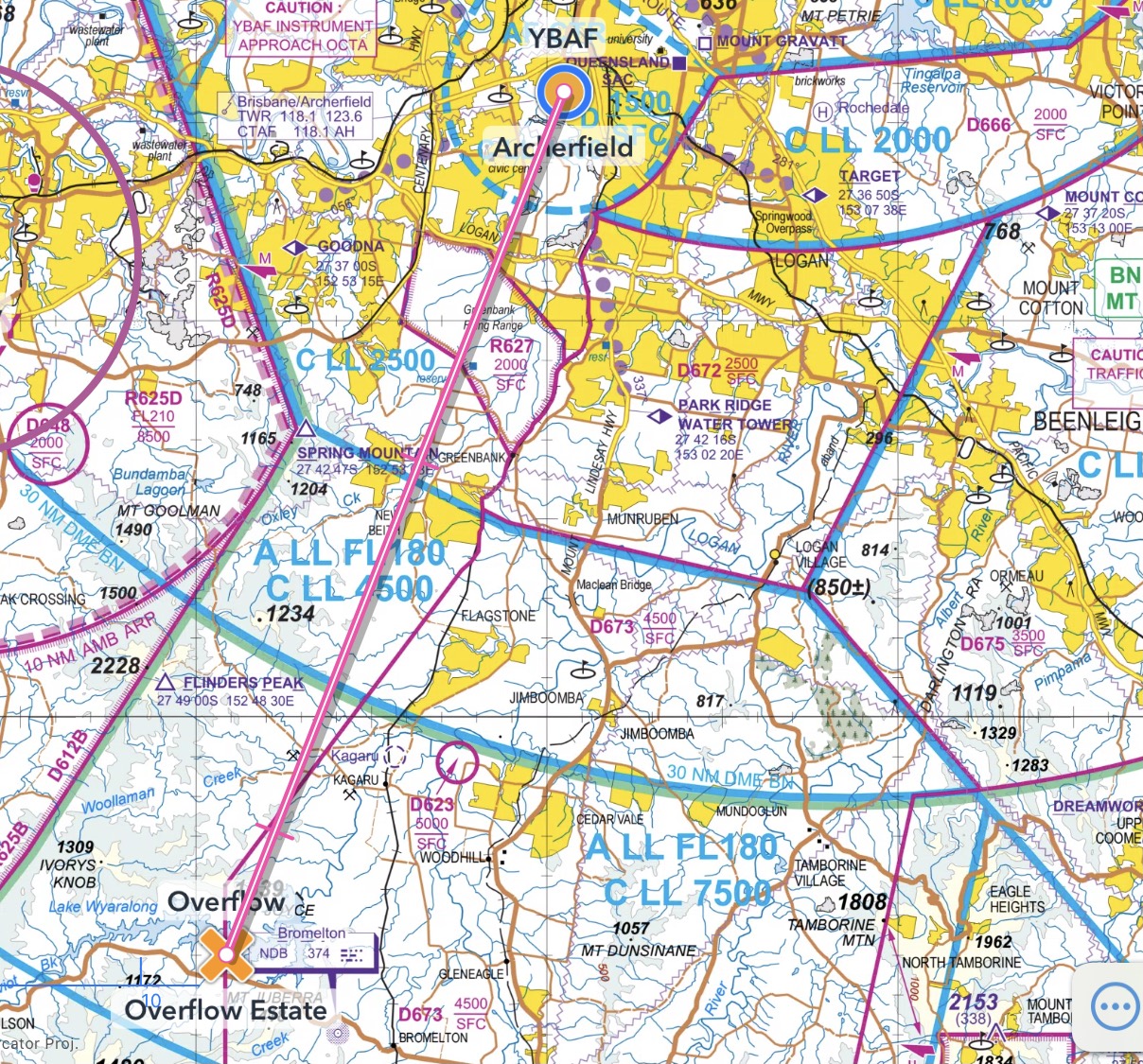
Then followed a series of demonstrations and opportunities for me to practise stalls and steep turns as well as nose high and nose low upset recoveries. The weather wasn’t as clear as the day before with numerous stratocumulus clouds in the area so we had to keep turning to avoid the clouds and couldn’t really climb that high. I had a heightened feeling of air sickness as a result of our cloud dodging activities so we called it a day after about 40 minutes and headed back to Archerfield.

Pulling up at the hangar we noticed Brett Silvester had dropped by for lunch so after a debrief Brett and I went to the Asian Kitchen around the corner and chatted over a sandwich about a few details of our planned Oshkosh trip. The afternoon comprised more theory in preparation for the two flights we’d have on the Friday.
On Friday morning I arrived at Archerfield just after 7am so that I could visit the tower. I’d rung up the day before and checked they had time and they were happy to show me around. I’d been flying in and out of Archerfield for well over 10 years by this time and never been up the tower so it was time check it out. The three air traffic controllers were very accommodating and answered all my questions about their procedures.
Arriving at UPRT at 8am Rob said we’d head out for our third flight pretty much straight away as the sky was clear and it was best to make the most of the good conditions. Once again we headed to the southern training area and this time there were no clouds. Just clear blue sky. And the recoveries went so much better then the day before. I did stalls, and nose up and nose down and Rob demonstrated a spin that I was able to copy and then a spiral dive. All in all much better than the day before.
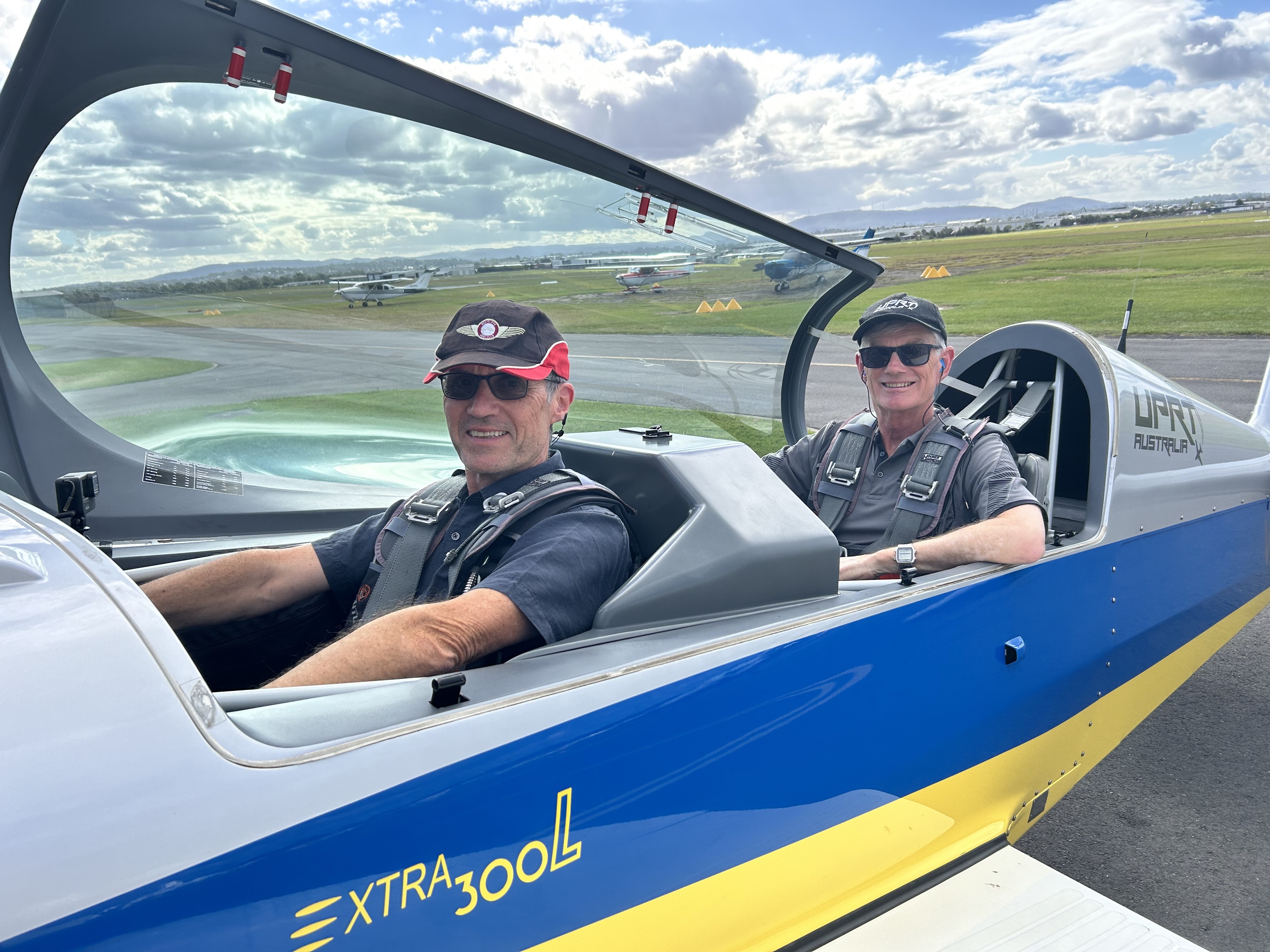
Back on the ground we completed our theory and had lunch before preparing for the fourth flight of the day. This time Rob said I could take my camera with me. It would be safely stowed in a zip up pocket until I extracted it to take a photo while were were inverted.
We headed out to the southern training area again and started repeating the procedures we’d covered the day before and that morning. Then we had an opportunity to fly inverted and also experience ground rush as the plane did a hammerhead stall turn and then headed straight for the ground at 120 knots. All good fun, especially as Rob was in control!

This time however my lunch must have been undigested because I started to feel queasy about 30 minutes into the exercises. I did a couple more steep turns then decided to head back before I emptied my stomach contents into the cockpit.
Landing at Archerfield I felt that I’d achieved all I’d wanted to do out of the training and had had a good time as well.

We headed back into the office for our debrief and a summary of the course contents. Jeremy then gave us an impromptu presentation on some of the formation flying training he’s done coaching his Freedom Formation team and some of the events they’ve flown in such at the Gold Coast Air Show in 2023.

https://www.freedomformation.com.au
Overall I found the course really enjoyable and useful. It’s not cheap but it’s also not that easy to get the opportunity to fly such extreme manoeuvres in such a powerful aircraft with such a competent instructor. UPRT offer one day refresher courses so I intend to return sometime in the next 12 months for another go. They also offer formation training that may be interesting one day. I think I may give the aerobatics course a miss though. My stomach probably won’t hold up to it.
 PrivatierAir