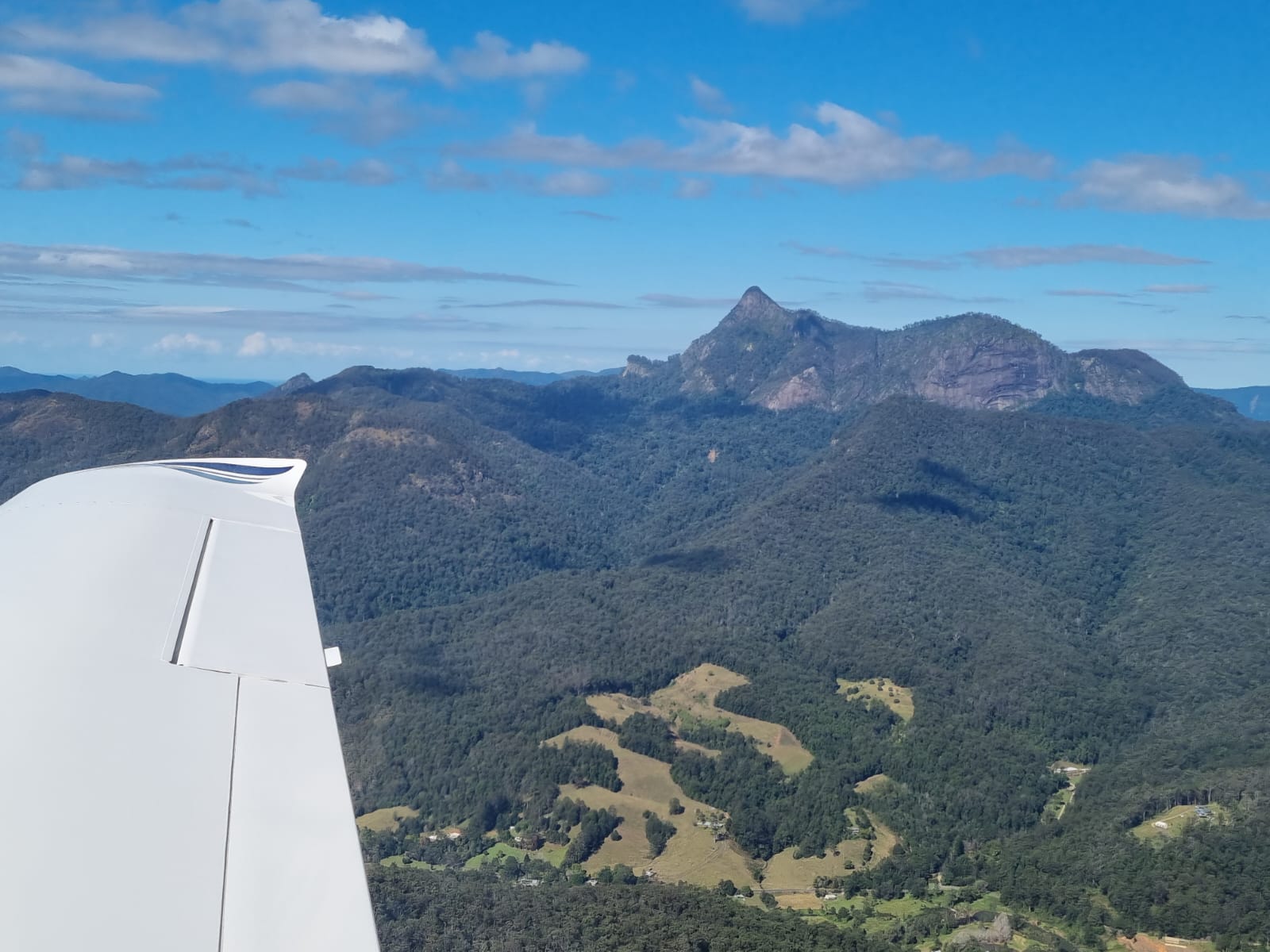
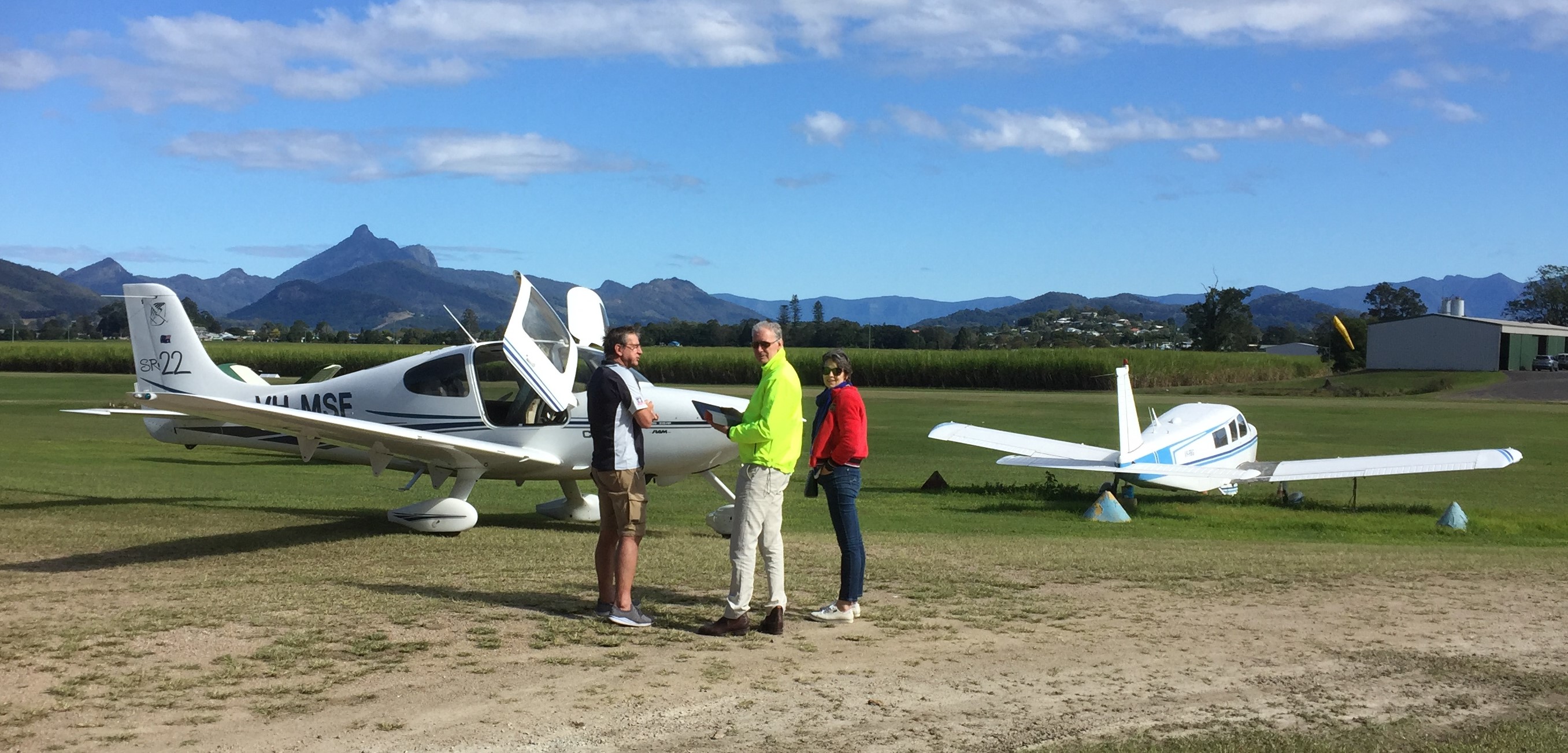
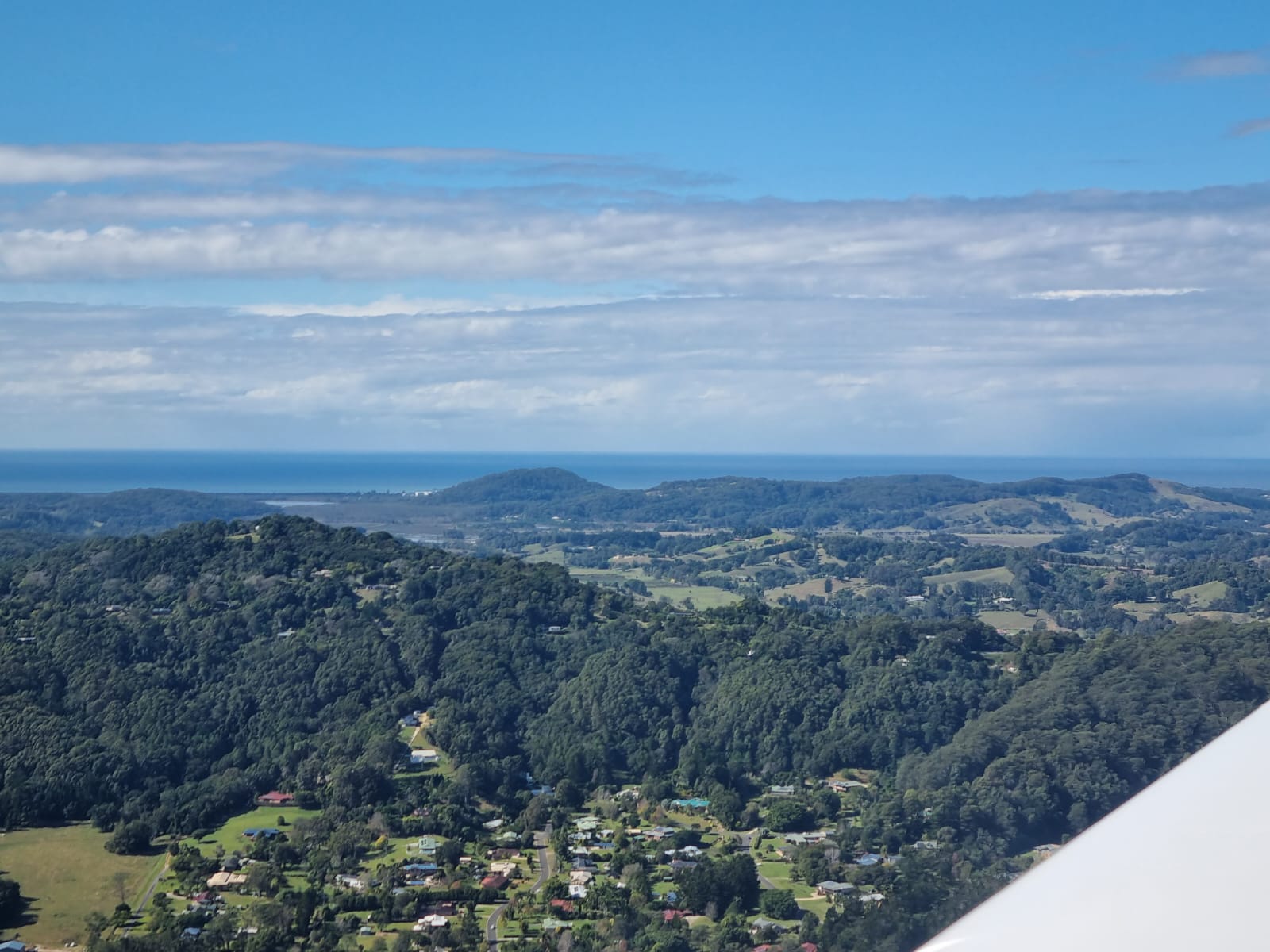
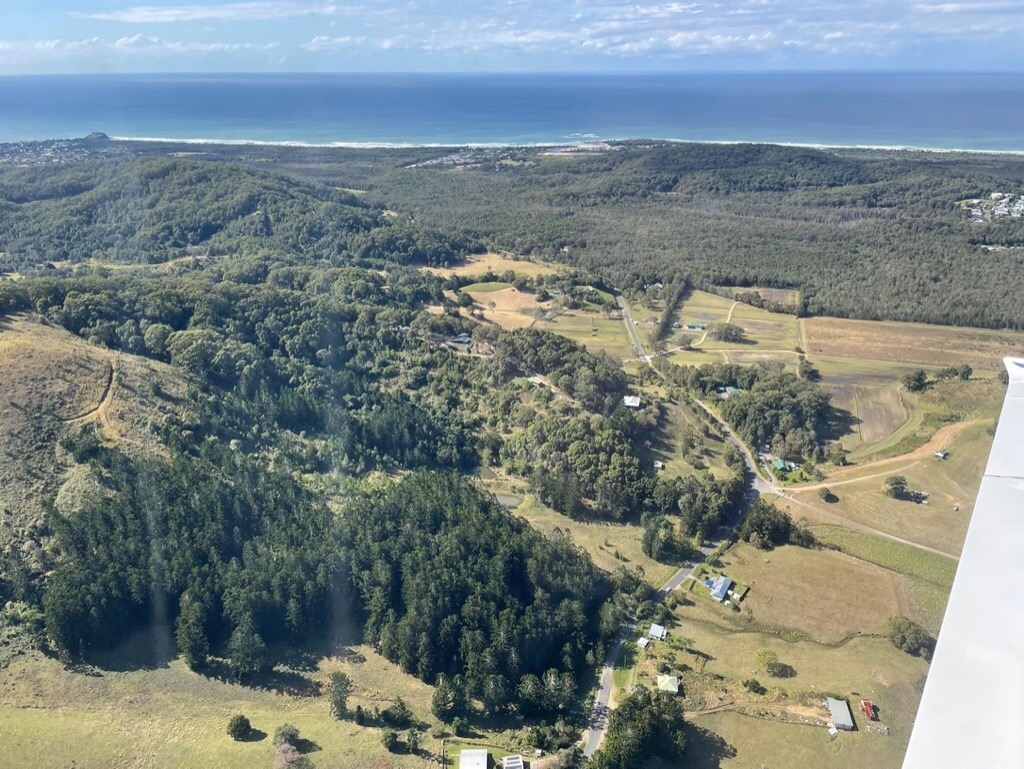
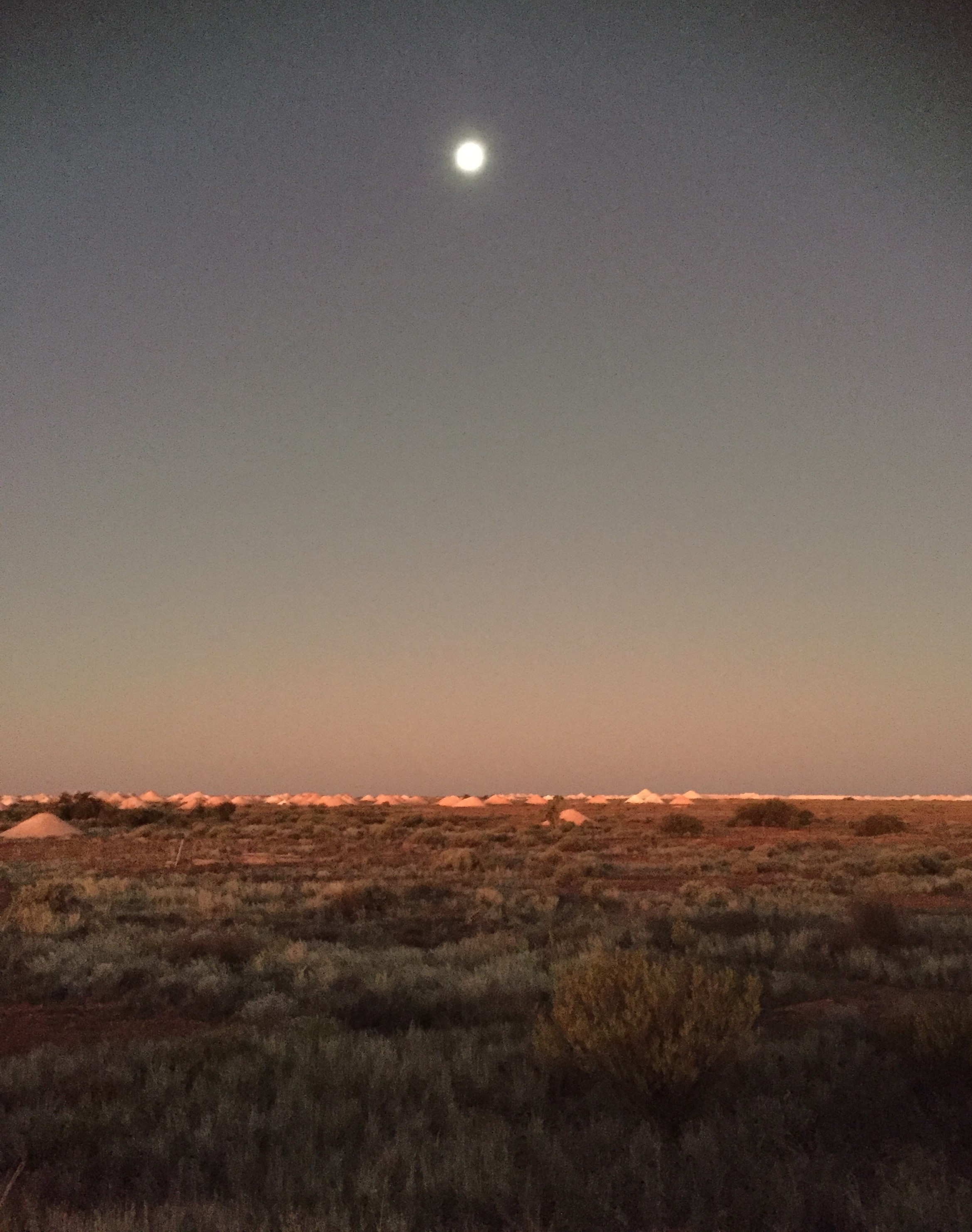
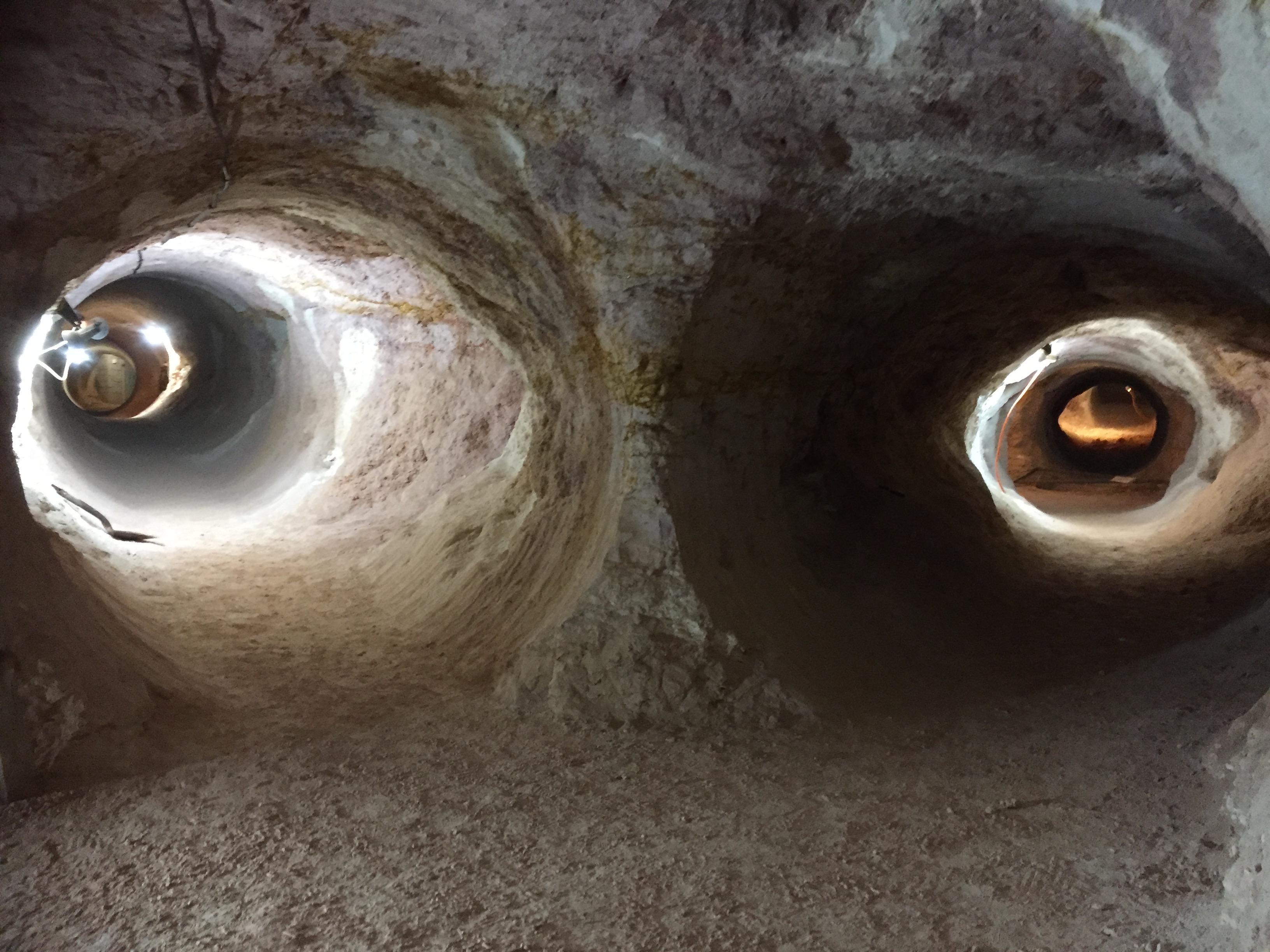
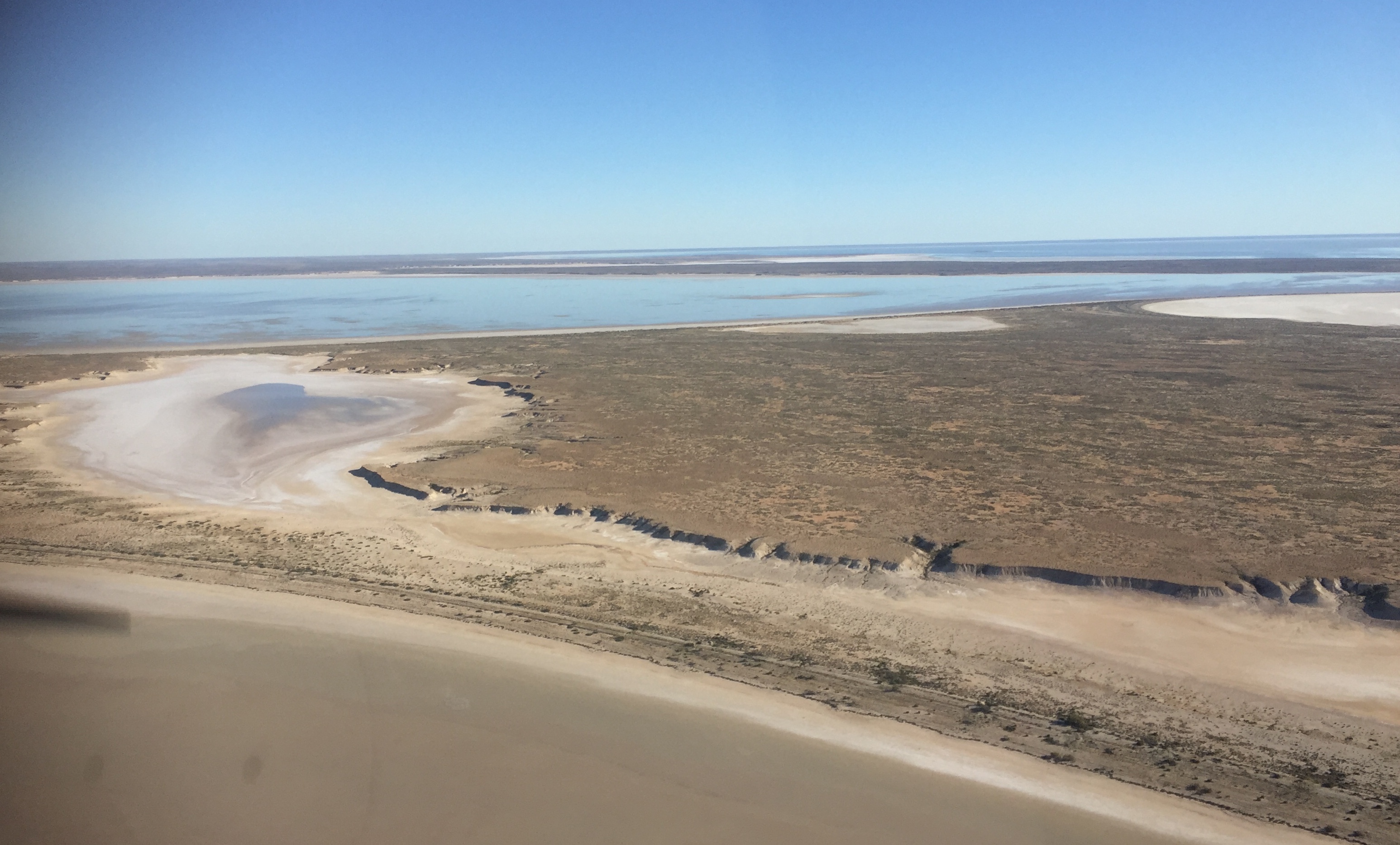
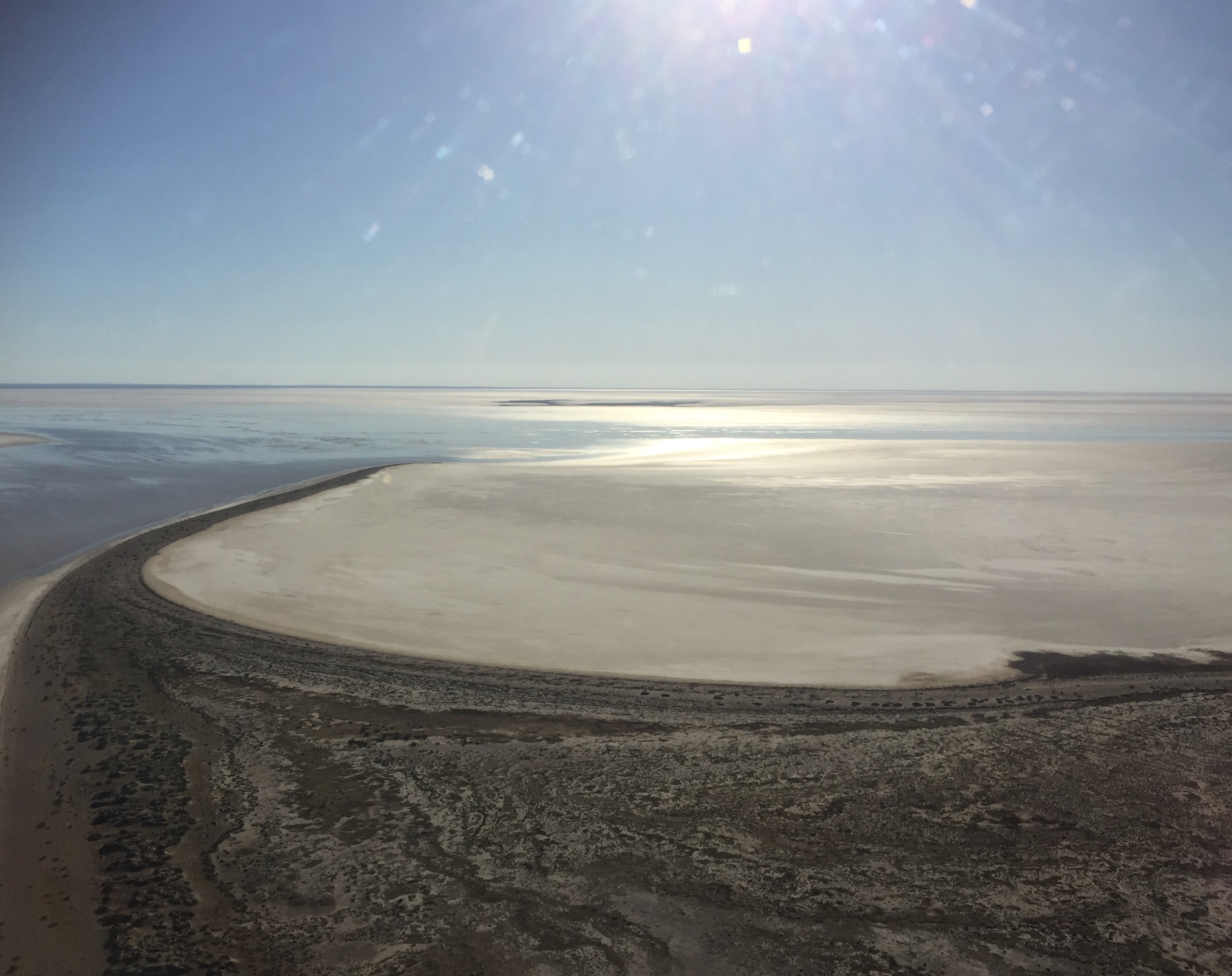
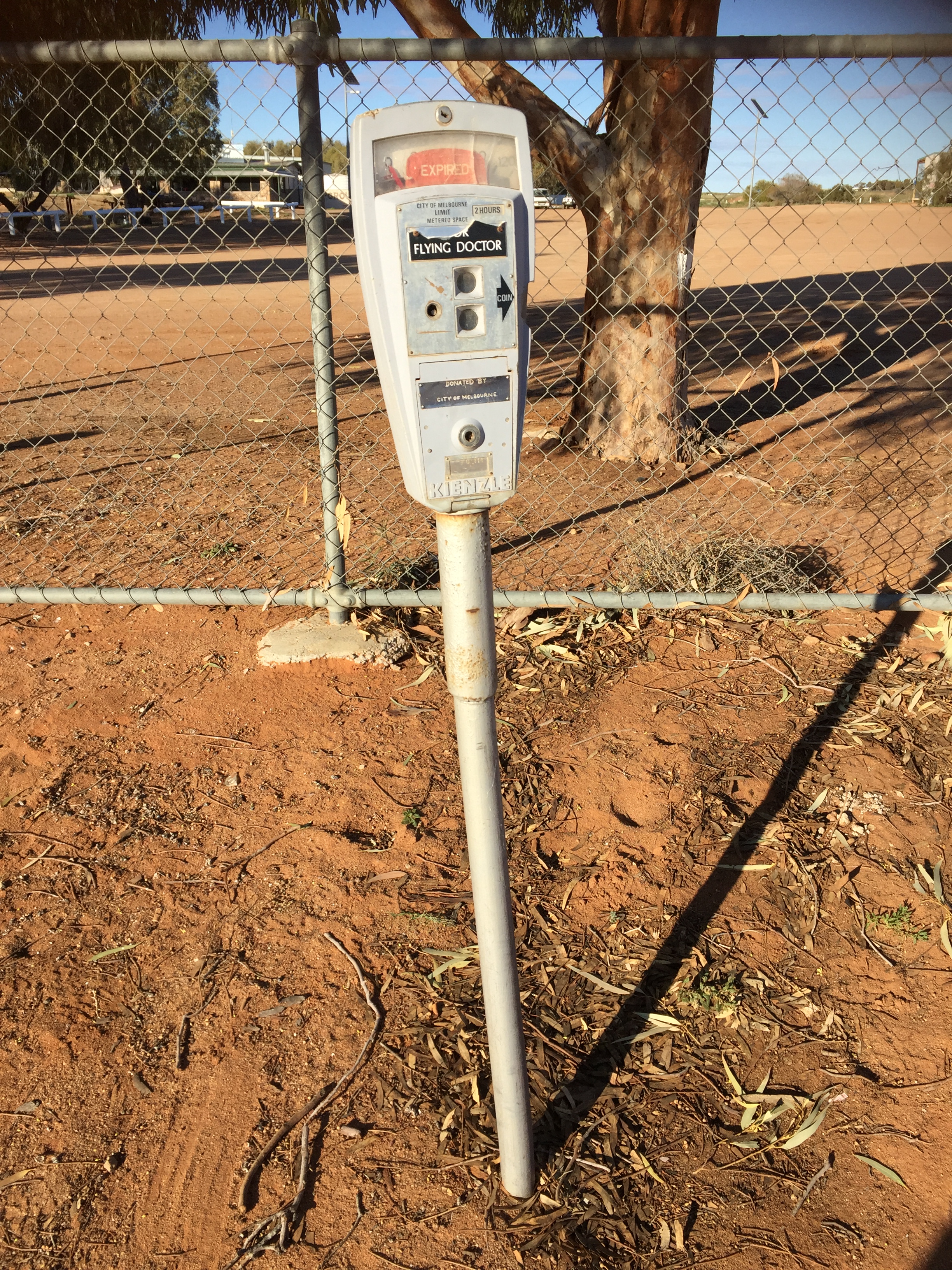
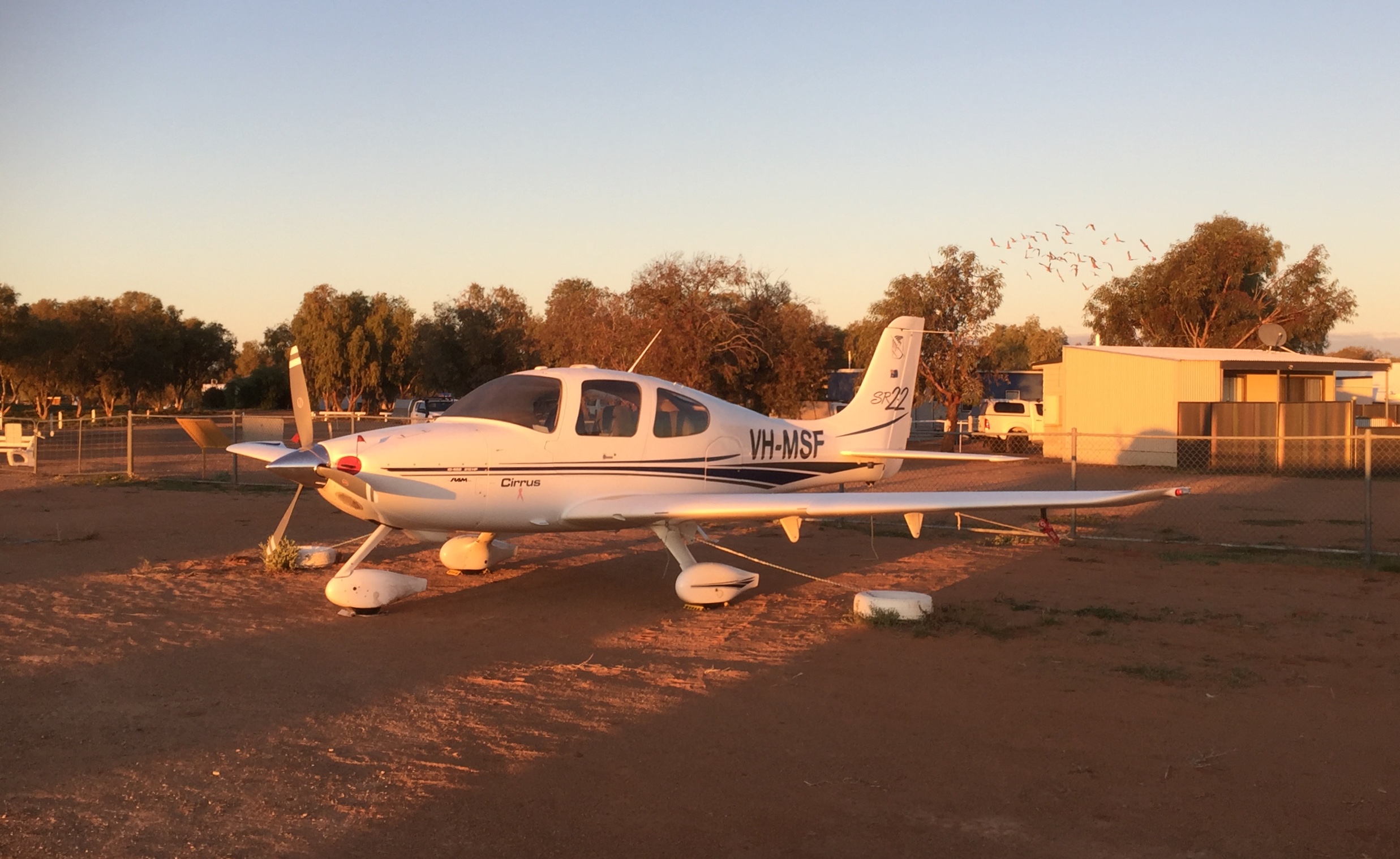
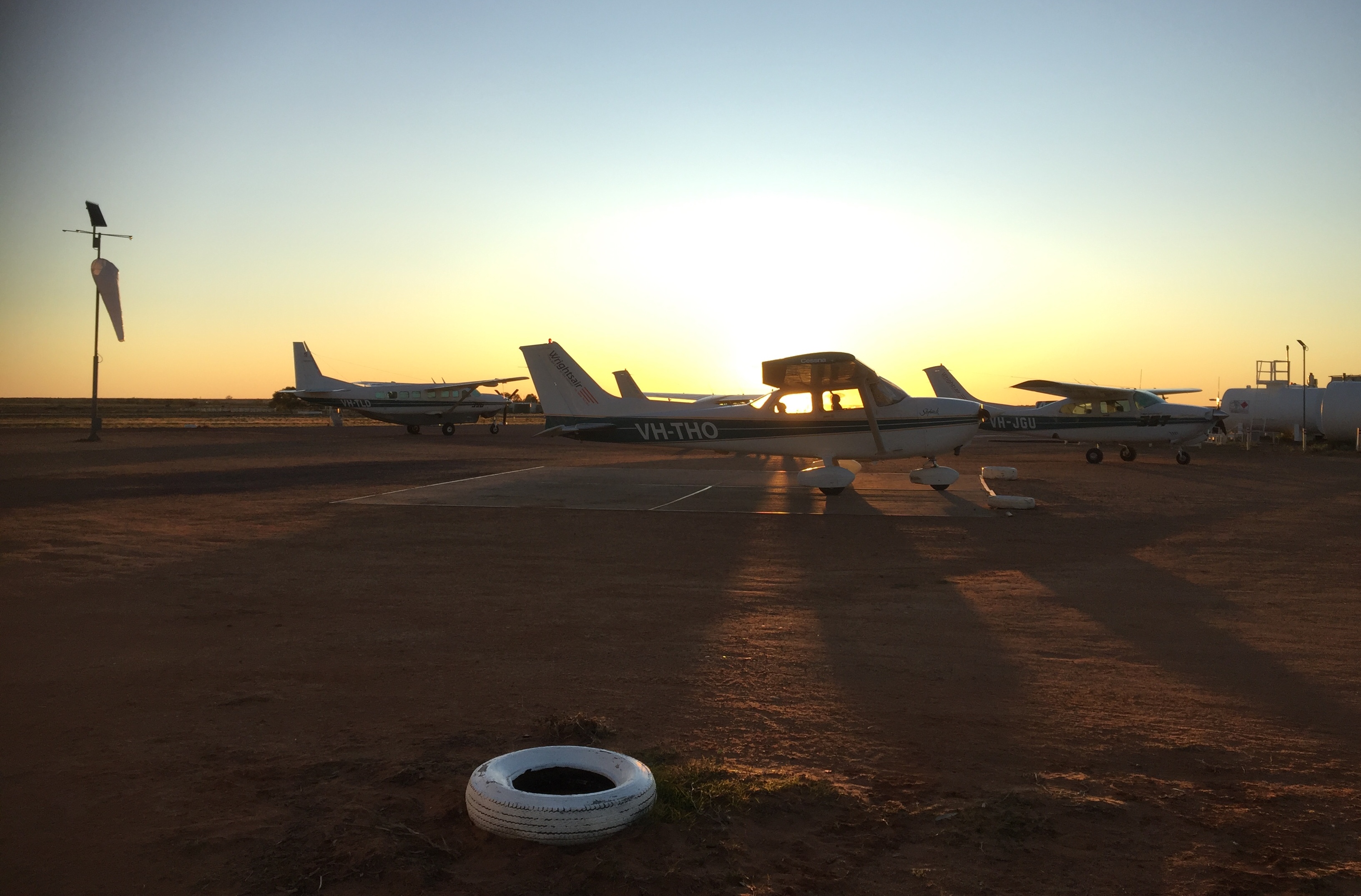
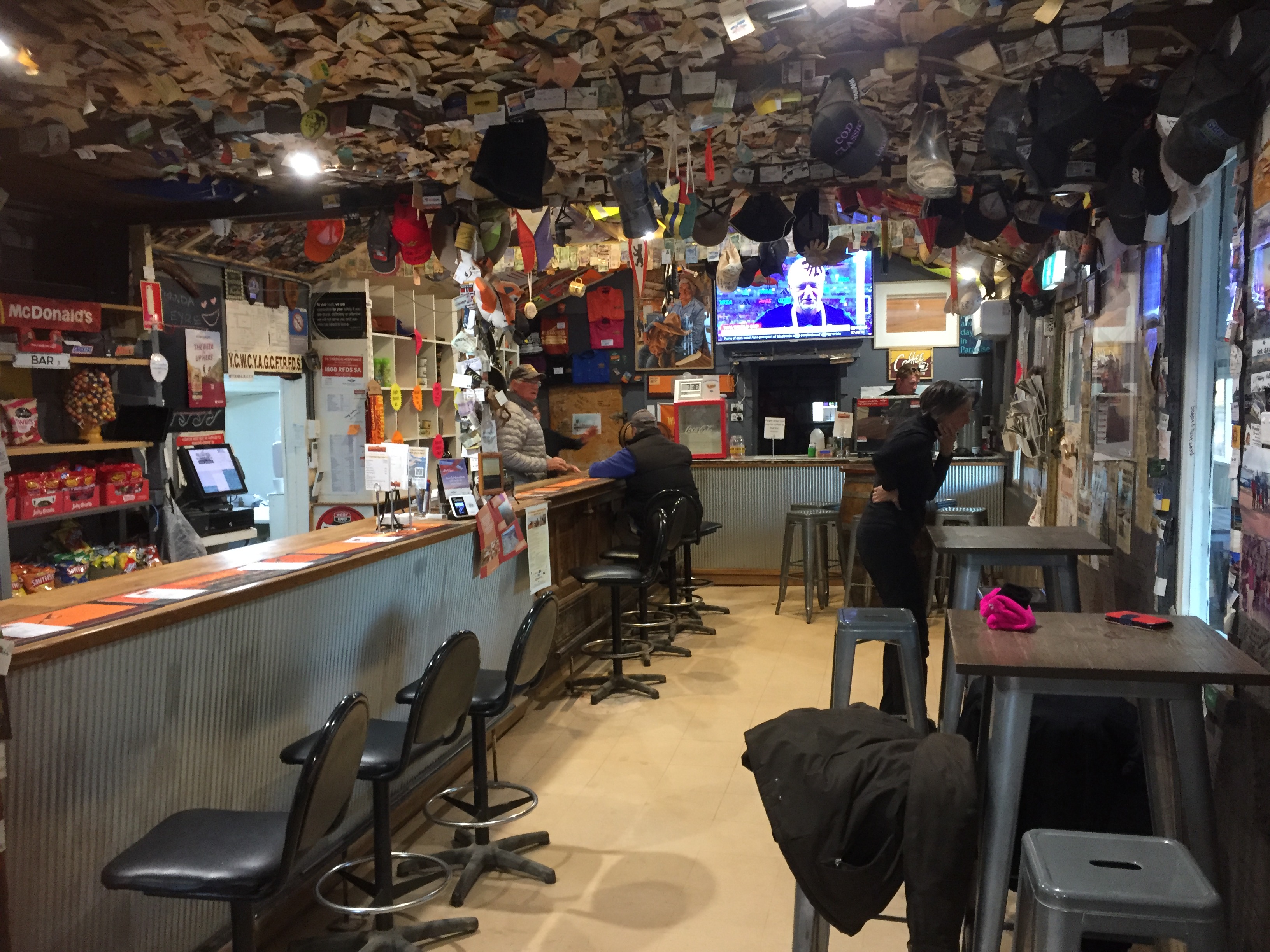
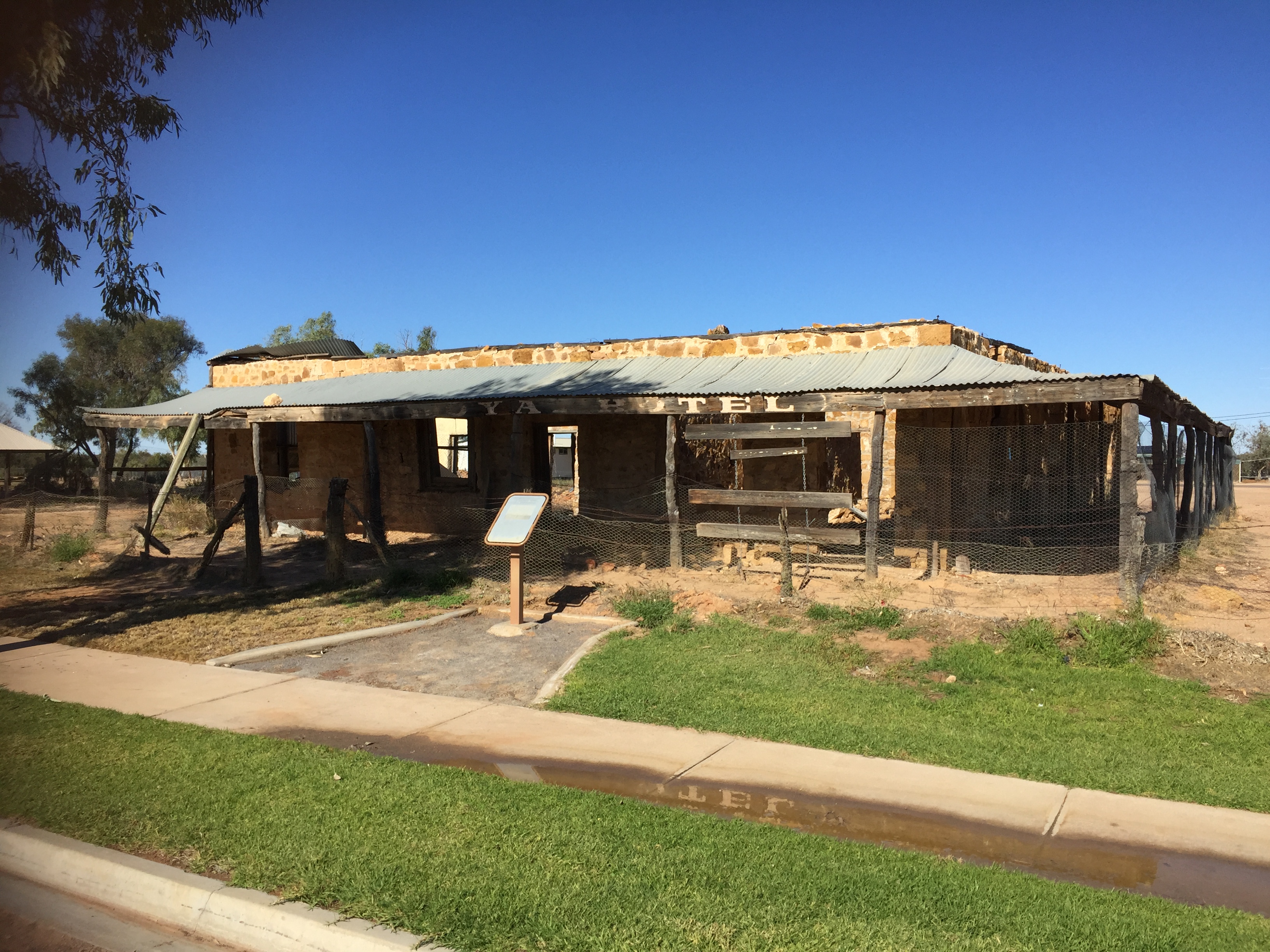
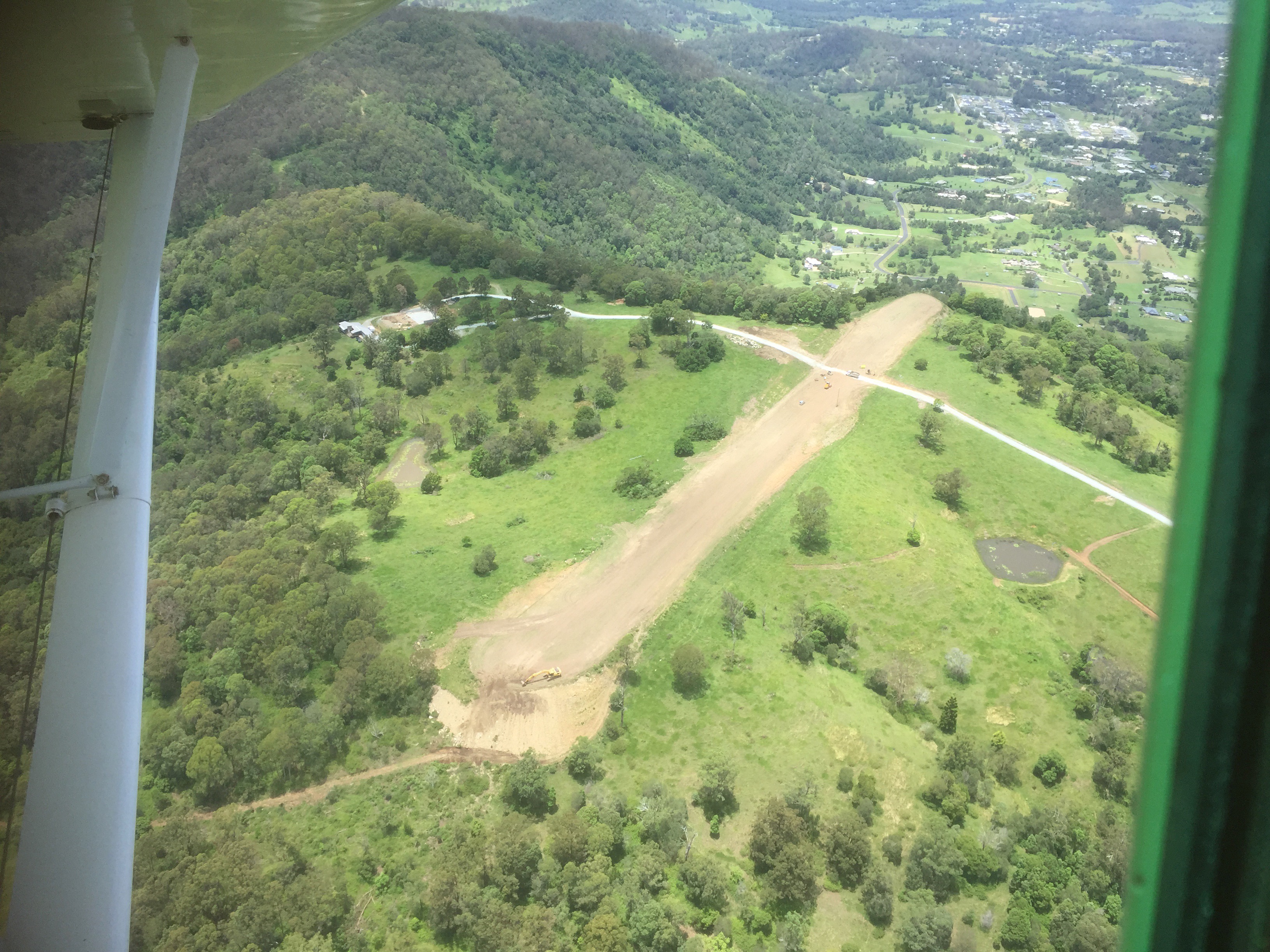
Way out West – A trip to Lake Eyre (Kati Thanda) and back

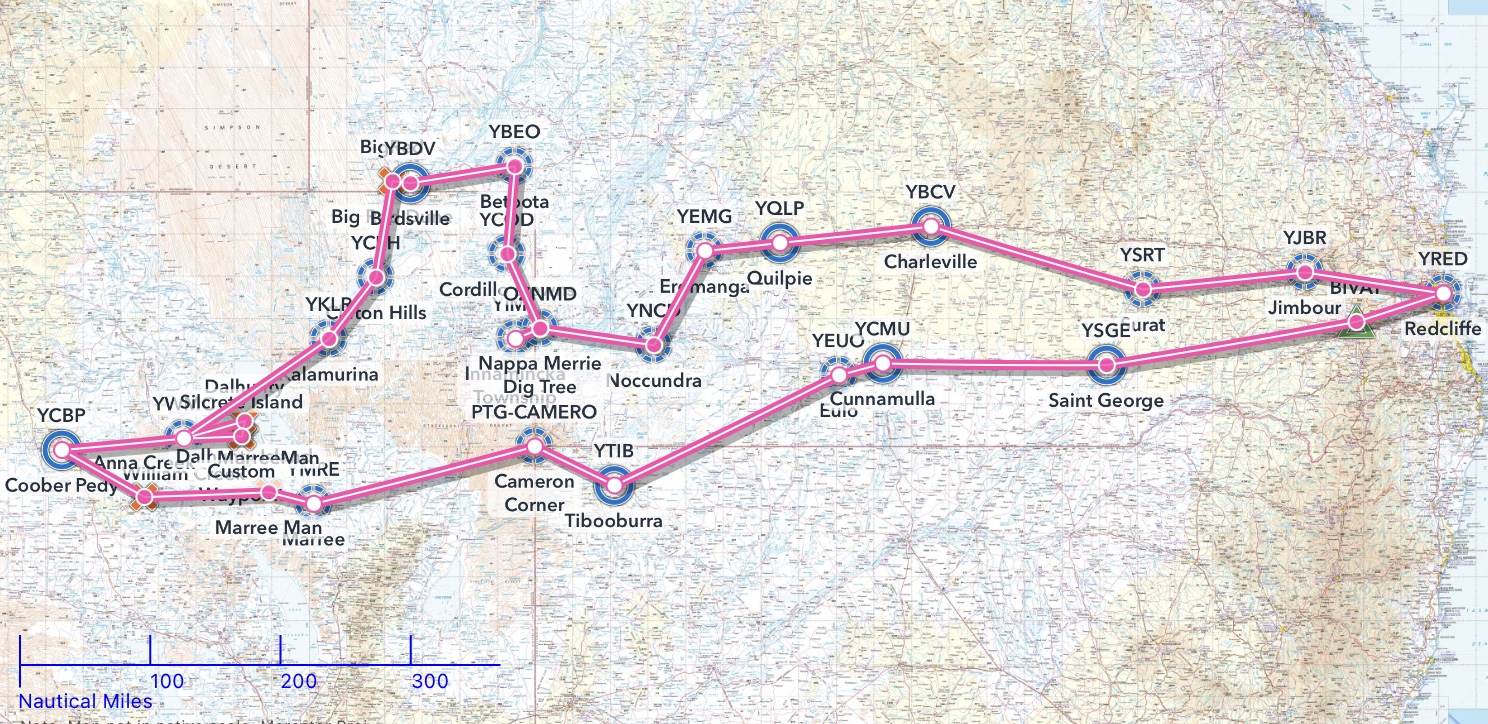
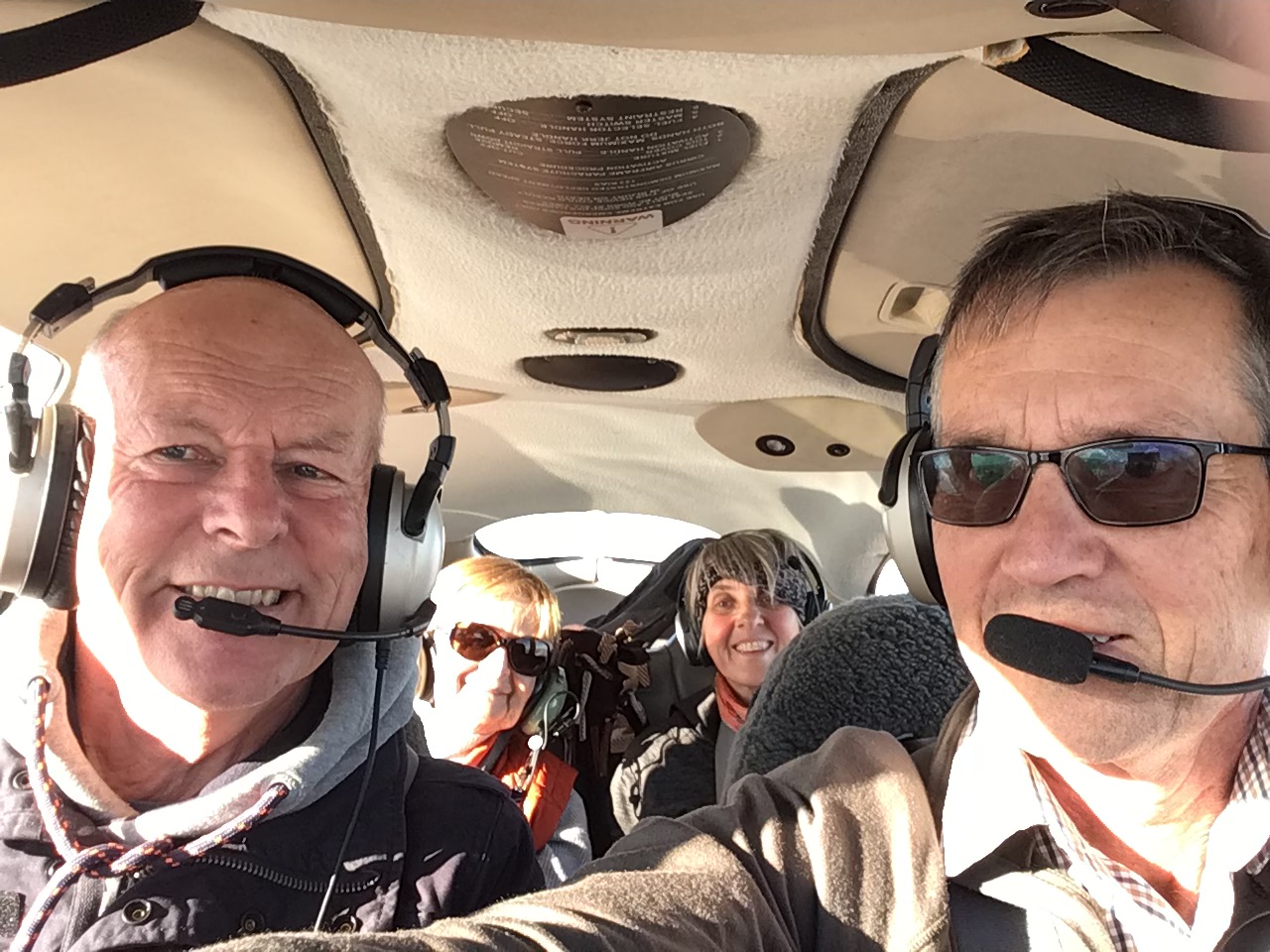
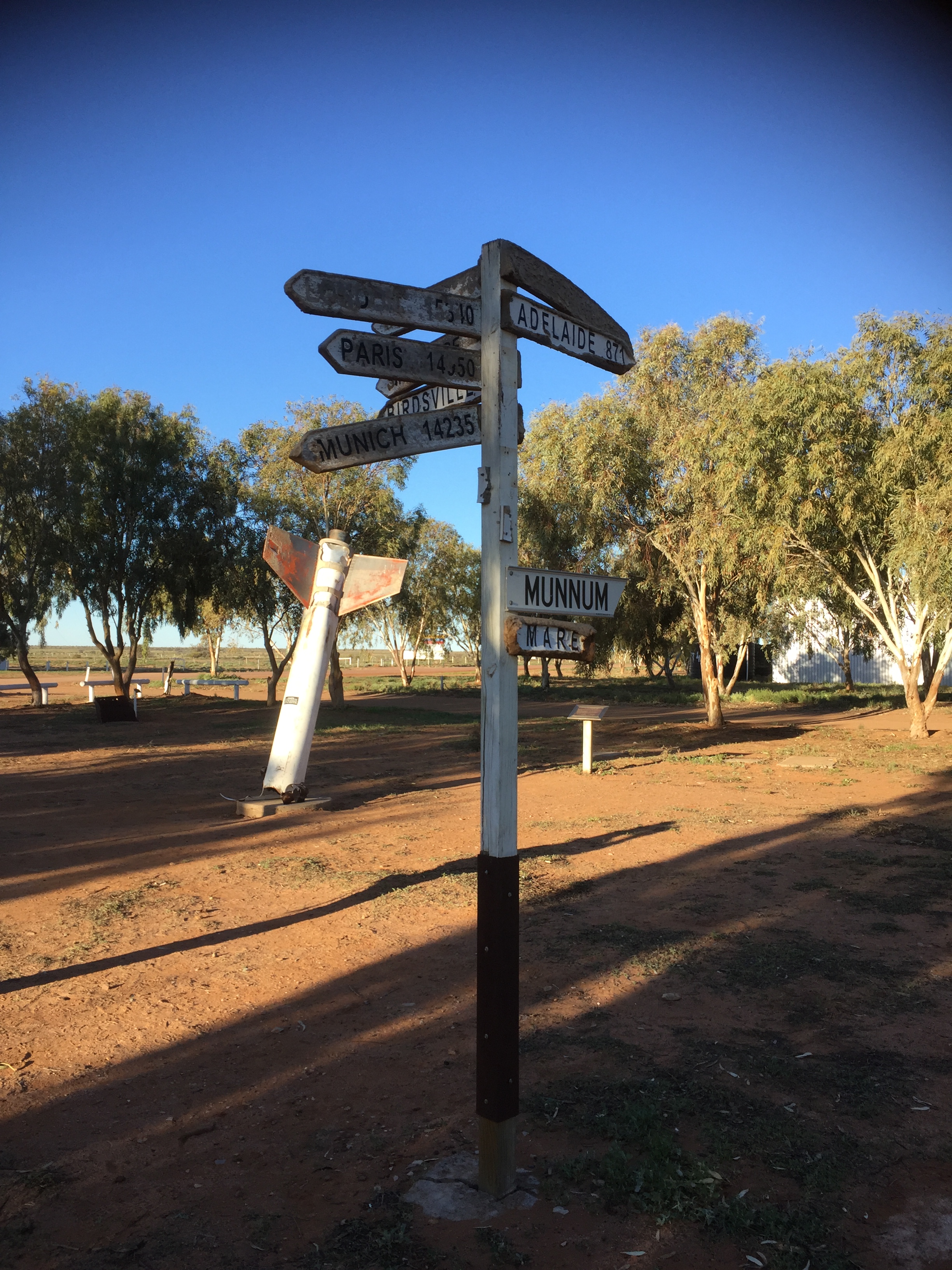
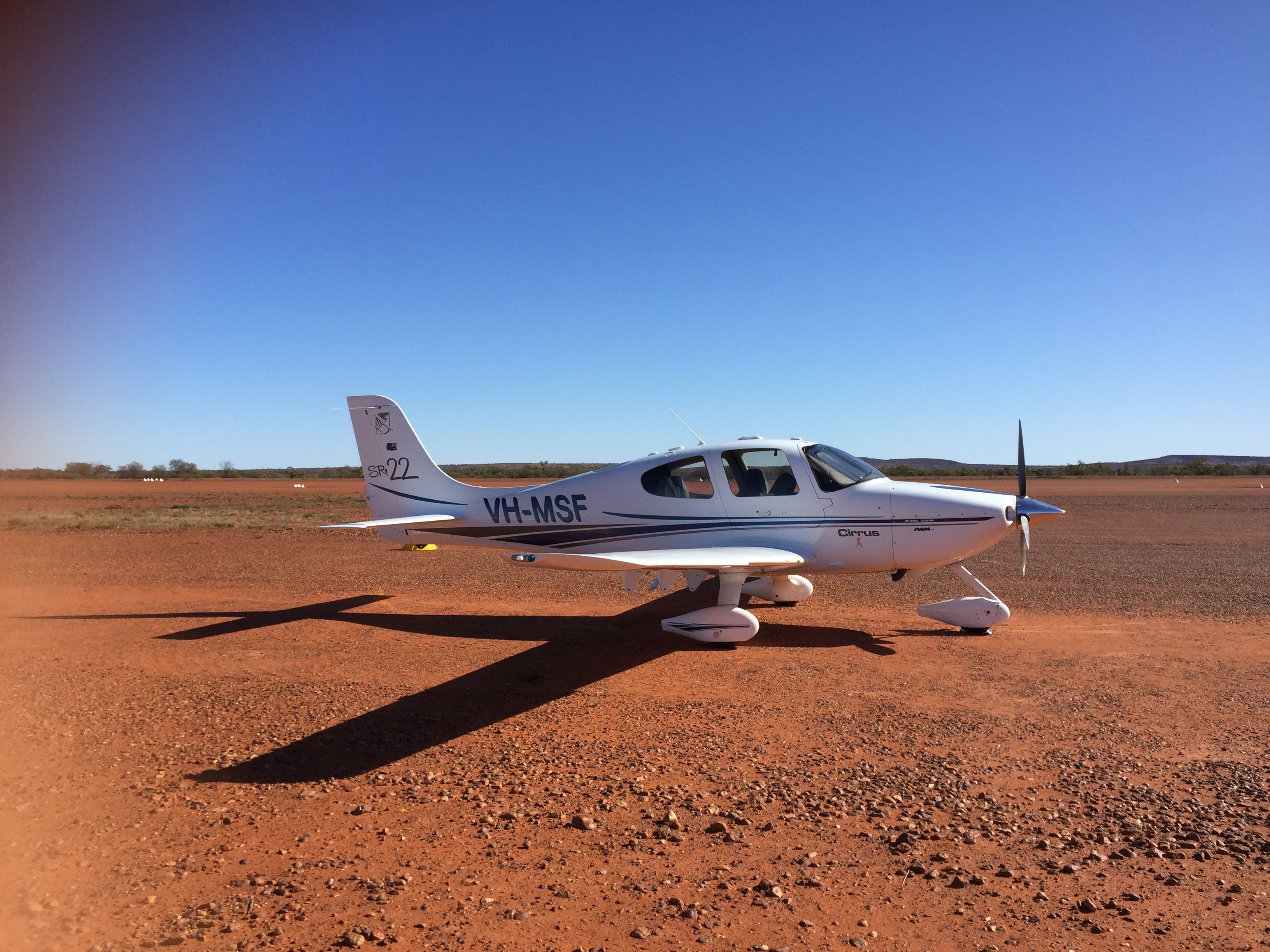
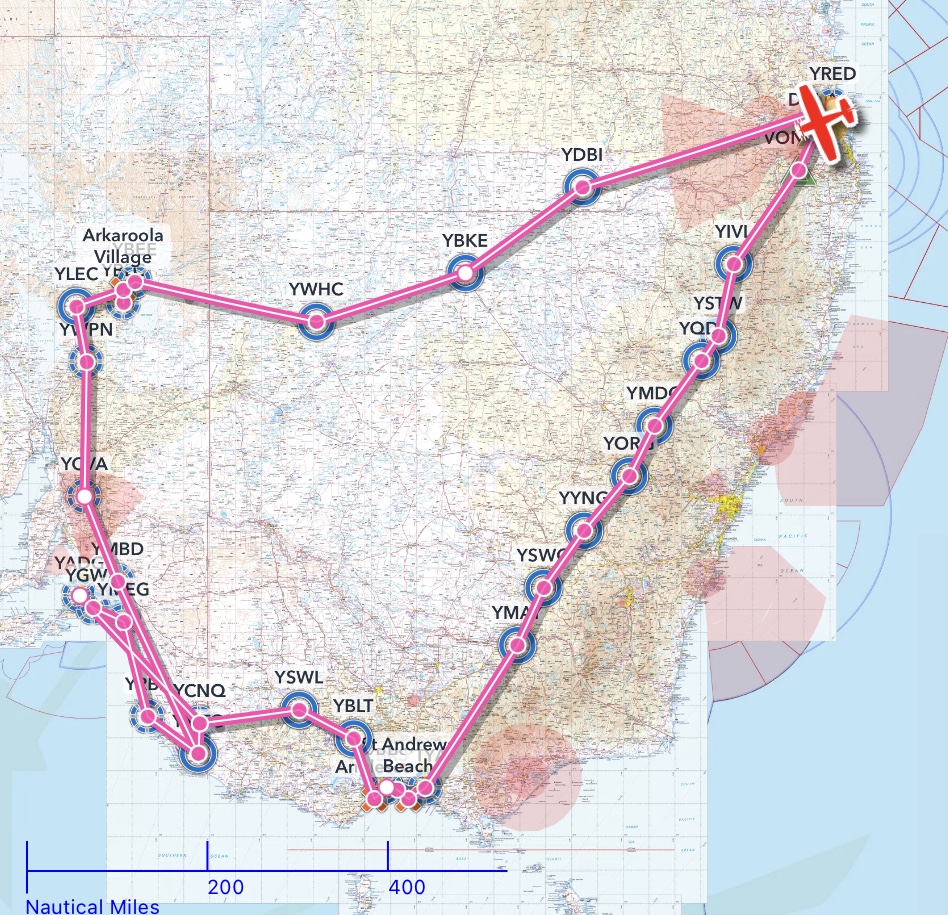
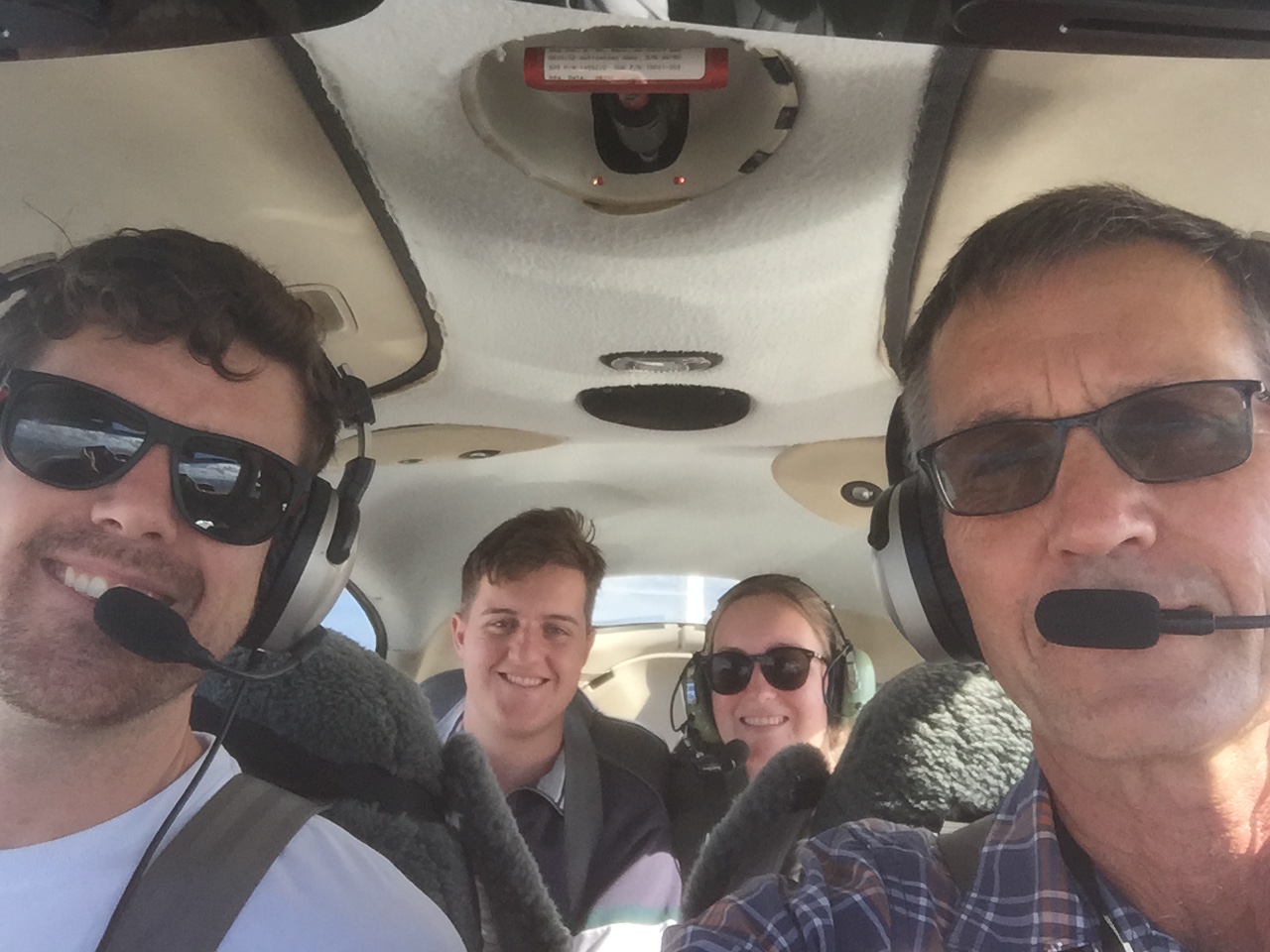
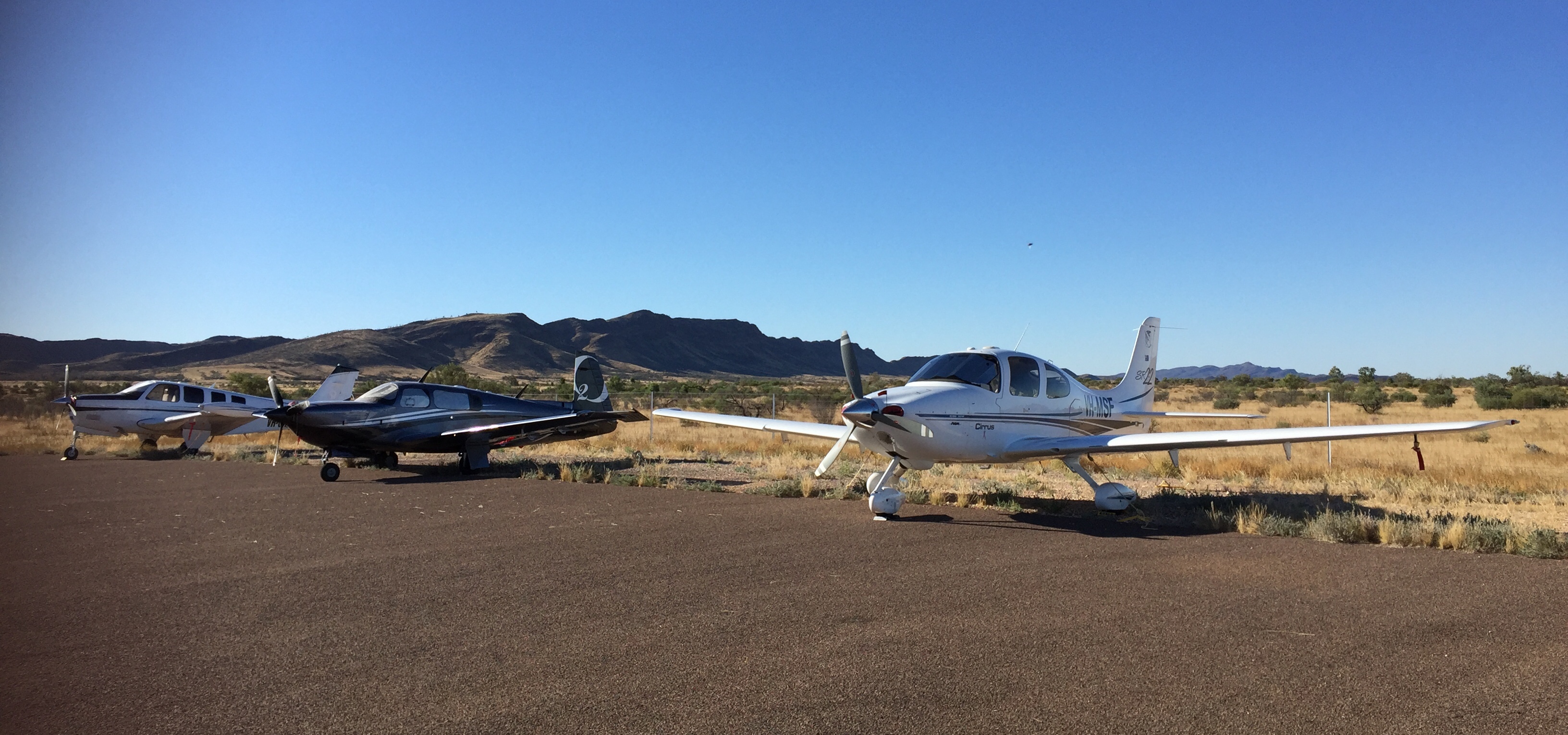
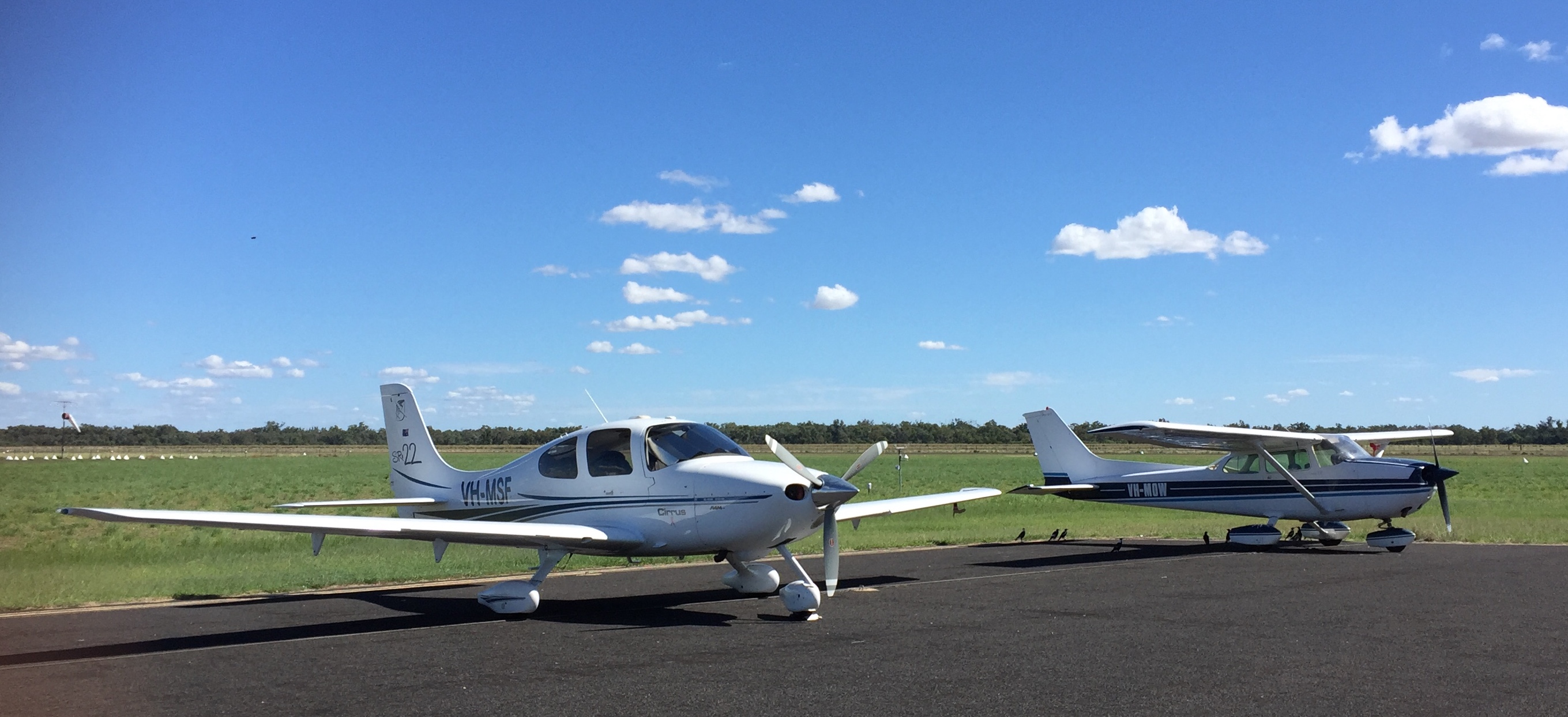
With Lake Eyre filling up after all the summer and autumn rains I thought it’d be a good idea to fly out there in June 2022. It started as a sort of aviators’ outback pub crawl but eventually morphed into a nine day bucket list trip there and back again. Key bucket list items were Cameron Corner, Marree and Maree Man, Coober Pedy, William Creek, Kati Thanda itself, Birdsville and Big Red, Burke and Wills Dig Tree, the Noccundra Pub, Eromanga Natural History Museum and the Cosmos Centre at Charleville. Sigi was keen and when I mentioned what we wanted to do to my friend Harpur he immediately signed up his wife Anne and himself to accompany us.
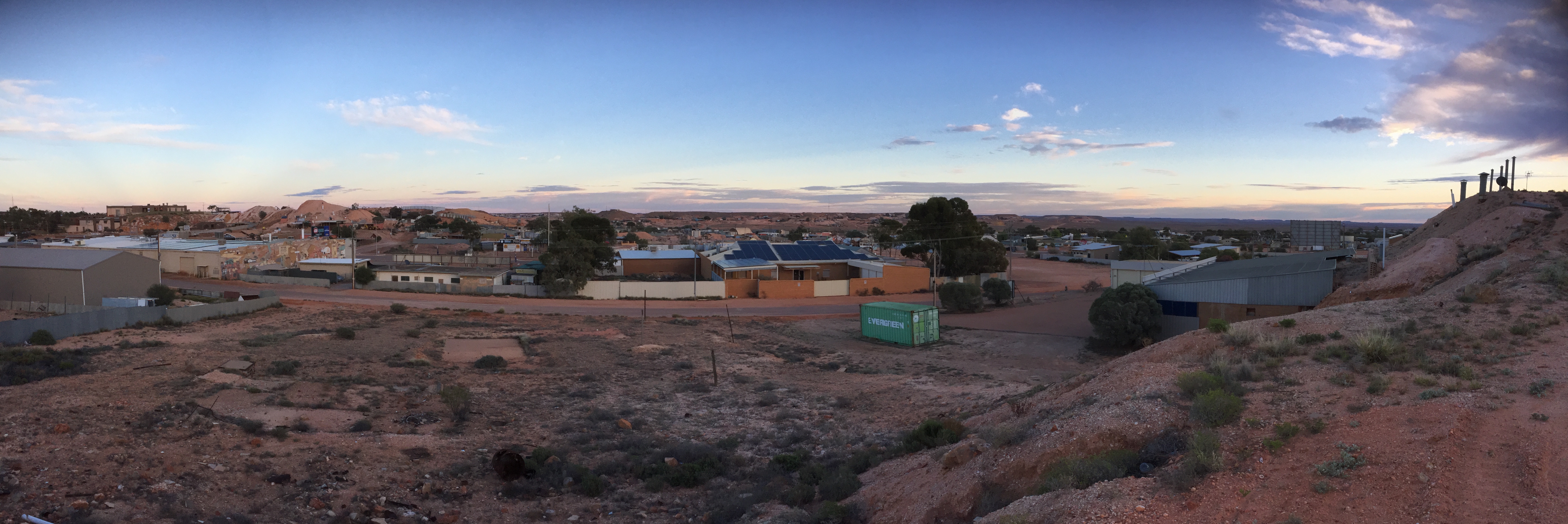
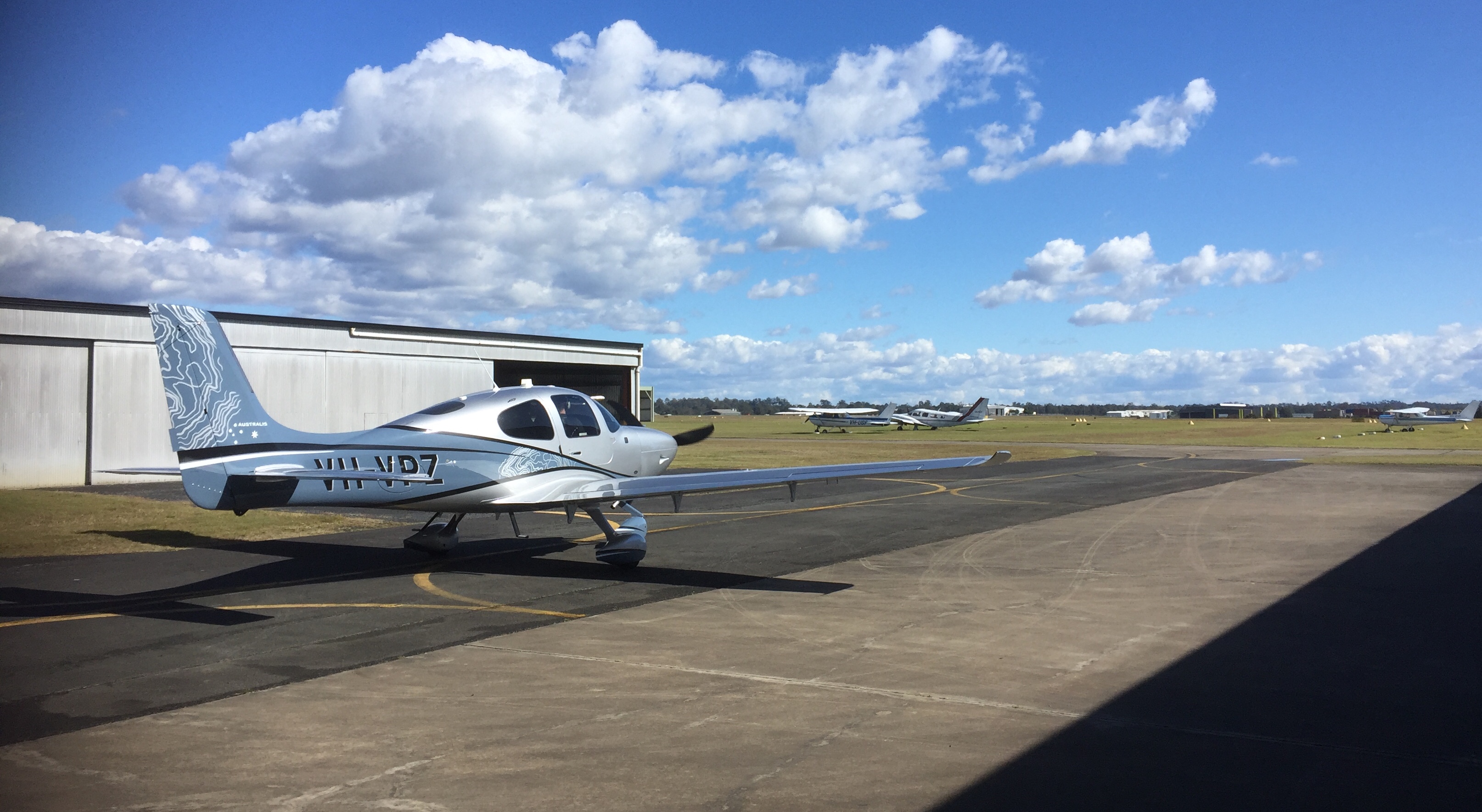
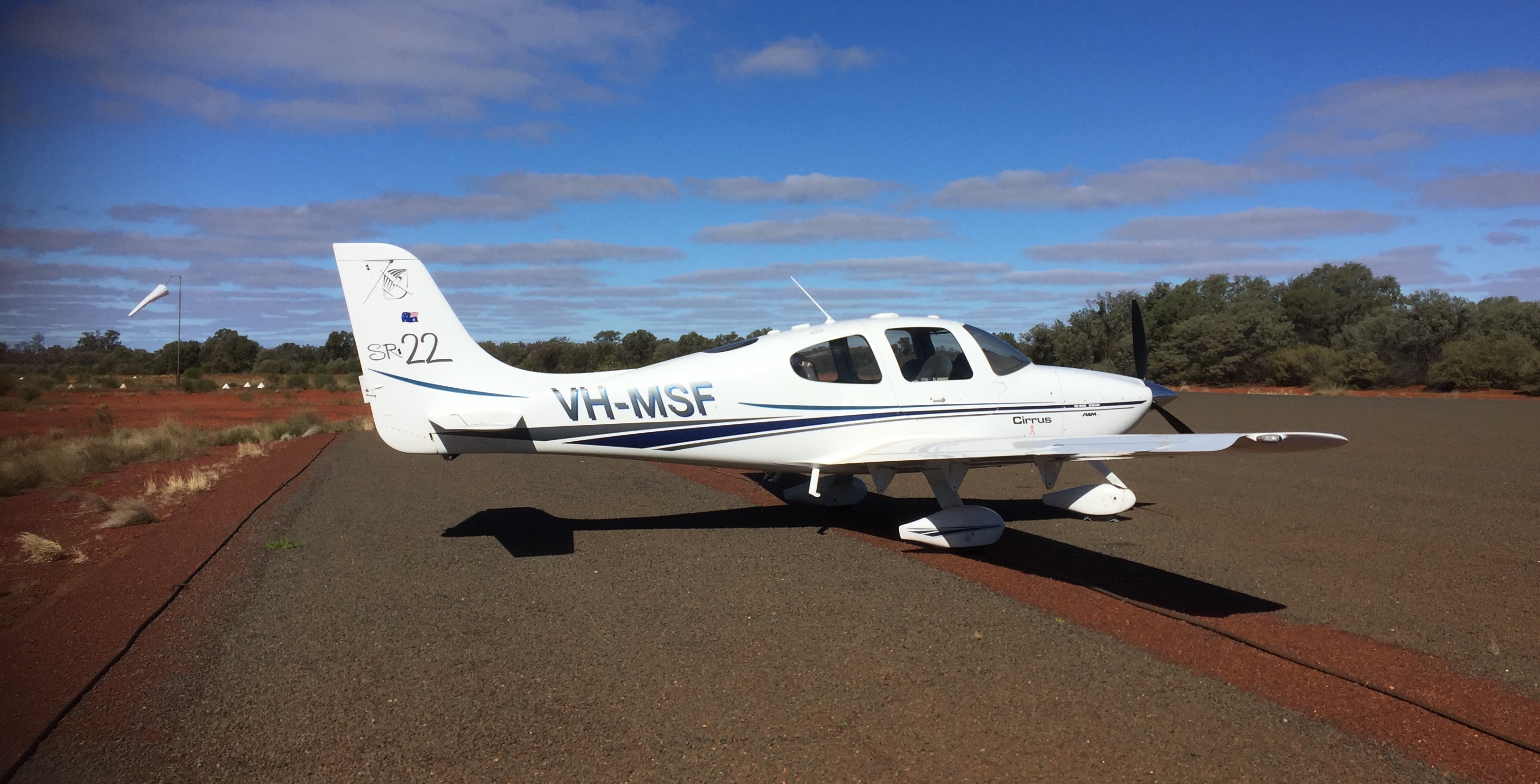
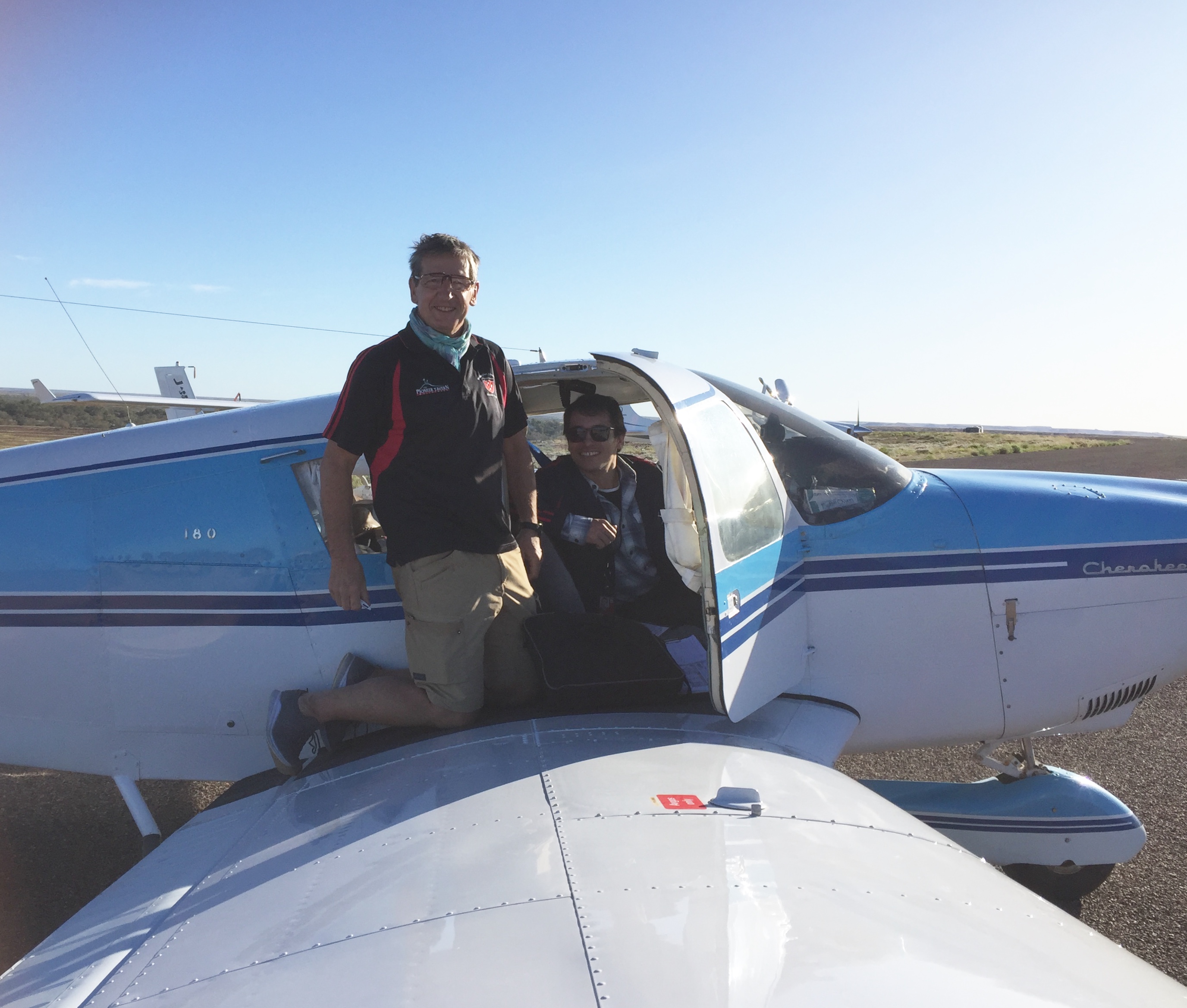
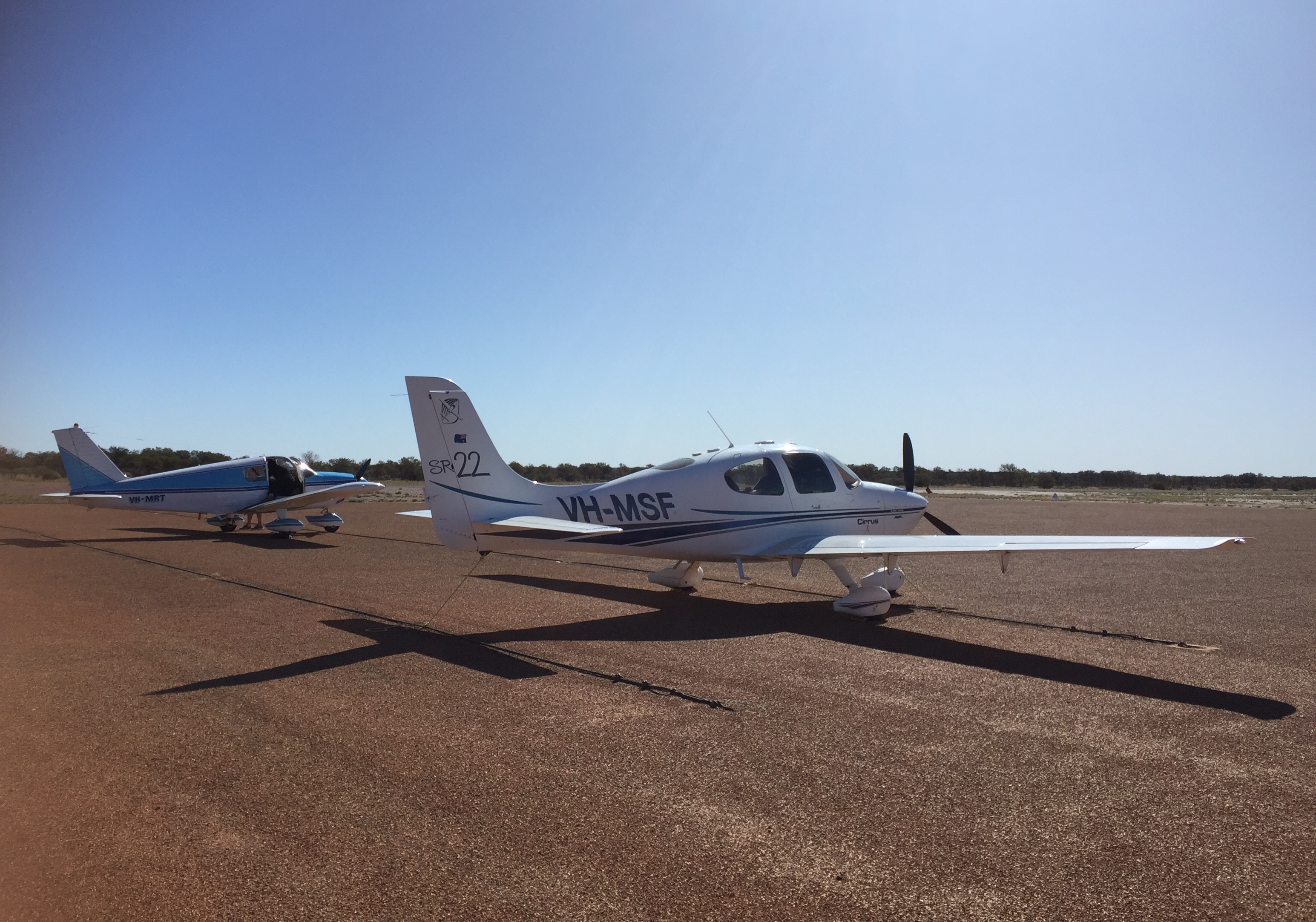
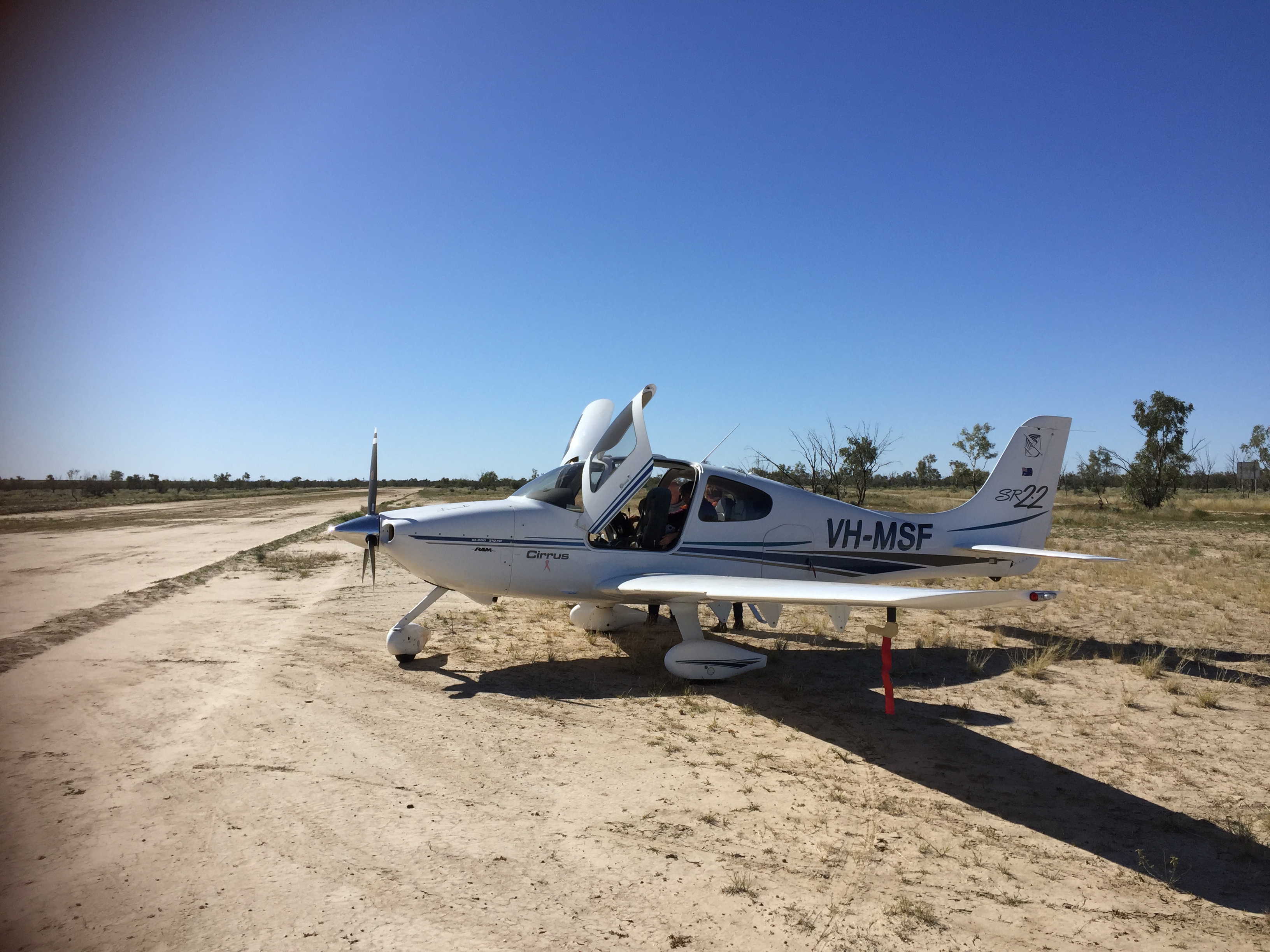
Another pilot friend, Luc, had shown interest in tagging along on the trip and as the date approached he confirmed that he and another friend, Scott, who’s also a pilot, would join us. Luc has his own Piper Cherokee that flies about 110 knots compared to the Cirrus at 165 knots so he planned to depart a day earlier and stay overnight at St George. We’d meet them there.
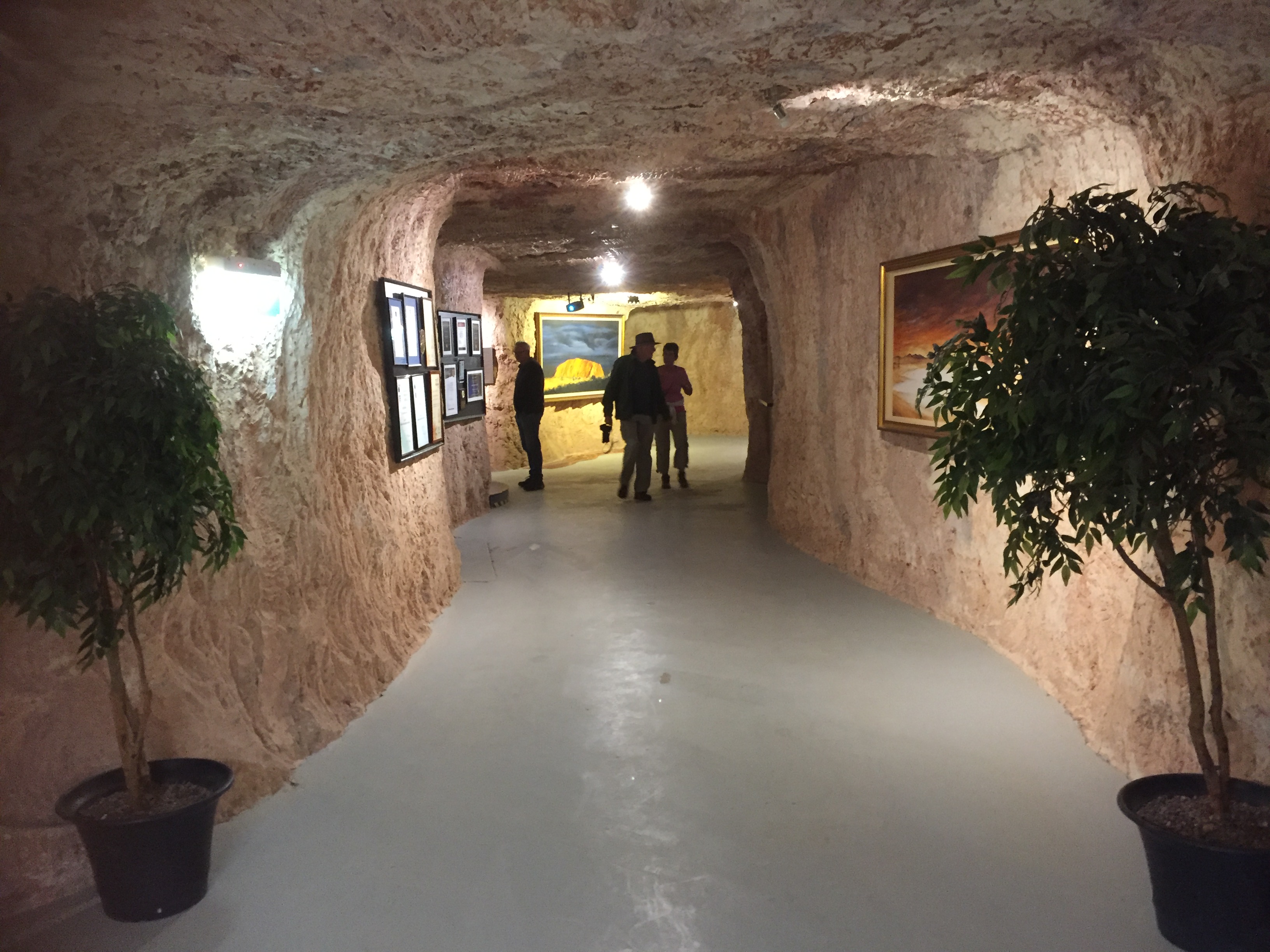
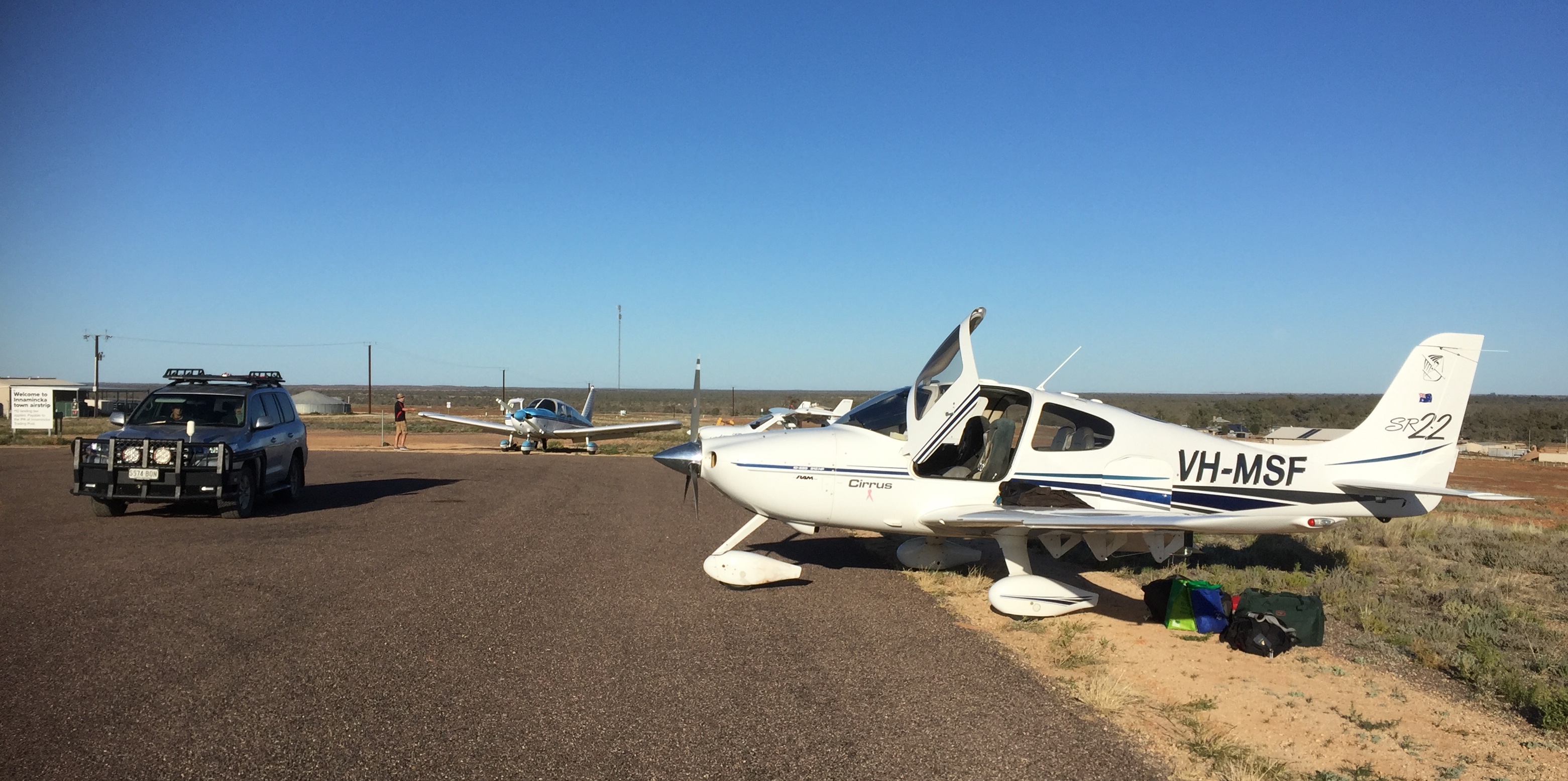
There was quite a bit of planning required. First I needed to include regular refuelling stops, as in order to remain below maximum take off weight we could only load 230 litres (rather than full tanks of 300L) after allowing 10kg of baggage for each of us. This gave us a range of about 500 nautical miles (just over 900km) in just over 3 hours. I normally like to have a break every 2 hours for my own sake but also so that my passengers can stretch their legs so this seemed fine. We just had to make sure that Avgas was available at these intervals. I rang up all the refuellers during the weeks prior to our departure and the only one with limited supply was Marree, but they seemed confident that they’d have fuel by early June. The supplier at Innamincka seemed to have the most limited supply and he noted down our arrival date and that we’d need about 100 litres so that he’d have it on hand.
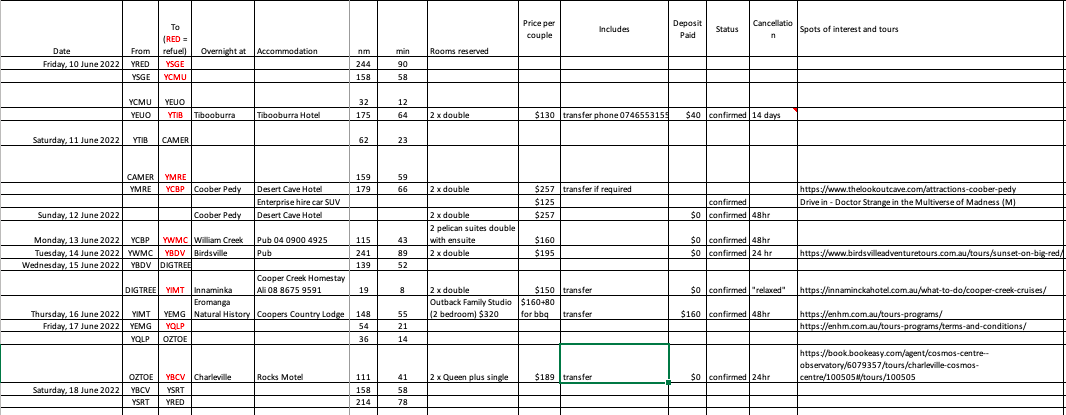
Trip itinerary spreadsheet

Accommodation was generally available. It appears that in 2022 things aren’t as busy in the outback as in 2021. Partly because the borders are open again and partly due to high fuel prices keeping people closer to home. Transfers from the airport to the town are always an issue so I tried to target stops where the strips were close to town or where the refueller or the hotel could provide transfers. The most difficult place was Coober Pedy, where there is no taxi or uber service and oddly only a few of the accommodation options would provide a transfer for the 3km from the airport. They generally said they were short staffed so couldn’t spare the time to pick someone up. Must have more than enough business I thought. So in Coober Pedy we went for the most expensive option as they could also provide a transfer. The refuellers at Charleville were the most accommodating, providing an old Barina as a loan car for free if we bought some avgas from them. I had to reshuffle a couple of dates along the way to make it all work out but by late May it was all locked in, our rooms were booked, and we were ready to go. Then first Sigi, then Anne and Harpur caught Covid. Luckily they all recovered in time and I avoided catching it so that we could all depart together as planned.

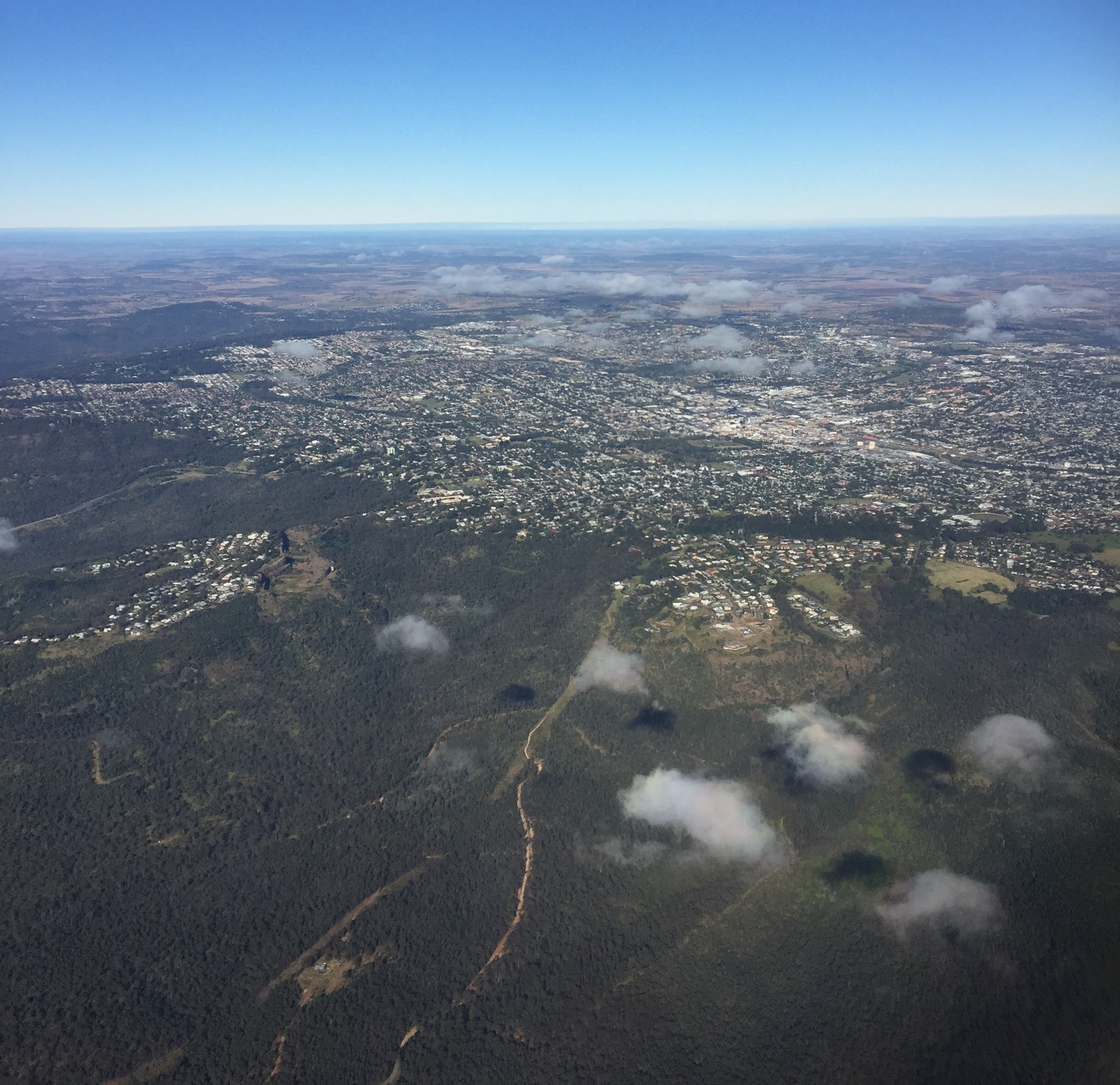
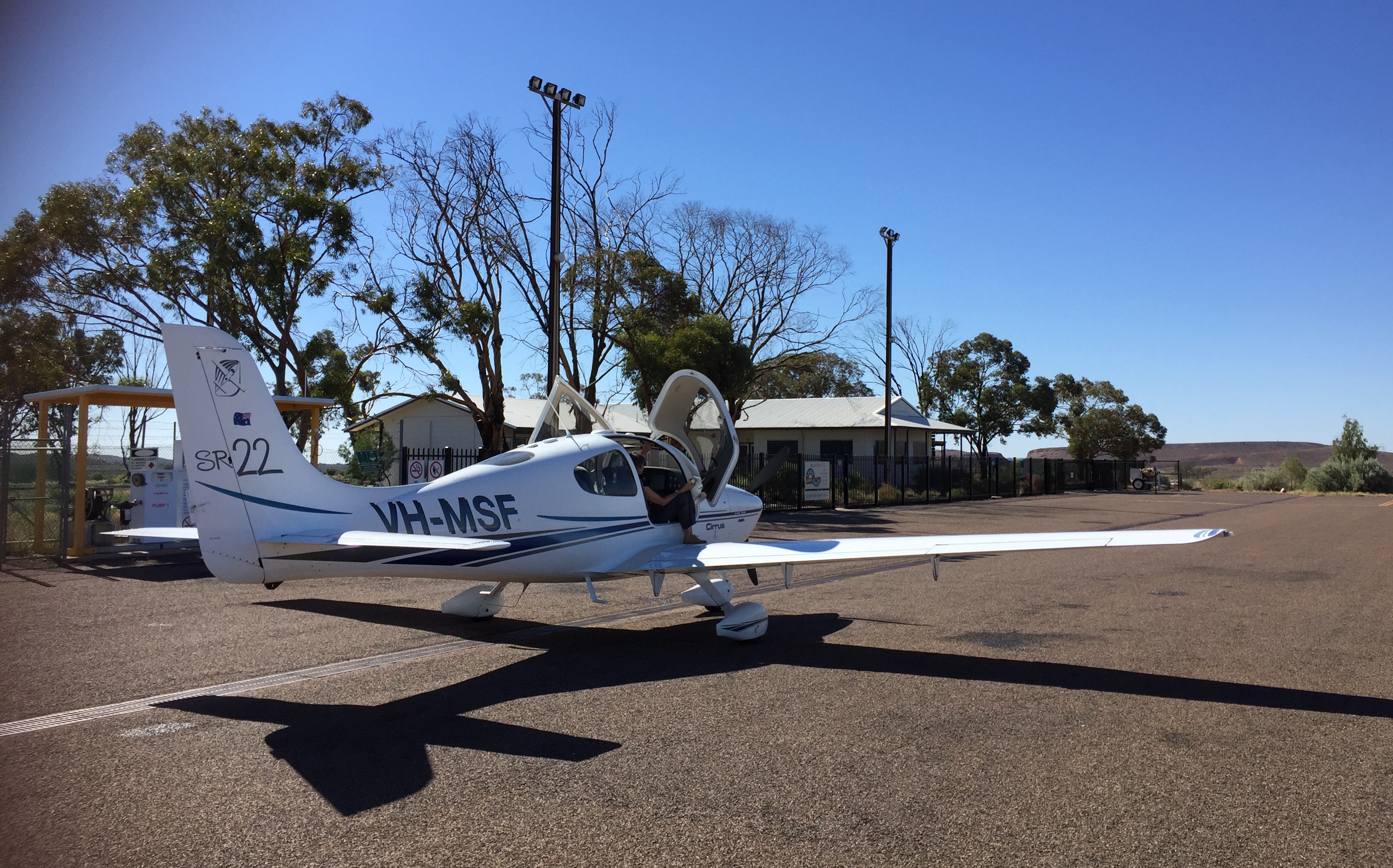
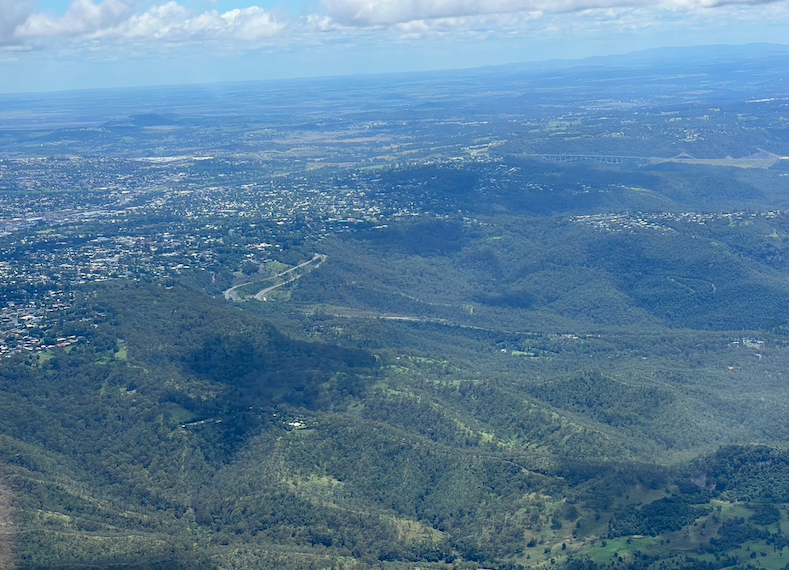
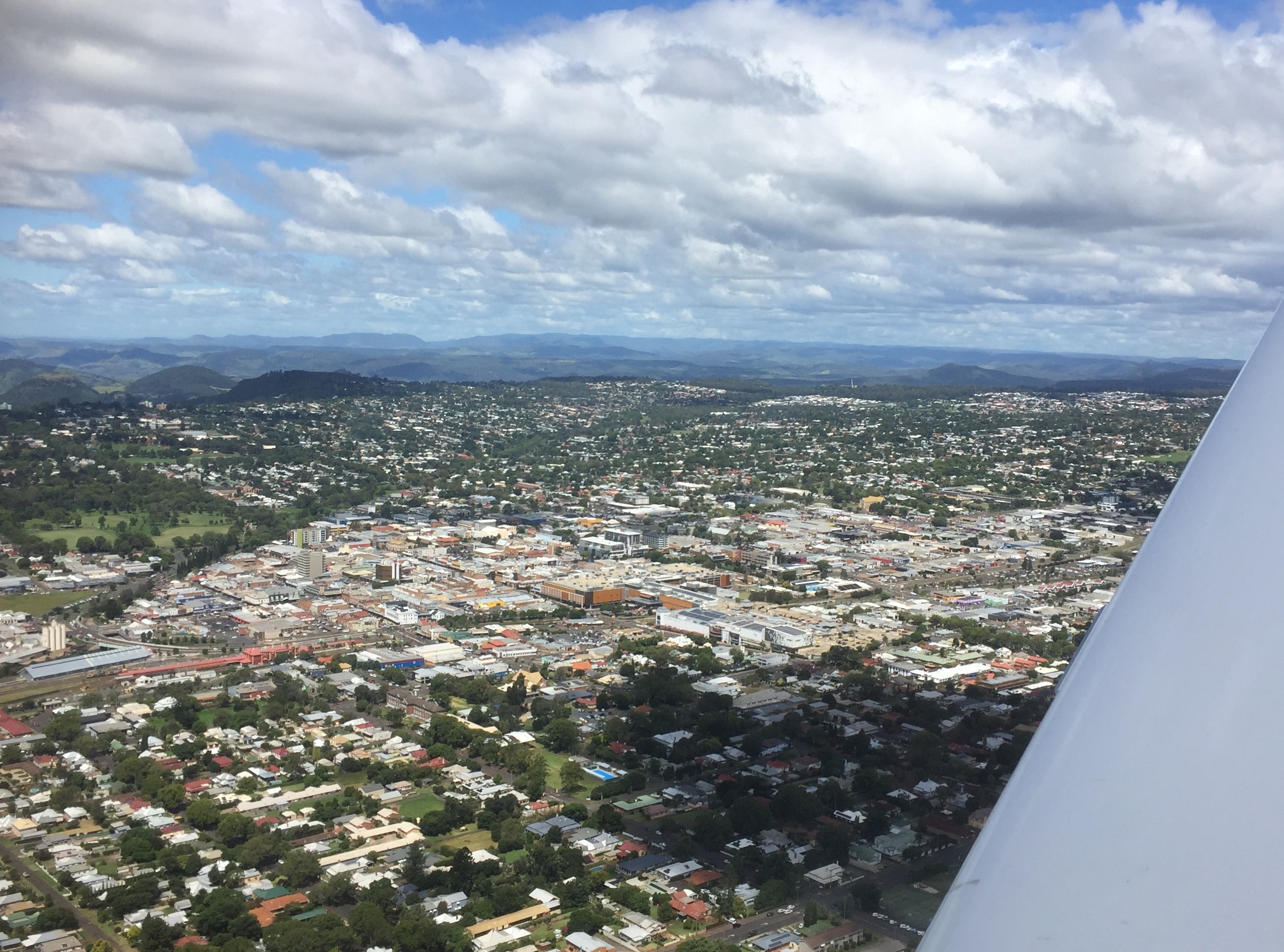
We set off on Friday June 10th 2022. Our first day was a big flying day. In fact, it was the biggest of the whole trip. It took us across almost the entire width of Queensland to the far north west corner of New South Wales. Taking off from Redcliffe at 8:30, we tracked over Toowoomba and then direct to St George to refuel.

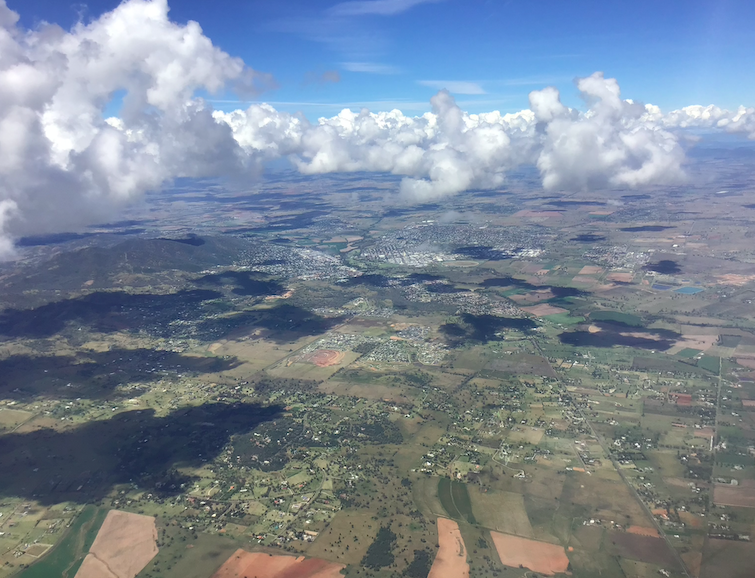
Toowoomba

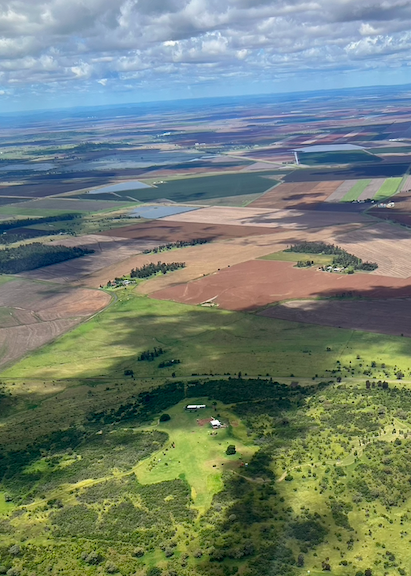
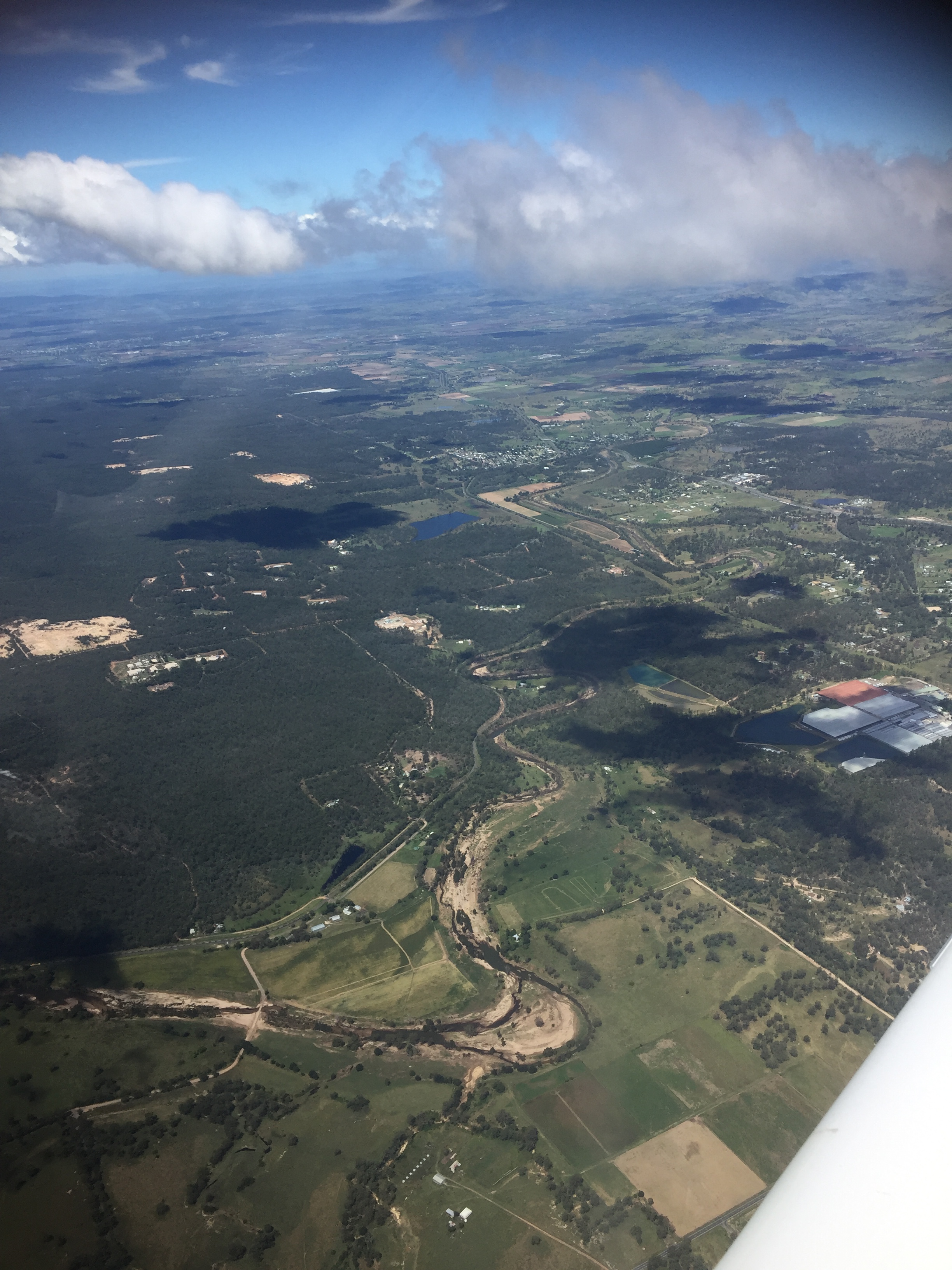
On the way to St George a cloud layer built up below us between 3000 and 4000ft AMSL. This wasn’t a problem as we were flying IFR, until we landed at St George when we just froze in the cold southerly under the overcast sky. We had been expecting cold weather and had rugged up but it was still a bit of a shock.

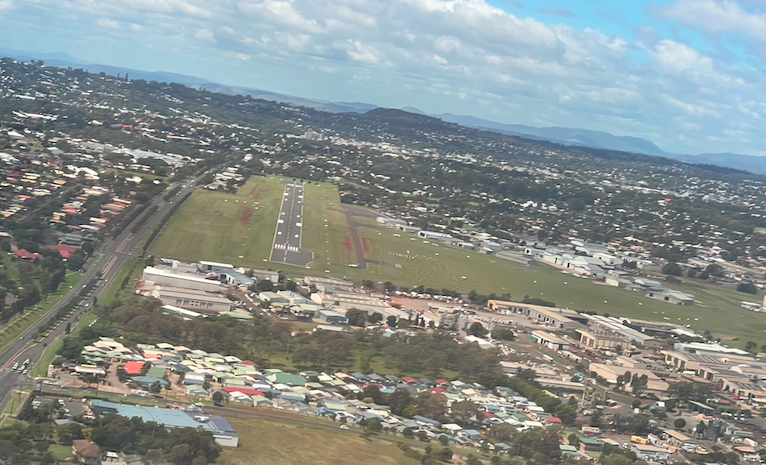
St George

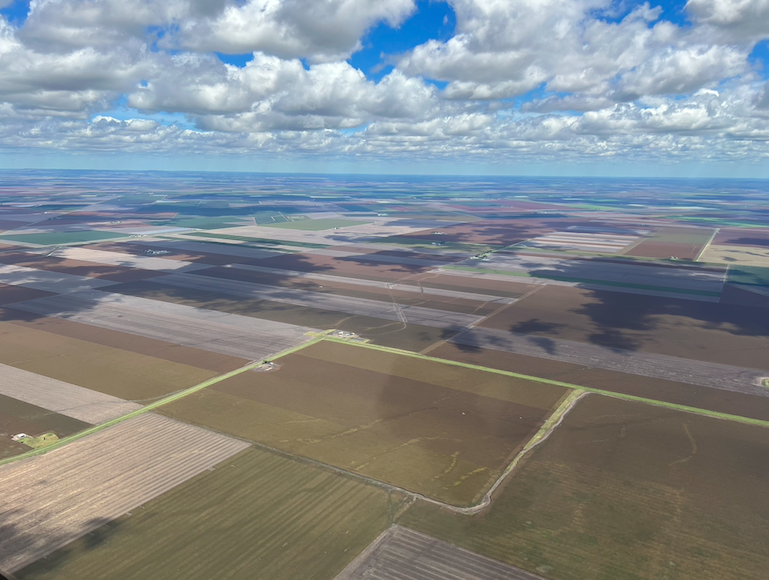
We had another refuelling stop at Cunnamulla where the clouds gradually started to part. The refueller was very generous at this stop. She’d been called away on business but the pump was accessible and all I had to do was note down how much fuel we used along with my contact details and she would email me an invoice. How good is that? We met Luc and Scott at Cunnumalla, who told us of problems they’d had with the Piper. The suspension on the right main wheel had collapsed and the local LAME at St George had managed to fix it but it was a temporary fix only. They had to decide whether they could continue. In the end they decided to proceed to Tibooburra’ sealed strip but not land at Eulo as it was a dirt strip and they didn’t want to stress the undercarriage. They’d then try to see if they could arrange a repair at William Creek.

Up above the clouds

From Cunnamulla it was a quick hop over to Eulo for lunch. Eulo is a small community with a great amount of pride that is evident when you visit. Famous not only for the infamous “Eulo Queen” and the hotel named after her but also for the abundant local produce and product as well as opal and craft which can all be purchased in the town. Adjacent to the Paroo River, and boasting a colourful history, the Eulo Queen Hotel awaits the weary traveller with her old world charm and generous hospitality.

Eulo apron

The story of the Eulo Queen is the story of the great, late Isabel Gray. Thought to have been born in 1851 her first marriage certificate recorded her as born in England, the daughter of an army captain. Things had changed it seemed by the time of her second marriage in 1871 where she was then recorded as being born in Mauritius! Her back story included a good education in Switzerland and then in 1868 she was sent to Australia. In Australia she married, only to be widowed a few years later and in 1871 she married Richard William Robinson with whom she became hotel-keepers in Eulo in 1886. Eulo was a gathering place for travellers and wayfarers and the Robinsons acquired further licenses to run a butcher shop and store. But the cunning Isabel began to conduct business outside of the boundaries of the hotel beguiling her guests in other ways. Her seemingly complaisant husband allowed her to freely fraternise with travellers in exchange for opals – for which she acquired a feverish penchant. So captivated was she by the gems she used them as currency in exchange for her services and adorned herself lavishly from head to toe in the stones, including a glamorous girdle fashioned with alternate large stones and nautilus shells. She was said to have some physical beauty, but her talent was surely her ability to enrapture her male counterparts with ease.

It was a 5 minute walk down the main street to the Eulo pub where they had delicious hamburgers. The publican turned out to be a former pilot with more than 10,000 hours, many of which were with the Royal Flying Doctor Service based in Cairns. He said he had lots of bad weather experiences that he wished he hadn’t had. He also told us that business was very poor compared with 2021 when he’d do 60 lunches per day. There was only us and one other couple for lunch that day.

While walking around the pub we learned about the Eulo Queen. Her scintillating stories and newspaper clippings adorn the walls as she plays host to locals and wayfarers alike.

Eulo pub

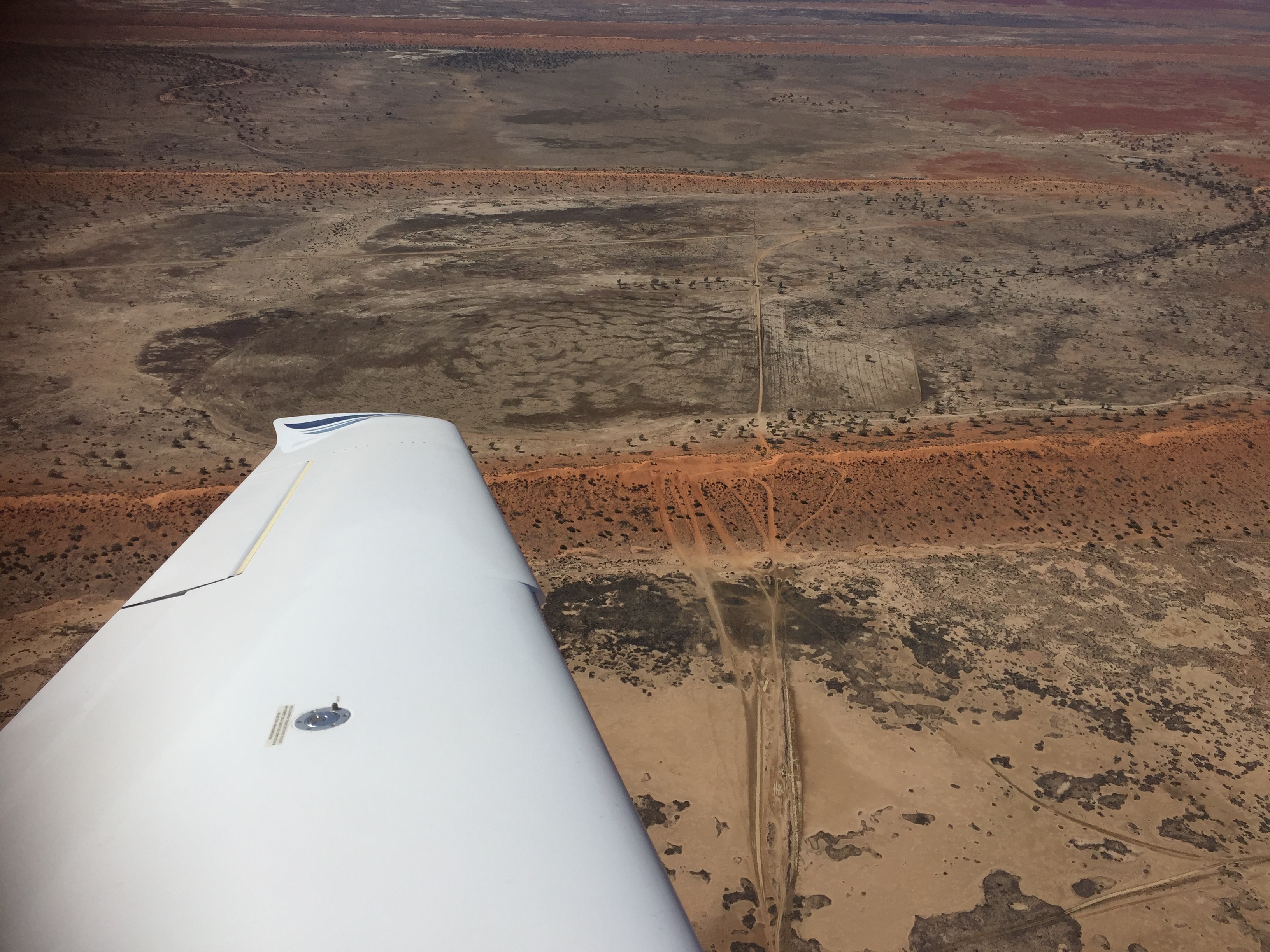
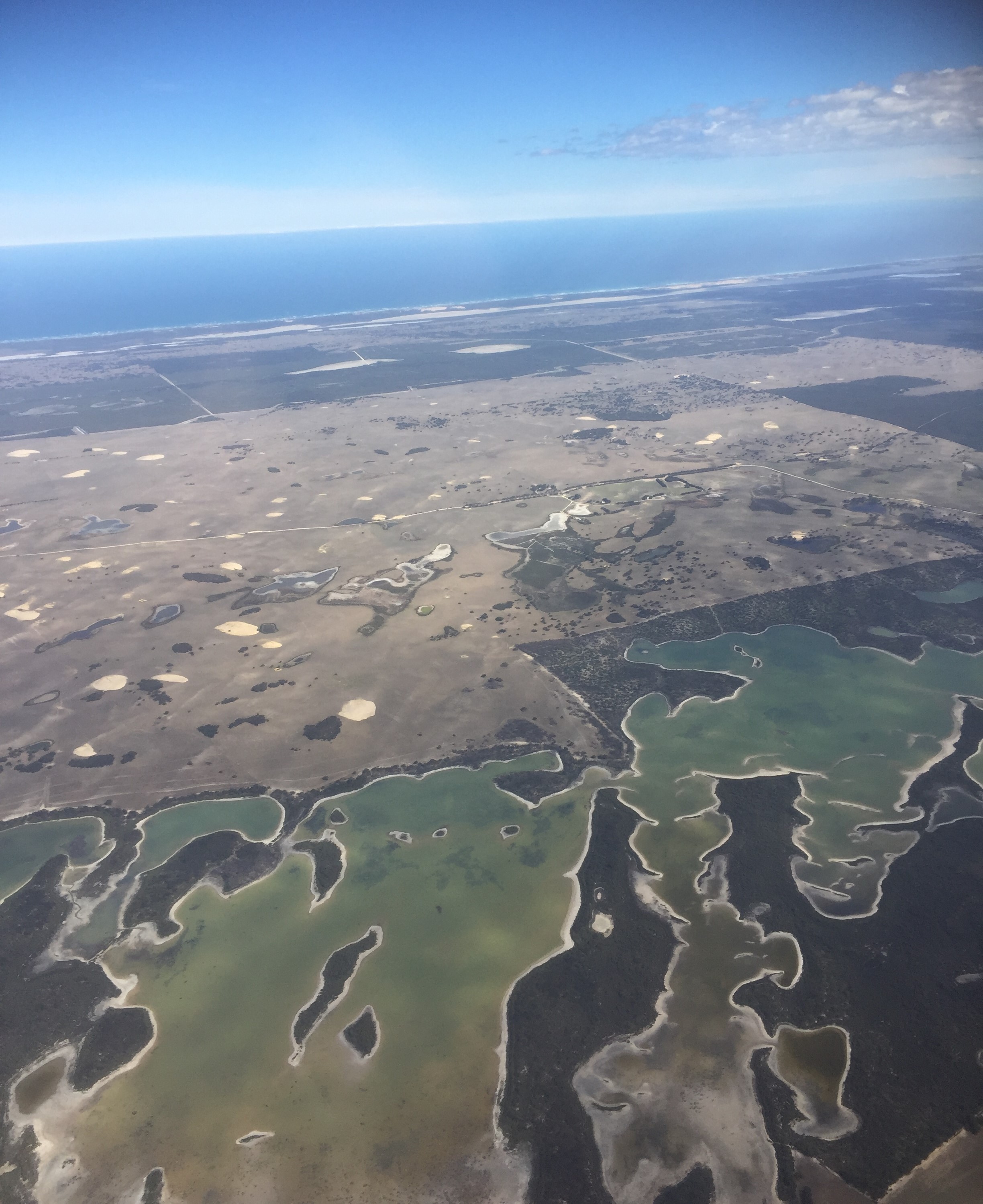
After lunch it was a one hour flight to Tibooburra. On the way we passed over Lake Wyara, a tip from the Eulo publican, to spot some of the thousands of pelicans that were nesting there. There were some amazing patterns in the sand surrounding the lake.

At Tibooburra we refuelled again and were taken into the Tibooburra Hotel for our overnight stay. The owner of the hotel is the refueller so that made things easy.

Tibooburra is a two pub town steeped in history. Charles Sturt passed through the area during his Inland Expedition in 1845. Soon after pastoralists arrived with their flocks of sheep and the wool industry began.

Formerly known as The Granites, the town began as a gold-rush town when gold was discovered early in the 1880s in the region known as the Albert Goldfields. This extended from Mt Browne, Milparinka, Mt Poole through to “The Granites”. For a while several hundred people lived in the area known as the Granites, named after the granite tors which surround the town. These days the population is around 100 people. The town’s name was later changed to Tibooburra, a local Aboriginal word for “pile of rocks”.

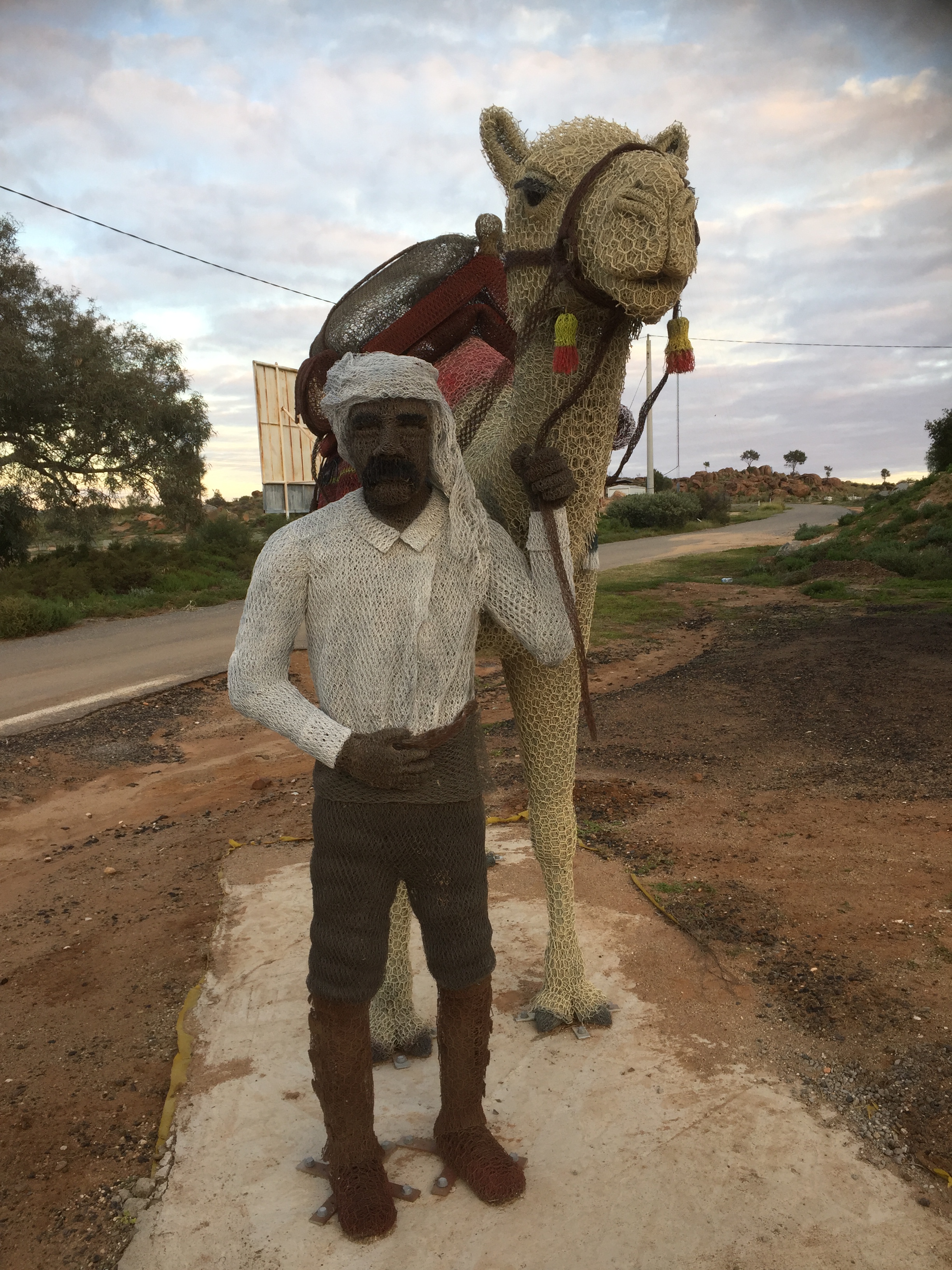
There is a museum under construction that amongst other things celebrates the role the Afghan cameleers played in opening up the country. There’s an amazing sculpture made out of chicken wire outside the museum.

Luc and Scott met up with us at the Tibooburra Hotel and after phoning around decided they’d head for Broken Hill the next day as that was the only place a LAME would be able to repair their suspension. The hotel burned down in early 2021 so it was still in the final stages of rebuilding when we were there. They’d build some comfortable motel units out the back and we stayed in them. The bar was open and there was a temporary kitchen doing meals. They were a bit rushed off their feet that night as it was Friday so it took over an hour to get our meals but it didn’t really matter as we weren’t in a hurry.

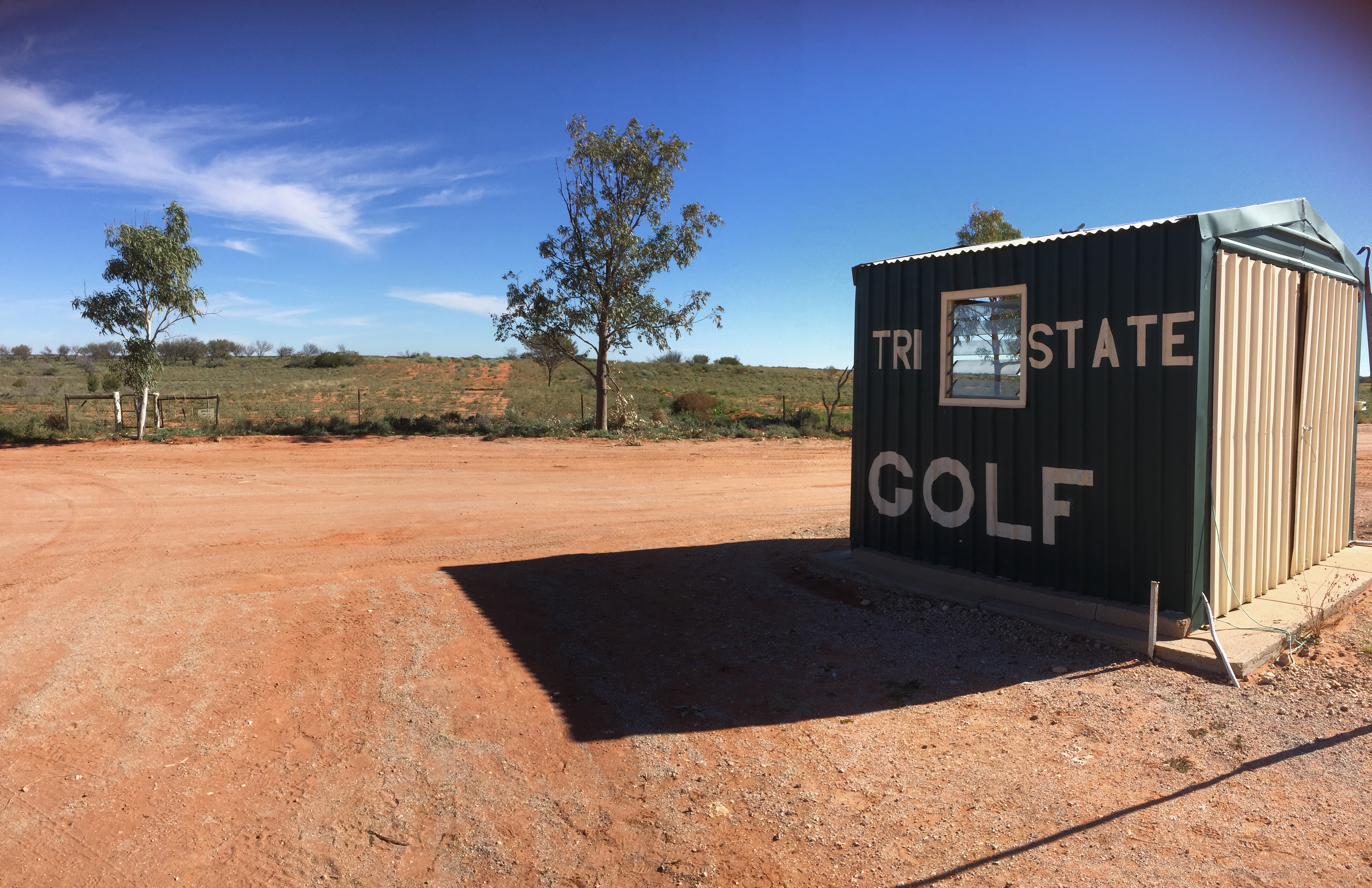
On Day 2 the first challenge was to find some breakfast. The pub didn’t do breakfast and the grocery store, which had good ratings on TripAdvisor, was closed due to lack of staff. Luc and Scott had discovered that the roadhouse on the outskirts of town was open so we went there, only to find that they could at best manage some toast and jam. Coffee was just a bit too difficult. So we ate the toast then headed back to the hotel and packed up and after a delayed transfer to the airstrip (the hotel owner’s partner thought we’d already left) took off on the short flight to Cameron Corner, where Queensland, NSW and South Australian borders meet. The home of Tri State Golf and so much more.

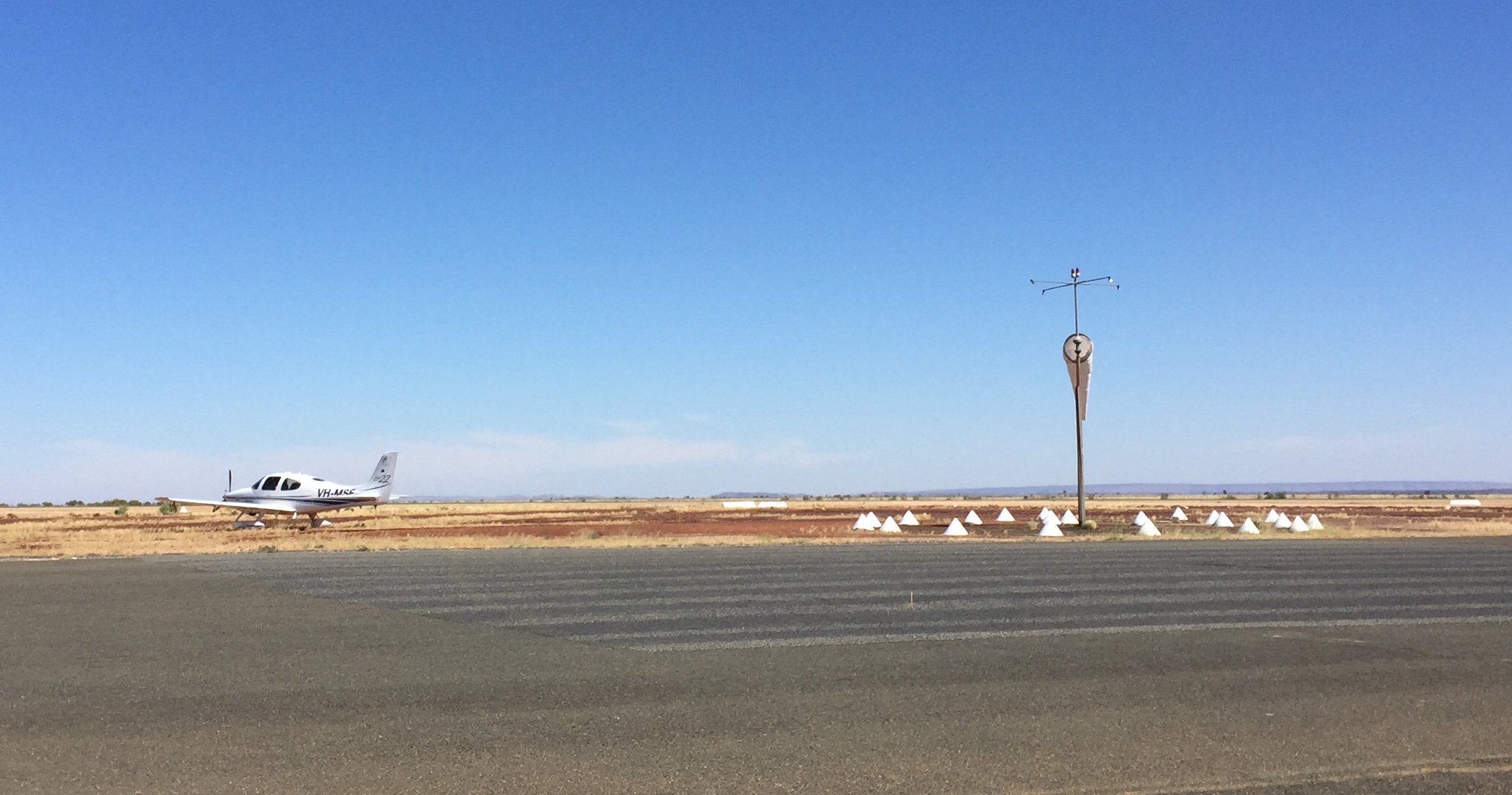
It has a lovely smooth dirt strip only 5 minutes walk to the store but no Telstra coverage and a very basic “waiting room”. My next challenge was how to cancel my SARTIME.

Luckily Tina at the store was so helpful and let me use her landline to cancel the Sartime and their wifi to submit another flight notification. She was a mine of information and very chatty – and had great coffee and cake too.

Tina

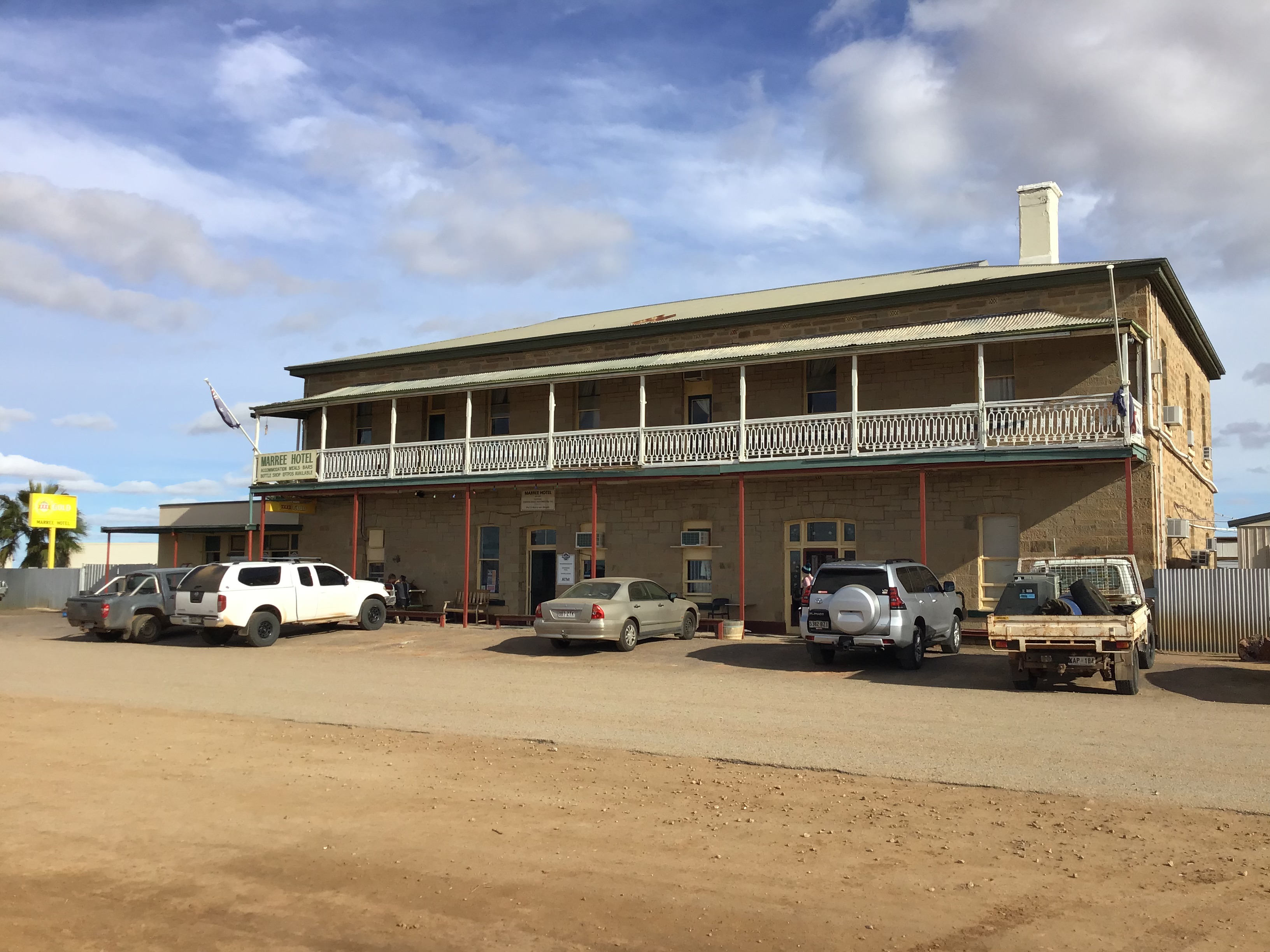
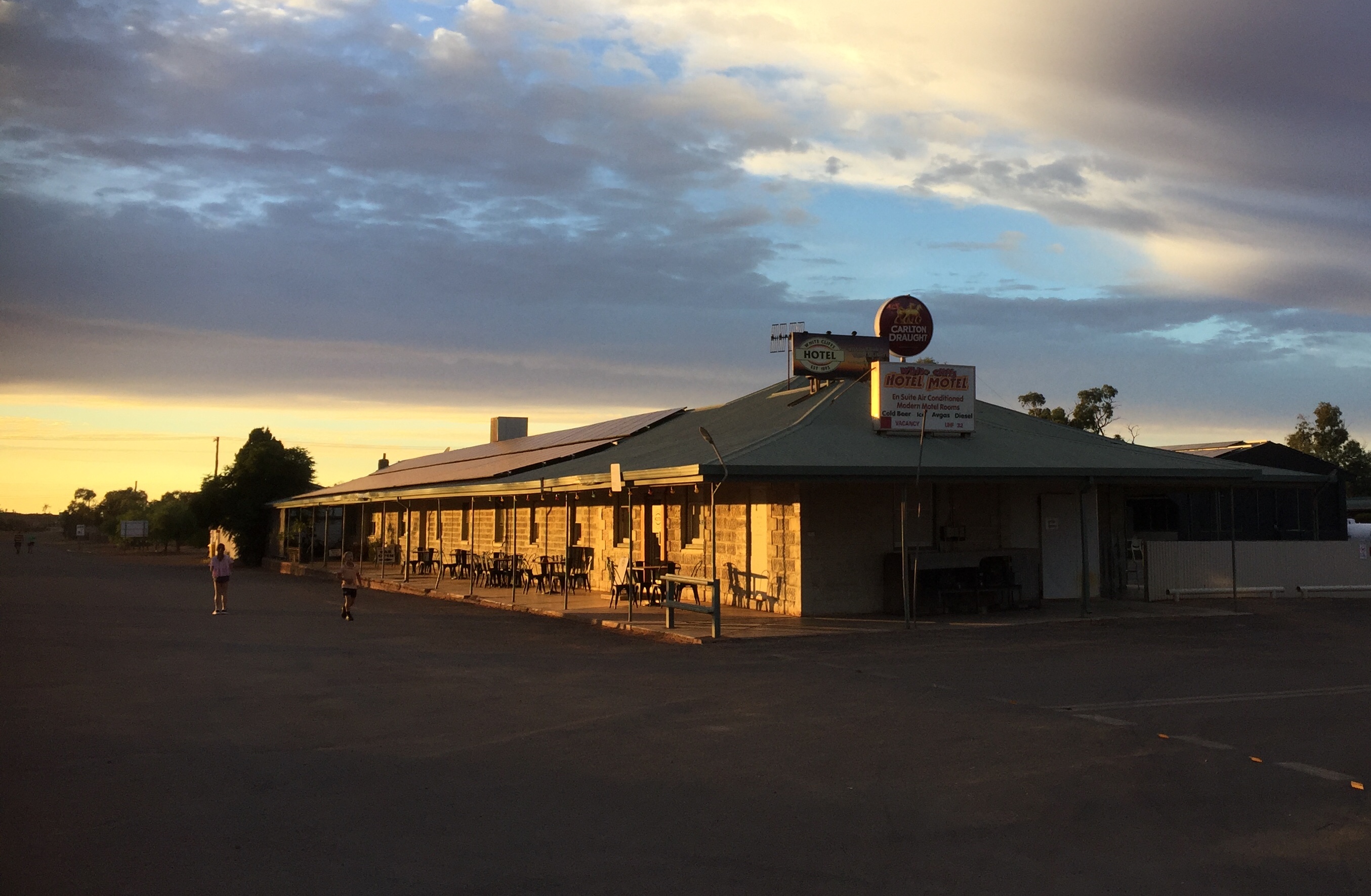
We continued to fly across the southern Strzelecki Desert to Marree to top up with fuel and have some lunch at the pub. Marree is a small South Australian town situated on the old (now defunct) Ghan railway line. There was a great refuelling service and a free lift into the pub by one of the young pilots who is based there and grew up in Brisbane. There was limited Telstra coverage however – data but no voice calls possible on my mobile. We were later to discover that it was due to the micro cell mobile system in place and my phone needed to be reset.

Marree Pub

The hotel includes the “Tom Kruse Museum”, full of information about the great Birdsville Mailman; and then there’s the John McDouall Stuart Museum with unique drawings and a host of information about Australia’s greatest inland explorer.

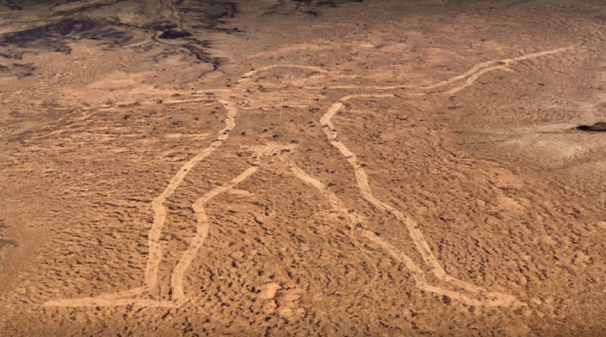
From Marree we headed west, passing over the Marree Man. Only visible from the air, this mysterious figure was discovered on 26th June 1998, and over time eroded to almost ‘extinction’. Following the granting of Native Title to the Arabana, the Marree Hotel was asked to restore the Marree Man.  Three years later with painstaking analysis of GPS data, the Marree Man was brought back to ‘life’. Speculation as to the origins of the Marree Man are captivating – theories; assumptions; mystery; intrigue; and controversy abound.  It appears unlikely that it could be created without the help of a GPS system. These were not in common use in the 1990s. The most likely story appears to be that some US Airforce personnel who were working at Woomera, went out there on a day off with a grader that had been fitted with an early GPS tracking system and carved it out in the desert. 

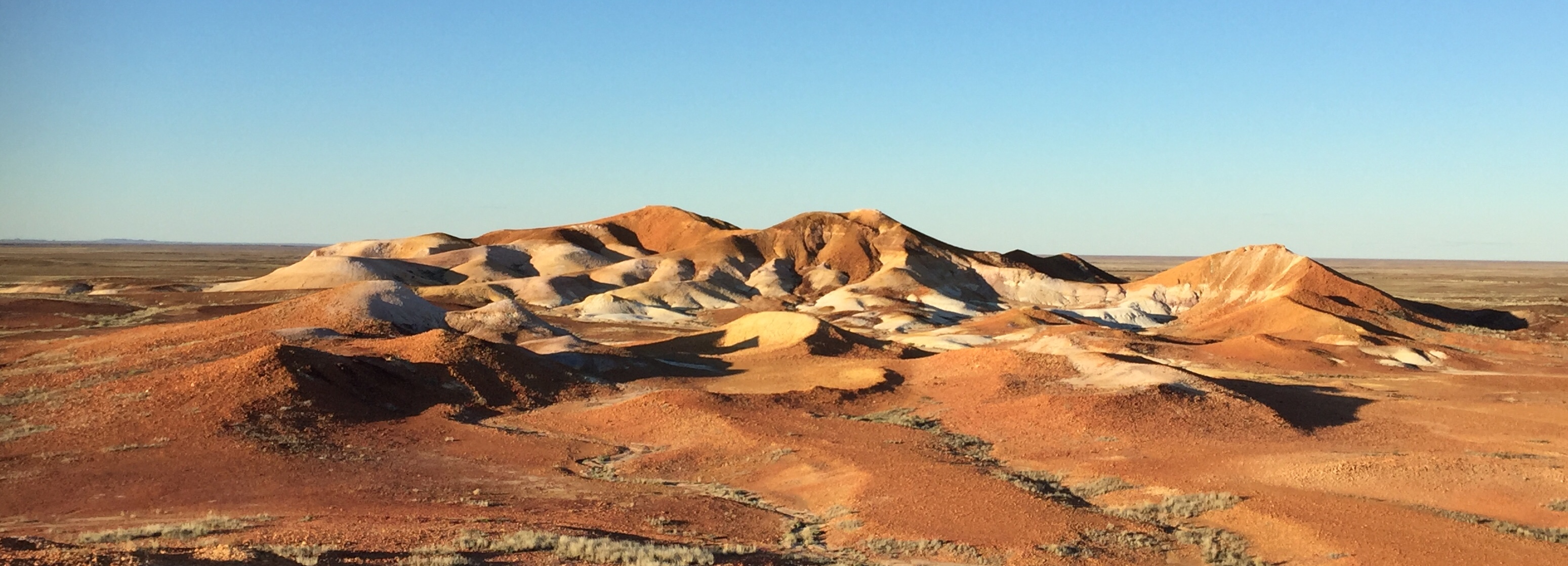
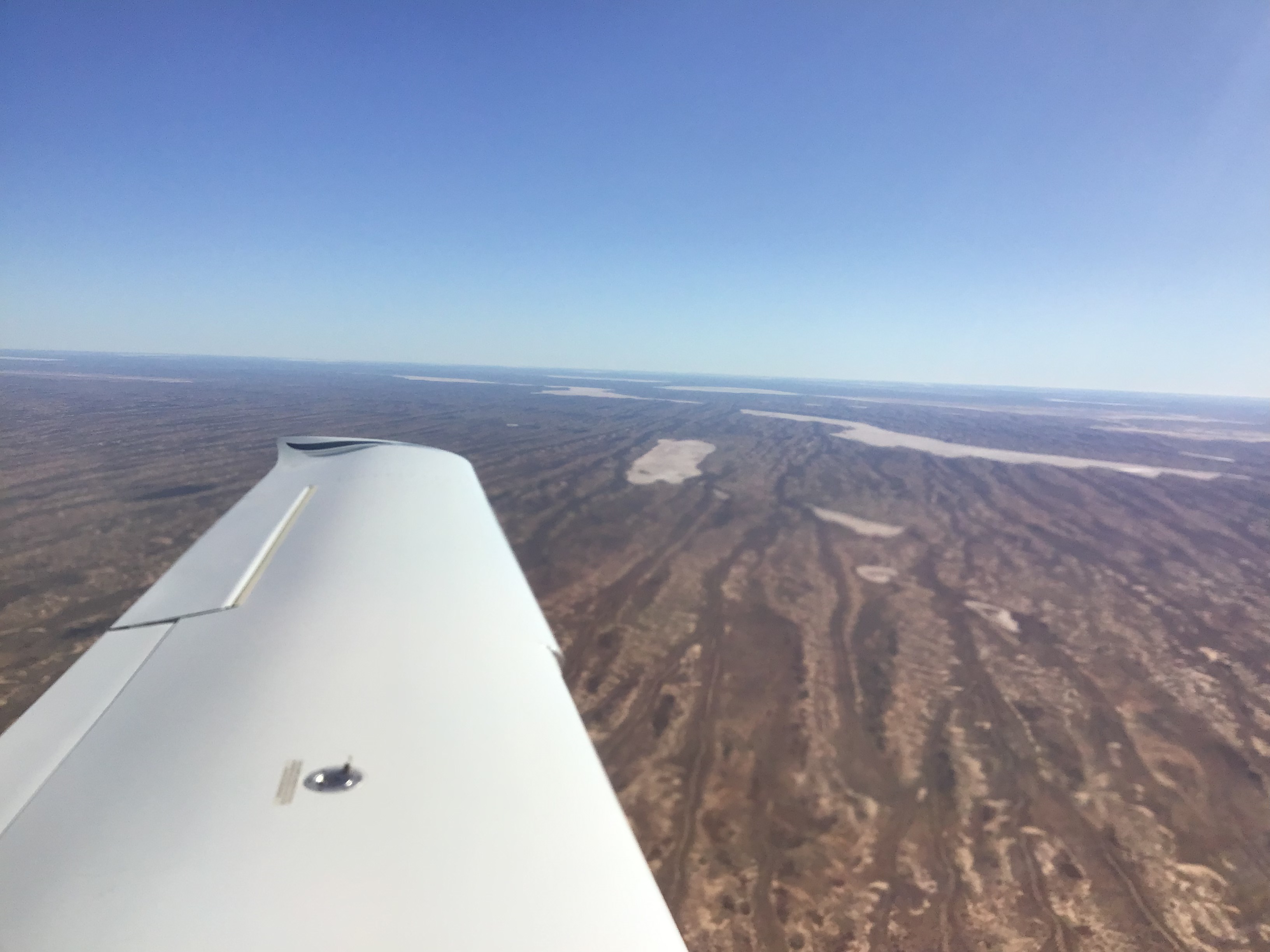
We passed the southern end of Lake Eyre South to the Anna Painted Hills then Coober Pedy, opal mining capital of the world and home of some very interesting underground buildings, not to mention underground people. Arriving at Coober Pedy we topped up the tanks and after a bit of a mix up picked up our 4WD hire car at the Desert Cave Hotel.

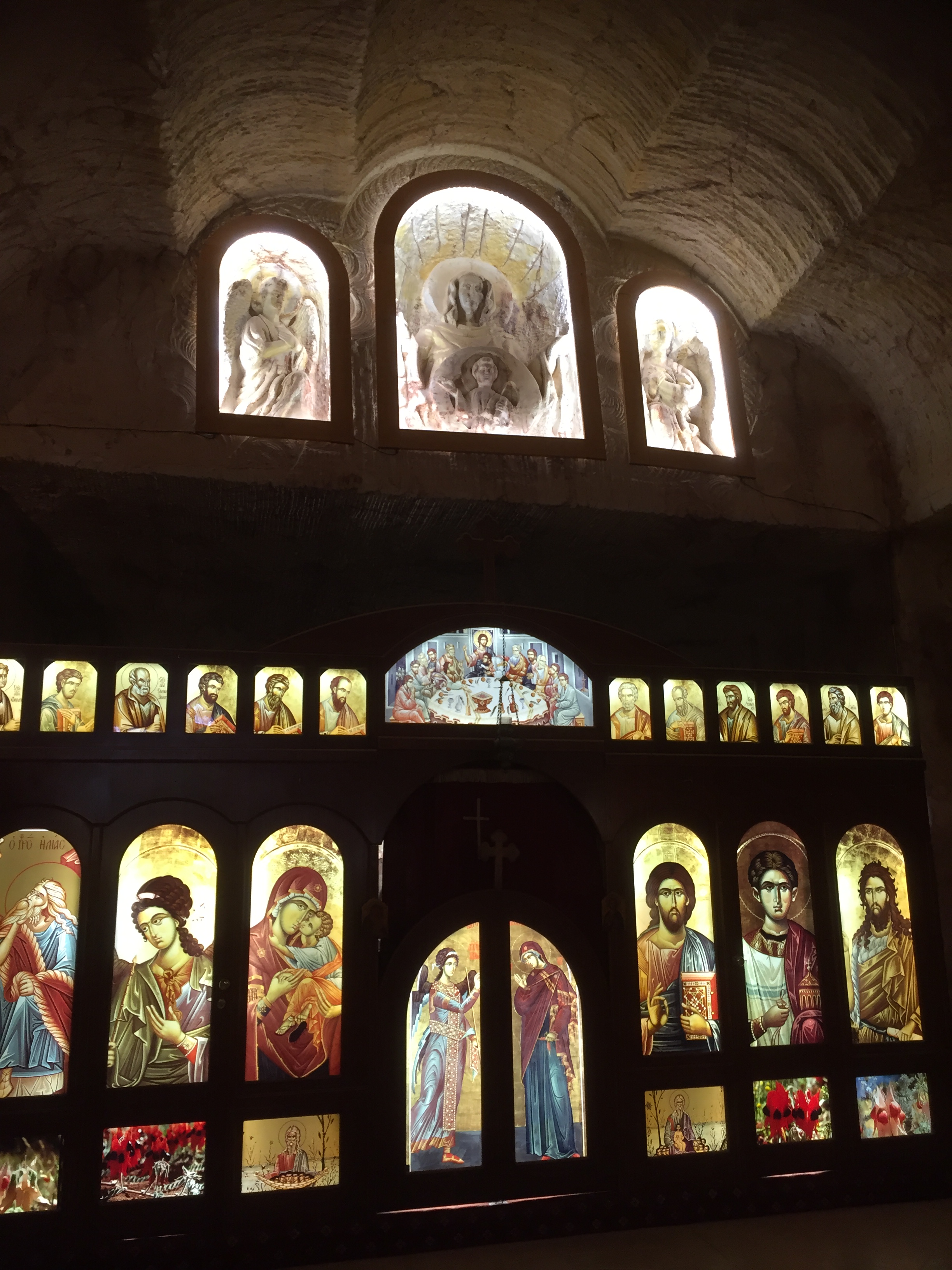
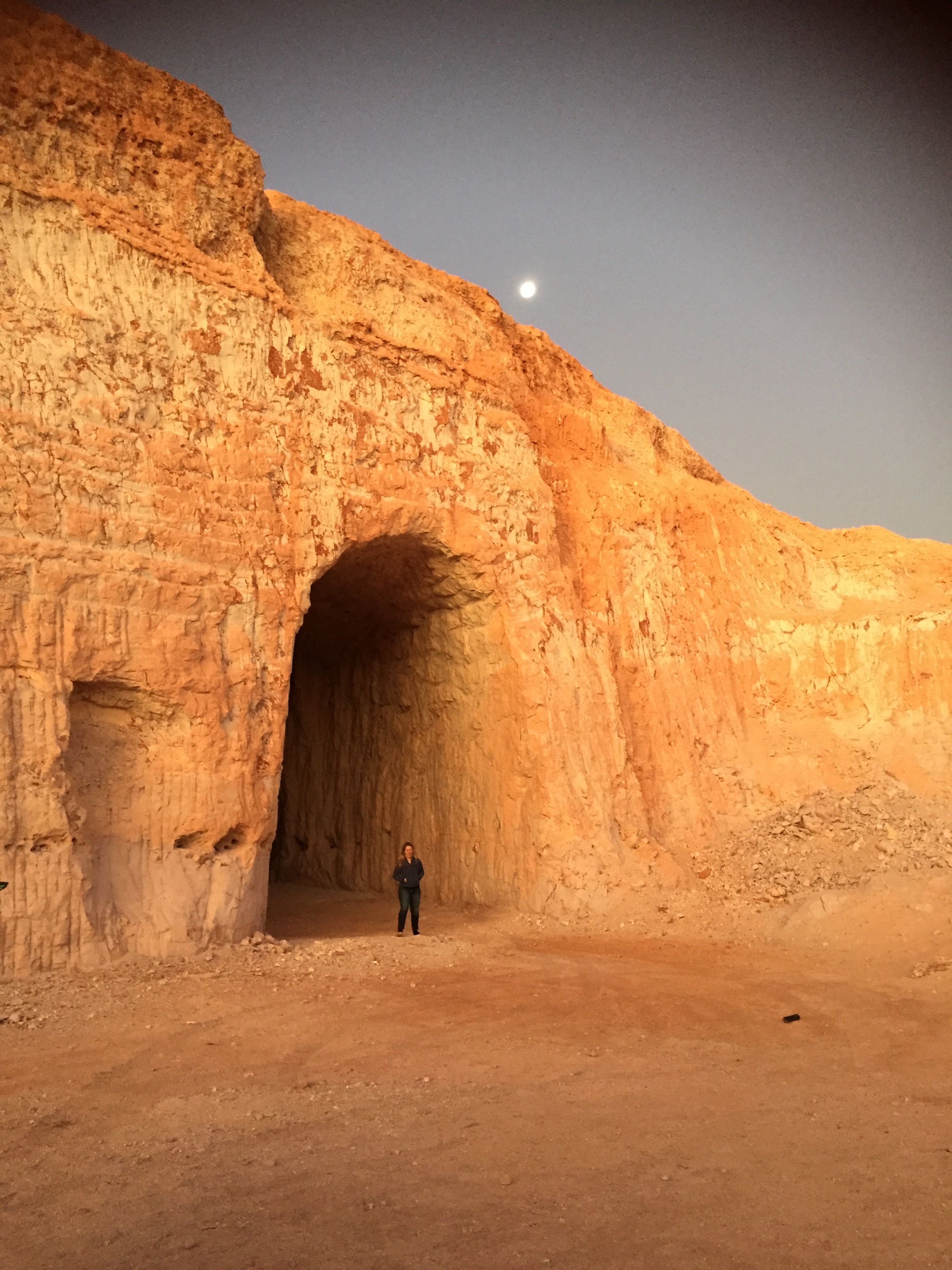
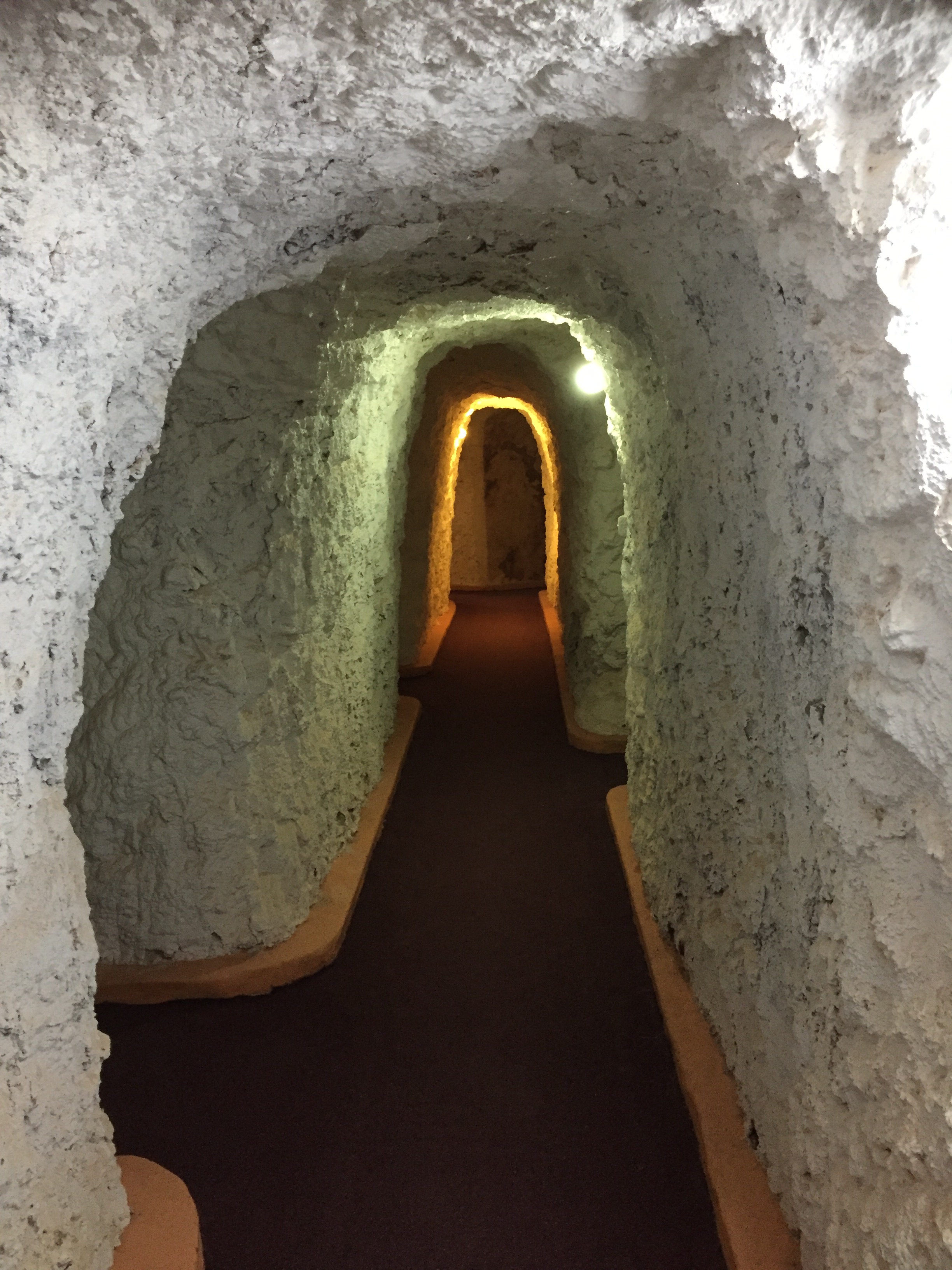
We spent Day 3 at Coober Pedy. The town’s name is an English adaptation of the local Aboriginal (Dieri) words ‘kupa piti’, meaning “whiteman’s holes”. More than half of the town’s population live underground, where temperatures are maintained at a pleasant 23-25 degrees C throughout the year while in summer above ground they often exceed 50 degrees. There are underground churches and art galleries too.

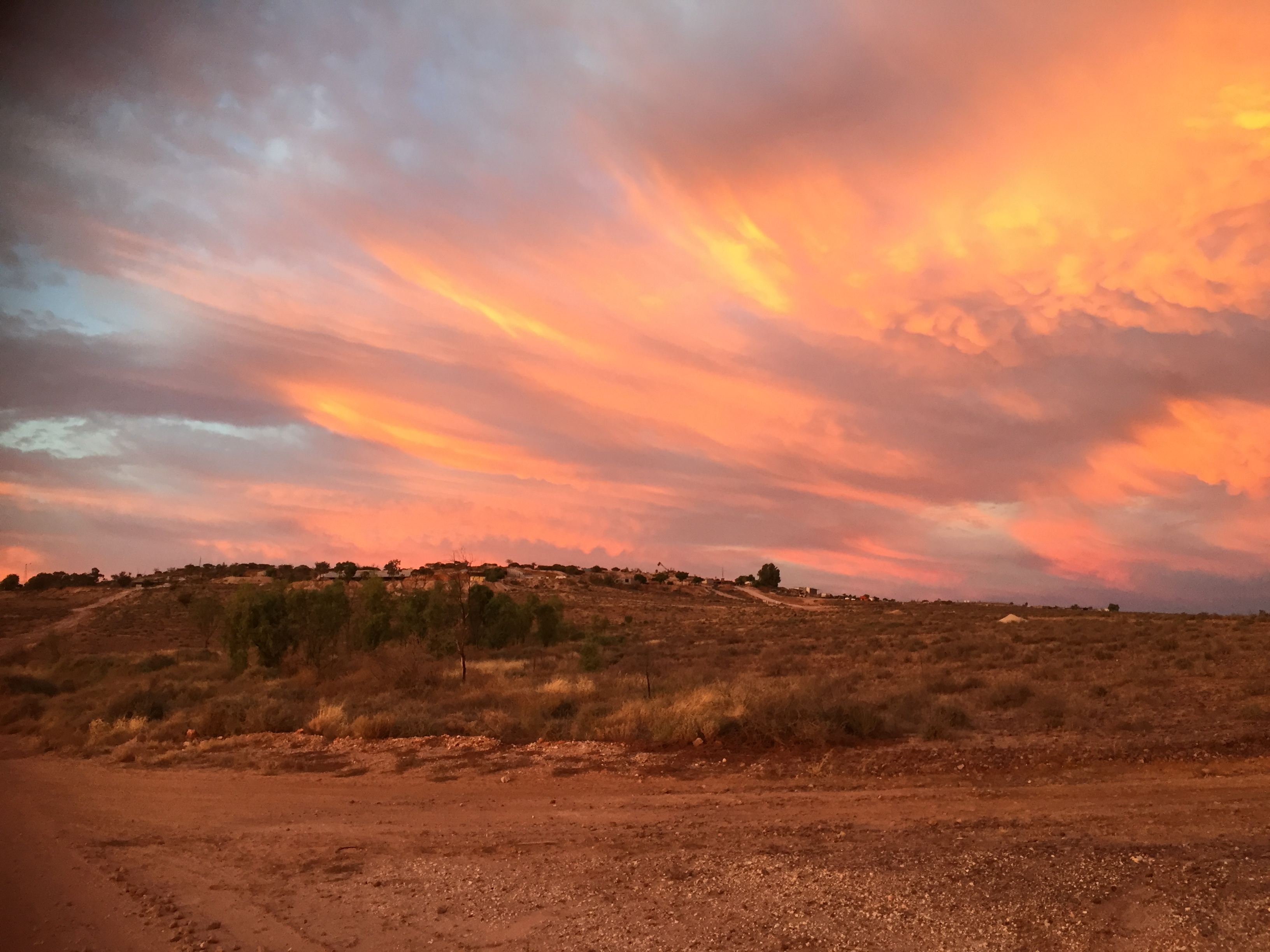
A highlight was an afternoon tour with Aaron Noble from Noble Tours Australia | 4WD tours from Coober Pedy out to the “breakaways”, a cluster of hills about 30km to the north where we saw an amazing sunset, and dropped into Aaron’s opal claim where he hopes to make his fortune one day.

On Day 4 we had a tour of one of the underground houses, built by a feminist miner in the 1980s. Faye apparently found quite a bit of opal while extending the house to include three bedrooms, a lounge and even a swimming pool.

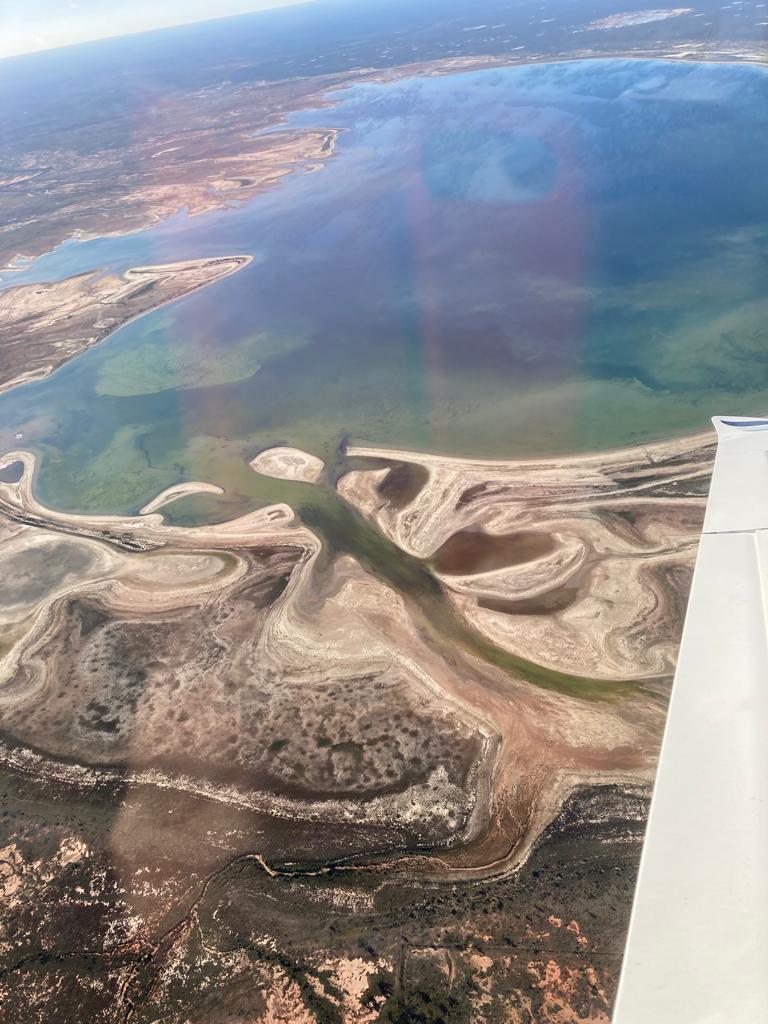
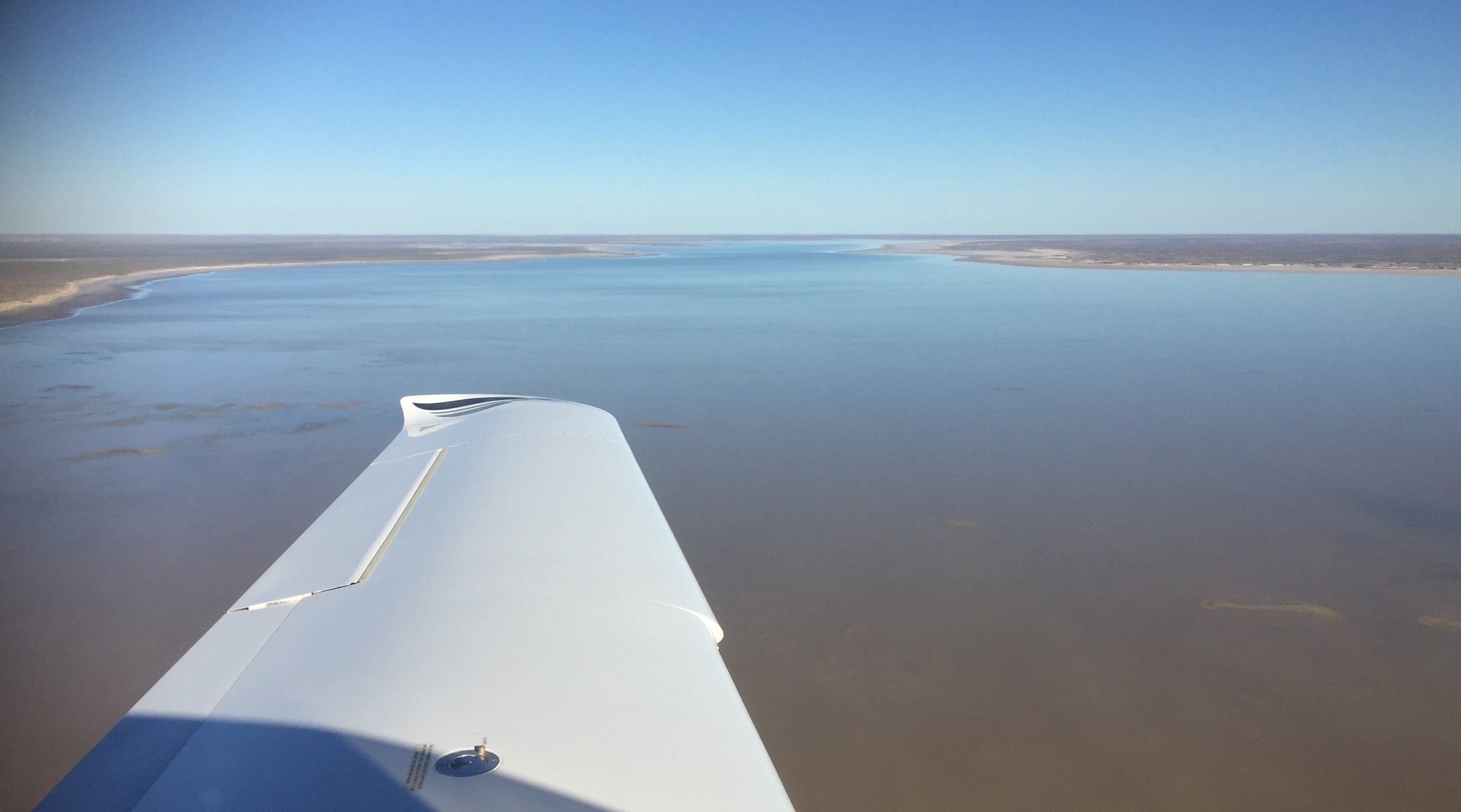
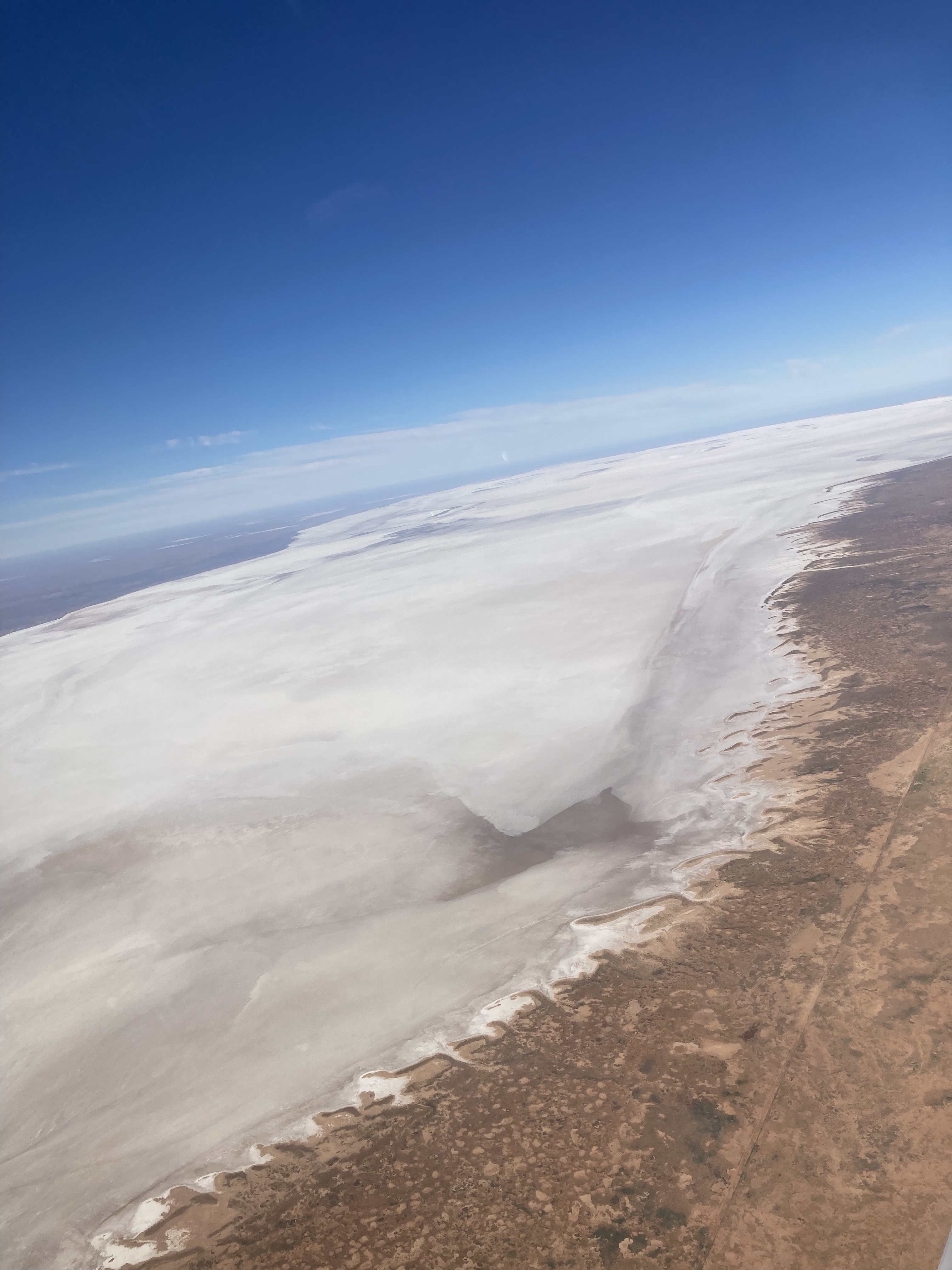
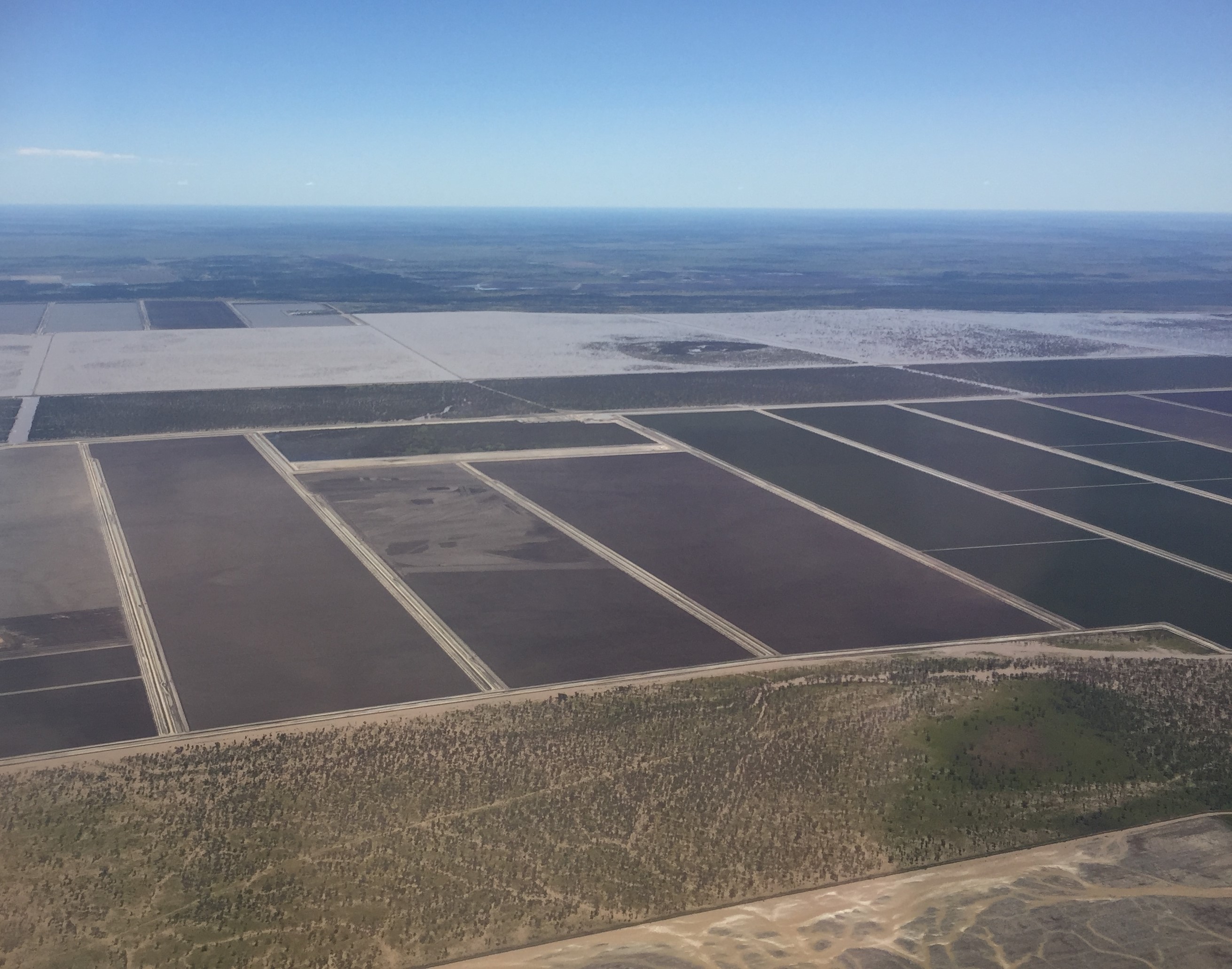
Later in the morning we headed for William Creek, the closest settlement to Lake Eyre. It was only a 30 minute flight so we were there in time for lunch. It sits on the famous outback “highway” called the Oodnadatta Track, between Marree and Oodnadatta. If you land on the gravel runway you have to watch for road traffic as you taxi, as you have to cross the “highway” to get to the apron. We landed on the sealed runway however. William Creek is surrounded by Anna Creek Station, the largest cattle station in the world, and is the gateway to the vast Simpson Desert. I had a chat to some of the local pilots about how they do scenic flights over the lake and after lunch we did a scenic of our own. The southern end of the lake was full of water and we could see the dry salt pan stretching way off into the distance to the north.

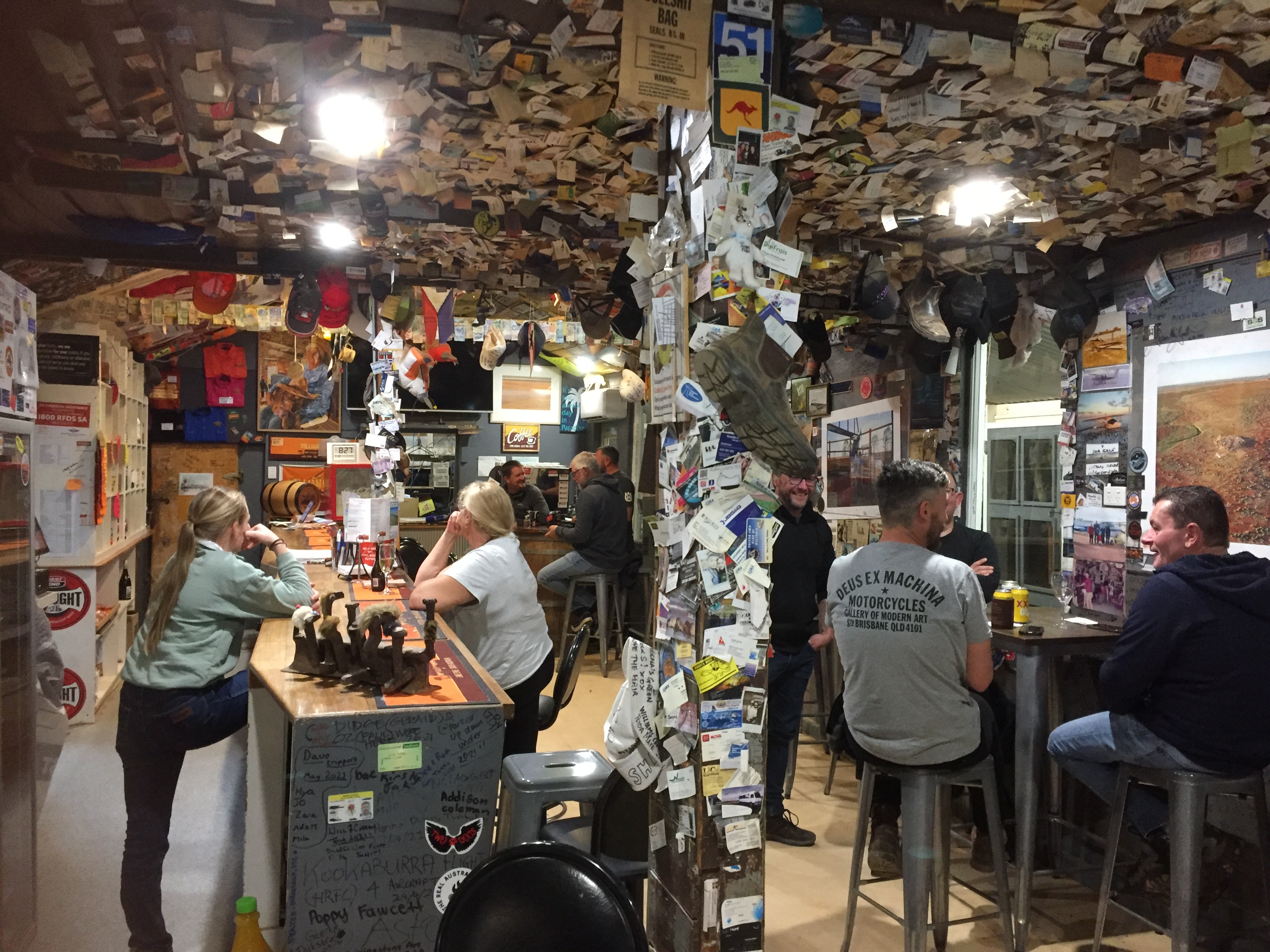
That evening we enjoyed dinner in the atmospheric William Creek pub along with numerous other pilots, truck drivers and tourists, some of which were returning from the Finke Desert motorbike rally.

We rose early on Day 5, walking around checking out the William Creek airstrips as the sun rose, and running into the owner Trevor Wright as he did his early morning rounds.

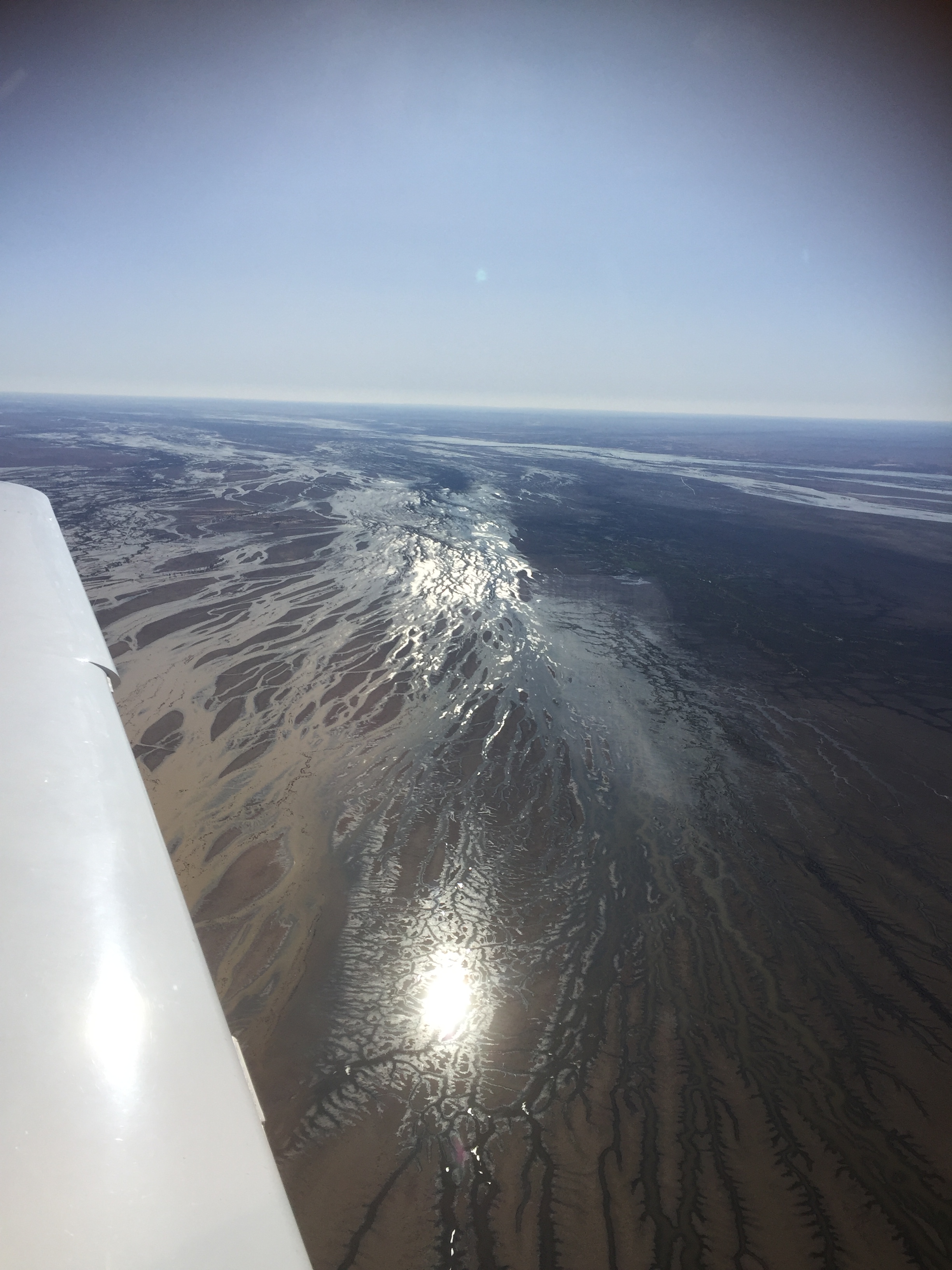
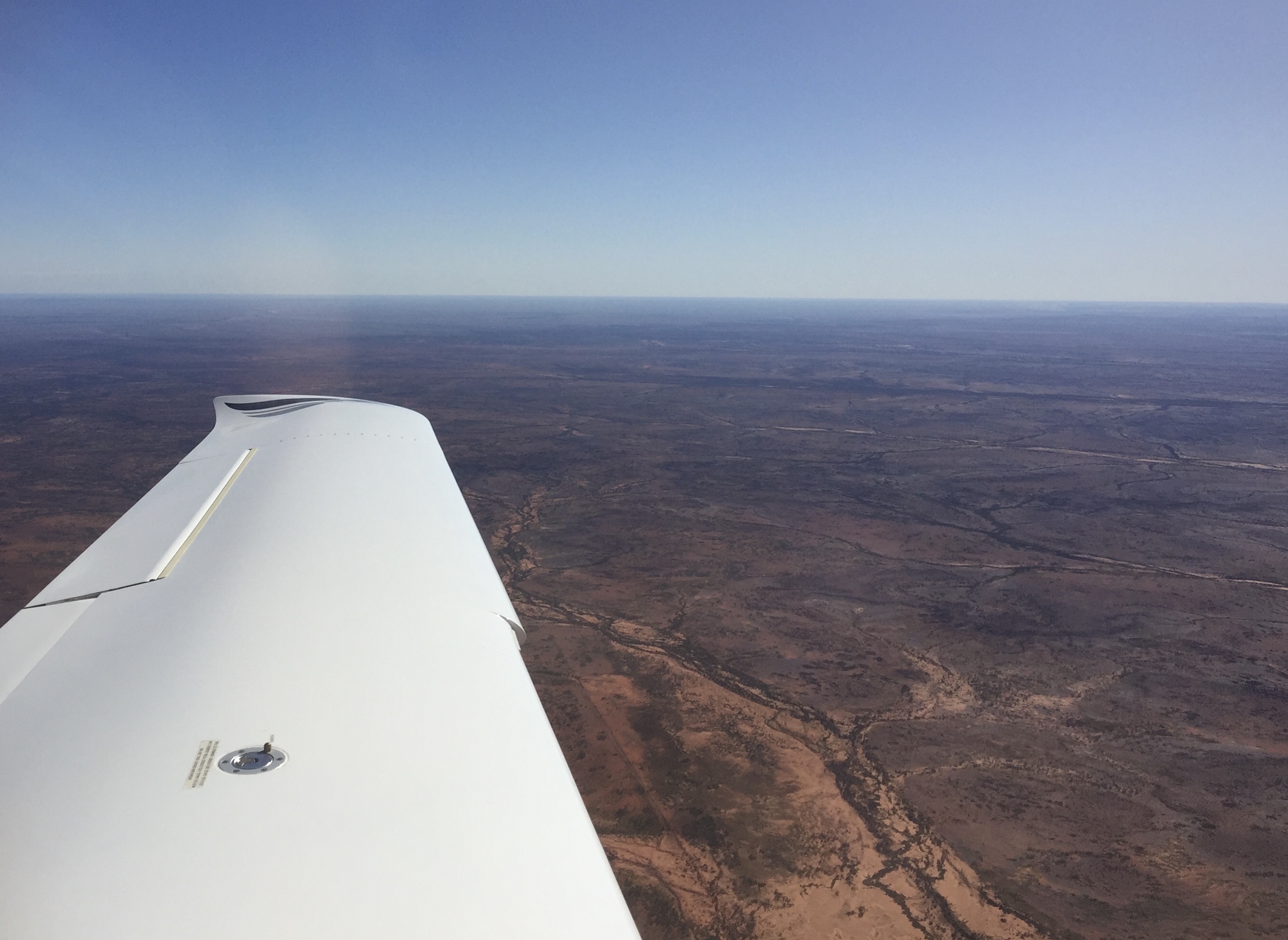
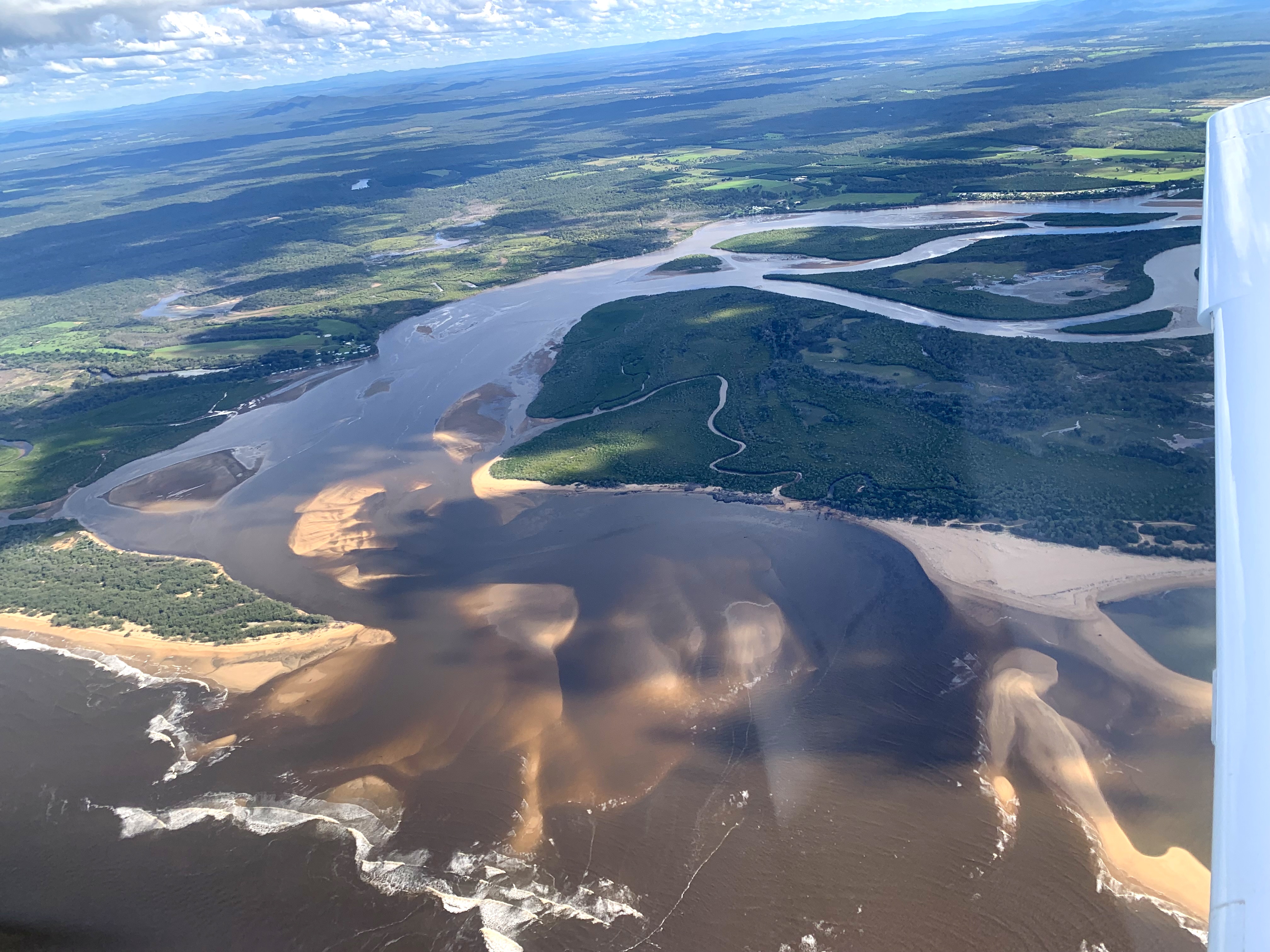
After a hearty breakfast we took off and flew north east over Lake Eyre North to Birdsville. There was not much water in the lake but a lot in the Diamantina and Warburton River catchments, heading south.

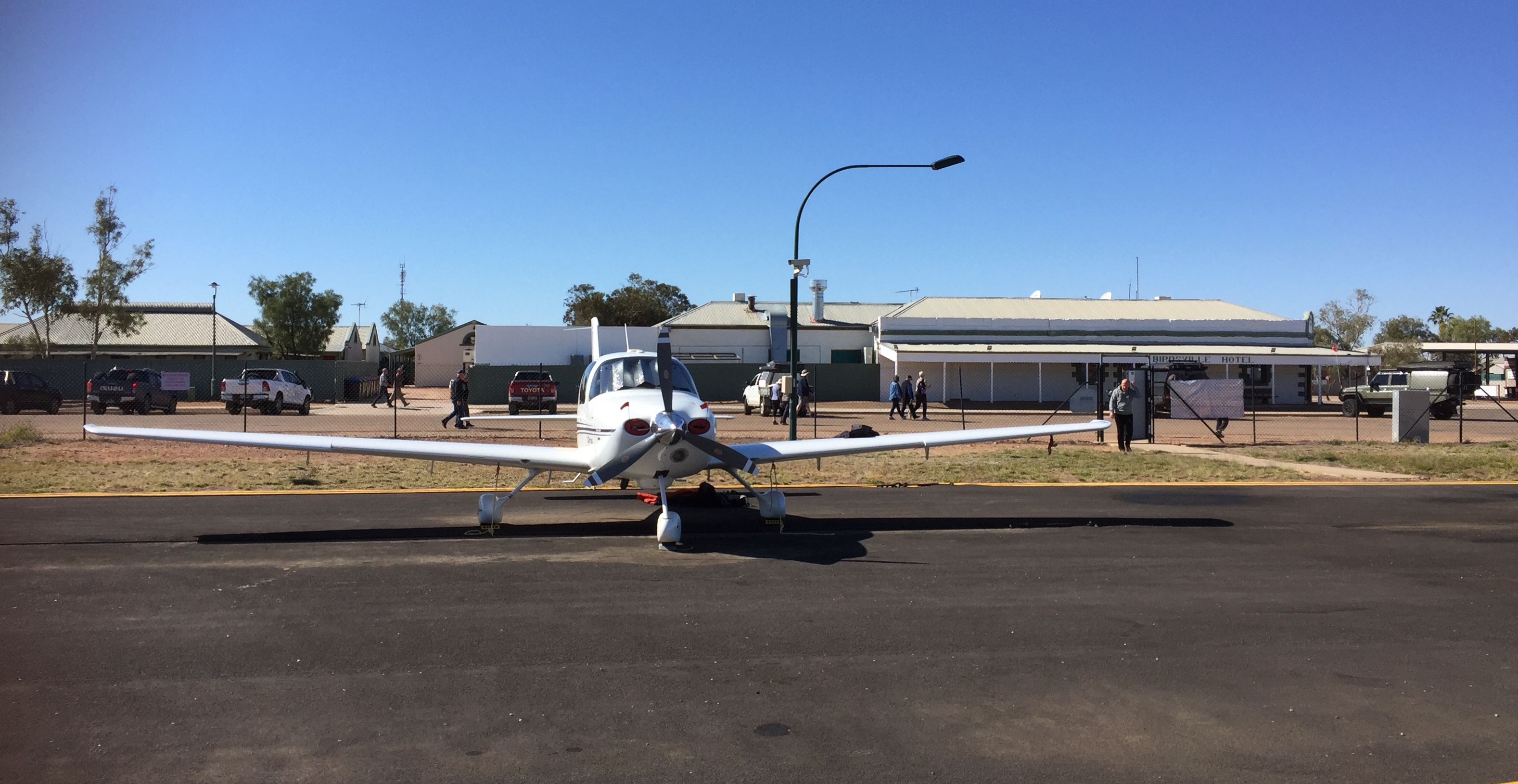
We passed over a couple of cattle stations on the Warburton. As we descended into Birdsville we did a couple of orbits over Big Red then headed for the town, managing to park opposite the pub.

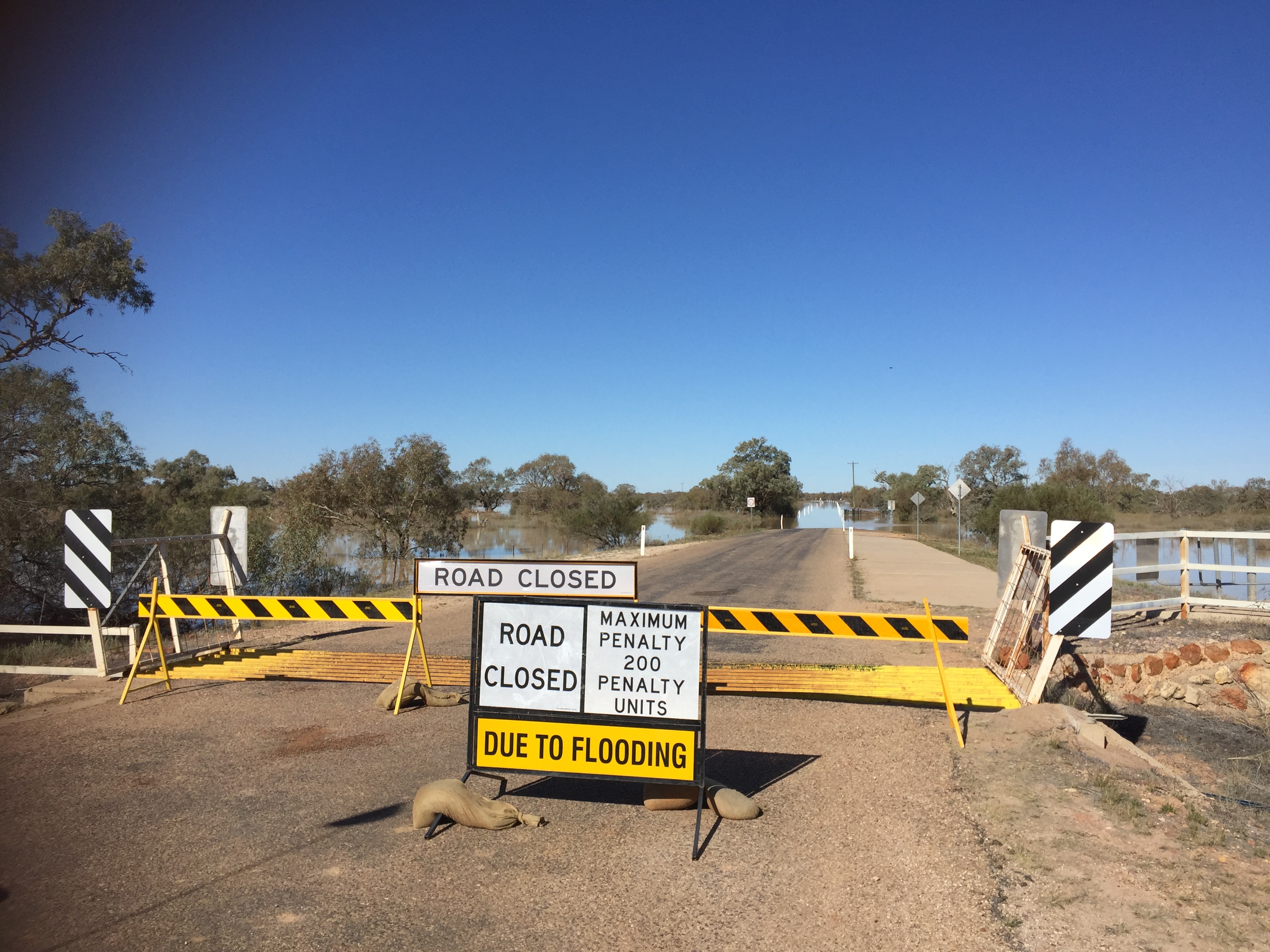
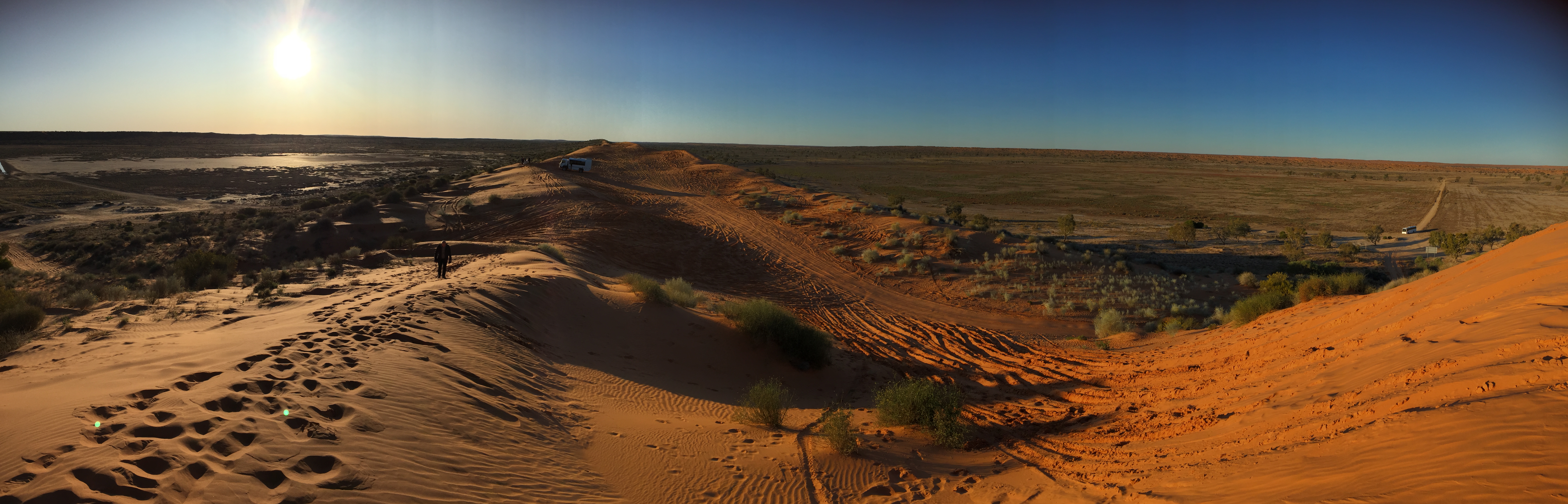
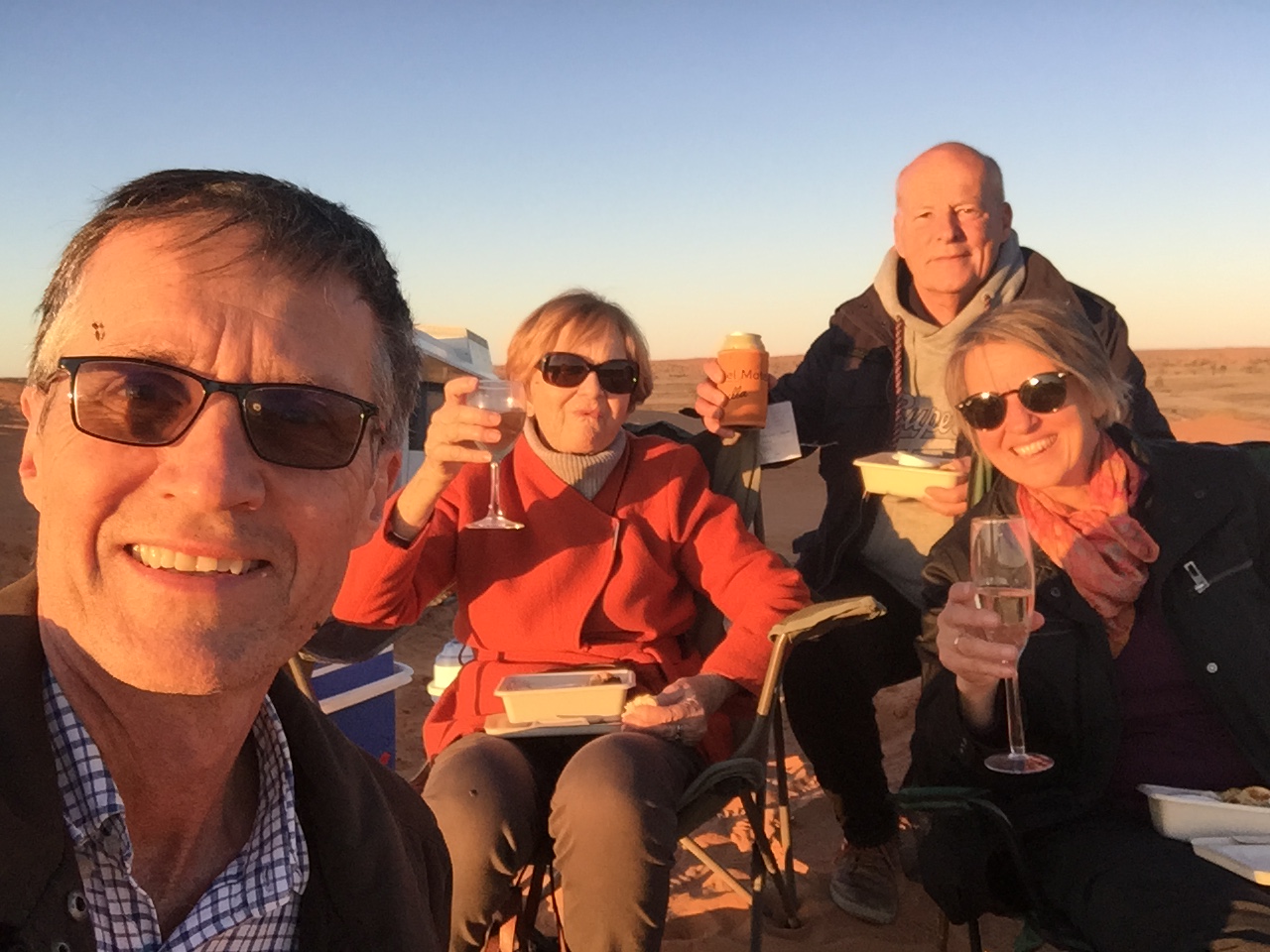
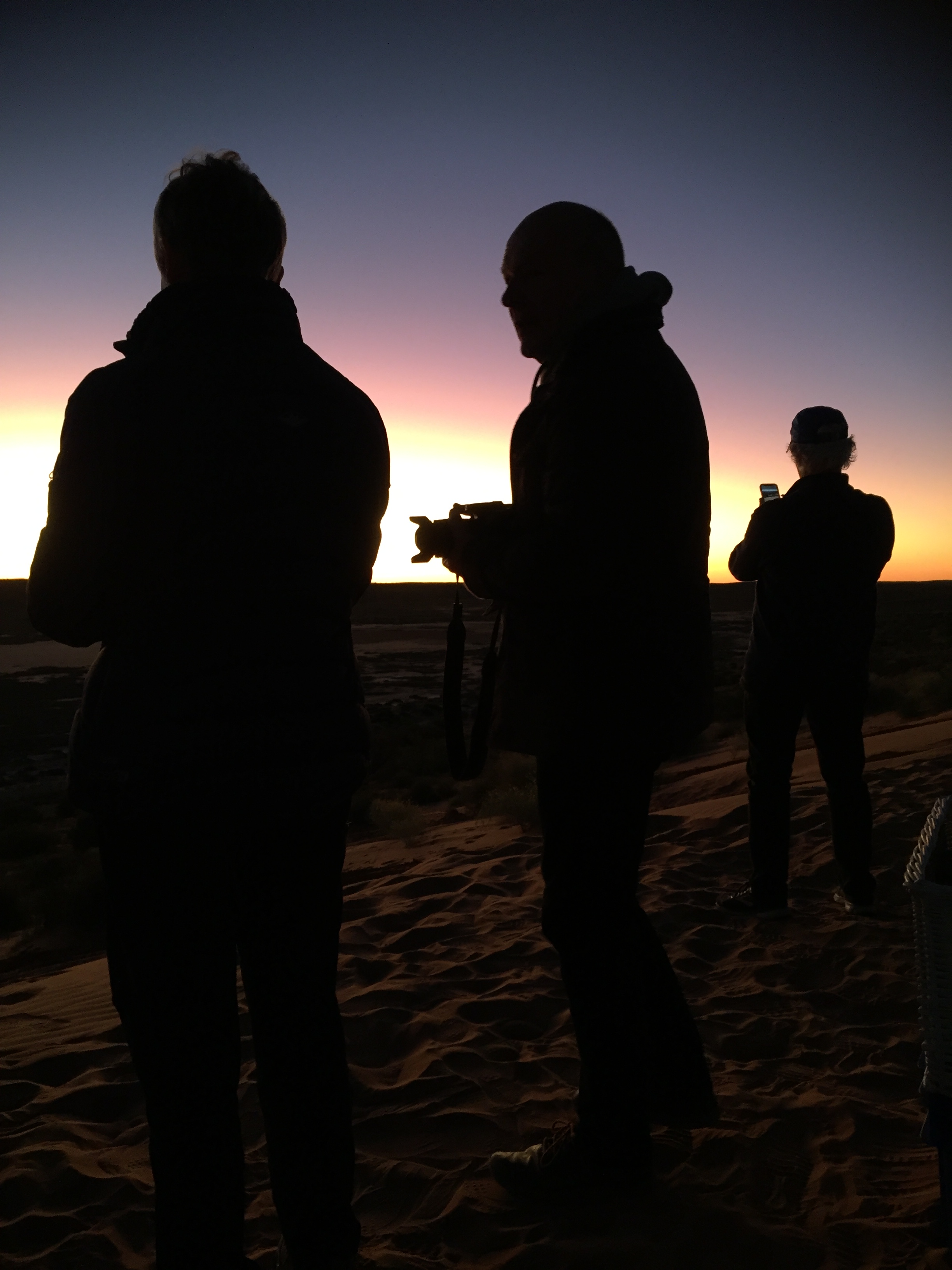
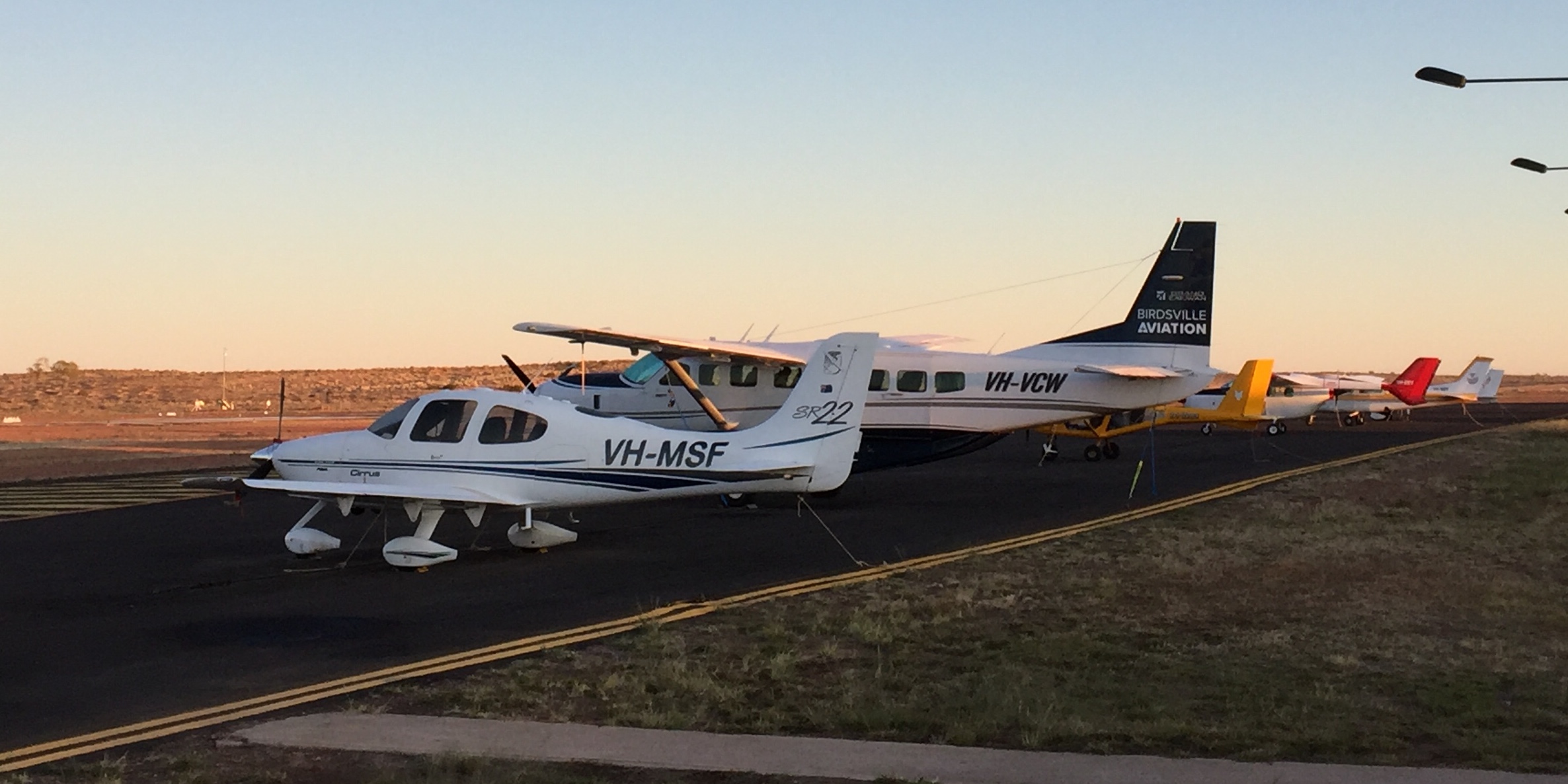
After arriving in Birdsville we checked into our motel room at the pub and then headed on our Big Red Tour with bus driver Greg. He drove us around town, first pointing out the interesting spots like the flooded causeway at the Diamantina River (the road had been closed for weeks limiting the movement of tourists and supplies), the school (it has only 3 students), the other pub (Royal Hotel) that has been decommissioned for many, many years, the geothermal power station that was shut down because it was contaminated with sulphur, the famous bakery and more. I hadn’t realised that Birdsville was so big. Then it was off to Big Red, a 30 km drive. The 4WD bus climbed effortlessly up on to the sand dune where we enjoyed the end of another day with beers, bubbles and a big red while watching the sun set in the west and a beautiful full moon rise in the east. We returned to town for dinner at the iconic pub.

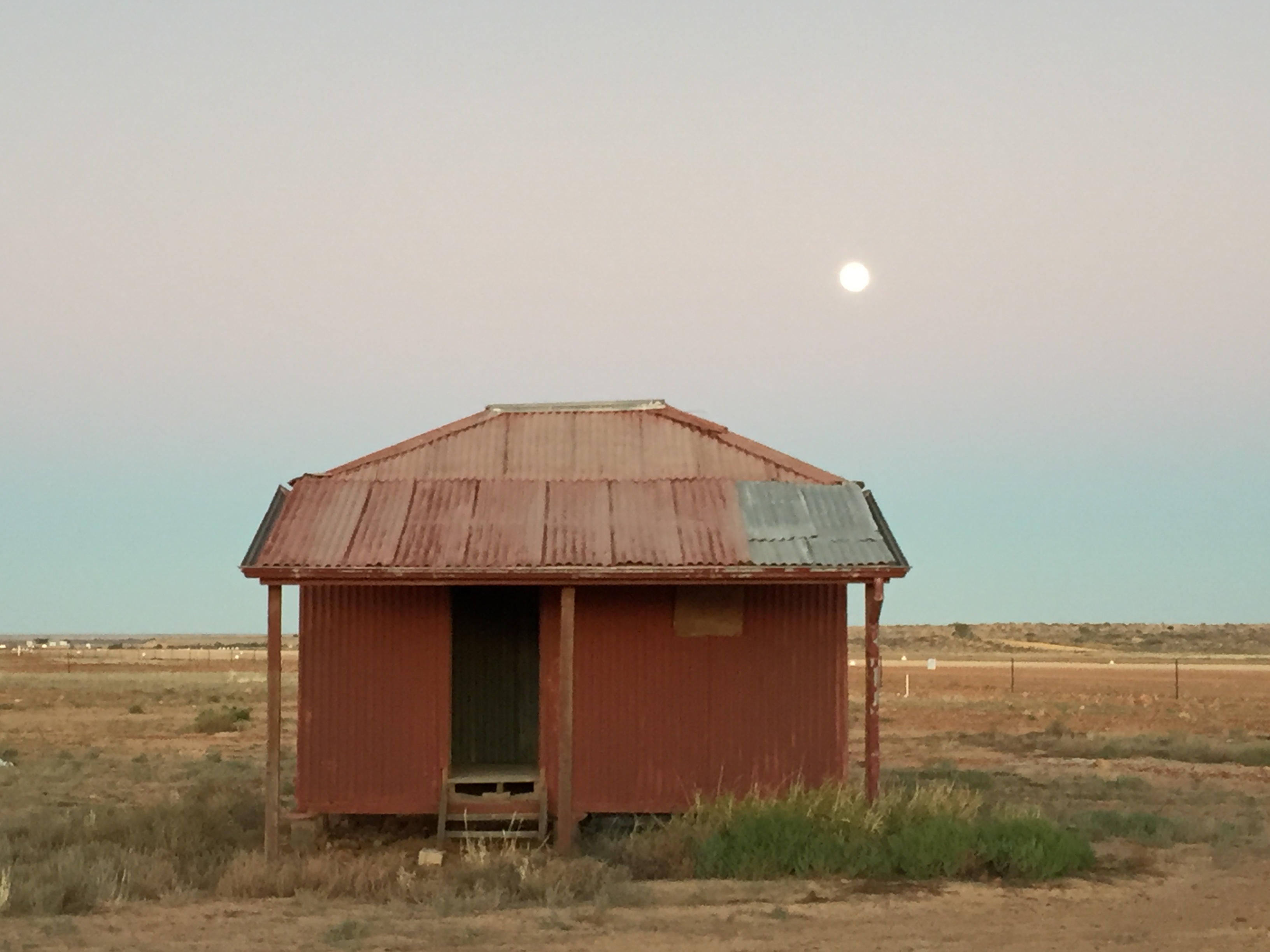
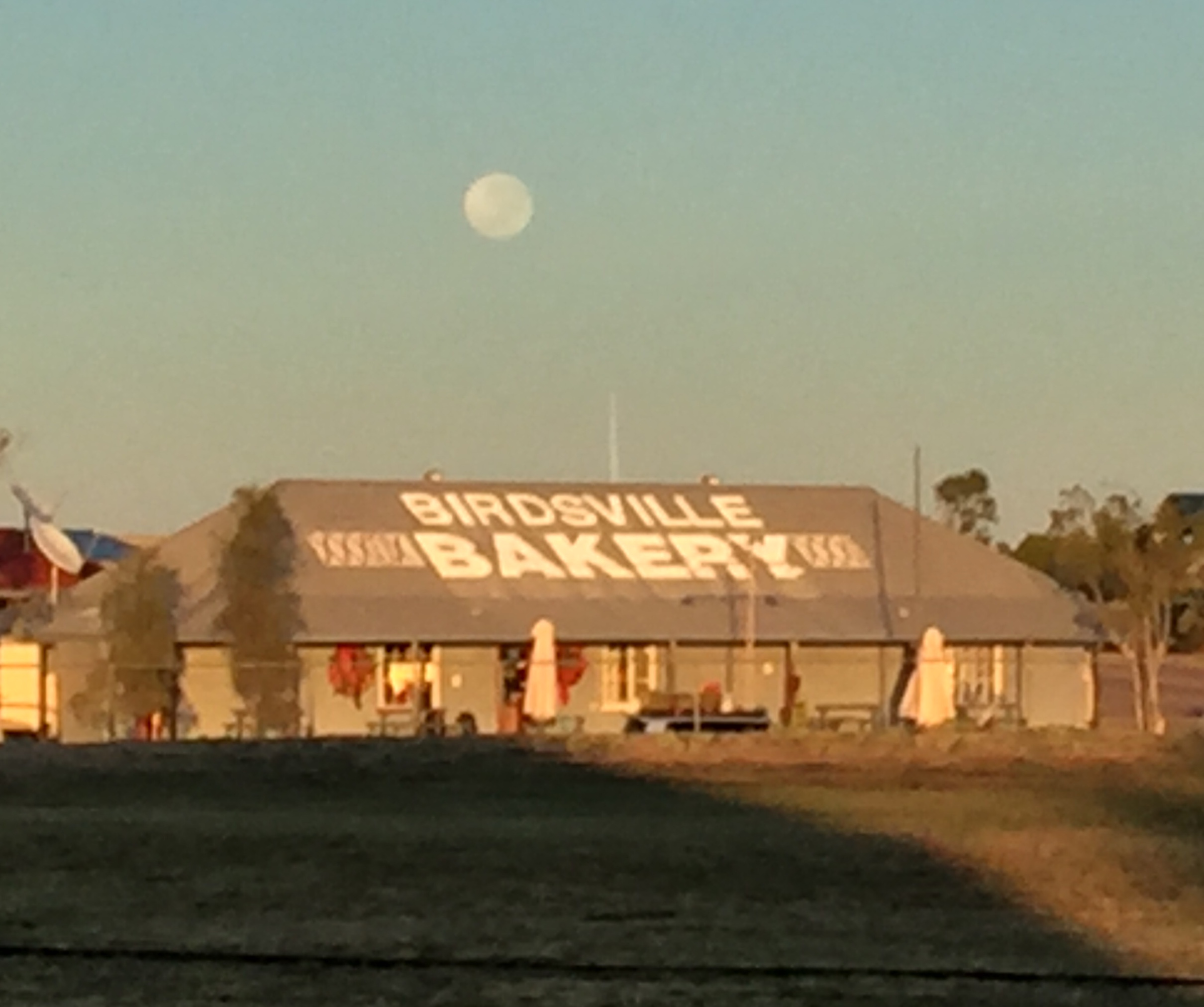
On day 6 of our “Way out west” tour we rose in time to see the moon set in the western sky and visited the old gaol and courthouse, saw the first plane take off and headed to the bakery for breakfast. They didn’t have a huge selection of rolls or fillings but we managed to buy a few things for a picnic at the Burke and Wills Dig Tree.

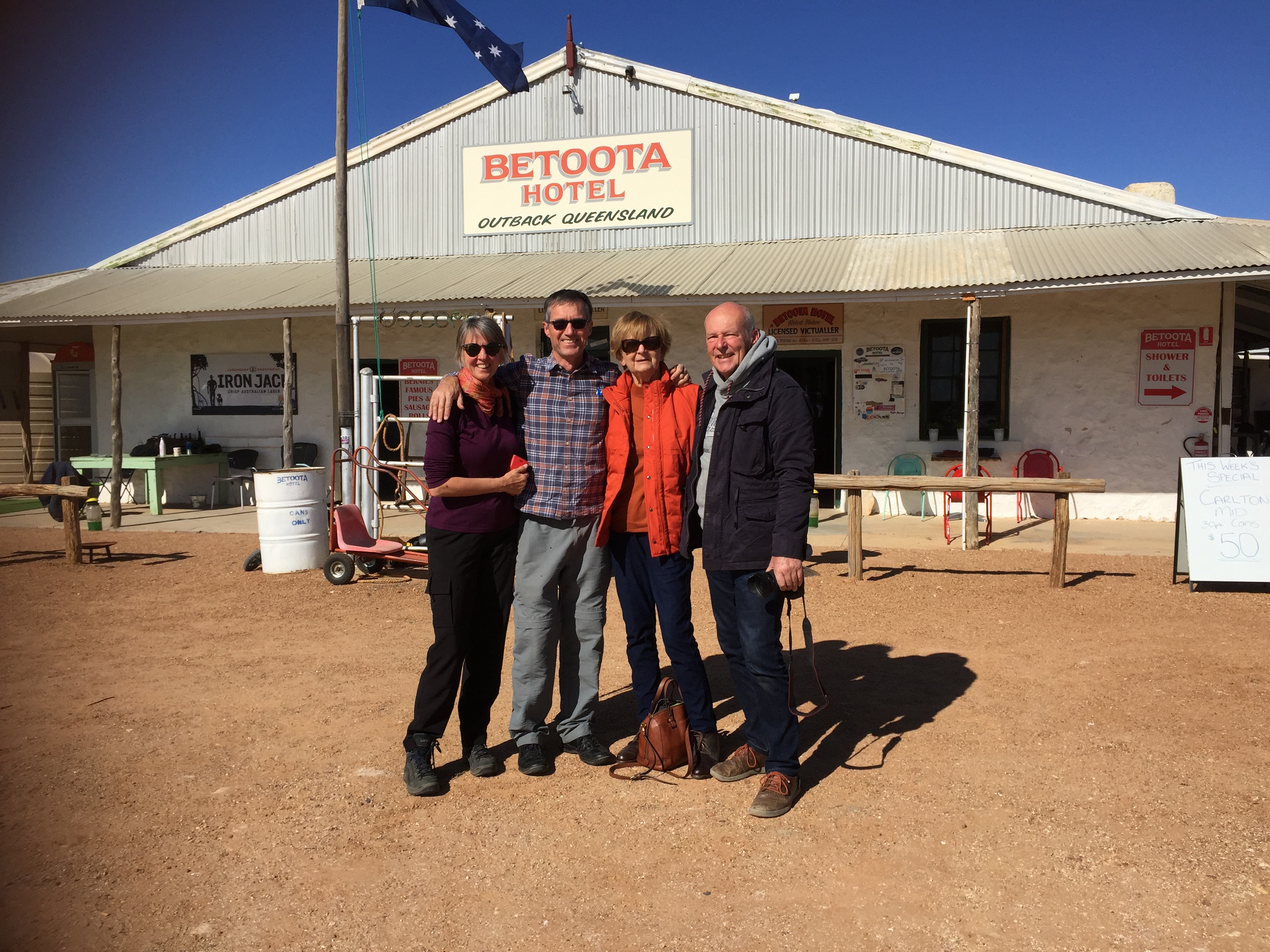
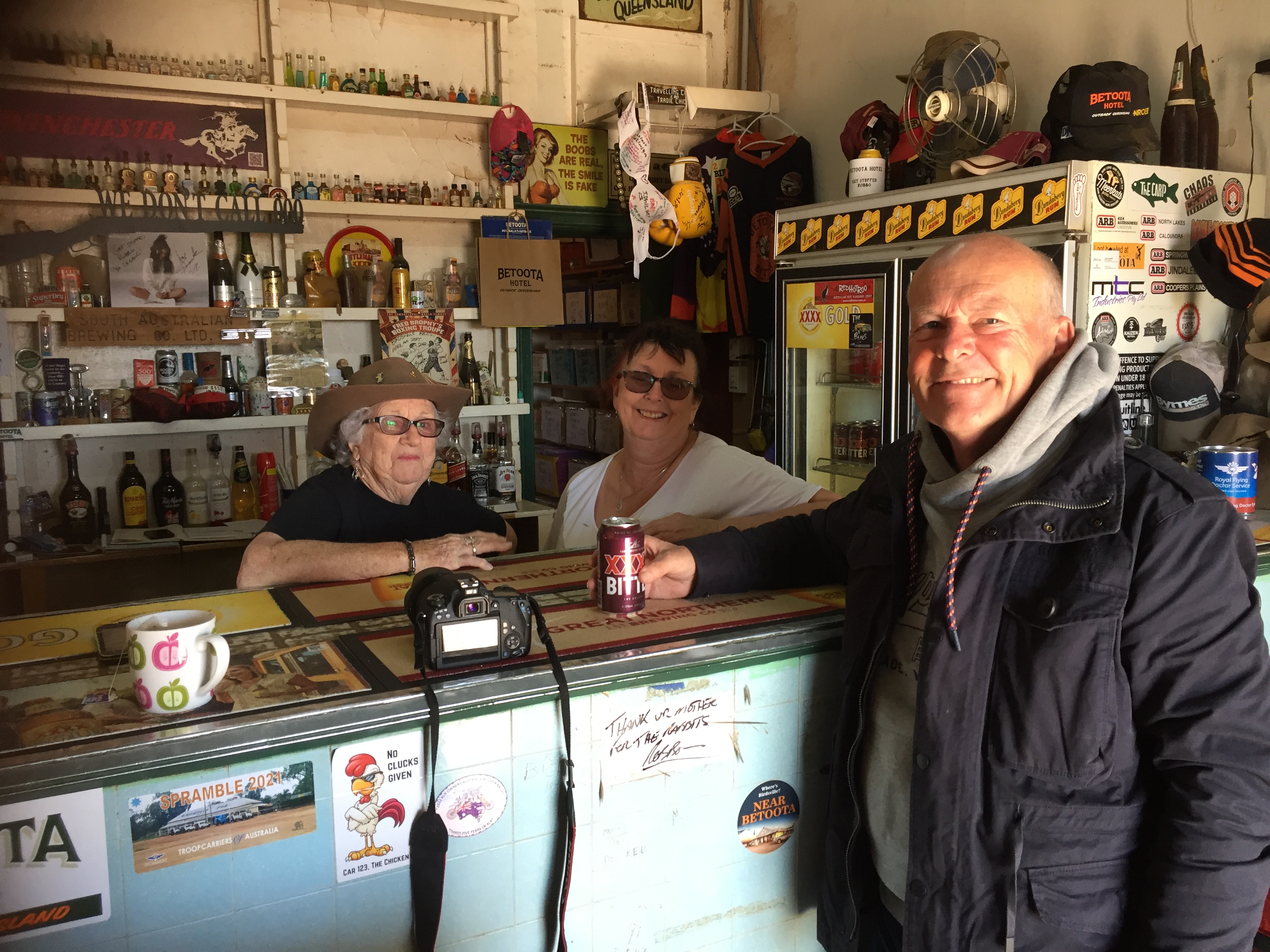
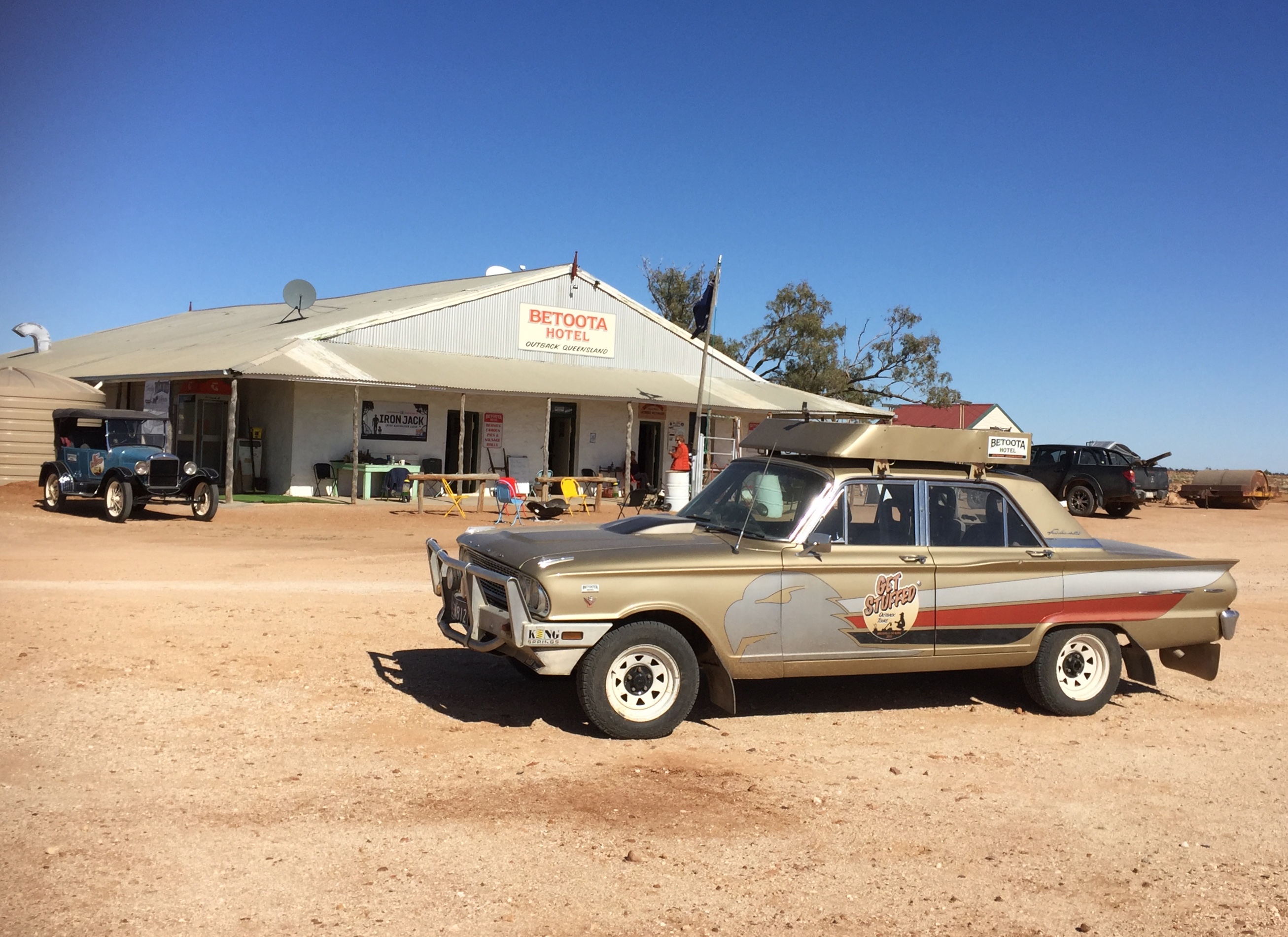
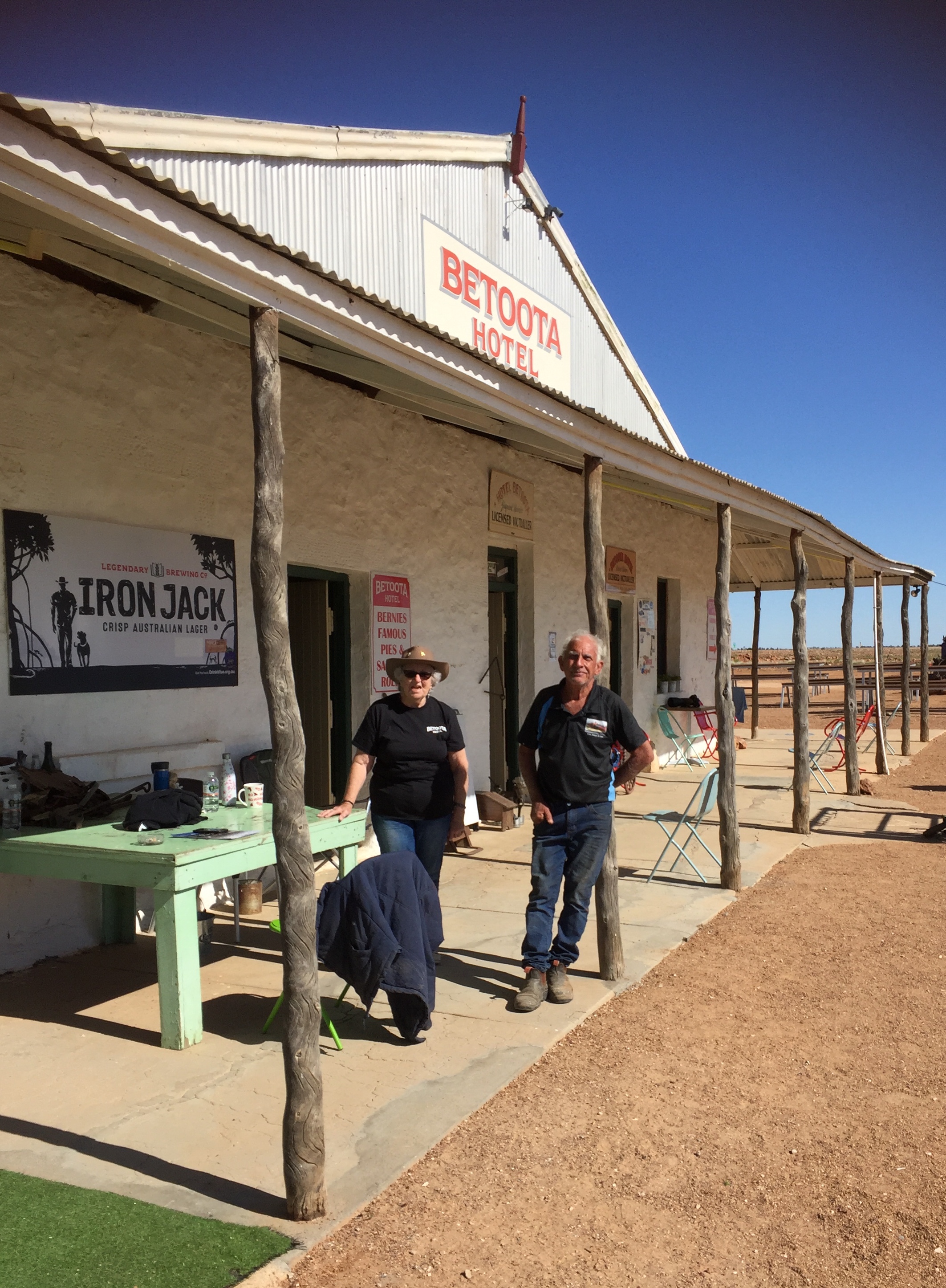
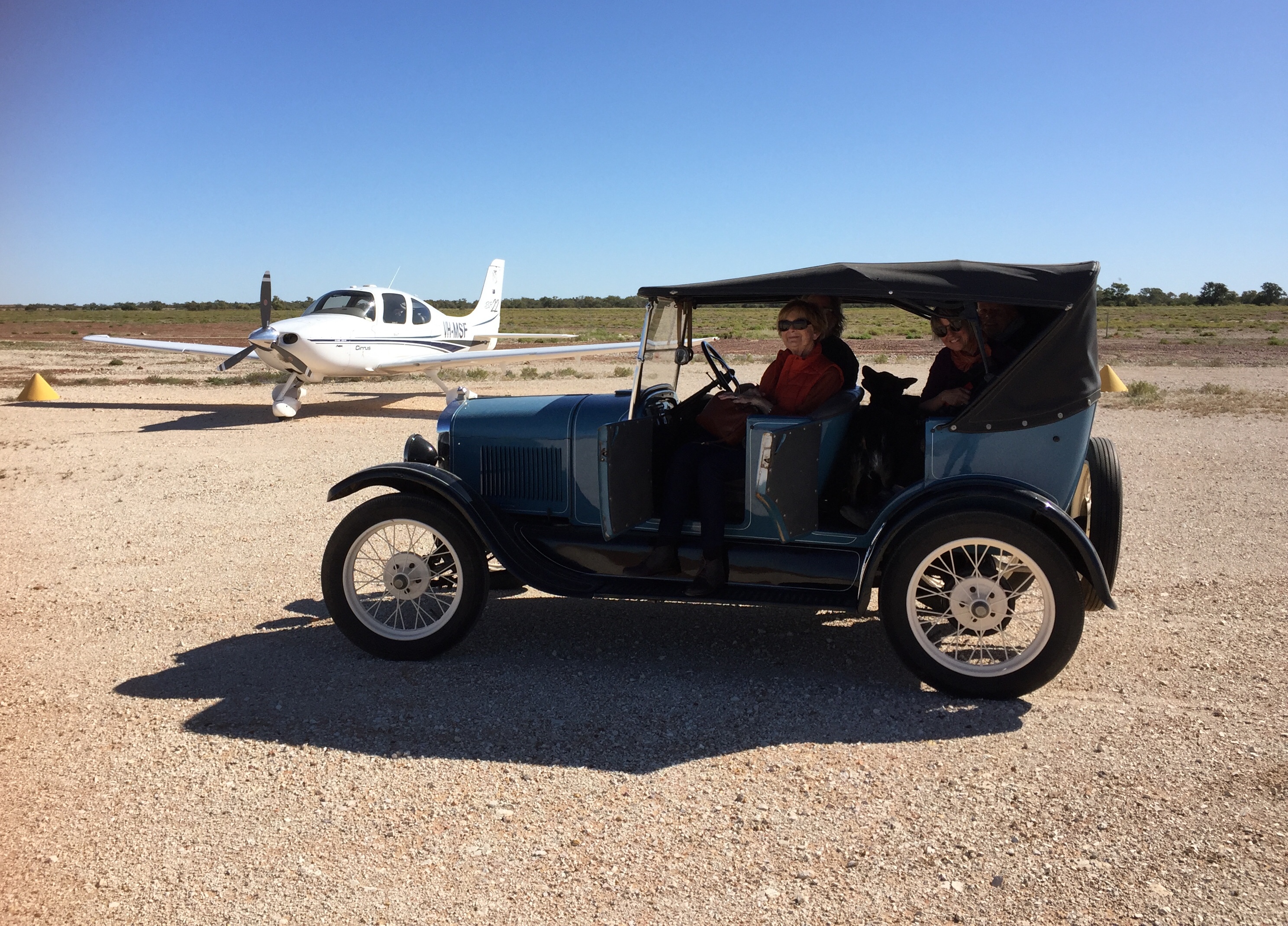
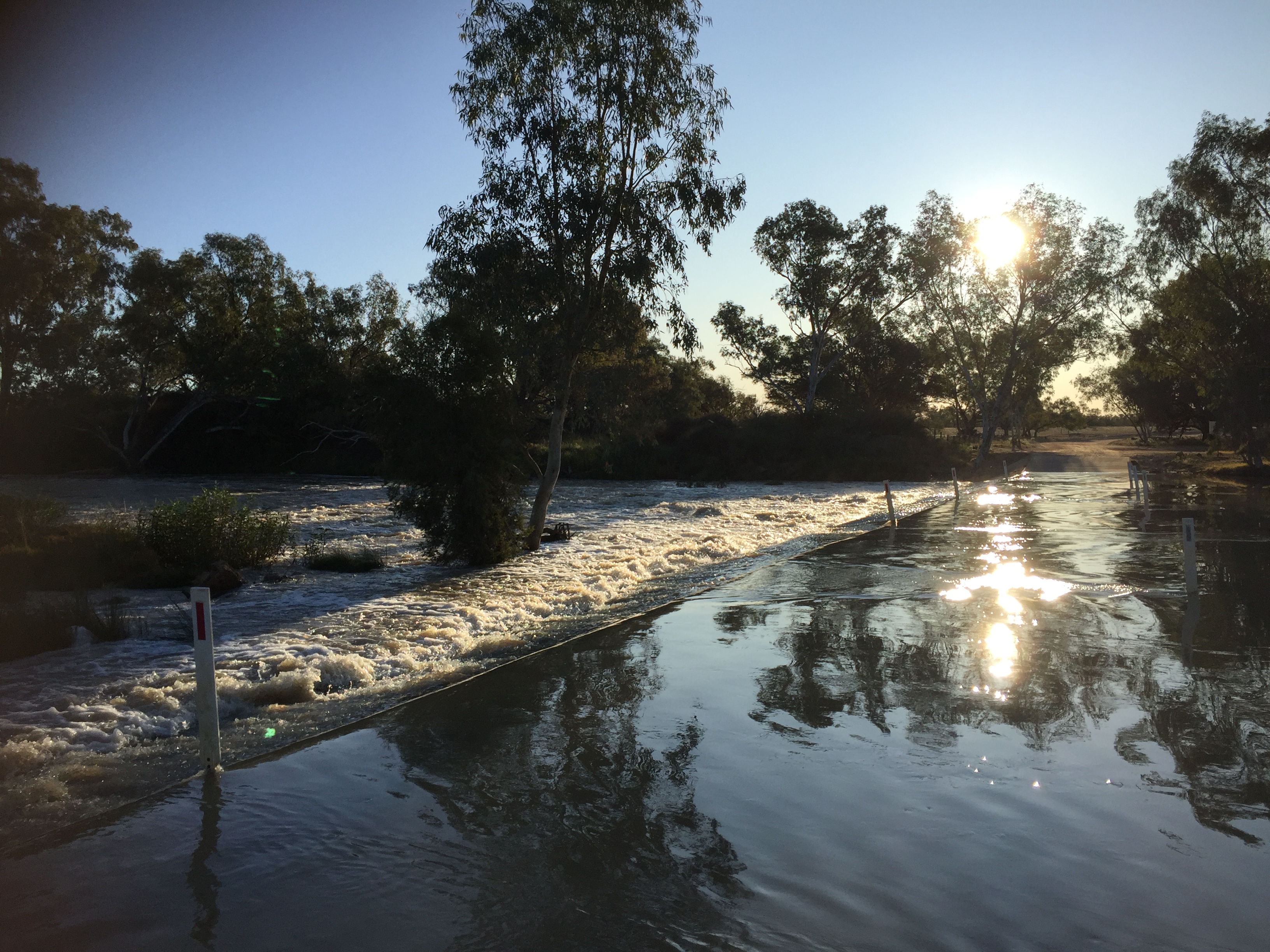
Then we packed up and took off, passing over the flooded Diamantina River, for Betoota. Greg our driver from the Big Red Tour had told us we just had to go there for a cup of tea (or something stronger for the non-pilots). Made somewhat famous by the satirical newspaper “The Betoota Advocate” the only things at Betoota are a pub, a racetrack and a superbly kept airstrip. Twenty minutes to the east of Birdsville we were landing next to the Pub. The original owner Ziggy died there about 10 years ago and Robbie the new owner has been doing it up gradually ever since. His “staff” of friends and family took good care of us, showed us around and shared stories of the pub’s history, including the infamous “yellow bus”. Robbie insisted on driving us back to the plane in his superbly restored 1927 Model T Ford for our departure to the Dig Tree.

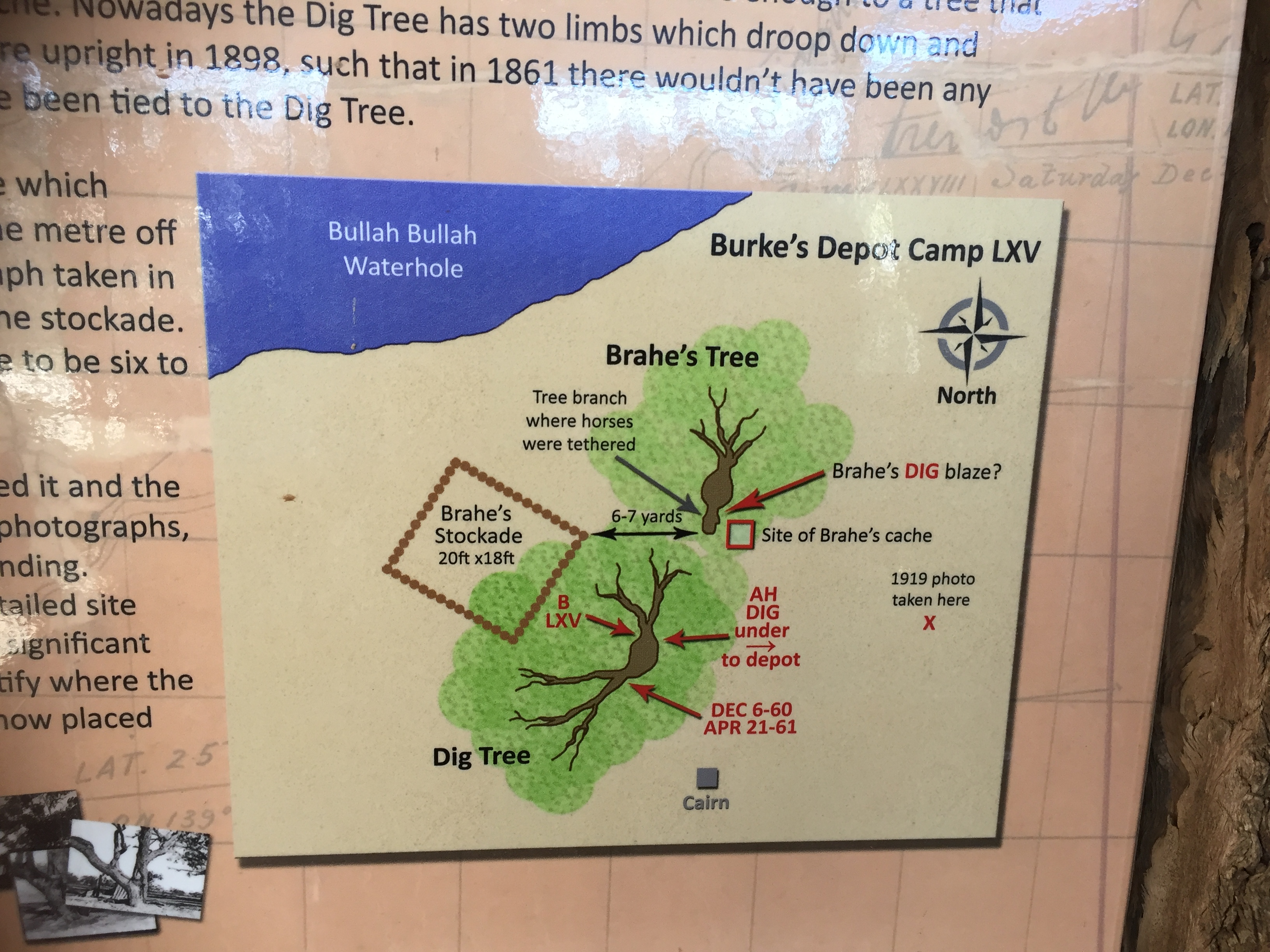
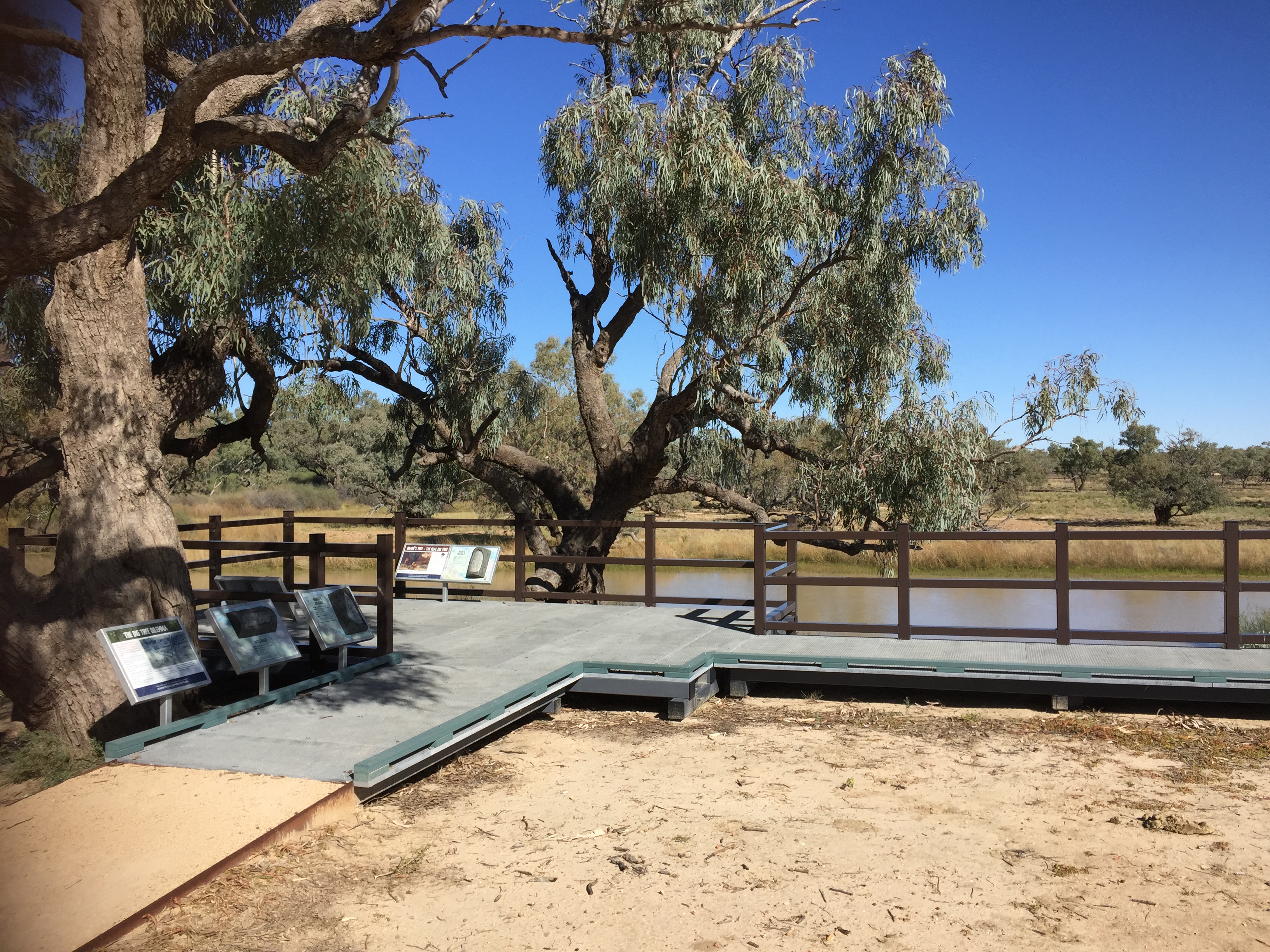
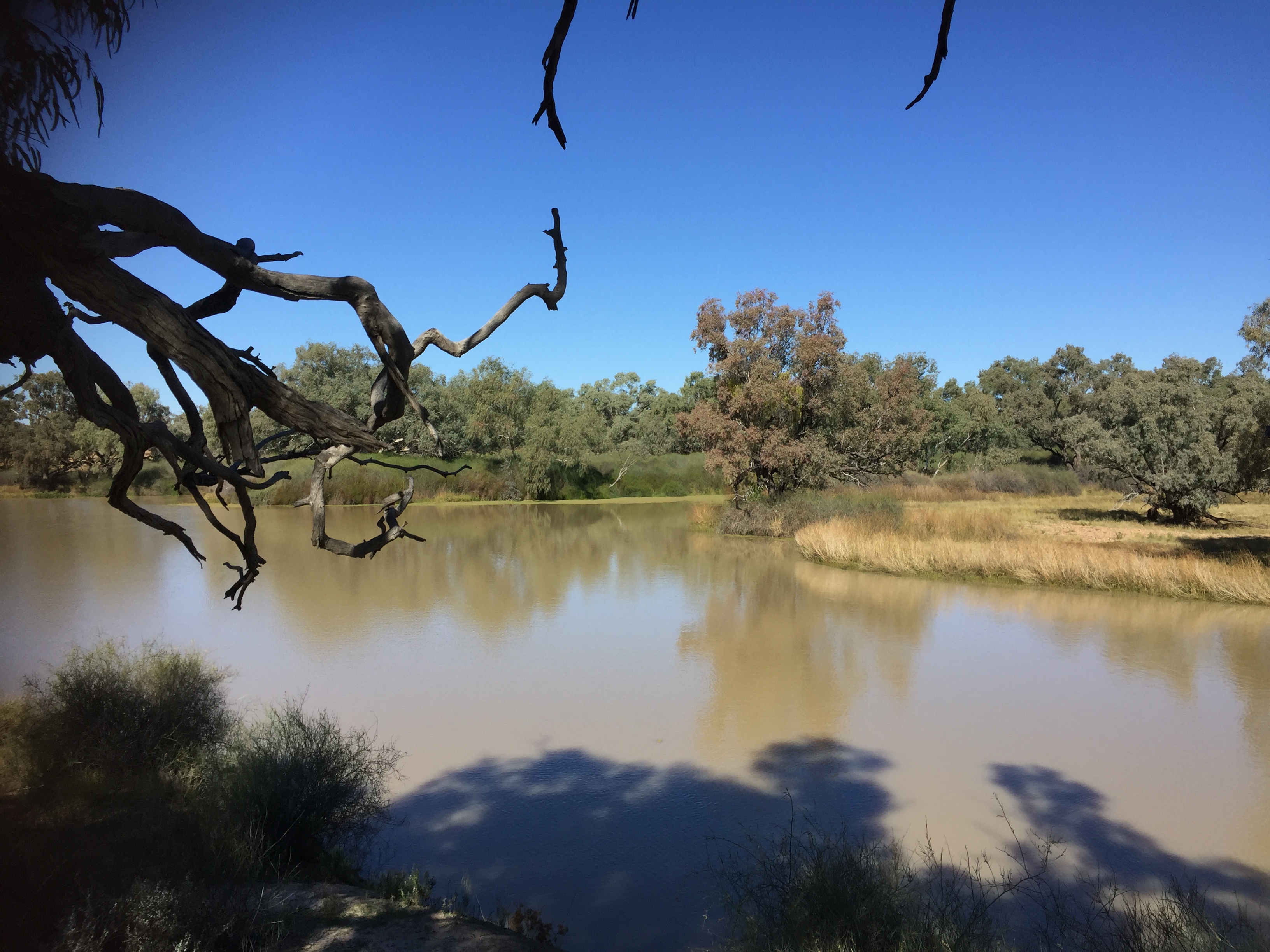
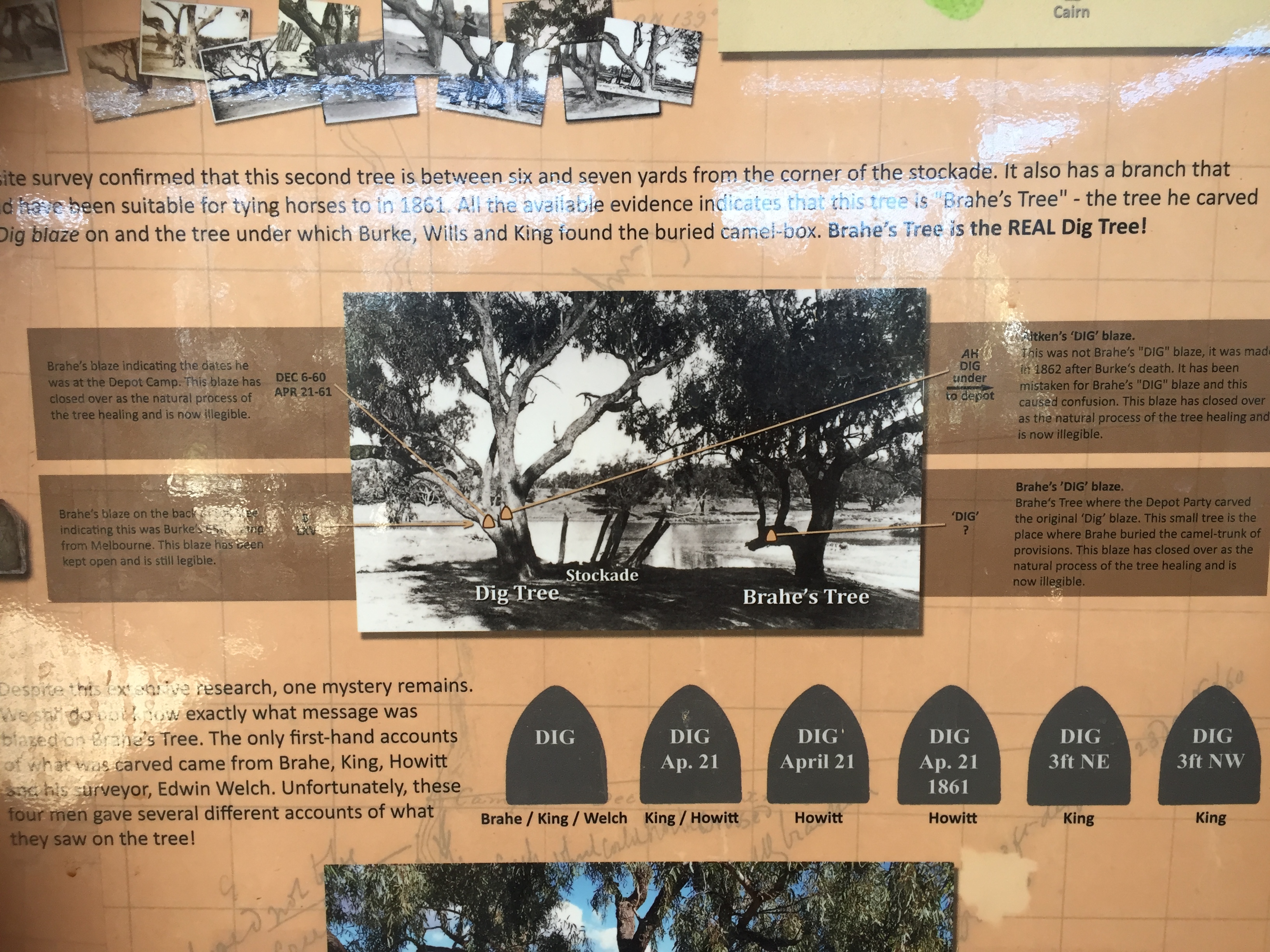
From Betoota we headed south, passing into South Australia and over Cordillo Station then on to the Burke and Wills Dig Tree, just over the border in Queensland again. The memorial is on Nappa Merrie Station and has its own airstrip. Once again very well maintained, the strip is 5 minutes walk to the Dig Tree on the banks of Cooper Creek. A great spot for a picnic under the Coolibah trees.

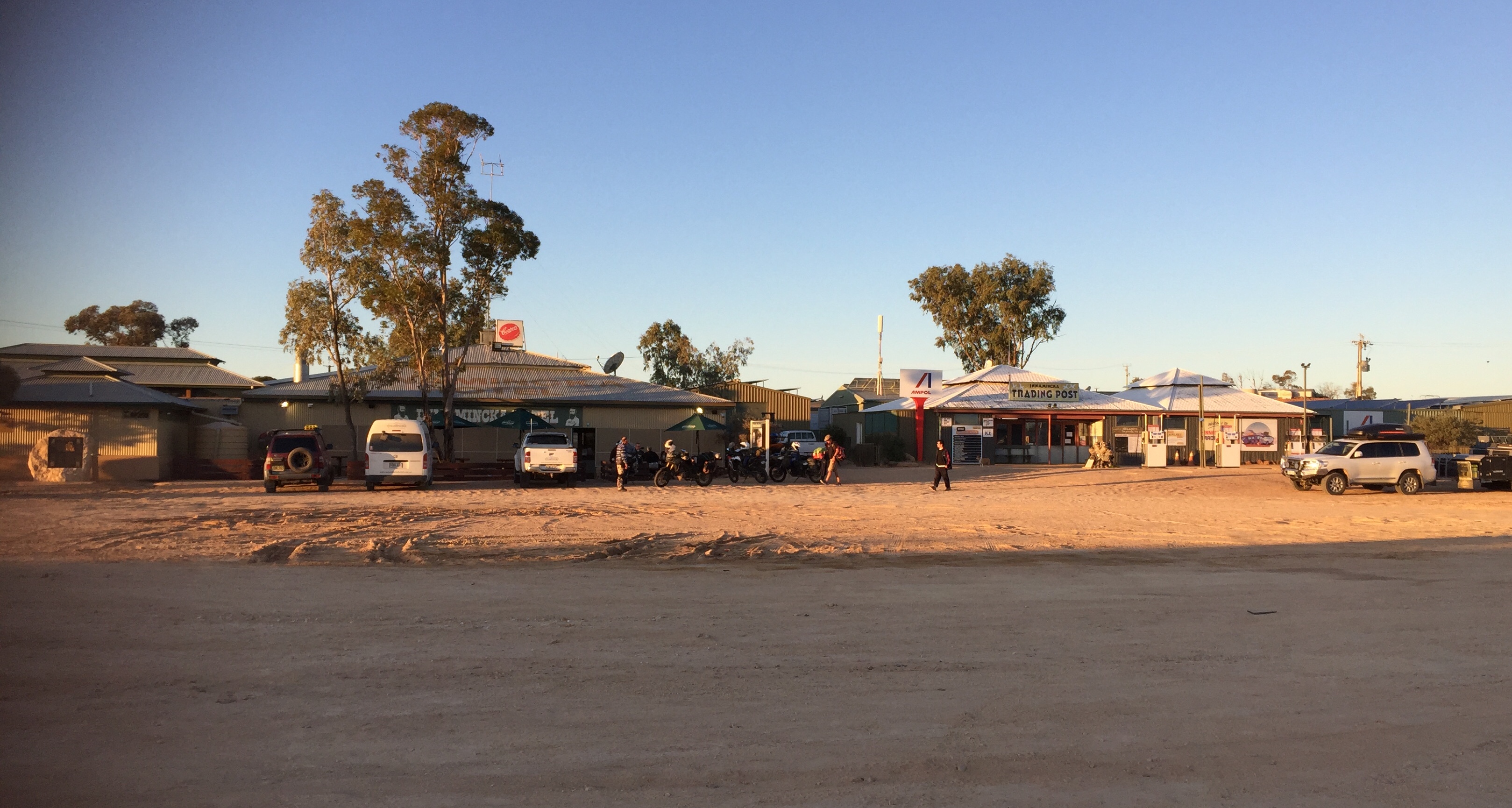
From there it was a 10 minute hop over the border to Innamincka where we stayed overnight. We landed 5 minutes after Luc and Scott who we last saw in Tibooburra as they’d been stuck in Broken Hill for a few days. We celebrated our reunification with a couple of drinks in the pub’s beer garden.

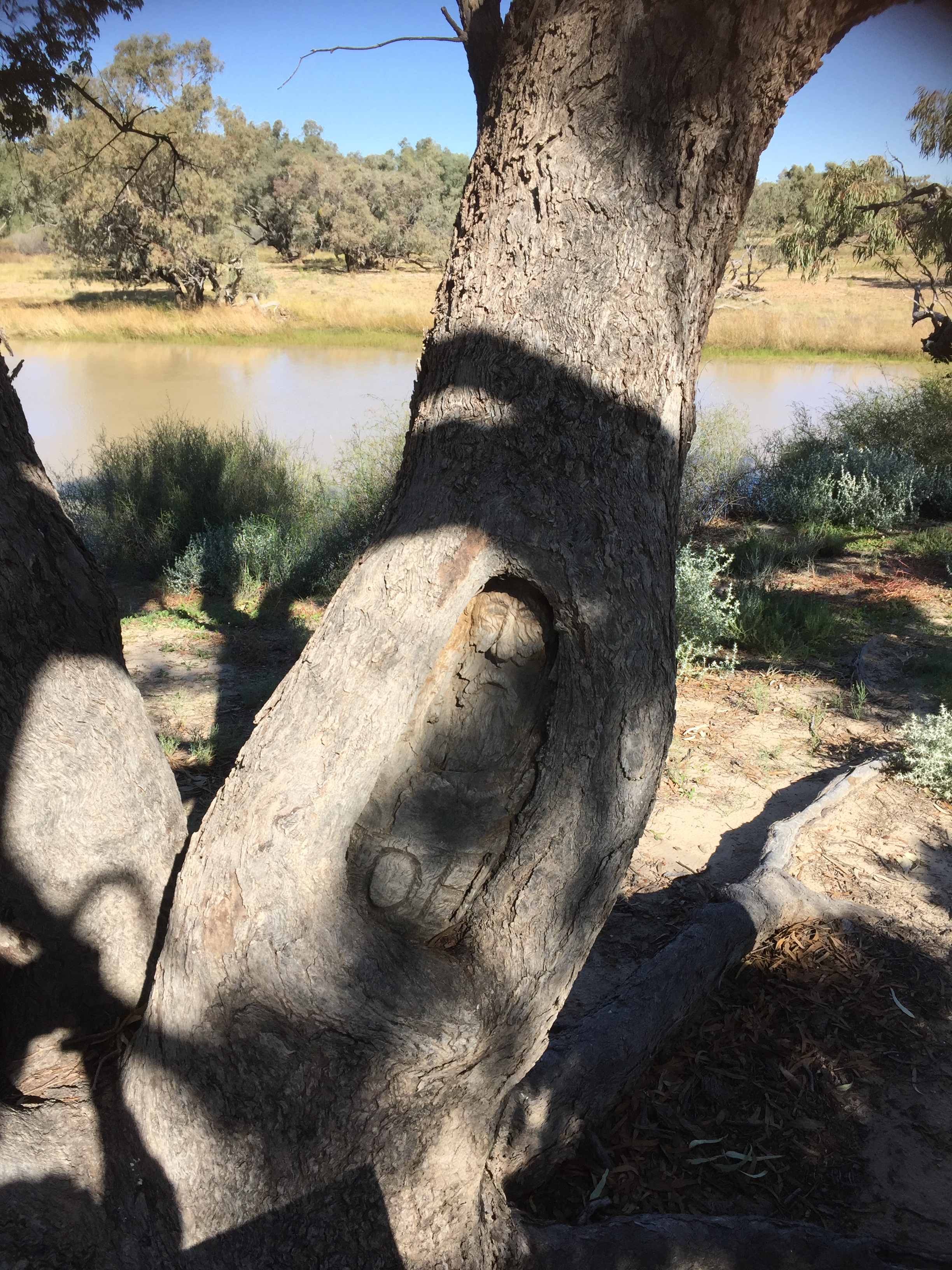
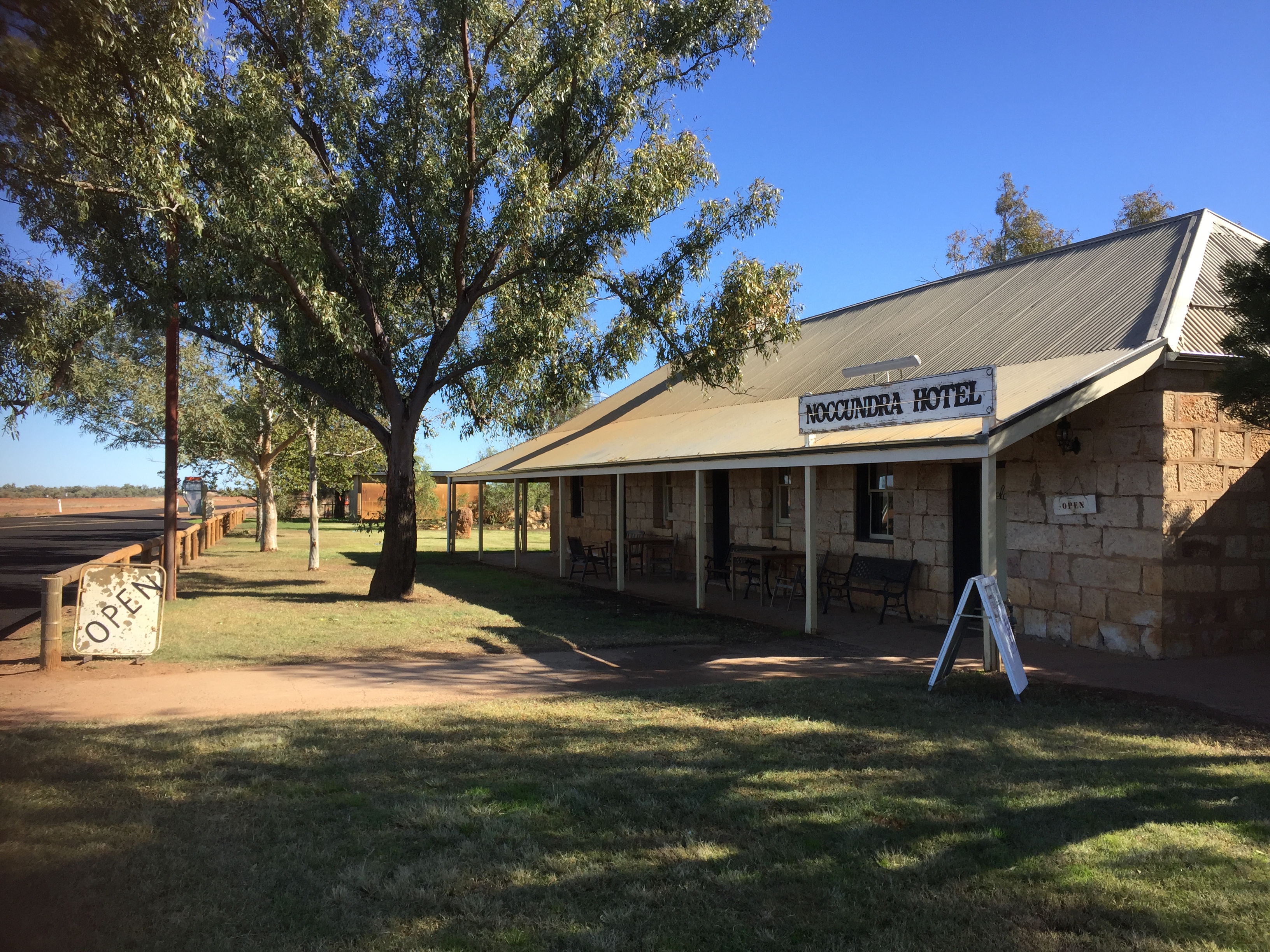
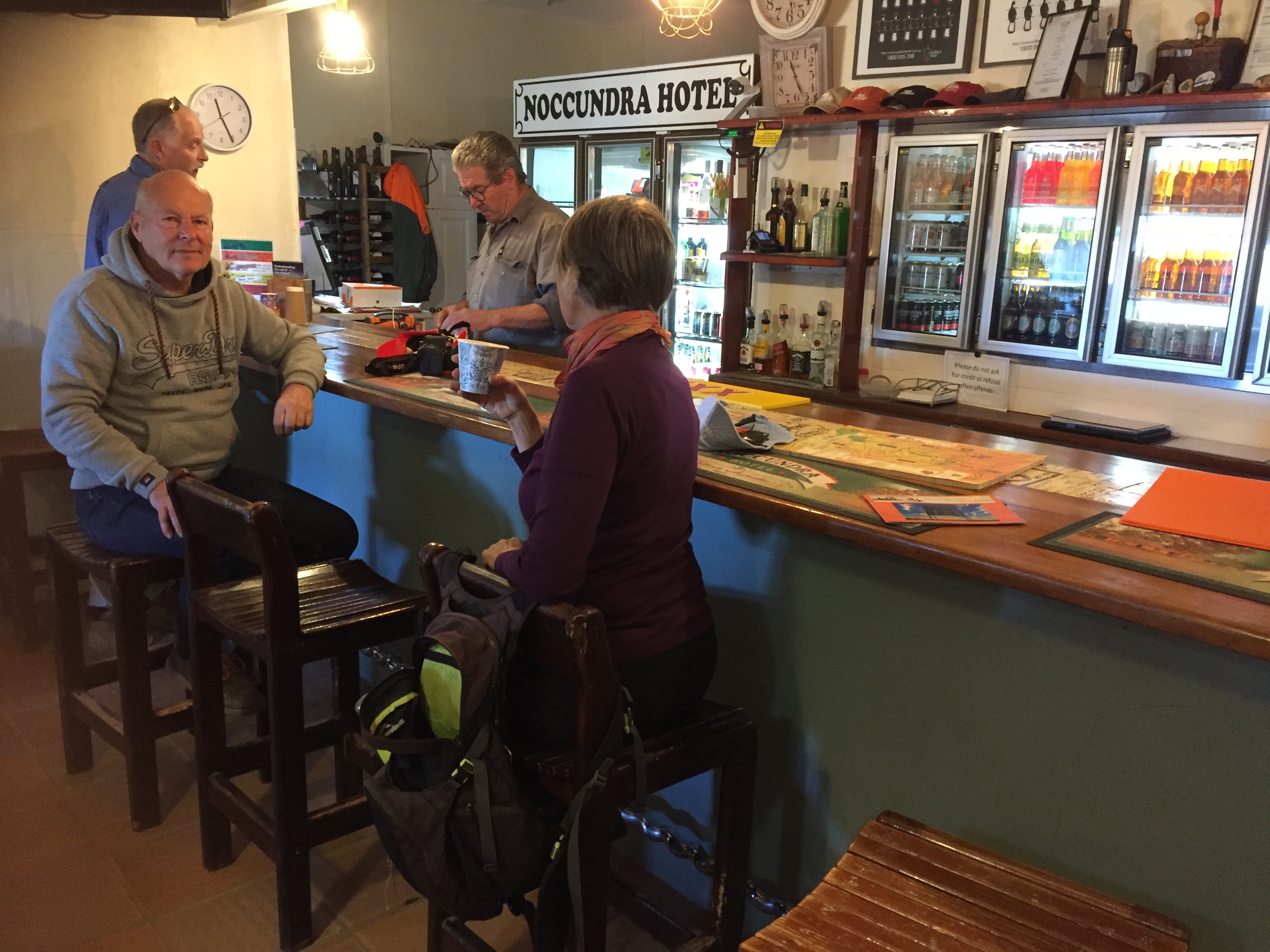
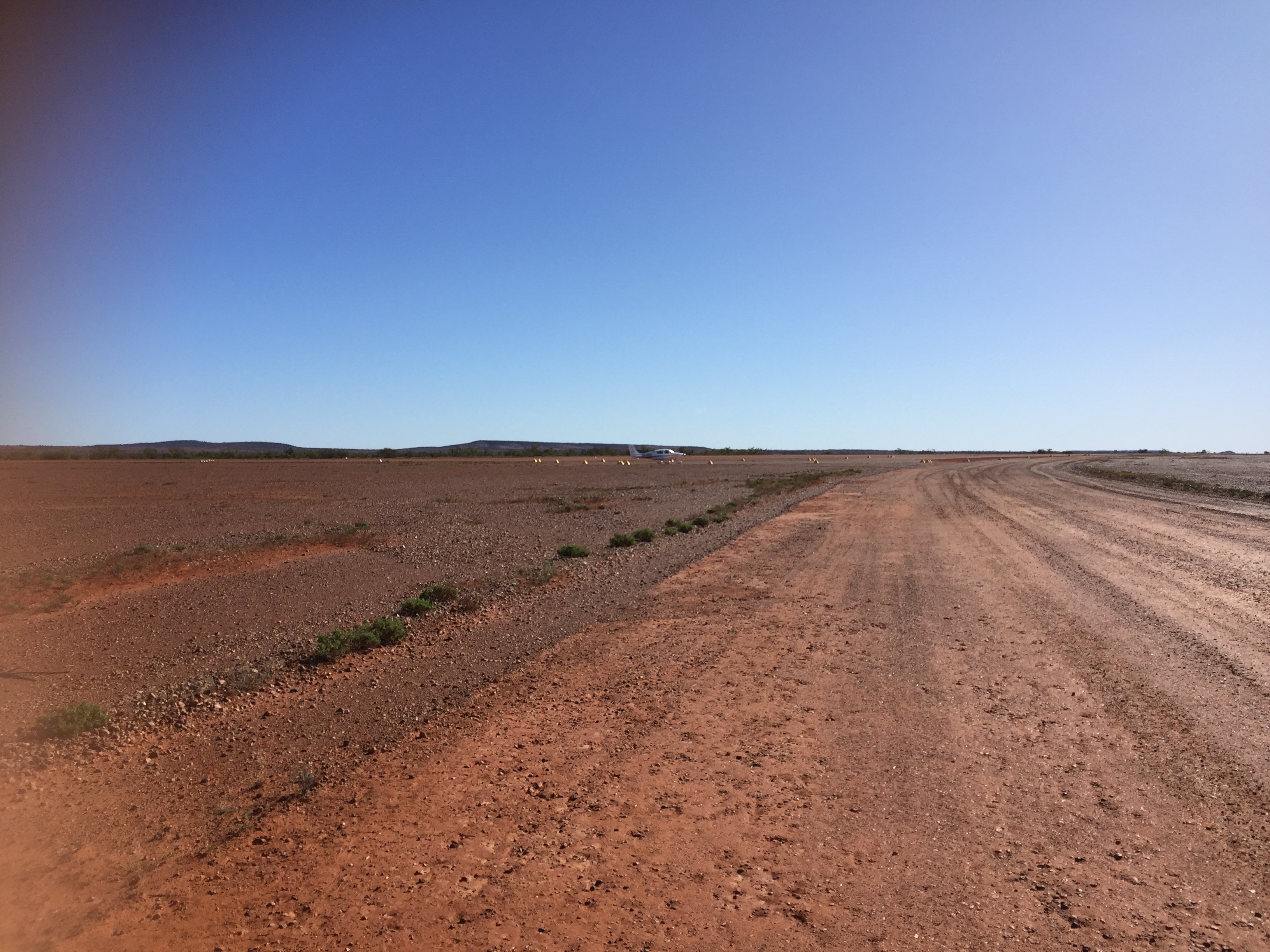
Day 7 of the Wild West Wander it was time to head back east. After a chilly start to the morning at Innamincka we loaded the planes and took off. Luc and Scott went first as they were landing at the Dig Tree, having missed out on it the day before. We flew over the top and followed the flooded Cooper Creek for a while and then on to Noccundra. It’s a pub without a town. That’s all there is. The airstrip is really good and there is a free public phone box out front so you can cancel your SARTIME easily (no mobile coverage). It’s a 5 minute stroll from the apron to the pub where they had great pies for lunch and pretty good coffee.

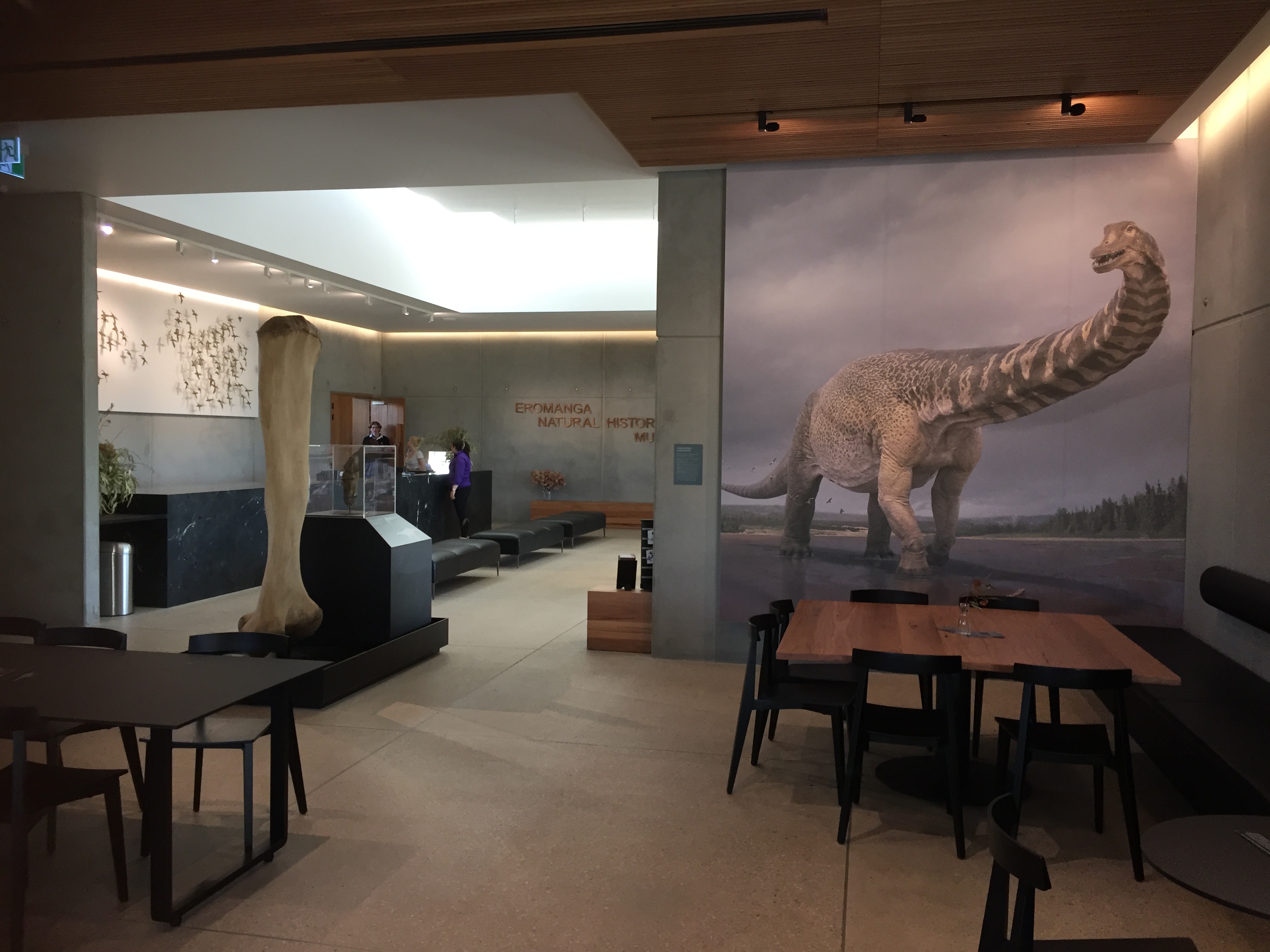
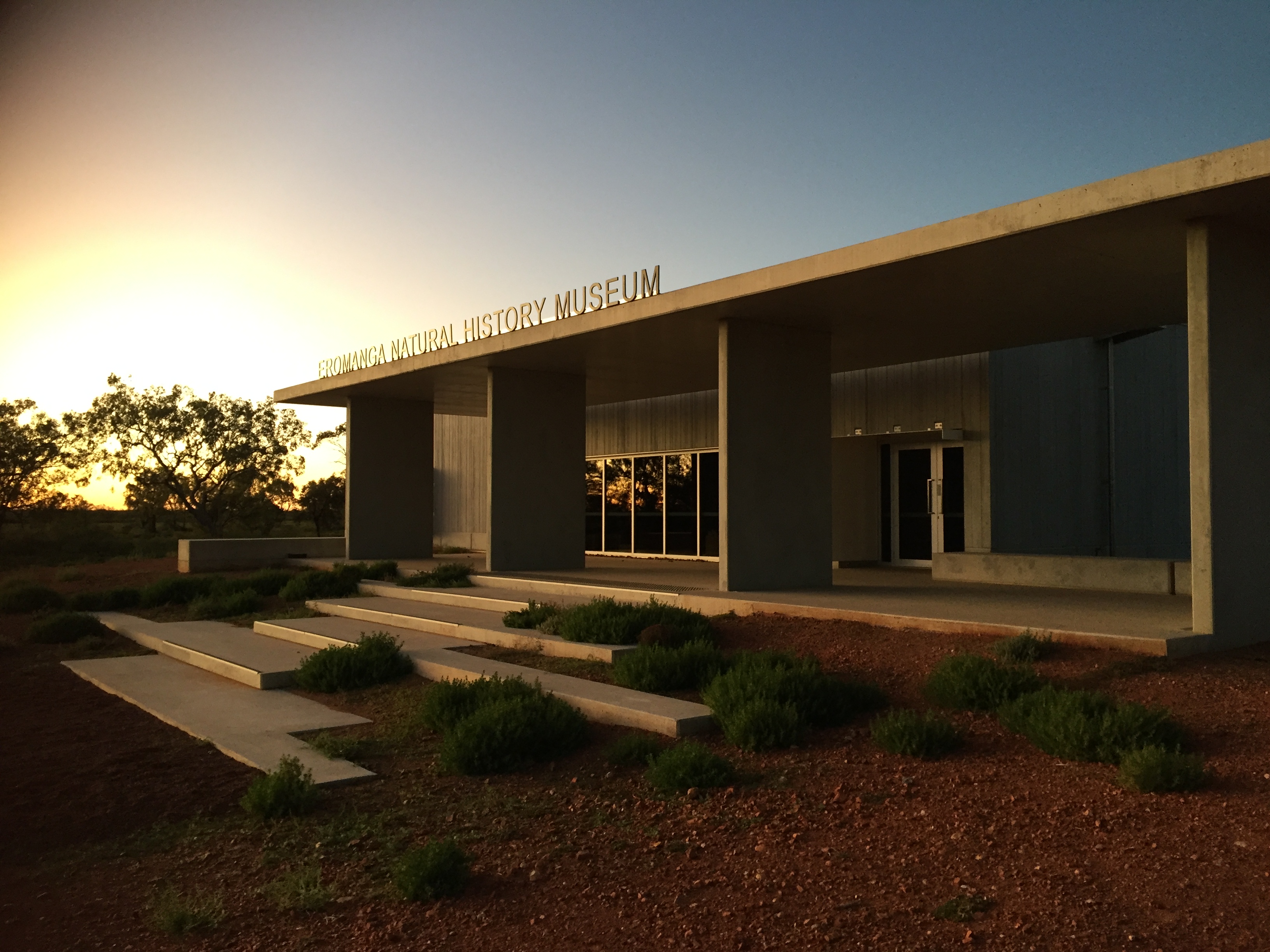
After lunch it was off to Eromanga, home of the Eromanga Natural History Museum. https://enhm.com.au

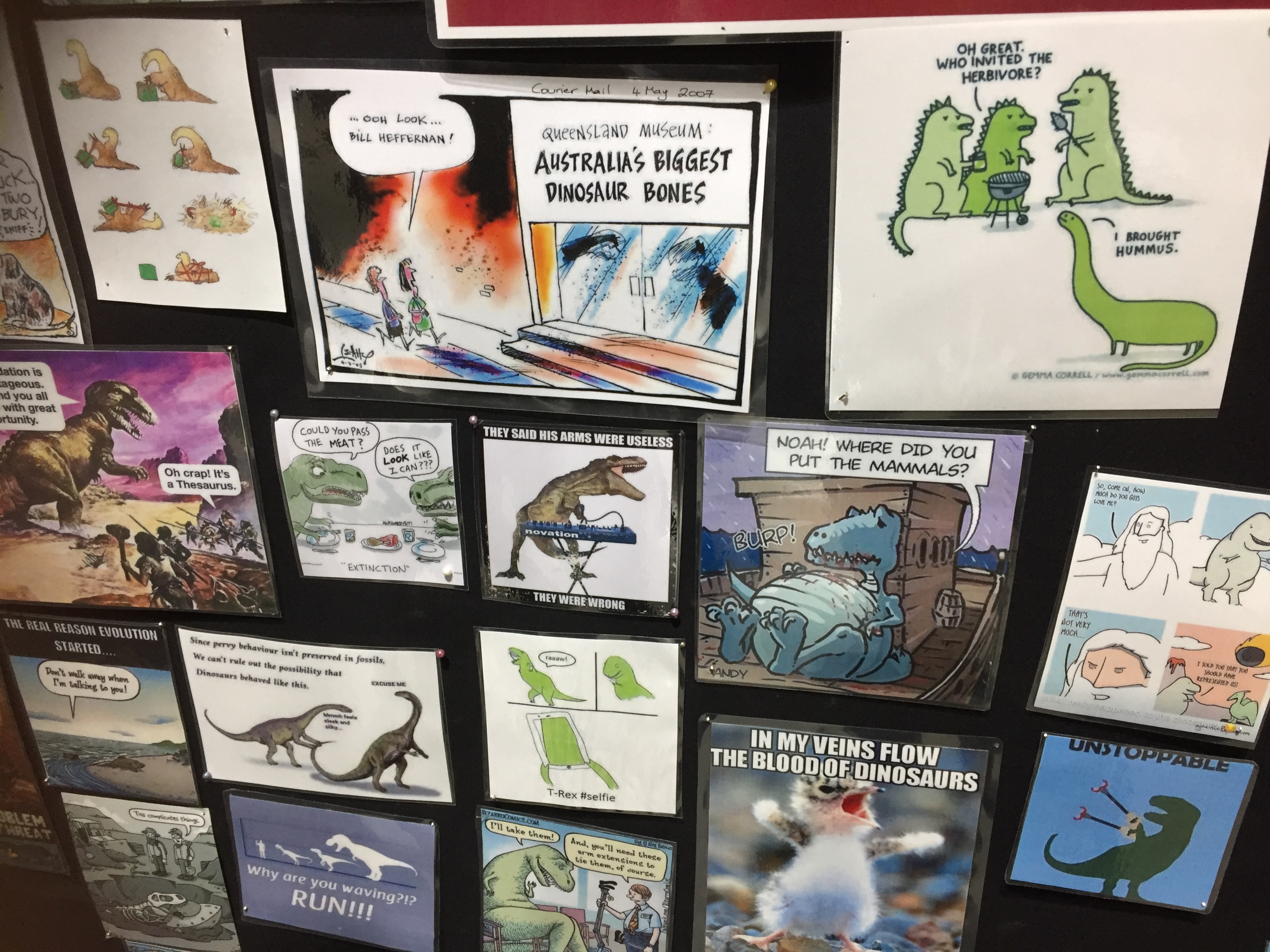
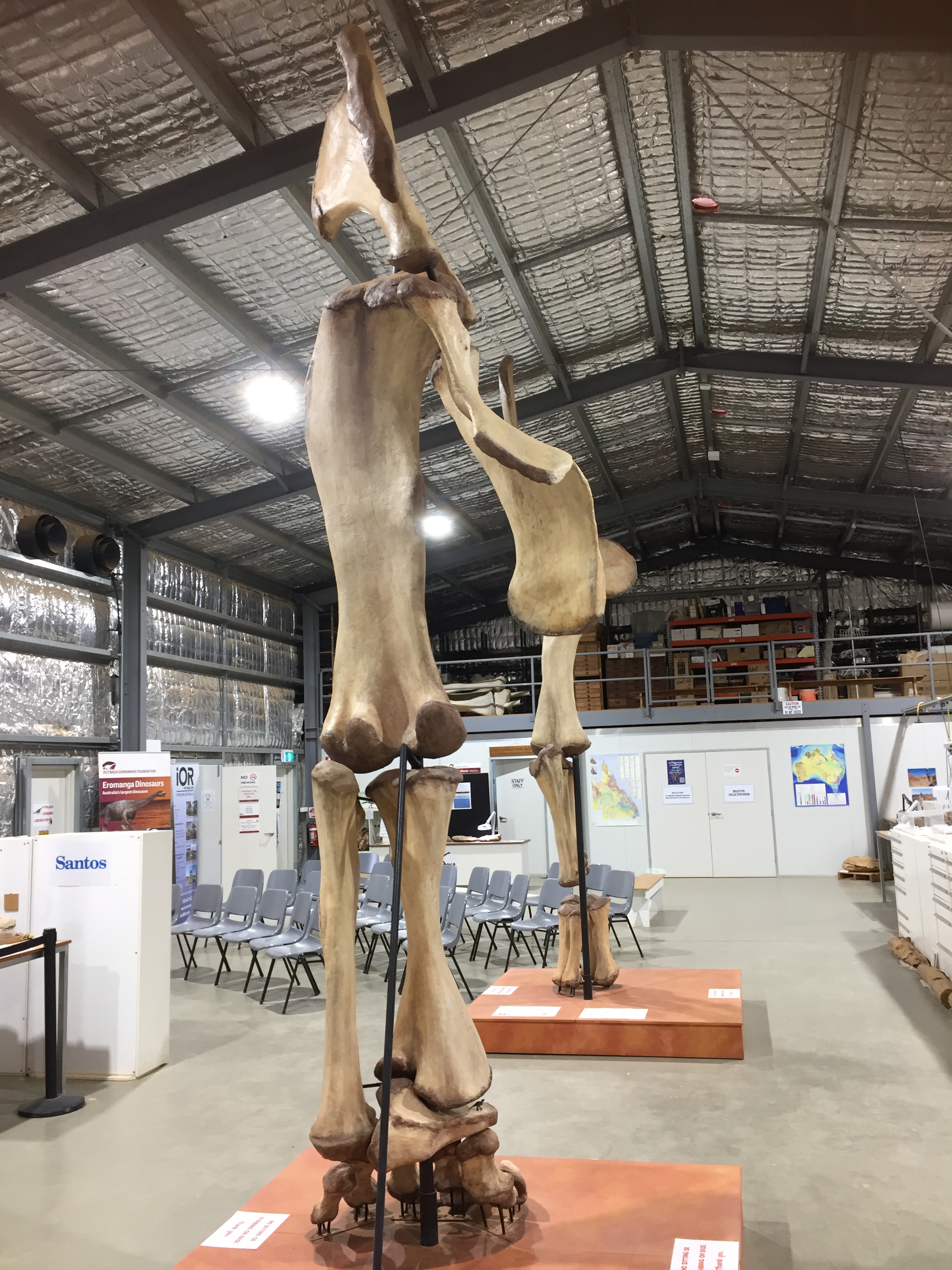
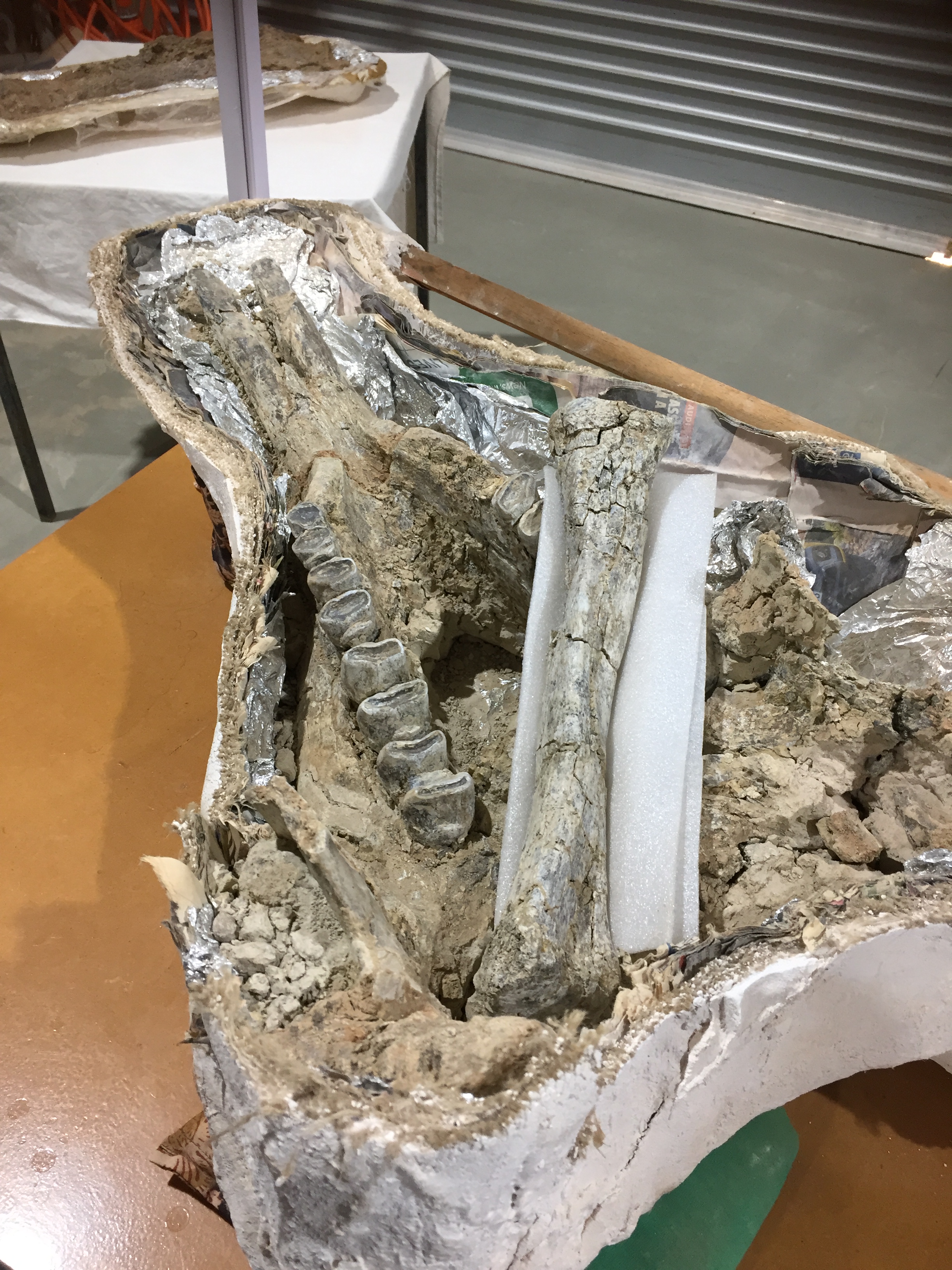
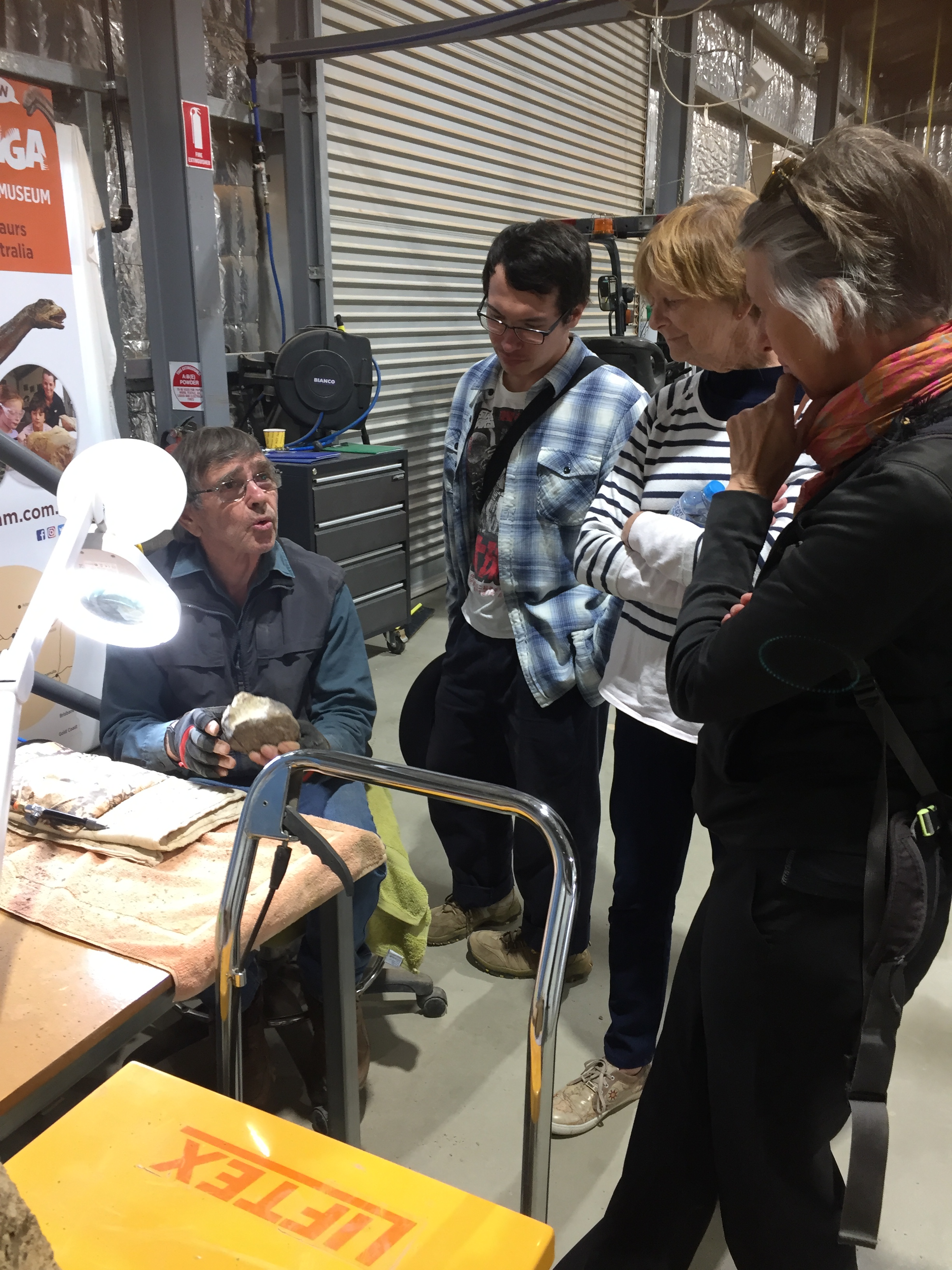
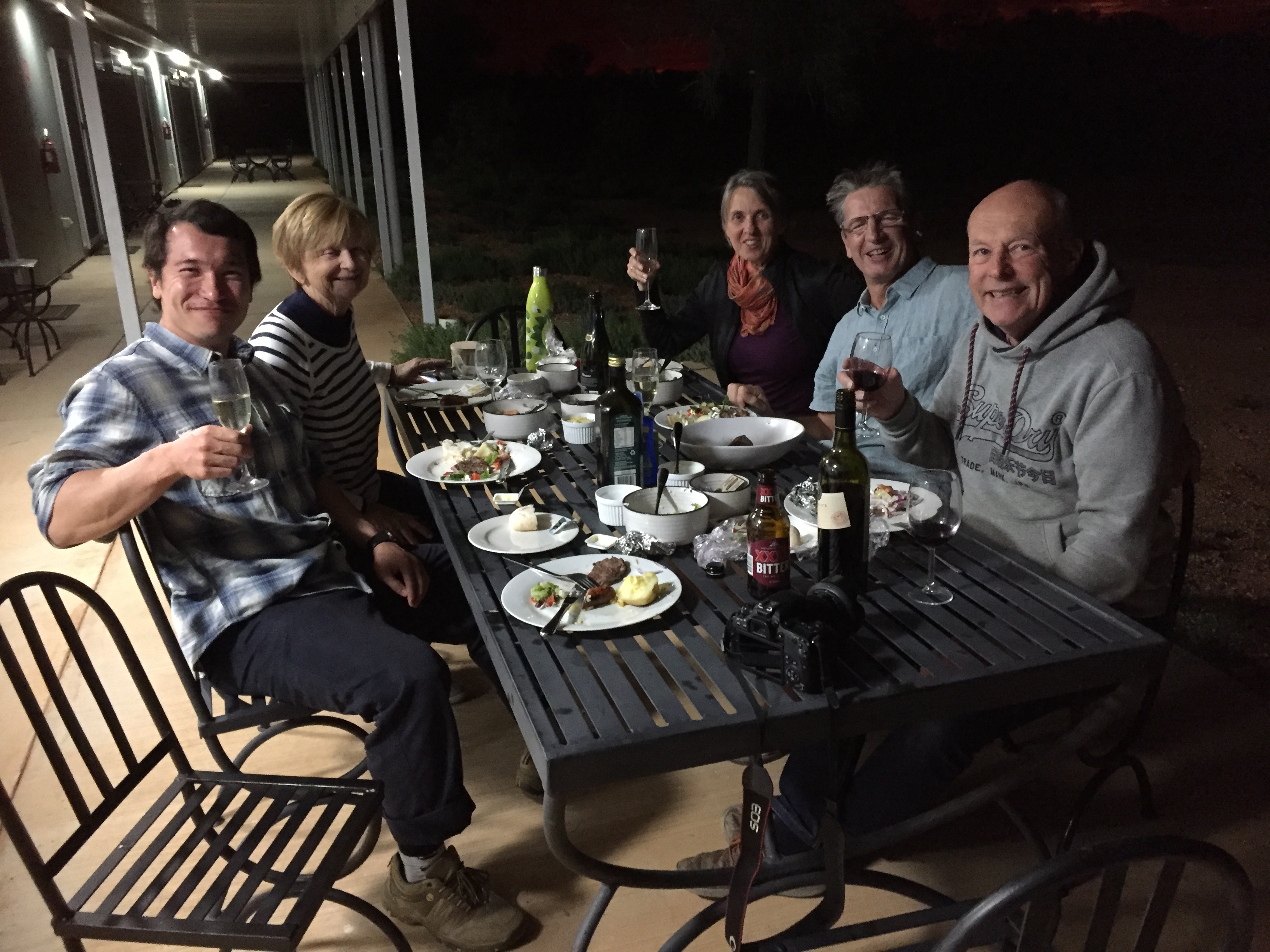
This amazing facility was opened in early 2021 and houses the bones of the largest dinosaur found in Australia – Australotitan Cooperensis (or Cooper for short). The first fossil was discovered in 2006 by a 14 year old boy on a property about 100km away. Since then they’ve been excavating and sorting many, many fossilised bones of various animals. Volunteers work with paid staff to chip away patiently to expose the fossilised bones that are about 95 million years old. The museum also houses bones of megafauna like the Diprotodon, giant wombats discovered near Eulo to the south (our lunch stop on Day 1). We’d booked to stay overnight and a tour at 3pm so, touching down at 1:30 we were met by a couple of the staff who drove us the 2km to the museum. We watched a very good video of the history of the earth and the dinosaurs in Australia followed by a tour of their workshop. They supply barbecue packs that you could cook yourself at the luxurious accommodation nearby so after the tour, hearing that we needed some drinks to have with our BBQ, one of the girls drove us about 3km into the Eromanga Pub to buy some wine. It was a great evening chatting to some fellow travellers and relaxing around the fire pit as the night chill set in.

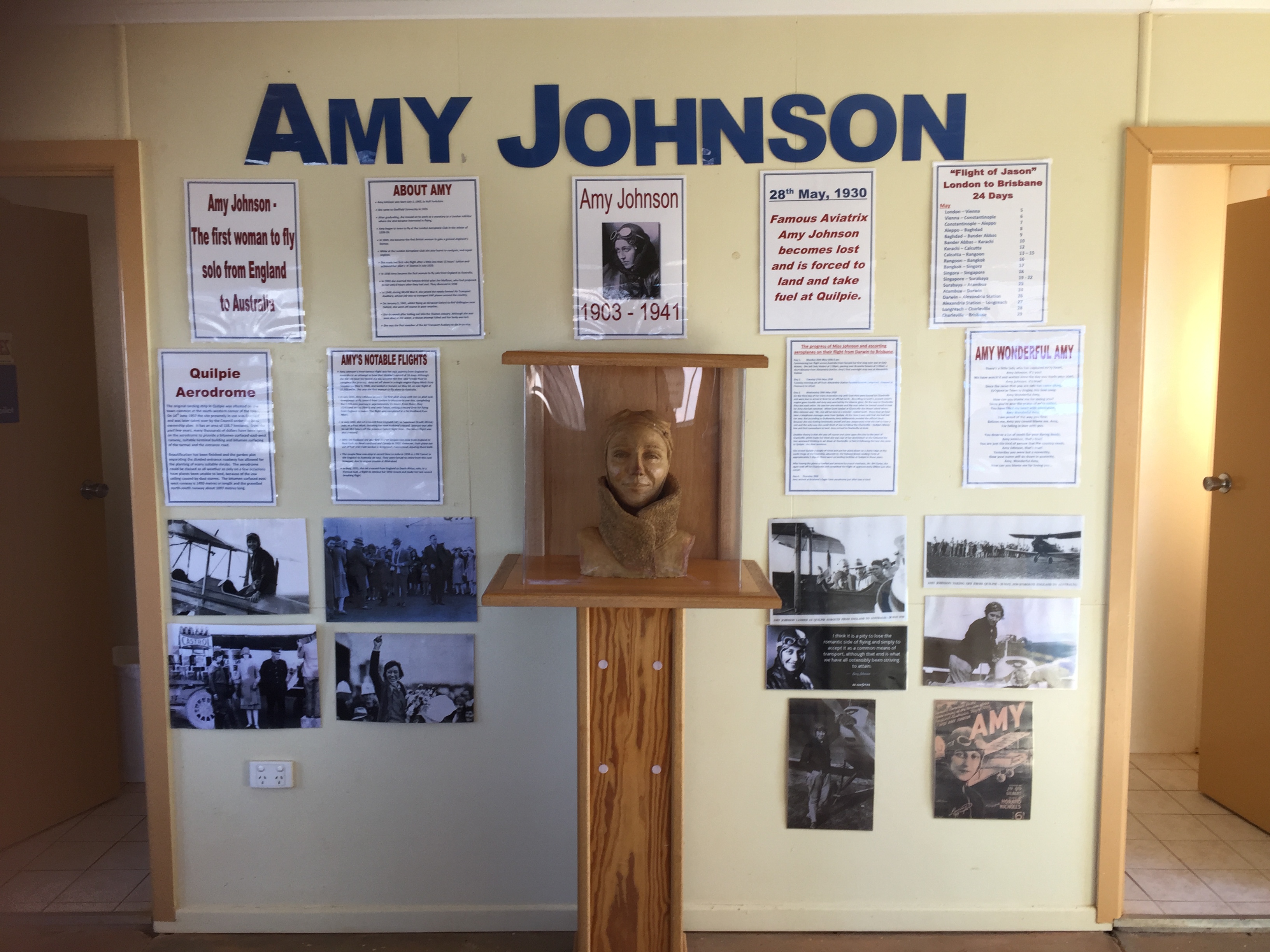
On Day 8 blue skies beckoned once again. Sigi and I went for a walk around the property surrounding the museum, startling a couple of wallabies as we went, then headed back to the accommodation block for a serve-yourself continental breakfast on the verandah. Luc and Scott wanted to head off early as they had to return to Broken Hill to pick up Luc’s plane so we accompanied them to the museum for a coffee then soon after we were dropped at the airstrip. The museum staff were amazingly hospitable and helpful. Our next leg was to Quilpie to refuel. We walked into town for lunch at the bakery and inspected the opal altar at the catholic church. Unfortunately Lyn Barnes’ Gallery https://www.lynbarnes.com/about/ wasn’t open so we couldn’t see her outback landscape paintings. We headed back to the airport and visited the Amy Johnson display in the old terminal building instead. Famous aviatrix Amy landed at Quilpie on her solo flight from England to Australia in 1930. The story is she was supposed to land in Charleville but she had an outdated map that showed Charleville at the end of the railway line when in reality it had been extended to Quilpie a year or so before. So, when she spotted the railway line she thought she was off course to the east and followed it to the west, bringing her to Quilpie instead of Charleville, much to the delight of the locals. After refuelling she continued to Charleville to an even more rapturous reception.

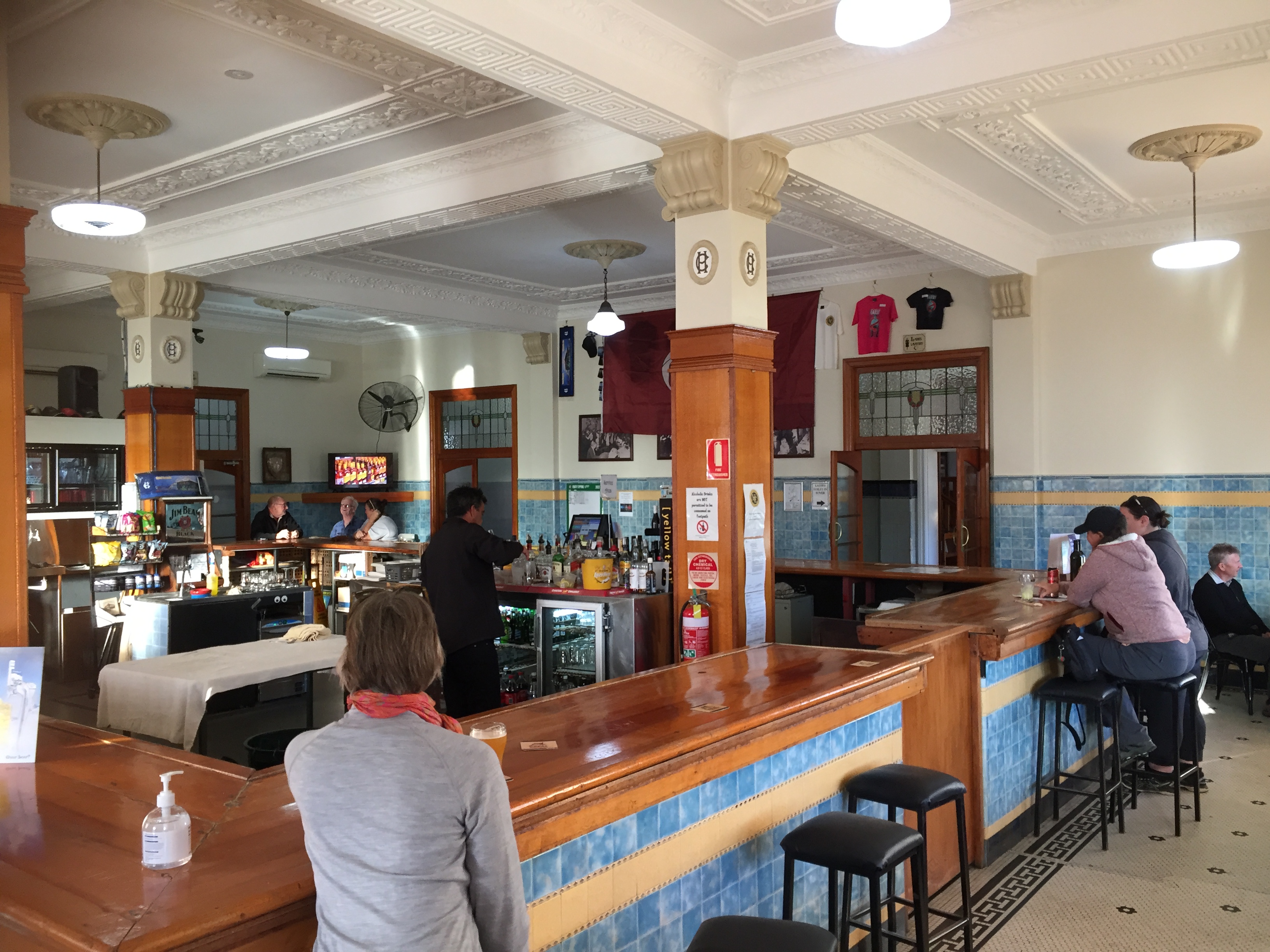
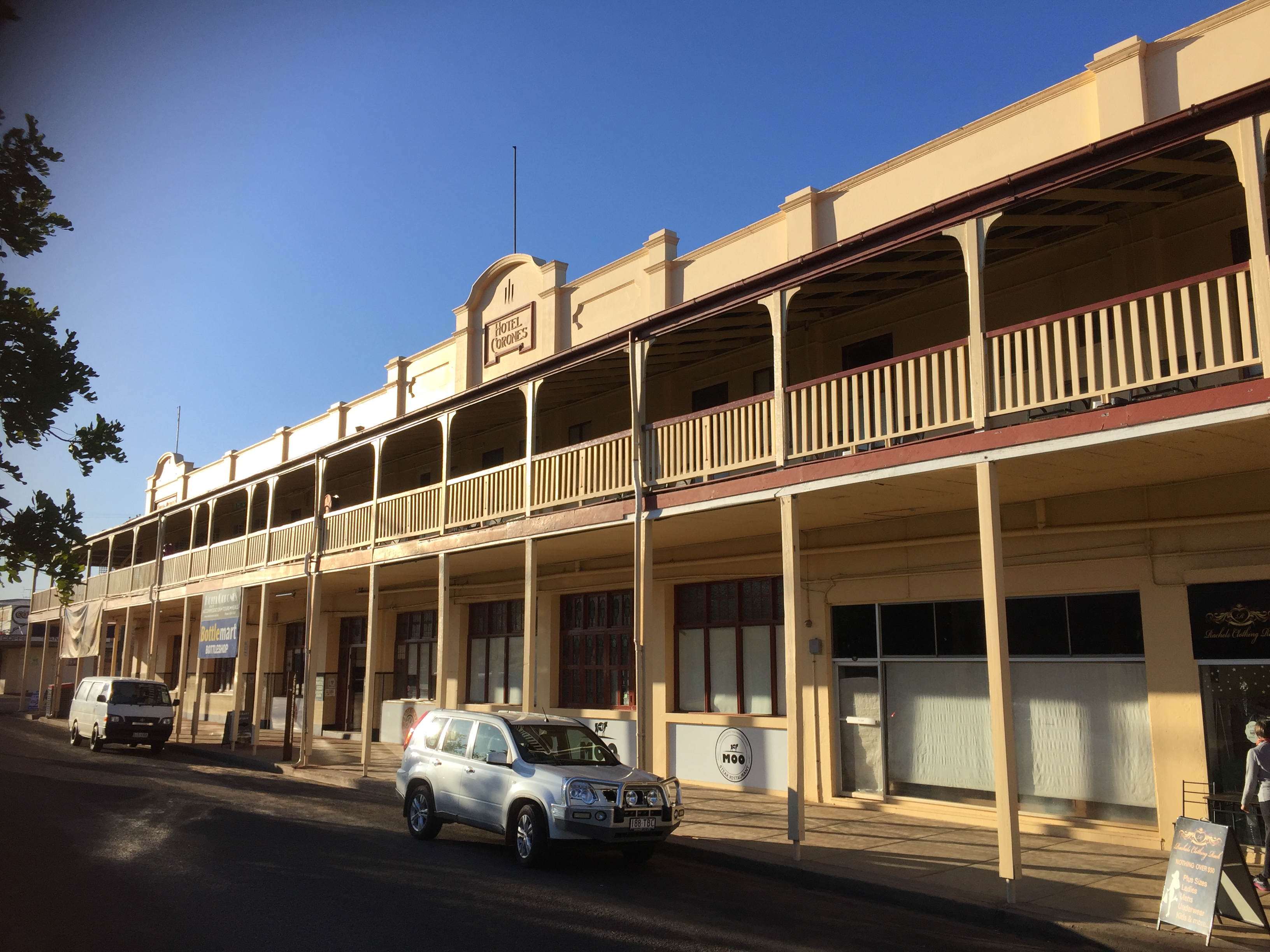
From Quilpie we followed in Amy’s footsteps to Charleville where we were met by the refueller at South West Air Services http://www.southwestair.com.au. They have an amazing service at the Flight Deck Cafe where they lend their “Mighty Barina” to flyin visitors. Free of charge – just fill it up with fuel before you return it. After a visit to the bar at the famous Corones Hotel (the one where Amy famously bathed in champagne after her belated arrival) https://www.hotelcorones.com.au for a quick beer we had dinner at the Rocks Motel before rugging up and heading out to the Cosmos Centre https://www.cosmoscentre.com for an of evening of star gazing. They have a great set up there where we had a close up view of alpha centauri and a few constellations.

On Day 9 it was time to head for home, but with a lunch stop in Surat. We’d stopped in Roma a few times before so wanted a change and the airstrip at Surat is walking distance to the main street so it seemed an obvious alternative. The Cobb and Co Staging Station Museum https://www.outbackqueensland.com.au/…/cobb-co…/ was another attraction. It was about one hour to Surat over country that gradually turned greener.

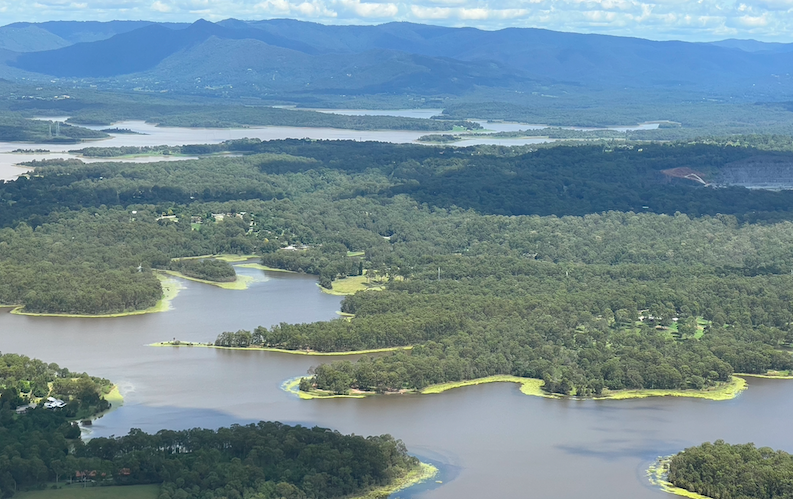
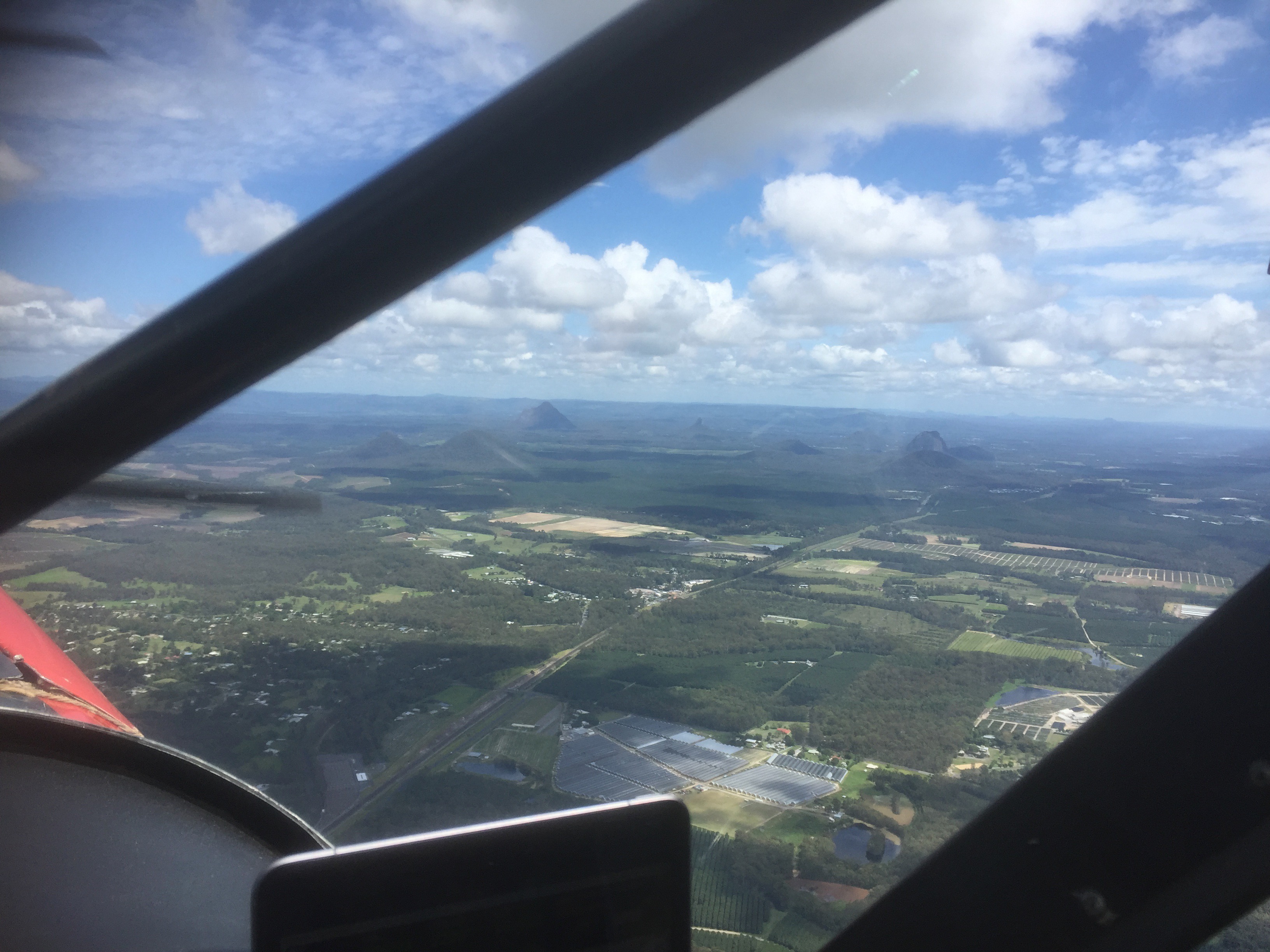
After a light lunch and a tour of the museum we were back on board, this time back to Redcliffe. We passed over Jimbour and the Brisbane Valley, taking in the Glass House Mountains on our descent into Redcliffe.

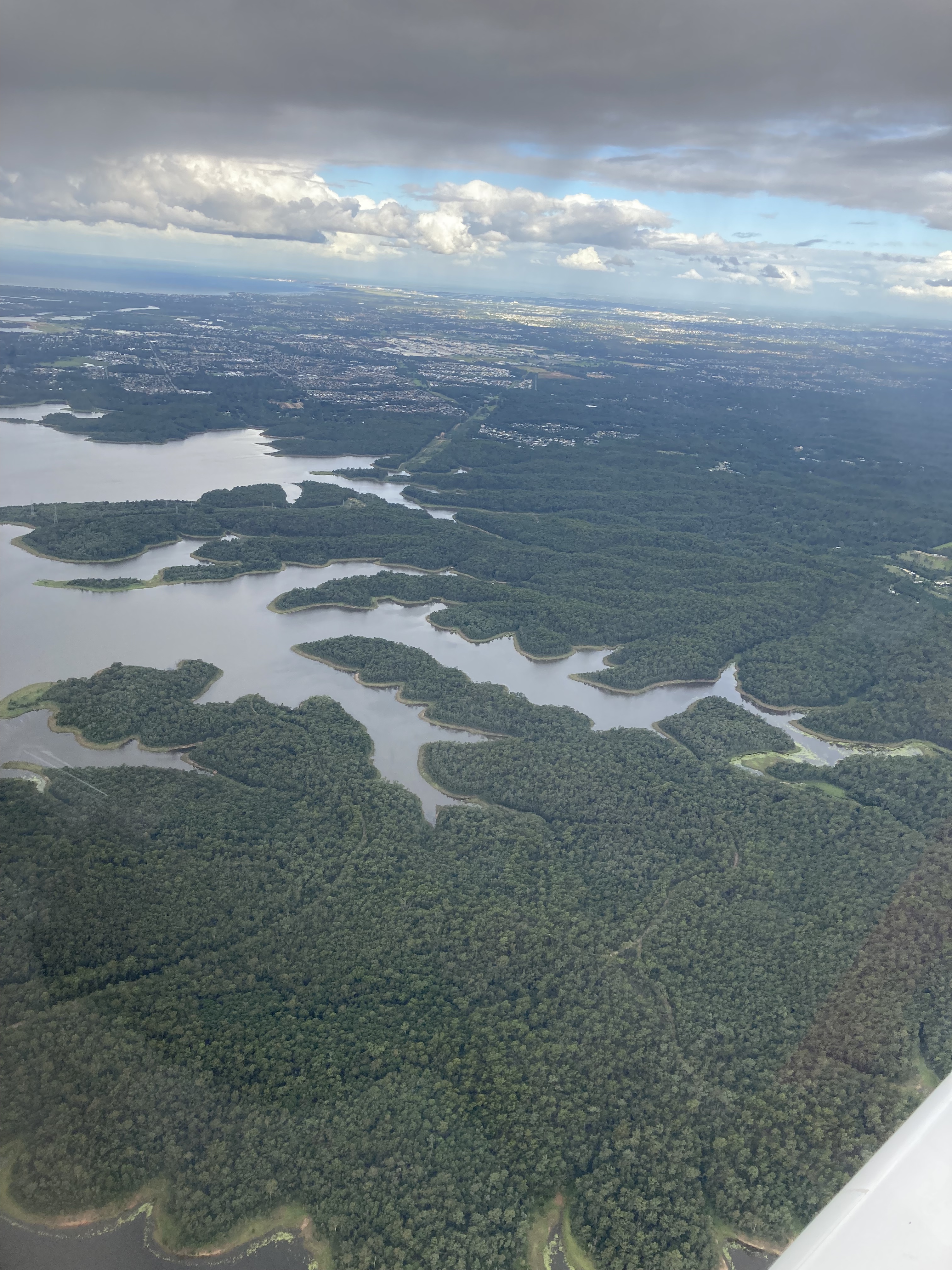
Lake Somerset

Our western wanderings were over. It was a great trip and we really are fortunate to be able to travel around this great country of ours so freely. It is a huge land mass and travelling by air is a great way to see it. When we get out in the outback I am constantly amazed how friendly, trusting and helpful people are.

Redcliffe to Caloundra – some video

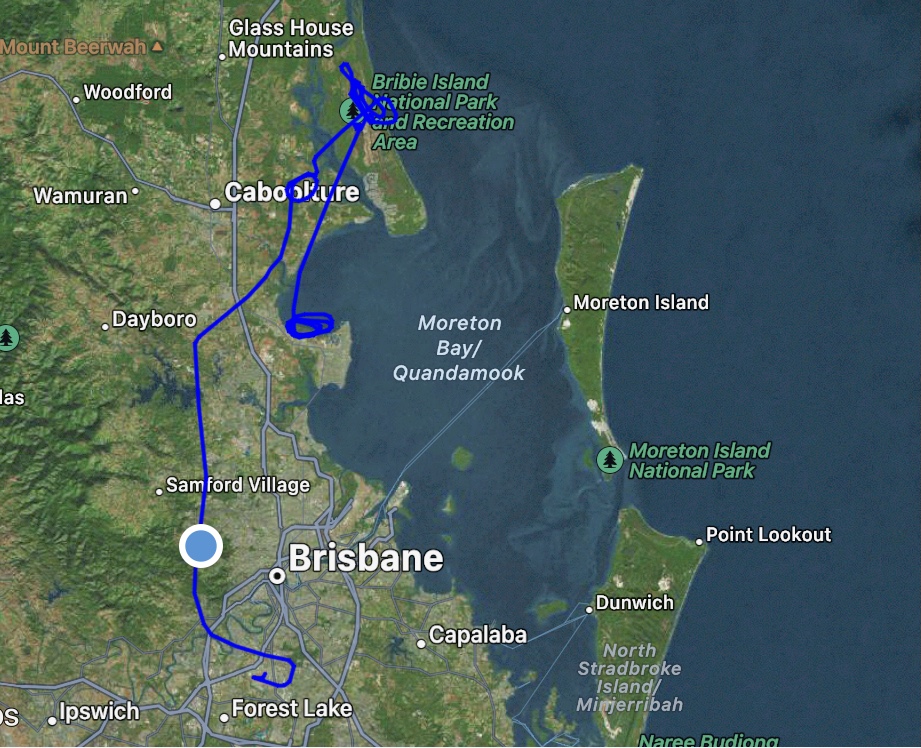
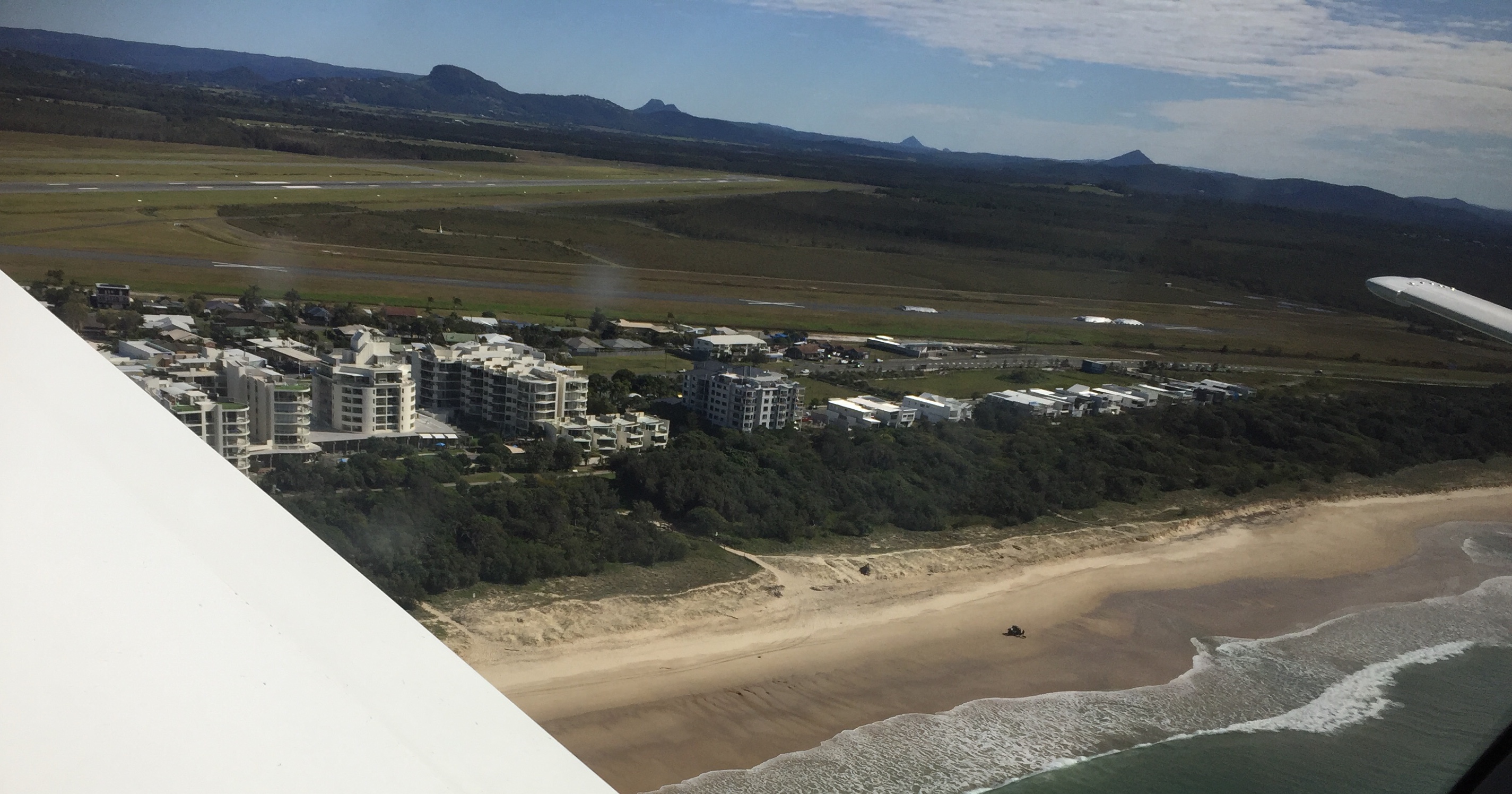
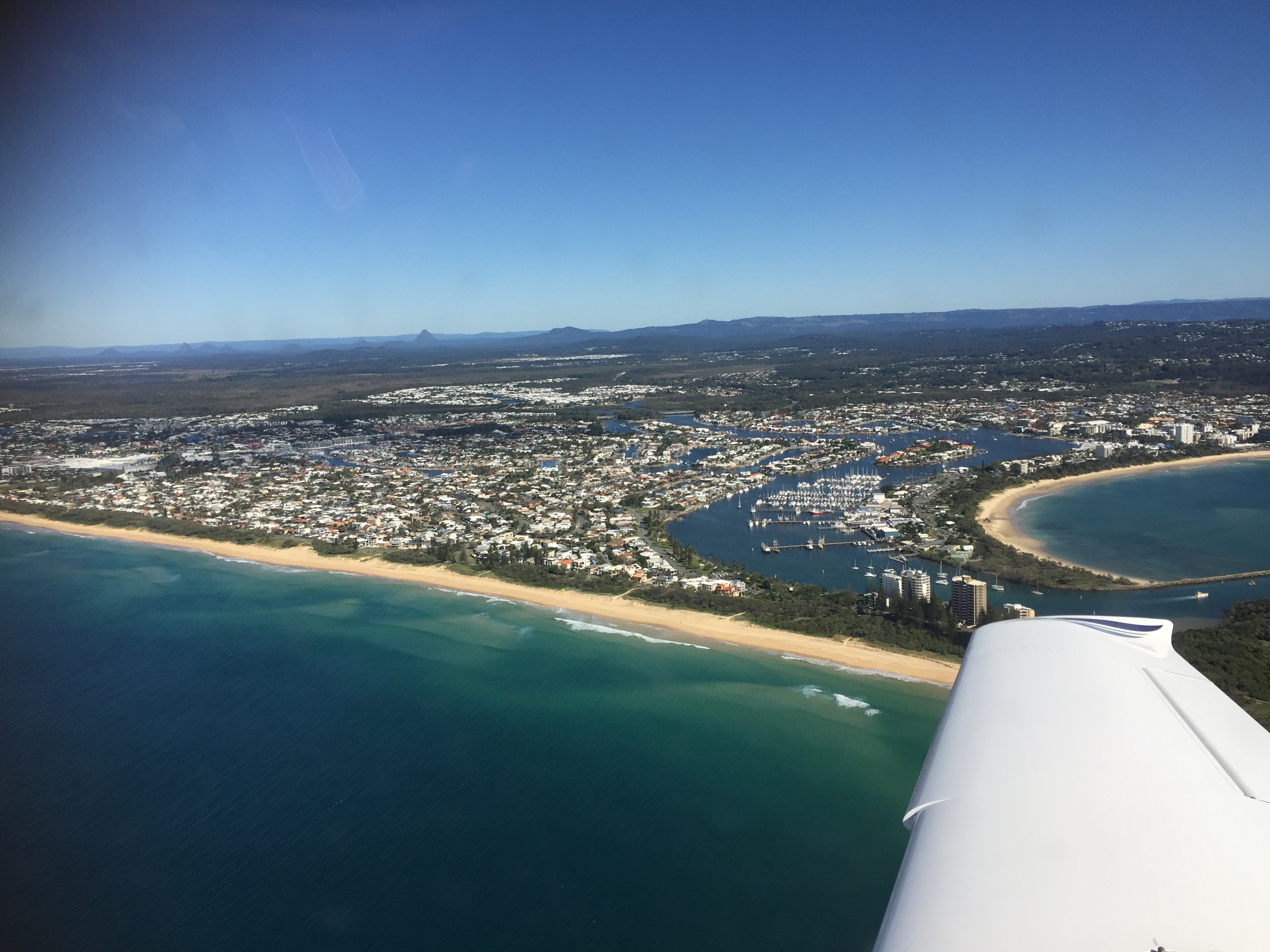
On Friday 3rd June 2022 I went out to Redcliffe in the early afternoon to prepare for the monthly club barbecue. There was time to spare, and as one of the club’s 182s (my old favourite VH-ROC) needed to be ferried back from AMS, the aviation maintenance company located in Caloundra, Mike and I took Brendan, one of the instructors, up there, so he could pick it up. I was in the back seat on the way up and made the most of the opportunity to take some video along the way.

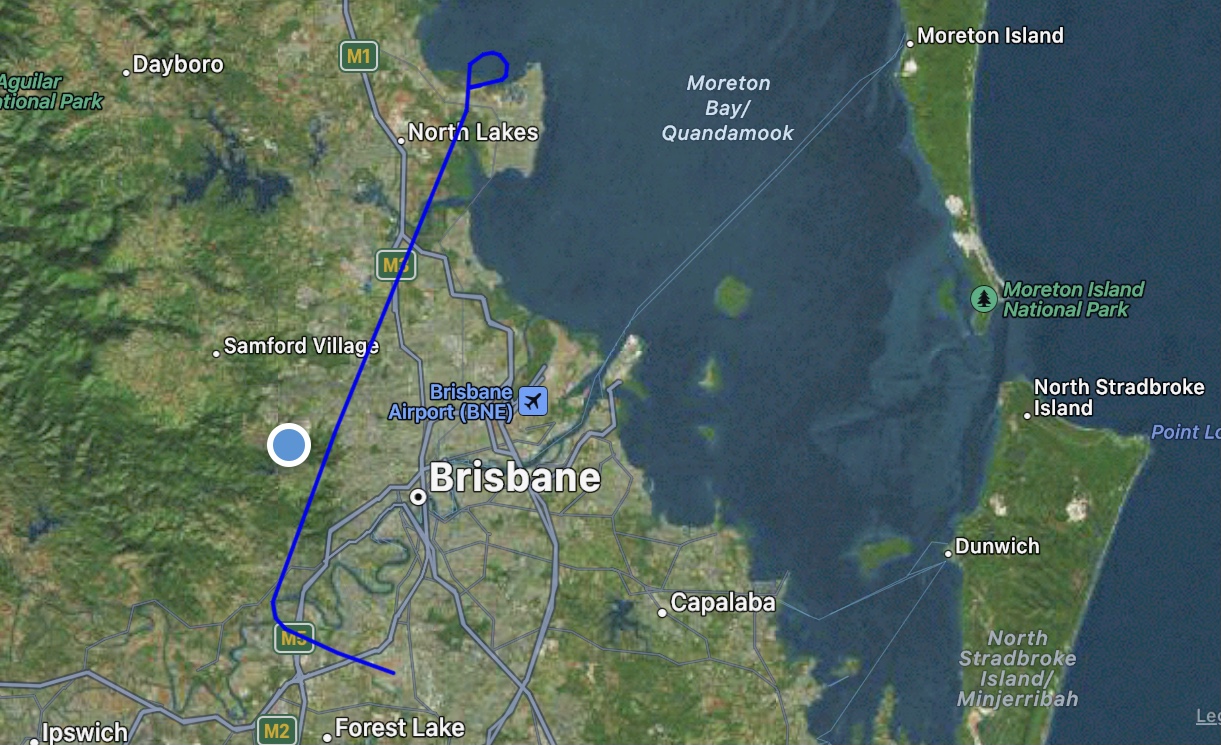
The first video is of our departure from Redcliffe and flight over the bay past Beachmere, with the Glasshouse Mountains in the distance.

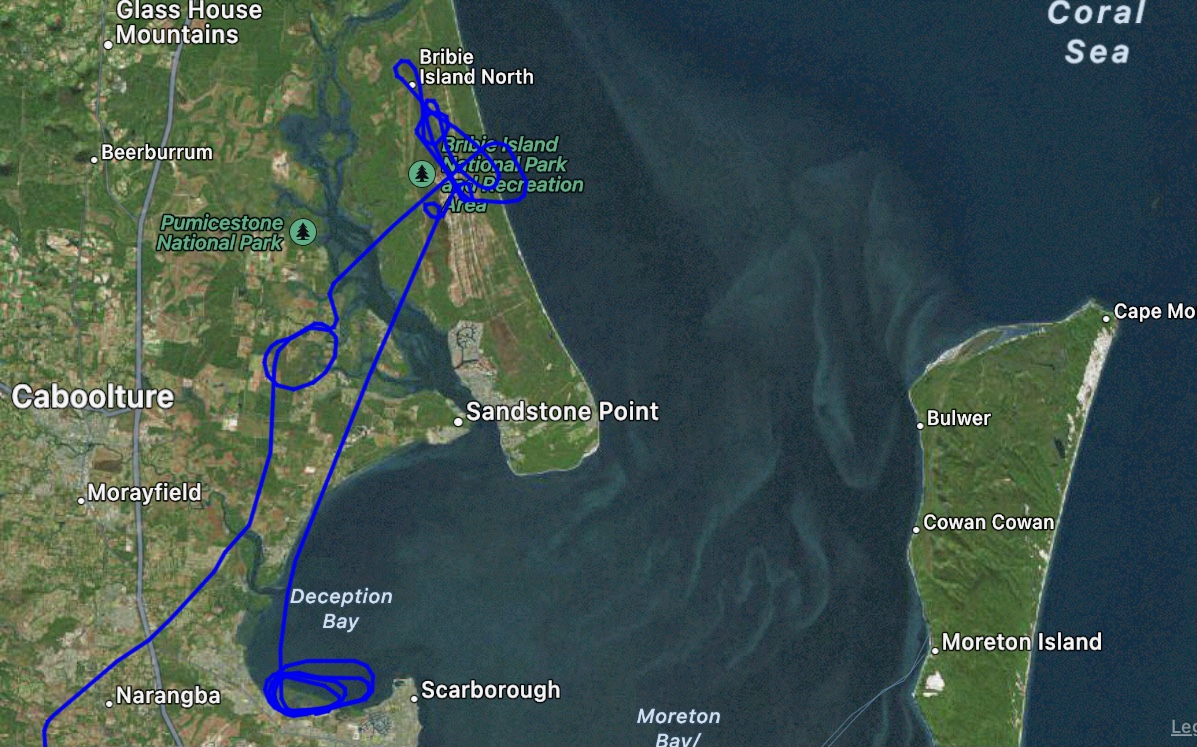
The second one is passing Bribie Island.

The third is joining the circuit in Caloundra.

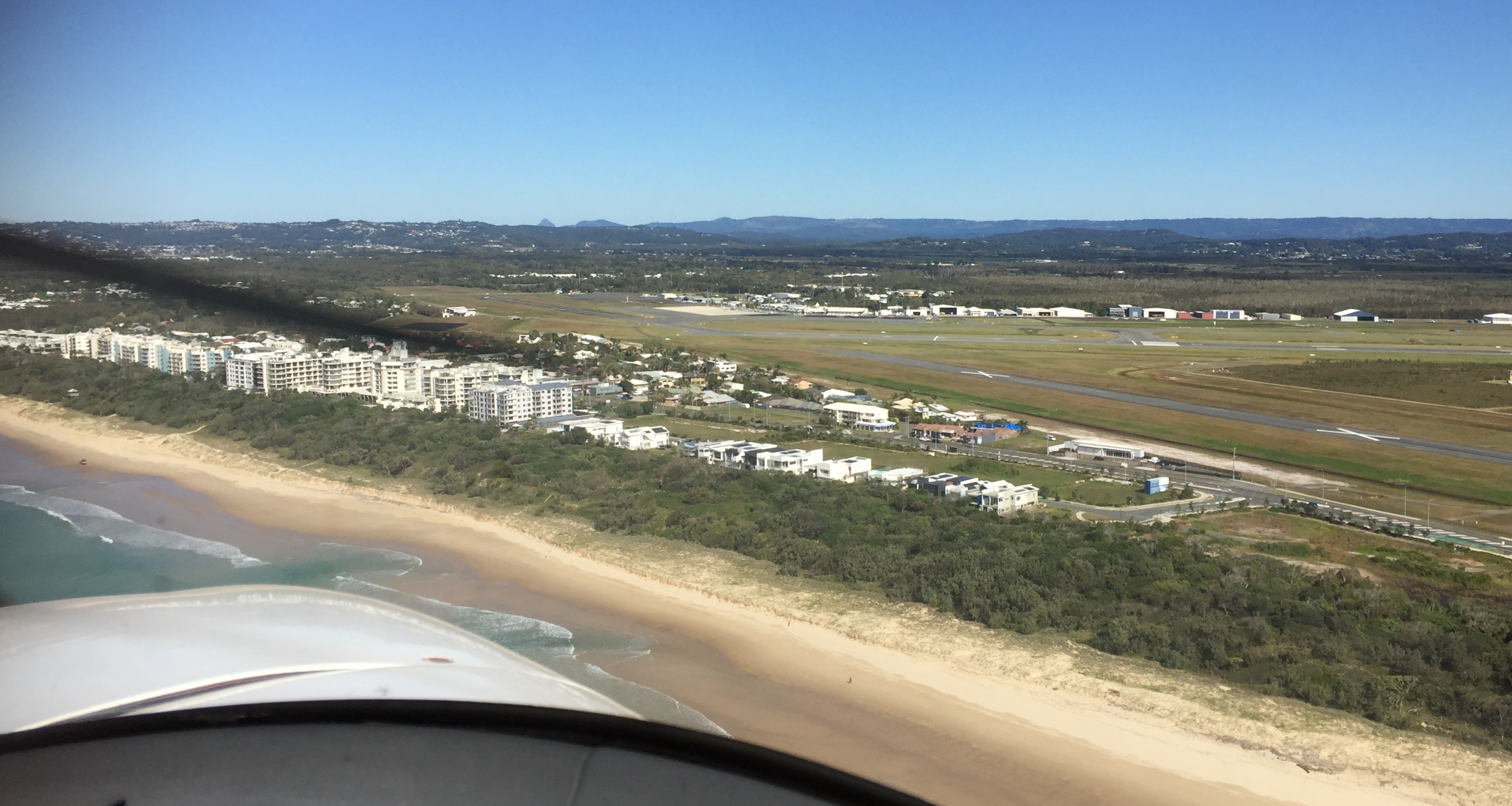
The fourth is approach and landing at Caloundra.

A quick flight to the Sunny Coast

On Wednesday 8th June 2022 Mike Cahill wanted to fly the short hop from Redcliffe to the Sunshine Coast (YBSU) to practise his procedures for flying in and out of the D-Class airport with its control tower. He was planning to pick up some friends there in a few weeks time and wanted to check where he should tell them to wait, how to gain access for them and how to deal with the new arrangements since runway 13/31 was constructed together with its new taxiways. He asked me to accompany him as an extra set of ears and eyes and provide advice based on the fact that I’d flown in there a couple of times since the new runway was commissioned. It was a perfect day and we flew up via Bribie Island, joined downwind for RWY13 and landed part way down, leaving less taxi distance to the exit ramp. Taxiing to the General Aviation apron to the south of the RPT apron we shut down, walked over to Gate 4 that he could use to let people in and then returned to the aircraft. We taxied out and did an intersection departure on RWY 13. Mike had spoken to the tower beforehand and arranged to do a left turn over the water after take off so that he could fly past the apartment block where his daughter and granddaughter live, to “waggle the wings” so to speak. We flew past, did a 180 and headed south again over water past Maroochydore and Caloundra and back to Redcliffe.

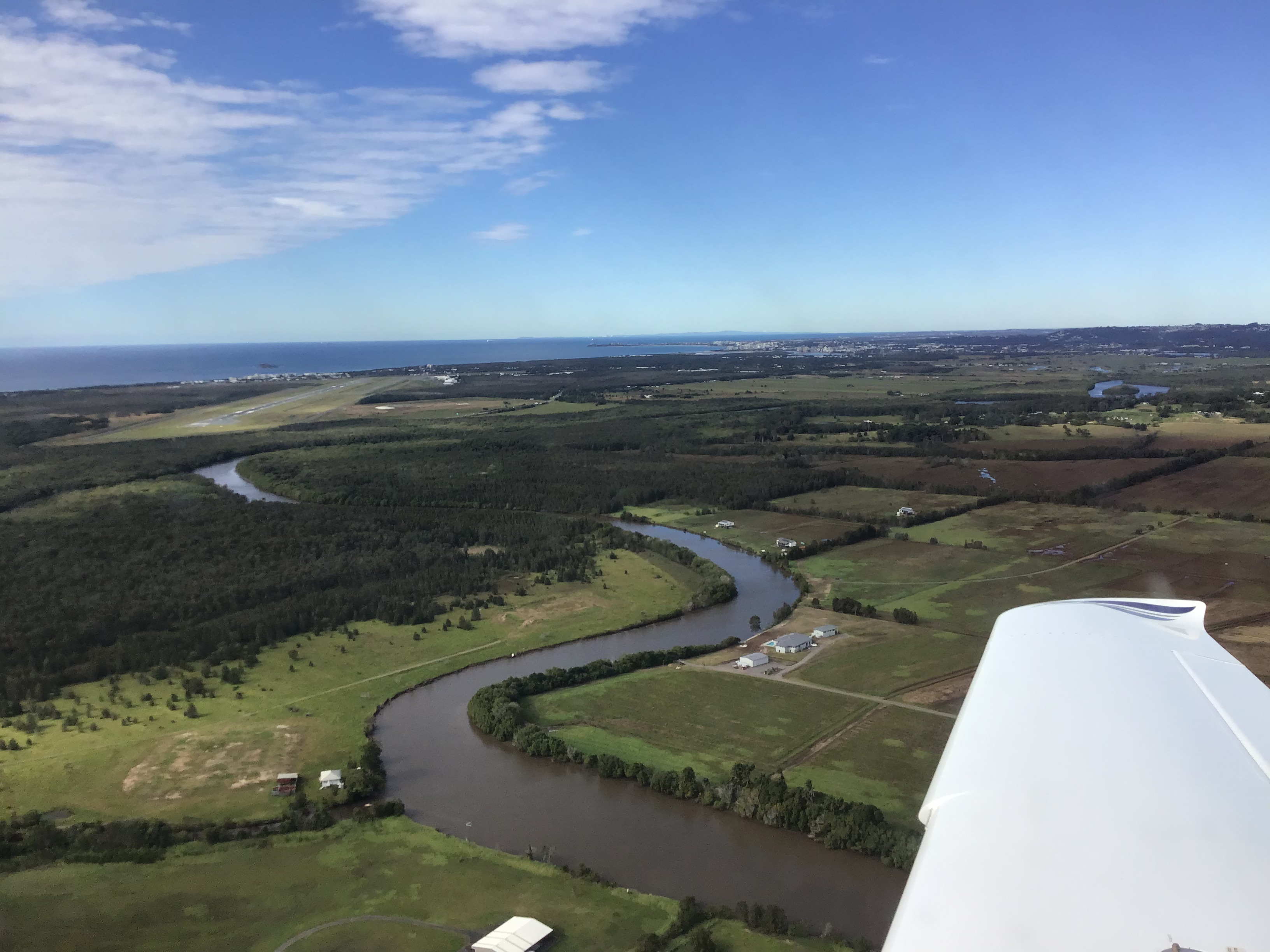
Maroochy River with RWY13 in background
Fly past the apartment blocks

2022 Old Station Flyin

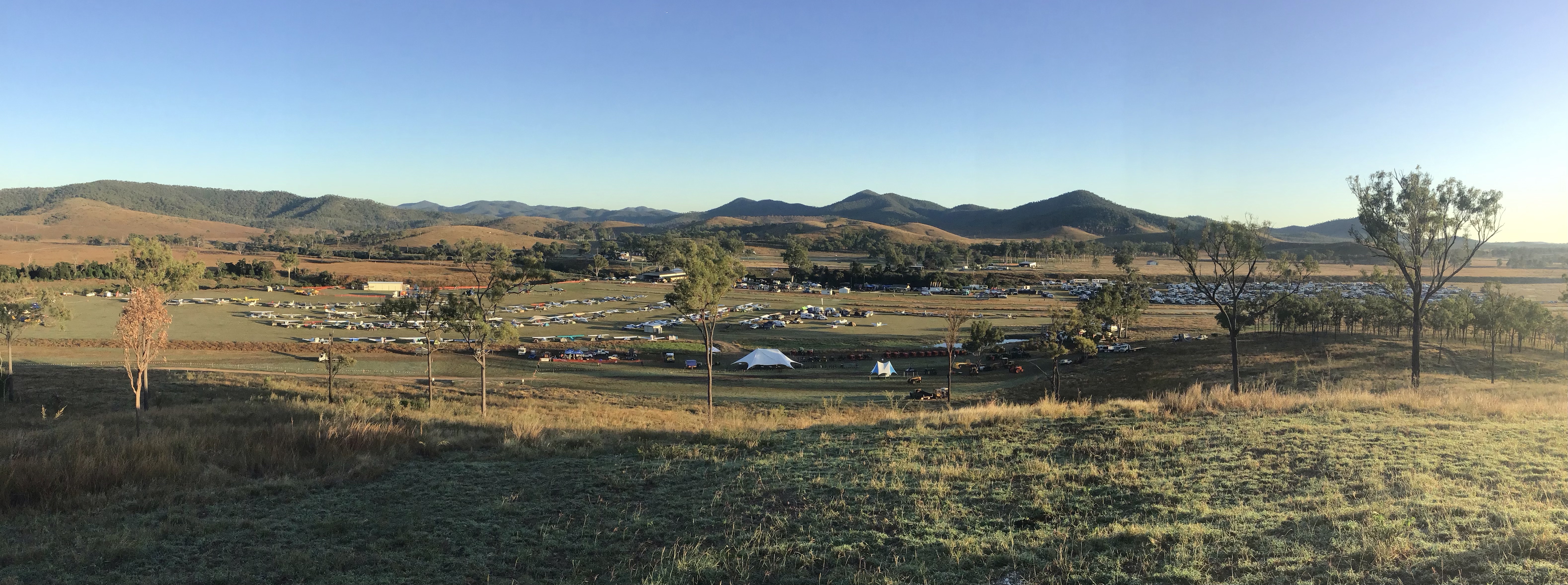
The Old Station is a property at Raglan, west of Gladstone. It has a 2km long grass airstrip and accommodation for flyin guests. We’ve dropped in a couple of times over the past few years and stayed overnight (see separate blogs) and owners Ron and Helen Creed are amazingly hospitable. For an operating cattle station it is a really amazing tourist destination. It’s also been hosting flyins and airshows for decades. The flyins were originally started by Ron Creed’s parents, and eventually Ron and Helen took over the task of organising them. They were being held every 2 years and I’d enjoyed visiting in 2016 and 2018 but Covid interrupted in 2020 so when the Creeds announced that it was on again in May 2022 I knew I had to go again. 

Overview of the property

Mike Cahill was keen to attend. We asked fellow Cirrus enthusiast Brett Sylvester to join us in MSF and he jumped at the opportunity. A few other Redcliffe aeroclub members also decided to go in various aircraft so it would be an “unofficial” club flyaway. 

Autumn 2022 had been the wettest in living memory and there was very little flying to be had in south east Queensland from February to early May so when the flyin date at the end of May approached and the weather looked like it’d be dry and sunny you could feel the excitement building. Would the strip be too soft though, especially if over one hundred aircraft were flying in? I rang Helen Creed and she assured me that being inland they hadn’t had so much rain and the strip was perfect. The paddock that is used for aircraft parking and camping under the wing was also dry. They had heavy machinery driving over it without any concerns.

Sadly, Mike came down with a viral infection a few days before the event, and told me he may have to pull out. We had originally intended to fly up on the Friday 27th May but decided to give him one more day to recover. However, on Friday afternoon he was still not any better and decided not to go. It was just Brett and me in MSF. Brett has flown Cirrus quite a bit but hadn’t flown for a while so he was happy for me to pilot up and back. 

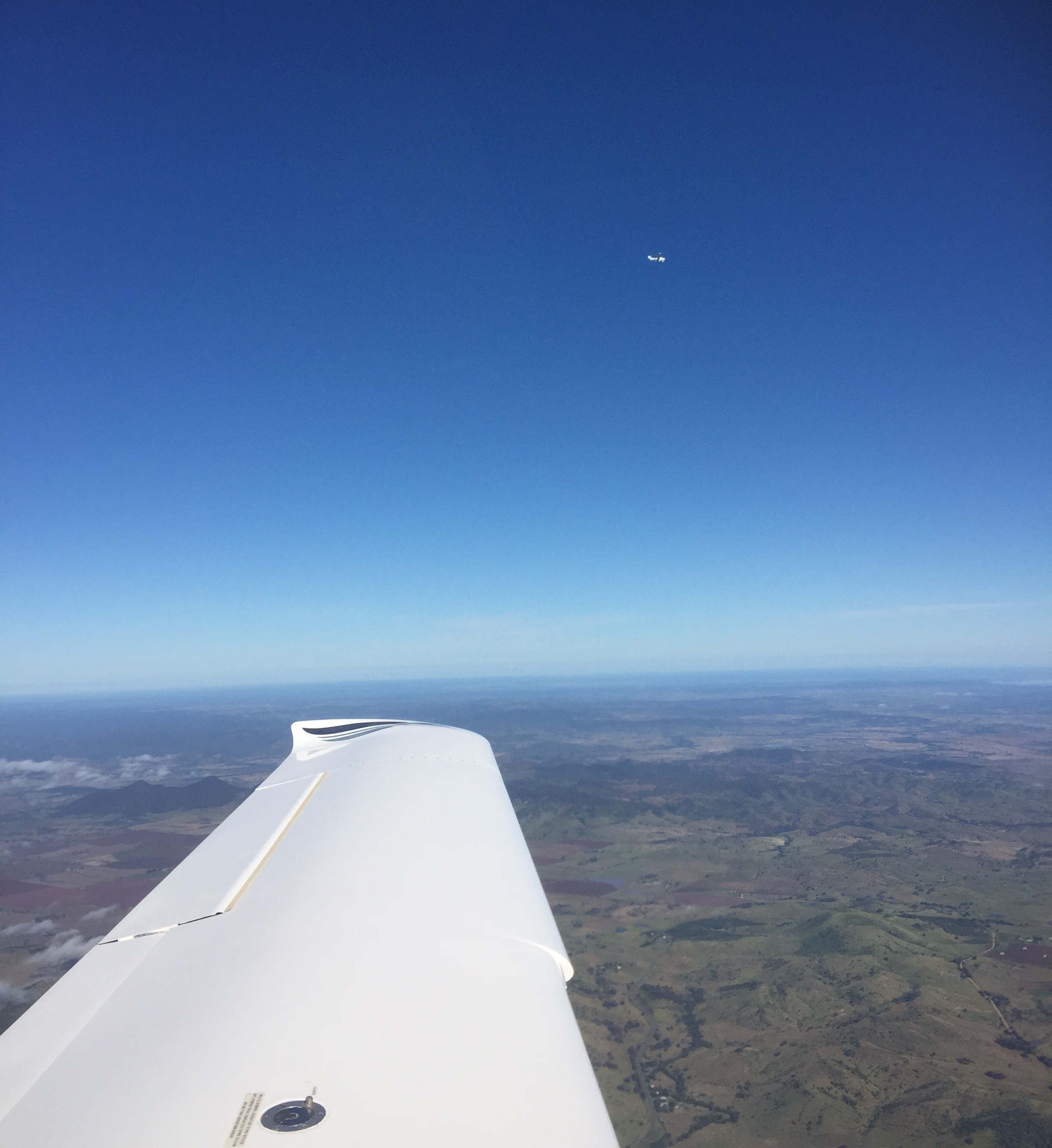
Saturday 28th dawned clear and bright. A perfect morning for flying. I met Brett out at the hangar at Redcliffe at 7:30 and after filling the tanks we were in the air just after 8:30. It was a smooth flight direct to Old Station, about 90 minutes in all, passing over familiar territory like the Sunshine Coast Hinterland, Biggenden and Mount Perry where I’d done a cross country flight during my CPL training. We flew IFR as, based on my previous visits to the airshow, I was expecting quite a few aircraft converging on Old Station and wanted a heads up from Air Traffic Control. It was very quiet however and we only passed one other aircraft, a Jabiru about abeam Monto, on the way up.

As we reached top of descent for Old Station the ATC advised that there was “no IFR traffic but a few VFR aircraft in the circuit”. 

I’d noticed an inconsistency in the CTAF frequency announced for the Old Station. The Flyin website said we should use 132.2 MHz while the OzRunways guide said it should be 126.7. So I downgraded to VFR so I could monitor both frequencies simultaneously on my two radios, asking ATC for a SARTIME before I switched off their frequency. As it turned out, there was only one other aircraft in the circuit with us and we followed him in on runway 06. As we flew downwind we could see that there was already a large number of aircraft parked in the paddock and a huge crowd along the end and edge of the runway. It was a little bit unnerving on short final as I noticed that there were literally hundreds of people lined up watching every plane land. “Don’t mess up this landing” went through my head – there are too many witnesses. With almost no wind and perfect conditions what could go wrong and it was a greaser of a landing. We turned off the runway, cancelled our SARTIME with Brisbane Centre (the mobile service is not great there) and taxied towards the parking area, switching to the ground frequency that was displayed clearly for all to see. A parking assistant manning a portable VHF radio directed us to a “follow me” car that we followed to our designated parking spot at the far end of the paddock and shut down. It appeared that most people had arrived the day before and that’s why it was so quiet flying in. As a result our parking spot was quite a long way away from the runway. Never mind, at least it’d be quiet at night. 

After tying down the plane Brett and I pitched our tents ready for the night while a tractor pulling competition occurred in the background. A couple of local farmers came up and had a chat about the Cirrus. They decided they’d like one too and wanted to know a few details. One of the guys from the aeroclub walk past and told us where they were parked and we headed down there for a chat. Later it was off over to the main area to find some lunch and prepare for the airshow. There were numerous stalls and options for eating and drinking as well as a display of numerous trucks and cars of all sorts. 

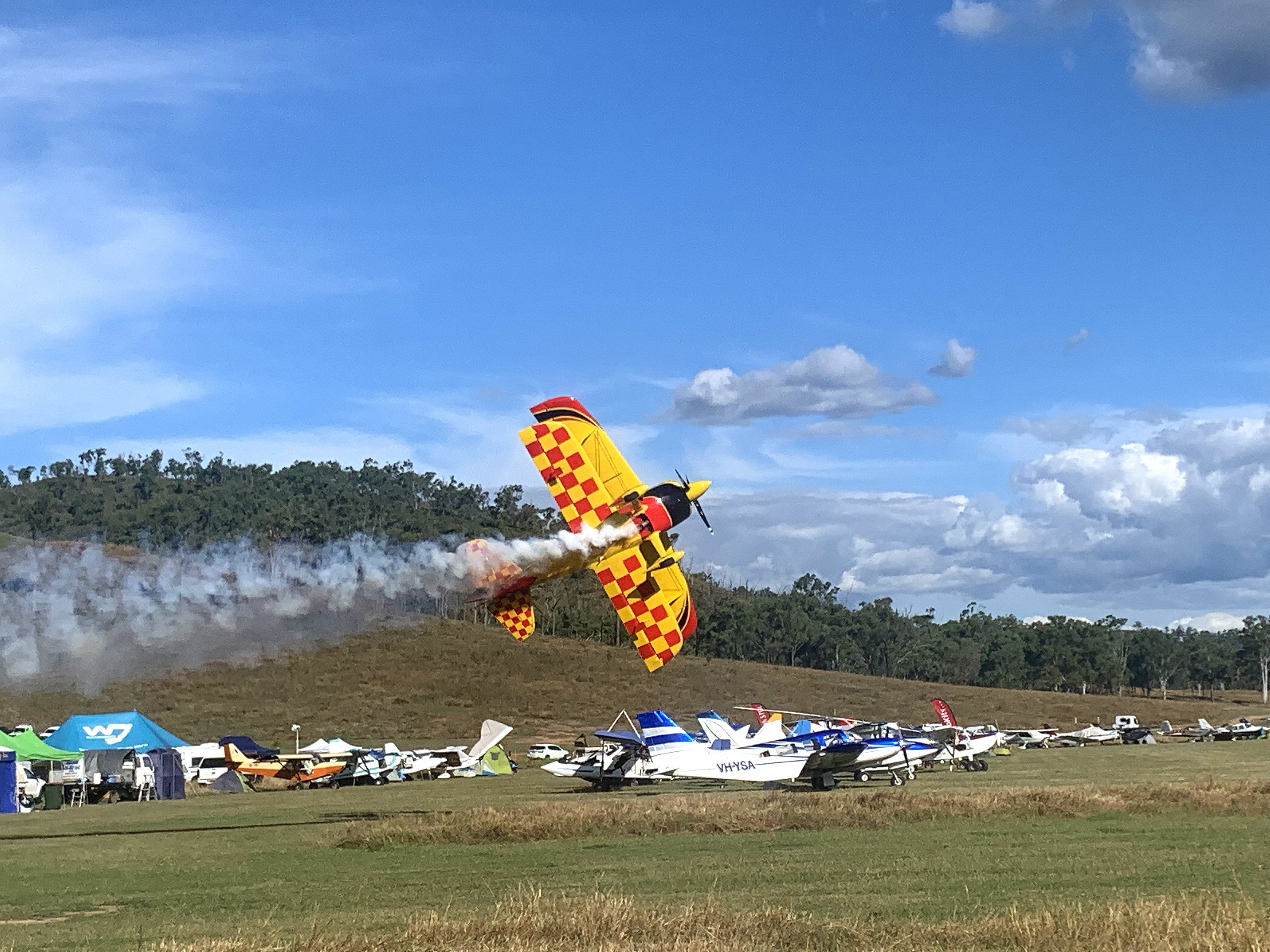
The air show ran from 2pm to 4pm and included a number of aerobatic displays including Matt Hall and Paul Bennet and a few warbirds amongst others.

It was followed by dinner and a couple of bands that played into the night while the temperature dropped to a reasonable 12 degrees and we warmed ourselves around a few large braziers full of blazing sleepers.

We caught up with various old friends as well as making some new ones. By 10:30pm we retired to our tents and were lulled to sleep by the sound of the band playing on, accompanied by the raucous singing of some of the younger attendees. 

It was a bit of a difficult night, not being used to sleeping on air mattresses in tents anymore so I woke up a few times and was still a bit tired when a loud explosion signalled first light around 6am. The first aircraft departed soon after. It was another perfect blue sky day. The sun rose over the hill and lit up the property. More planes departed as the dew gradually evaporated off the grass and the tents.

During breakfast we watched as one plane after the other took off, heading for home. Brett and I packed up our tents and were ready for departure by 10:30. By the time we taxied out to runway 24 there were not that many planes remaining. It was all very orderly and soon it was our turn to back track. We took off past the assembled crowds, using the soft field technique to lift into the air then accelerate in ground effect, before climbing away at the far end of the runway. Soon we were heading south east at 5500 feet, this time for Agnes Water. It was only a 20 minute flight and as we descended we heard a Jabiru that was also heading for Agnes. He was ahead of us though so we let him do a straight in approach while we passed overhead then did a 500ft overfly to inspect the runway. After all the recent rain I wanted to be sure there were no ruts and also no kangaroos around. All was good so we did another circuit and landed. As we shut down the Jabiru pilot approached and offered us a lift into town. How could we refuse?

After lunch at the Holidays Café at the beach we caught a taxi back out to the airstrip for the trip home. It really was a perfect day as we lifted off and followed the coast all the way back to Noosa Heads at 3000ft.

A somewhat nervous sounding Jetstar pilot who told us he was from “down south” was taxiing at Hervey Bay and wanted to know our location and intentions as we flew past. Eventually after a few exchanges the air traffic controller assured him that as we were at the southern end of Fraser Island we were well out of the way of his climb out to the south.

Inskip Point and Fraser Island

We rounded the lighthouse on Double Island Point and marvelled at the number of cars on the beach.

Double Island Point

Passing through the Sunshine Coast controlled airspace we had a great view of beach side communities and had to pass behind a landing 737.

Point Cartwright

After passing over Bribie Island we were back at Redcliffe again. Another greaser landing and the weekend was over.  

Southern Explorer Trip

Orange – Tyabb – Melbourne – Ballarat – Stawell – Mount Gambier – Aldinga – Adelaide Hills – Arkaroola – Flinders Ranges – White Cliffs – Dirranbandi

On 16th March 2022 Sigi and departed in Cirrus MSF on a “southern explorer” trip. The trip included both IFR and VFR legs and though it was mostly in VMC, the PIFR came in very handy, especially when we did encounter IMC conditions. There were a few instrument approaches, mostly just for practice but one was in IMC almost down to minimum descent altitude. There were also some night circuits, a couple of scenic flights and some landings in some very remote places.

The trip had its genesis one evening in September 2021 at a charity ball in support of Brainchild,  a marvellous charity that helps families with children suffering from brain tumours. There was a silent auction and one “prize” was a three night accommodation package at Mt Lofty House in the Adelaide Hills. This is a high class hotel incorporated into an historic 19th century mansion. I’ve been aware of it for many years and had often thought it’d be a great place to stay so, given my love of the Adelaide Hills region, I thought I’d bid for it, not thinking I’d win.  Surprise, surprise! Mine was the top bid. So, the next challenge was to decide a time to stay there. We elected to go in autumn, a beautiful time in the Adelaide Hills, and built a three week flying trip itinerary around this “anchor”. The aim was to fly first to Tyabb, near Melbourne, to visit our daughter and various friends, and then to Stawell to overnight with some friends, and then to Mount Gambier, to visit my 96 year old mother. From there, we’d fly to Aldinga, a convenient base for the Adelaide Hills/Mt Lofty House and, after our stay at Mt Lofty, we’d continue via various stops in South Australia and New South Wales back to Redcliffe.

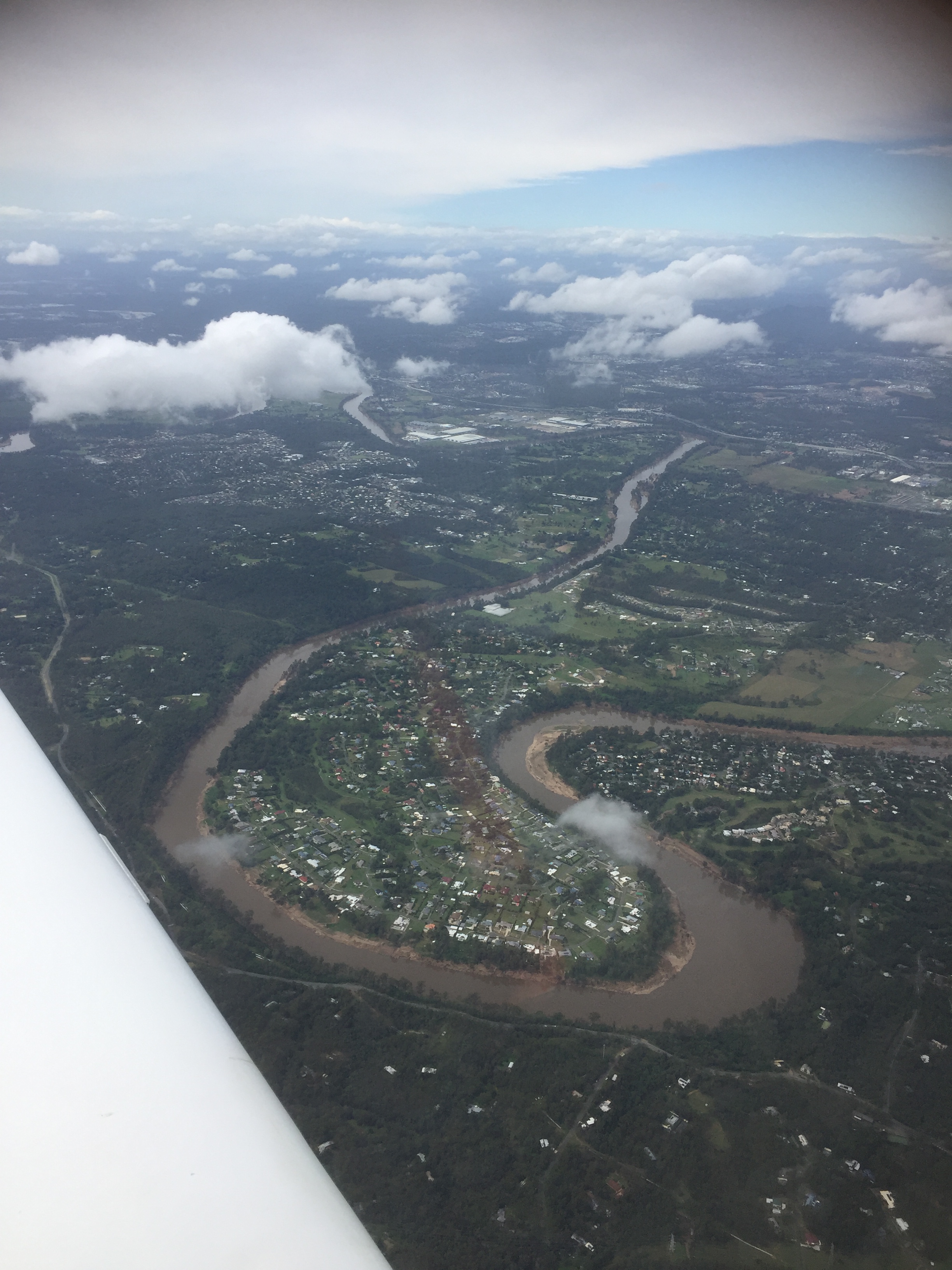
Brisbane had suffered record rainfall in the week prior to our departure. I’d tipped 1600mm of rain out of my rain gauge over 72 hours! So there had been quite a lot of devastation along the river systems, including the Brisbane River. The 16th March dawned fine however and we took off from Redcliffe IFR for our first stop – Quirindi. From Redcliffe we tracked past the TV Towers on Mt Coot-tha and over the Brisbane River, that showed definite signs of damage on its banks from flooding.

From overhead Amberley, we tracked for Inverell then through the Tamworth controlled airspace. In one of the few glitches I’ve ever noticed with ATC I actually had to remind the controller that I needed a clearance as we were about 1 nm from the boundary. He then cleared me quickly through the airspace and on to Quirindi and the RNP approach.

Tamworth

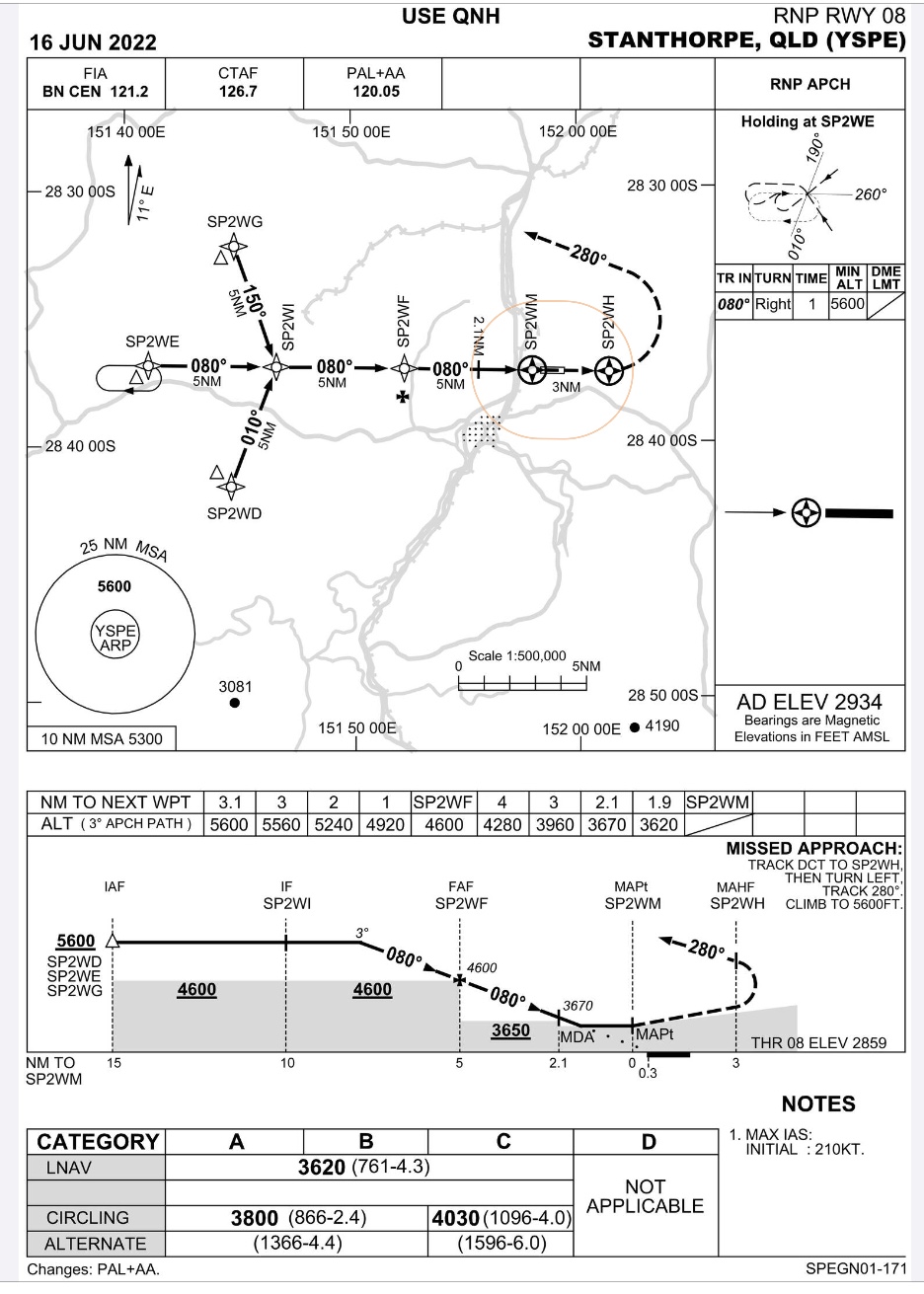
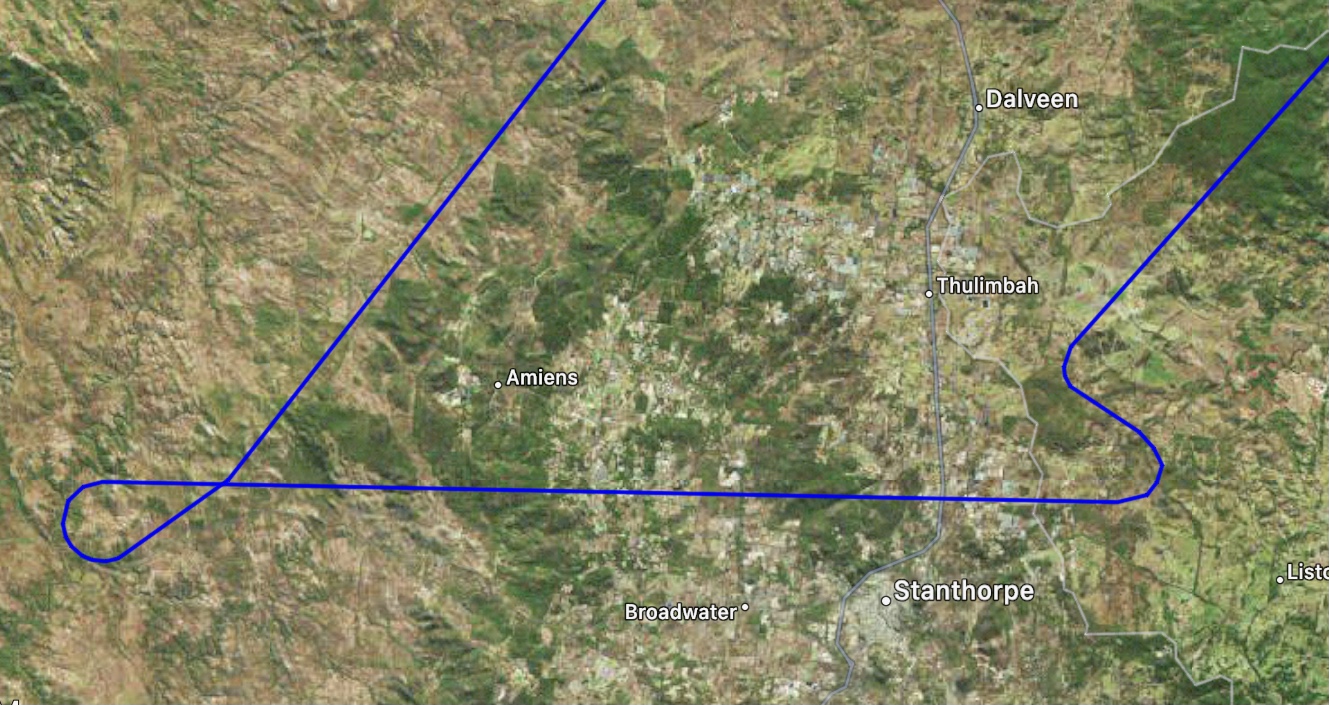
So why were we flying to Quirindi? I’ve stopped there before and it’s basically an easy place to land with almost no traffic and a good place to have a toilet stop and drink/snack. It also has RNP approaches that the RAAF trainees use when they’re flying out of Tamworth so it’s a good place to practise instrument approaches. So even though it was practically CAVOK I decided to use the opportunity to practise via waypoint WG – it went ok but was not perfect. I could do with some more practice.

On the ground in Quirindi

After a sandwich and a toilet break, we took off for our next stop – Orange. I attended a Cirrus workshop event there in 2019 and thought it would be a good place for Sigi to see and as it’s just over half way to Tyabb it seemed a good place to stop for the night. Orange also has RNP approaches so I did another practice, via waypoint WC. This time it went very smoothly.

Unfortunately, finding accommodation in Orange hadn’t gone so smoothly. It was very heavily booked (due to a major expansion project at Newcrest’s Cadia gold mine we were told) so we booked into the Millthorpe Boutique Motel  in the quaint village of Millthorpe, about 15 km from Orange Airport. It was a great little town to explore on foot, once we’d arrived by taxi. The taxi was a bit of a trap though. I’d phoned up the taxi company the day before and asked whether we could catch a taxi from the airport to Millthorpe and what the approximate cost would be. My thoughts were that if it was much more than $40 each way, I could hire a car for 24 hours instead. The operator told me it’d be $30-40 so I thought that’d be fine. Only once we climbed into the taxi and were heading to Millthorpe did the driver say “Did they tell you about the surcharge?” It turns out that if you take a taxi from the airport in any direction away from Orange they charge you a $30 surcharge. Similarly if you catch one back from Millthorpe you pay the surcharge. This is because they’re unlikely to get a return fare. I don’t mind paying such a surcharge but when I ring up specially and ask for the fare to Millthorpe and they don’t tell me about the surcharge I get a bit annoyed. I could’ve hired a car for less and we could have driven into Orange for dinner. You live and learn.

Pym Street, Millthorpe

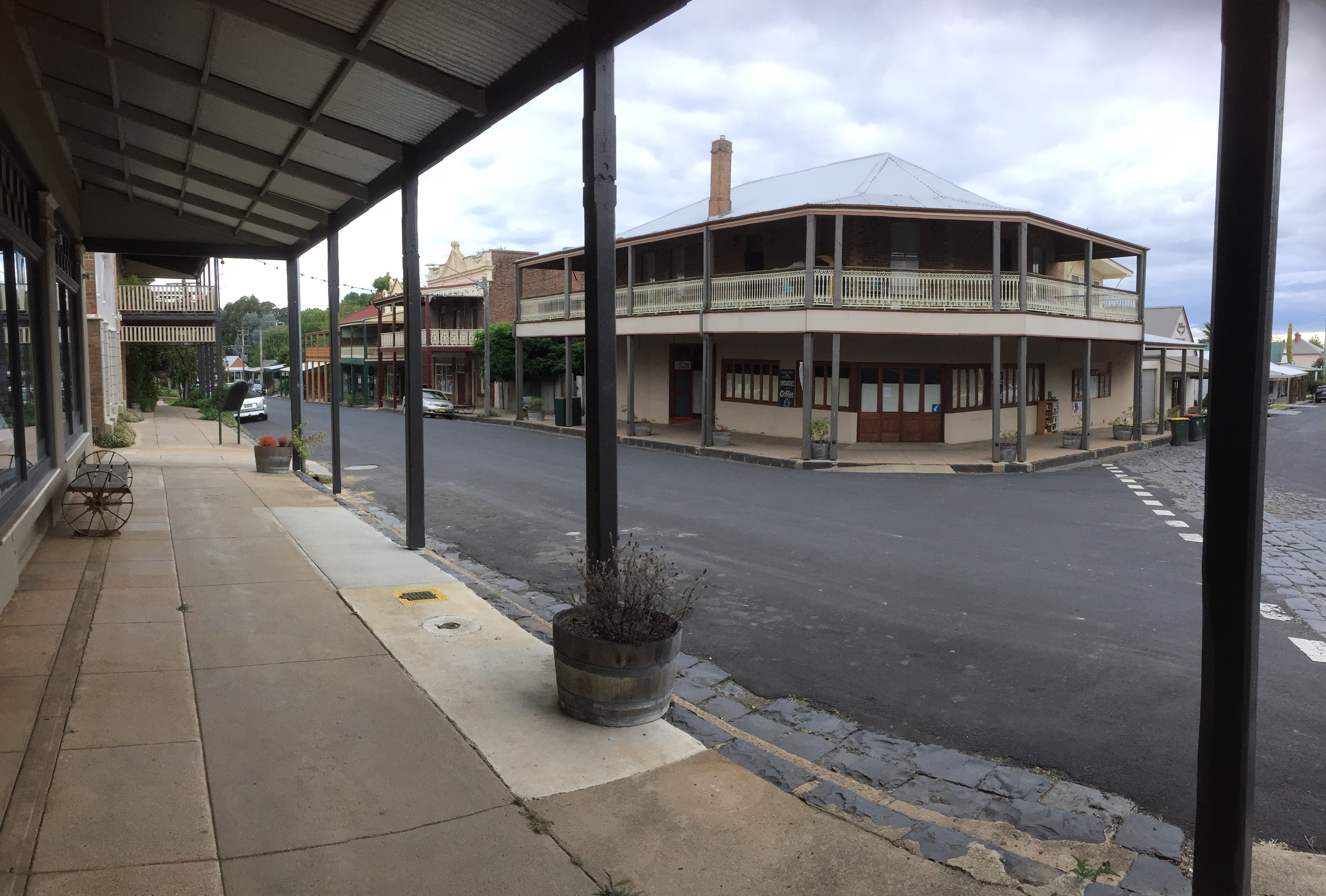
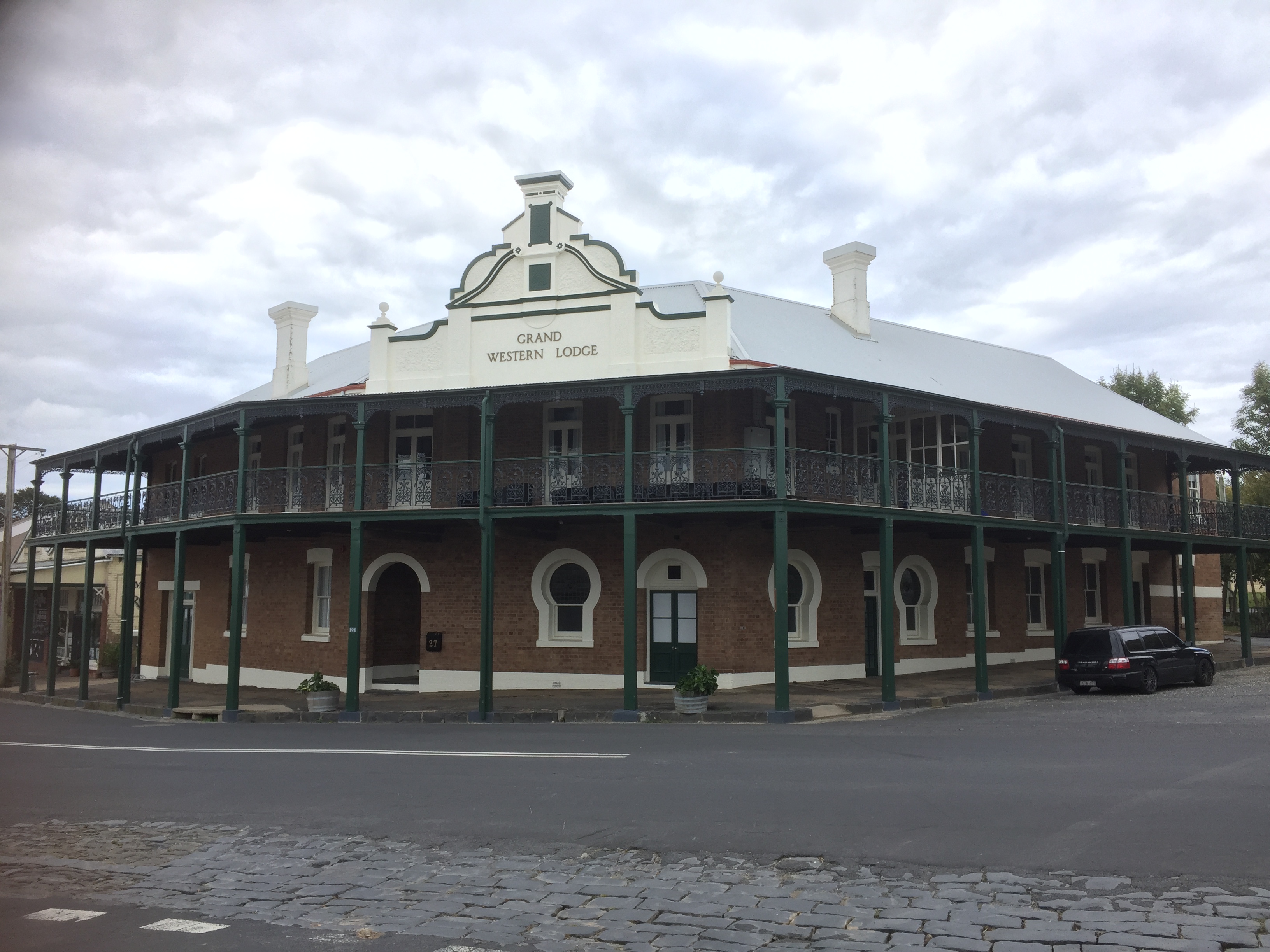
Anyway, we had a pleasant walk around Millthorpe, with its old railway station and pubs. It’s on the Great Western Railway route from Sydney to Dubbo and the XPT train passes through in each direction once per day. The old Grand Western Lodge that used to house passengers in the railway’s heyday is still there but currently closed due to Covid, or so it seems. Hopefully it will reopen soon.

Grand Western Lodge

We had dinner at the only place in town that opens on a Wednesday, the Millthorpe Hotel, another old building that oozes charm. After another walk around the other end of town we headed back to the motel for an early night.

The next day we were at the Millthorpe Providore across the road from the motel just after 7am. Great breakfast and lots of locally made foodstuffs to buy. Our taxi arrived and sped us back to the Orange Airport, with another “did they tell you about the surcharge?” interchange.

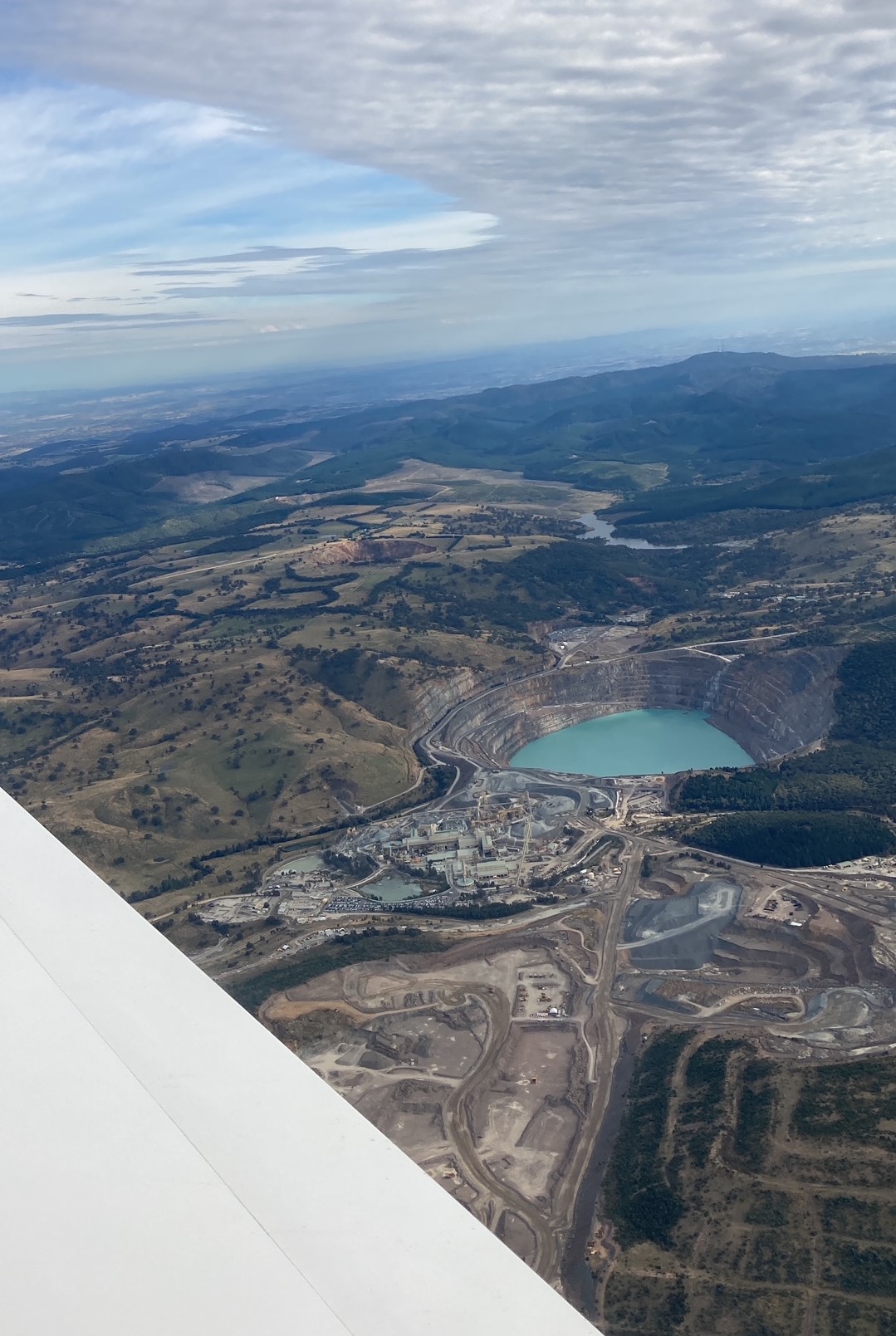
We took off into a clear blue sky passing near the Cadia Valley Gold Mine as we climbed to cruising level.

Cadia Mine

From there we flew to Cowra and on to Young. I’d planned to fly at 8000ft but as we went further south the clouds gathered and descended, so I requested traffic for 6000ft and we descended to stay below them.

Young

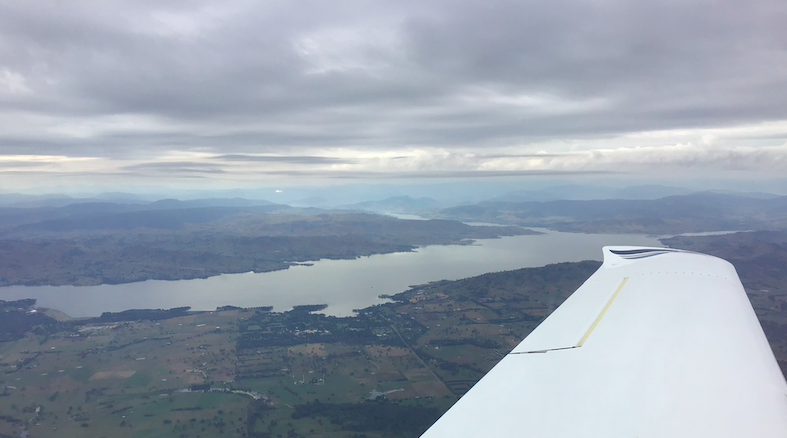
From Young we tracked to Wagga Wagga then Albury, passing by Lake Hume, Beechworth and Lake Eildon before descending into Tyabb on the Mornington Peninsula.

Lake Hume
Beechworth, with Mt Hotham on horizon

It was starting to spit with rain as we descended and the light was fading, even though it was around midday. Tyabb is a private aerodrome surrounded by farmland about half way down the Mornington Peninsula, south east of Melbourne. The runway doesn’t really stand out. Five miles out and I still couldn’t see the runway. Then suddenly, about 3 miles out there it was, straight in front of us. We flew over the top, checked the windsock and decided to land from the north. Pulling up at the bowser we saw our friends Beate and Colin waiting nearby. They came over and helped us remove our bags from the plane as I was topping up the tanks. I wasn’t paying attention to their movements until Beate caused a taxiing 172 to stop in its tracks and shut down. She was about to walk straight into its spinning propeller! I then asked Sigi to act as chaperone while I finished my fuelling duty.

Tyabb is home to the Peninsula Aeroclub. With approximately 600 members and 18,000 movements per year, it’s a very active place so you’re best to book your parking ahead of time. I’d rung the flight school the week before and booked a space on the grass alongside the clubhouse for four nights. It think it cost me $5 per night. The clubhouse was built in 1995 and has a very pleasant first floor bar and restaurant area with panoramic view over the runways and apron. In recent years the club has had its fair share of problems with the local council, who were trying to restrict their activities, and even shut them down. However, the aeroclub recently won a court case and even had costs awarded against the council so feel vindicated and more secure in their future. The club has quite a few flight instructors and many hangars on site. They have also put on a few spectacular airshows in recent years (prior to covid) and it’d be great to attend one in the future. The land for the aerodrome was donated by Doug Thompson, one of the original club members, in 1961. He also built the Peninsula Motor Inn and Tyabb Fly Inn Restaurant and associated conference centre on site for visiting aviators. A ten minute taxi ride away is an Avis depot at Mornington. We hired a car there for a couple of days.

Tied down in Tyabb

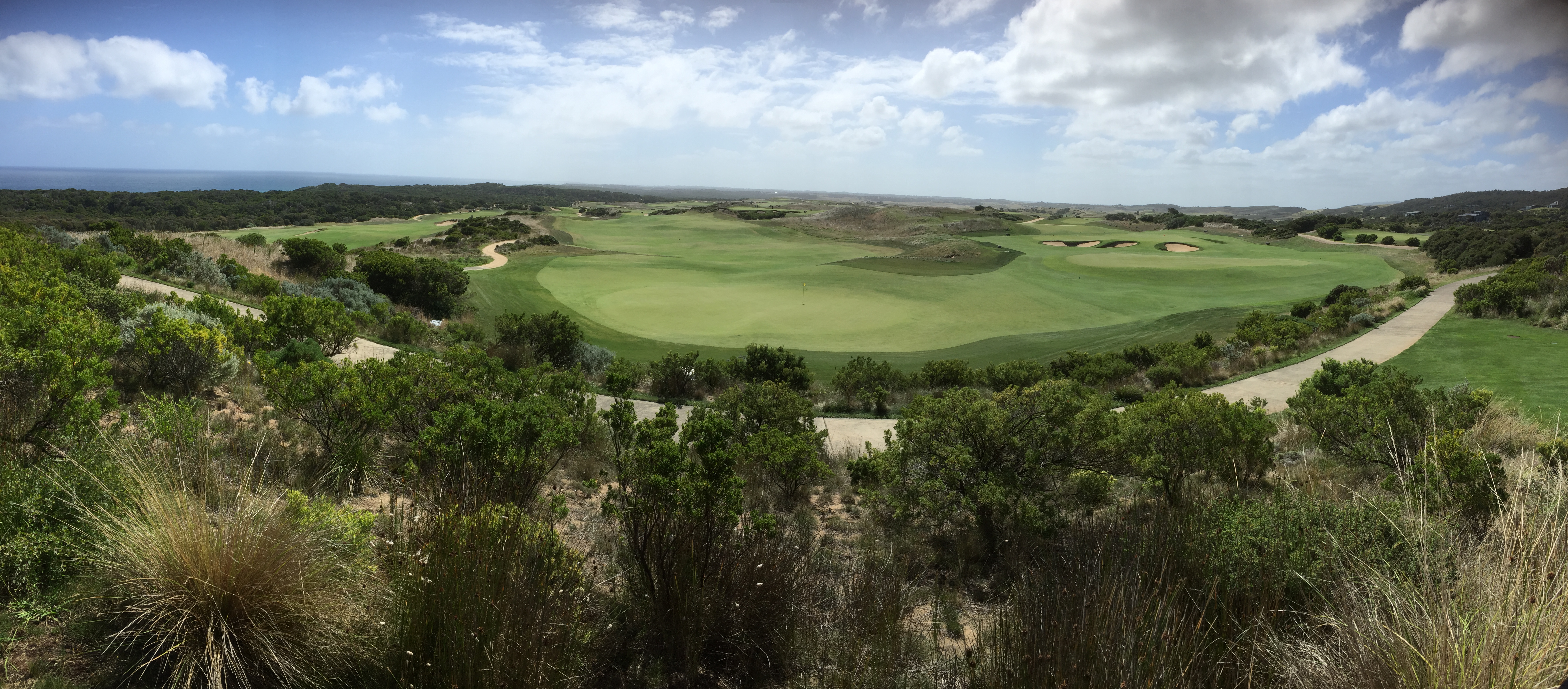
We spent two days on the Peninsula at Rye with Beate and Colin, including 9 holes of golf at the National Golf Club.

The National

That was followed by two days in Melbourne where we helped friends to move house and did a lovely walk around the Yarra Bend Park with our daughter.

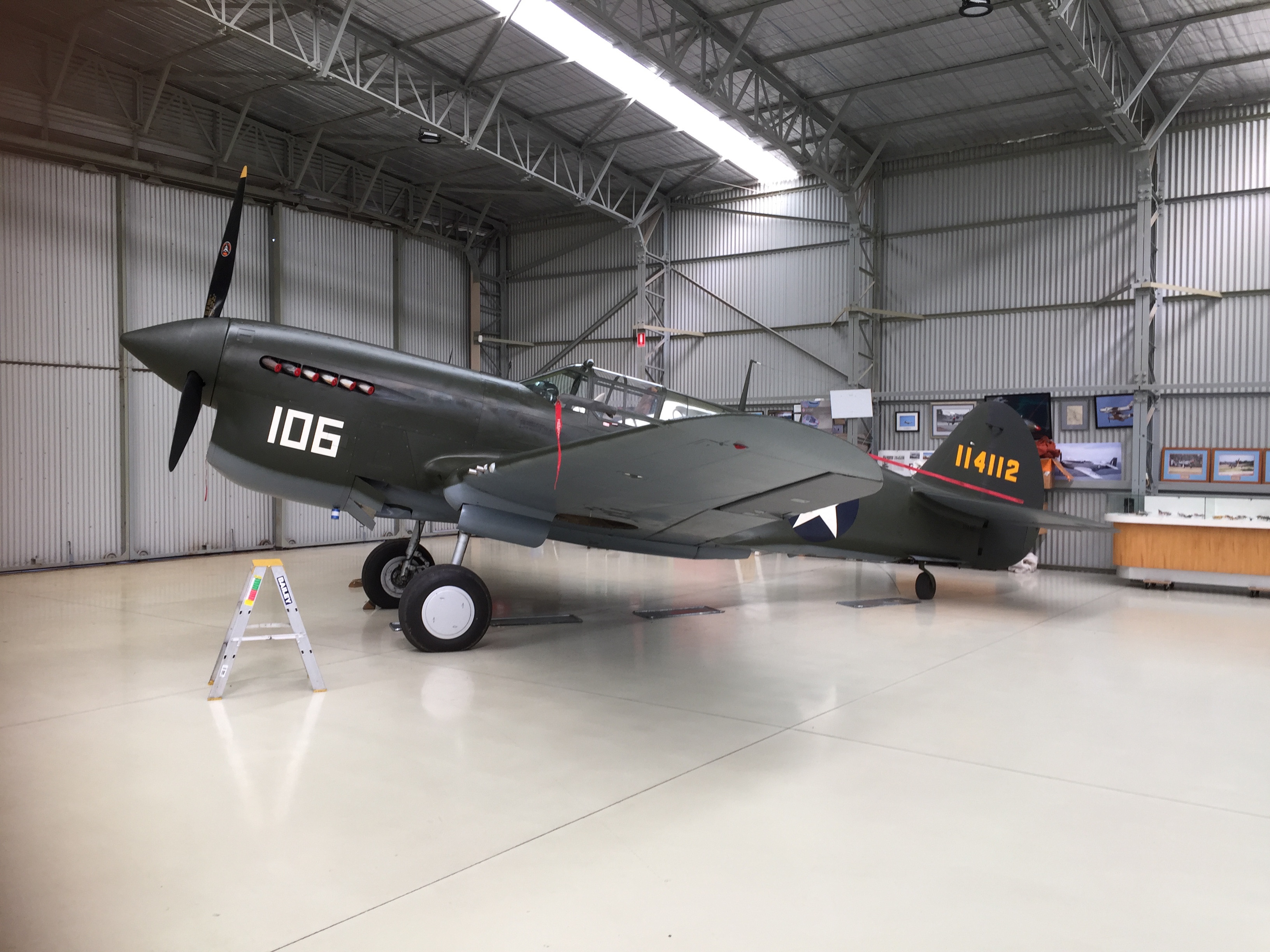
On Monday 21st March it was time to depart from Tyabb but not before Ian Johnson, one of the Aeroclub directors, kindly took me for a tour of a private collection of warbirds that is stored there. They belong to Judy Pay, another director, who owns an aviation maintenance business on site. All of the planes still fly at least a couple of times per month. Thanks Ian for being so hospitable. Ian also put me on the mailing list for the weekly Tyabb newsletter so that I am now being kept up to their activities.

We took off from Tyabb and flew south west at 1500ft, passing over the National Golf Course and Rye, then on along the coast to the Port Phillip Bay Heads.

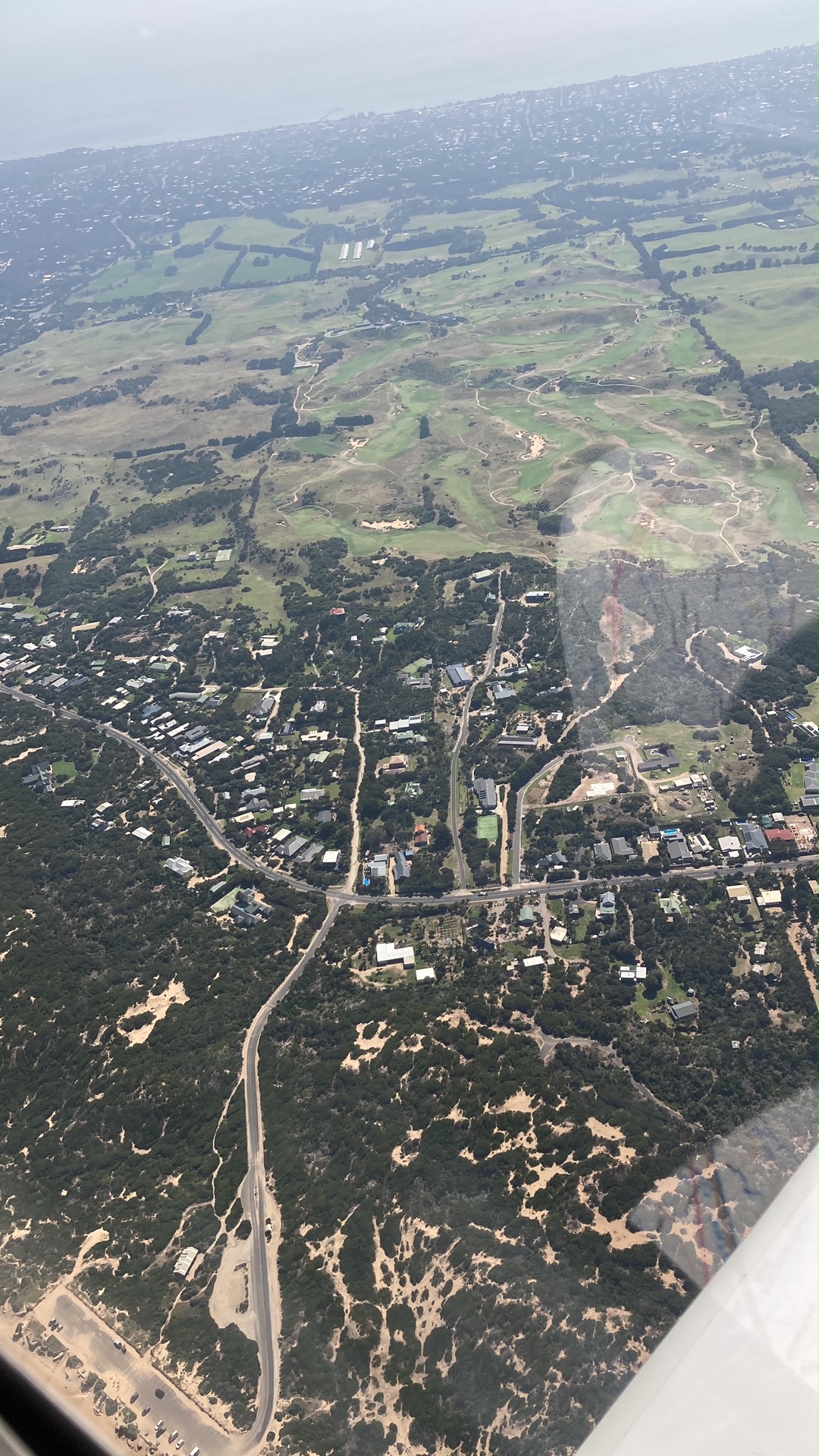
Rye and The Dunes Golf Links

It’s a great coastline that continues on past Barwon Heads and Torquay to Anglesea, where we did an orbit to have a good look at the town, where we’ve stayed with friends on numerous occasions, and waggle the wings to Sue and Ramon (see Agnes Water story) who were expecting us, then headed northwards and climbed to 4500ft, direct to Ballarat.

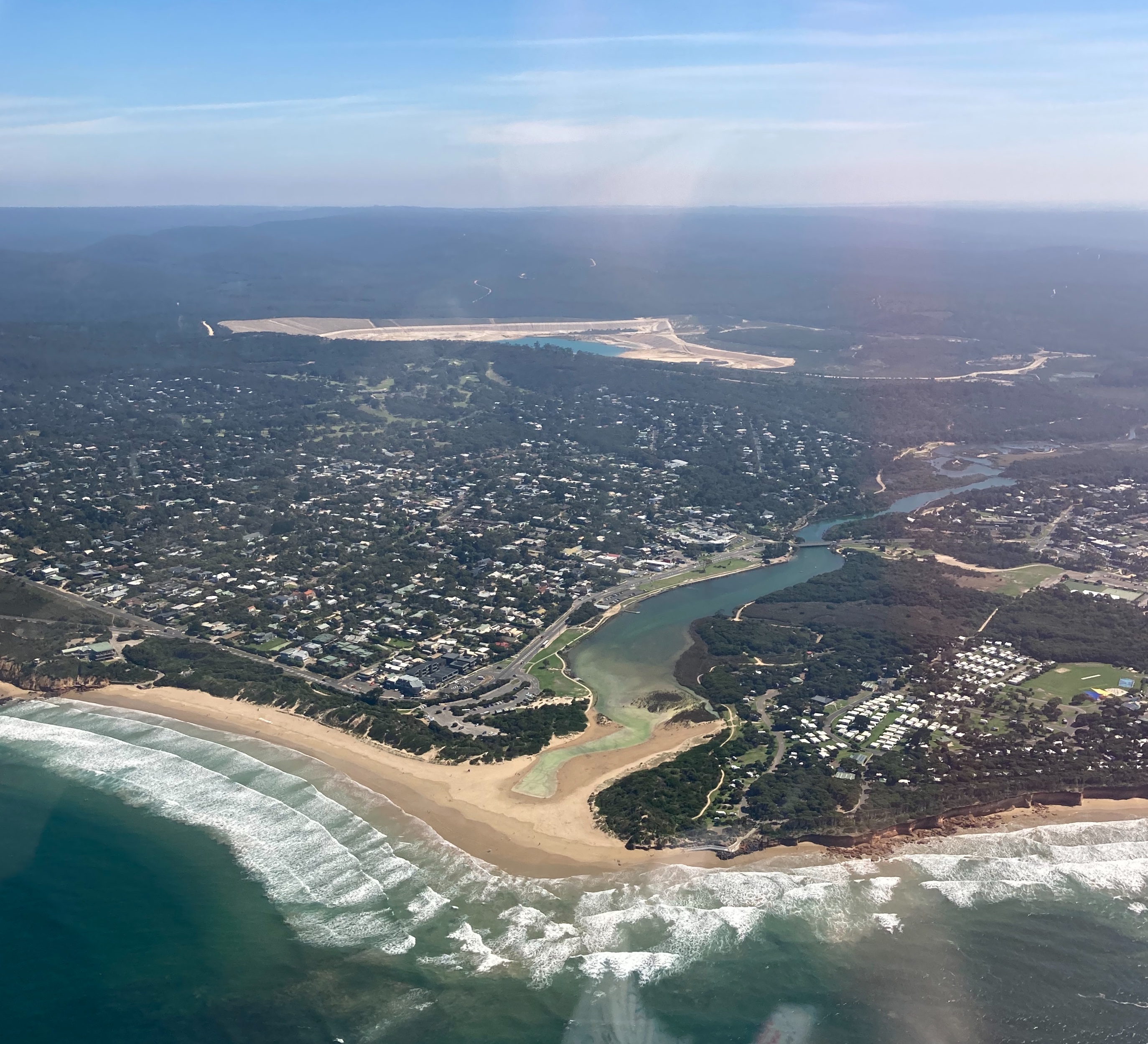
Anglesea

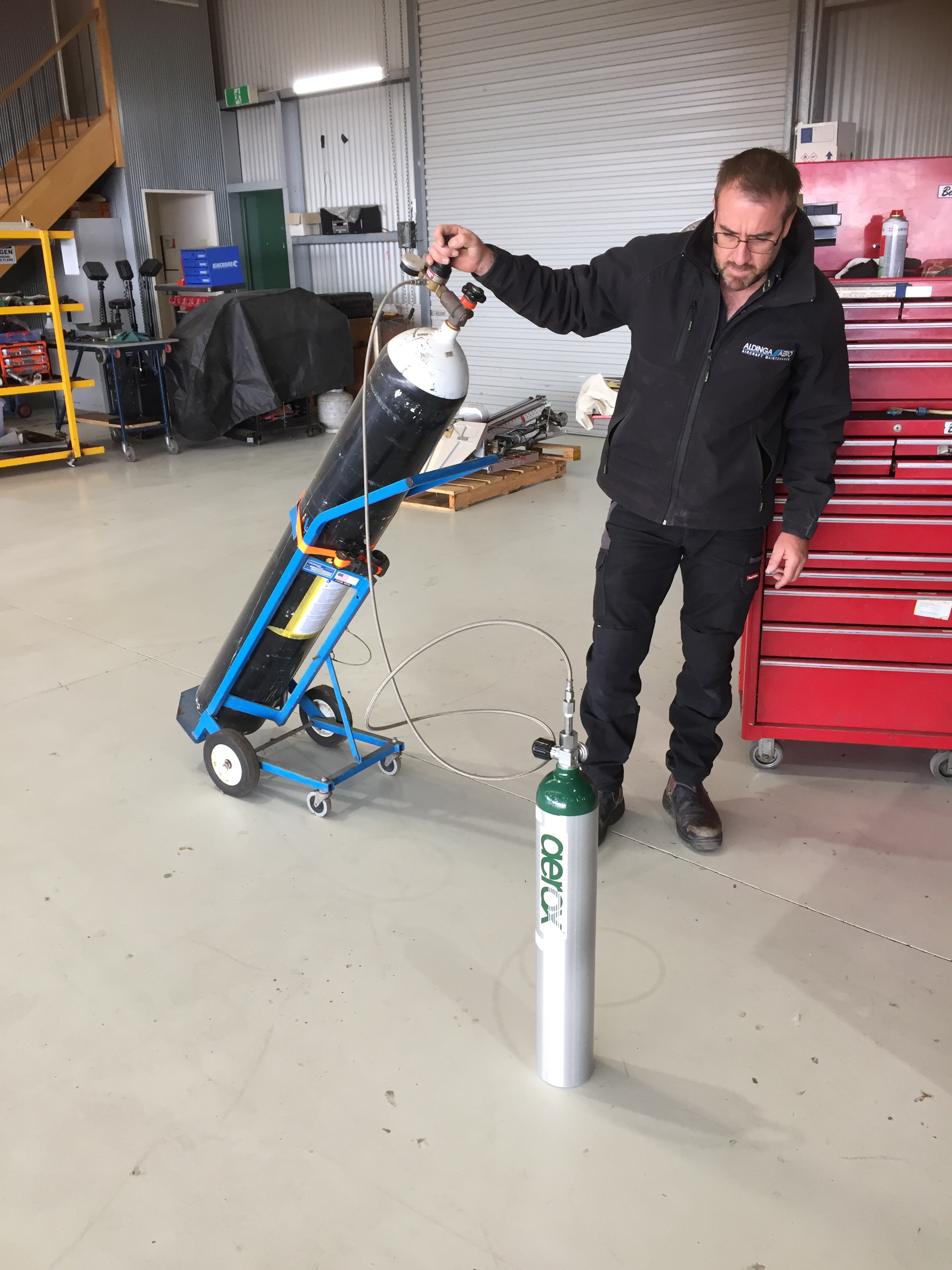
The reason for going to Ballarat was to attempt to refill my oxygen bottle. We’d been using oxygen on the way down whenever we were above 7000ft. As mentioned in an earlier post Sigi tends to get headaches above 7000ft without oxygen and I find that my concentration is heightened if I have enough oxygen to keep my blood oxygen level above 90% so a bit oxy above 7000ft is good for me too. I’d calculated we’d need to refill it about half way along the journey so I’d been ringing around Western Victoria and South East South Australia to find someone who’d be able to top it up. A company at Ballarat airport was the only one I’d found. Sure enough, the level was getting close to refill time so in we went and I walked over to their hangars, only to discover that they didn’t have the right fitting for my bottle. Never mind, I’d also found someone at Aldinga near Adelaide who said they could refill it so we’d wait until then.

We took off again for the short hop to Stawell where we’d stay overnight with our friends David and Rita. On the way we flew over the Great Dividing Range near Ararat and Mt Langi Ghiran.

Mt Langi Ghiran

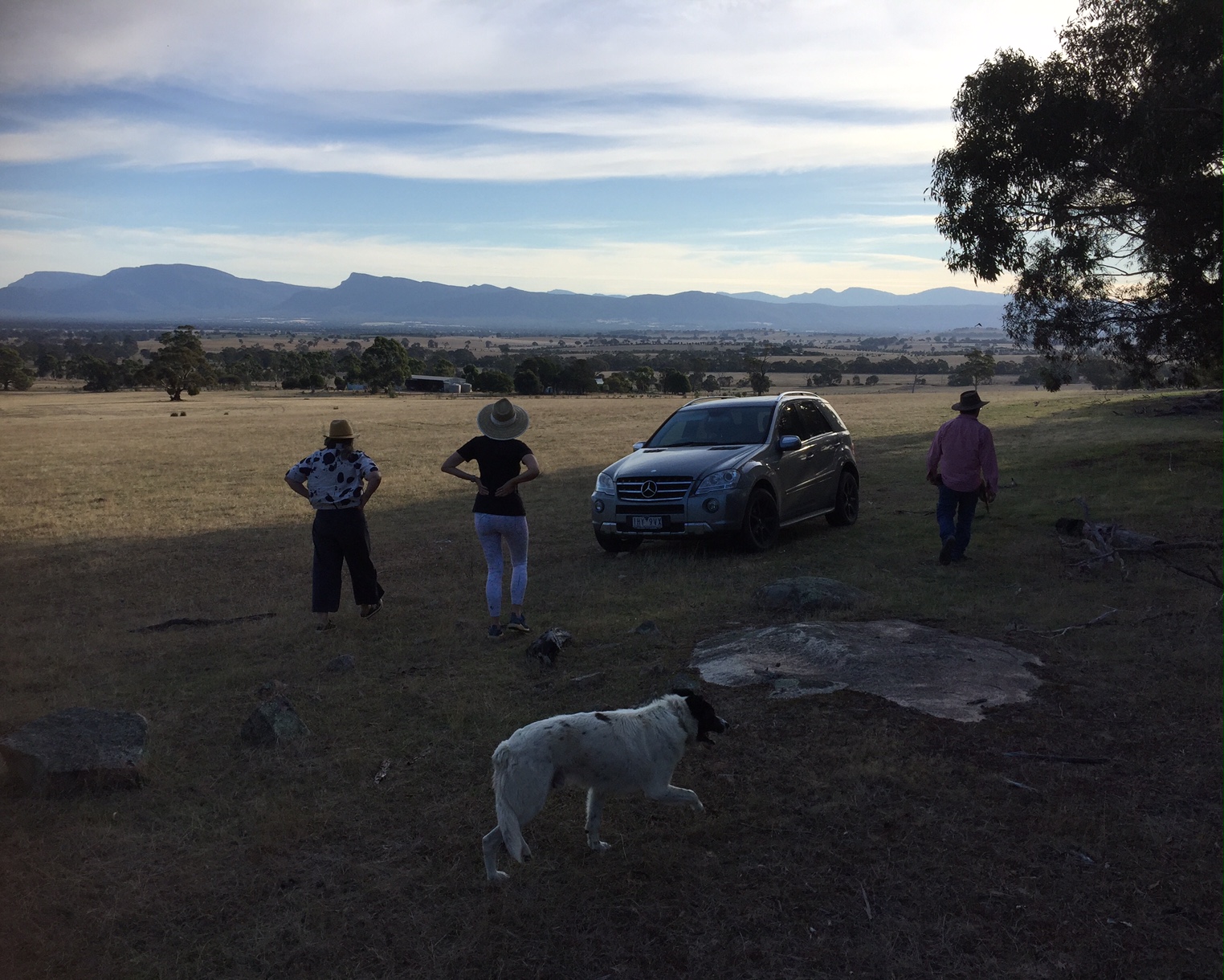
David greeted us on landing and after tying down the plane we drove to their sheep farm, where Rita was awaiting us with a late lunch. With time to stretch our legs we explore the farm, and the neighbouring Black Range, we had great views of the Mount William Range in the Grampians in the distance.

After the overnight stay with David and Rita we clambered back on board MSF for the short hop over the border to Mount Gambier, taking the opportunity to practise an RNP instrument approach that passed directly over Coonawarra, the wine district with the famous “terra rossa” soil. Once again, there was only scattered cloud but, given that we were passing that way anyway and the fact that you can never practise enough instrument approaches, it seemed too good an opportunity to miss. Once again, it all went smoothly.

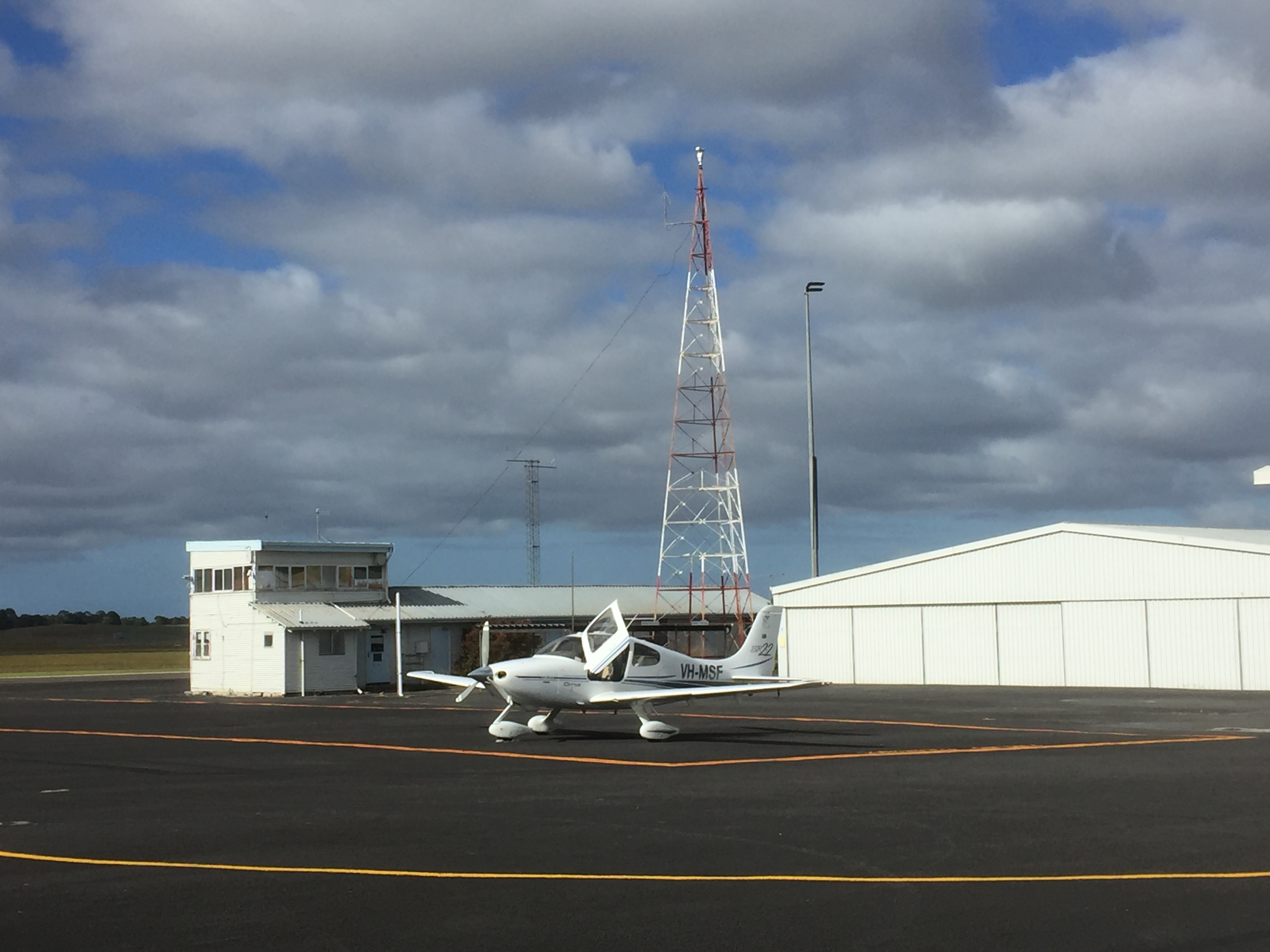
Mount Gambier apron

We spent four nights in Mt Gambier with my brother Alan, who was visiting from Sydney, and visited mum each day. She wasn’t doing particularly well but we were able to have some lovely chats with her and share lots of memories.

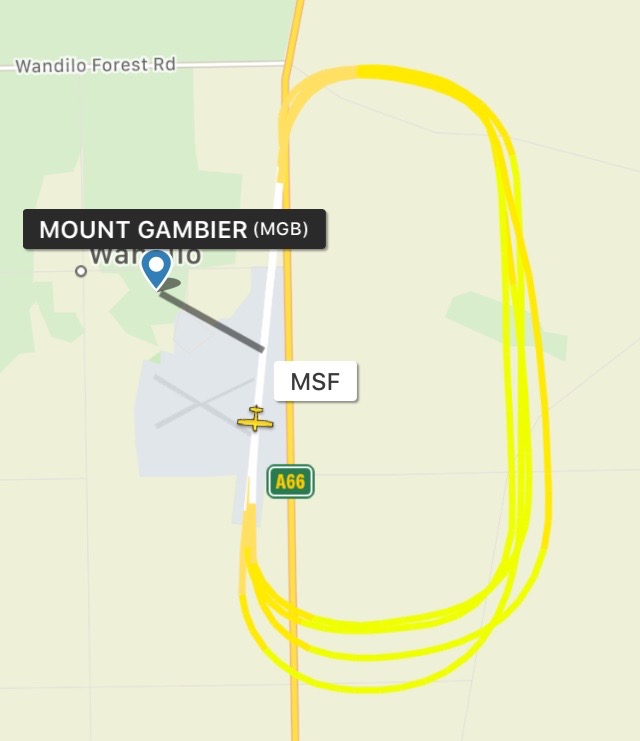
One evening I decided to make the most of the clear weather and fly some night circuits to retain my currency. Normally I’d need to drive 45 minutes out to Redcliffe but it was only 10 minutes out to the Mt Gambier airport and the runway is considerably longer and wider than the Redcliffe one, making it all a bit easier. Mind you, it was a new experience for me landing there at night time. I did a couple of circuits before last light to familiarise myself with surroundings. Once it was dark enough I took off for four more in the dark. They all went very smoothly.

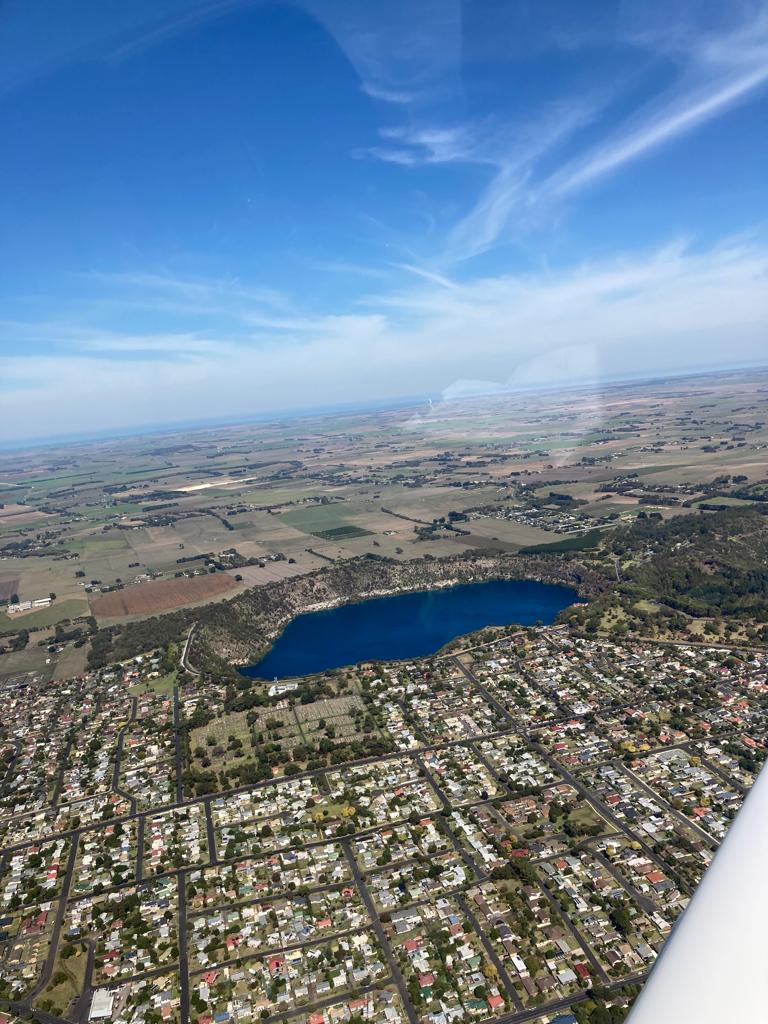
We departed Mt Gambier on Sunday 27th March for Aldinga, in the Southern Vales near Adelaide. It was perfect day for flying, with clear blue skies so I submitted a VFR flight plan to follow the coast all the way up to Victor Harbour. We initially headed south over the city of Mount Gambier and the crater lakes then further to Port MacDonnell on the coast. From there we followed the coast past Southend, Beachport, Robe, Kingston and the Coorong to the mouth of the Murray River.

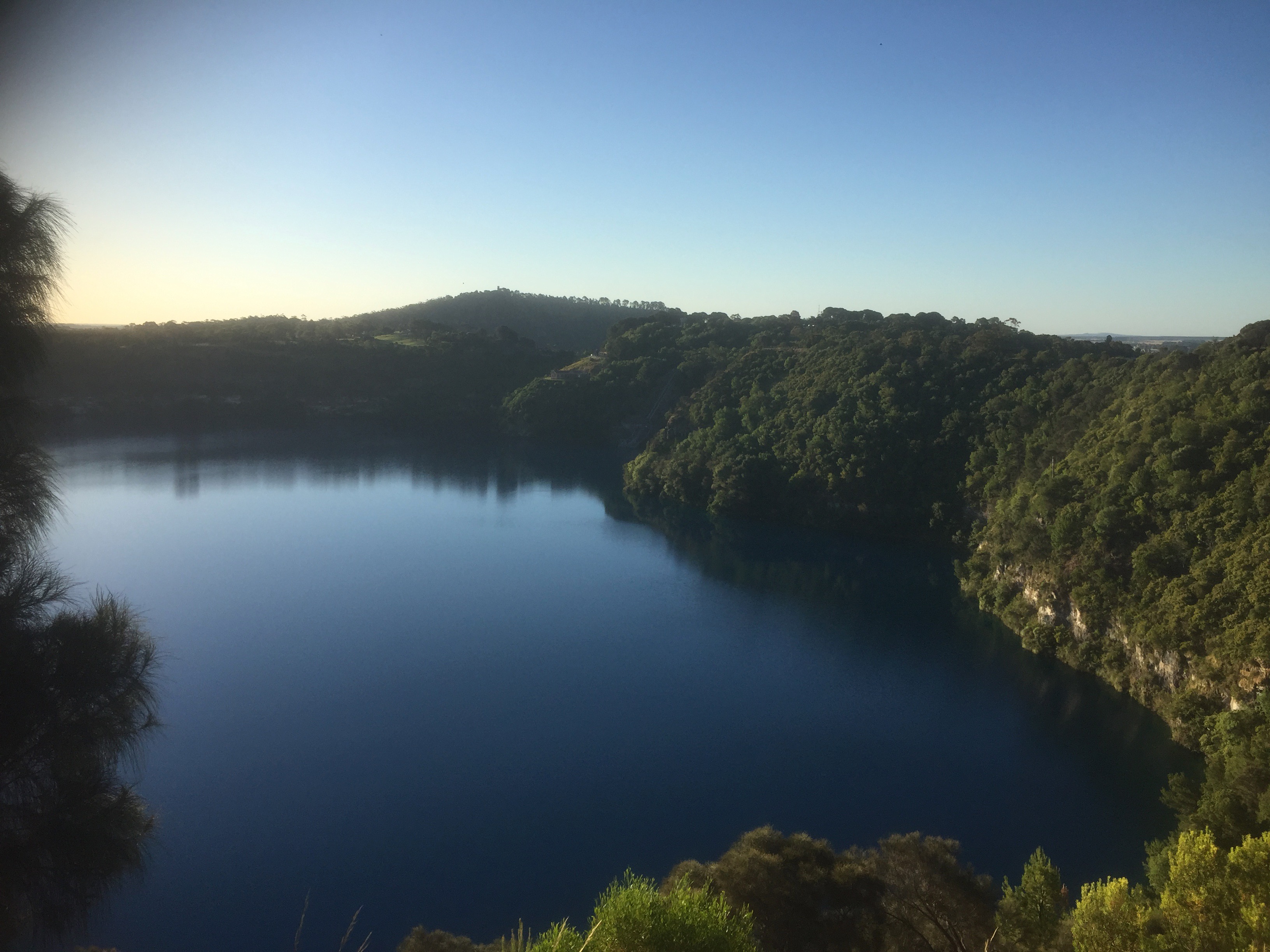
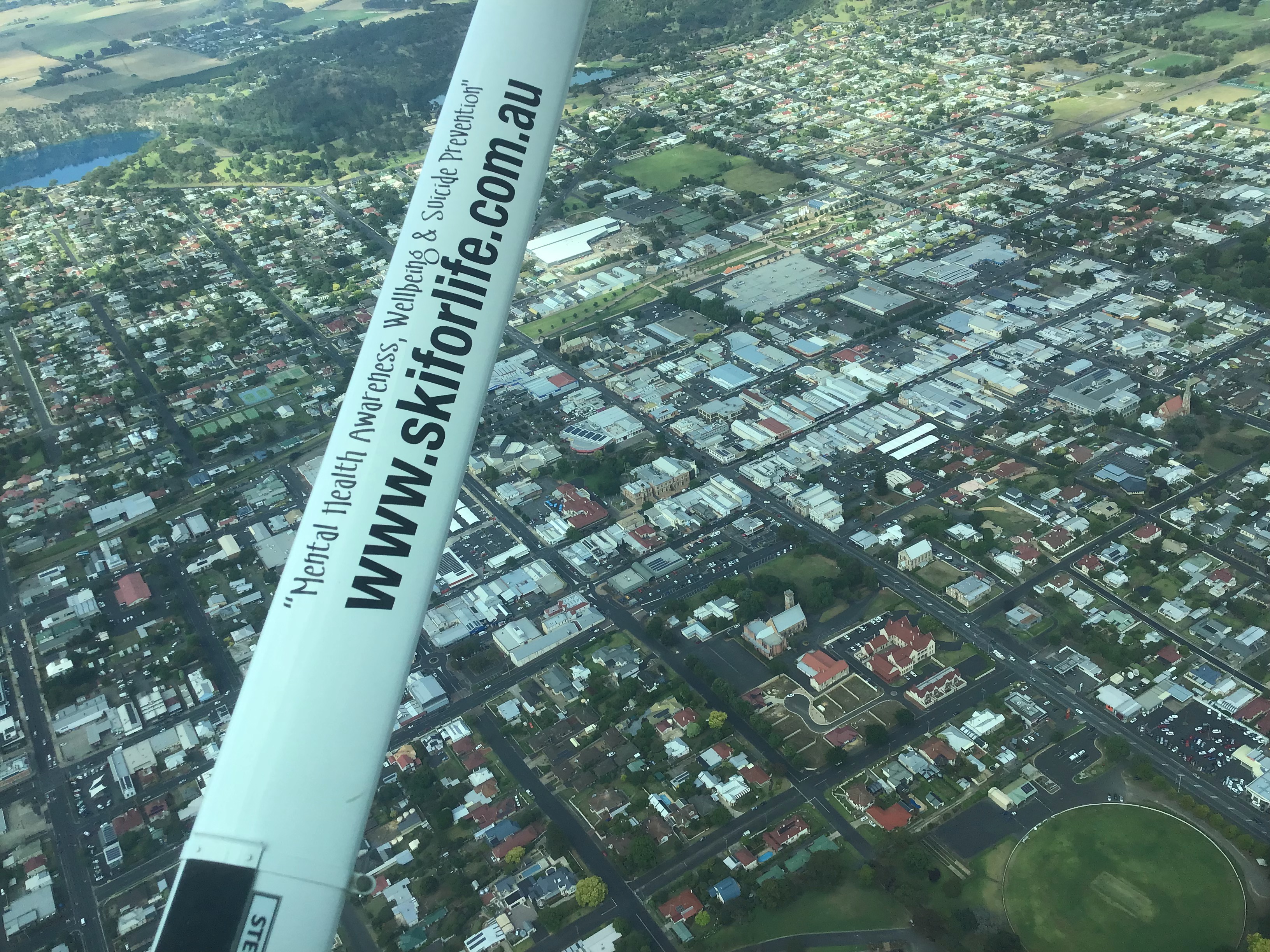
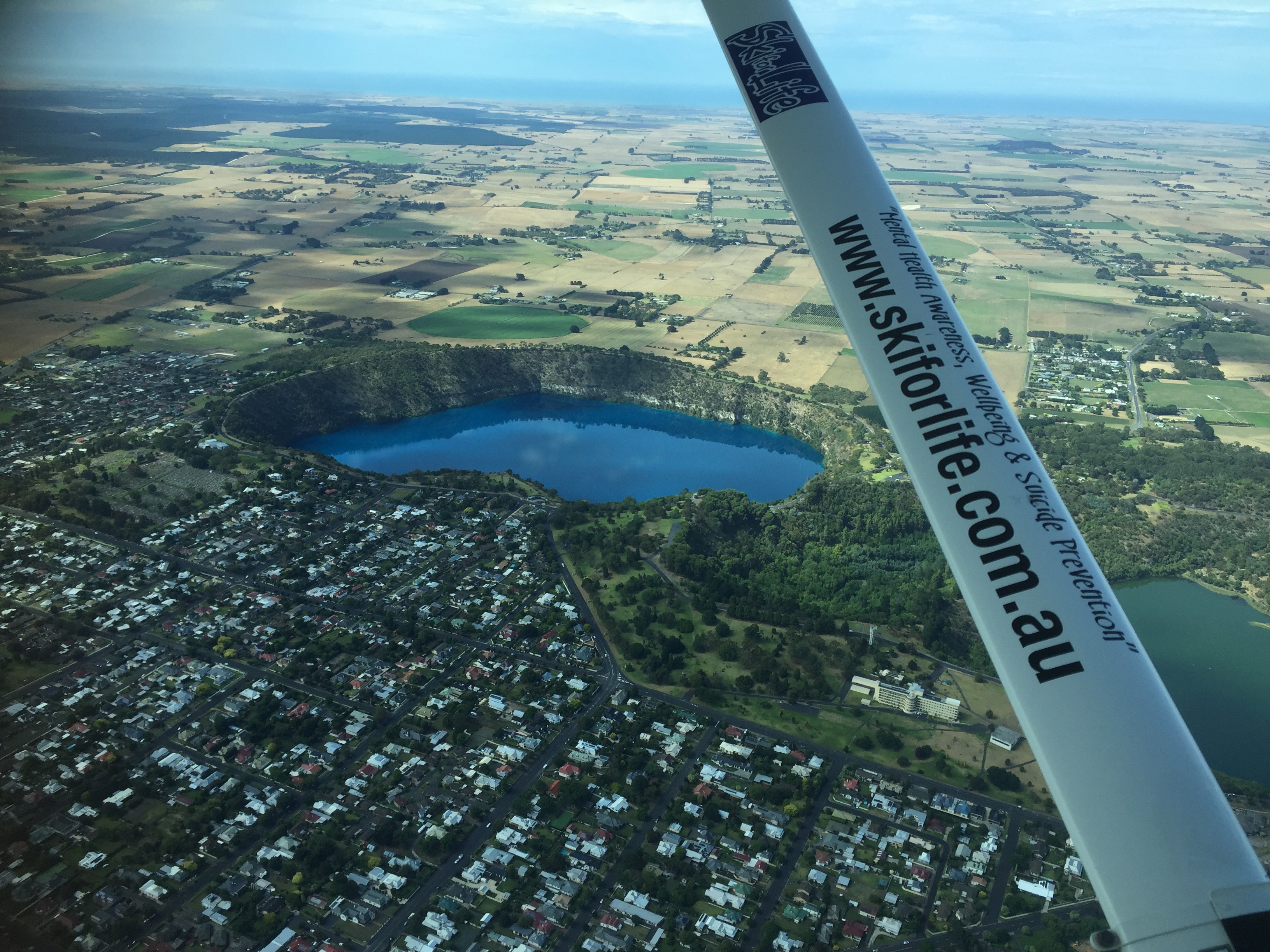
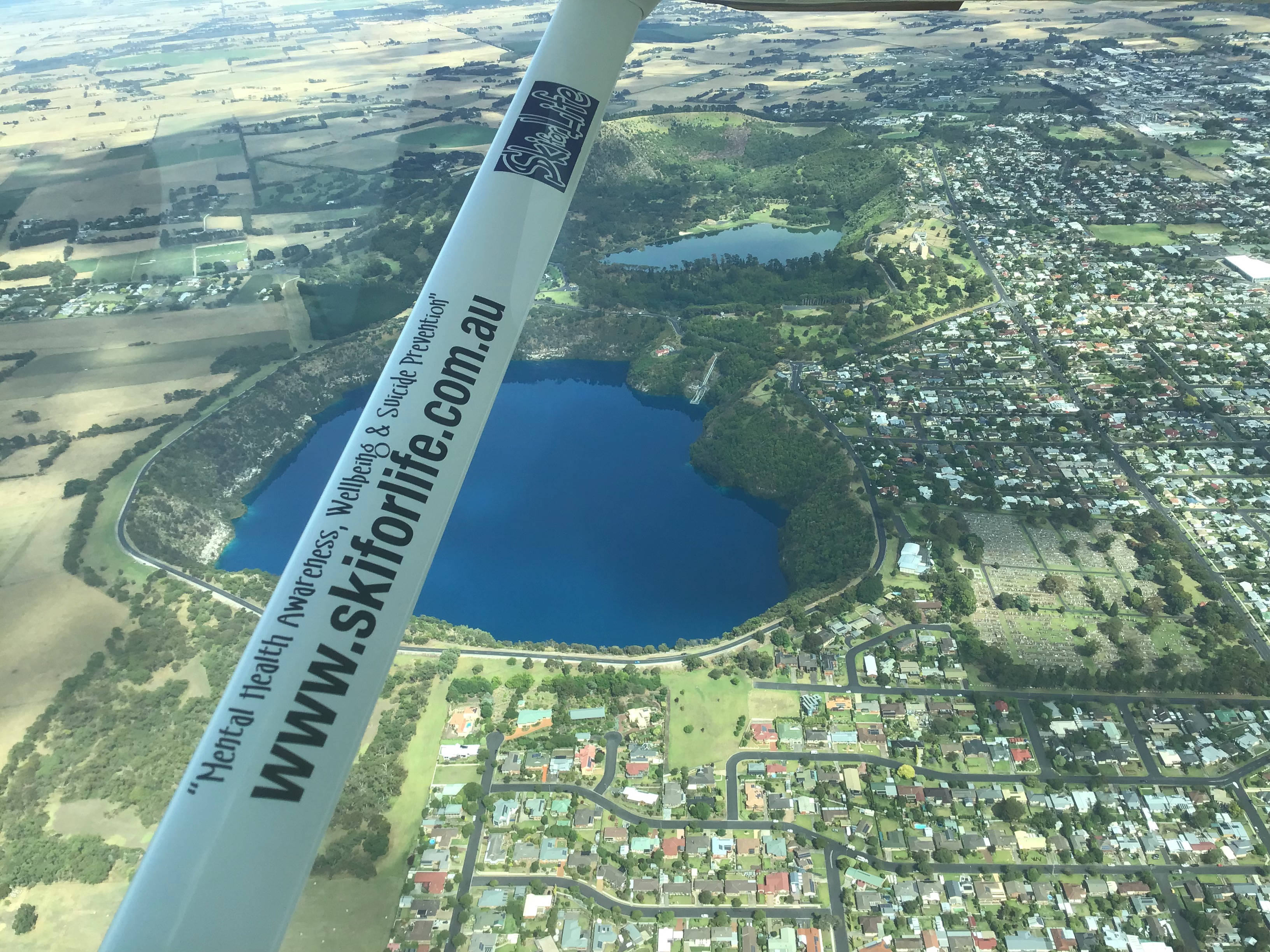
Mount Gambier City and Blue Lake
Beachport
Robe
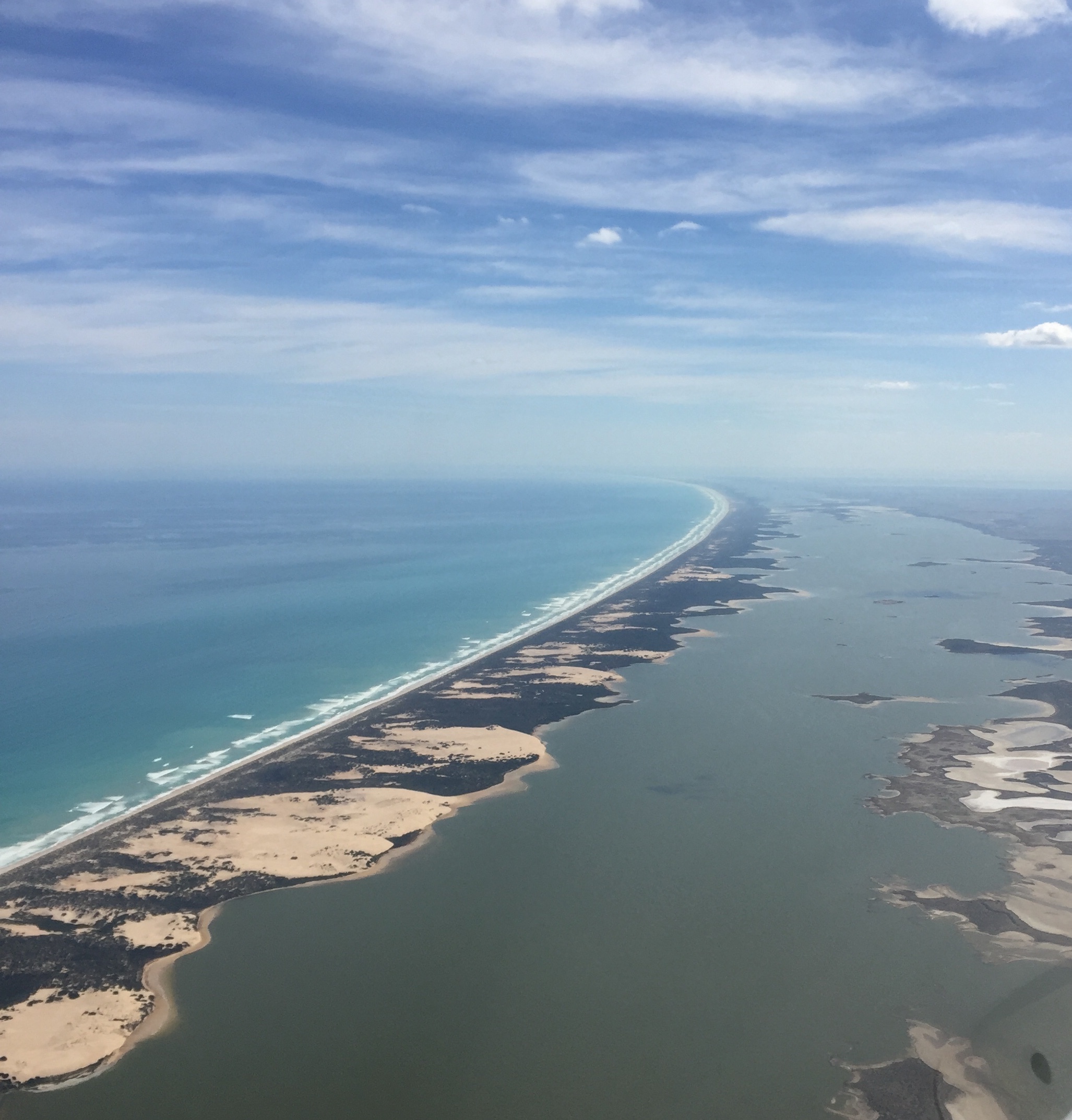
The Coorong

It was spectacular scenery as we continued over Goolwa and Victor Harbour then headed inland over the Fleurieu Peninsula to Aldinga. There were a couple of other planes flying in and out of Aldinga and one doing circuits on the cross runway. He kindly suggested I use the longer sealed runway, for my landing while he would stay out of my way, so I did.

Aldinga

On landing I carried the oxygen bottle over to Aldinga Aero, the local LAME workshop where I handed it to James for refilling. He promised to have it done by the time we returned on Wednesday.

Adelaide Biplanes is a business based at Aldinga. They offer joy flights in a variety of planes, but, more importantly, have a very pleasant café on site with shady garden and seating overlooking the runways. Very civilized.

I’d arranged a hire car from Lonsdale Auto, a local company who actually drop the car off for you at the airstrip and pick it up from there when you return. Martyn arrived soon after we’d landed and handed over the keys to a somewhat dated but very serviceable Ford. We were soon heading for the hills (literally) and found ourselves at Mt Lofty House, just outside Crafers, about 4pm.

We were welcomed warmly with a glass of bubbly at reception. After unpacking we took part in a tour of the historic house and gardens, with another glass of bubbly, at 5pm. It’s had an interesting life, including being totally gutted in the Ash Wednesday bushfires in 1983. Now it’s really hitting its stride as an upmarket getaway for anyone who likes a bit of luxury and fine food. They recently excavated a wine cellar that is now full of special bottles of wine.

It’s also located next to the Mt Lofty Botanic Gardens and numerous bush tracks, including the famous Heysen Trail, that traverses the Adelaide Hills from south to north, so makes it a great base for exploring the region on foot.

Mt Lofty House

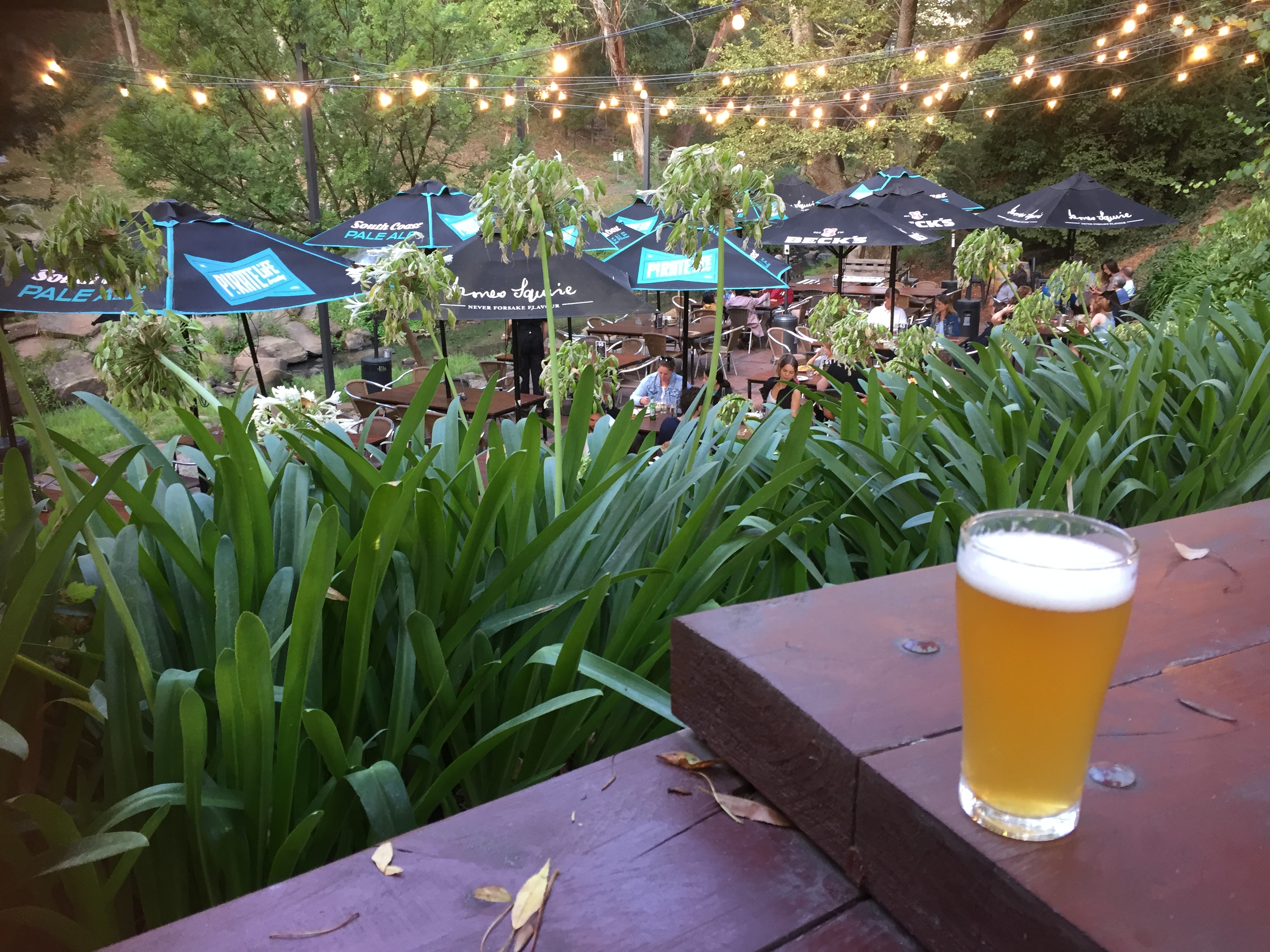
For dinner, however, we decided to drive via Sterling and Aldgate to the Bridgewater Inn, with its great beer garden.

Bridgewater Inn

The next day was blue sky and after a hearty breakfast at the hotel with a panoramic view over the Piccadilly Valley we headed off on foot to find the Waterfall Gully trail. This heavily trafficked (and quite steep, but sealed) walking path leads from Waterfall Gully on the edge of Adelaide’s suburbs up to the summit of Mt Lofty.

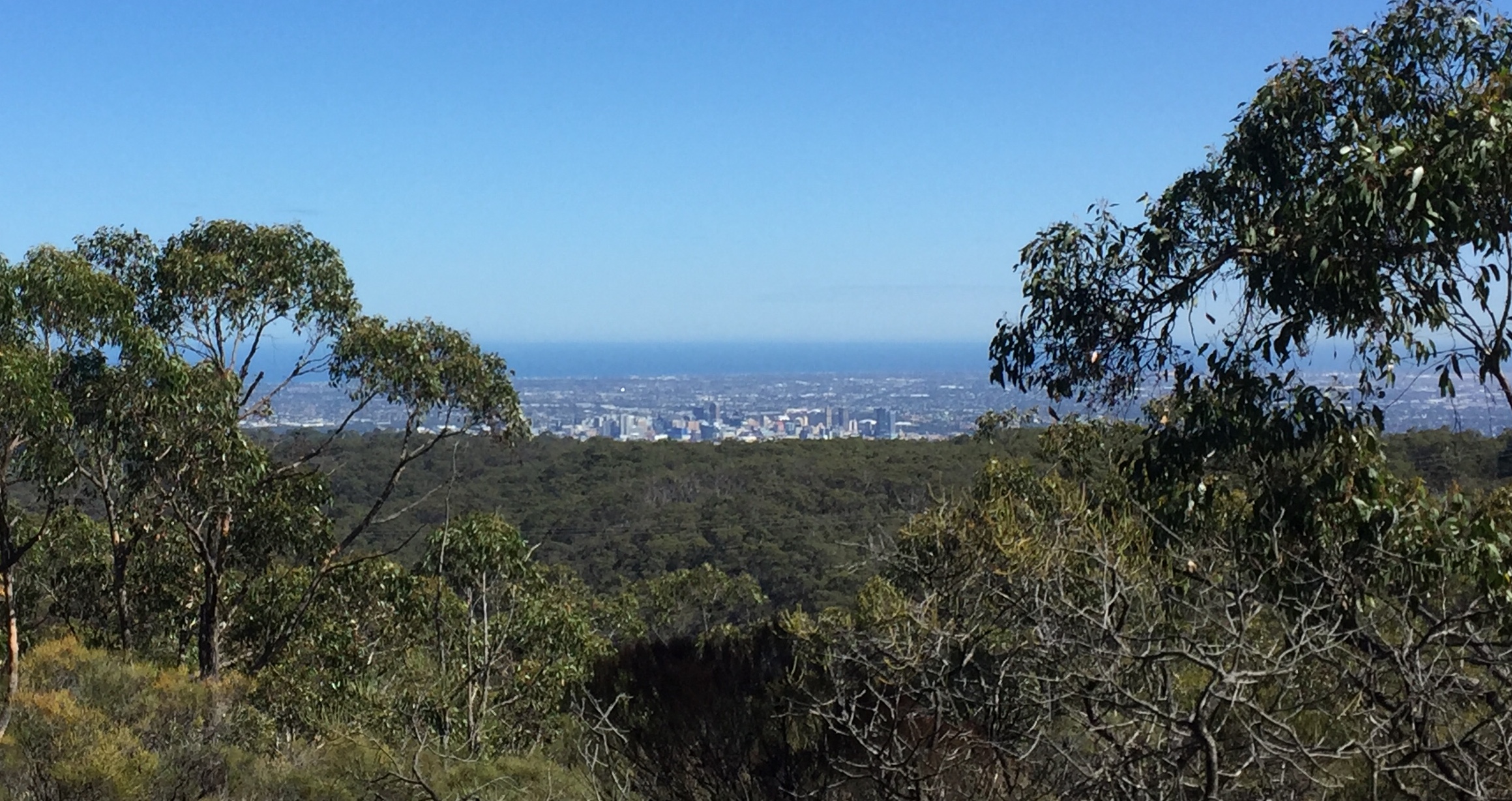
Adelaide CBD from Waterfall Gully Track

It’s very popular with superfit runners. We approached it from the summit, so in reverse. It took us about one hour to reach the base of the track where the (unfortunately closed due to Covid) tea rooms are located. So we turned around and headed back up the hill. It was actually easier going uphill than down.

Waterfall Gully Track

At the top we headed back to Mt Lofty House for a quick break before driving via backroads to the Jurlique Farm near Echunga, where they growing the various botanicals they put into their creams and perfumes. Their factory is in Mt Barker these days but the outlet is still on the farm. Sigi bought a few things then we headed to Nairne, a few km away, for lunch. The reason for going to Nairne was that one of Mt Lofty House’s partners, the Howard Vineyard, is located on its edge. They do wine tastings so I just had to imbibe, trying a variety of whites and light reds from their own vineyards.

I couldn’t decide which were best so just bought a couple bottles of each variety and we headed back to Crafers via the freeway.

That evening was our chance to sample Hardy’s Restaurant at Mt Lofty House. This is a top notch hatted location where they do really great food. Needless to say, the four course degustation menu did not disappoint.

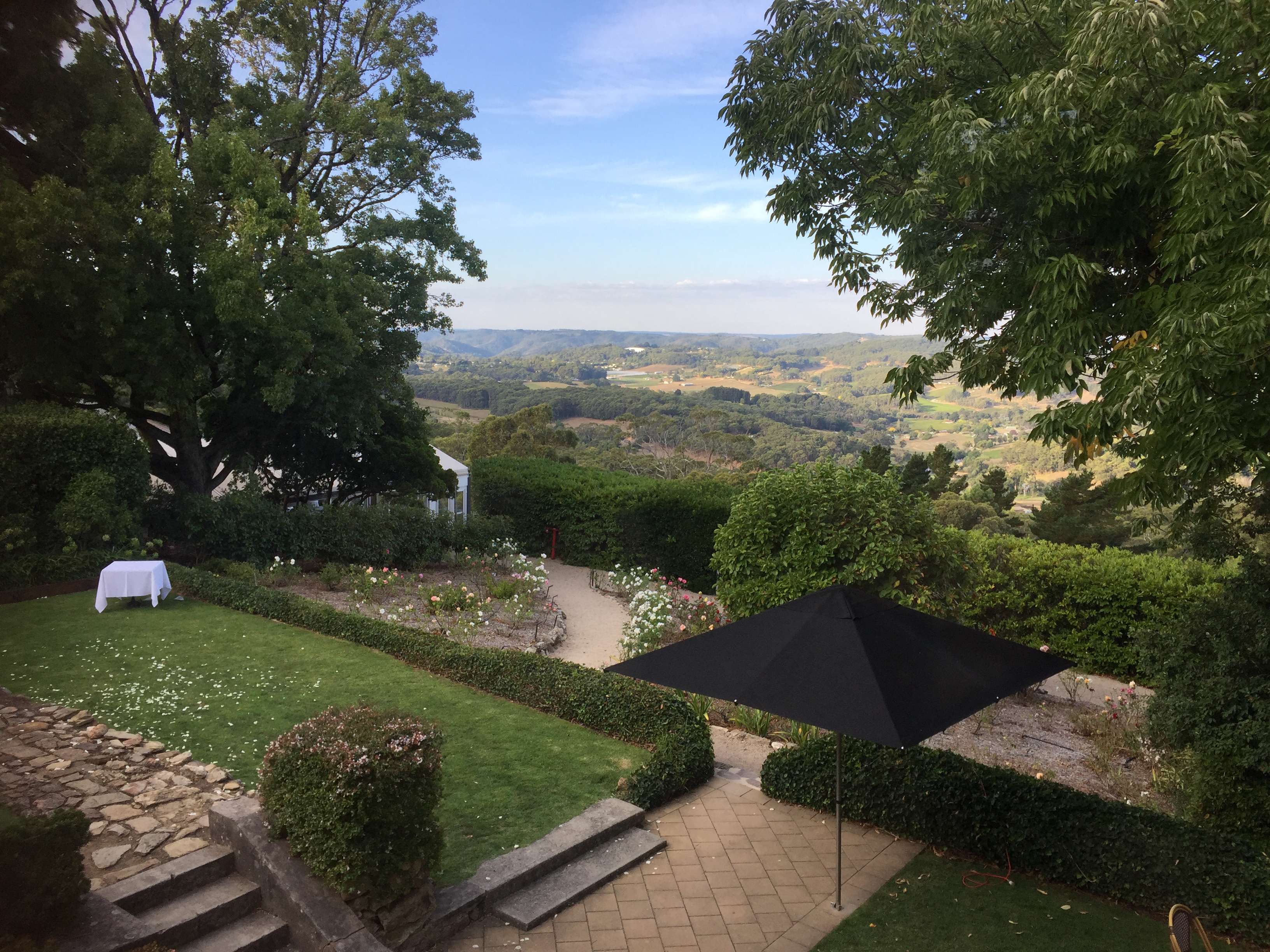
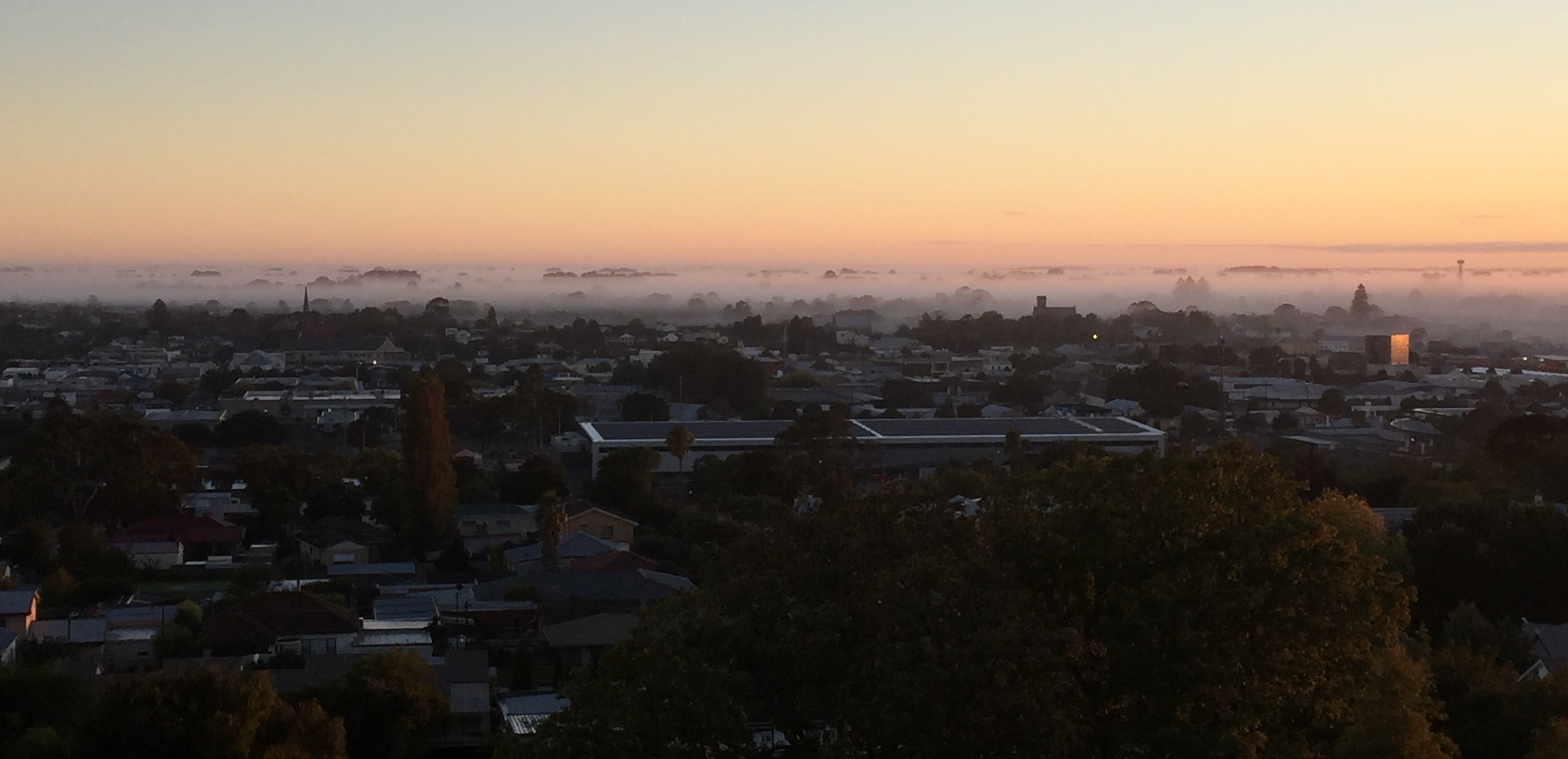
The next morning greeted us with fog covering the Piccadilly Valley as we enjoyed our breakfast. It was magical as the fog gradually dissipated and the valley was exposed.

We decided to do another walk. This time a circuit around Mt Lofty Summit, that is part of the Hans Heysen Trail. Hans Heysen was a famous South Australian painter who captured the local landscape particularly in the Flinders Ranges and lived in nearby Hahndorf. The trail took us first through the Mt Lofty Botanic Gardens, where the deciduous trees were just starting to turn.

Mt Lofty House Gardens and Piccadilly Valley

From there it was a casual stroll through the Piccadilly Valley followed by a steep ascent up to the top of Mt Lofty, where we took in the views from the scenic lookout. Most people had driven up but we felt pretty good having climbed at least the last part. On the way we passed Carminow Castle, built in 1885 for Sir Thomas Elder and later owned by Sir Langdon Bonython.

After lunch we drove to the Hans Heysen House, on the outskirts of Hahndorf. This is where the famous painter lived for many years and produced thousands of paintings. We went on a guided tour of the main rooms, where the Federation era “Arts and Crafts” décor allowed us to experience the lifestyle of another age. And of course there were opportunities to view many original works of art by Hans Heysen, his daughter Nora, and other artists that are represented in collection.

Back at the hotel we took part in a wine appreciation course with one of the Mt Lofty sommilliers, who explained some of finer points of the wines grown in the Adelaide Hills. Later we met up with my cousin John for a casual dinner at the restaurant downstairs. He instantly agreed he’d have to bring is bride Jo up to Mt Lofty House for dinner in the near future.

Wednesday 30th March dawned with a bit of cloud. We packed our bags and headed down to one last breakfast as we watched the beautiful sunrise over the Piccadilly Valley. Driving out of Mt Lofty House we felt that it had been a really worthwhile albeit expensive visit. We were specially pleased that the money we’d paid for our stay had gone to a very worthwhile charity. Having said that, I think we’d like to go there again some day.

We drove back to Aldinga and left the car in the car park, gave the keys to the Gaylene at the cafe (who’d pass them on to Martyn), and met up with James who filled the oxygen bottle. Then, with a full oxygen bottle and full fuel tanks, we loaded the plane and took off, back to Mt Gambier.

Originally we’d planned to fly to Kangaroo Island, but Alan told us that mum had taken a turn for the worse so we decided to head back to Mt Gambier instead. The weather forecast had predicted cloud and some moderate showers of rain in Mt Gambier so I’d decided to fly IFR. As we headed into the south east corner of South Australia the clouds gathered and I prepared for an instrument approach. It was good that I’d practised the RNP approach the week before as it made it easier the second time round, in IMC conditions.

We passed over Coonawarra and descended at 500ft/min, entering the cloud at about 4000ft AMSL and raindrops started to hit the windscreen as I sat there, waiting patiently to emerge from the cloud. The instrument approach has a minimum height of 730ft AMSL, meaning that if I couldn’t see the runway threshold by the time we reached 730ft I’d have to abort the landing and climb out for a second attempt. Finally, at 800ft AMSL we popped out of the cloud and I could see the runway (through light rain). We landed smoothly and taxied to the apron just as it started to pour. We decided to wait in the plane until the rain eased, about 20 minutes. That was really the only rain we experience the whole trip. It just so happened that it occurred right when we wanted to land. Very good instrument practice.

Sunrise in Mt Gambier
Autumn colours

Alan picked us up from the airport and we drove into town. We knew that mum was not doing well but we were very glad we’d got back when we did. She slipped away that evening. She was 5 weeks short of her 97th birthday.

The next few days were a whirlwind as we arranged the funeral and my other siblings, cousins and mum’s grandchildren arrived from Adelaide, Melbourne, country Victoria and Sydney. We did our best to celebrate mum’s long and happy life at a ceremony on 7th April. It was a sad occasion but it was a chance to catch up with many relatives who we don’t see that often, especially over the past 2 years.

On Saturday 9th April I did a couple of scenic flights with six passengers. They were my daughter, two of my nephews, two nieces and Ethan, the boyfriend of one of my nieces. We flew over Mount Gambier city and its crater lakes then headed for the coast and the mouth of the Glenelg River.

It was a lovely day with a few friendly clouds around and they all seemed to enjoy it. Except that Ethan told me after we landed that he’d felt like vomiting the whole time!

Note to self: “Always ask first time passengers whether they have flown in a light aircraft before and whether they are prone to motion sickness. Also, ask them how they’re doing 5 minutes into the flight. And be prepared to return for an early landing if they’re not feeling well.”

Anyway, Ethan managed to avoid making a mess and said that apart from that he really enjoyed the flight.

Alec, Carl, Emma
Ethan, Holly, Sonja

On Monday 11th April it was time to head north again. It was overcast in Mt Gambier but we climbed through the clouds and were soon in clear air above the clouds on our way to the Clare Valley Airport. On the way we passed inland from the Coorong.

From there our track took us over Murray Bridge and Mannum and the Barossa Valley, where a gliding competition was underway.

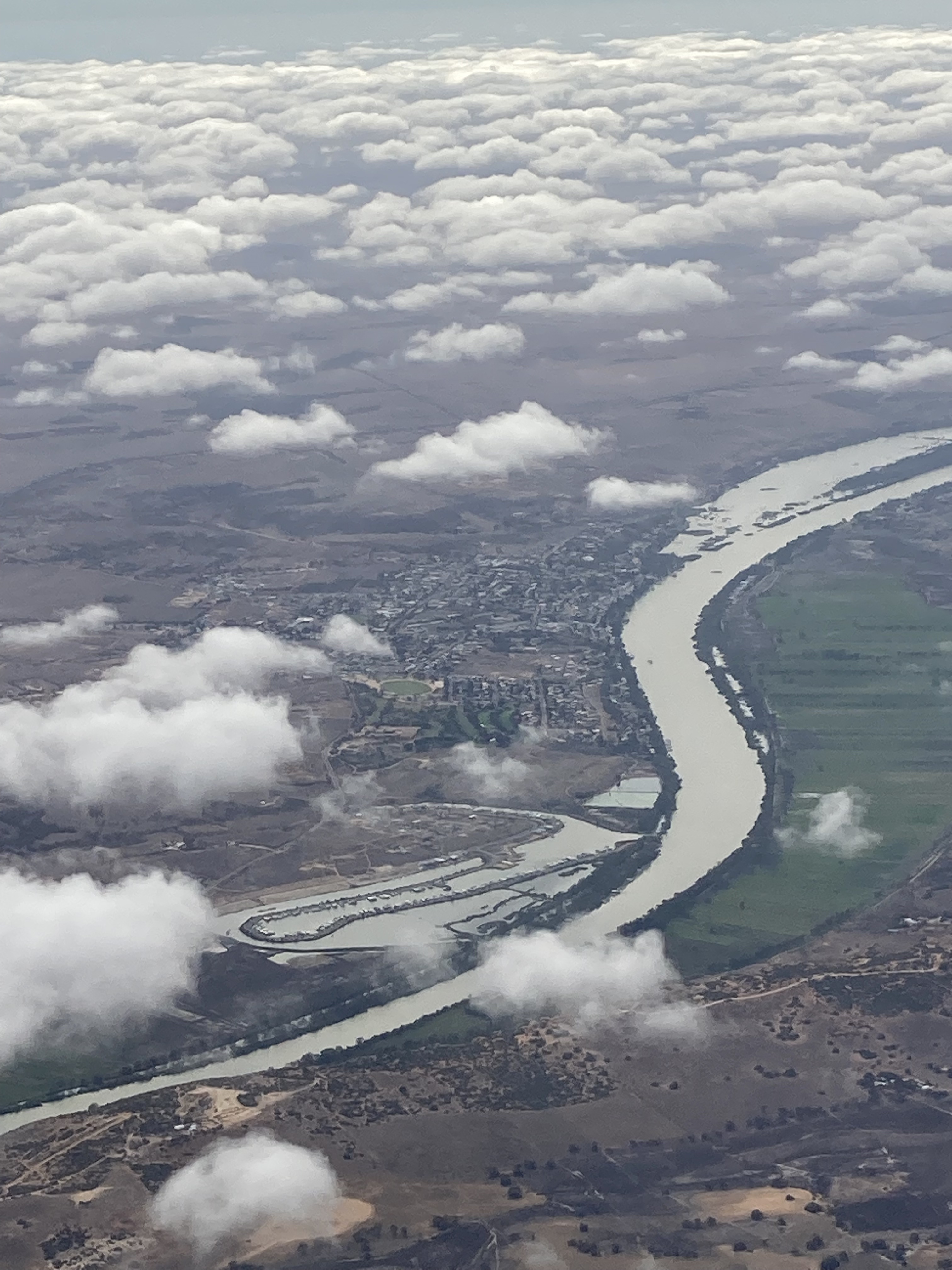
Mannum on the Murray River

ATC asked whether I’d like to climb to 7000ft to get above the 6500ft ceiling of the gliding comp “box” so I did.

Descending past Clare

After landing at the Clare Valley aerodrome we refuelled and then ate our sandwiches while inspecting their really impressive clubhouse and airfield. The airfield was only built a few years ago and it is a very impressive addition to the area, giving fly in visitors ready access to the Clare Valley wine district. The club even has a couple of loan cars available for fly in aviators. I left a few Redcliffe Aeroclub AirChat magazines in the clubhouse for them to read.

Club members have installed a novel windvane near the clubhouse. It’s a Tobago TB10 that was donated to the club by Flight Training Adelaide. It actually spins with the wind and has lights to illuminate it at night time. Special.

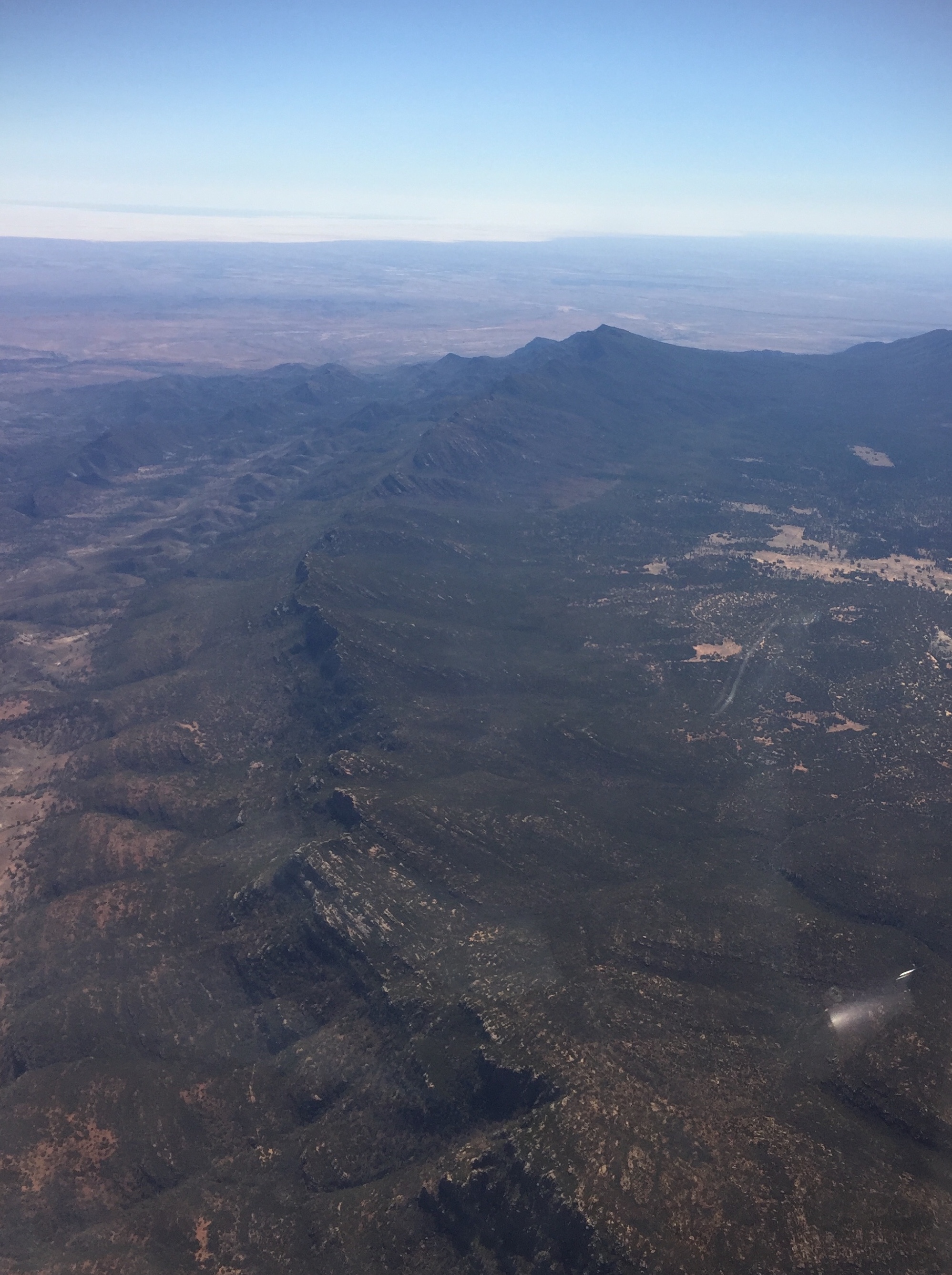
On takeoff we headed for Wilpena Pound in the Flinders Ranges. This iconic geological formation is impressive from the ground but even more so from the air.

Wilpena Pound

We flew right over the top and then tracked for Leigh Creek to top up our fuel.

Leigh Creek

From there it was a 25 minute hop via the Gammon Ranges over to Balcanoona, a lovely sealed strip in the middle of nowhere. It’s next to a National Parks station but it was our destination so we could access Arkaroola Village, one of the highlights of the Flinders Ranges. It’s pretty inhospitable country around there and so it’s comforting to know that ATC are looking out for you. One way of making sure you’re ok is to maintain a Search and Rescue Watch (SARWATCH) over you while you’re flying IFR. The only thing is that you have to cancel it before or when you land. That’s ok if you have radio or mobile reception at the airfield but that’s not the case at Balcanoona. In fact, the ERSA says that the reception is only down to 5000ft above sea level.

Gammon Ranges

So, to play it safe, I cancelled my Sarwatch overhead the field at 7000ft, where I still had radio contact with Melbourne Centre, then had to do a couple of descending orbits down to circuit height before we could land.

On final at Balcanoona

Given that there’s no phone or radio coverage at the strip, I’d phoned up the reception at Arkaroola Village from Leigh Creek, and asked for a car to meet us there at about 3:30. I’d also flown over the top of the village (2 minutes prior to landing) in the hope that they might hear us (just in case they’d forgotten). The owner of Arkaroola, Doug Sprigg, is a pilot and generally very accommodating for visiting aviators so I didn’t really have any concerns but it feels a bit strange when you land in the middle of nowhere and are waiting for a car to appear in the distance.

Tied down at Balcanoona

While we waited we tied the plane down. There were two others parked there so we weren’t alone. Sure enough, just after 3:30 a cloud of dust in the distance signalled the arrival of our 4WD. It pulled up and Pierre introduced himself. Originally from France, he’s lived in Australia for about 40 years and worked all over as a driver. He’s been at Arkaroola for about 5 or 6 years I think.

It was a 30 minute drive to Arkaroola Village, where we were shown to our motel room and settled in with a couple of drinks admiring the rough mountainous terrain that surrounded us. Dinner was at the excellent restaurant.

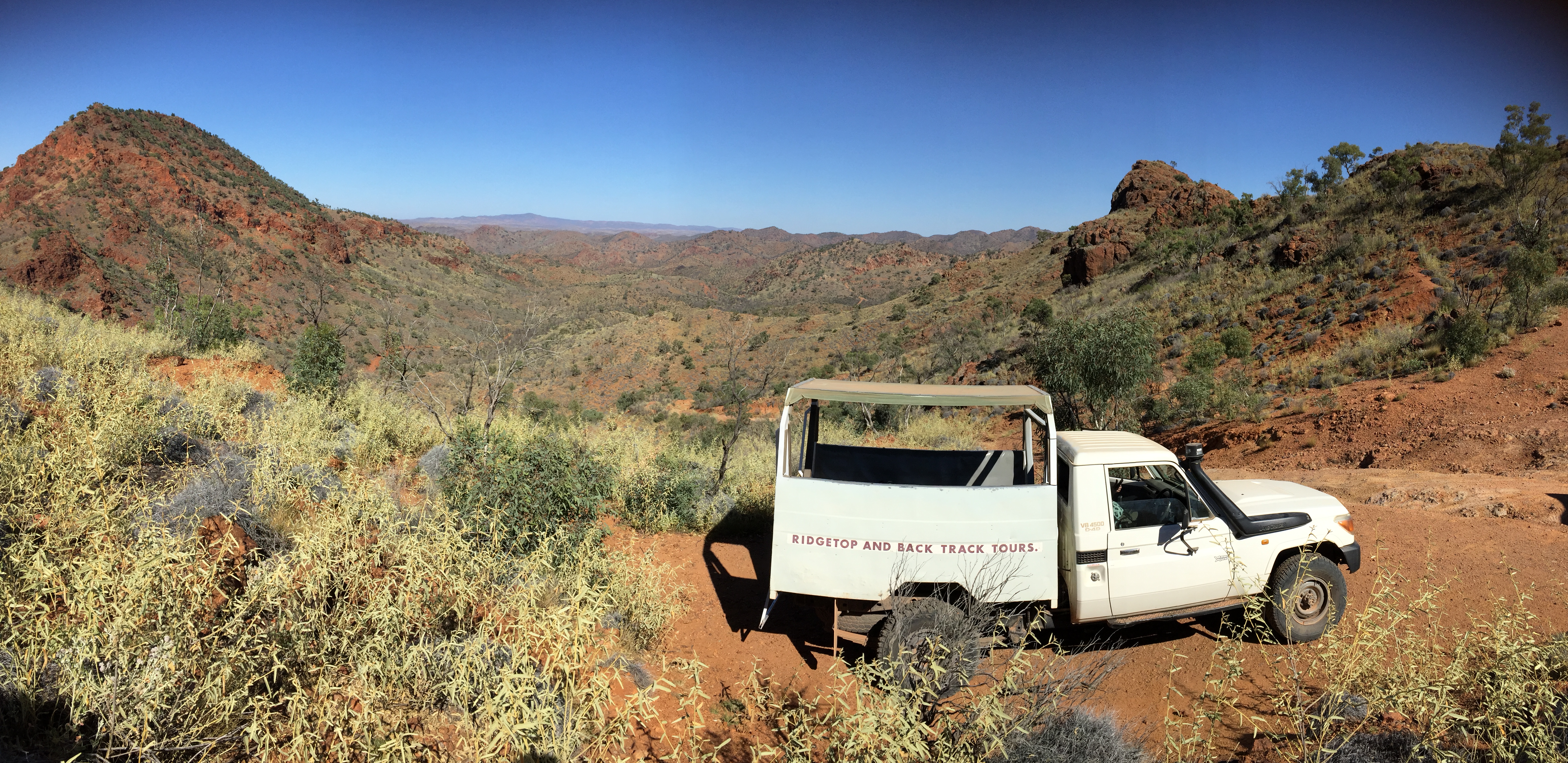
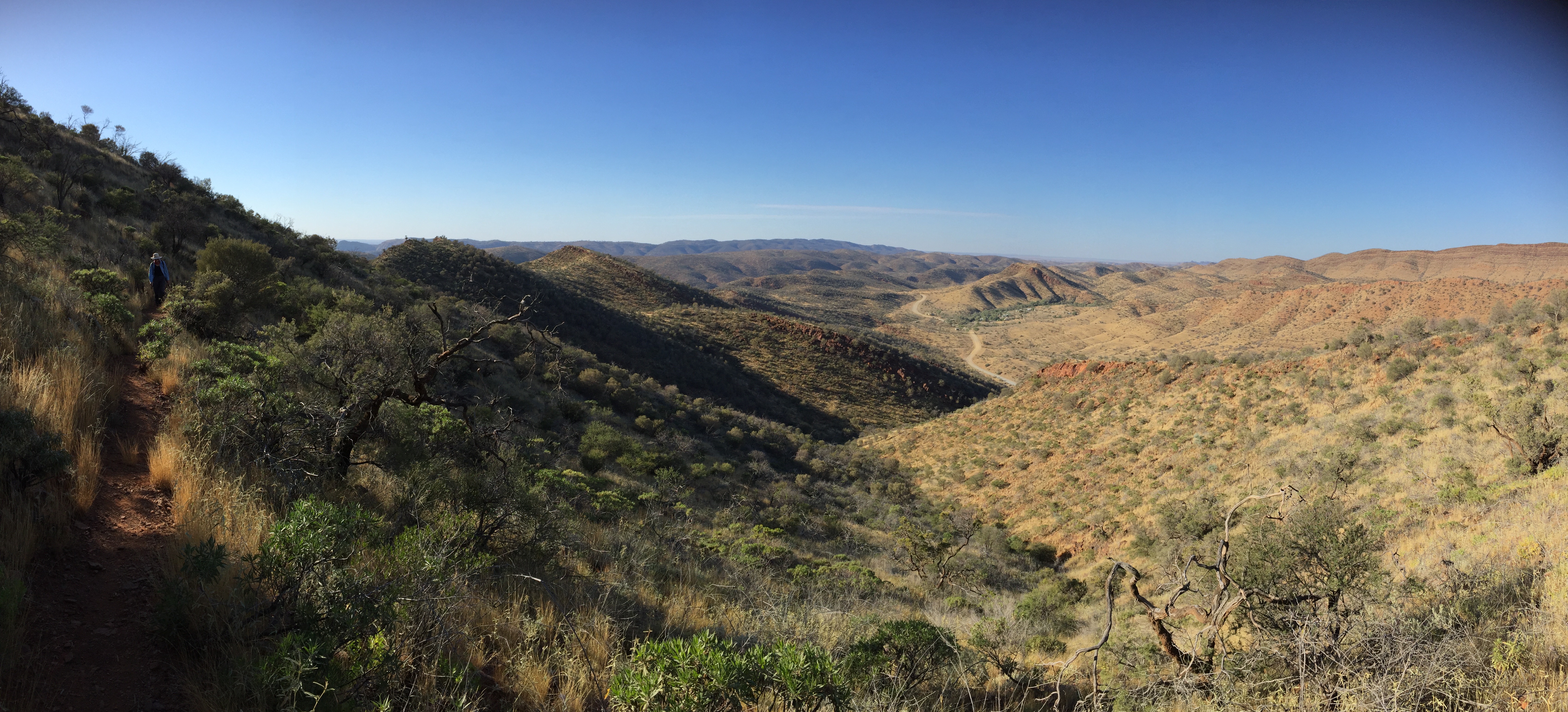
The following day, Tuesday 12th April, we had a “Ridge Top Tour” to Sillers Lookout on the eastern edge of the Flinders Ranges. Our guide explained the history of the Arkaroola property and how it became one huge nature reserve after many years of prospecting by various companies for minerals including uranium ore. The track was in the process of being graded after they’d had record rainfall and was not particularly smooth.

It was also very steep in places. In the end it took us 3 hours to travel 21 km.

Sillers Lookout

Back at the village we had a cooling swim in the surprisingly refreshing pool and later climbed up the hill next to the village for a view as the sun set. After dinner there was an astronomy talk using some high technology telescopes with views of the stars projected onto a couple of large screens.

The next day we did a couple of bush walks near the village. There was a transfer organised for 9am but given that it was heating up we thought it’d be better to start earlier. After a brief chat with Doug, the owner, he offered to drop us off about 5km along the road, at the start of the Acacia Ridge walk. He was taking some other visitors to the airstrip for a scenic flight around the area.

Acacia Ridge

As the chief pilot, and having grown up in the area and studied geology, Doug takes all these flights personally so passengers get a really impressive description of the area they fly over. As we walked along the track they flew over the top.

Walking down Acacia Ridge towards the village
Arkaroola Village from Griselda’s Hill

That evening was a barbecue for all the guests where we met up with a few other travellers, none of whom was travelling by light aircraft.

On Thursday 14th April it was time to depart the Flinders Ranges and South Australia. After breakfast I submitted my IFR flight notification at the village, knowing that I wouldn’t have a mobile signal out at the airstrip. One of Doug’s drivers drove us out and waited patiently as we untied the plane, did the preflight checks and started up. Their policy is never to leave the guests until the plane has taken off and disappeared into the distance which is great. I wouldn’t want to be left stranded there with a plane that wouldn’t start and no means of communication.

We took off and I orbited above the airstrip as we climbed to 5000ft so I could contact Melbourne Centre on the radio and make my departure call, before setting course to the north and climbing to 7000ft. We passed over the Arkaroola Village once again then turned to the east. The Beverley Uranium Mine appeared just east of the ranges and we heard a FIFO plane making its approach from the south. There is a small processing plant that leaches the uranium ore and produces yellowcake (U3O8) for export to the USA.

Beverley Uranium Processing Plant

Further east we passed the northern end of Lake Frome, one of the huge salt lakes in northern South Australia.

Lake Frome

The country was fairly featureless as we tracked for White Cliffs, an opal mining town in the far west of New South Wales.

White Cliffs

Once again I’d phoned up the day before to make sure that someone would meet us at the airstrip. I rang again as soon as we were on the ground and a car turned up shortly after we’d tied the plane down and removed the things for an overnight stay.

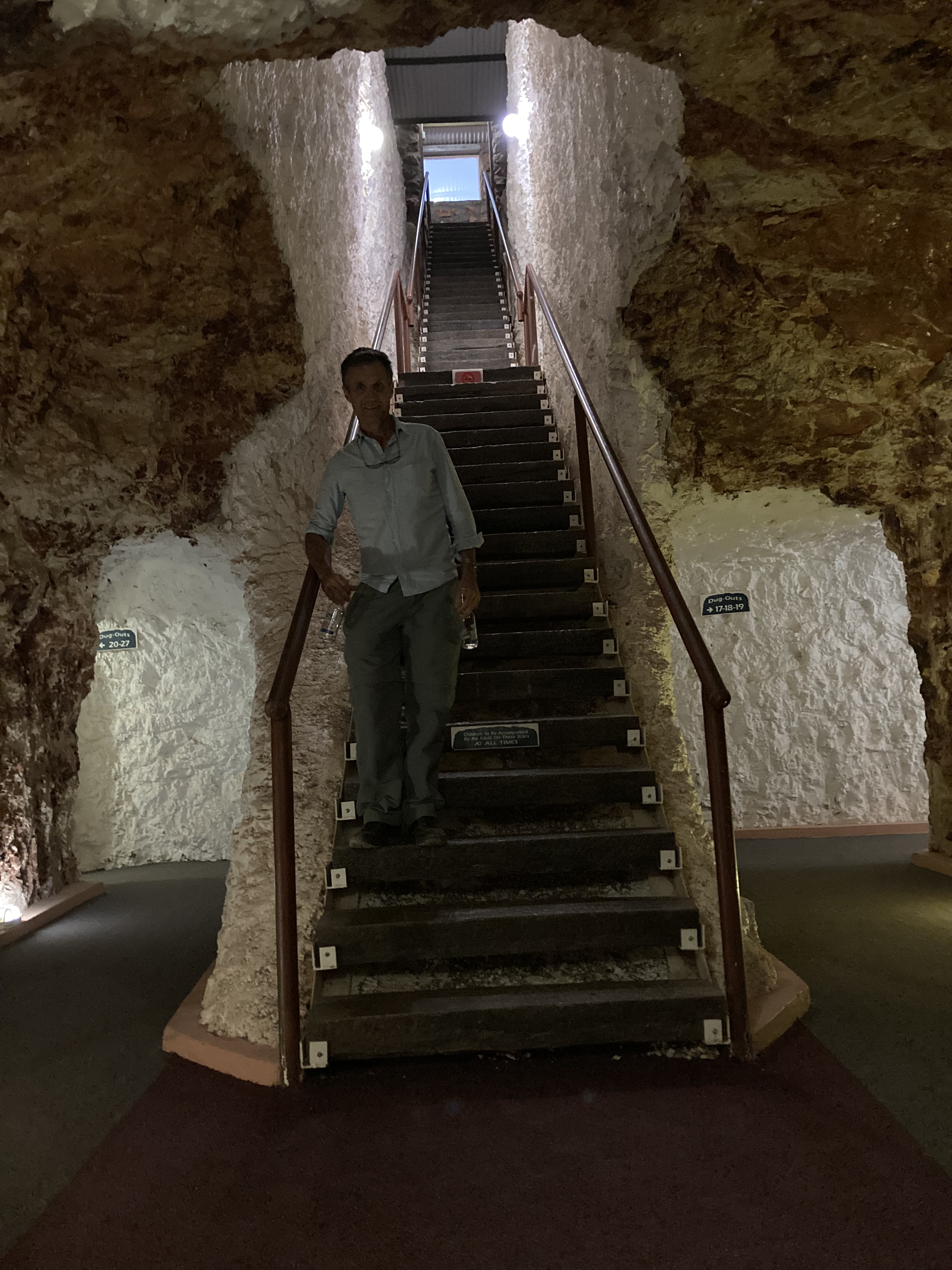
Ardi, the manager of the Underground Motel, was originally from Iran. He was probably mid 30s and has lived in White Cliffs for about 8 years. He gave us a bit of a run down on the town as we headed in. We dropped into his “dugout” – an old underground residence that he’s restoring to make into an AirBNB. It looks like it’ll be great. Meanwhile, we were staying at the motel, where we dropped our bags and Ardi dropped us off at the pub for lunch.

Underground Motel

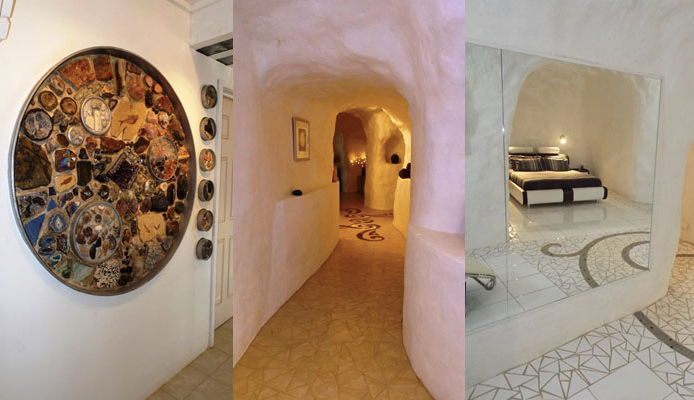
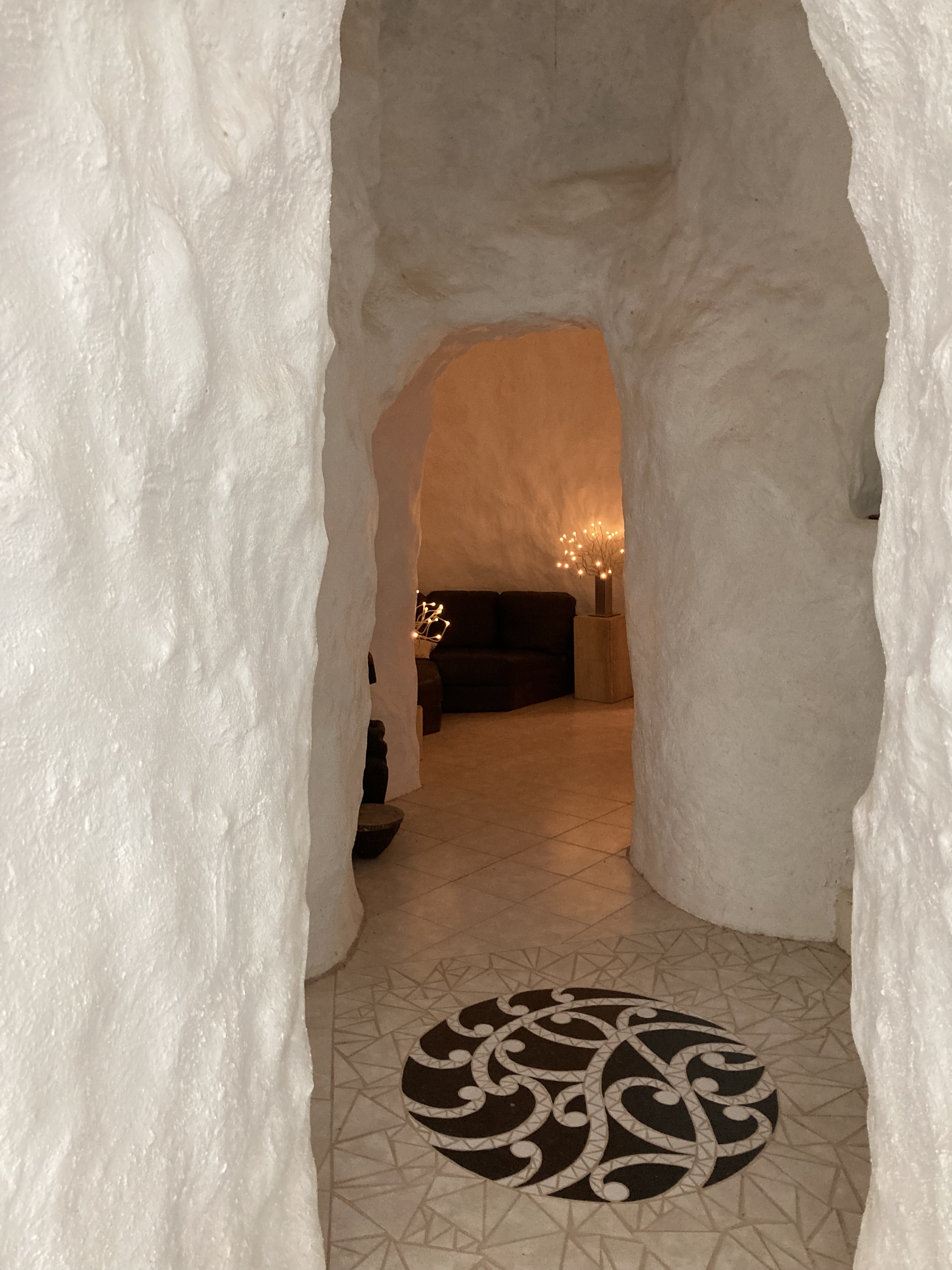
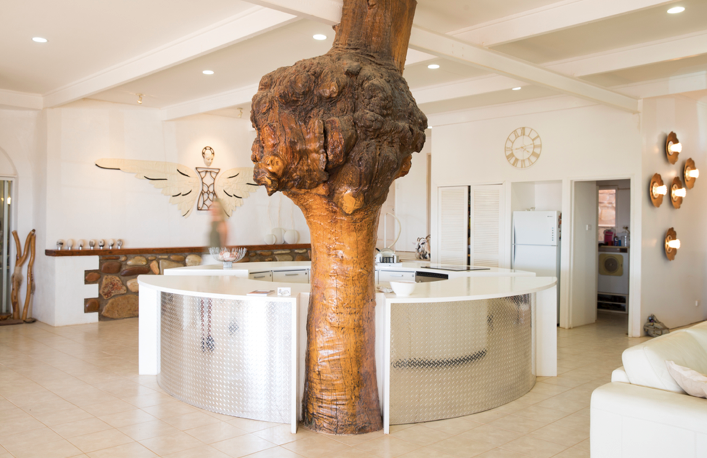
White Cliffs mixes tourism with opal mining, offering visitors a unique perspective to outback living. As he’d left us, Ardi had suggested we do a “dug out” tour at 2pm and an opal mine tour at 3pm. So we did. There are around 100 dugout homes still in use in White Cliffs, making them fascinating to visit. Walking up to the “White House Dug Out” we found ourselves in what appeared to be a bit of a junk yard. The owner Lindsay White welcomed us into the house and we were literally gobsmacked. It was like walking into a Vogue magazine. The beautifully carved residence that Lindsay shares with his partner, artist Cree Marshall and that they have renovated over the past 5 years, has something at every corner that caught our eyes — an ornamental wooden harp, the towering tree stump standing at the centre of the circular kitchen, and recycled geometric floor tiles. Everything is made from second hand materials, and therefore, according to Lindsay, the fitout was amazingly cheap.

The tour was $15 each and Lindsay said most of the fee is donated to the Royal Flying Doctor Service.

He is currently working on the outdoor part (ie the “junkyard” including a spa bath with a view) so welcomed us back in one or two years once the work is done.

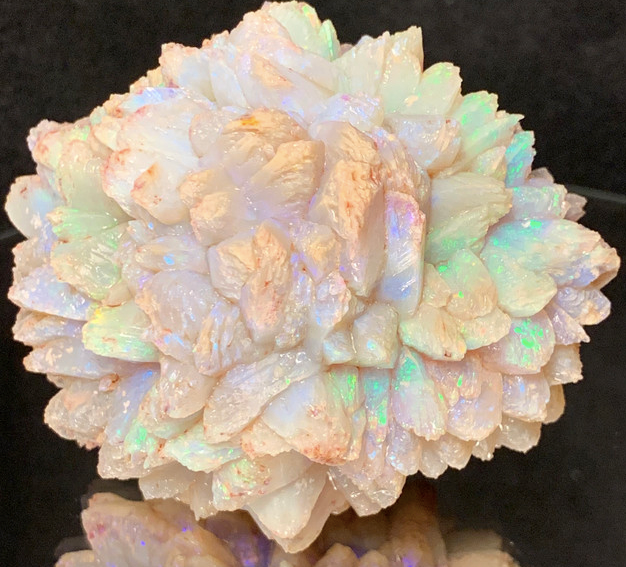
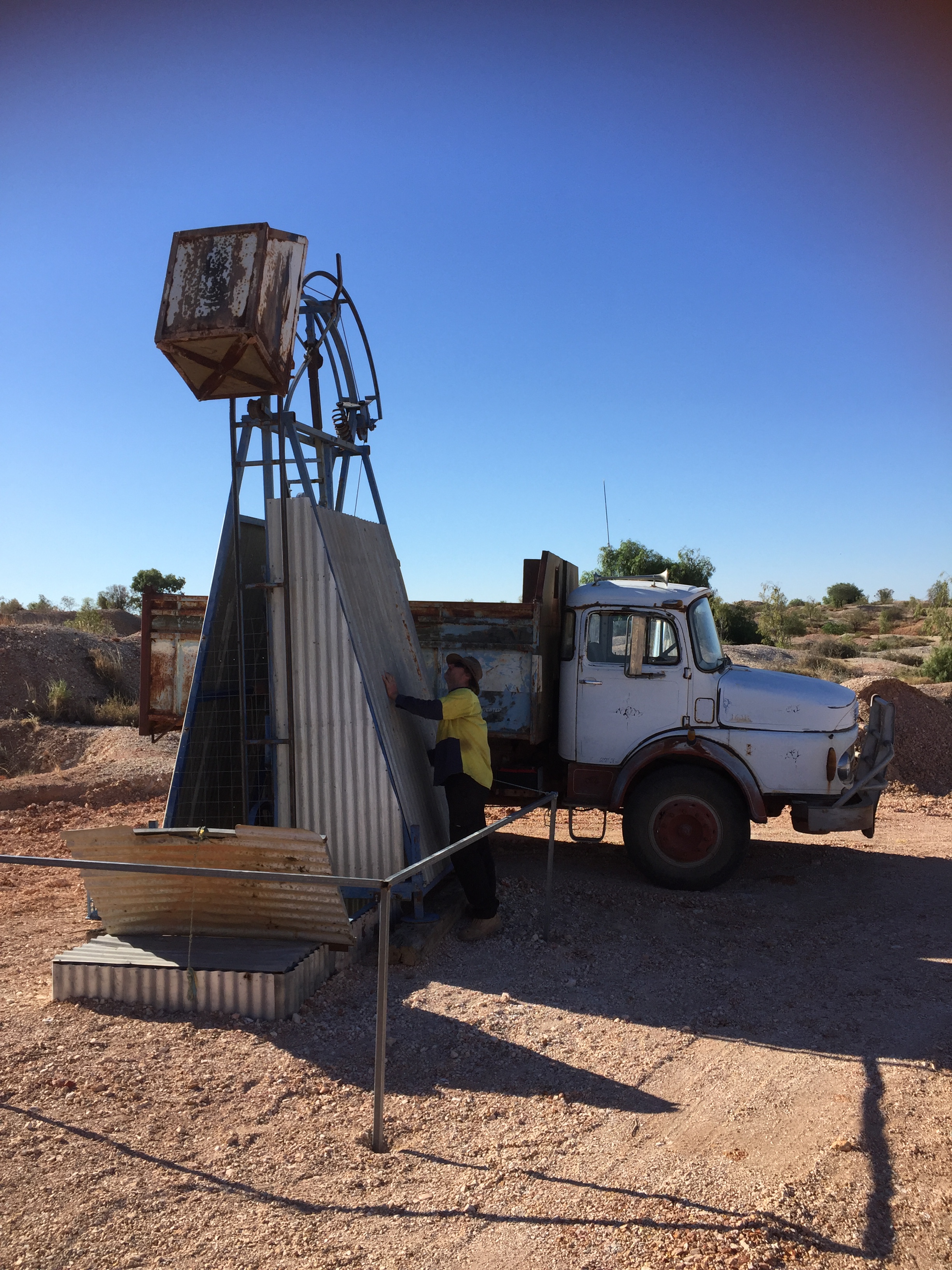
200 metres down the road is the Red Opal Café. Opal is still being found at White Cliffs and what better way to get an insight into the historic diggings of the 1890s than by visiting an underground working opal mine? After a bit of a spiel about opal mining in the café, owner and miner Graeme walked us down an access tunnel into his mine and showed us how he finds the elusive stones using modern mining techniques. He shared stories of mining that he started at age 14 under the tutelage of his father and the number of brilliant opal “pineapples” he’s found, that have only ever been found in White Cliffs. Most of the stones sell at a gem fair that’s held annually in the USA. Graeme and his wife Sacha sell their biggest rocks there. They regularly go for tens of thousands of dollars each and some have fetched up to one million US$.

Pineapple opal

White Cliffs and Graeme feature in an ABC TV Backroads episode from 2018.

Graeme demonstrates his bucket elevator

We caught a lift back to the Underground Motel with a friendly family from Lightning Ridge and were in time to catch the sunset from the top of the “stairway to heaven”. That’s a long set of stairs that leads to the roof of the motel and provides a clear view out west towards South Australia. Beer in hand we admired the view, noticing the airstrip in the distance.

Stairway to heaven

Dinner was at the motel where the cook’s teenage nephew was trying his hand at waiting on customers, one of the problems of full employment and lack of backpackers to fill the gaps. It was a bit of a mix up and the food was not as good as at the pub but it was still passable.

Friday the 15th April was Good Friday. It was time to head for home. We rose early and walked around town as the sunrise lit up the hills with a magical light.

One of the local residents, Doug Tropey, has an outdoor gallery of welded art, so we walked past there to enjoy his hundreds of small sculptures and a few big ones.

Back at the motel it was a simple continental breakfast. I submitted my flight notification and Ardi’s girlfriend took us out to the airstrip.

Not long after we were climbing out and tracking to Burke, where we could refuel. There was an AirLink RPT aircraft on the tarmac so I had a quick chat to the pilot who had to wait there for 4 hours until the scheduled flight back to Dubbo. At least he had a pleasant enough terminal building to spend his time in.

Taking off again we headed to Dirranbandi. The main attraction there was that the airstrip is only 300 metres from the main street so it was an easy walk into town. On the descent we passed by Cubby Station and its enormous dams.

Although it was Good Friday, the Café 22 was open for business (we’d checked their Facebook page) and was a great spot for a bit of lunch.

We couldn’t resist the Dirranbandi Bakery too, famous for its Russian delicacies including a quite different type of vanilla slice. There was a sign up declaring that they support Ukraine, just to set the record straight.

Dirranbandi

After a short walk around along the main street we were back at the aircraft and taking off once more, this time direct to Redcliffe. We passed over Wellcamp Airport at 9000ft and then with cloud building as we approached the coast, descended into Redcliffe through about 20 minutes of IMC under the watchful eyes of ATC.

Wellcamp Airport

We popped out of the clouds at about 4000 ft and found ourselves visual over Lake Samsonvale.

Lake Samsonvale

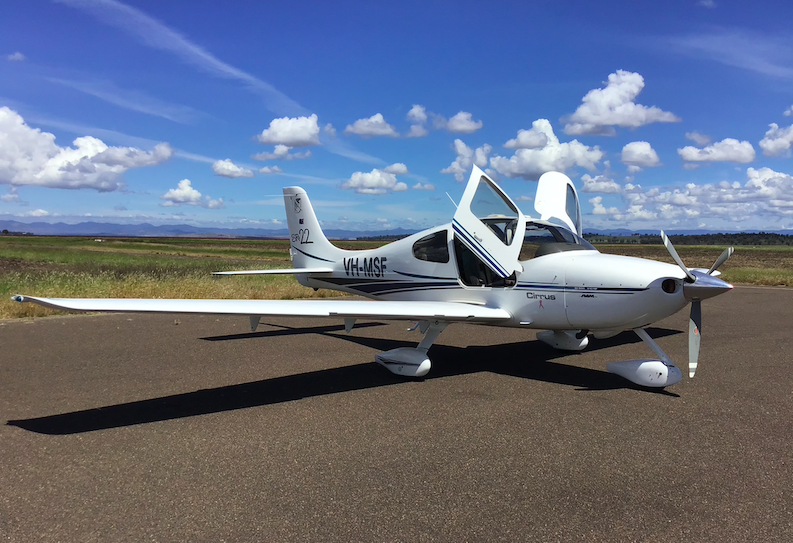
Putting the plane away we agreed it had been a really good trip and demonstrated once again what a great aircraft the Cirrus SR22 is for touring around the country. Thanks again to owner Mike for giving us the opportunity to use it.

Checking out potential flyaway destinations

Overflow Estate Winery – Figtree Country Retreat – Toowoomba

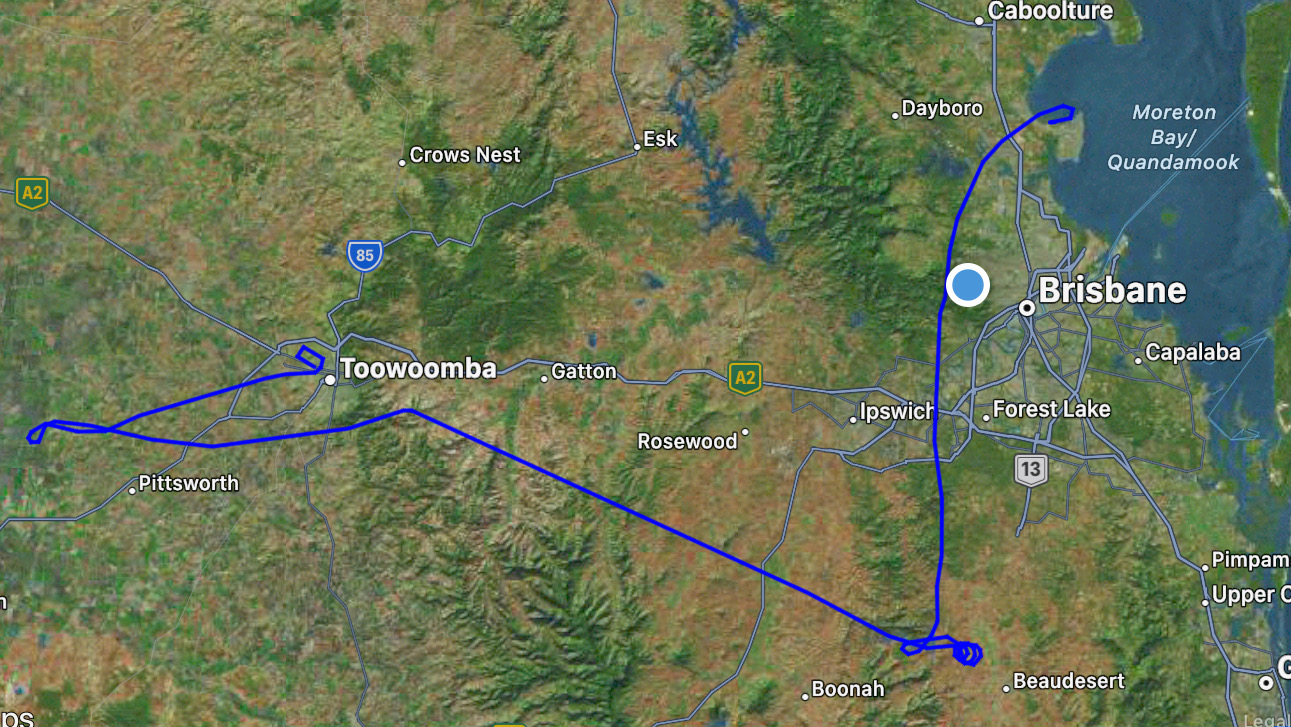
On 14th March 2022 I wanted to do a short flight in Cirrus MSF to brush up on my skills prior to leaving on a long trip to Victoria and South Australia. I asked Mike Cahill to go with me and we decided to use the flight to check out a couple of potential destinations for club flyaways. The first was a winery called “The Overflow Estate” located north east of Boonah, while the other was a small resort called Fig Tree Country Retreat, near Pittsworth. We decided we’d land at Toowoomba after overflying the two “targets”. I’d fly the leg to Toowoomba and Mike would fly from there back to Redcliffe.

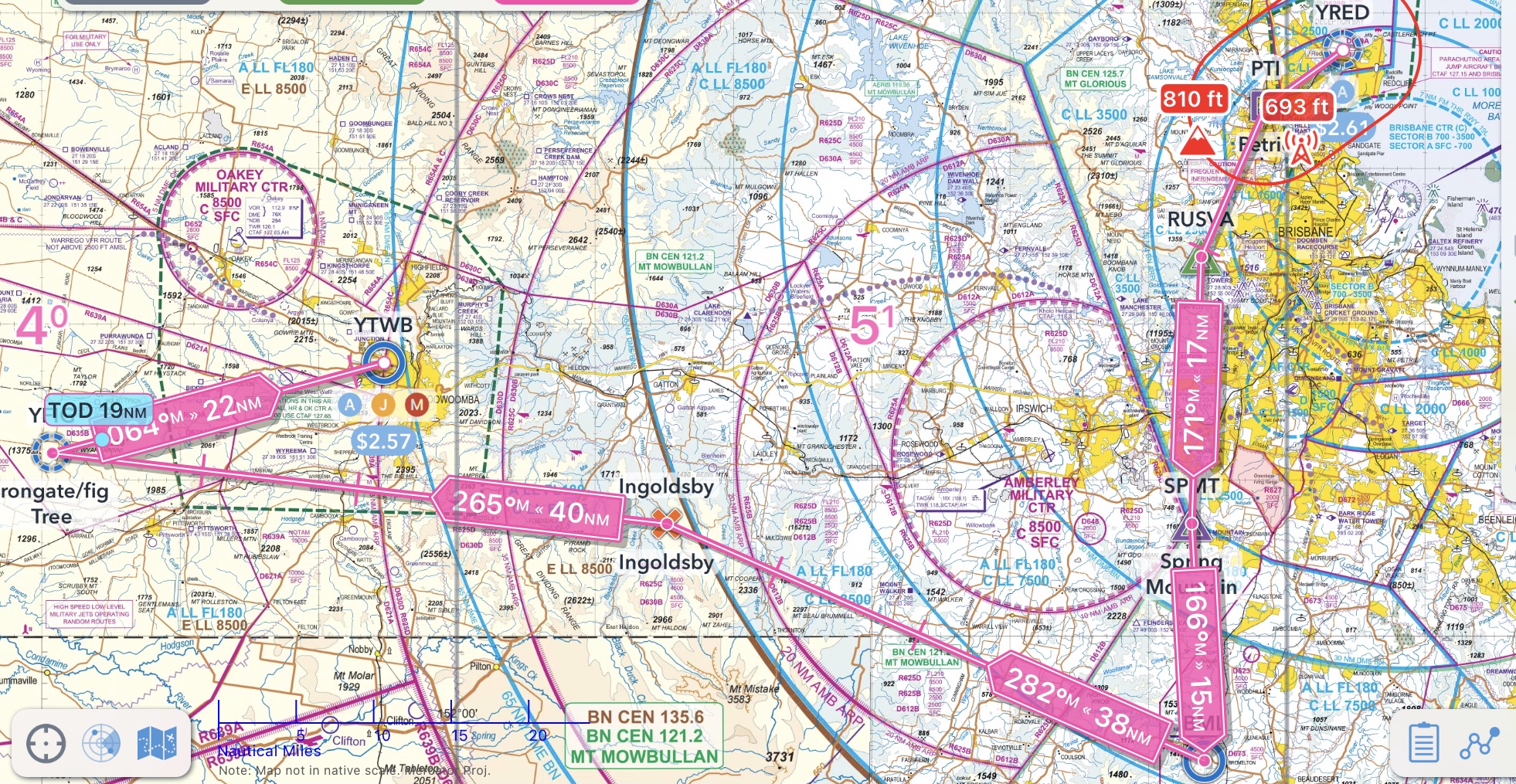
Our route to Toowoomba

I elected to fly my leg VFR so that we’d have the opportunity to divert and orbit as required to get a really good look at our two targets. We headed off to the south west from Redcliffe, passing to the west of Mount Coot-tha and to the east of the Amberley restricted airspace at 2200ft, to remain under the Brisbane controlled airspace. This was the same route taken on my CPL practice flights to Boonah but this time we’d stop short of Boonah.

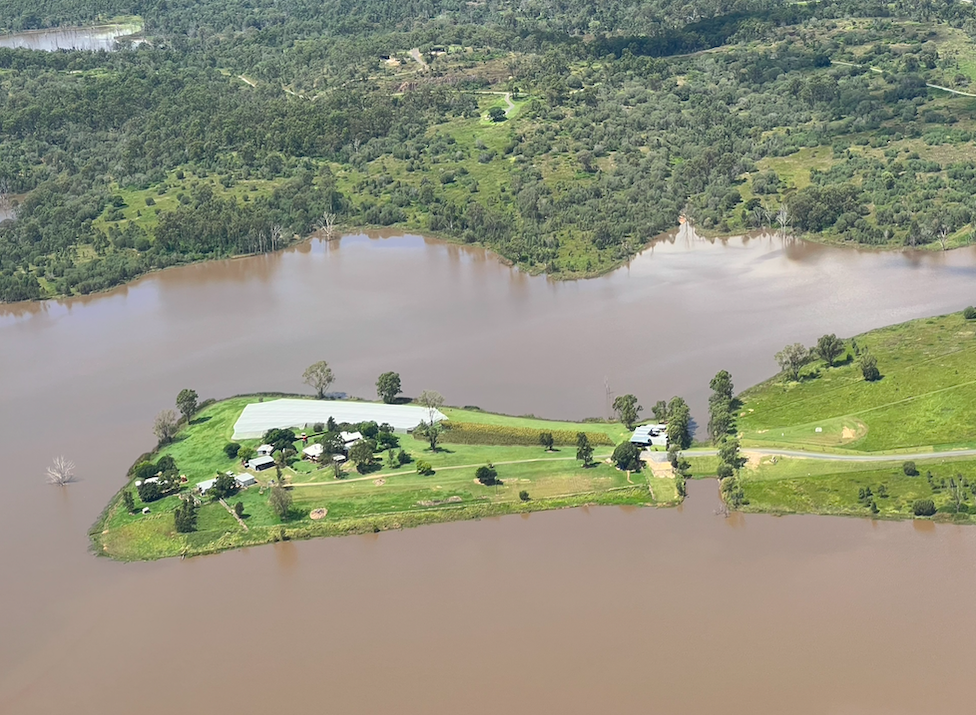
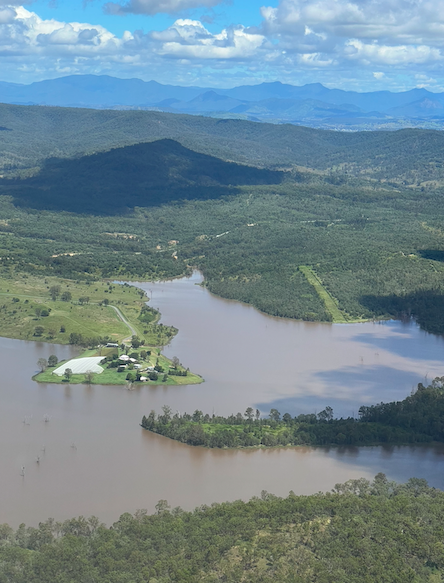
Passing Spring Mountain we skirted down the eastern flank of the Amberley RAAF restricted area and arrived overhead Bromelton. The Overflow Estate winery is located on the shores of Lake Wyaralong just west of Bromelton. It’s on a finger of land that juts out into the lake.

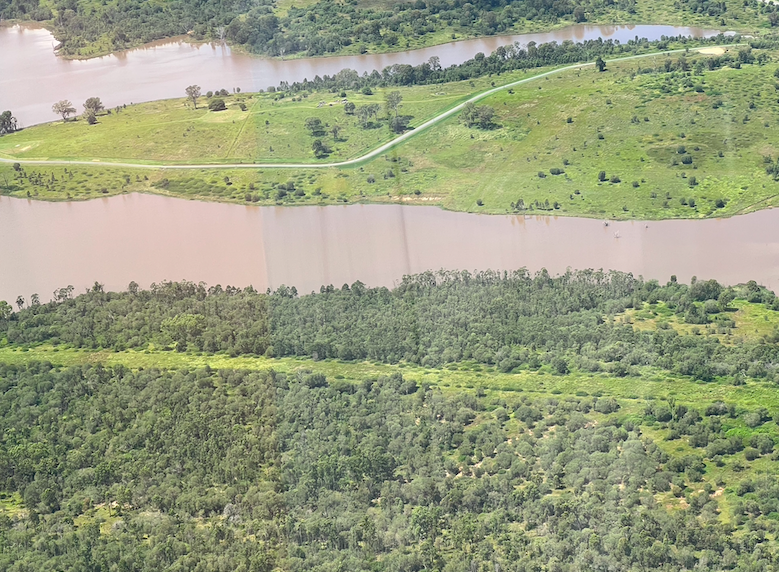
The airstrip is on another finger of land just across the water, seen on the right below.

We wanted to check out whether the airstrip would be suitable to land on. On closer inspection we decided it looked a bit too rough and that we’d probably give it a miss for now.

We now needed to traverse the Amberley restricted airspace, that was active, so needed a clearance. I also noticed a few clouds between us and Toowoomba so decided to change to IFR so we could climb through them to a safe height. I listened on the radio for the ATIS then called up Amberley Clearance Delivery and requested the clearance and an upgrade to IFR. “Remain outside controlled airspace and standby for clearance” was the reply. After orbiting a couple of times I asked whether we’d been identified. ATC responded that we had been identified. Before we had time for another orbit we had a transponder code, our clearance IFR direct to Toowoomba at 6000 ft, and told to contact Amberley approach.

Traversing the Amberley airspace was uneventful and as we approached the western edge of the restricted airspace I requested a descent to 4000ft to remain below the clouds and a switch back to VFR. Granted. Soon we were outside their airspace and could then track direct for Figtree.

On the western edge of Amberley airspace, south east of Toowoomba

Now Figtree airstrip is only 400m long so not easy to spot, especially as it’s in a well mowed field adjacent to the “resort”. We used our best VFR map reading skills to find our way out there as we listened to all the Qantas Academy pilots taking off and landing at WellCamp not far away. As we looked to the west the flat plains of the Darling Downs stretched away to the horizon.

Turning around we spotted the Figtree strip right where it should be! The airstrip looked very inviting but at 400m it was a bit short for the Cirrus so we’d have to return in a different aircraft someday.

Figtree airstrip and accommodation

From there it was a simple flight back over the top of Wellcamp Airport to Toowoomba where we joined downwind for a RWY11.

After a short break Mike took control and we took off again towards Redcliffe. This time IFR.

Climbing out past the Toowoomba CBD

Passing over the Lockyer Valley in between the clouds we saw some of the damage caused by the recent torrential rainfall.

River erosion near Murphy’s Creek

Further on we passed over a very full and muddy looking Lake Wivenhoe.

As we approached Redcliffe the Pine Rivers Dam also looked at capacity.

After touch down in Redcliffe we agreed that MSF had performed admirably and was ready for the big trip down south.

When does 12 = 7?

Port Fairy – Warrnambool – Peterborough – Port Campbell – Twelve Apostles – Portland

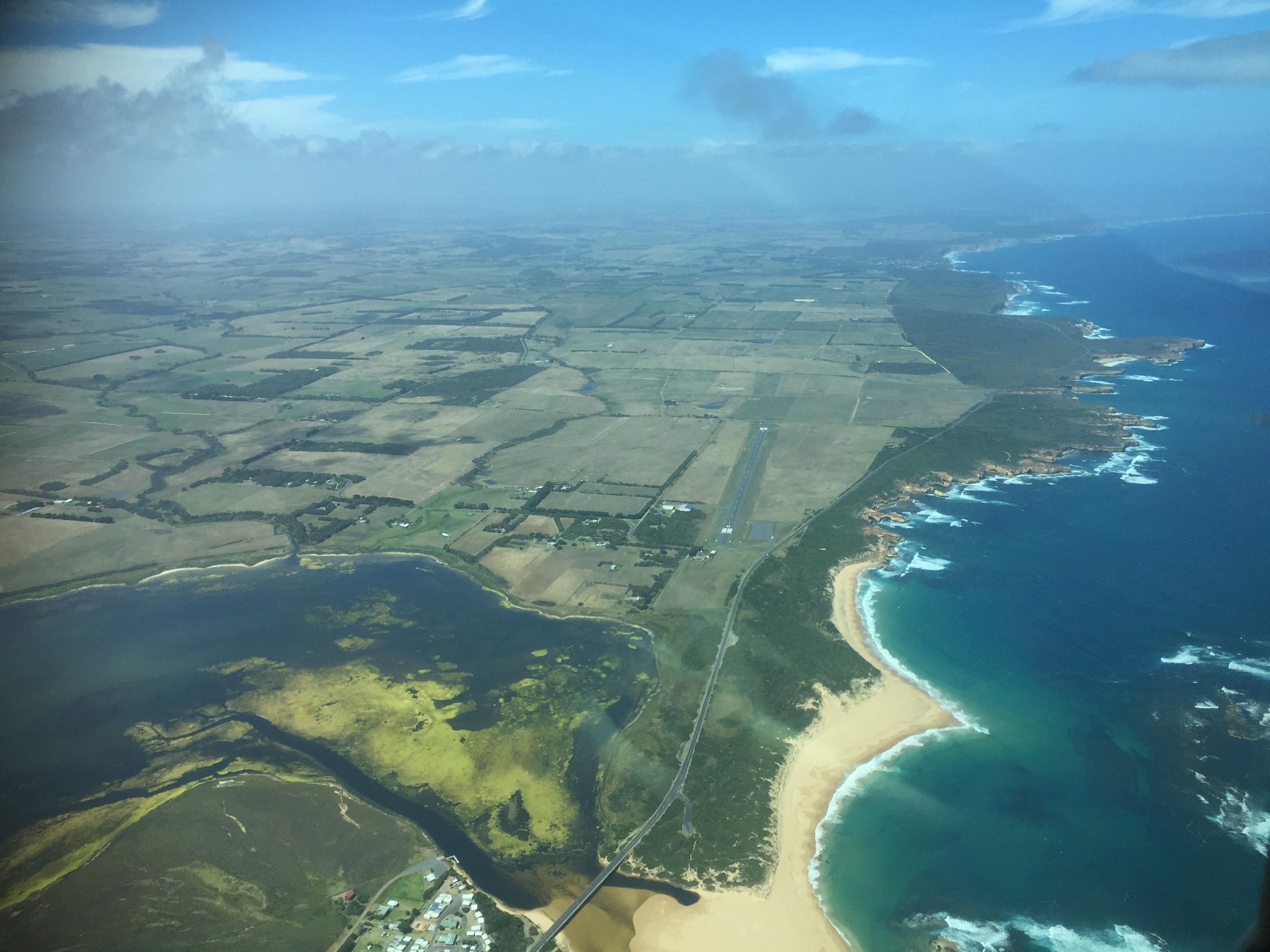
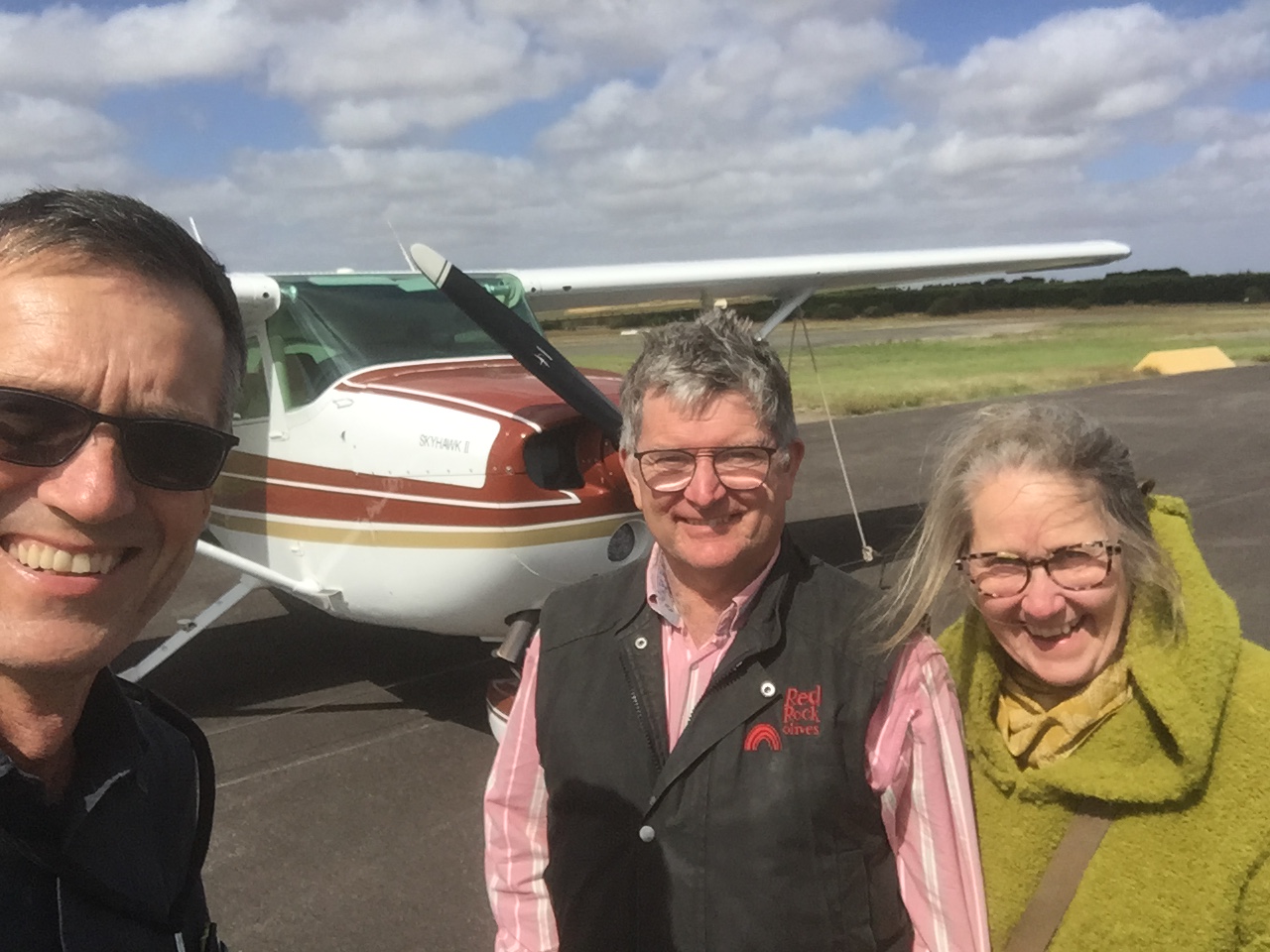
In February 2022 while visiting Mount Gambier I hired Bob Rowe’s Cessna 172 to fly over to Warrnambool to see David and Rita from Red Rock Olives who had rented a cottage in the seaside town of Port Fairy for a summer holiday. As Bob had decided to sell VH-CNY I realised it was possibly the last time I’d get to fly it. I wanted to take David and Rita on a flight down along the Great Ocean Road to experience the awesome natural beauty of the world-famous “Twelve Apostles”. Rising abruptly from the tempestuous Southern Ocean, these limestone stacks are a highlight of the Great Ocean Road. While I’d flown past them in November 2019, David and Rita had only seen them from the ground before so they were excited to experience the aerial view.

Originally I’d planned to land at Port Fairy where there is a grass airstrip but after talking to the local manager and reading OzRunways info about the airstrip I decided not to, as there was a strong south easterly forecast. The airstrip is located adjacent to a line of sandhills and when a south easterly is blowing it comes straight over the sandhills at right angles to the airstrip and can cause severe turbulence on short final. I decided to land at Warrnambool instead and asked David and Rita to meet me there.

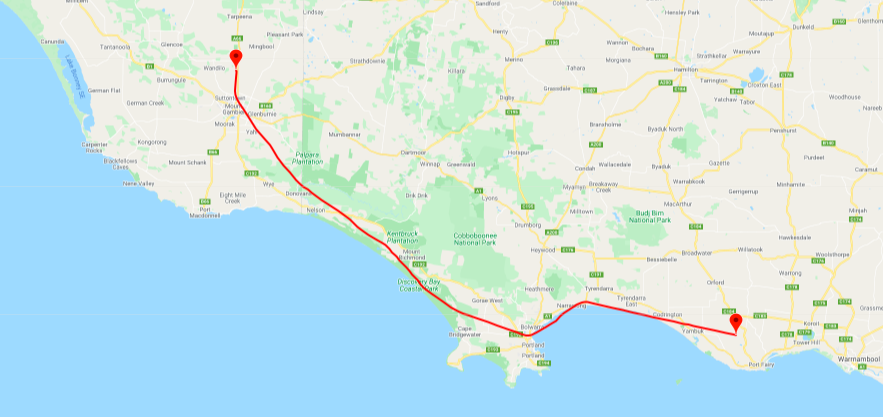
Taking off from Mt Gambier I climbed to 2500ft to stay below a 7/8 cloud ceiling at about 3000ft and followed the Princes Highway past Dartmoor and Heywood and soon saw Port Fairy in the distance. Descending to 1500ft I checked out the airstrip and although the surface looked dry and in good order the wind sock was almost horizontal and fully crosswind. Feeling vindicated in my decision I headed to Warrnambool and landed to see David and Rita waiting.

The Warrnambool airport is 5 minutes drive from Koroit, Victoria’s Irish heritage village.

https://www.koroit.org.au

We headed to Noodledoof microbrewery in the Koroit main street for lunch. This brewery/restaurant was opened a couple of years ago and has a great feel to it and a great menu. Avoiding imbibing in the brews over lunch, we bought a few cans on the way out to enjoy in the evening.

https://www.noodledoof.com/hello

Back at the airport the three of us climbed in and took off to the south east, passing over the city of Warrnambool and heading to the coast. Soon we were over Peterborough and its large sealed runway. This is where the picturesque coastline began.

Peterborough coast with airport

As we headed further east we had amazing views of the cliffs and multiple little bays, inlets and limestone outcrops.

And soon we were approaching Port Campbell, a signal that the Twelve Apostles were up next.

Port Campbell

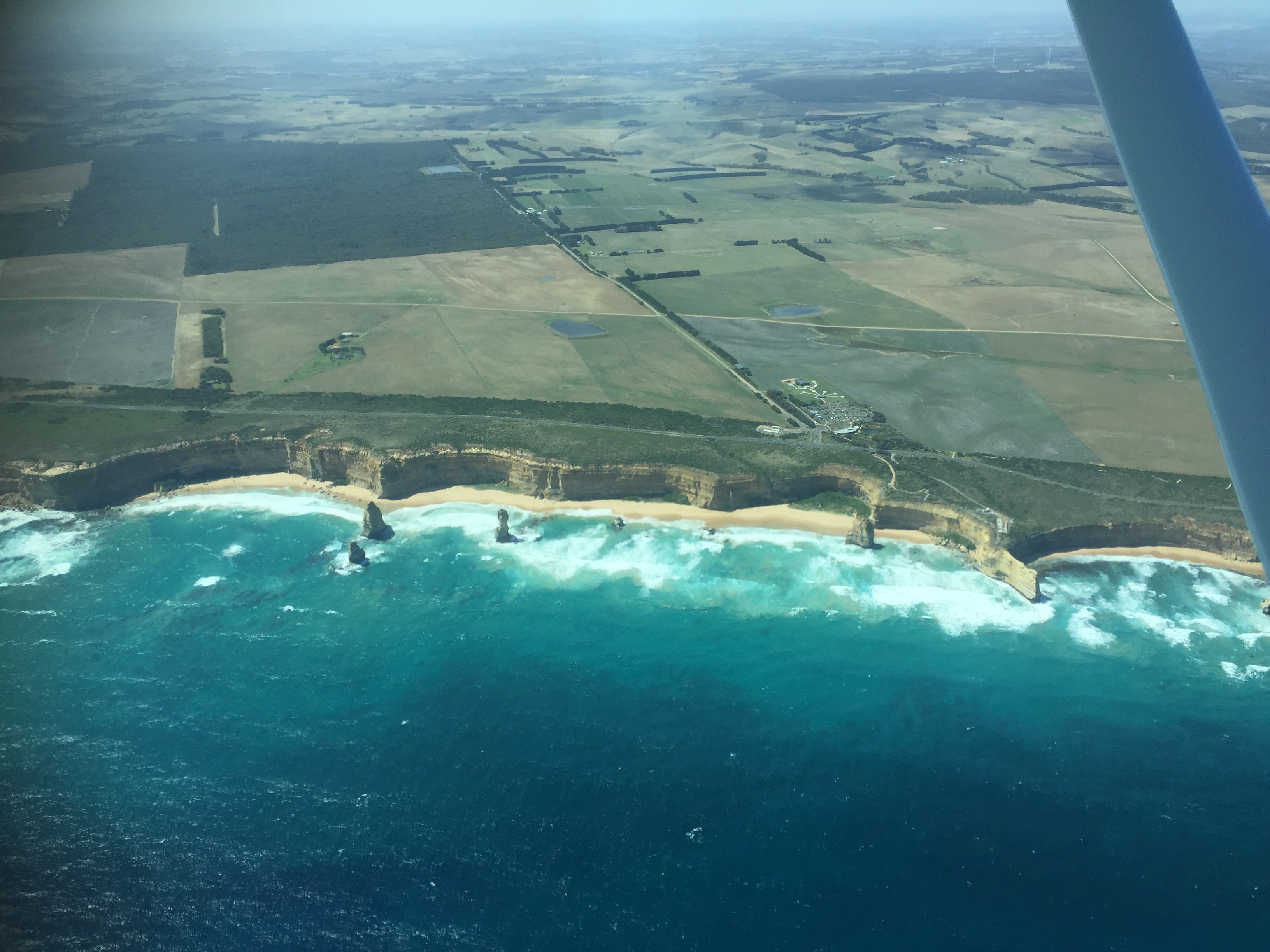
A few miles further on we spotted the visitors’ centre that allowed us to locate the “Twelve Apostles”. These limestone formations jut out of the sea impressively and have become a major tourist drawcard, with many thousands of visitors making the trek from Melbourne along the coast to this point.

The Apostles

The effect of the pounding waves is having its effect on the outcrops. We decided that although they still look impressive from 3000 ft that they probably look more imposing from the top of the cliffs. And yes, there are only 7 of the 12 apostles left.

We headed on further east for a bit, spotting the Otway Ranges in the distance and the coastline as it curved towards Cape Otway.

Turning 180 degrees we headed back at 2000ft for a slightly lower pass by the Apostles and on past Warrnambool to Port Fairy.

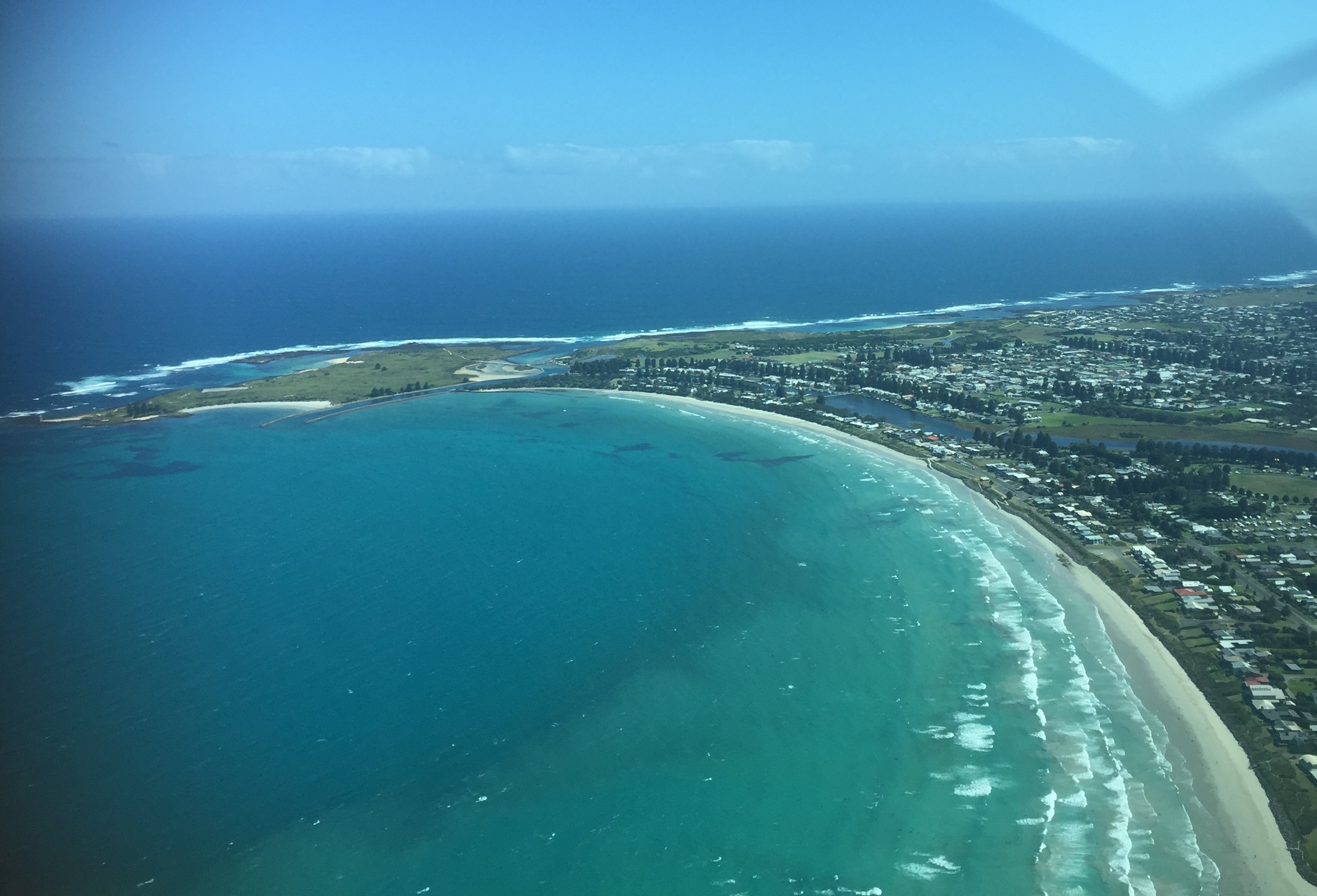
Port Fairy

I’ve driven through Port Fairy many times but hadn’t realised what a wonderful beach it has and suddenly realised why it was the preferred beach resort for so many western Victoria grazier families. It’s become really trendy with Melbourne sea changers especially since Covid, so the real estate prices have sky rocketed and there have been lots of new and fancy homes built in recent years.

https://port-fairy.com

Heading back to Warrnambool we flew over the Tower Hill volcanic crater.

We followed a C152, who was on a training flight from Moorabbin, as he joined the circuit on crosswind and then flew one of the widest circuits I’ve ever seen before executing a touch and go. We did a full stop and parked, tied down the plane and headed back to Port Fairy for the evening.

After having a minor delay due to a mislaid aeroplane key, my return trip the next day was along the coast over Port Fairy once again and then past Portland with its harbour and aluminium smelter on the point.

Further up the coast I passed over Nelson at the mouth of the Glenelg River.

From there it was a ten minute descent into Mount Gambier. Listening to the AWIS the wind had changed to 350 degrees at 7 knots and as there was no sound of any other traffic it was an easy decision to do a straight in approach on RWY36.

Mt Gambier from 2500ft

Encountering a slight bit of turbulence over Mount Gambier I descended towards the recently extended runway and touched down with one of those landings that pilots dream about, taxied over to the apron and put CNY back into the hangar, probably for the last time. Someone will get a nice old 172.

Limestone coast, lakes, sinkholes, volcanic craters, and a river

Mount Gambier – Blue Lake – Mount Schanck – Glenelg River – Port Macdonnell – Lake Bonney

The Limestone Coast is a name used since the early twenty-first century for a South Australian government region located in the south east of South Australia. It immediately adjoins the continental coastline and the Victorian border. The name is also used for a tourist region and a wine zone both located in the same part of South Australia. The region was underwater in prehistoric times so a thick layer of limestone was created out of the shellfish that lived and died there. When the seas subsided the limestone was gradually covered by soil and created the “terra rossa” region around Coonawarra that is famous for its red wines.

Mount Gambier is the largest city in the Limestone Coast and South Australia’s second largest city. The Mount Gambier area is famous for its volcanic craters and crater lakes that are spectacular from ground but also from the air, especially on a sunny blue sky day.

The Blue Lake from the ground

While visiting my mum who lives in Mount Gambier for new year in January 2022 I took my school friend David, his wife Rita and daughter Tansy for a flight around the area in Bob Rowe’s Cessna 172 VH-CNY. It was a perfect morning as we opened the hangar, with a few stratus clouds in the distance burning off and the wind sock hanging limp around its supporting pole. I did the preflight and we pulled CNY out onto the apron and fired it up.

I wanted to use RWY18 and depart on upwind directly to the city of Mt Gambier 5 km away but another aircraft was inbound to land on RWY 36 so we waited patiently for it to land and taxi up to the apron before we taxied down to the threshold of RWY18. It was an amazingly clear day and as we climbed out we could spot the Grampians, where David and Rita live, on the horizon, about 150km to the east.

Soon we were over the city at 2500ft and did a couple of orbits in different directions so we could all take in the views.

Mount Gambier city centre

From there we flew around the edge of the crater lakes.

The lakes formed in the craters from volcanic eruptions 4600 years ago. It’s the most recent volcanic activity anywhere in Australia.

Blue Lake (foreground) and Valley Lake (background)

The water from the Blue Lake is used as the city’s drinking water so no swimming or boating is allowed. The only access to the lake’s surface is via an elevator on tours. The elevator shaft was cut through the limestone from the old pumping station. The Valley Lake on the other had is used for recreational boating, mostly waterskiing.

There is also a “Little Blue Lake” only about 10km to the south. We flew there next.

Little Blue Lake

It’s a sink hole used for swimming and cave diving. There’s an extensive underwater cave system that divers love to explore. Since a number of drownings in the 1970s access for cave diving has been limited to suitable qualified divers. Nowadays they have to be holders of the CDAA Deep Cavern grade. The water is crystal clear, having been filtered through the surrounding limestone. The lake has a diameter of about 40 metres, with cliffs approaching a height of about 8 metres above water level and has a maximum depth of about 47 metres. A popular pastime for locals is to jump off the surrounding cliffs into the water. Given its depth, there’s no chance of hitting the bottom. According to a government website “Cliff jumping is dangerous and prohibited.” I suppose that’s so they won’t be sued by people who hurt themselves jumping in. It’s only suitable for experienced swimmers of course due to the depth of the water.

From the Little Blue Lake it was only a couple of kilometres to the Mount Schanck volcanic crater.

Part of Kanawinka Geopark (Kanawinka.org.au), Mount Schanck is slightly older than Mount Gambier. The 2km walk around the dormant volcano crater’s rim provides sensational views of Mount Gambier and surrounding areas. The volcanic cinder cone of Mount Schanck is a striking landmark. The cone has been little affected by erosion and rises approximately 100 metres above the flat coastal plain.

From Mount Schanck it was a 10 minute hop over to the Glenelg River on the Victorian border. We flew over the Princess Margaret Rose Caves, a subterraean limestone cave formation that is open for visitors during non-covid times. It’s quite a spectacular cave system so well worth visiting if you’re in the area. We followed the river as it wound its way between tall limestone cliffs down to its estuary and mouth at Nelson. In more normal times you can actually catch a boat from Nelson up the river to the Caves so worth considering – great day trip.

Glenelg River flows past Princess Margaret Rose Caves
Nelson

From Nelson we followed the coast past Piccaninnie Ponds, a favourite diving spot for serious cave divers


Further along the coast we flew over South Australia’s most southerly port, Port MacDonnell, a centre for the rock lobster fishing industry. Its breakwater is used to protect the fishing boats from the wild seas. It’s also called “the Shipwreck Coast” due to the high number of fatal shipwrecks that occurred in the 19th and early 20th centuries. There’s a great fish shop there where you can buy freshly caught and cooked rock lobster. Since China stopped import Australian lobster there’s more for us. Yumm!

Port MacDonnell with Mount Schanck and Mount Gambier in the background

Further along the coast we did a couple of orbits over the settlement of Pelican Point where another school friend has a beach house. He was expecting us and apparently waved but we couldn’t spot him, even after descending to 1500ft.

Pelican Point

As we reached Lake Bonney, a large freshwater lake, we turned inland and passed over a massive wind farm. The 278.5 MW Lake Bonney Wind Farm comprises 112 wind turbines which include 46 Vestas V66 wind turbines and 66 Vestas V90 wind turbines.

Wind turbines and Lake Bonney on the right

I looked at my watch and noticed that we only had 30 minutes until my SARTIME. It was time to head back to Mount Gambier. In 15 minutes we were flying overhead the aerodrome. I checked the windsock and did a crosswind join for RWY11.

After a deliciously smooth touchdown we taxied back to the hangar and put CNY away. It had been an amazing and pleasant flight and I think we all enjoyed the aerial experience of the Limestone Coast.

Tail dragger endorsement

While doing my gliding course in November 2021 I was intrigued by the Piper Pawnee, the tug that was used to tow the gliders. Pawnees are a popular aircraft for glider tug duties. Most were originally used for crop dusting or other agricultural duties but have been superseded by more modern aircraft. They can be bought by gliding clubs relatively cheaply and are apparently not too difficult to fly – assuming you have a “tail dragger endorsement”. Tail draggers are the original style of aircraft with the small wheel (or sometimes a skid) under the tail and the main wheels under the wings, meaning that they sit at an angle when on the ground. This design means that there’s more clearance from the propeller to the ground than in a conventional tricycle undercarriage, making them more suitable for the rough fields and paddocks that gliding clubs often employ.

Tail dragger (top) and tricycle (bottom) designs

The design means that the centre of gravity is behind the main wheels and this fact presents some additional challenges when taxiing, taking off and landing. Taildraggers are inherently less stable in the longitudinal axis than the “tricycle” aircraft that generally want to keep going in a straight line on the ground even if the pilot isn’t concentrating. With the tail draggers, the aft centre of gravity means that if the plane wanders a bit off a straight line, the tail wants to swing around and overtake the front of the plane.

Centre of gravity in a taildragger is behind the main wheels

This simple fact of physics can result in a sudden “ground loop” in which the plane does a 180 degree turn or even further, and can lose balance, causing a wing tip to hit the ground and be damaged. This may lead to some significant damage and would be somewhat embarrassing.

So it’s an acquired skill manoeuvring a tail dragger and it requires a bit of training. If you go through the syllabus and pass, you’re rewarded with an endorsement, meaning that you’re qualified to fly one. I’d done a couple of lessons in a Citabria taildragger at the Redcliffe Aeroclub in 2016 but decided at the time that there was no point paying to have the endorsement as I couldn’t see any point of flying one……until I did the gliding course. Wouldn’t it be cool if I’m able to glide and also fly the tug from time to time? And it would improve my overall skill level. But where to do it? Redcliffe Aeroclub had sold the Citabria and didn’t have any taildraggers. So while talking to Jonathan, one my fellow students on the gliding course, he recommended I talk to Doug Field, who owns a flying school at Caboolture, not far from Redcliffe. Doug’s business is called “Sticknrudder” and they only have tail draggers. It seemed a good place to train so I went out to Caboolture in late November when there was an open day and had a chat to Doug and Cameron, one of his fellow instructors, and checked out the Eurofox aircraft they use for the initial training. Doug explained that the Eurofox, built in Czech Republic, is a Light Sport Aircraft (LSA) so is administered by the Recreational Aircraft Association (RAAus) rather than CASA. This meant I’d have to become an RAA member, at least during my training. Flying it wouldn’t qualify me for a CASA endorsement. Once I’d mastered the Eurofox, I’d be able to switch to a Piper Cub, which is a “VH registered” aircraft administered by CASA so would be able to gain the CASA endorsement. That all made sense so I booked three days of training in the week prior to Christmas and went away to read up on tail dragger theory.

Eurofox

Before you could say “ground loop” the first day was upon us. I drove out to Caboolture and was introduced to the Eurofox by Doug. After completing the daily inspertion, the first task was to learn how to taxi without ground looping. I had done this in the Citabria before so it wasn’t too difficult, using the rudder to keep the plane heading in a straight line. There’s a hell of a lot of leg movement required to keep the thing tracking straight. It gives your thighs and calves a real workout. Next we were ready to fly. First Doug suggested a take off and flight over Bribie Island to get a feel for the plane and then practise some three point landings. The take off wasn’t so difficult. Just had to get the plane rolling then push forward on the stick to get the tail off the ground, then hold the stick back a bit to keep it level until it lifted off by itself. Then we had to climb out, retract the flaps at 300ft AGL and at 500ft start a turn onto crosswind. That’s when the lesson really started. Balanced turns are something that all instructors try to drum into students but with a small tail dragger like this Doug was all about making our turns as balanced as possible. What technique did he employ? Well he said it’s not about watching the “balance ball” as you turn, it’s about looking outside and observing the horizon as you turn. But first, just prior to the turn onto cross wind, look left 90 degrees and spot a land mark you want to turn to. Then with your eyes looking straight forward again bank first with aileron, then use rudder to ensure the nose comes around smoothly on the horizon. As your landmark appears, back off on the bank and balance with rudder. Why bother to be so precise? Well it makes it a much a more comfortable turn and reduces the risk of killing yourself through a stall with wing drop brought about by adverse yaw. And the climb out is one of the times that such a situation can develop. Makes sense to learn to do it properly. Anyway this attention to detail continued during the training in the Eurofox as we practised circuit after circuit for the whole day. We were doing “three point” landings, where all three wheels are intended to touch down at the same time. This requires quite a high flare, basically bringing the plane to a position like it is on the ground. It’s meant to be the easier way to land, once you get the angle right. It’s similar to landing in a glider and at first I was tending to land a bit too tail low or tail high but gradually managed to get the flare about right and by the end of the day I wasn’t doing too badly.

On Day 2 I was back in the Eurofox but with Cameron this time. Once again we focussed on the circuits but also started doing some “wheeler landings” which involve landing on the main wheels only. These are apparently better in crosswinds and gusty conditions but require a bit more skill, as you have to land a bit flatter and then when the main wheels touch, push forward on the stick to keep the tail off the ground. If you don’t do that, the inertia of the downward moving tail will make it continue moving down and the wing’s angle of attack will increase, causing lift to increase and the plane will take off again. The tail may also hit the ground and the resultant bounce, if not arrested can lead to a gradually worsening series of hops down the runway that could cause major damage to the aircraft. So the best thing to do if you start to bounce is to apply power and go around for another attempt. I did that a couple of times and by the end of the day was starting to get it about right but it was tricky.

On Day 3 I transferred to the Piper Cub, this time with Guy Hazelton, who turns out to be the son of the person who started Hazelton Airlines that used to fly into Mt Gambier when I was growing up. Guy is a very experienced commercial airline pilot who is now instructing in a “transition to retirement” type role. We started again by doing the daily inspection and starting the plane then doing some taxiing practice and I soon felt comfortable with the plane on the ground.

Guy with the Piper Cub

When we went out to take off however, we found during the run ups that the engine was running rough on one magneto. We leaned the fuel and ran it for about a minute to try to burn off any deposits on the spark plugs and tried again but to no avail. Still running rough. So we had to taxi back to the hangar and get it checked out by the LAME. I had lunch while they took it out and went for a short flight. On their return Guy and I taxied out again but still had the same problem. So we called it a day and I headed for home, hoping that things would be sorted by the morning.

The next morning Doug assured us that the problem had been fixed but we shouldn’t run the engine too slowly for long otherwise the spark plugs could foul so we taxied out with relatively high RPM and did the run ups again. This time all was good. It ran smoothly on both magnetos. So we took off. Once again, accelerating down the runway, keeping it straight with rudder, then allowing the stick to move forward so the tail lifted and then it lifted off almost straight away. I climbed out, using Doug’s technique to do a nice smooth balanced turn and headed for Bribie Island to get a feel for the plane with some stalls and steep turns. Then it was back to Caboolture again for some three point landings. The Piper Cub is a tandem plane so the instructor sits behind the student, and only has limited view of instruments so I had to let him know what our RPM, airspeed and elevation were until he felt comfortable with the way I was flying the plane.

The Cub is heavier than the Eurofox so isn’t as skittish and sits more stably in the air so was in fact actually easier to land than the Eurofox. It wasn’t long before the three point landings were going well and we tried some wheeler landings. These too were easier than in the Eurofox and by the end the day I felt I’d got them pretty well sorted. On downwind on one of the later ones Guy said “Oh, oh, Doug’s car’s on the taxi way. That means he’s planning to take a video of your next landing. It’d better be a good one!” So I did my best landing of the day.

My wheeler landing in the Piper Cub

We’d got a bit behind schedule due to the problems with the Cub, so I’d have to come back on the fourth day to complete the CASA curriculum for the endorsement including a couple of glide approaches so at 4pm we called it a day and headed home.

On Day 4 I was out at Caboolture at 7am and Guy had the plane ready to go. We taxied out and did a number of circuits with some practice glide approaches and a variety of different landings and by morning tea he told me that I’d completed everything required for the endorsement. So as he signed off my licence I suggested we do a flight out over the Glasshouse Mountains to Archer Falls, where Doug’s father has a small airstrip. Guy was up for that and suggested we also try some landings at another “bush strip” nearby to improve my skill level.

Tracking west over Caboolture

So we took off and headed west over Caboolture towards the hills where Archer Falls is located. And this was when I noticed a huge advantage of the Cub. It cruises at 70 knots, which is not very fast. Not good if you want to get somewhere in a hurry. But great if you want to sight see. You can really take in the country as you fly over it and although I’d flown over the Glasshouse mountains and Woodford area numerous times it was the first time I’d noticed so much detail. It was fantastic.

Near Woodford, with the Glass House Mountains on the horizon

We arrived over Archer Falls and did a pre-landing recce of the strip on downwind for RWY 18. Guy pointed out a powerline running along the road that crosses the northern end of the strip. Something to stay well clear of on short final. So we stayed a bit higher than normal till we’d cleared the power line then dropped softly onto the freshly mowed and slightly rising runway. Guy dropped something off to Doug’s father who was just finishing mowing the airstrip on his rider mower. A big job that had taken him a few hours. It’s a one way airstrip, and you land to the south, with Mt Archer rising at the southern end. This means you don’t get a chance to go around. Once you are close in you are committed and must land.

At Archer Falls with Mt Archer in the background

Of course, you have to take off to the north (RWY36), away from the mountain, and the strip is interesting in another way. It actually curves around a bend at its southern end, so to take off you taxi down to the southern end and around the bend so you can’t actually see the far end of the runway when you start the take off roll.

RWY36 viewed from just around the bend

We accelerated and I lifted the tail off the ground just as we reached the bend, turned left and headed down the runway, lifting off with plenty of room to spare. The Cub doesn’t need much room.

The airstrip on the round hill

Heading off to the north we found another “bush airstrip” on a nearby property. This one isn’t marked on maps and is also a one way strip. It’s also interesting in that it actually is on a round hill, so you land on a rising runway, climb up to and pass over the crest of the hill and then have to decelerate on a downward slope. Guy demonstrated the first landing and I turned the plane around and did the take off. Initial acceleration was slow and blind, lifted the tail, still couldn’t see over the crest of the hill, then cleared it and accelerated quickly down the other side, clearing the dam at the far end. I did a circuit then came back for my first attempt. Over the dam, in between the trees, settled onto the runway and we were soon careering down the other side but there was plenty of room to stop. After two more circuits we called it a day and headed back towards Caboolture.

But suddenly Guy said “Do you have another 20 minutes spare?”. Sure. “Well I know this new airstrip that’s being constructed over near Dayboro that ends over a sheer drop. You really should see it.” Sounds good. Let’s go. So we headed over to Mt Mee where I suddenly realised we were going near the house of some friends of ours so I said “Can we hunt for this house I know?” and Guy said Sure! The beauty of the Cub as mentioned above is that it flies so slowly that you can keep track of where you are and follow roads and identify landmarks easily. So I spotted Mt Mee township then the road we had to follow and soon we were over the house.

Orbiting our friends’ house

We did one orbit over the top but couldn’t see anybody so headed off again towards Dayboro. On the way we passed over the Ocean View Estate winery where two helicopters were coming into land and soon were over the new airstrip that Guy had mentioned. Very impressive with a significant drop at the western end into the Dayboro Valley.

Airstrip under construction
The strip ends at a precipice to the west, with a drop into the Dayboro Valley

Then it really was time to head back to Caboolture and the finish of my taildragger course. It had been fun. Meanwhile, gliders climbed behind tugs overhead.

More night circuits

On Monday December 13, 2021 it was time to practise night circuits yet again. Another three months had passed so I had to do at least three take offs and landings after last light to be qualified to carry passengers at night. This time I decided to take Cessna 172 VH-IVW as it’s cheaper to hire than the Cirrus and easier to deal with on completion. The Cirrus has to be physically pushed back into the hangar, a bit of a tricky thing to do on your own in the dark. With IVW I can just tie it down on the apron outside the Aero Club so no physical work is involved.

As usual, I submitted an IFR flight plan for my circuits (I only have a night IFR rating), nominating Archerfield as the alternate (just in case Redcliffe’s runway lights failed while I was up in the air) and rang up the Brisbane Centre shift manager to explain what I was planning so there’d be no surprises for the controllers when I gave them my taxi call. Most pilots have a night VFR rating so don’t need to call up on the radio to do circuits at Redcliffe so I like to explain my situation to them beforehand. All good.

While it was still light I did three circuits to familiarise myself with handling of the plane again then parked on the apron and ate a sandwich out the front of the clubhouse while the light faded. It was a great evening. Blue sky, almost no wind and the sun sinking slowly in the west. Redcliffe has PAL (pilot actuated lights) for the runway and these have to be turned on by pushing the “press to talk” switch three times on a particular radio frequency. They automatically extinguish after about 30 minutes if you don’t switch them on again so you have to be ready for them. There are lights around the wind sock too so you can see the wind speed and direction at night. These lights flash for the final 5 minutes before the runway lights turn off so warn you that it’s time to switch them on again. The lights were on as another pilot was already doing circuits but I switched them on again anyway, first to test my radio was working and I had the correct frequency, and second so I’d have at least another 30 minutes until I’d need to switch them on again.

By then it was almost last light so fired up IVW and taxied out. It wasn’t quite last light yet so I could legally use the (unlit) taxiway to RWY07.

On return to the apron

After last light you have to backtrack the runway as there are no lights on the taxiway. Given that there was one other aircraft already in the circuit it would have been a pain to backtrack all the way in between his landings so it was good to be able to use the taxiway instead.

After completing the pre-takeoff checks and the runups ATC gave me a transponder code and, after allowing for the other guy to land, I took off just before last light. On downwind at 1000ft AGL the controller identified me and asked whether I’d like an “ops normal time”. This is a time the pilot nominates for search and rescue purposes. If they haven’t heard from my by the nominated time they try to call me. If they can’t raise me on the radio they try to phone me on the mobile and if they still don’t have any luck they raise the alarm and the search and rescue process is initiated. This system is particularly comforting when you’re doing circuits at night over the sea, as is the case at Redcliffe. It was just on 7pm so I nominated 7:30. I calculated that should give me time for 4 circuits. The other guy in the circuit landed as I was on downwind and called a full stop. He can’t have been night rated. The clock ticked over to last light as I was on final and I completed a nice touch and go landing, climbing out on instruments over the bay. Four more equally smooth touch and goes followed as the night sky grew darker and the lights of Brisbane sparkled off to the south. It was an ideal evening with clear sky, almost no wind and very smooth flying. Satisfied with the standard of the five landings I taxied back to the apron, cancelled my Sarwatch with Brisbane Centre, and tied the plane down. Night circuits done for another 90 days.

Instrument approach practice

On November 19th 2021 it was time to practise instrument approaches using the GPS again so Mike and I took Brett for a trip to Kingaroy and Hervey Bay. I was PIC for the first leg from Redcliffe to Kingaroy at 6000ft.

Our track from Redcliffe to Kingaroy with RNP approaches

Perfect weather with a few friendly cumulus to fly through. There was a bit of other traffic about both IFR and VFR and gliders so ATC did a good job of informing us and keeping us separated. First up was the RNAV (or RNP) for RWY 34 via waypoint Sierra Echo. I did one hold and then joined the approach with the hood on and Brett acting as safety pilot (being my eyes in the sky as I focussed on the instruments).

I did a missed approach and climbed out to 3700ft AMSL then tracked for waypoint November Delta on the RNAV for RWY 16. Now the active RWY was 34 and another aircraft taxied out for departure so I told him what I was doing and he kindly waited for me to descend to about 2 miles out and I then became “visual” (lifted the hood) and broke off the approach, joining downwind for RWY 34. After a short break on the ground Mike took over as PIC and flew us to Hervey Bay at 5000ft, passing Maryborough on the way, then conducting the RNAV on RWY 11.

Our track from Kingaroy to Hervey Bay with RNP approach
Departing Kingaroy
Maryborough

After a break for some lunch we headed off again, this time to Redcliffe at 9000ft.

Track from Hervey Bay to Redcliffe

I was in the back seat this time as Mike explained some of the finer details of his Cirrus to Brett but was stumped by Brett’s question of “where’s the clock?” After a bit of hunting around we decided the answer was “On my wrist!”

Tin Can Bay and Inskip Point

Descending parallel to the Sunshine Coast we had great views from Noosa all the way to Bribie.

Tewantin and Noosa
Coast from Noosa Heads to Coolum
Passing the Sunshine Coast Airport
Overhead Redcliffe

Joining the circuit at Redcliffe we had a birds eye view of the housing development at Newport adjacent to the aerodrome. Let’s hope those new residents don’t start complaining about aircraft noise!

Newport development with adjacent swamp and aerodrome

And of course the touchdown at Redcliffe was just perfect!