Mountain flying in the US Rockies

After doing a few days of mountain flying in New Zealand in 2023 I was keen to do some more and learn a bit more about what to do and what not to do when flying at altitude amongst the mountains. There’s no place to do it in Australia but I knew that it’s possible in the Rocky Mountains in the US. I’d also wanted to fly in the US for a while and had plans to visit the EAA Airventure in Wisconsin in 2024 so, wanting to make the most of my trip to the US, decided to add a couple of days of mountain flying training to my itinerary prior to arriving in Oshkosh.

I contacted a few flight schools by email to find out pricing and the types of aircraft they used and decided on flying with Matt Beyer who is based at Rocky Mountains Metro Airport, about 30km north of the Denver city centre.  Matt had three days available in the week before AirVenture so I booked two, with the third held in reserve in case of bad weather.
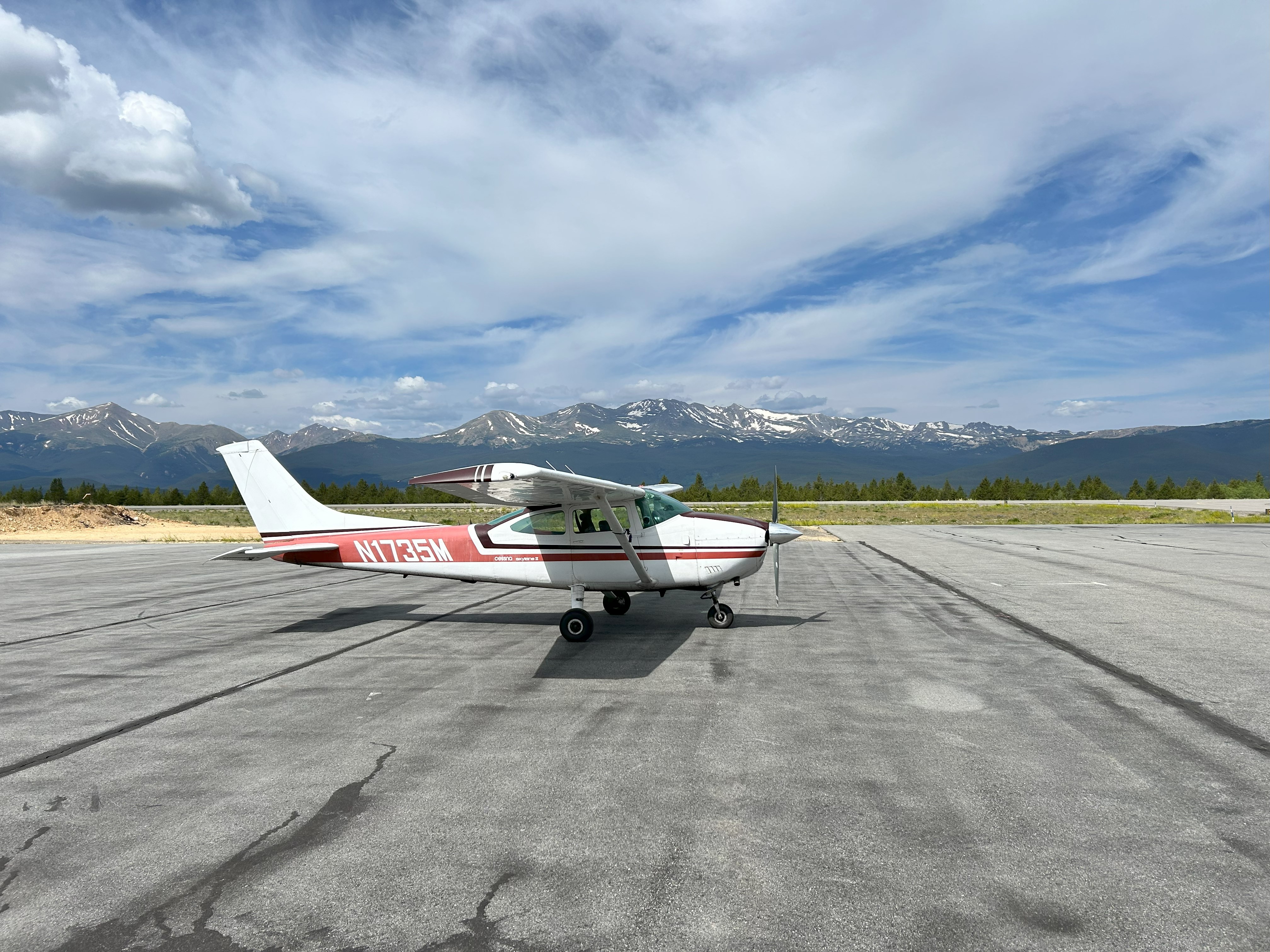
On the ground at Leadville, the highest airport in North America

Matt is about my age and grew up in Denver where he’s spent most of his life.  He’s flown around the Rockies since about 1990 so knows the area really well.  And he’s survived that long in the mountains so I reckoned there’d be a good chance he’d be safe to fly with.  As it turned out he’s also the chief safety officer for the Rocky Mountain Flight School.

So, in early July Brett Silvester and I flew from Brisbane to Los Angeles. I’d originally planned to fly commercial from LA to Denver but after telling Brett of my plans he suggested we do a road trip.  As a result, we drove the 1,600km over four days, arriving in Denver the afternoon of the day before the first flying day.  That gave us the advantage of getting over jet lag and seeing some amazing country that we’d otherwise never experience.

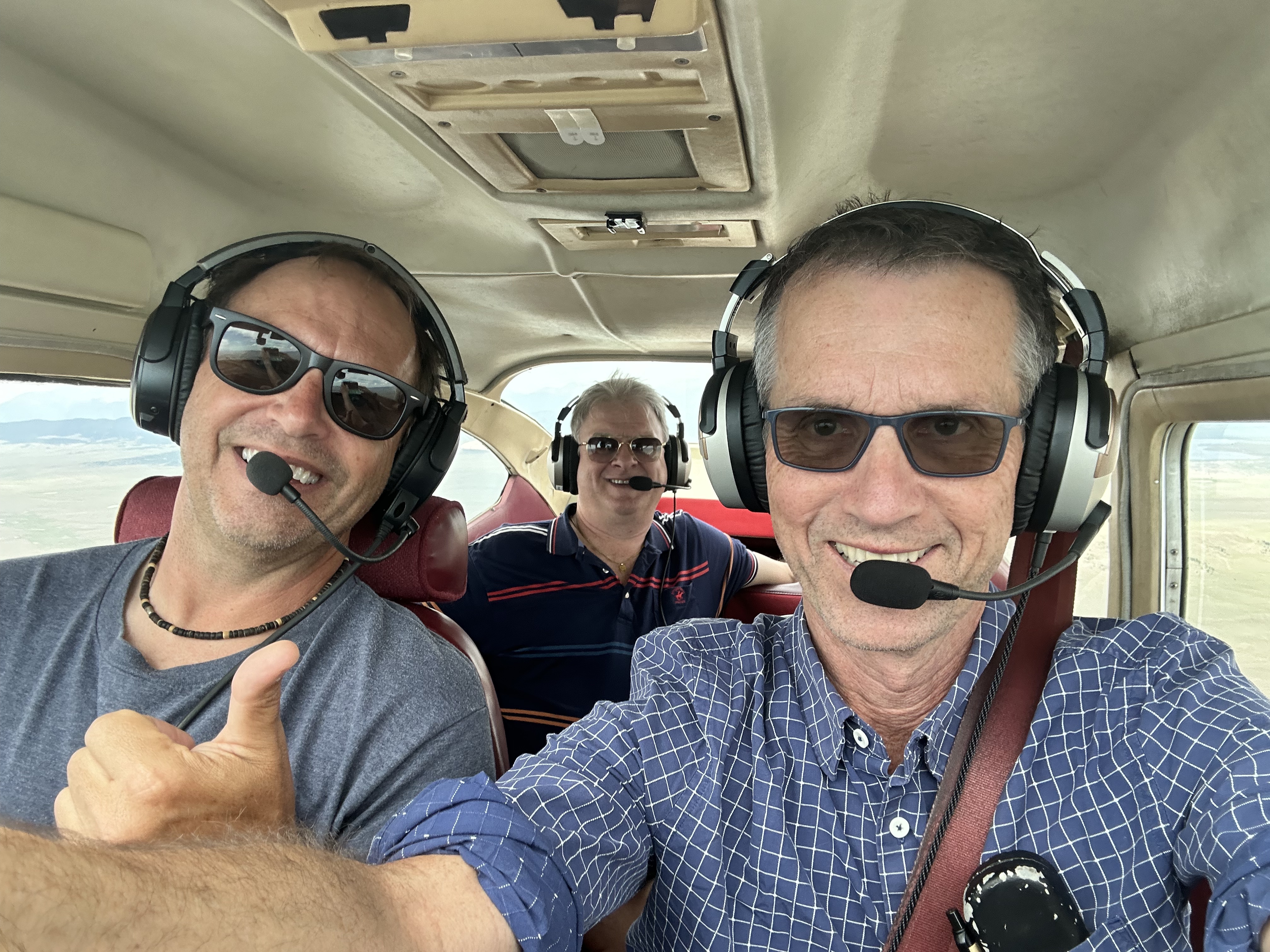
The first lesson we learned for flying in the mountains was to fly early because the weather often deteriorates in the afternoon and storms build up, so we’d arranged to meet Matt at 6:30am on Day 1.  He had the C182 fuelled up and ready to go so after a quick preflight I climbed into the left hand seat with Matt in the right and Brett in the back.  Situated at 5670ft MSL as they say in the US the air at Rocky Mountains Metro has a fairly low density, even on a cool morning, so after taxiing to the runup bay I had to lean the mixture to obtain the maximum RPM. This is to ensure the maximum power for takeoff. 

RWY30L at Rocky Mountains Airport

We took off to the north west into the clear morning air and climbed slowly to about 12,000 feet.  We had to climb that high to cross over the continental divide on the eastern side of the Rockies so we could reach the vast array of mountains to the west. You could tell the 182 was struggling a bit to climb in the thin air with the three of us on board. 

Crossing over the continental divide

Surrounded by beautiful mountain scenery we descended into the ski resort of Steamboat Springs, passing over a number of chair lifts that service the ski area.
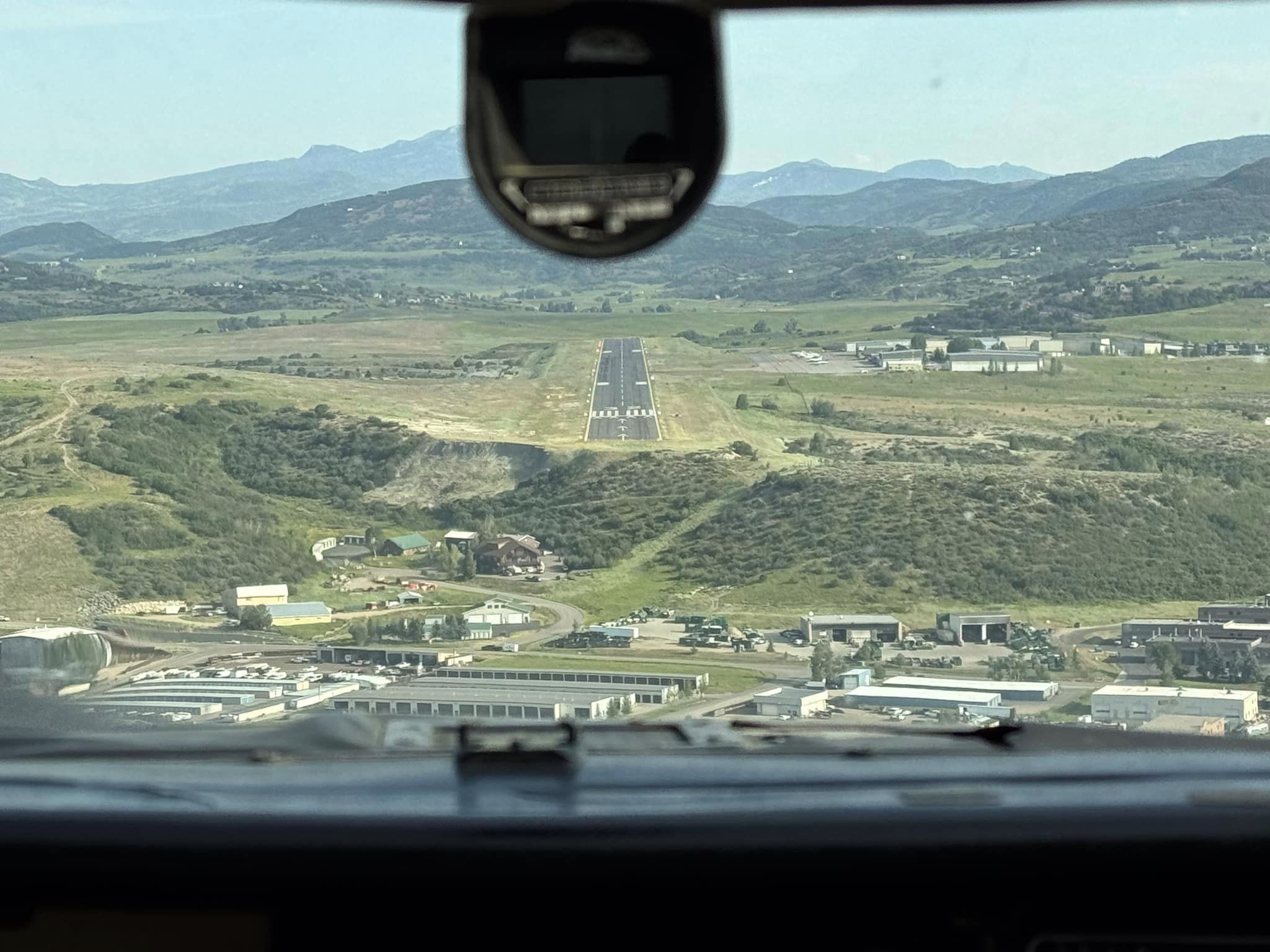
Short final at Steamboat Springs

The airport had a pleasant FBO (Fixed Base Operator) where I had a good coffee that was even free! The FBO’s are of varying qualities but all have great facilities for itinerant pilots.

After our break at Steamboat we flew over amazing mountain scenery to our next destination. Eagle County airport, that services the Vail ski resort, nestles in a valley next to the I70, the trans Rockies interstate highway. I did a touch and go on the incredibly long runway.
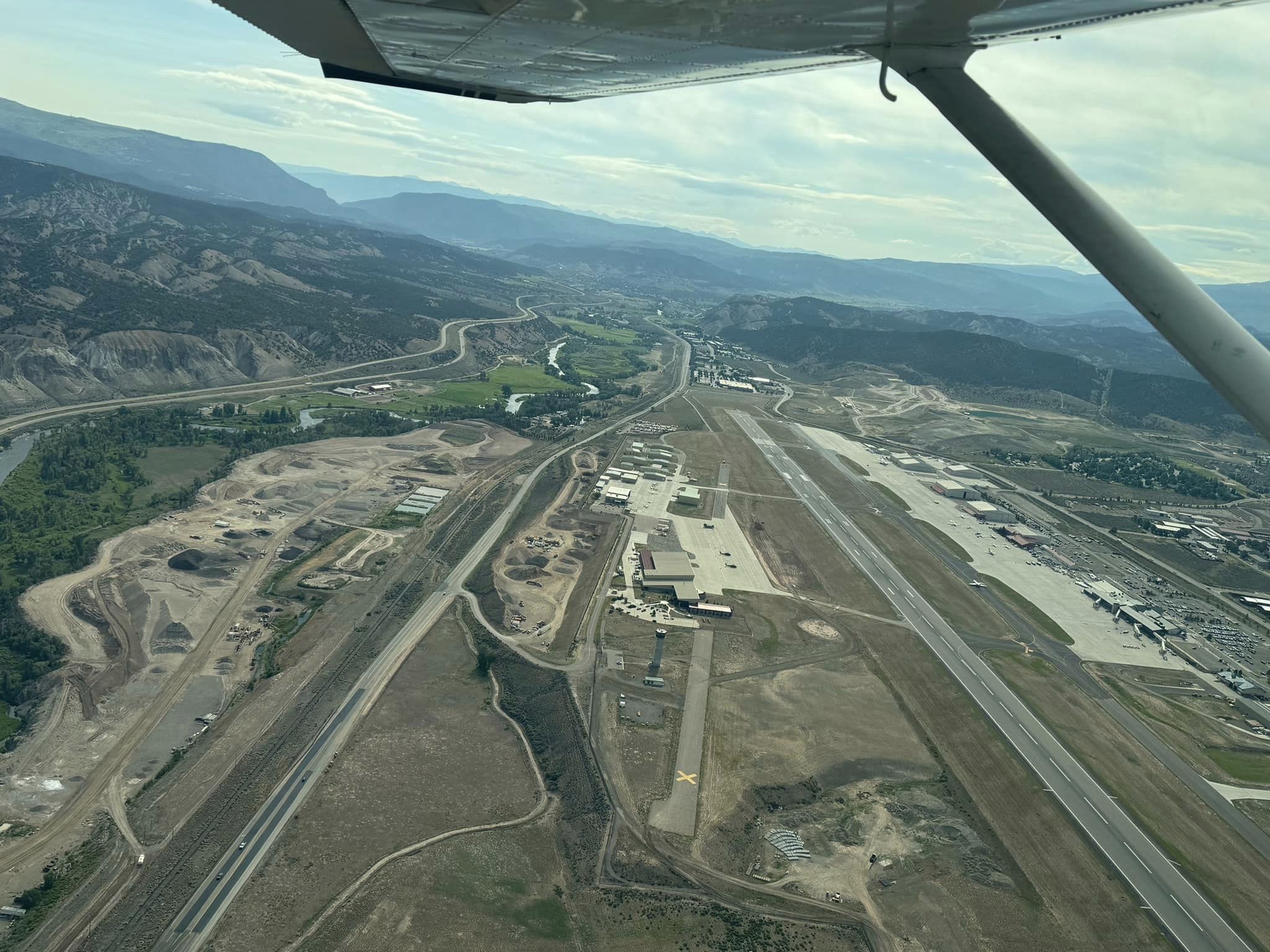
Eagle County Airport

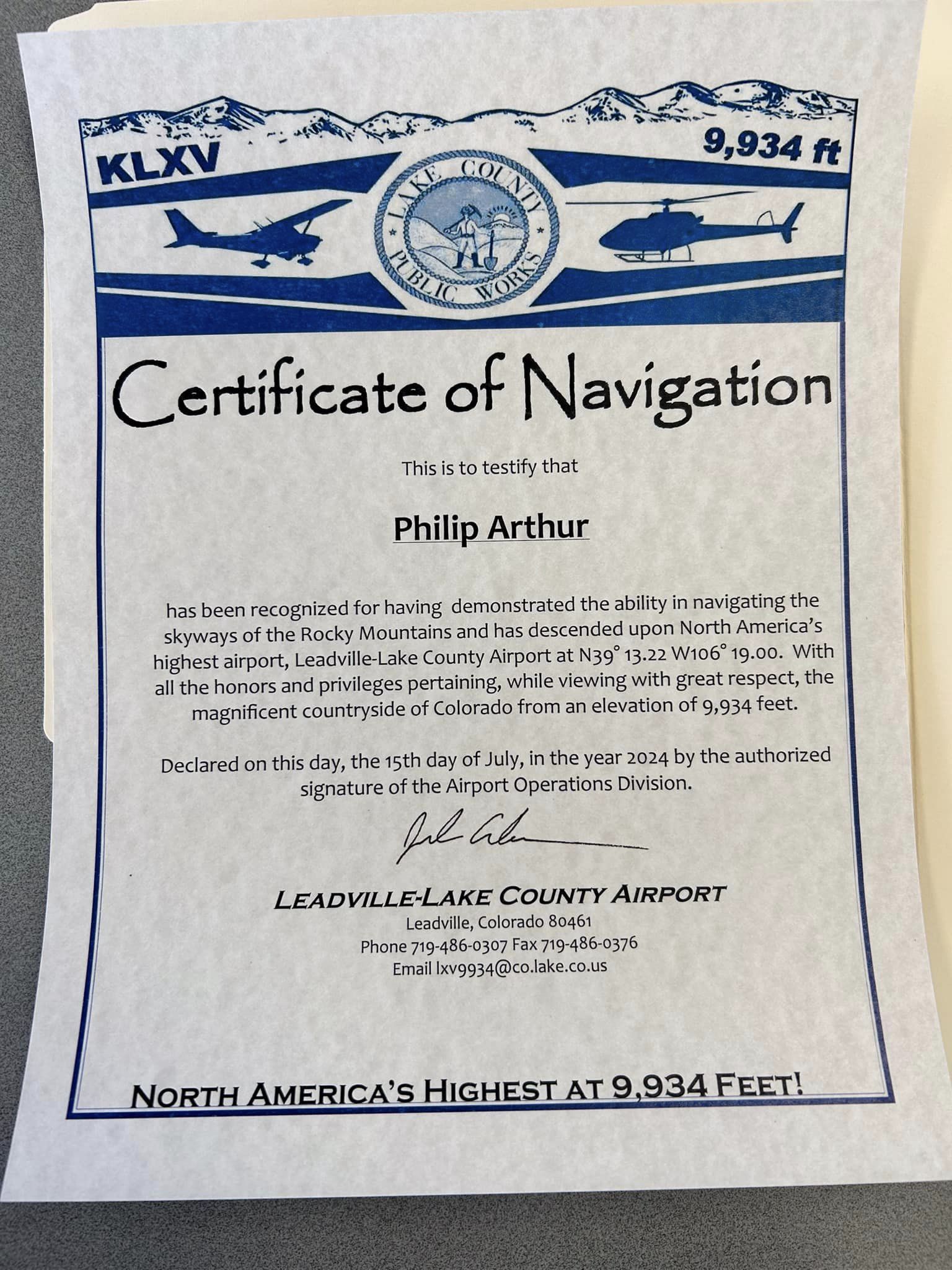
From there it was a short hop over some more mountains to Leadville for another full stop.  Leadville is North America’s highest airport at 9934ft MSL and was the site of a lead mine and smelter in earlier days, so two points of interest for a metallurgical engineer turned pilot like me.
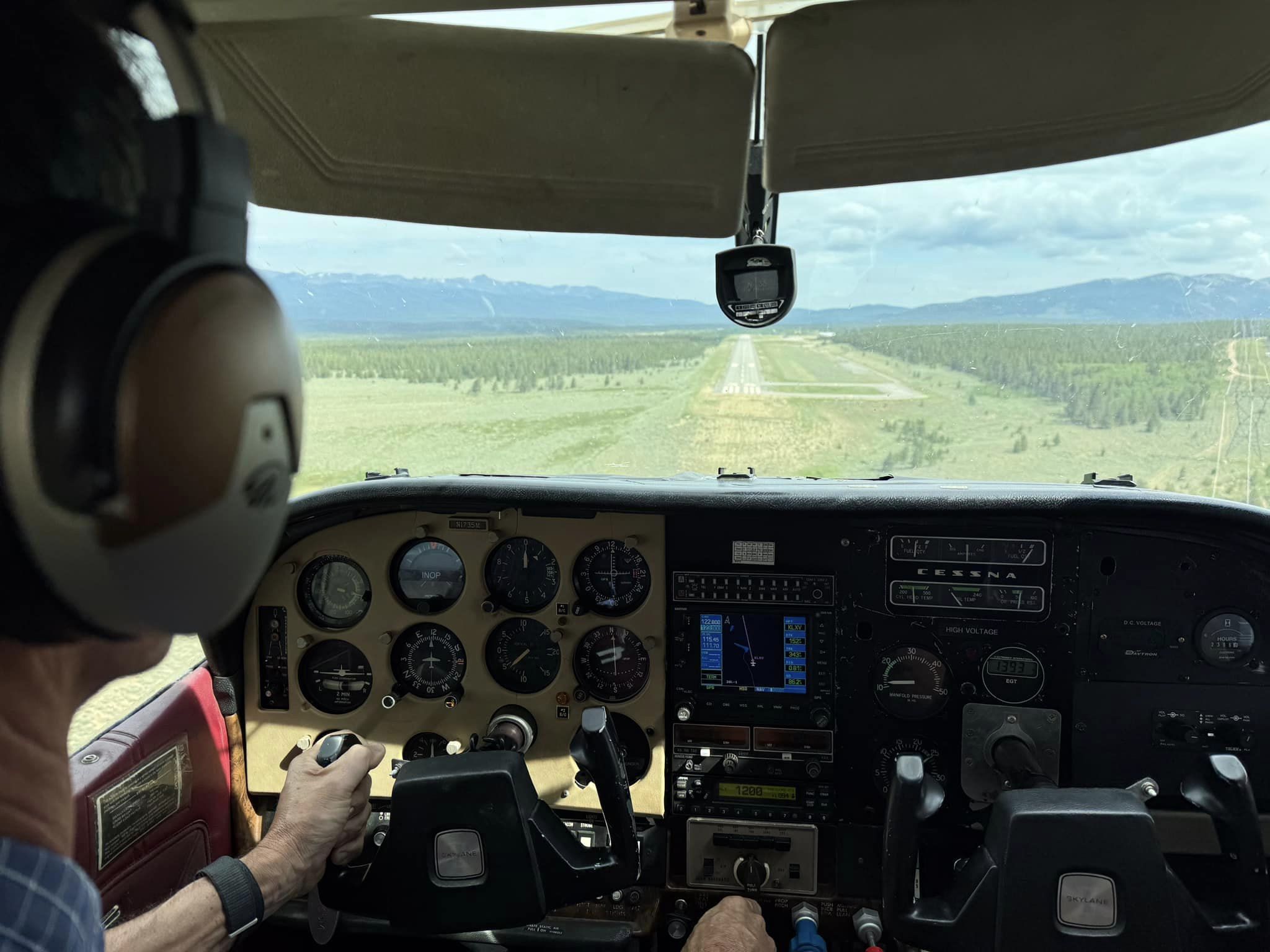
Short final at Leadville

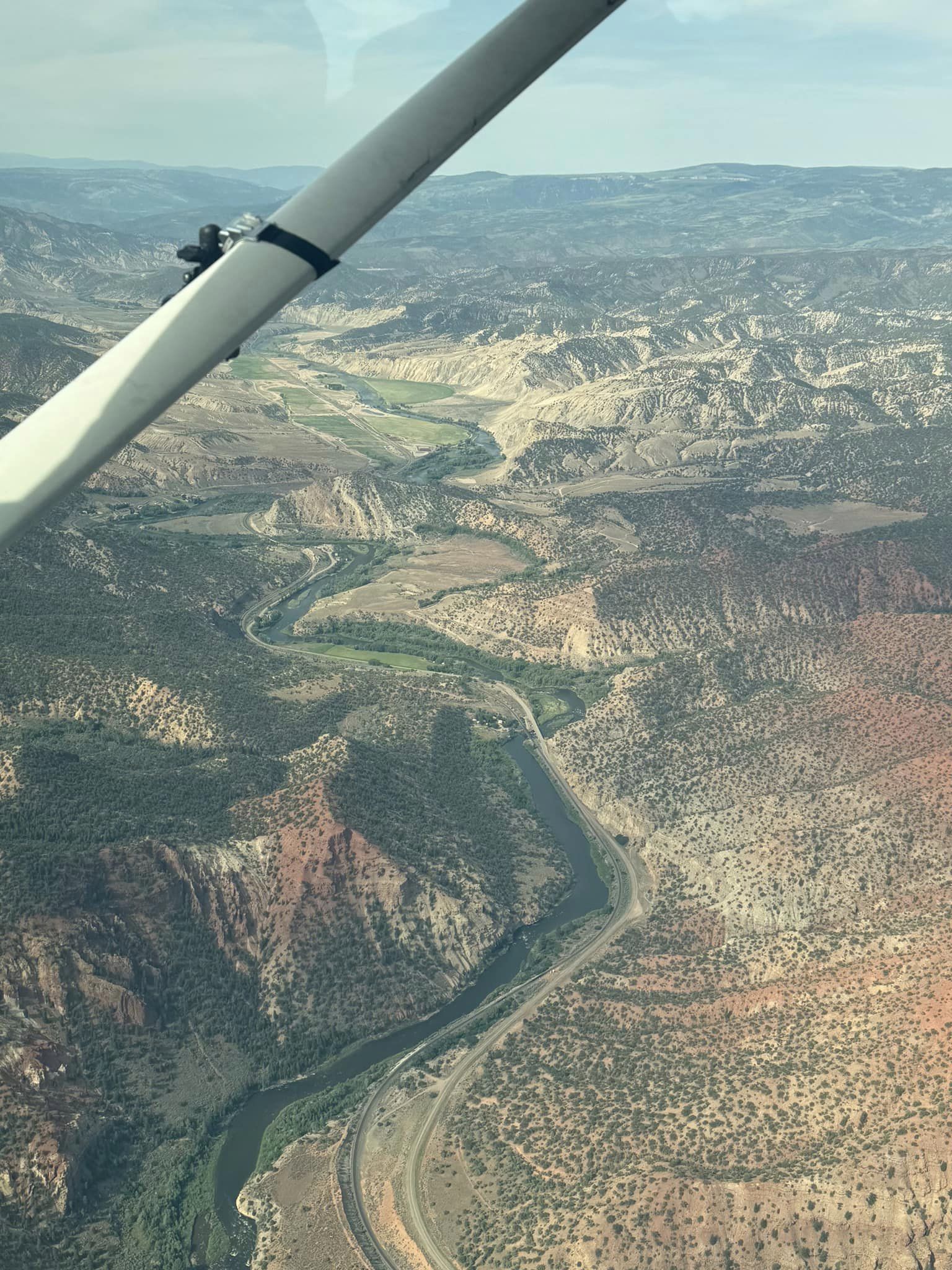
I was amazed at how vast the mountainous area is and how much wilderness there is.  There are certainly a few towns and ski resorts scattered around and some farming in particular areas but the vast majority is pure wilderness.  Amazing!
After obtaining my commemorative certificate for flying into the highest airport, and buying the mandatory t-shirts we made our way back to Denver.
On the way we passed over more wild country and also some grazing land where one of Matt’s friends has a farm with its own strip. Landing just before noon we all agreed it’d been a great morning. There’d been little wind so not much opportunity to practise how to avoid mountain waves and downdrafts but at least the flying had been very smooth.  Clouds were forming over the mountains as we tied down the plane and by 3pm that afternoon a major thunderstorm hit with some torrential rain.  We were glad we were back out of the mountains.
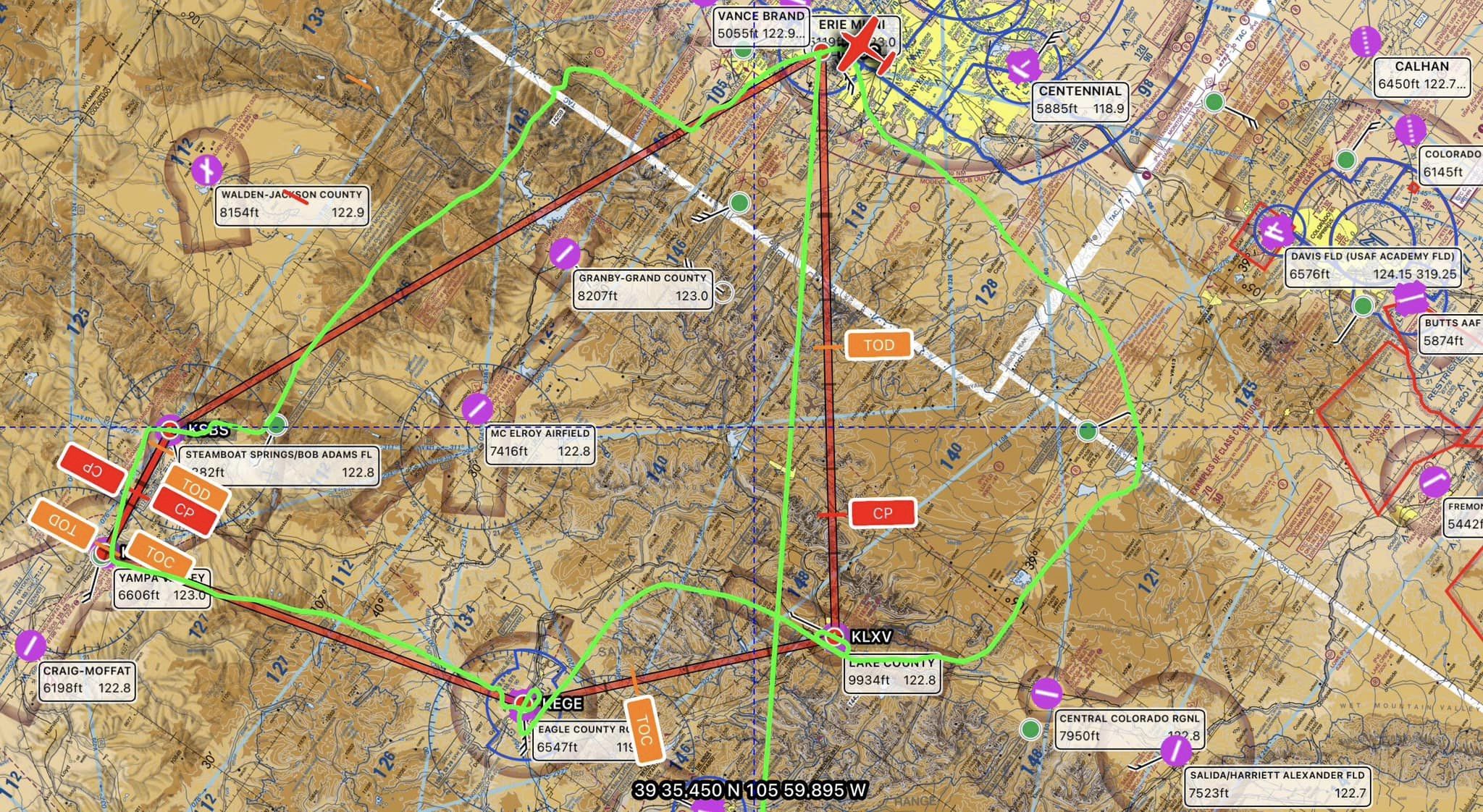
Day 1 flight plan and actual route

The next day we met Matt at 6:30 again. We took off to the south west this time, once again climbing to about 12,000 ft to make it over a different pass for a flight into Aspen. 
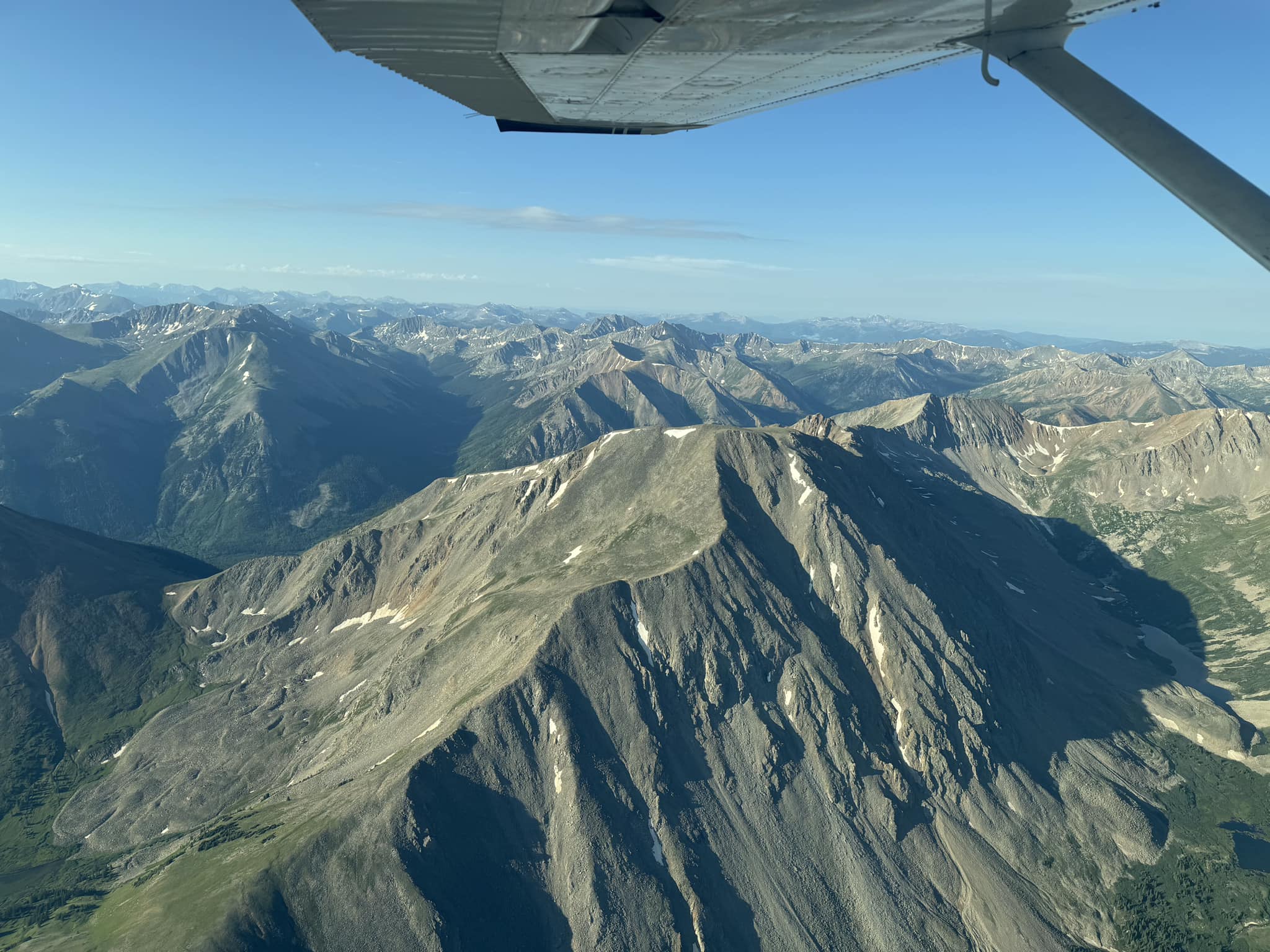
Passing over the peaks enroute to Aspen

Now Aspen is really where all the rich and famous hang out and there was a $50 landing fee if you stopped and visited the FBO so we decided to give it a miss.  

Ski slopes on descent into Aspen

As I did a touch and go we could see all the private jets lined up along the apron.  It was really quite a sight.
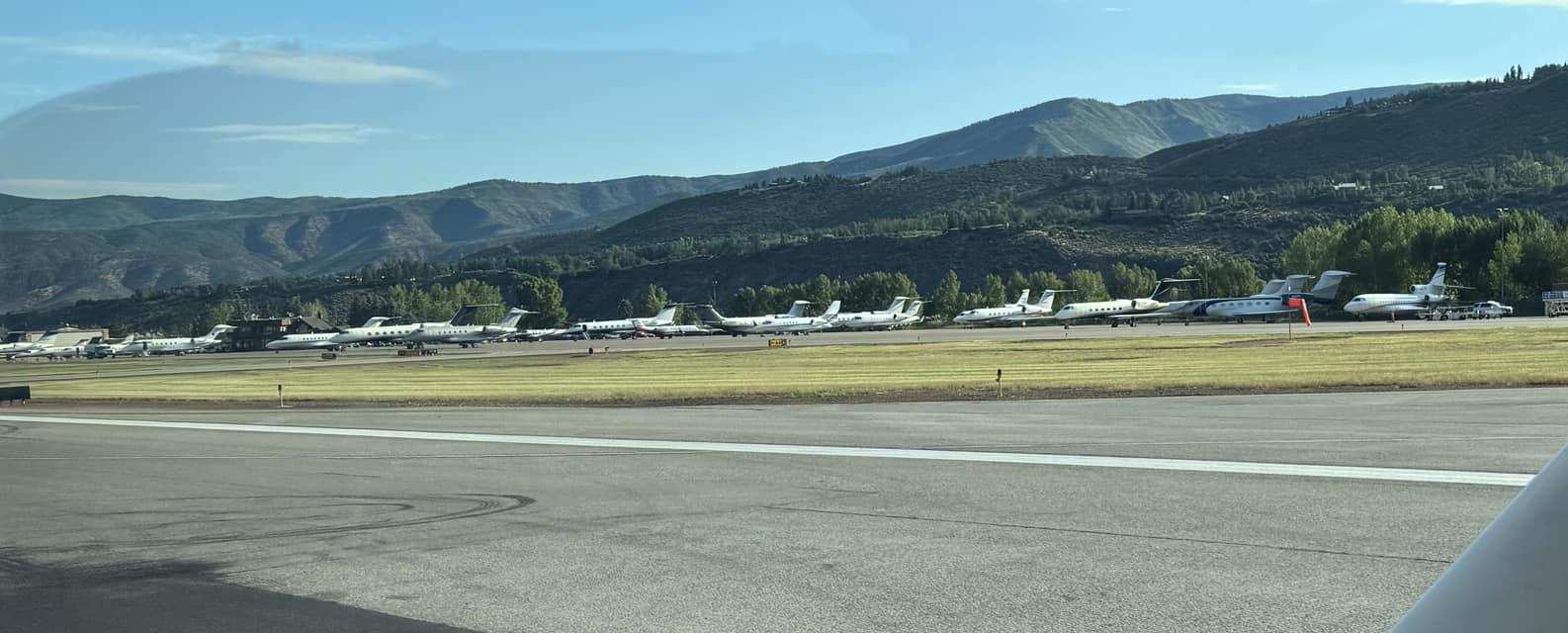
From Aspen it was a short hop over to Glenwood Springs where we did a full stop to check out the facilities.  On descent our course took us around one mountain and I had to turn to avoid another, negotiating our way down through a valley, and flying past a theme park that was perched high on the side of the mountain we had to avoid.  Wouldn’t be good to park the plane in a Ferris wheel on a mountain side would it?
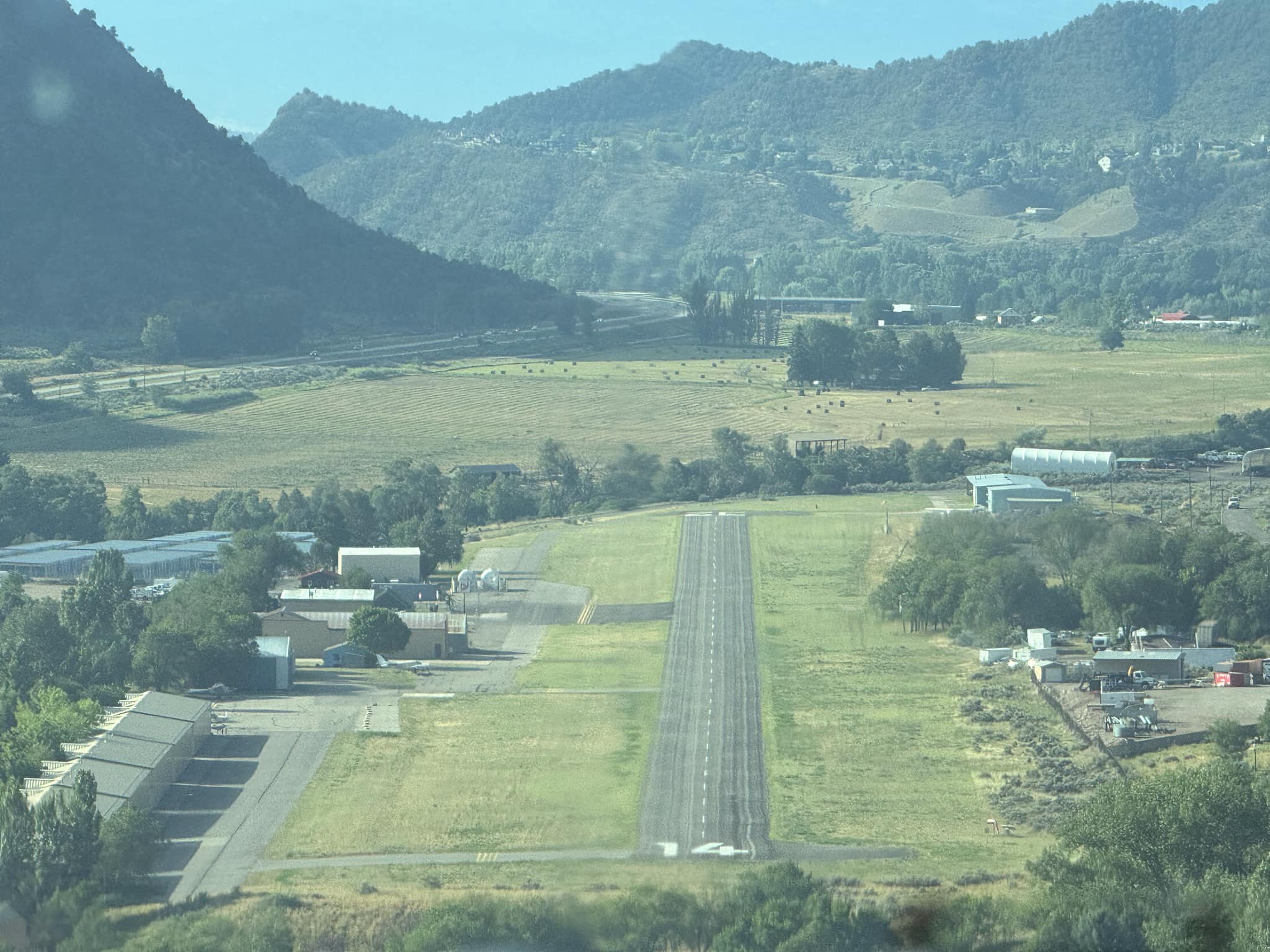
Glenwood Springs

The next leg took us over some real wilderness country and another pass towards Crawford, a short ‘one way’ grass airstrip that belongs to the owner of a private bed and breakfast.  On the way Matt suddenly suggested we do a touch and go at Paonia, a short runway plonked on top of a mesa (or jump up), that happened to be on our way.  I had to orbit a couple of times to descend a few thousand feet a bit earlier than expected and then headed for the mesa.  It was a great experience and what was really interesting was that the runway has a slight kink at each end to enable it to be as long as possible on the surrounding topography.

Paonia

From Pionia it was about 10 minutes to Crawford, where the ‘piano keys’ of the grass strip are located on the edge of a small canyon, making for interesting updrafts on short final.  Touching down it was a slight uphill to the BNB at the end.  We didn’t have time to stop and chat so turned around and barrelled back the other way to take off over the canyon.
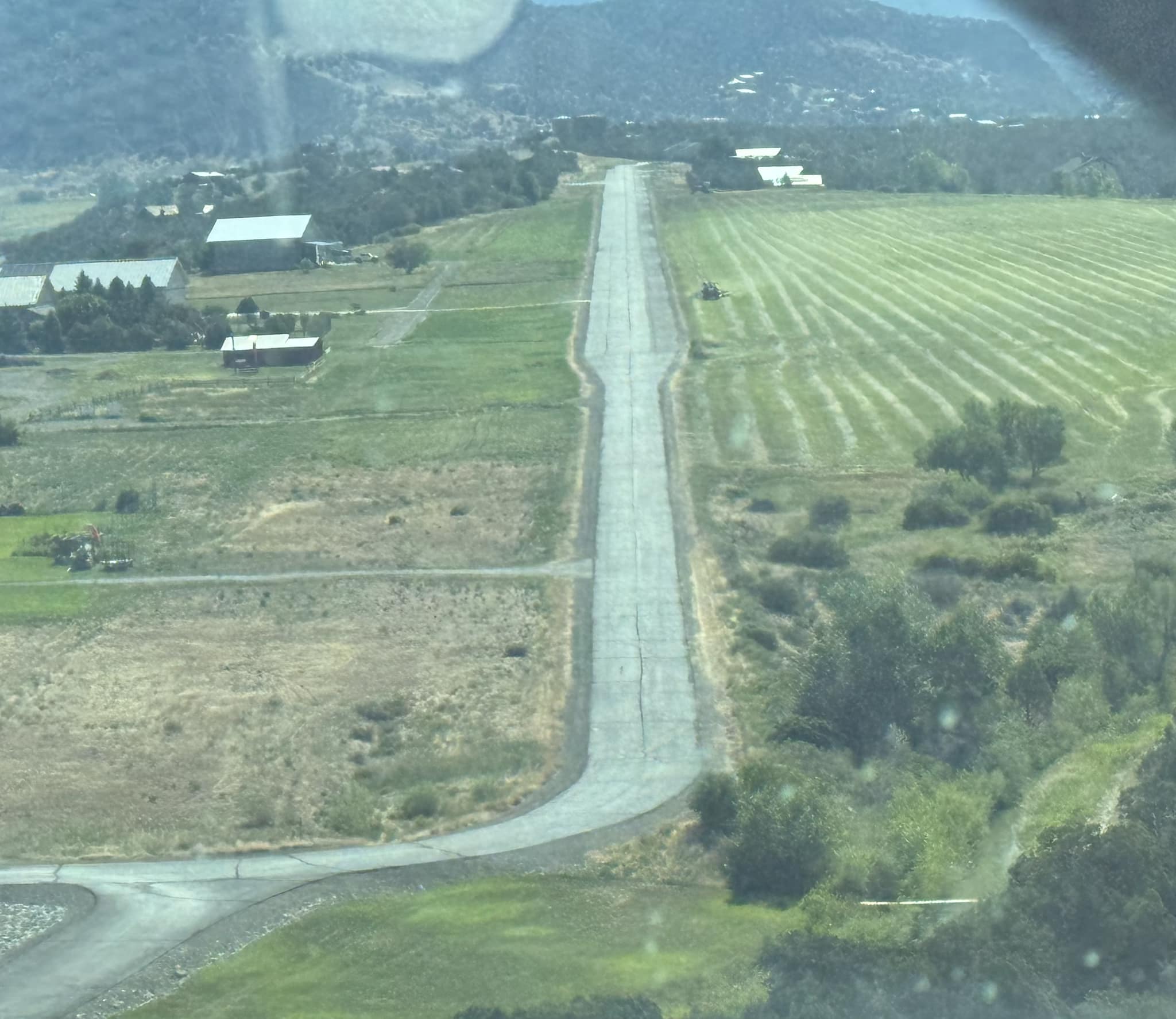
Crawford

Our route then took us over Black Canyon, a smaller version of the Grand Canyon in Arizona, where Matt had taken his family hiking in the past.  There were impressive views down the sheer cliff sides to the river below and I could imagine it being a great place to explore on the ground.
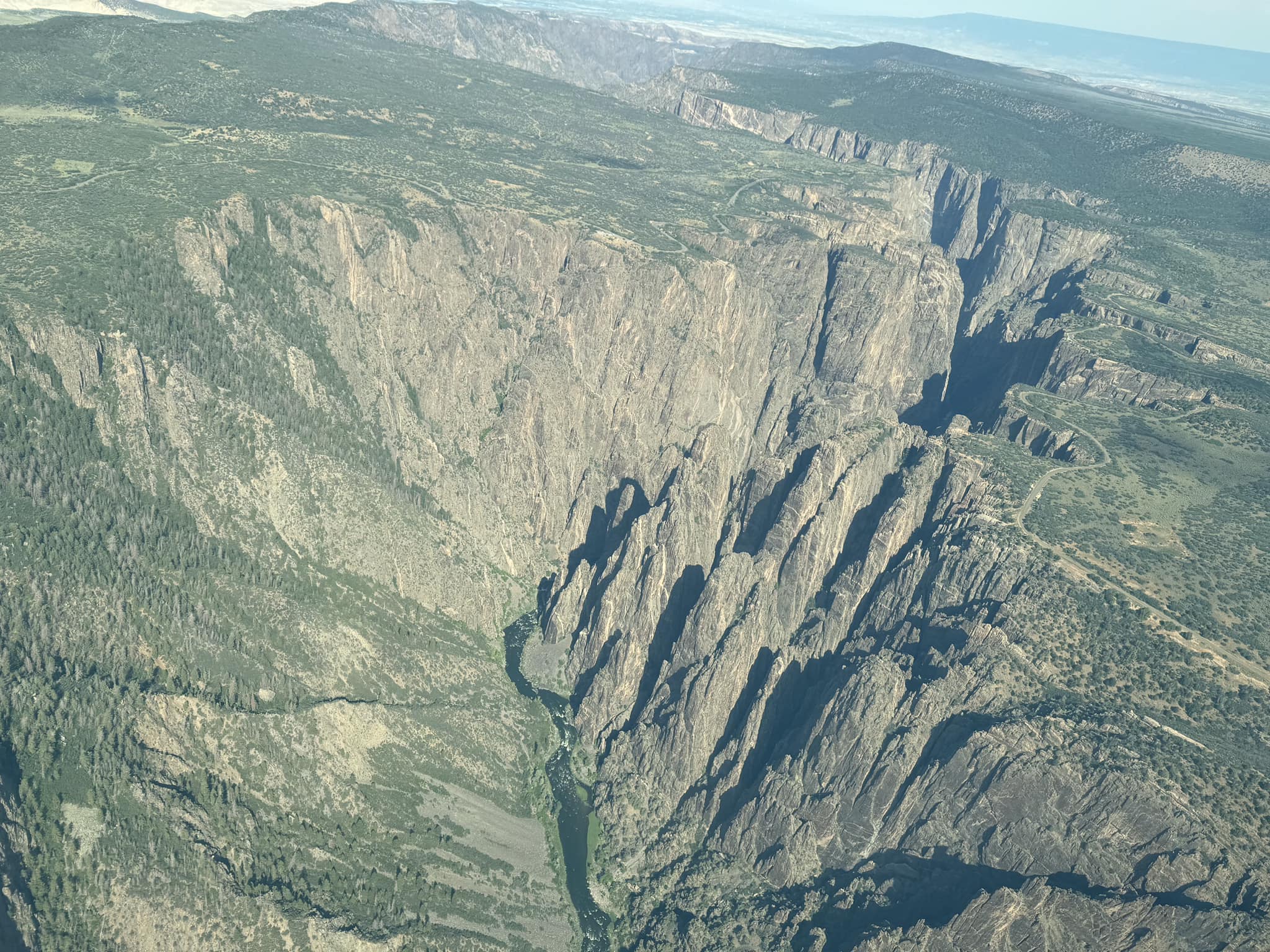
Black Canyon

The last stop for the morning was Gunnison, where we checked out the impressive FBO and had a chat to a young refueller who was attending university there.  It’s a very outdoorsy university with lots of courses in sports related activities and environmental science etc. 
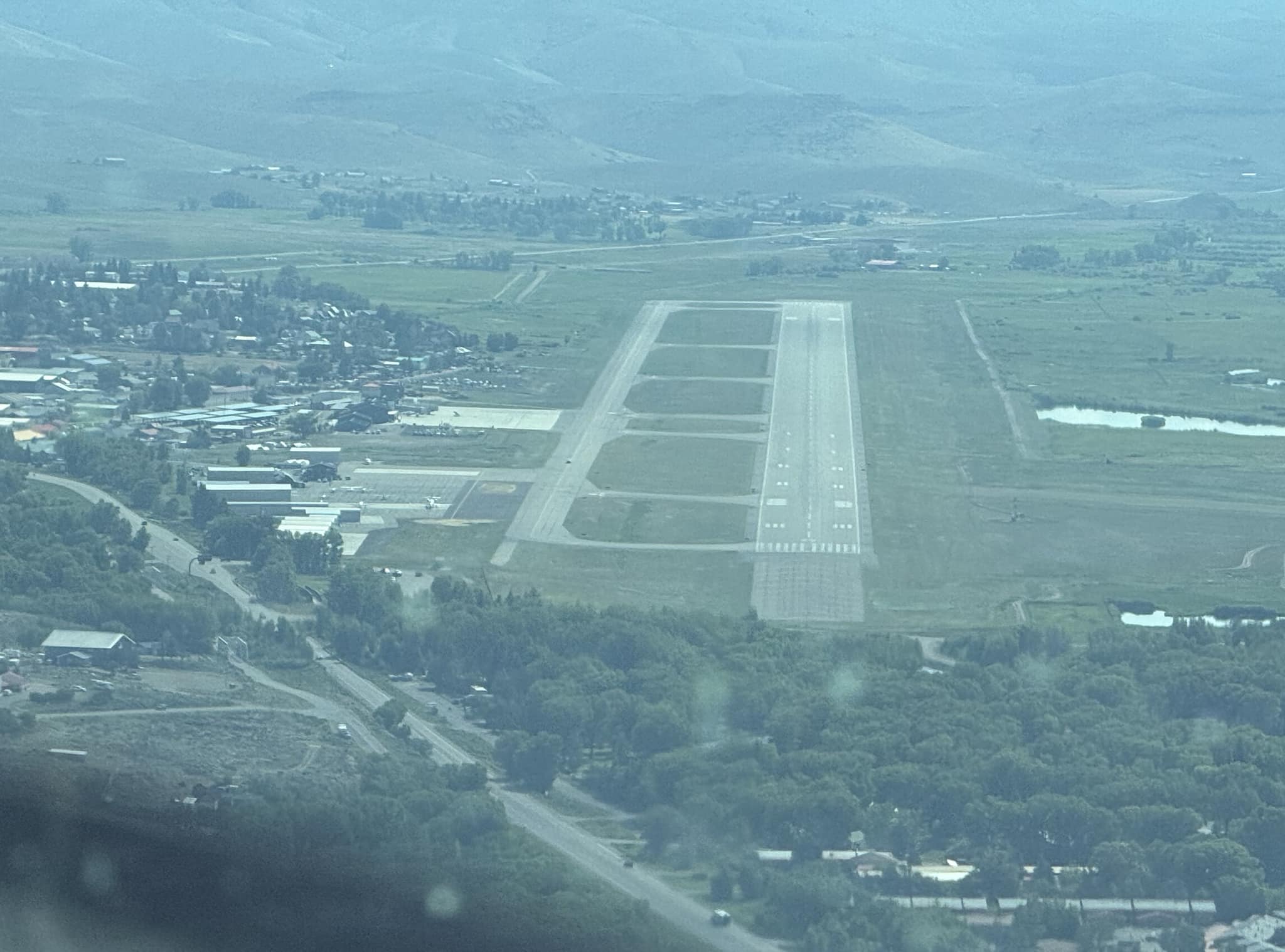
Gunnison

On our way back to Denver we crossed more amazing country with varying amount of wilderness and farmland and forest.

On our return to Denver there was lots of traffic in the ‘pattern’ (ie circuit) so we made a snap decision to do a 10 minute detour around the CBD to kill some time and have some great views of the city centre. 
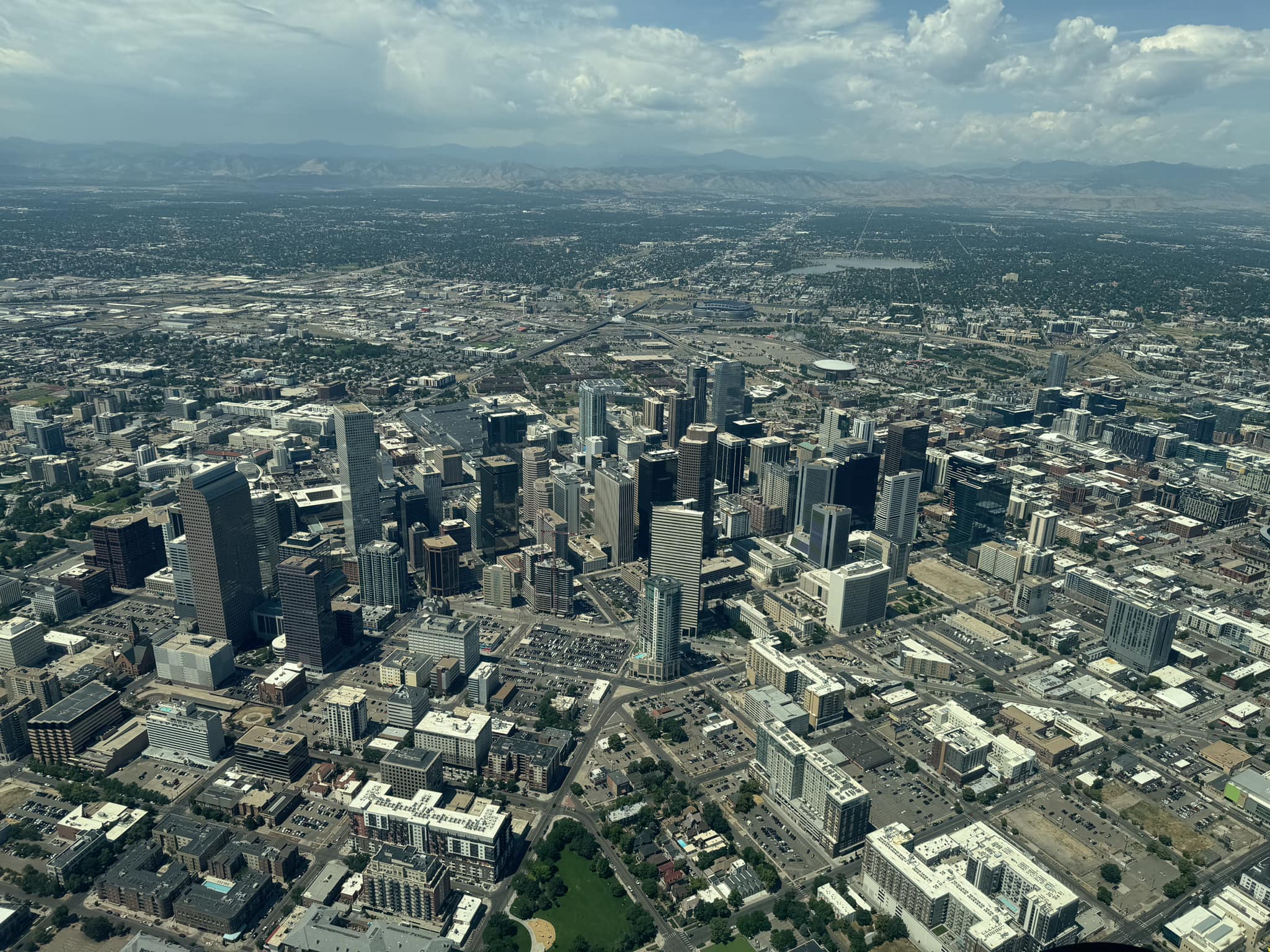
Approaching the Rocky Mountains Airport again the traffic situation hadn’t improved so I had to fly an incredibly long downwind waiting for a ‘slot’ to fit in.  The controller sounded like a race caller, issuing non-stop directives to numerous planes taking off and landing.  An incredible feat of professional air traffic controlling. 
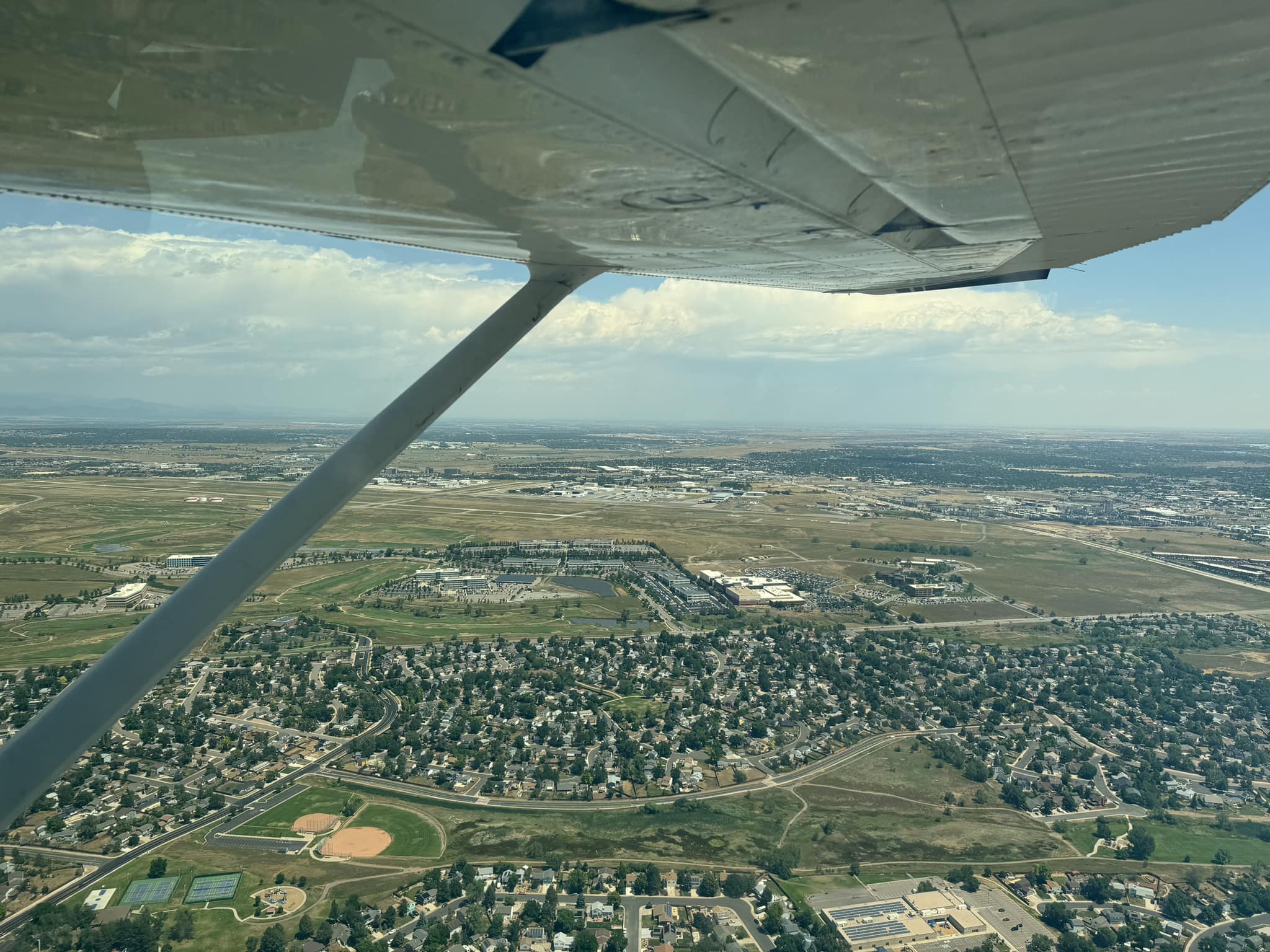
Joining downwind RWY12R at Rocky Mountain Airport

Just as I thought we would have to turn to avoid the mountains ahead he told us to turn base and we followed three other planes in on final.  It turned out that the controller had been one of Matt’s students in the past and Matt congratulated him on a job well done after we’d landed.

Day 2 flight plan and actual route

We taxied back to the flight school and celebrated with a group photo. It’d been another great day.
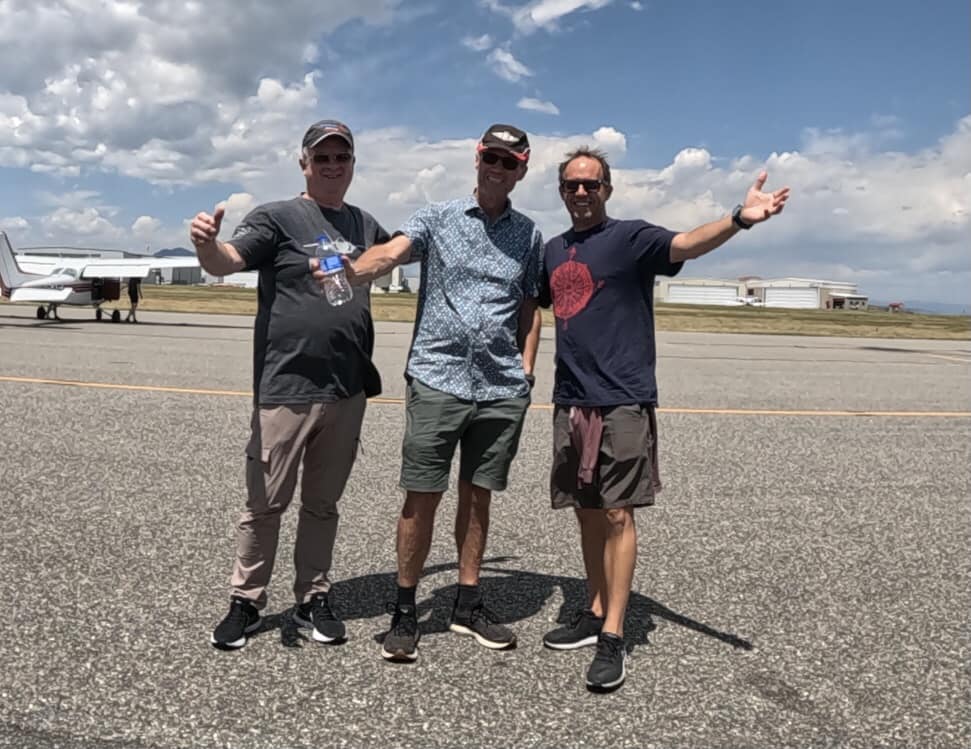
Back at the flight school I paid the bill and noticed a white board showed the variety of aircraft for hire and the surprisingly cheap rates.  But they were generally a lot older than the RAC fleet.

Before heading off on to continue our long drive to Wisconsin we reviewed what we’d learned about flying in the mountains.  The following are the main tips I brought away.

Weather is even more critical in the mountains.  Weather is always a paramount consideration before we go flying but in the mountains the conditions can deteriorate rapidly.  It helps to fly early in the day.  On both days we flew we had clear blue skies when we arrived at the airport.  We took off before 7am both days and flew for over 4 hours each time so were back before 12 o’clock.  The weather forecast clouds and storms in the afternoons and sure enough on the first day about 3pm a thunderstorm hit Denver.  As we returned from our flight the next day we could see the clouds building in the mountains behind us.  You don’t want to be in the mountains once storms start to develop.

Fuel planning is, as always, really important.  Matt told us of one recent experience of a pilot who hired a plane from the flight school for a ‘short flight’ that ended up being extended due to weather.  The diversions meant he burned a lot more fuel than he expected.  By good fuel management he was able to make it back to the airport but only had about 5 litres left in one tank and basically nothing in the other tank when he did touch down!  Matt filled up with fuel on both days so we had plenty plus some more for our flights.

Density altitude becomes critical at high altitudes.  You need to consider what actual lift you can achieve given the ambient conditions.  Both the measured air pressure and air temperature affect the amount of lift you’ll achieve.  At higher temperatures the air is less dense so you lose lift.  In summer you won’t get as much lift as in winter.  You need to calculate whether you will be able to take off from a runway that may be fine on a high pressure day in winter and may not be long enough on a hot day in summer.  It may be fine to land but will you get out again?

Lean the engine for best performance prior to take off at high altitude.  Denver is at about 5700 ft above sea level so the low air pressure means that there’s not as much oxygen available as at sea level.  At full rich mixture it’ll be over rich and the excess fuel will reduce the power delivered by the engine.  So, during your run ups lean the mixture and watch as the RPM increases to a point where there’s maximum RPM then enrichen it a couple of complete turns to get it a bit rich of peak RPM.  This process ensures you can take off in the minimum distance.  Not so critical on a long runway like at Rocky Mountain Metro or Aspen but certainly at short strips like at Crawford.

Recognise pockets of air that have the best lift to help you climb.  You need to fly at maximum power the whole time anyway but the higher you go the slower you climb.  So, just like in a glider, you need to hunt for those spots with maximum lift and stay away from areas with sink.  Work out which way the wind is blowing (from the forecast, looking at the surfaces of lakes, smoke) and then stick to the upwind side of the mountain where the air is rising.  If you’re flying along a valley don’t fly up the middle.  Fly as close as practical to the upwind side to take advantage of the lift.  It will also allow you the maximum radius for a turn if you need to return back down the valley – just in case you can’t make it over the pass at the end.

Approach passes at 45 degrees so that if you can’t make it you have only a 90 degree turn to get away from the mountain.  You don’t want to have to negotiate a 180 degree turn in a tight spot.

Watch out for downdrafts and mountain waves.  We had minimal wind on the days we flew so there were no major downdrafts and certainly no mountain waves and minimal turbulence.  The downside was that there was also minimal lift but that just meant we had to hunt a bit harder to find the lift we needed to get over the high passes.

There is a limit to how high you can fly with a given engine.  At high altitude the ‘thin air’ (low oxygen partial pressure) results in lower engine performance.  A Cessna 182 at maximum weight has real trouble climbing when you get up over 13,000ft like we did.

Keep an eye on your airspeed and decide on the minimum speed you’ll accept to stay above the stall speed.  Matt specified 70 knots for the 182.  If you can’t climb over a pass without reducing the speed below that then turn around and try another pass (or go home).

Know your aircraft.  A Cessna 152 has much less power than a 182 or a 172 so is not really suited to mountain flying.  They are cheap to buy and operate however, so flight schools still use them for routine training.  Rocky Mountain Flight School owns one C152 in which the second seat has been taken out to minimise its weight so student pilots can build the 1500 hours minimum they require to apply for jobs at the airlines as cheaply as possible.  But it’s not intended for flying in the mountains.  Matt told us the story of one student pilot who did take it to the mountains on 4th July this year (just two weeks before our flights) and very nearly killed himself trying to fly over the continental divide near where we flew over it.  The location was where we were but we decided to fly over a different pass a bit further to the north as we couldn’t get enough lift to get over that particular pass in our 182.  The student’s resultant stall and nose dive followed by miraculous escape were captured on mobile phone video taken by a family that was hiking nearby (see screenshot below) and went viral on the internet. 

Matt shared with us a video posted by one of his ‘favourite YouTube people’ that you can access via the QR code or the link below.  He analyses the video and talks about the incident.  As Matt said, ‘It’s just nuts.’

https://www.youtube.com/watch?v=fcM7O9JYXKU&t=28s

Another useful hint Matt gave me that’s unrelated to mountain flying is keep to one side of the centreline of a sealed runway when backtracking rather than taxiing down the centre.  When you’re off centre you’re more likely to be spotted by any aircraft who may be on approach.

I can’t recommend Matt highly enough.  If you’re in the US and want to improve your mountain flying skills get in contact with him.

https://www.mattbeyer.com/files/Matts-MountainFlying.pdf


Upset Prevention and Recovery Training at Archerfield

Stalls – Spins – Steep Turns – Unusual attitudes

In January 2024 CASA inserted a “safety pilot” restriction on my aviation medical after I’d been diagnosed with Atrial Fibrillation. This meant that I couldn’t fly solo until the restriction was lifted. I had to either fly with another pilot who was qualified to fly in the aircraft I was piloting or with an instructor. We hadn’t planned on doing any big trips in 2024 anyway so I wasn’t too bothered but I was keen to keep my skills up as they tend to deteriorate if you don’t practise regularly. My next biennial flight review was due in August 2024 and I knew that one of the things I’d have to demonstrate would be stalls. This wasn’t a big deal but I still felt a bit of hesitation about practising stalls so was looking for ways to improve my stall recovery technique. I reasoned that this would not only help me in the flight review but, more importantly, may actually save my life (and those of my passengers) if I ever got into a situation where an unintentional stall occurred.
For those who don’t know, stalls are not related to an aircraft’s engine. What we’re talking about here is a “wing stall”. The aircraft’s wings produce lift and keep it flying. Lift is produced by the aerodynamic shape of the wing and the amount of lift produced is related to the angle between the wing and the passage of surrounding air. As the angle between the airflow and the wing increases from zero (parallel to) the amount of lift steadily increases until you reach a critical angle at which it starts to decrease again. If you pull back on the stick/yoke past that point while you’re flying level, you’ll exceed that critical (or stall) angle and the wing will no longer provide as much lift and the aircraft will descend.

Stalls are taught to all student pilots early in their training, but often by instructors who are also not very experienced with stalling technique and they can pass their uncertainty and hesitation on to their students. That occurred to me in my early training. We went off and practised stalls without me fully comprehending why we were doing stalls, which seemed unnecessary and foolhardy to me (why would you purposely put the plane into an undesired state?) So the reason for doing them and the way the stalls occur wasn’t fully explained beforehand. I had the impression that as you pulled back on the stick and a stall occurred that one of the wings would drop and you’d plummet to the ground and very quickly kill yourself. I was told I had to respond really quickly before it developed into a spin. What wasn’t explained was that it’s more important to respond correctly than respond quickly. And that the best way to break the stall was simply to relax the backward pressure on the yoke. So I did what so many other student pilots do and over corrected, pushing the yoke way too far and giving myself and various instructors a bit of a shock as we appeared to hurtle towards the ground. As a result I was slightly traumatised by the process. Later, while training in the Cirrus I learned that you can hold the plane in a stall for an extended time (10-20 seconds) without losing control (as long as you are high enough to start with – don’t practise this at 500ft AGL!). Sure the plane descends more quickly than normal but not really quickly. The wings don’t lose all the lift, it just decreases somewhat.

When I did my commercial pilot licence I had to get the stall monkey off my back so spent a few training hours just doing stalls over and over until they became second nature.

Not long after that I did a gliding course and that was the first chance I had to actually do a spin. Most light aircraft these days are not certified for spins so you can’t train in doing any recovery from them but in gliders you still can. Practising spin recovery was one of the best parts of my glider training course, especially as it all happened rather slowly, allowing time to carry out the correct procedure without rushing anything. You can learn more about the gliding course at most post here:

Time passed, and by 2024 it was time for another flight review so I thought it’d be good to practise some more stalls before I actually did the review flight. This time I decided to train with a specialist who focussed on stalls, spins and other types of upset recoveries. Given that loss of control in flight is a major cause of light aircraft accidents and most of them are caused by some sort of upset it seemed sensible to practise how to recover from a range of upsets including stalls and spins. I asked around and someone told me to look up UPRT at Archerfield. UPRT, or Upset Prevention and Recovery Training, specialise in this particular skill and are considered among the best in Australia. Pilots come from all over Australia to learn from them. Given that they are just around the corner in Archerfield I decided I’d give them a try. I was not disappointed.

https://www.uprt.com.au

The 3 day course was held over Wednesday 8th to Friday 10th May. My instructor was Rob Crass, a former Qantas 737 captain who had become one of Qantas’ training managers and wrote numerous training manuals for them, including ones on upset recoveries. I headed out to Archerfield on the Wednesday and met Rob along with Jeremy Miller, one of the UPRT owners, at 8am. I had been a bit nervous about the course, given my past experience with various instructors but Rob immediately set me at ease. It was clear he was a very experienced instructor who did it for the love of it unlike so many others who do it as a way of building hours to become an airline pilot. Rob has all that behind him and does this because he loves to fly. He has his own PItts Special aerobatic biplane that is hangered at Watts Bridge and is president of the Queensland chapter of the Australian Aerobatic Club.

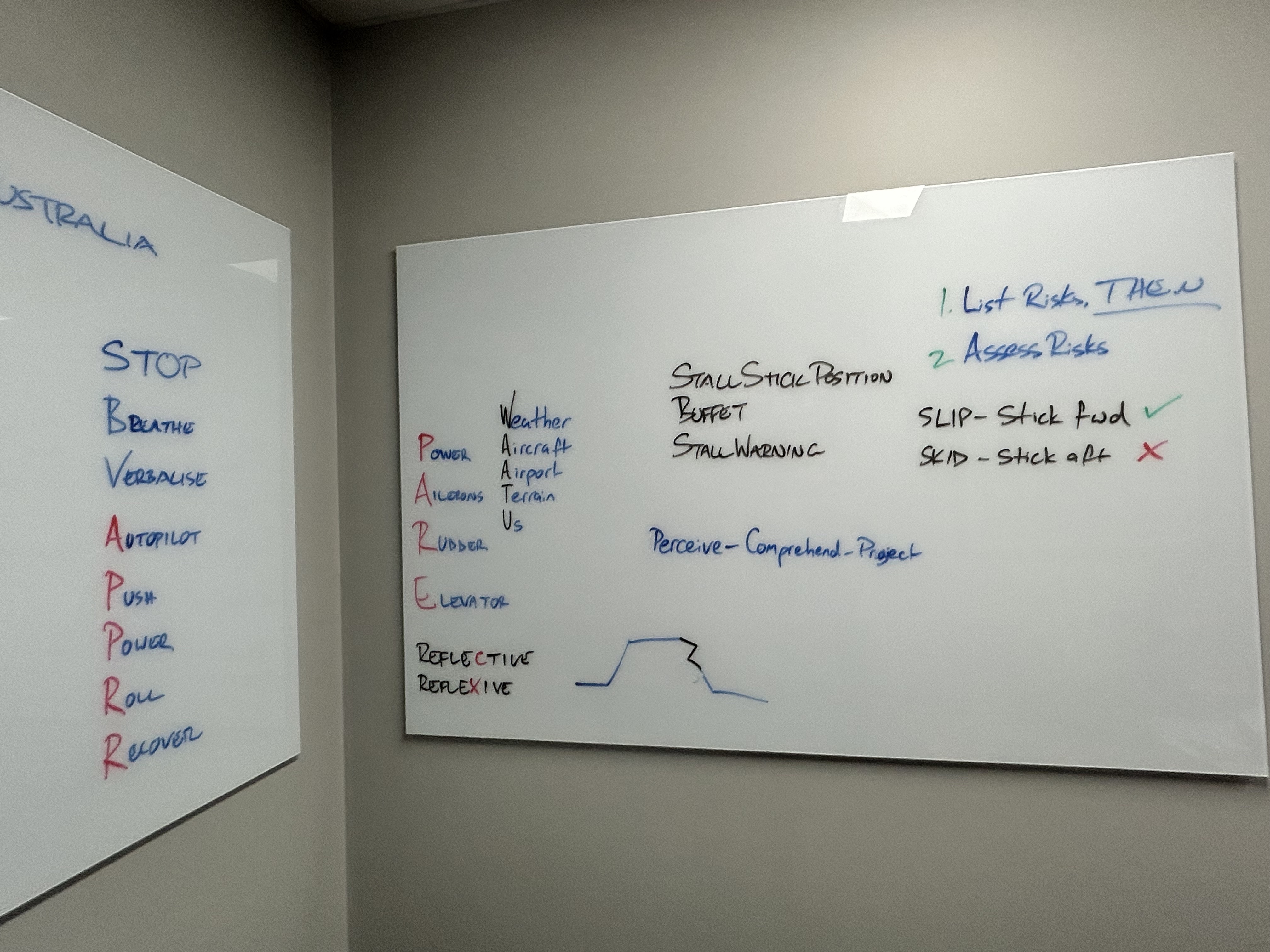
We started with a morning of theory, covering the causes of LOC-I (Loss of Control – In flight) and aerodynamics. We talked about slow flight, the approach to stalls and how to recognise it and recover from them. Also how to feel the g forces you’ll encounter in upset recoveries, flight path management and then the details about steep turns, and various upsets including nose high, nose low, spins and spiral dives and how to recover from all of them.

Rob emphasised the need to stop and breathe then verbalise what you are doing before responding to an upset condition. For example, the UPRT mantra for recovery from a stall is “STALL!, autopilot off, push, power, roll, recover”. So first identify the unusual condition, turn off the autopilot if it’s on, push the stick forward (or relax pressure) to lower the nose, apply power to reduce the loss of height, once the wing is flying again roll the wings level, then recover to a safe altitude by pulling gently back on the stick. This was the way I’d have to verbalise my actions in the flights.

It was a pretty full morning. After lunch there was a bit more theory and then we headed out to the hangar to preflight the aircraft that we were going to take flying.

Rob had told me we couldn’t take anything with us, as things tend to fly around when you’re doing aerobatic type manoeuvres and can become dangerous projectiles. So I left my phone, keys and iPad in the office.

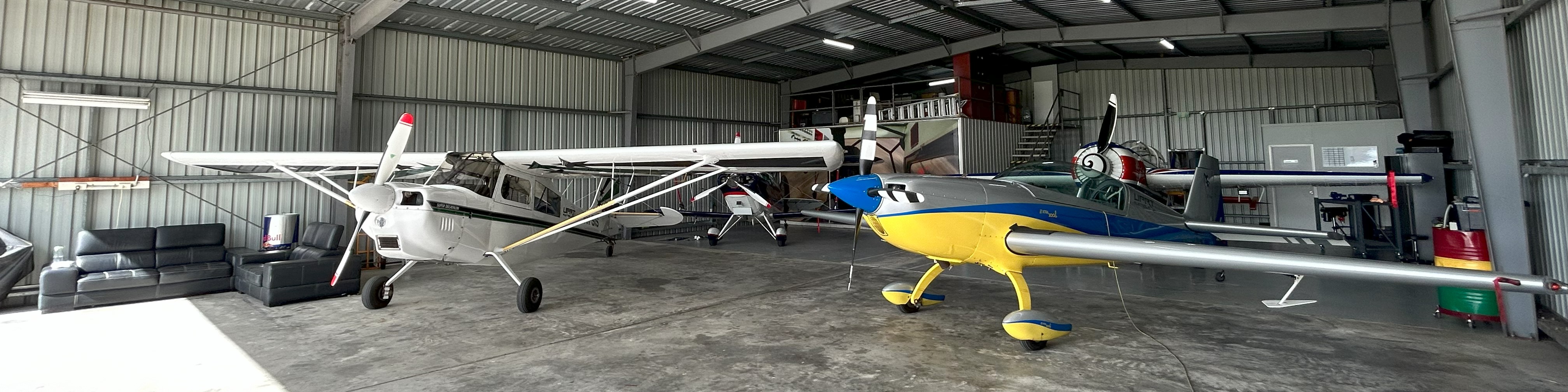
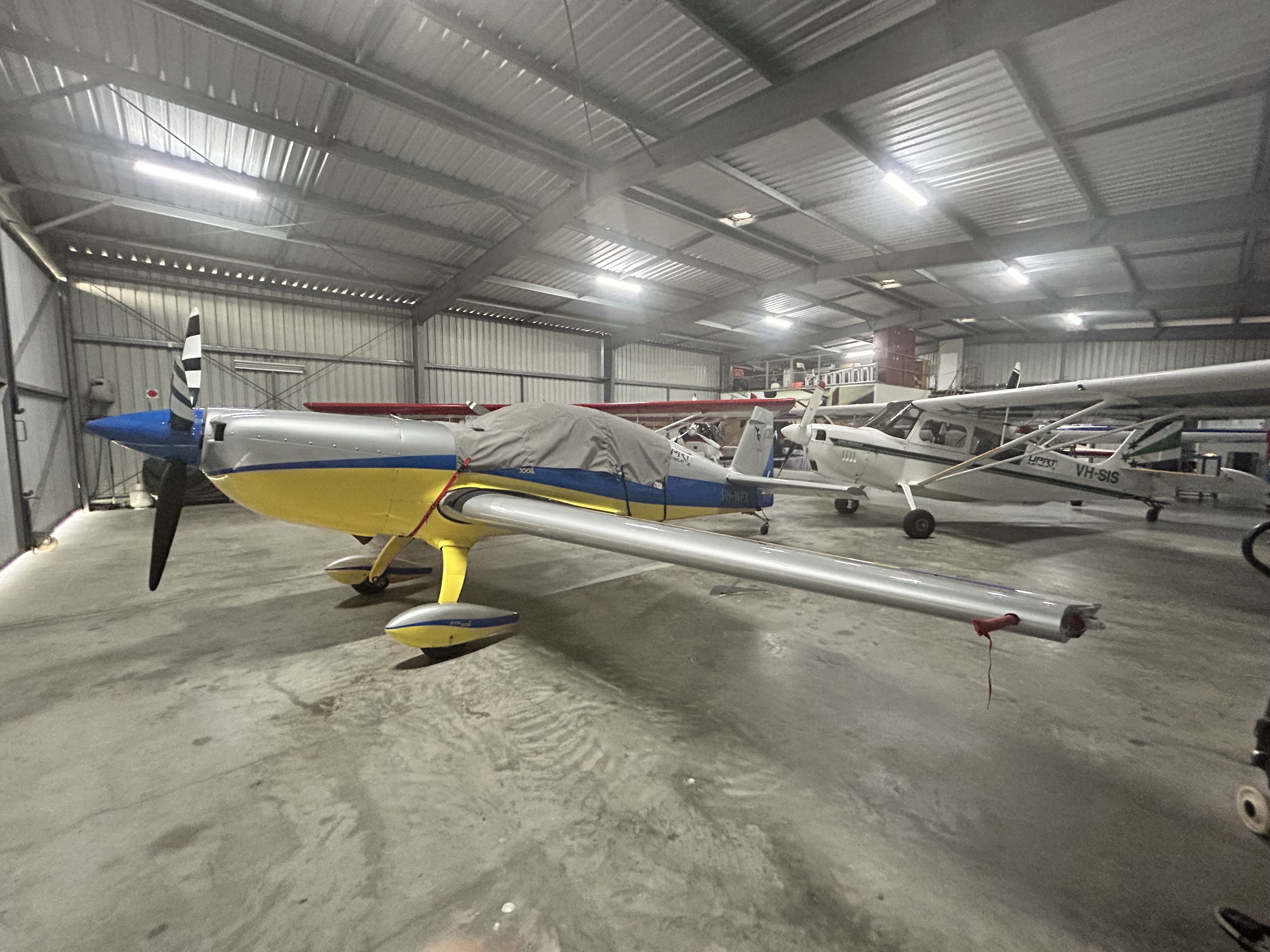
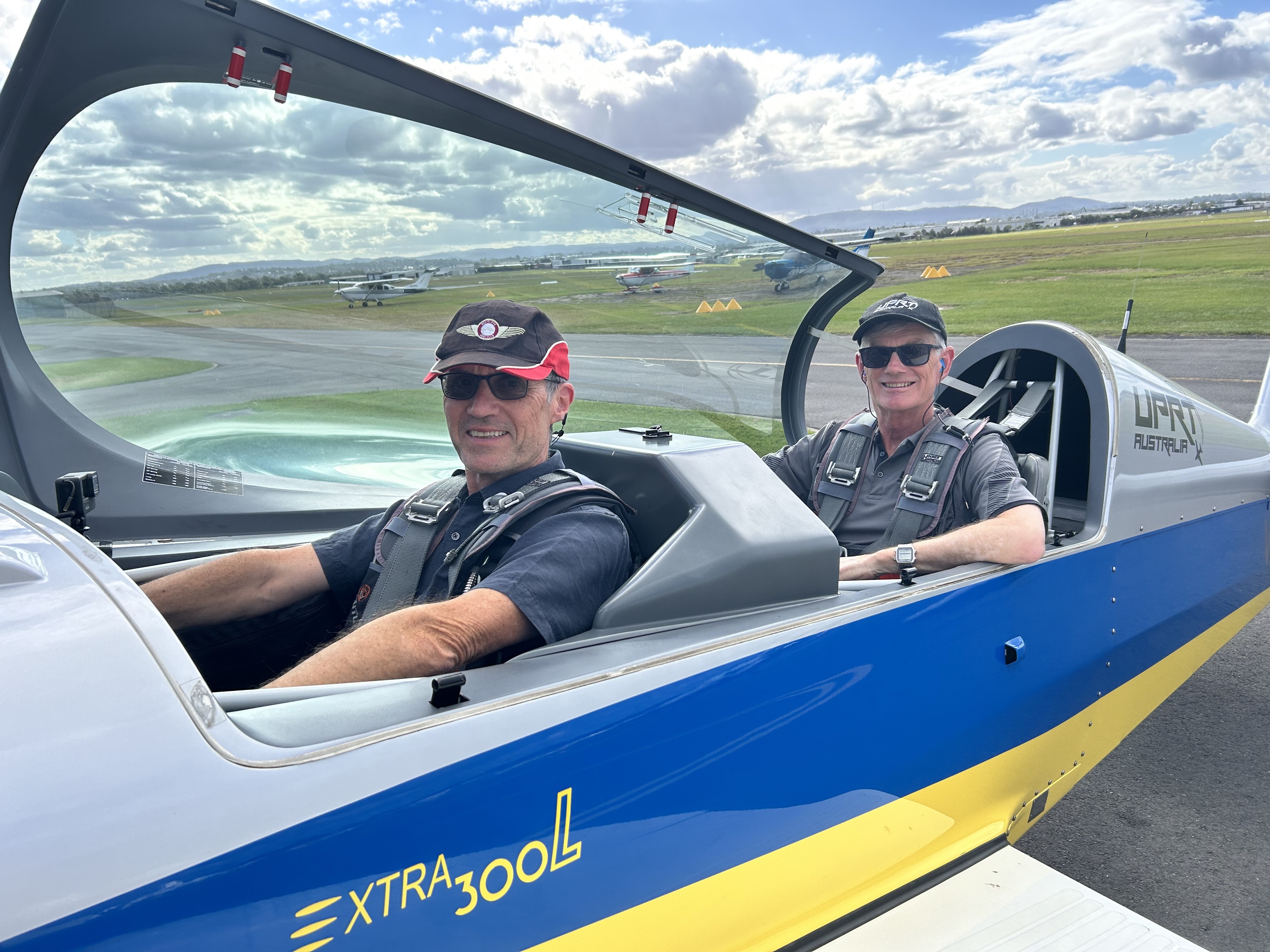
The Extra 300L is a German aircraft and capable of a whole range of aerobatic manoeuvres. It’s tandem so the instructor sits in the back seat and the student in front. There are lots more instruments for the instructor to play with but the student has an air speed indicator and an altimeter so what more do you need?

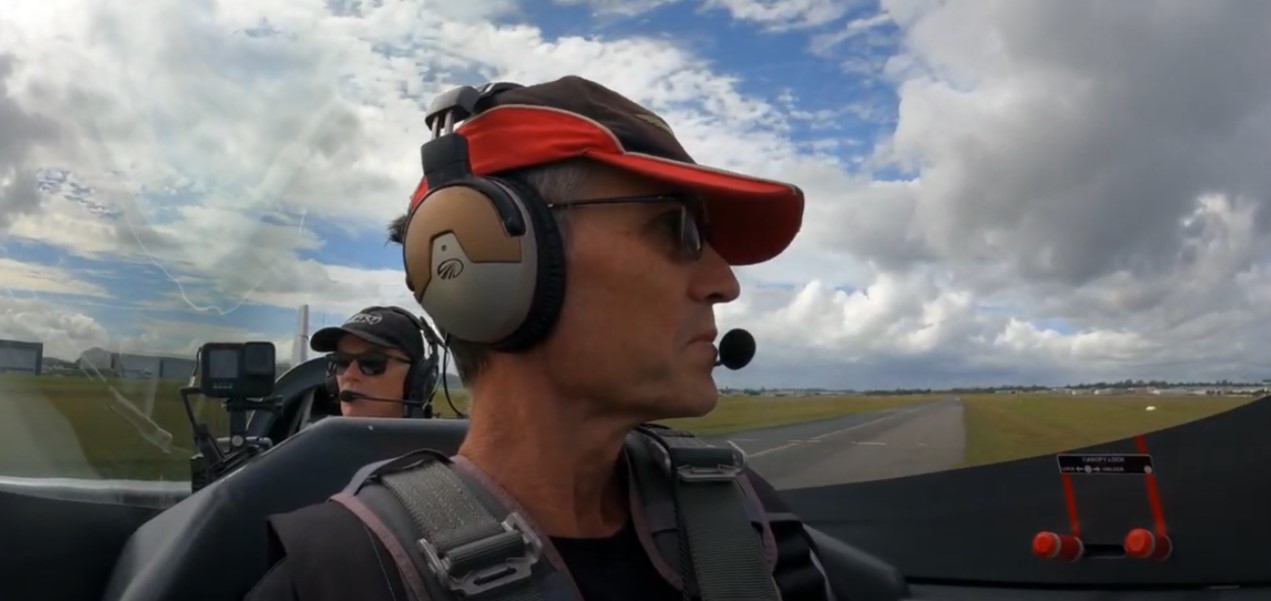
Once Rob had completed the preflight we both donned a parachute. UPRT are very particular about safety and so even thought they’ve never had to jump out of a plane they insist that all pilots wear parachutes just in case. A bit like glider pilots. I was instructed how to extricate myself from the plane if Rob were to shout “evacuate! evacuate! evacuate!” while we were in the air. Rob would open the canopy, I’d then have to remove my headset, unclip the seat harness (not the parachute harness!), climb out of the plane and launch myself into the air away from it, then when clear identify the parachute release handle, and push it away from me, then let the parachute do the rest. Oh, and remember to bend my legs on landing. With the parachute deployment instruction complete we climbed aboard went through our checklists.

Soon we were starting up and taxiing to the run up bay.

I’d never been to the 28L run up bay as in my previous flight in and out of Archerfield we’d always approached the runways from the north. UPRT’s hangar is on the southern side of the runway so very close to the runways, making for a quick getaway. Rob let the engine oil temperature increase to 120degC before doing the run ups and checking the engine was in good condition.

Our first flight was to be in the training area over the southern end of Moreton Bay so we taxied to RWY10L and were cleared for an eastern departure. Rob had explained that he’d take off and land and I could fly the plane the rest of the time except when he was demonstrating a procedure. A Cessna Citation took off before us so we gave him a bit of time to climb out to avoid his wake turbulence. Then Rob applied power and I was pushed back in the seat as the plane accelerated and climbed away. We rotated prior to the Citations’s rotation point and climbed at about 20 degrees so we’d remain above his flight path and wake.

On the way out to the training area Rob let me take over and told me to practise some “Dutch Rolls” using coordinated aileron and rudder to roll around a fixed point ahead of us.

Screenshot

On the way out to the training area Rob let me take over and told me to practise some “Dutch Rolls” using coordinated aileron and rudder to roll around a fixed point ahead of us. Once out over the bay he demonstrated some slow flight and the onset of stalls, then the stalls themselves then let me have a go. It was fairly benign with no wing drop to speak of. I then practised a couple of steep turns at 60 degrees to experience 2g acceleration and a zoom up and over the top to experience negative g. It was a great first flight without too much aerobatic flight so easy on the stomach. Just about one hour after takeoff we were back on the ground and had a debrief followed by a bit more theory before calling it a day.

On Thursday morning I arrived at 8am again and we settled into a bit more theory about human factors and threat and error management. These subjects had been covered in my CPL training but it was covered in a better way here. The CASA syllabus is a bit strange in this area where they seem to get tangled up in semantics and I found it quite frustrating. So it was good to talk about real world threats and errors and how to deal with them without having to worry too much about the exactly what type of threat or errors (according to CASA definitions) we were talking about.

Rob decided to go for our next flight before lunch so around 10am we headed out to the hangar once again, did the preflight, donned our parachutes and climbed aboard.

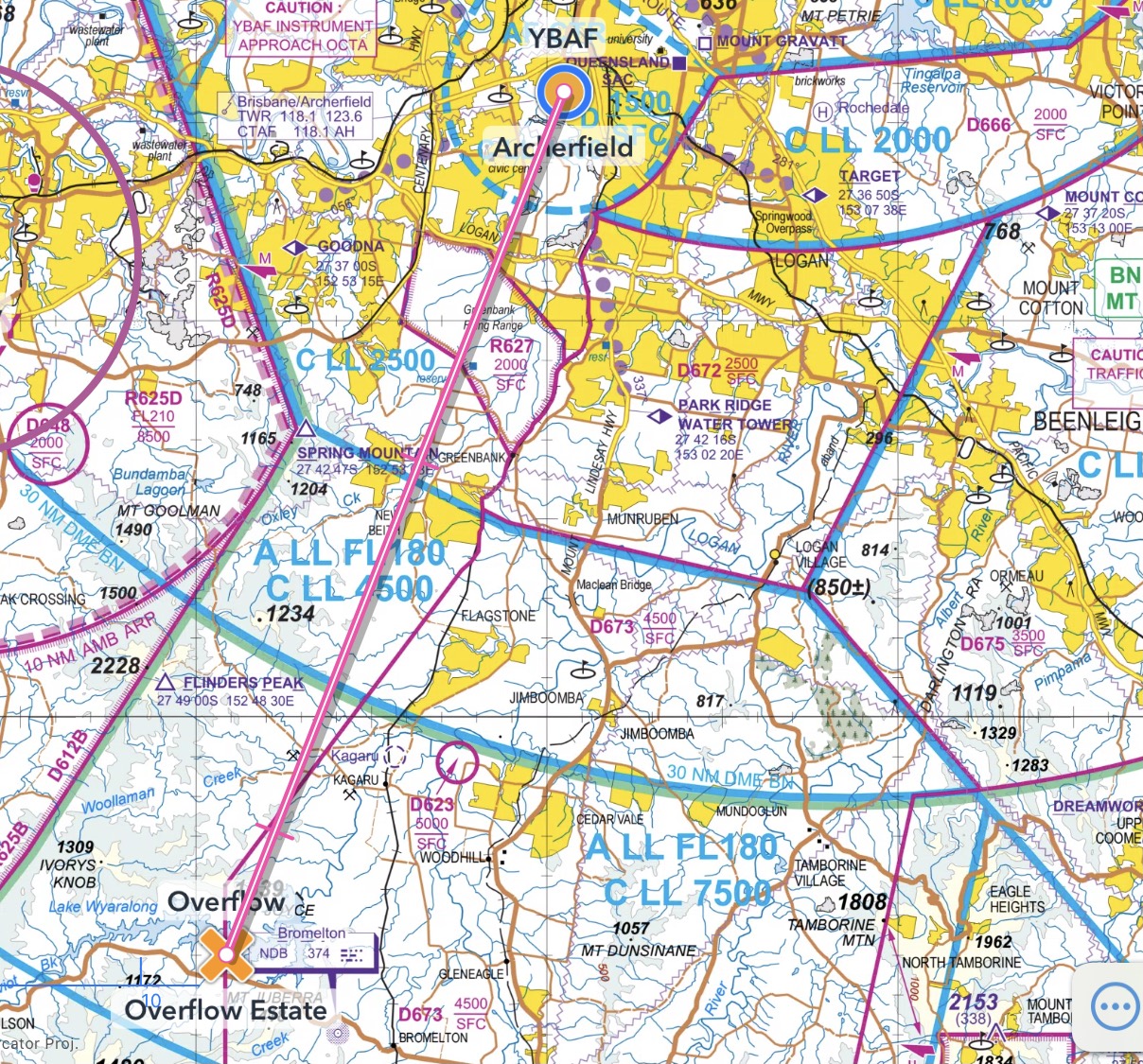
Soon we were off to the threshold of RWY28R, this time for the southern training area towards Beaudesert and Rob requested a “Greenbank Departure”. This entailed flying over the Greenbank army firing range so after taking off and turning right we maintained 1500ft until we left the Archerfield control zone. Rob handed over to me and I climbed quickly to 2300ft before we reached the edge of the firing range. Apparently their bullets can only reach 2000ft so we’d be fine at 2300 if they were firing!

Soon we were passing over a high tension power line that indicated the point where the controlled airspace ceiling increased to 4500ft and we could climb higher. Once we reached Lake Wyaralong we were in the 7500 foot controlled airspace ceiling so were able to climb to 6000 feet, giving us plenty of room for manoeuvres.

Then followed a series of demonstrations and opportunities for me to practise stalls and steep turns as well as nose high and nose low upset recoveries. The weather wasn’t as clear as the day before with numerous stratocumulus clouds in the area so we had to keep turning to avoid the clouds and couldn’t really climb that high. I had a heightened feeling of air sickness as a result of our cloud dodging activities so we called it a day after about 40 minutes and headed back to Archerfield.

Pulling up at the hangar we noticed Brett Silvester had dropped by for lunch so after a debrief Brett and I went to the Asian Kitchen around the corner and chatted over a sandwich about a few details of our planned Oshkosh trip. The afternoon comprised more theory in preparation for the two flights we’d have on the Friday.

On Friday morning I arrived at Archerfield just after 7am so that I could visit the tower. I’d rung up the day before and checked they had time and they were happy to show me around. I’d been flying in and out of Archerfield for well over 10 years by this time and never been up the tower so it was time check it out. The three air traffic controllers were very accommodating and answered all my questions about their procedures.

Arriving at UPRT at 8am Rob said we’d head out for our third flight pretty much straight away as the sky was clear and it was best to make the most of the good conditions. Once again we headed to the southern training area and this time there were no clouds. Just clear blue sky. And the recoveries went so much better then the day before. I did stalls, and nose up and nose down and Rob demonstrated a spin that I was able to copy and then a spiral dive. All in all much better than the day before.

Back on the ground we completed our theory and had lunch before preparing for the fourth flight of the day. This time Rob said I could take my camera with me. It would be safely stowed in a zip up pocket until I extracted it to take a photo while were were inverted.

We headed out to the southern training area again and started repeating the procedures we’d covered the day before and that morning. Then we had an opportunity to fly inverted and also experience ground rush as the plane did a hammerhead stall turn and then headed straight for the ground at 120 knots. All good fun, especially as Rob was in control!

This time however my lunch must have been undigested because I started to feel queasy about 30 minutes into the exercises. I did a couple more steep turns then decided to head back before I emptied my stomach contents into the cockpit.

Landing at Archerfield I felt that I’d achieved all I’d wanted to do out of the training and had had a good time as well.

We headed back into the office for our debrief and a summary of the course contents. Jeremy then gave us an impromptu presentation on some of the formation flying training he’s done coaching his Freedom Formation team and some of the events they’ve flown in such at the Gold Coast Air Show in 2023.

https://www.freedomformation.com.au

Overall I found the course really enjoyable and useful. It’s not cheap but it’s also not that easy to get the opportunity to fly such extreme manoeuvres in such a powerful aircraft with such a competent instructor. UPRT offer one day refresher courses so I intend to return sometime in the next 12 months for another go. They also offer formation training that may be interesting one day. I think I may give the aerobatics course a miss though. My stomach probably won’t hold up to it.

Pittsworth and Toowoomba

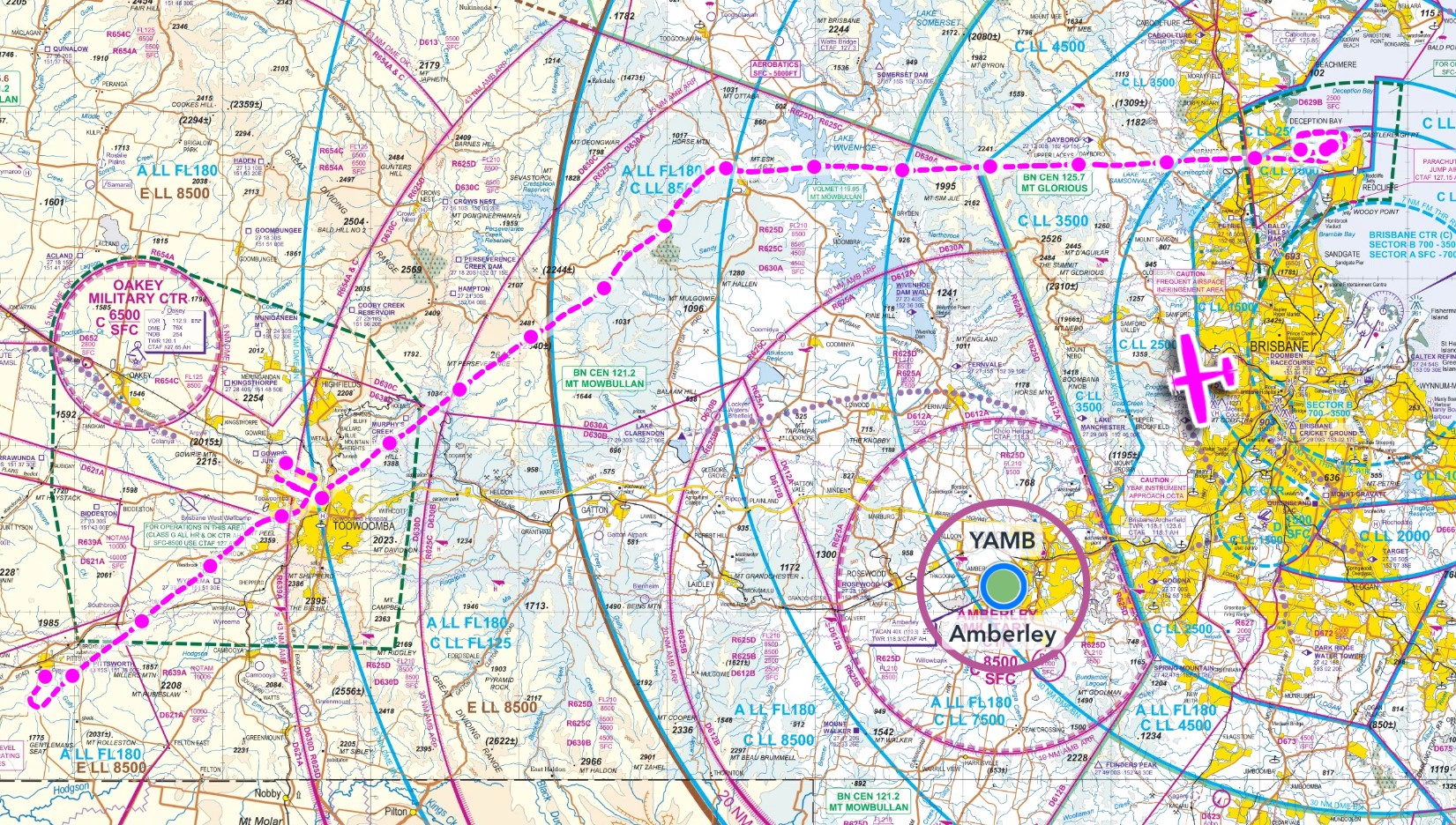
On 1st May 2024 Garry Ayre and I decided to go flying again. At first we were going to attempt to reach Tyagarah after our failed attempt a few weeks previously but the wind wasn’t favourable for the strip there so we decided to go to Pittsworth instead. Garry hadn’t been there before and I’d only been during very early PPL training.

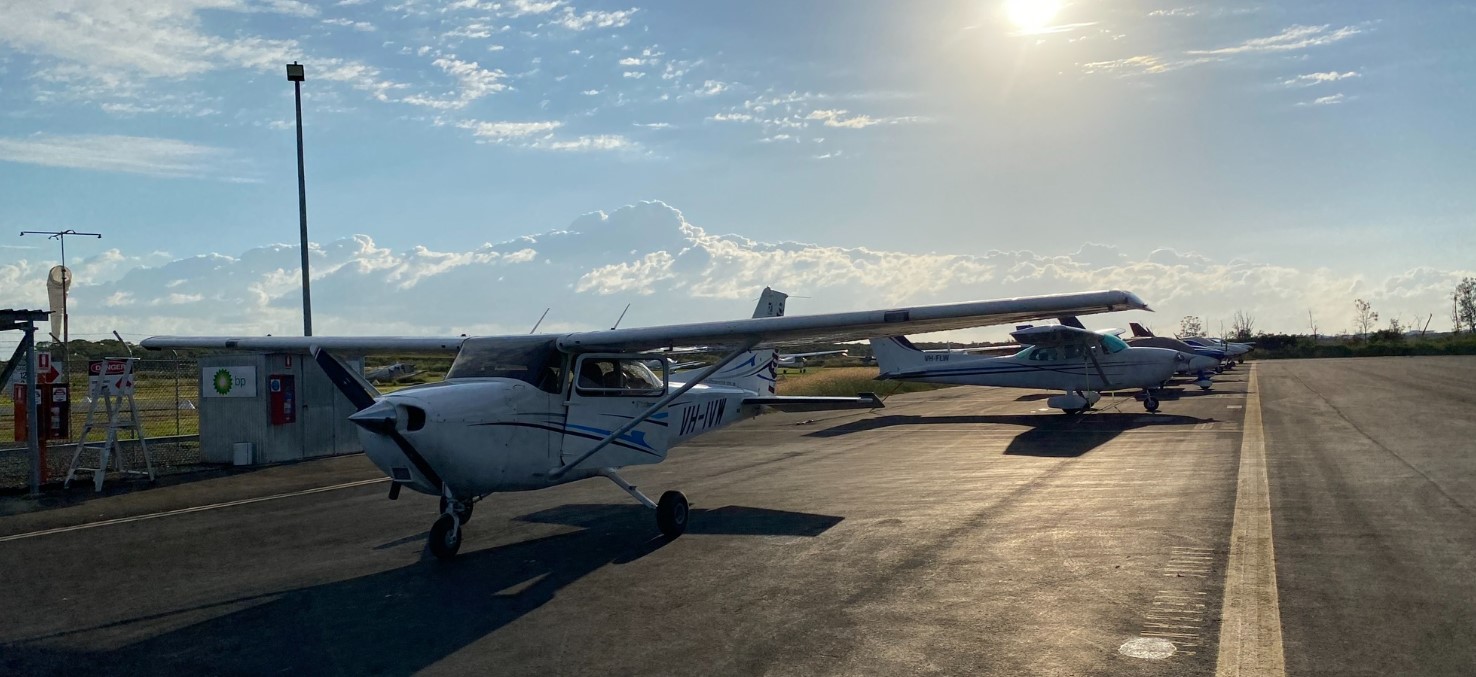
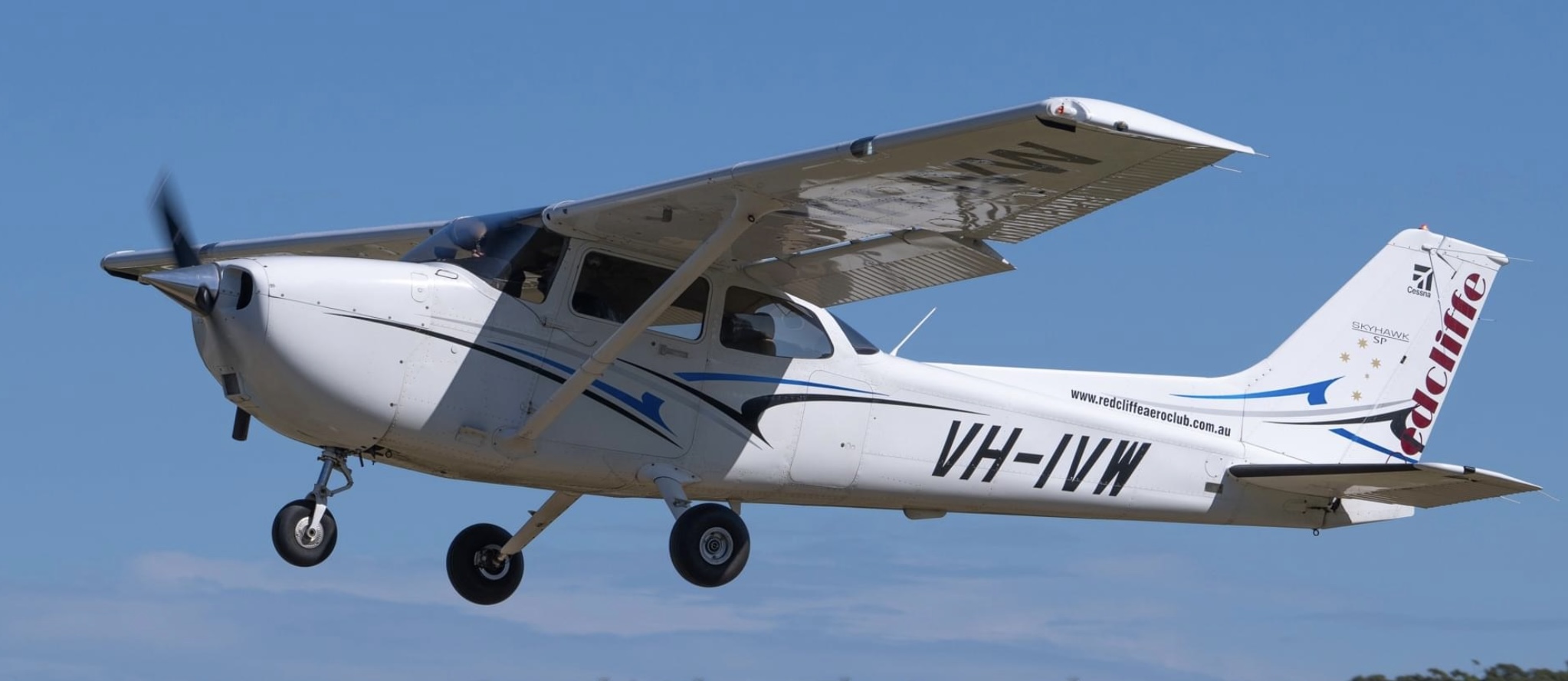
We took IVW and I flew out to Pittsworth with Garry flying back. Dee from the aeroclub told us that the bowser at YRED was under repair so asked whether we could refuel while we were gone so I checked that the bowser was working at Toowoomba and we agreed we’d stop there to refuel on our way back.

Taking off at about 10:30 we tracked direct to Esk where I’d recently completed a ride on the Brisbane Valley Rail Trail.

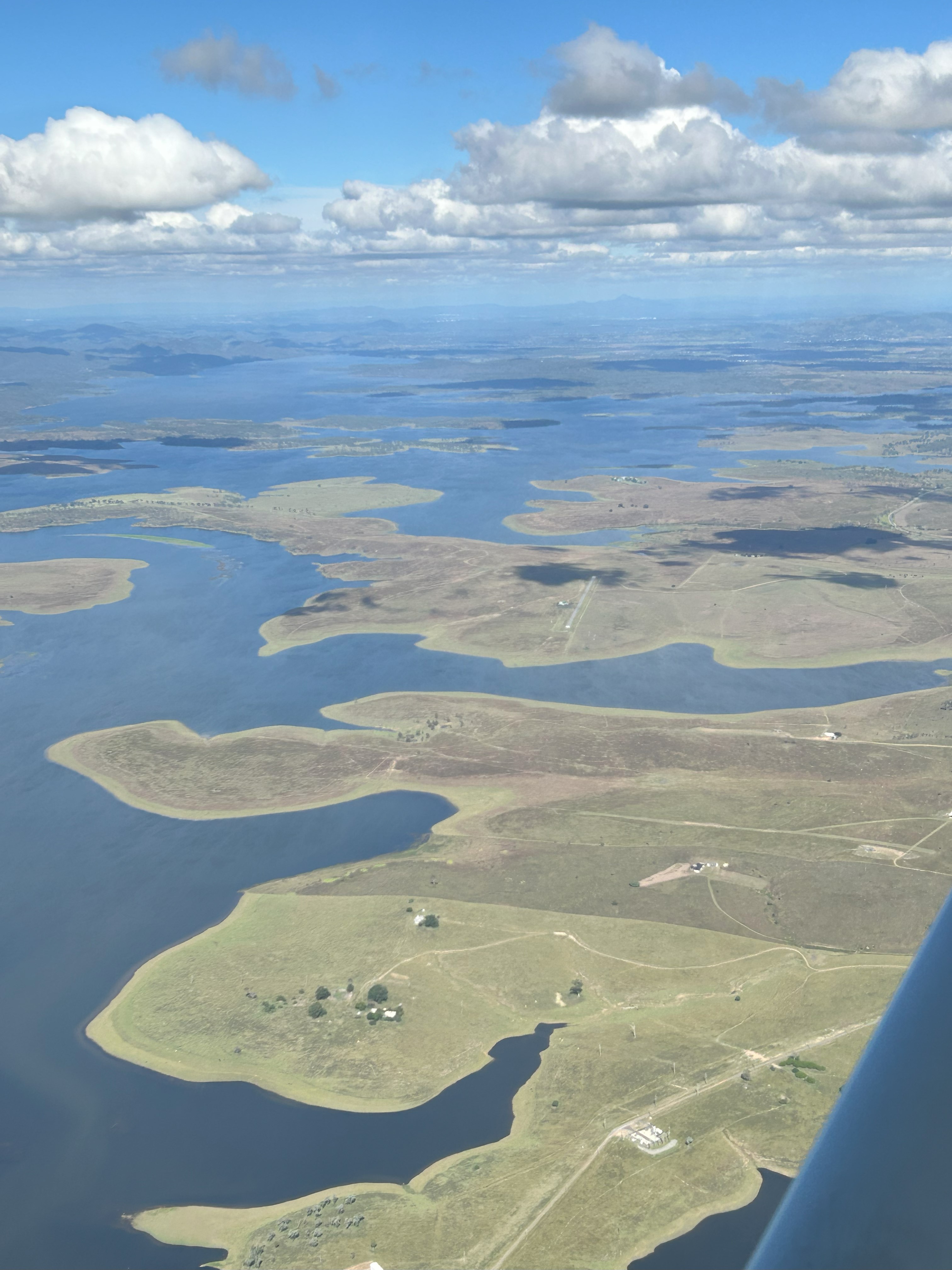
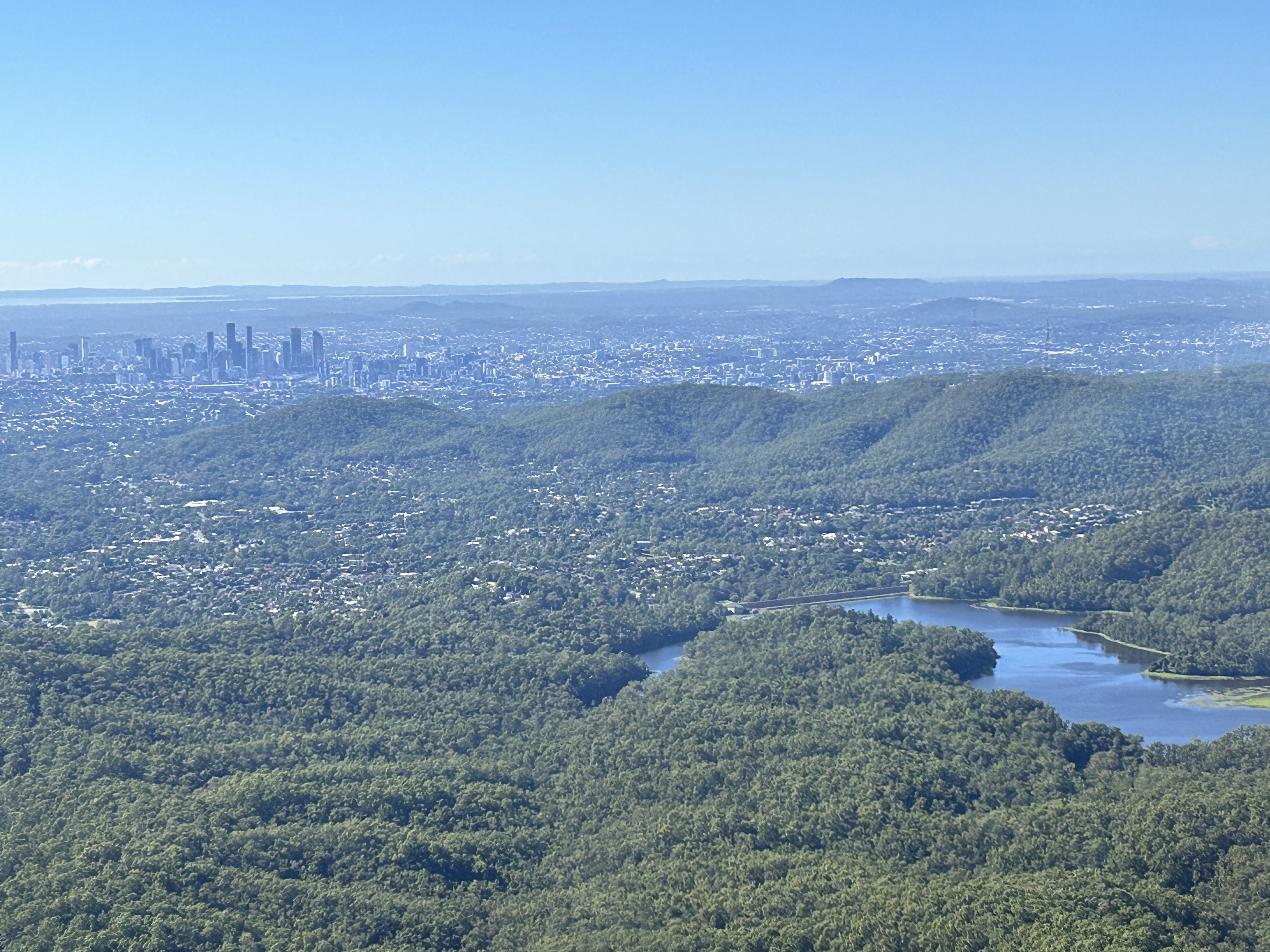
We also passed over Lake Wivenhoe and I noticed a couple of private airstrips I hadn’t seen before.

I’d planned to fly over the top of Toowoomba but we were flying just under the cloud at 3000ft and with the Toowoomba airfield at 2100ft elevation that was too low to have enough clearance to avoid circuit traffic so we skirted around the east of the escarpment and then south of the city before heading to Pittsworth.

There were quite a few aircraft flying in and out of Toowoomba and Wellcamp so we had to keep a good lookout. The AvTraffic app incorporated into OzRunways certainly helped our situational awareness.

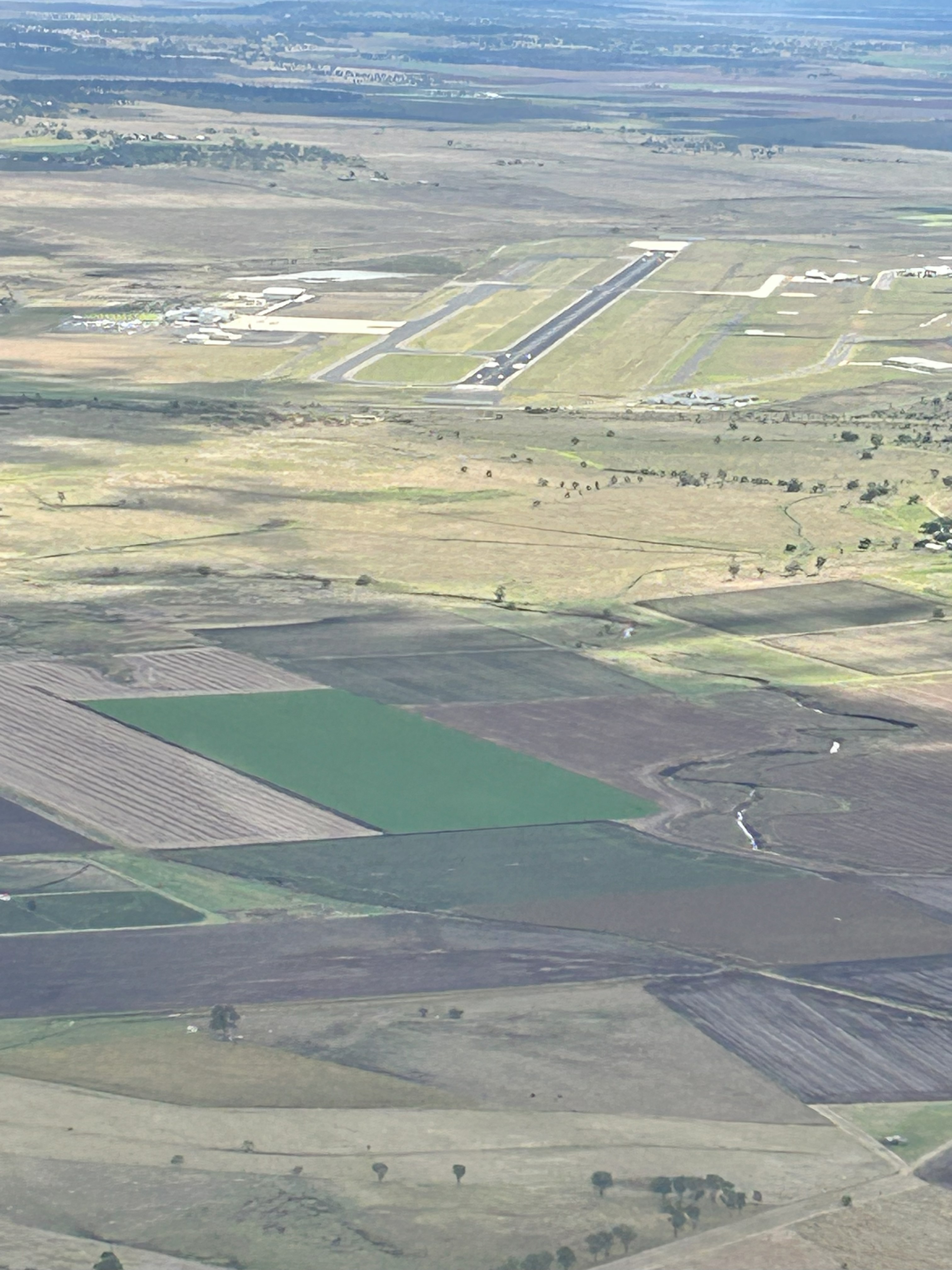
Landing at Pittsworth we watched as a crop duster landed, refuelled, and then took off again.

We swapped seats and Garry flew the short hop into Toowoomba, passing Wellcamp on the way. Once again there were numerous aircraft in the vicinity.

After refuelling we checked out the aero club and had a chat to a couple of people then climbed back aboard YRE and took off over the city.

Retracing our steps we passed over Esk and Lake Wivenhoe again.

We had a great view of the Lacy’s Creek Valley as we descended towards Redcliffe.

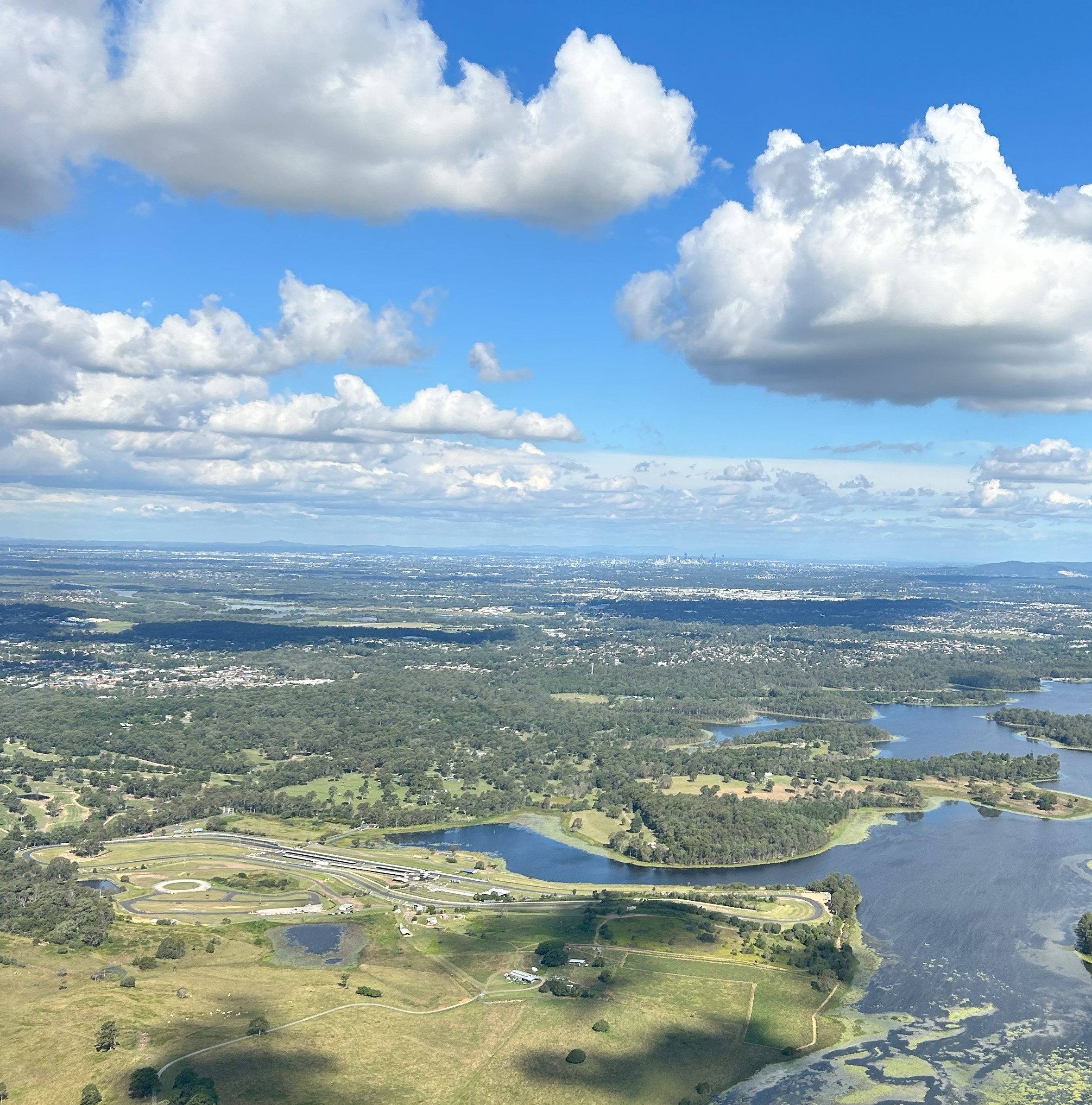
We also passed over the Lakeside Raceway.

I think Pittsworth would make a good lunch time flyaway sometime in the future.

To YDUN for brekkie and YHEC for morning tea

Dunwich – Heck Field

On Saturday 20th April 2024 Garry Ayre and I made the most of the perfect weather in the morning to fly to the monthly breakfast at Dunwich on North Stradbroke Island.

After topping up with fuel we departed at 7:30, crossing over to Moreton Island and flew past Tangalooma Resort.

There were numerous pilots on the Dunwich frequency announcing their intentions as they headed towards YDUN or joined the circuit. All were joining downwind for RWY15 as there was a strong southerly blowing. I decided to delay our arrival a bit by tracking to Point Lookout first. Garry hadn’t flown over it before and it would also allow us to enter the circuit mid downwind.

From Point Lookout we flew direct to YDUN and by the time we arrived all the other planes had landed or were on final. Joined downwind, turned base and then final and were buffeted a bit by the wind over the hills. Nevertheless it was a smoothish landing and we taxiied up to the parking area where a guide showed us where to park.

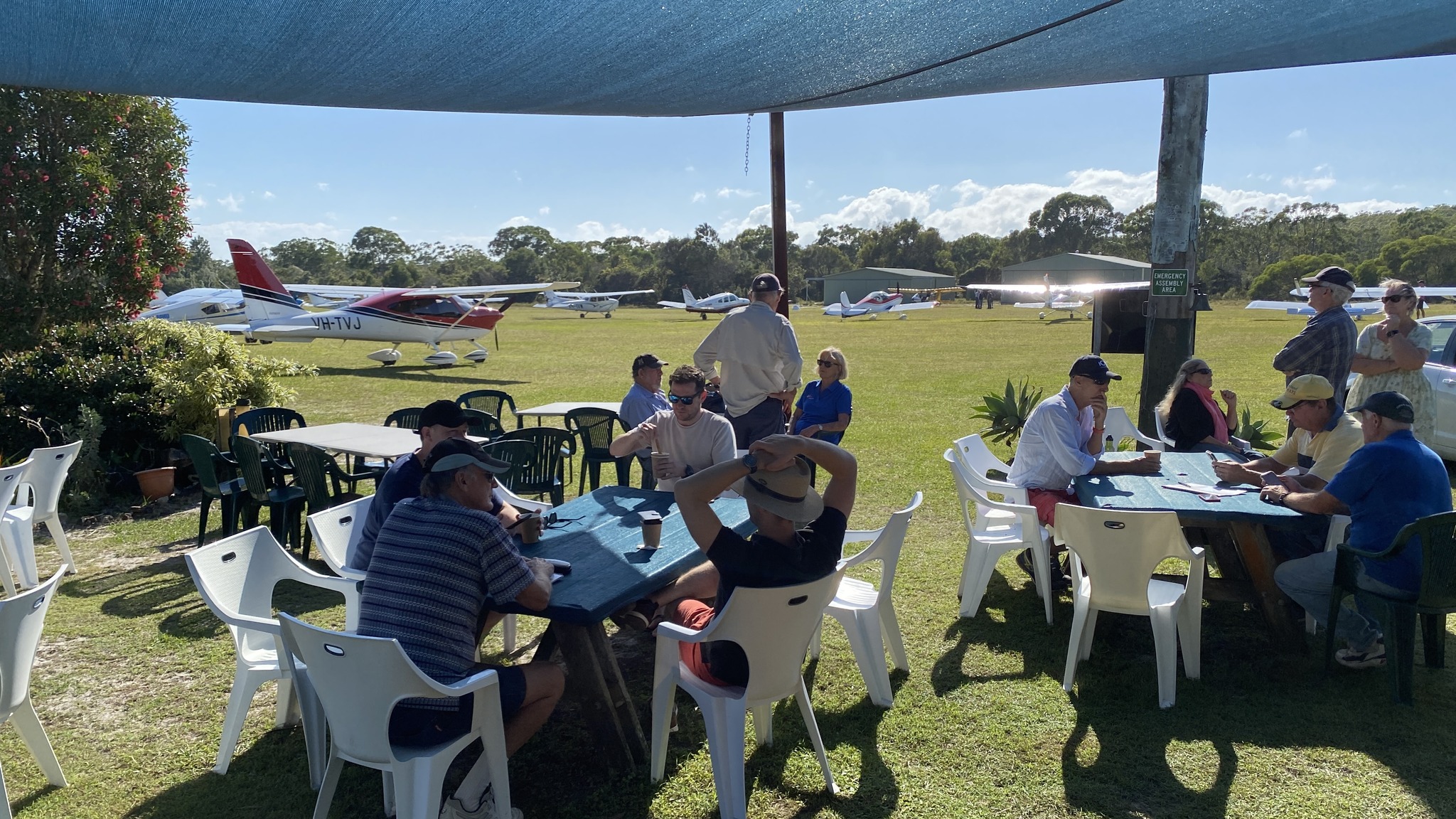
It was a great breakfast where we caught up with old friends and made some new ones.

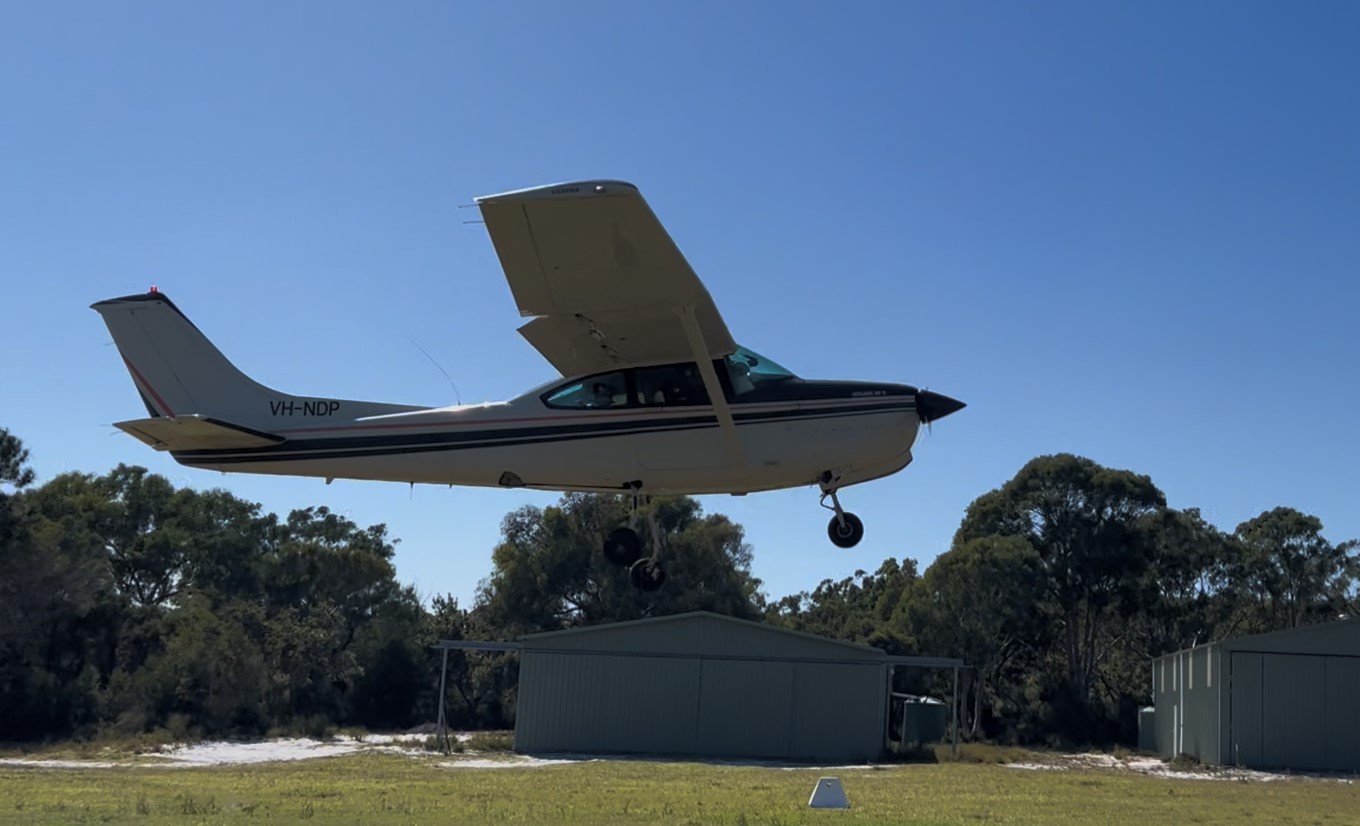
After brekkie we watched a few other planes take off, including Mark and Phil Ware in Mark’s 182 NDP.

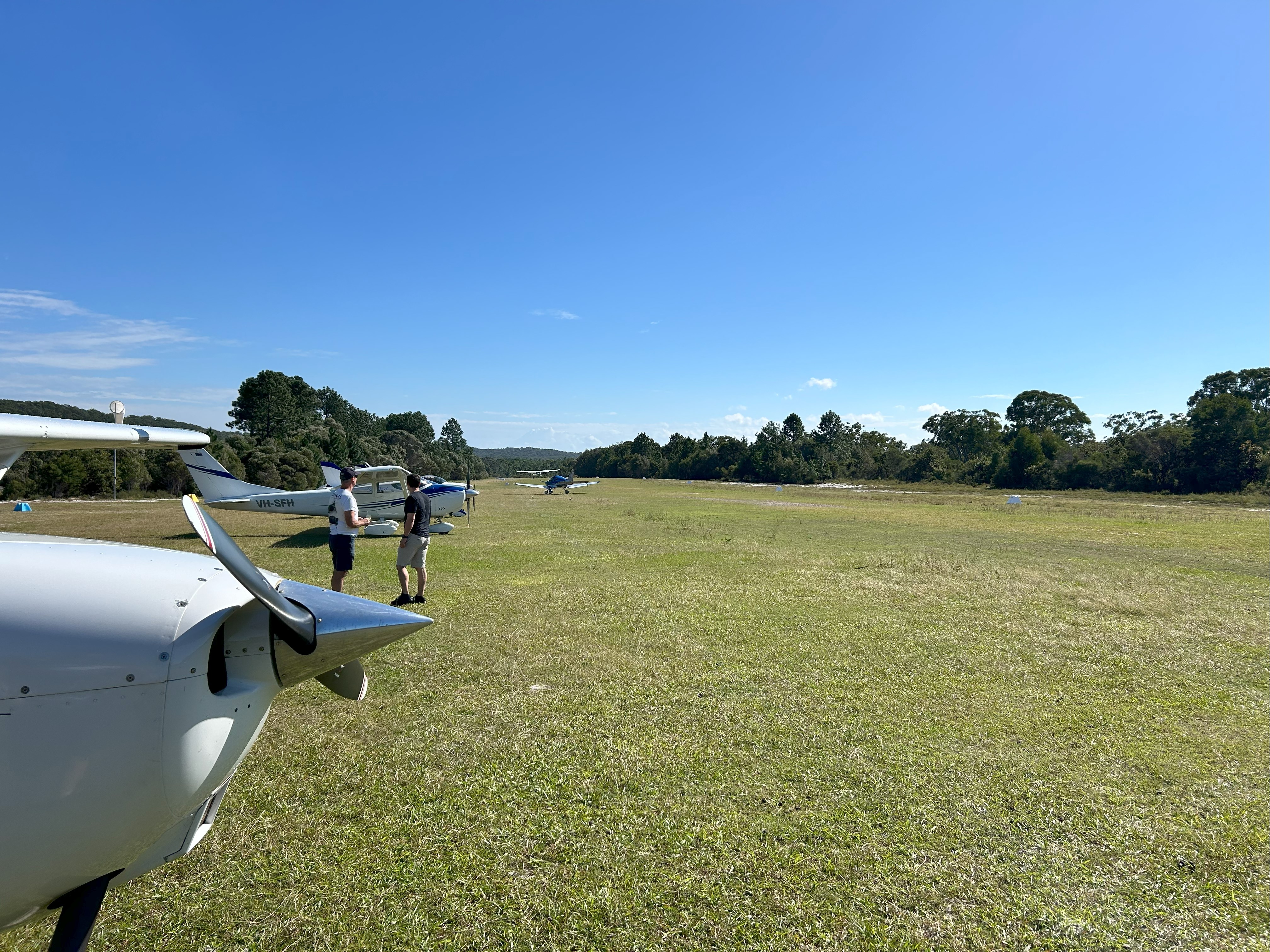
We took off again and headed south for a 10 minute hop to Heck Field near Jacobs Well.

It was my first time there and it was bit difficult to spot the strips at first but once we were only 3 miles out it became clear. We joined downwind for RWY10 ahead of a Sling that was doing circuits and made another smooth landing on the rather narrow sealed strip.

After a cup of tea and a chat to a few of the members we noticed some clouds were building up so Garry climbed into the left hand seat and we headed back to Redcliffe, taking off over Jacobs Well.

Now I was in the passenger seat so I had time to take photos. We headed direct to Target and crossed over the South Eastern Freeway.

Garry obtained a clearance from YBAF tower to fly direct to Walter Taylor Bridge and we passed over ANZ Stadium, Griffith Unit and had a good view of Archerfield airport.

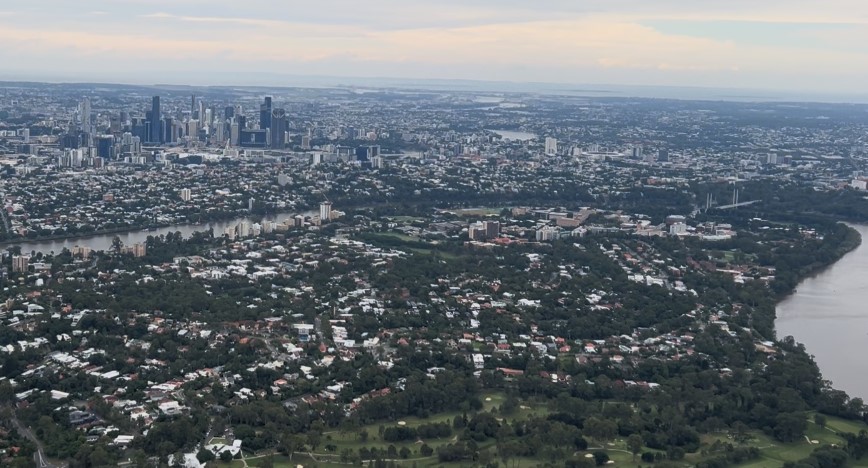
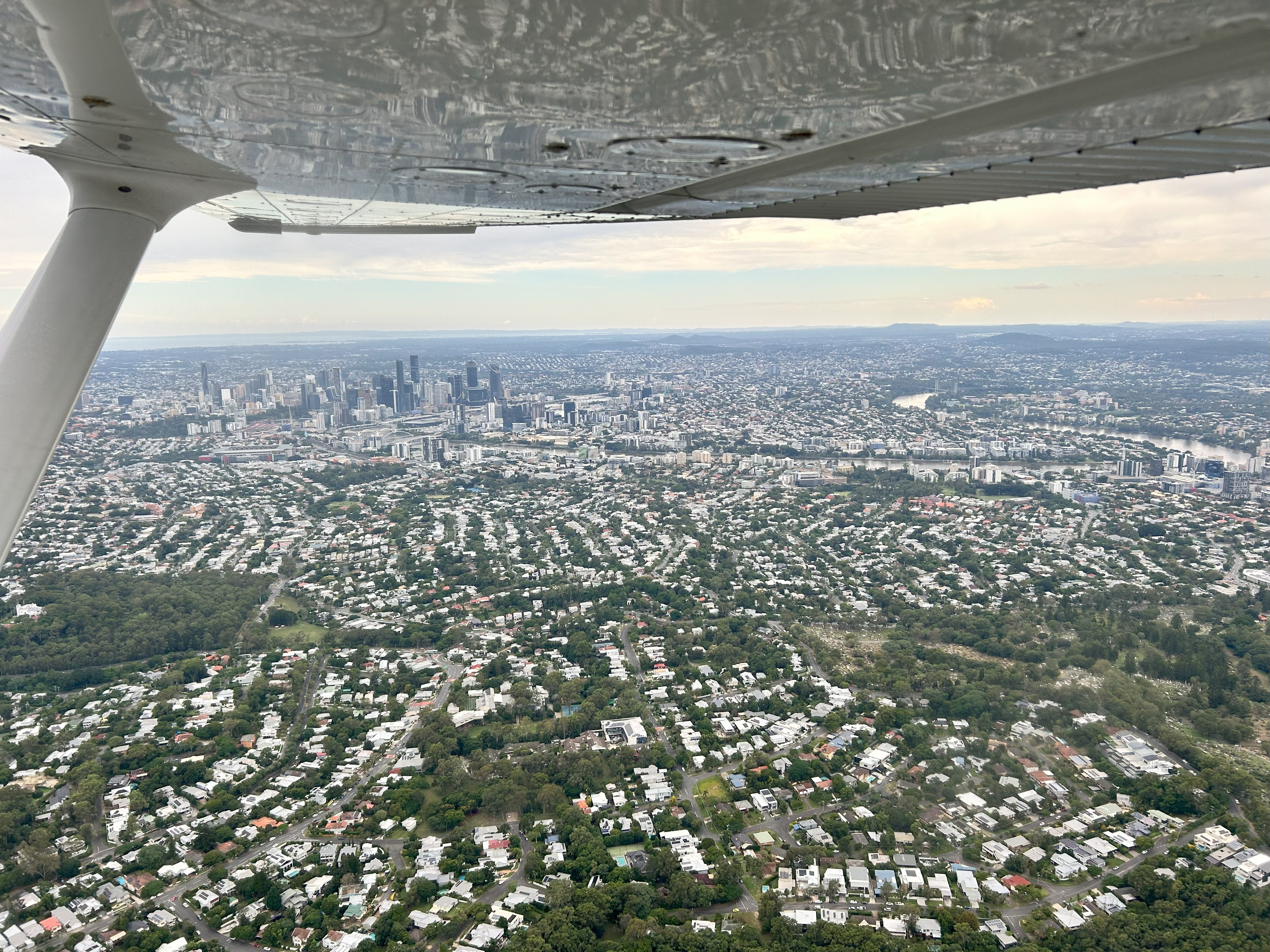
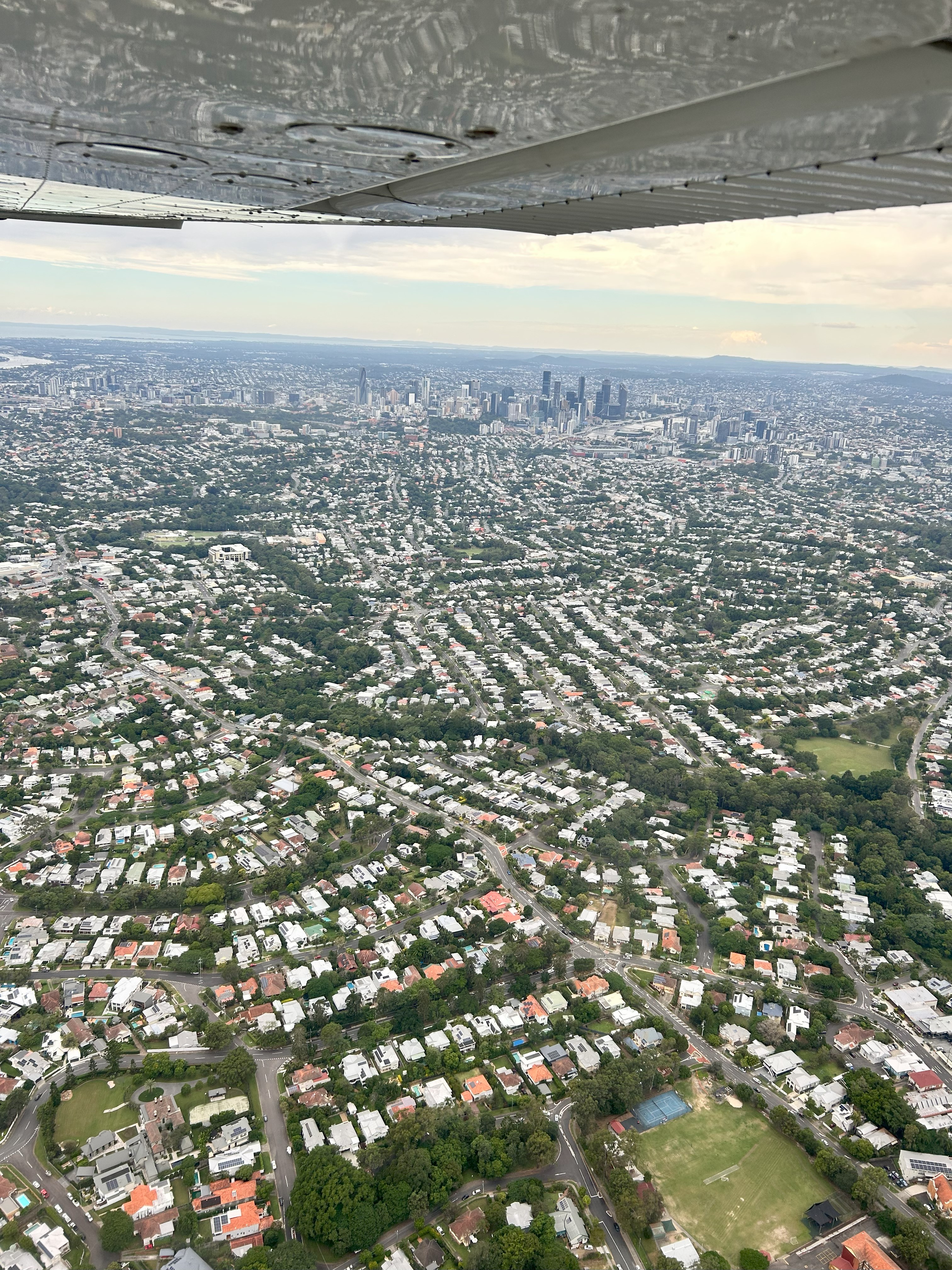
From there it was the old route via TV Towers and Enoggera with a great view of the CBD and the inner northern suburbs.

We also had a great view of the bay as we descended into Redcliffe.

We landed and parked the plane just as the first few drops of rain fell. Perfect timing. Oh and it was a bit of a personal milestone for me, as I passed 1000 hours total flying time.

Trouble getting to Tyagarah

Thursday 11th April 2024 was one of those autumn days that are perfect for flying. Blue sky, no wind and about 27 degrees so not too hot. Garry Ayre and I decided to make the most of it and go flying. I’d planned to fly to Tyagarah near Byron Bay with a short stop in Kooralbyn on the way. Garry would then fly back via the coast.

We’d tried to book C172 IVW but it was booked out so we’d booked YRE instead. Also a G1000 glass cockpit and similar vintage to IVW so we thought it would do just as well. We wanted to get away early so they guys at the club had left the plane out on the line overnight and the paperwork was in the hangar so we could sign in and do our preflighting before they arrived at 8am. I met Garry at 7:15 and just on 8:00 I was taxiing to the bowser. We filled up and took off to the west, climbed to 1500ft and were soon passing the Pine Rivers Dam at Lake Samsonvale. It was overflowing after all the rain.

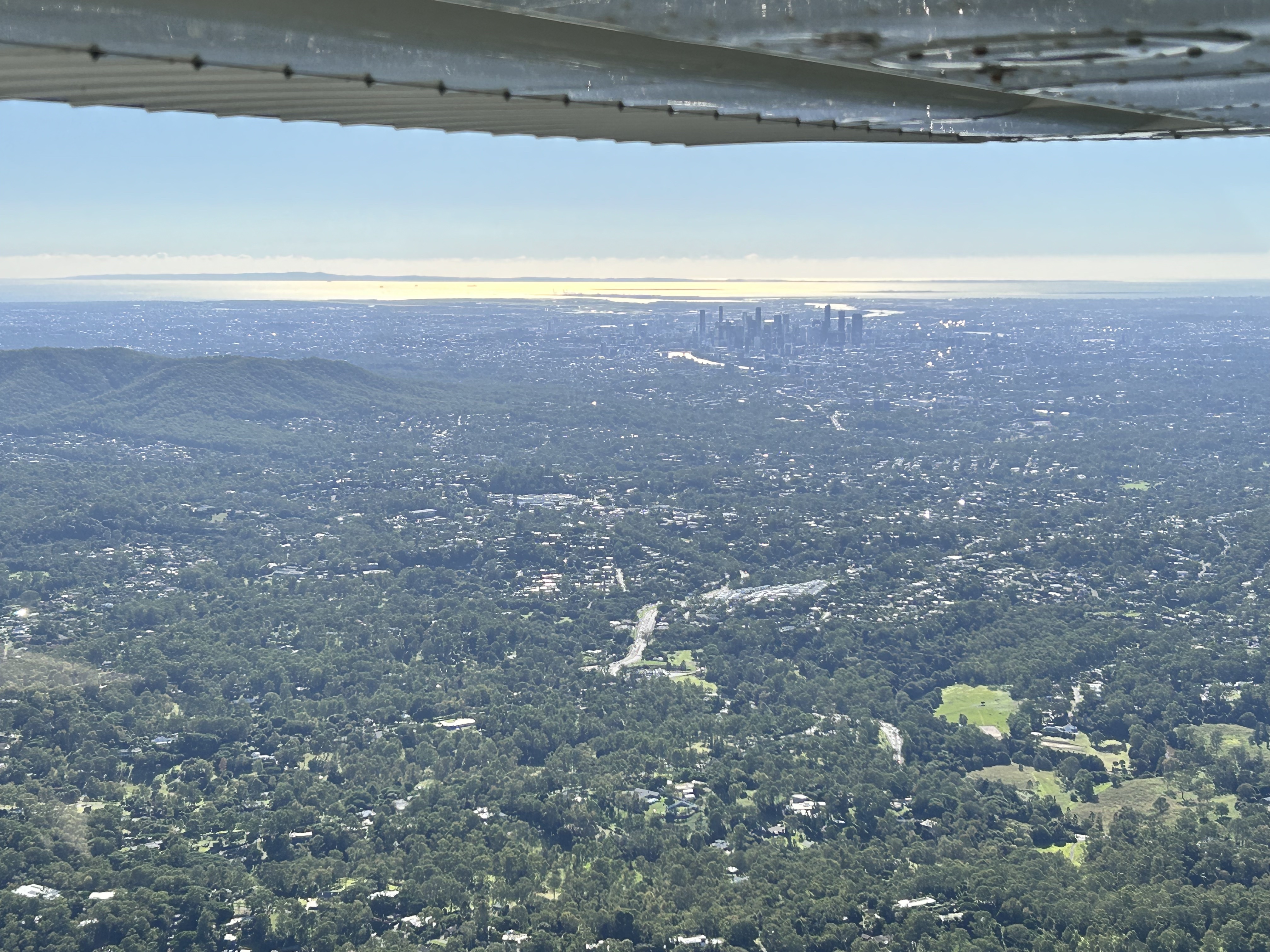
We could then climb to 2500 as we headed for Spring Mountain, passing Keperra and The Gap on the way.

I called up Archerfield Tower as we passed the TV Towers just to let them know we were staying clear of their controlled airspace. They seemed to appreciate the heads up and told us there was no other traffic in the area we were passing through. Nice.

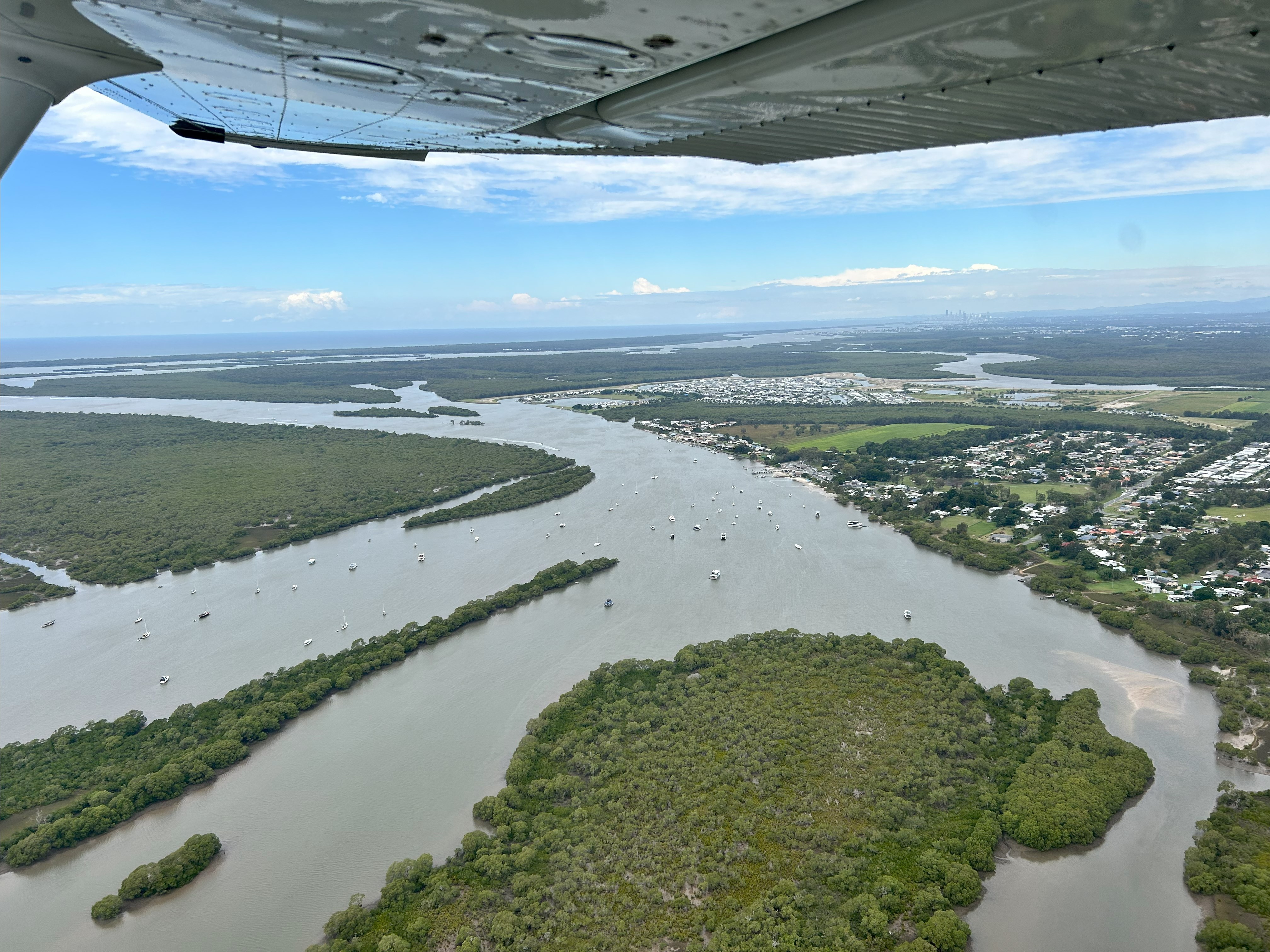
We had a good view of the Brisbane River, the CBD and the bay as we passed over Kenmore then Pullenvale.

We skirted the eastern edge of the Amberley controlled airspace as we passed Spring Mountain, avoiding the Greenbank Firing Range restricted airspace to the east as well.

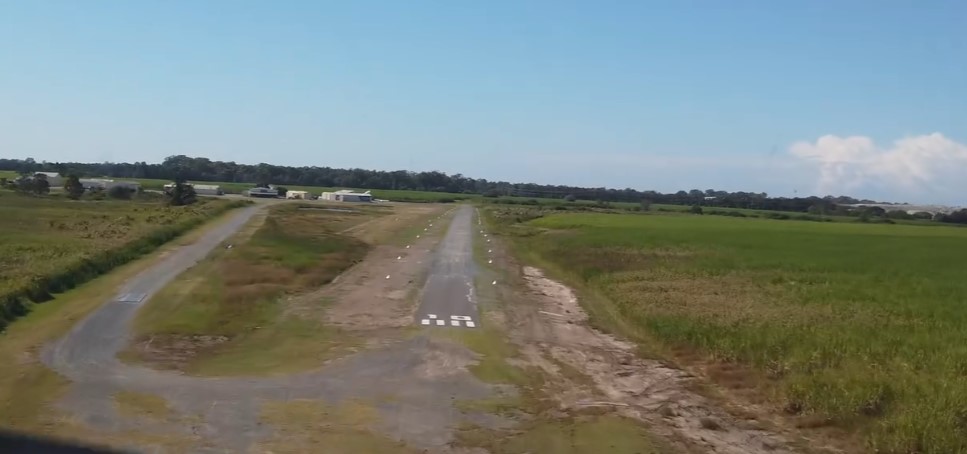
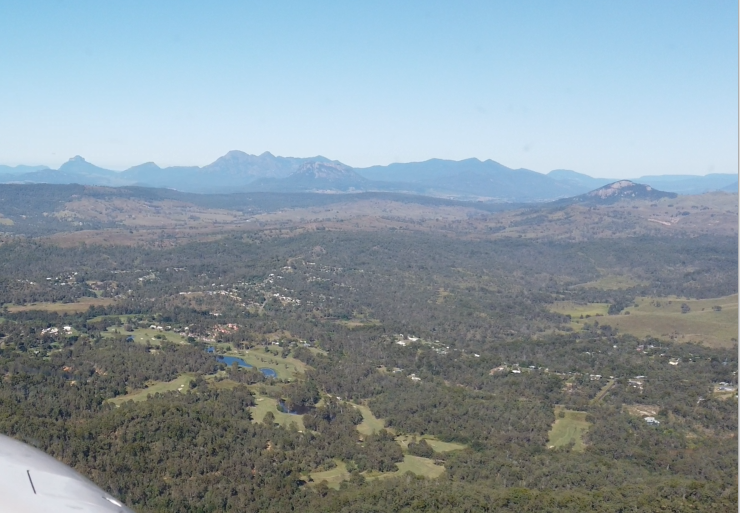
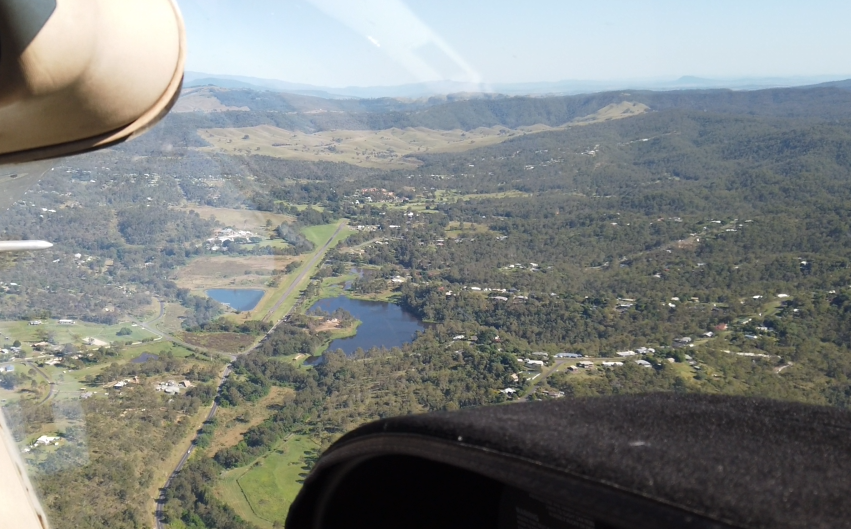
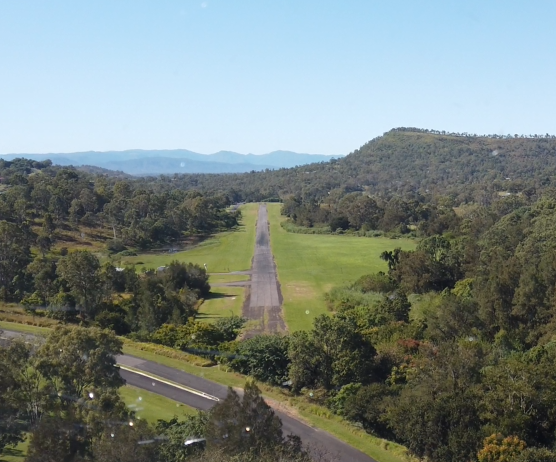
Another 15 minutes and we were arriving at Kooralbyn. The runway is nestled in between hills, so basically surrounded except to the east. As luck would have it, the wind was from the east, so I decided to land over the hills.

After checking out the windsock from 2500ft I descended to 1300 on the dead side and joined midfield crosswind for RWY12.

It’s a right hand circuit due to high terrain on the northern side. There are hills to the west as well of course so you can’t do a very wide turn onto base. As a result we were a bit high turning onto final and dived down to the threshold, passing over trees growing not too far from it. As I said to Garry, “we can always go around”. But it’s a 1200m runway so has plenty of length even if it’s only 10m wide.

We did a firm touchdown and backtracked to the apron.

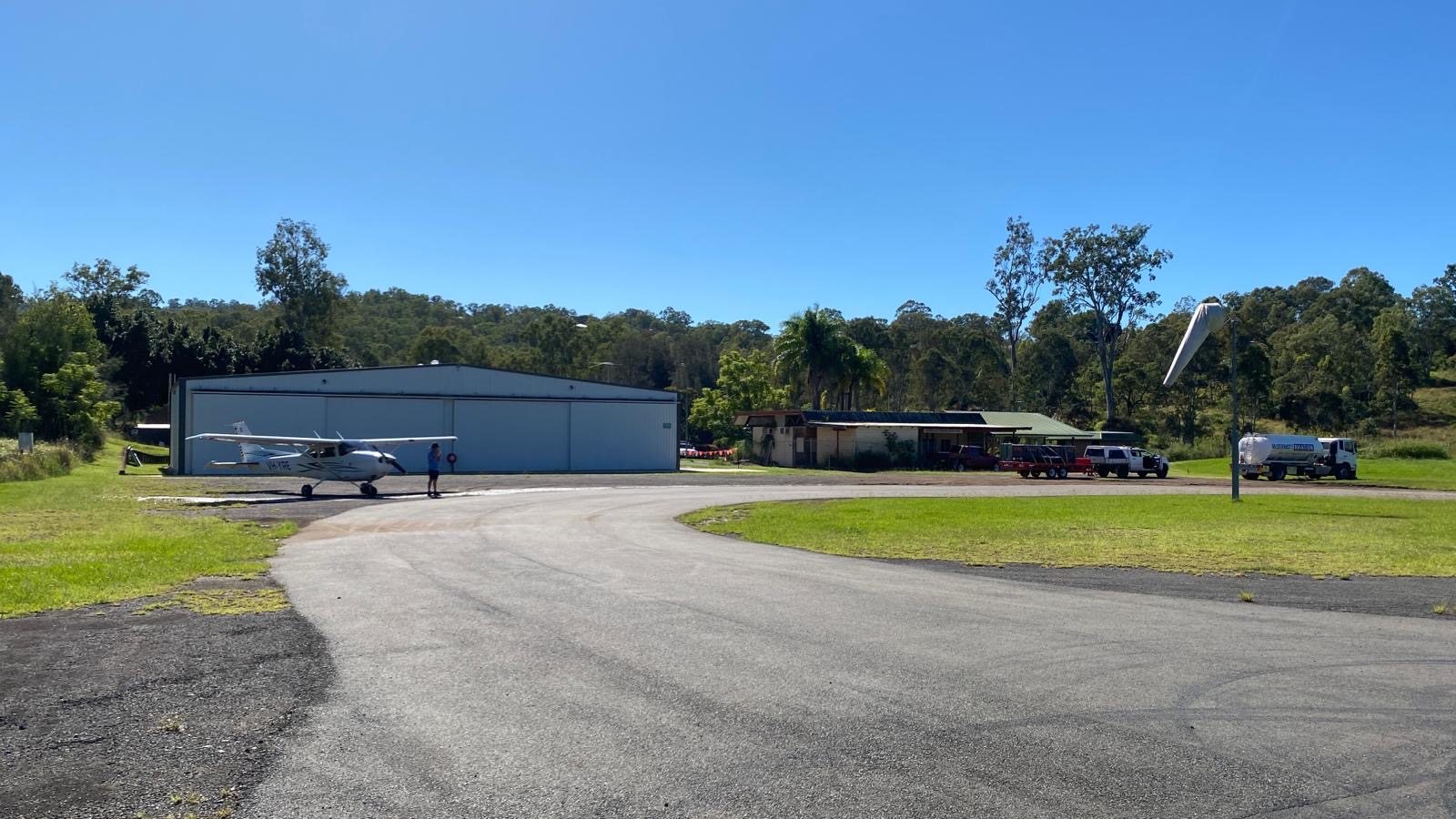
After shutting down we strolled off to the reception of the golf resort to pay our $10 landing fee. We caught up a bit on the history of the place while we were there and inspected some of the facilities.

Knowing we had limited time to get to Tyagarah and back to Redcliffe we headed back to the aircraft and clambered aboard. That’s the problem arose. The engine wouldn’t start. The propeller turned about 30 degrees each time and then stopped dead. There was plenty of voltage in the battery so it wasn’t the problem. I climbed out and carefully rotate the prop a few times and then tried the starter again. No luck. After a few more attempts I decided to call the aeroclub. I was wondering whether anyone else had had this problem. I had noticed on the maintenance document that there had been a problem with the starter motor in March so it could have been connected with that. I spoke to Valerie, one of the instructors, and she didn’t know what the problem could be. She rang the maintenance people at AMS in Caloundra and the only advice they had was to wait 30 minutes and try again.

Another pilot landed in a Jabiru so we had a chat to him. He’d flown in from Heck Field for a coffee and told us we should fly there next time. Meanwhile he’d be happy to rotate the prop a few times for us if we try again. So, after 10 minutes I tried the engine again. There was some life there but not much better than before. Our new friend rotated it a couple more times and each time it spluttered a bit then stopped. We contemplated waiting a few hours for someone to come and get us from Redcliffe. Not appealing. I said to Garry “one more attempt then we can go and have a coffee”. I gave it one more turn of the ignition switch and this time it worked! The engine started. We were off!

Waving to our new friend Garry and I agreed we’d fly straight back to Redcliffe and go to Tyagarah another day. I phoned the club and told them we were heading back. Lining up on RWY12 we heard another plane 10 miles out heading for Kooralbyn.

Climbing out we turned left and headed back to Spring Mountain at 3000ft. I called up Brisbane Centre and advised of our change in flight plan and asked for a new SARTIME at Redcliffe.

Passing Archerfield we called up the tower again and they advised us of traffic in the opposite direction heading past the TV Towers. We spotted them then carried on towards Samford. Noticing another aircraft flying across our path on our iPads, we kept a good lookout and I changed our heading a bit west, so we were heading over the western part of the Samford Valley. Once we’d spotted the other plane and he’d passed us I turned towards Redcliffe.

Touching down a bit earlier than we’d planned we parked YRE then headed into the clubhouse to discuss our troubles with the starter. One of the other instructors was there and when we mentioned we’d had problems starting he asked “Were you in YRE?” Yes we were. “Oh that’s just a problem with the ignition key. You have to push it in as you turn it as there’s a poor connection”. What? Why didn’t anyone else tell us that. Or maybe write it up on the dispatch sheet? Poor communication had meant we only did half of what we’d planned and Garry didn’t get to fly at all. But hey, you get that.

It had been an excellent morning and I’d practised my tricky landing at Kooralbyn so it wasn’t that bad. We’d try for Tyagarah another day.