
Gold Coast – Forster/Wallis Island – NSW coast – Sydney Harbour – Victor 1 – HARS Museum – Blue Mountains – Hunter Valley
On the morning of Sunday 21st September 2025 I was dropped off at the General Aviation area at the Gold Coast International Airport. I was due to meet Mike Cahill and Brad Green there who were about to arrive from Redcliffe in VH-MSF, as I was to join them on the annual Redcliffe Aeroclub flyaway. We’d land on an island, fly along the beach past the RAAF base at Williamtown, do orbits at 1500ft over Sydney Harbour, fly the “Victor 1” VFR route at 500ft along the coast past Bondi and Coogi beaches, spend a whole day marvelling at the collection of historical aircraft at the HARS museum near Wollongong, fly past the Three Sisters in the Blue Mountains and have a day of wine tasting in the Hunter Valley. What a program!
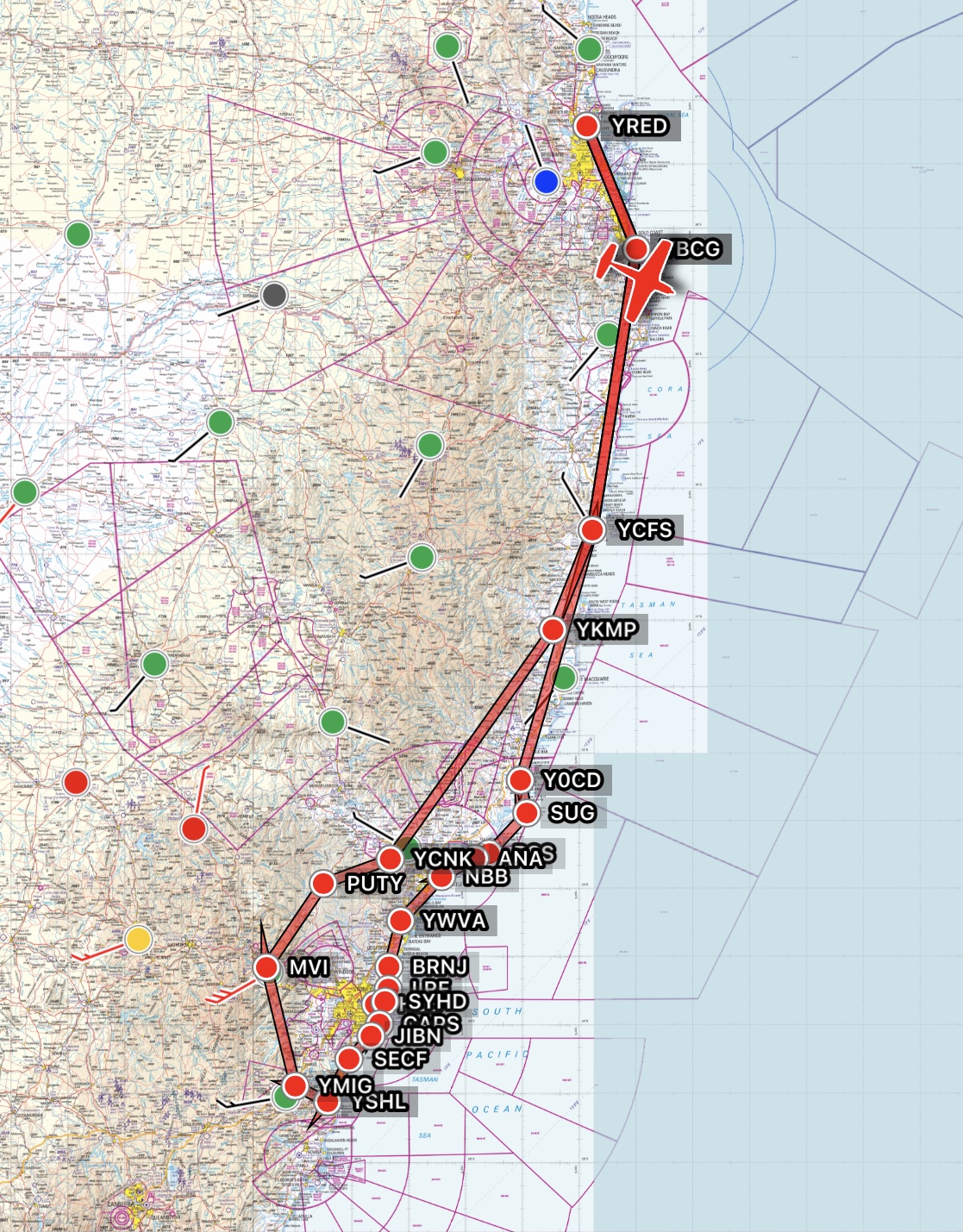
Five other aircraft with 12 other club members and families/friends had departed the previous day for Wallis Island, a grass airstrip near Forster, north of Newcastle, and we were to meet up with them there. MSF landed and after a short discussion of our flight plan we climbed aboard and, with Mike as PIC, took off to the south.
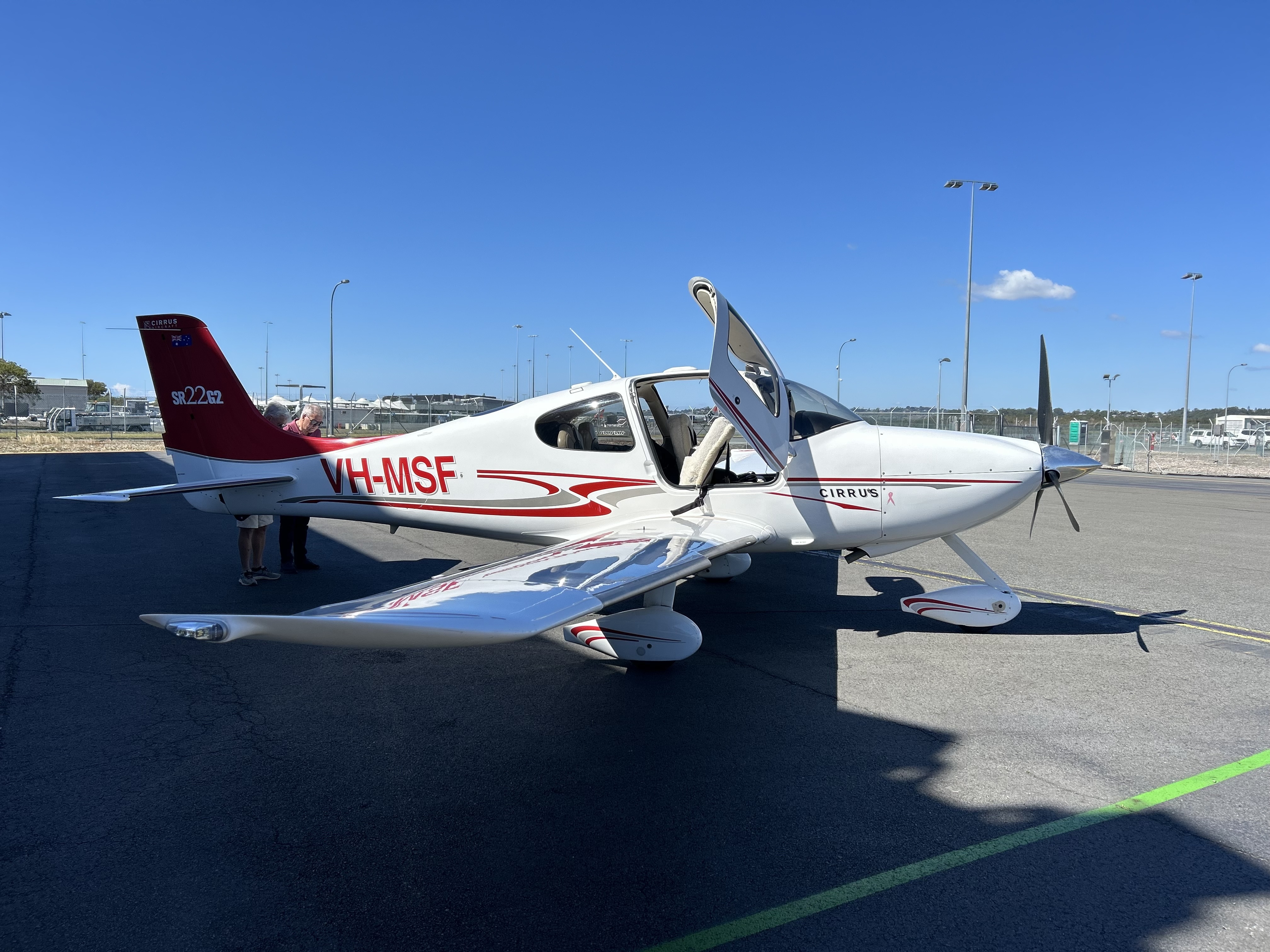
It was a perfect blue-sky day as we flew coastal at 2500ft so we had amazing views of the beaches and river mouths and inlets, heading first past Byron Bay for Ballina.

A few minutes later we were passing Evans Head.

The RAAF bombing range south of Evans Head was inactive so we could continue to fly low along the beach and were soon were passing Yamba.

The beaches and river mouths were just stunning as we headed further south past Wooli.
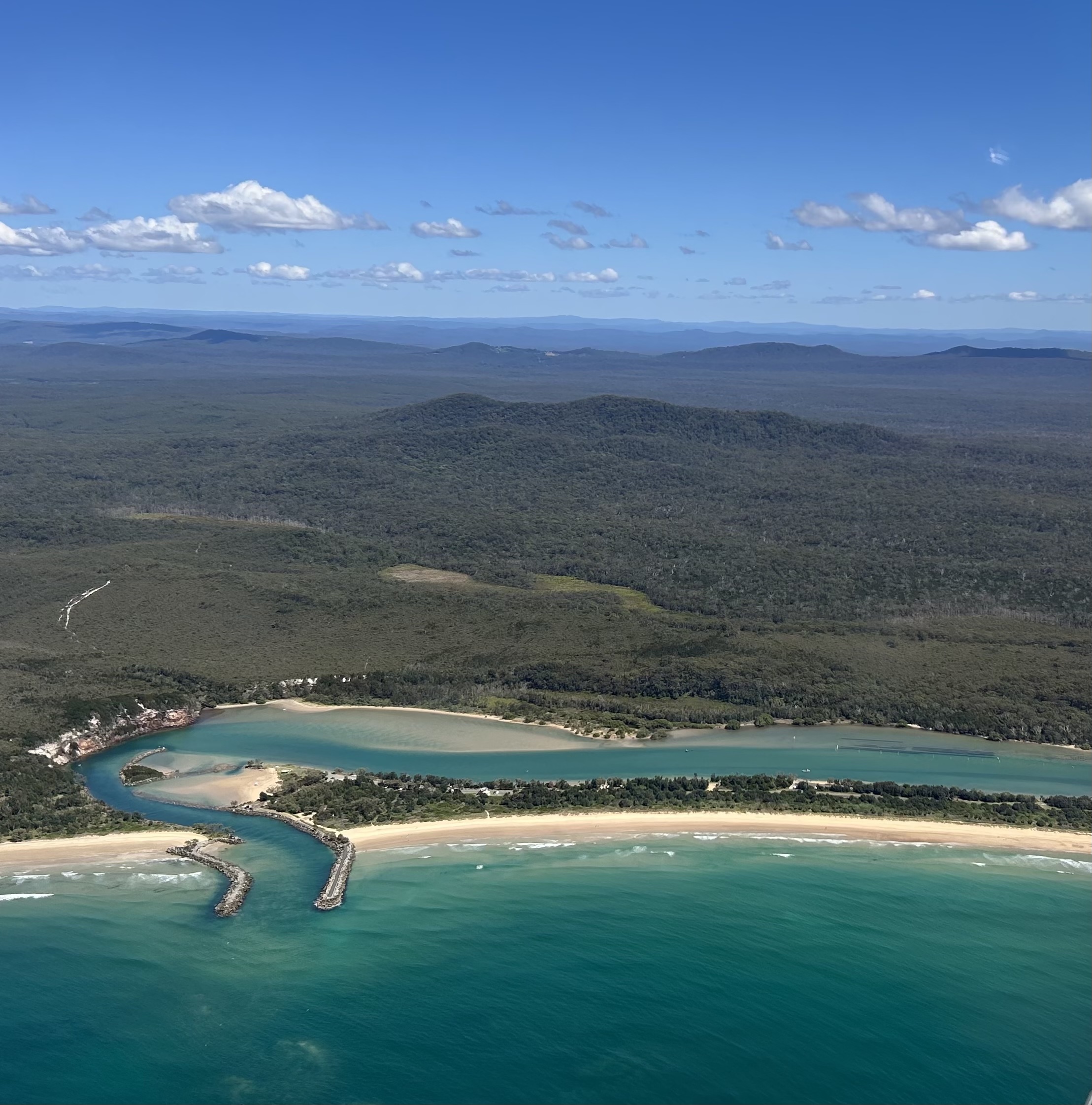
At Red Rock we obtained a clearance from Coffs Tower to transit the Coffs Harbour controlled airspace and passed Woolgoolga.

Bringing us to Coffs Harbour, where we had a great view of the town and airport as we passed.

The spectacular views just continued with Nambucca Heads being next on the list.
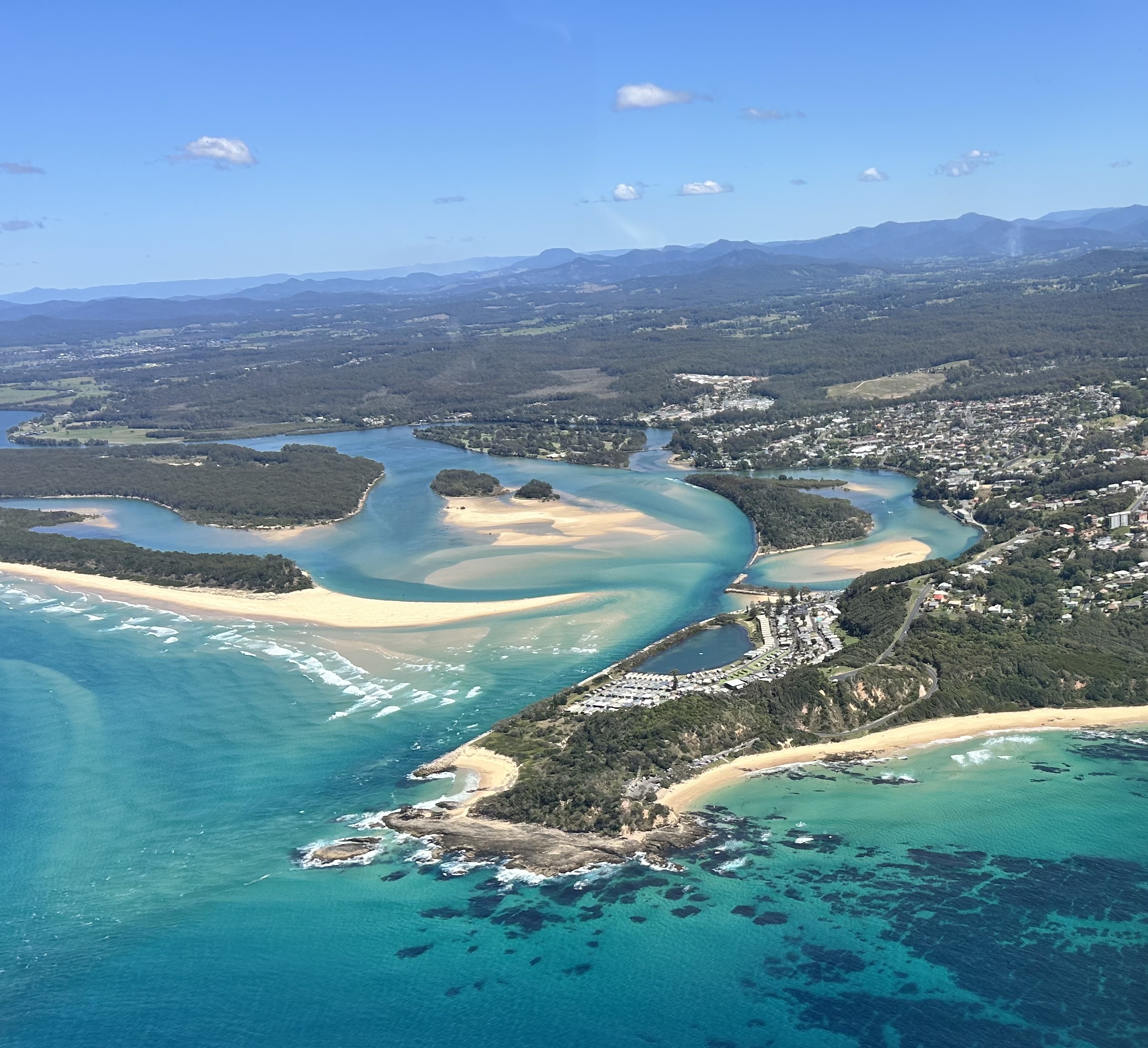
Further on we passed Port Macquarie and Diamond Head, one of the many picturesque headlands that jut out into the sea.

There was virtually no wind and no clouds the whole way so we had amazing views of the coastline with its myriad lakes, rivers and inlets and just so many deserted beaches. We really are fortunate to have such a great coastline in New South Wales and Queensland.
After about 90 minutes of simply amazing views we descended into Wallis Island, where we were planning to park the plane overnight.
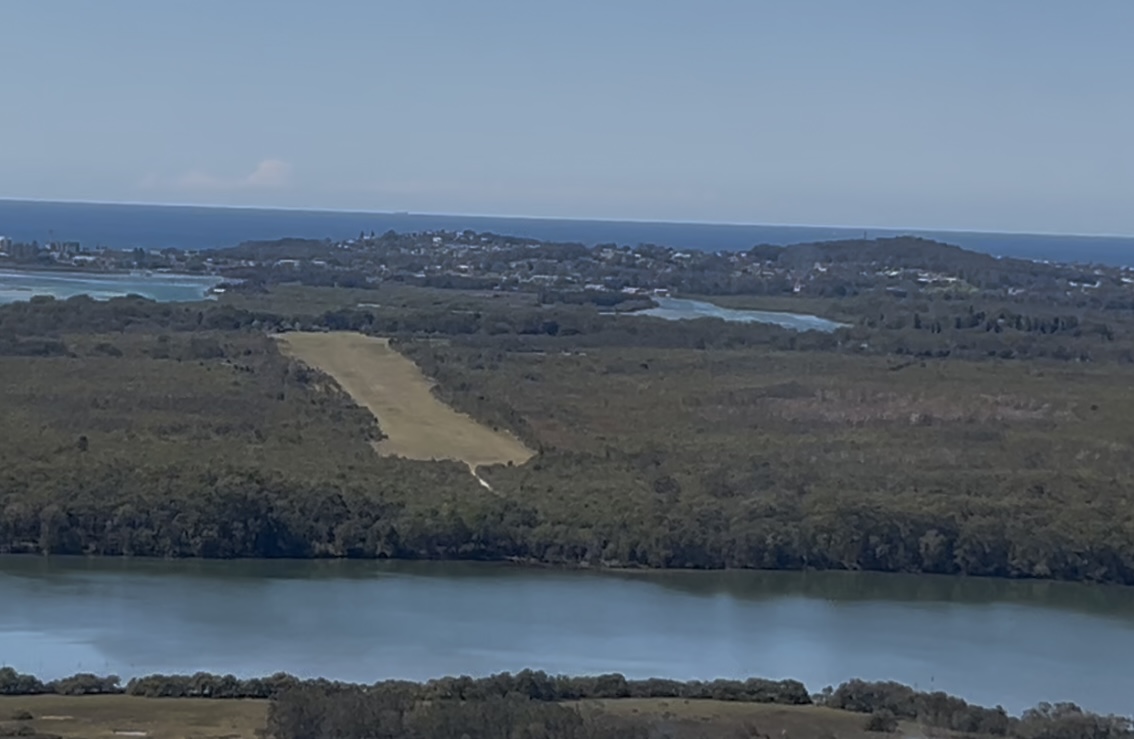
Landing on the smooth grass strip and were met by John Tkalec, the owner. John’s a builder/developer who lives in Cessnock in the Hunter Valley but is planning to develop the land on the island into a small resort/venue as a “retirement project”. He has a Beechcraft Bonanza that he flies between Cessnock and the island and has a small boat that he used to ferry us across to the Forster jetty. We checked in, explored the town centre and met up with the rest of our party surprise! surprise! at the local boutique brewery, later enjoying delicious Italian food at the Sicily Restaurant. A great start to the trip.

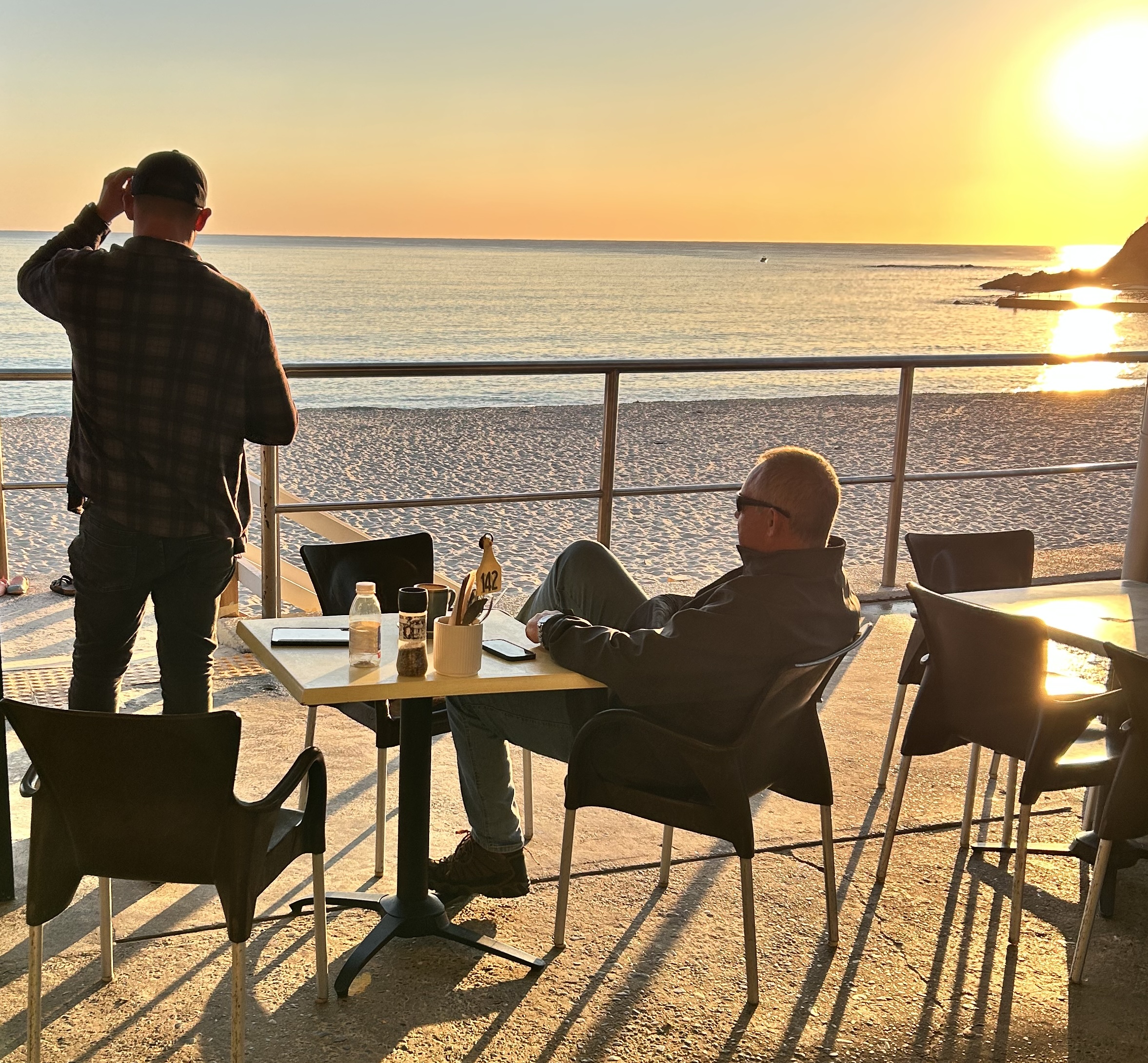
Monday 22nd September we watched the sun rise over breakfast at a Forster beachside café at 6am.
We met John at the town jetty at 7am for our 5 minute ferry transfer back to Wallis Island.

Once again, the weather gods were being kind and we had blue sky with minimal high-level cloud and not much wind. John delivered us to the airstrip and after preflighting the aircraft we we started the flight to Warnervale.

Taking off we followed the coast to the south.
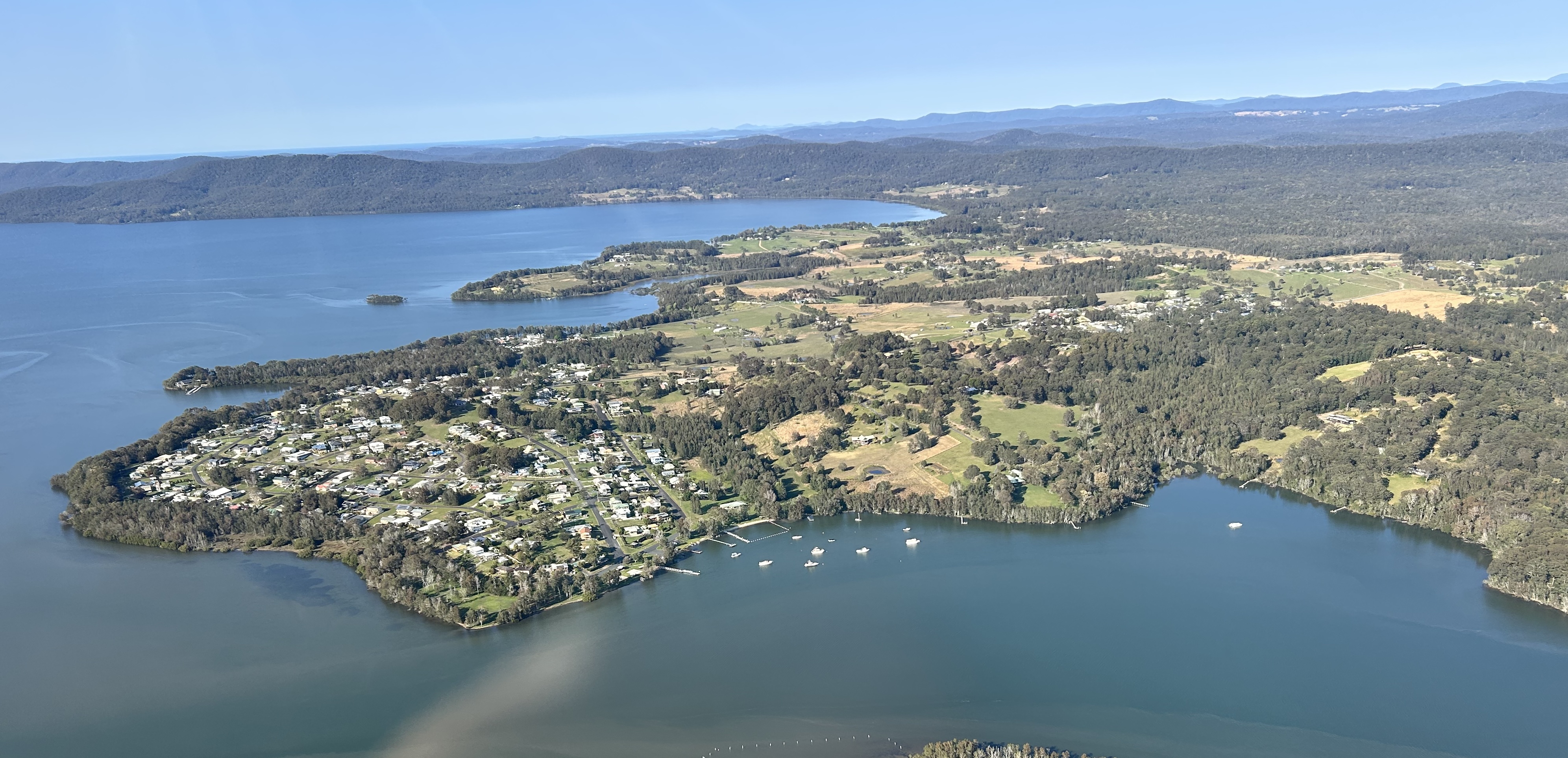
On this leg we flew past the Williamtown RAAF base so had to obtain a clearance to fly along the VFR route that begins at 2000ft at Sugarloaf Point. MSF was cleared to fly at 1500ft from Ana Bay to Nobbies Headland in Newcastle, that gave us a great view of the RAAF base and runway as we passed.

There was no obvious activity at the airport so I think the ATC were happy to have something to do and were very accommodating.
We flew along the wide Stockton Beach that led to the mouth of the Hunter River at Newcastle.
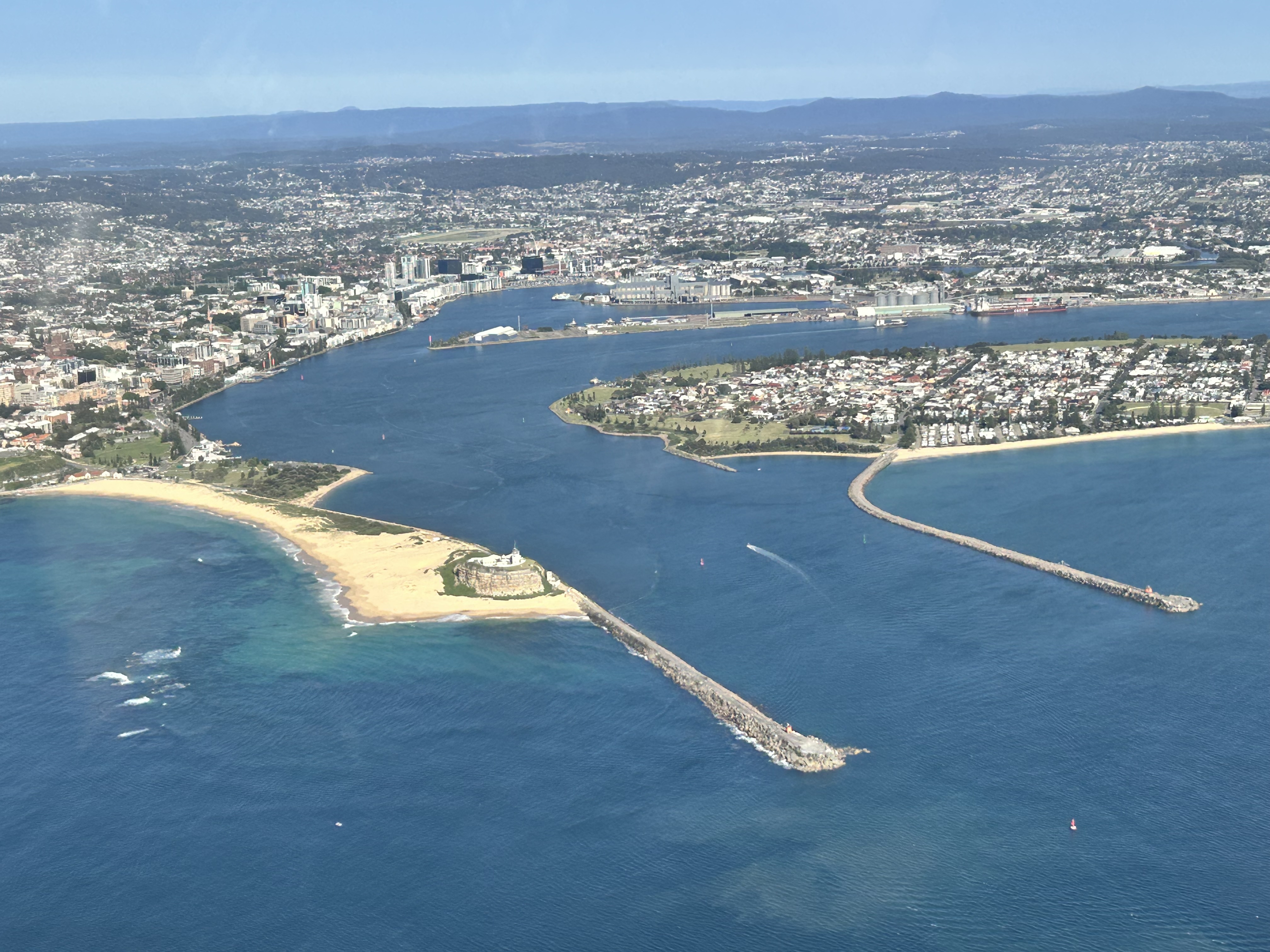
Leaving the RAAF’s controlled airspace we passed Newcastle.

Climbing to 2500ft we flew over Lake Macquarie Airport and the lake itself, touching down in Warnervale about 30 minutes after departing Wallis Island.

Our stop in Warnervale was an opportunity to add some fuel for the next leg to Shellharbour near Wollongong and to chat with the instructors and students of the local aero club.
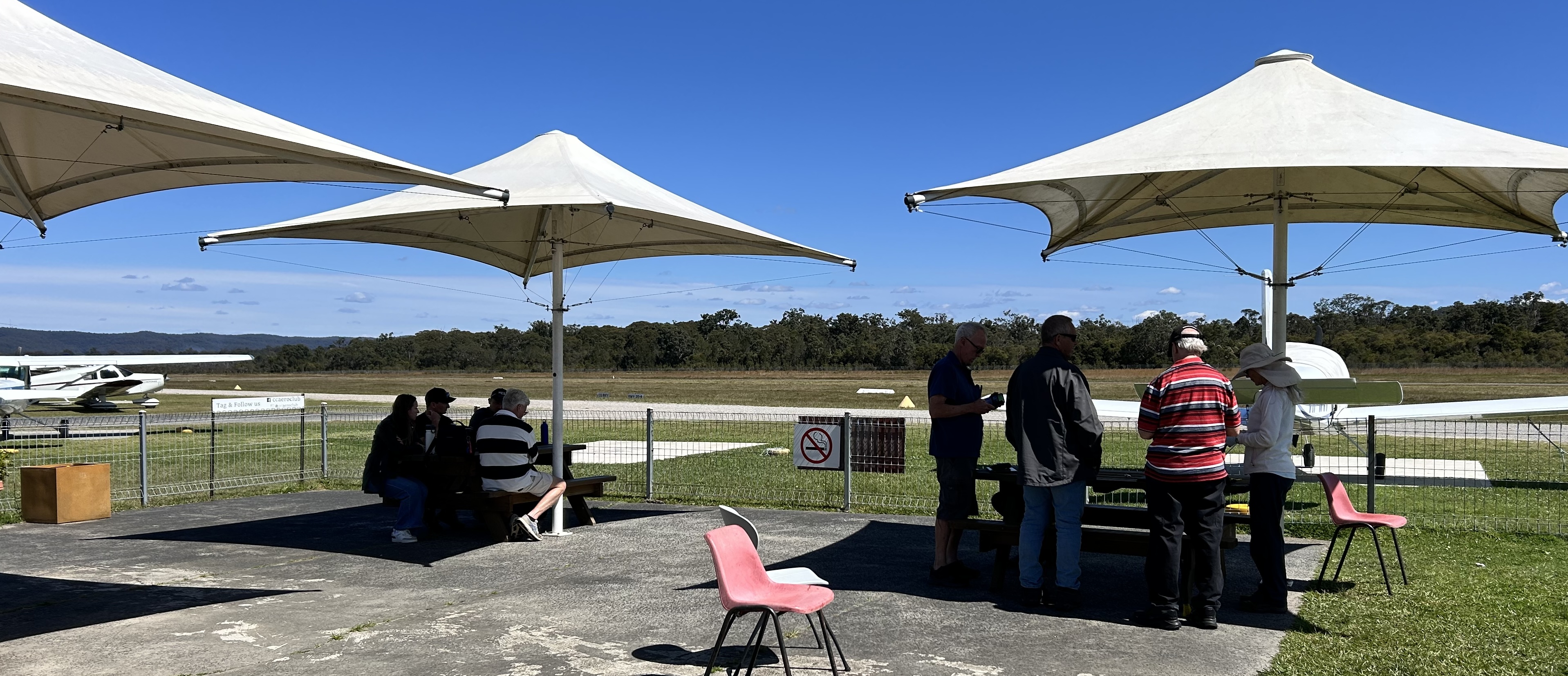
We were planning to ask for a clearance for the Sydney Harbour Scenic, which allows light aircraft to fly at 1500ft over the harbour next to the Harbour Bridge and the Opera House. Whether you obtain a clearance is dependent on weather, the amount of traffic in the area, the direction that the Sydney International jets are departing, and the workload of the air traffic controllers, so the planets had to align for all six of our aircraft to be cleared. If the jets are taking off to the north some can pass low over the harbour as they turn to the east, so ATC rarely let you do a harbour scenic in that case. It’s best to attempt the flight when the wind is from the south and the jets are departing to the south. Paul Smeath, who had organised the flyaway, had been talking to ATC in the Sydney tower for a few days leading up to our visit and in a phone call early that morning they’d advised him that the wind would change from northerly to southerly around 11am so if we arrived after 12 noon the jets would most likely be taking off to the south and it would give us the best chance of a clearance.
So, we unpacked and tried on our life jackets (needed for low level flying over water) sat in the sun outside the aeroclub office and drank coffee and chatted and waited until 11:30 when Paul confirmed that ATC had indeed changed the runway direction. That was the signal for MSF as lead aircraft to start up and taxi out.
We’d agreed the order in which the others would fly and that we’d delay take-offs to provide about 15 minutes separation between each aircraft. That would allow each aircraft to vacate the Harbour Scenic route before the next one asked for a clearance.
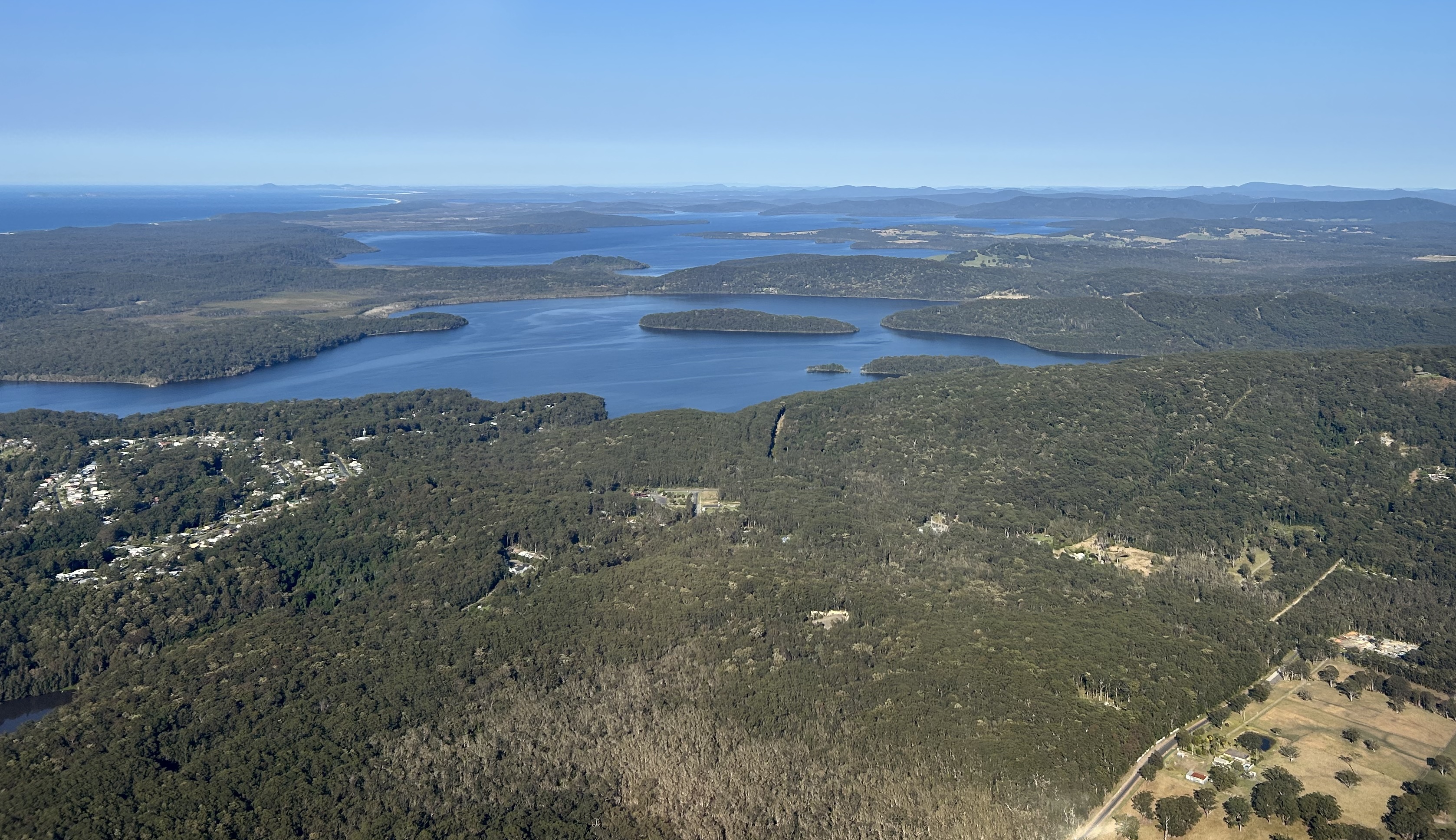
MSF took off at 11:45 and ten minutes later we passed over Brisbane Water and the mouth of the Hawkesbury River at Barrenjoey Head on our way to Long Reef where we’d ask for our clearance. Listening out on the Sydney ATIS we obtained the local QNH and then called up Sydney Tower for the clearance. They gave us a squawk code and then flicked us to Sydney Approach who almost immediately cleared us from Long Reef for Harbour Scenic 1. We’d done it!
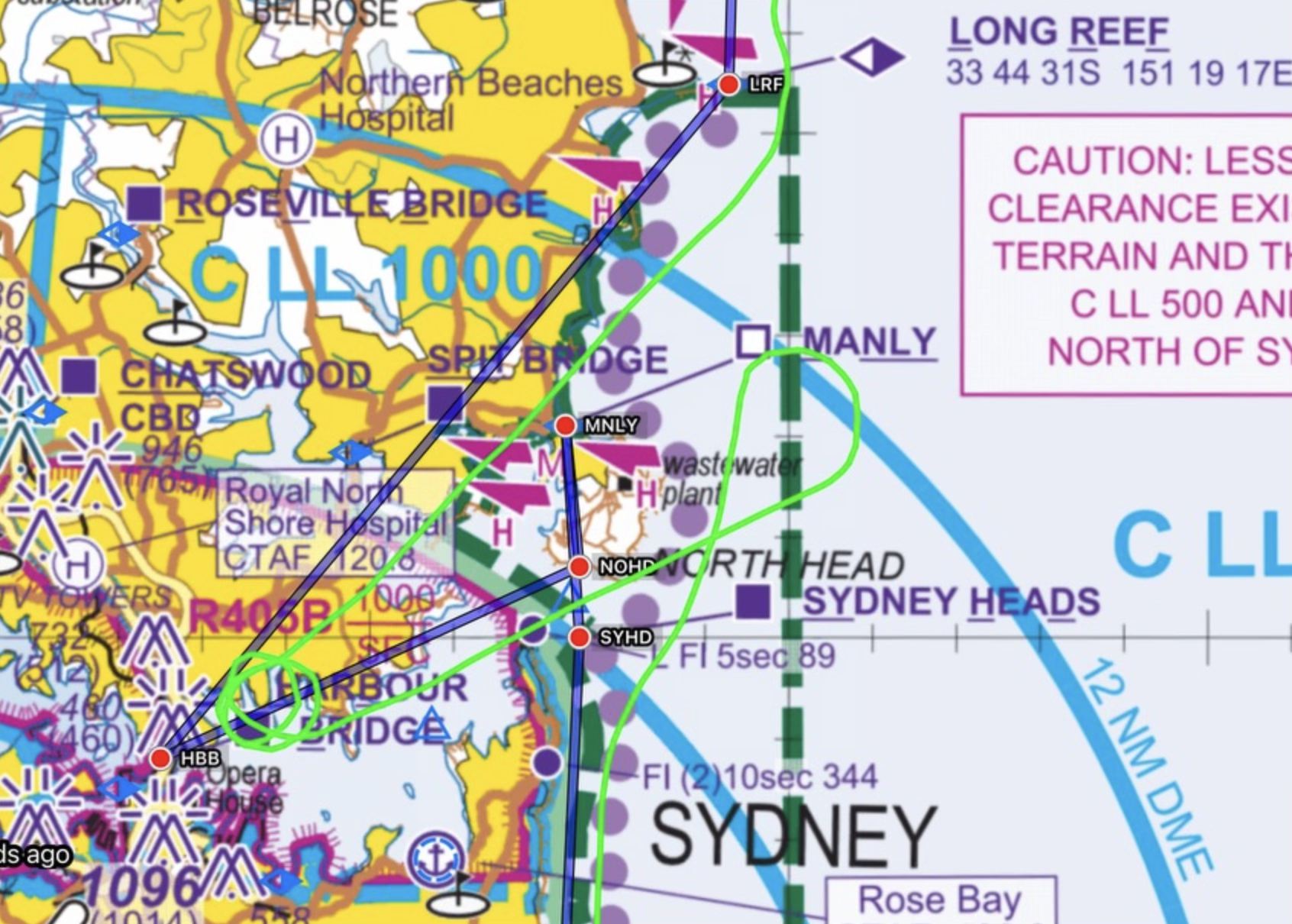
Tracking directly for the harbour bridge we passed over the Spit Bridge and were soon over Kirribilli and going into the first of two orbits. We had a spectacular view of the bridge, the opera house and the entire CBD.
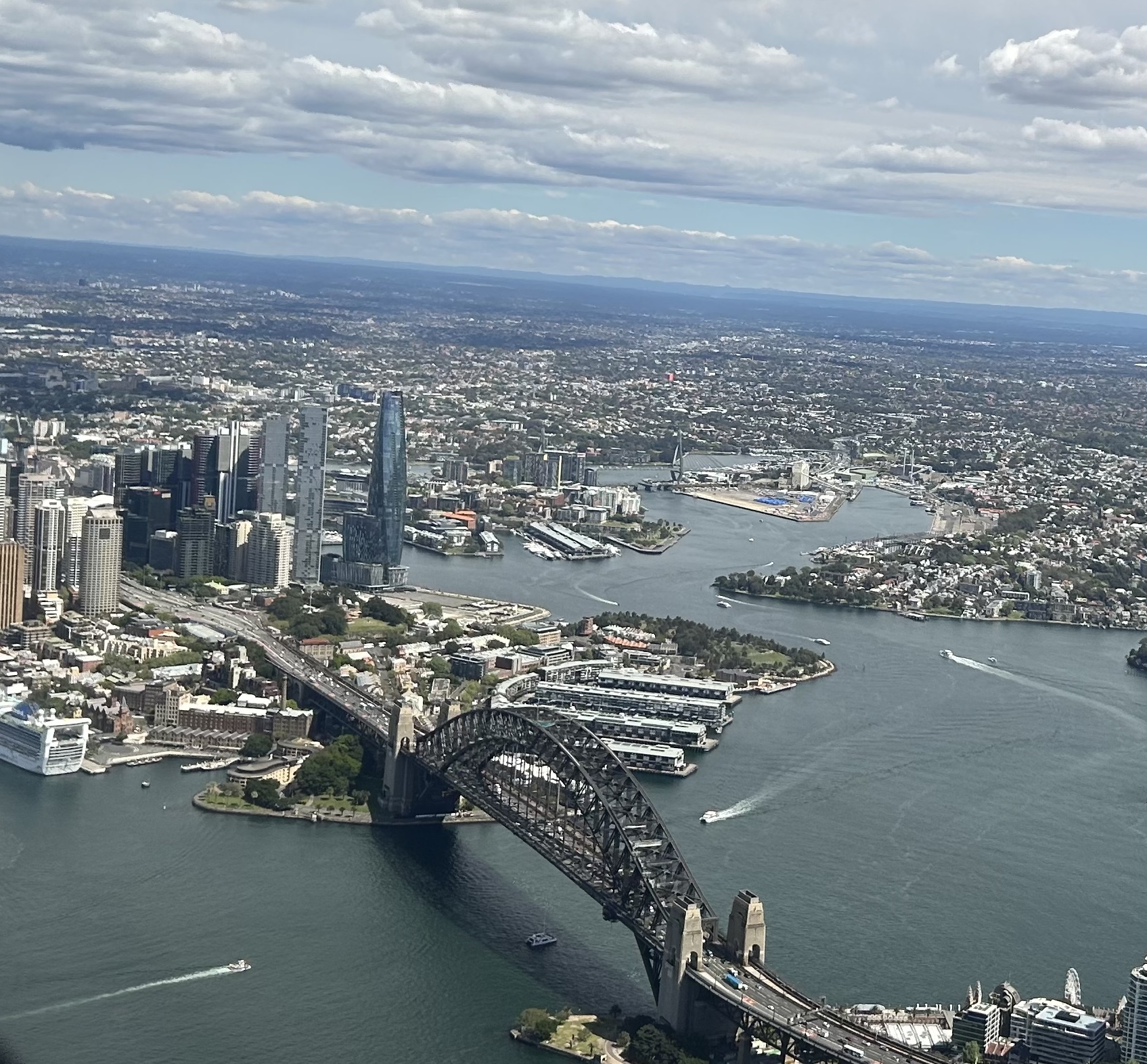

Just as quickly as we’d arrived, we were heading back out to North Head where we requested a clearance to leave controlled airspace on descent at Manly and turned south, entering the Victor 1 South at 500 ft at North Head.
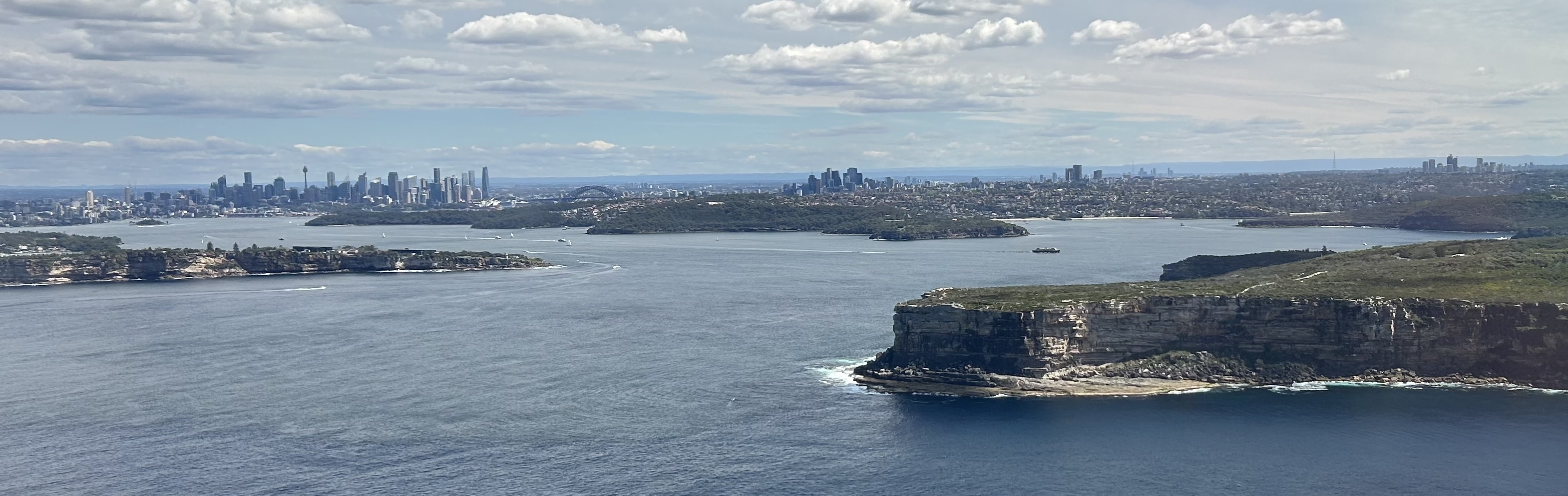
Next came South Head and some amazing houses in Vaucluse that are perched on the edge of the very high cliffs.

Just around the corner was Bondi Beach, then Coogee Beach and eventually Botany Bay, with the big jets taking off overhead.

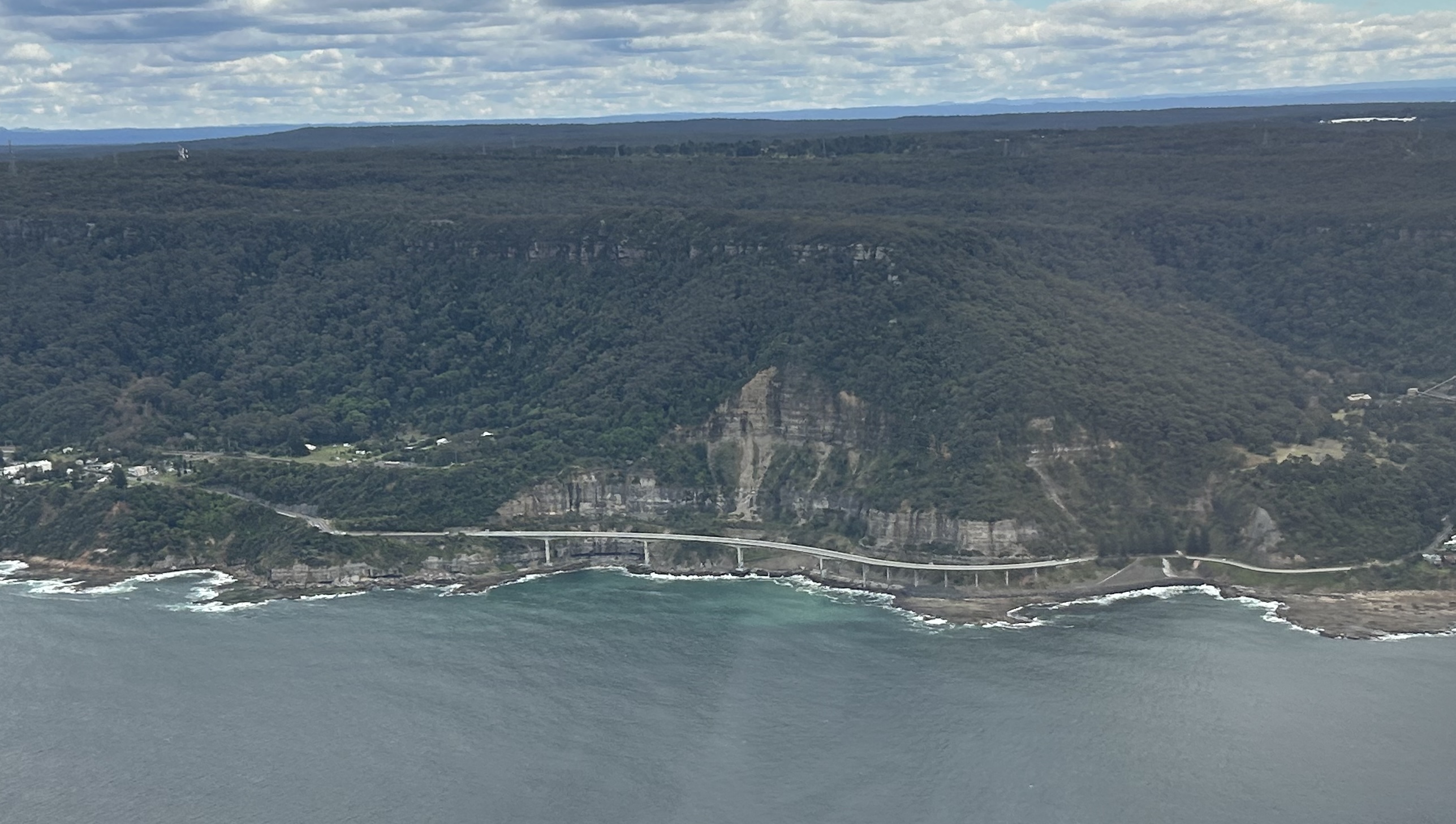
After leaving Victor 1 we could climb to 2500ft and had great views of the wilderness area that is the Royal National Park, Australia’s first national park, with its limestone cliffs and the Sea Cliff Bridge.
A few minutes later we were at Wollongong.
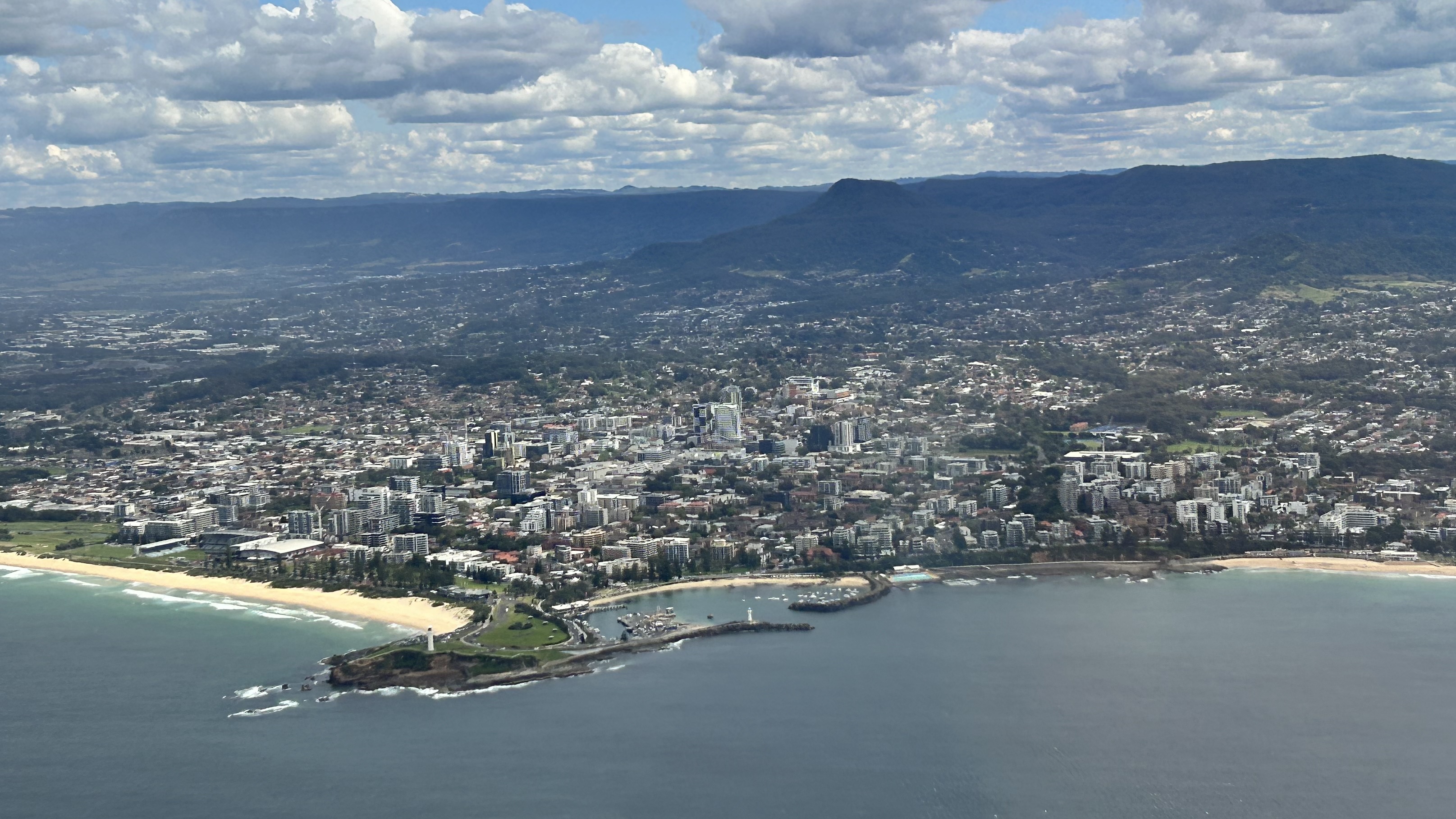
At Port Kembla we turned inland and headed for Shellharbour Airport, our final destination for the day.
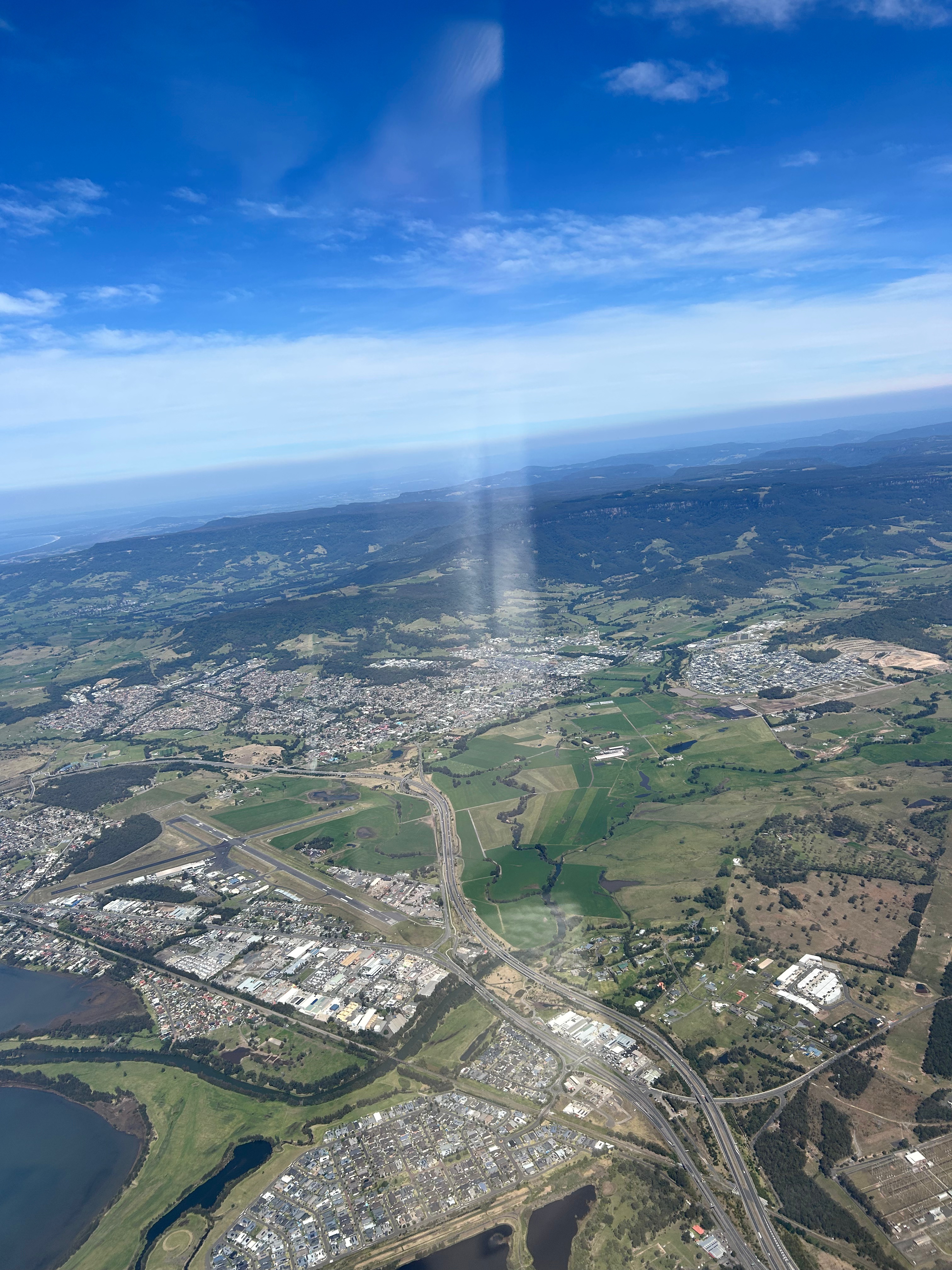
On landing we were met by Steve, one of the volunteers from HARS (the Historical Aircraft Restoration Society), who turned out to be retired Cathay Pacific 747 captain, and introduced ourselves to the local ARO who told us where we could park on the apron in front of the HARS museum and its 747.
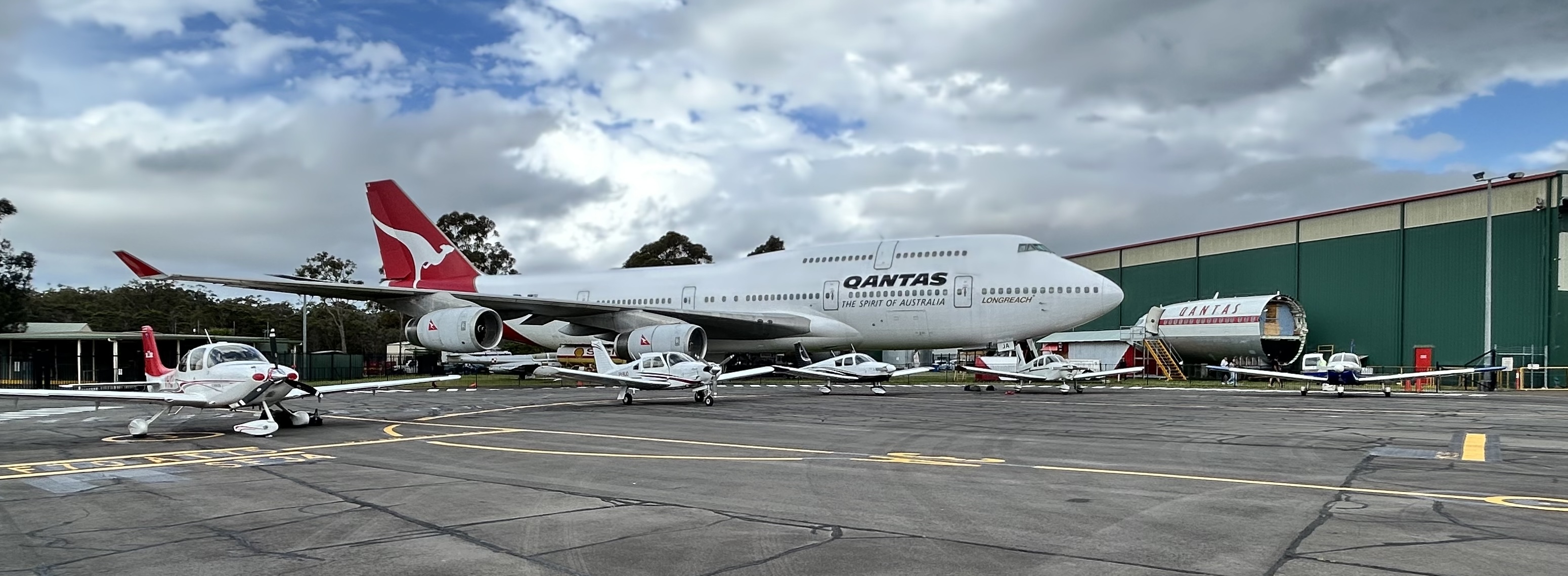
One by one the other five aircraft landed and after a meet and greet we noticed the wind was picking up and some gusts and showers were forecast so we decided to move the aircraft and park on the grass where we could tie them down.
A two-minute Uber ride delivered us to the Oaks Motor Inn just down the road where in the evening we celebrated the fact that all six of our planes had made it not just down Victor 1 but had also all been cleared for the Harbour Scenic 1. What an achievement!

We had a lazy start on Tuesday 23rd as the HARS museum tour wouldn’t commence until 10am. It was only a 20-minute walk from the motel to the museum that is located right next to the Shellharbour airport terminal.
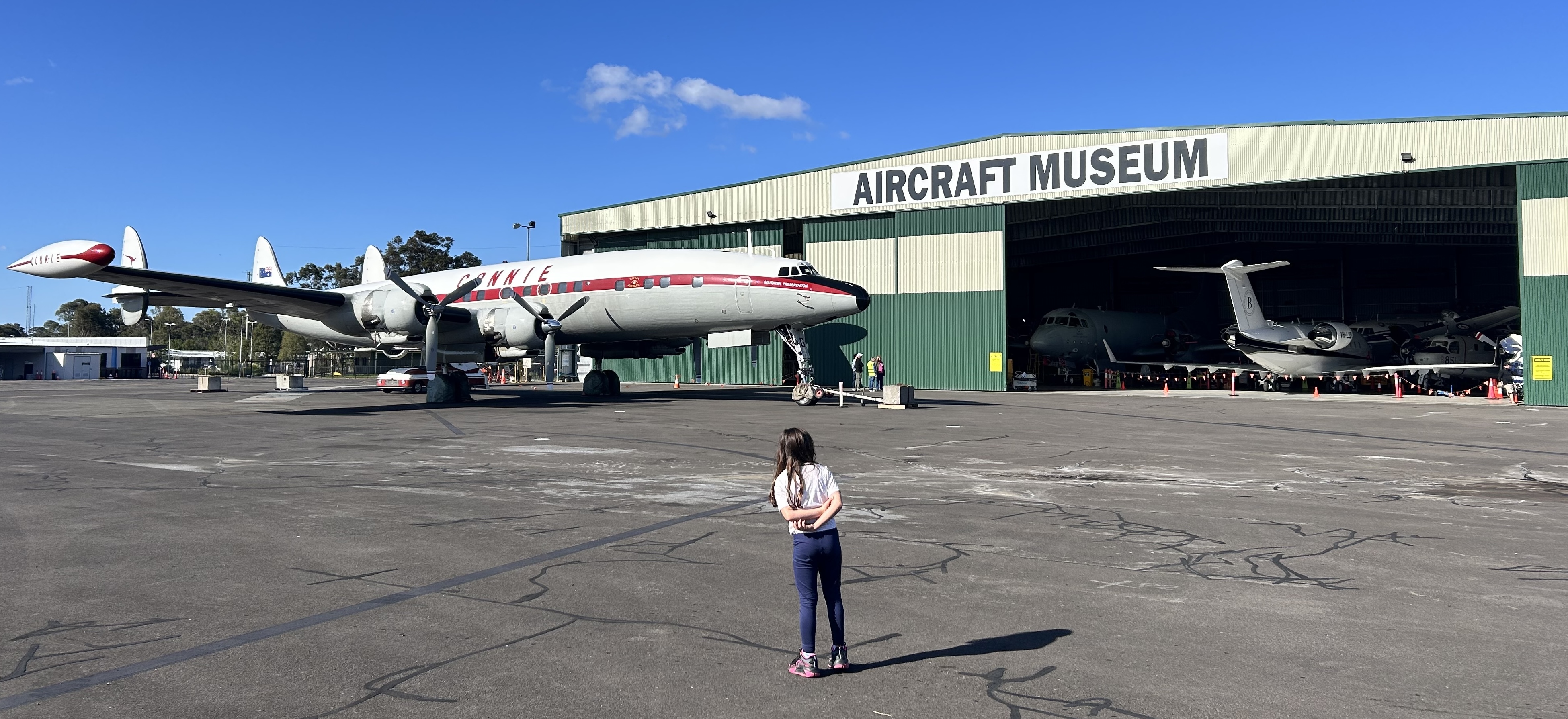
The HARS Aviation Museum is an all-volunteer group of aviation professionals and enthusiasts. Many are active or retired aviation personnel, but all someone needs to volunteer is dedication and a love of aircraft and history. They don’t receive any government funding and rely mainly on entrance fees and donations to fund the operation of the museum and the aircraft.
The idea for the museum originated in the 1990s when volunteers took a derelict Lockheed Super Constellation (Connie) from the Davis Montham aircraft graveyard near Tucson Arizona and restored it from almost nothing to beautiful flying condition and flew it across the Pacific to Shellharbour.
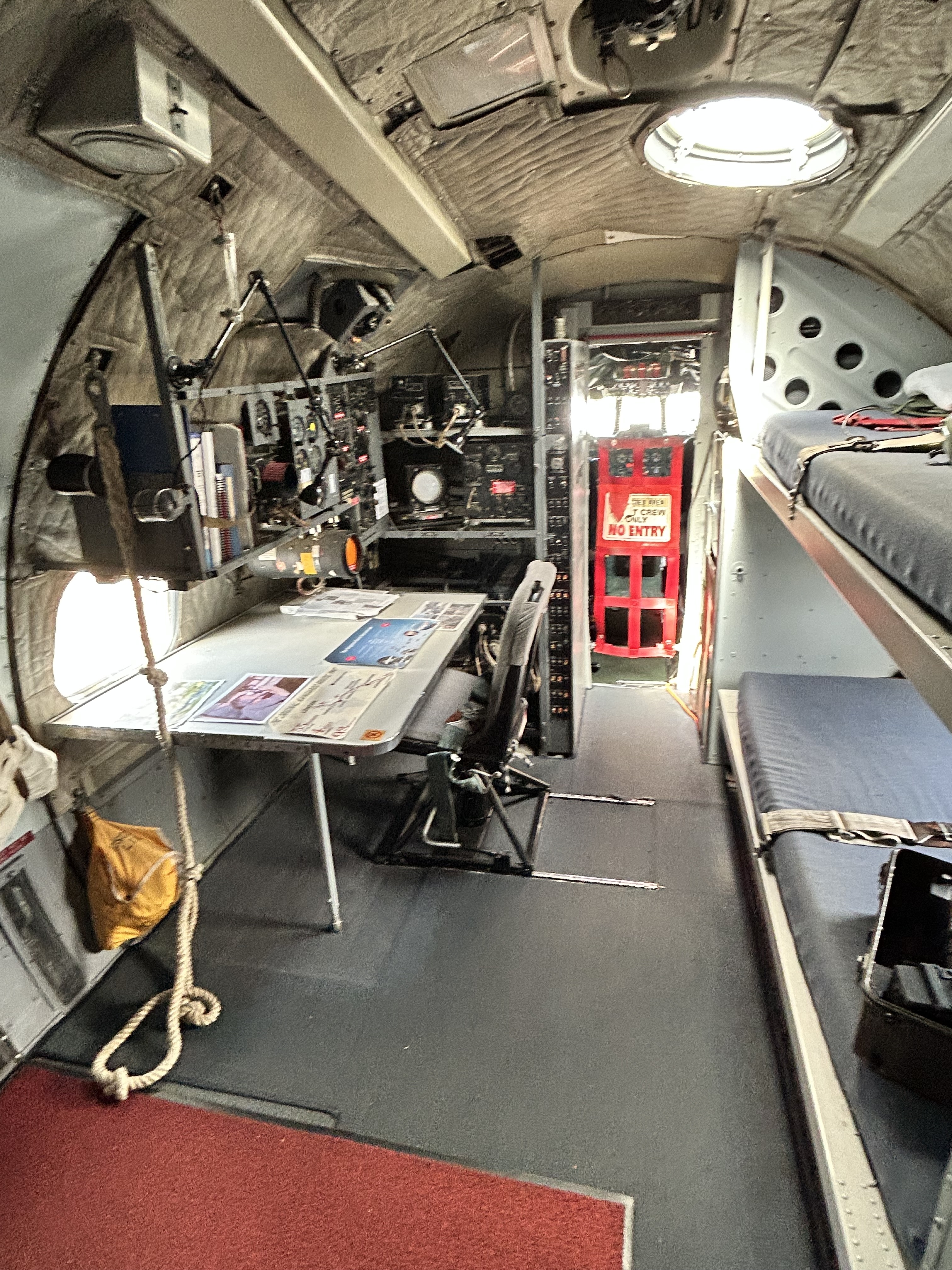
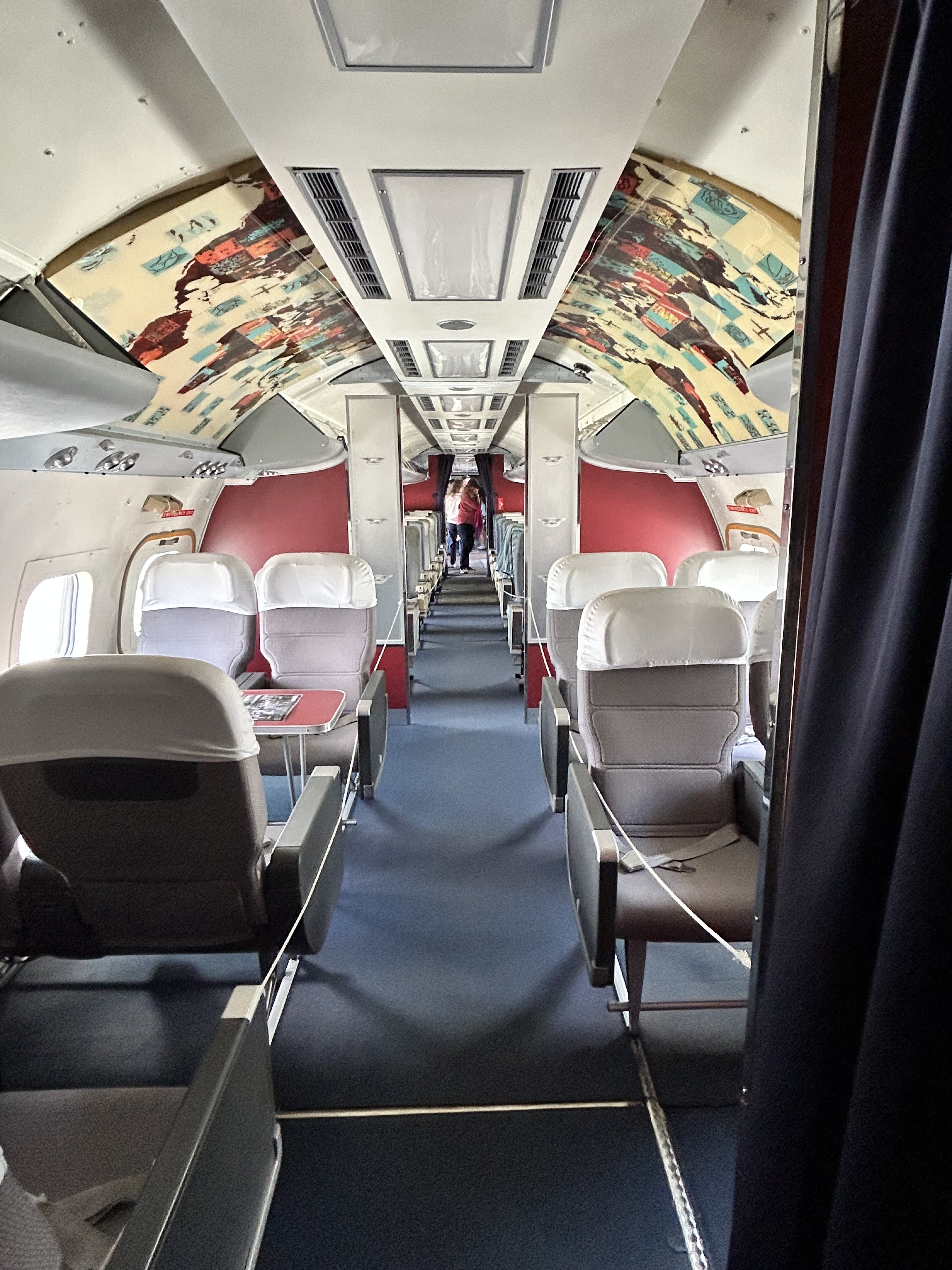
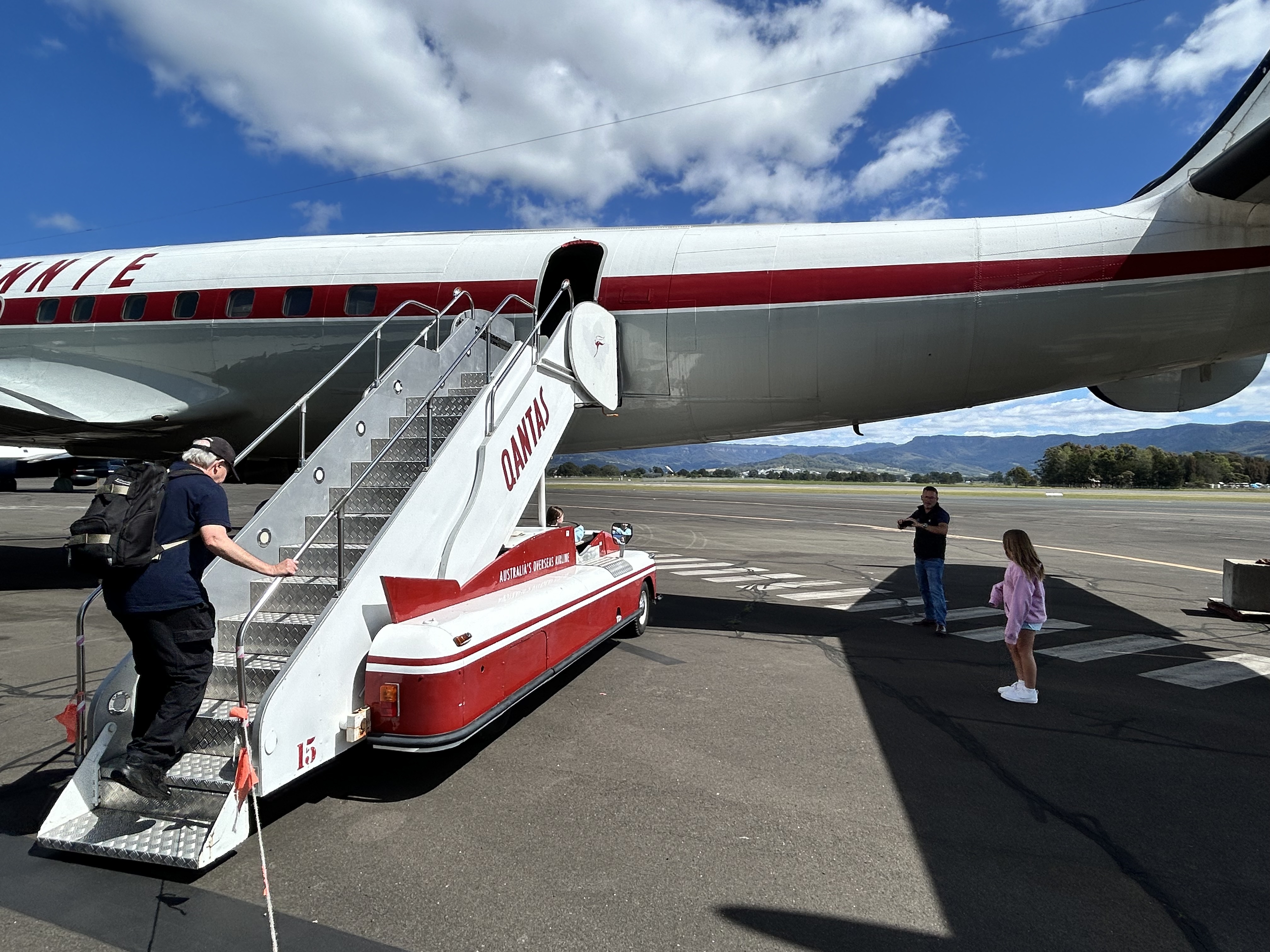
In addition to the Constellation the collection includes a 747-400 that flew both the longest flight and the shortest flight for any 747. The longest was its non-stop delivery flight from London to Sydney and the shortest was when it flew from Sydney to Shellharbour for its inclusion in the museum. And there are many other aircraft as can be seen in the photographs.
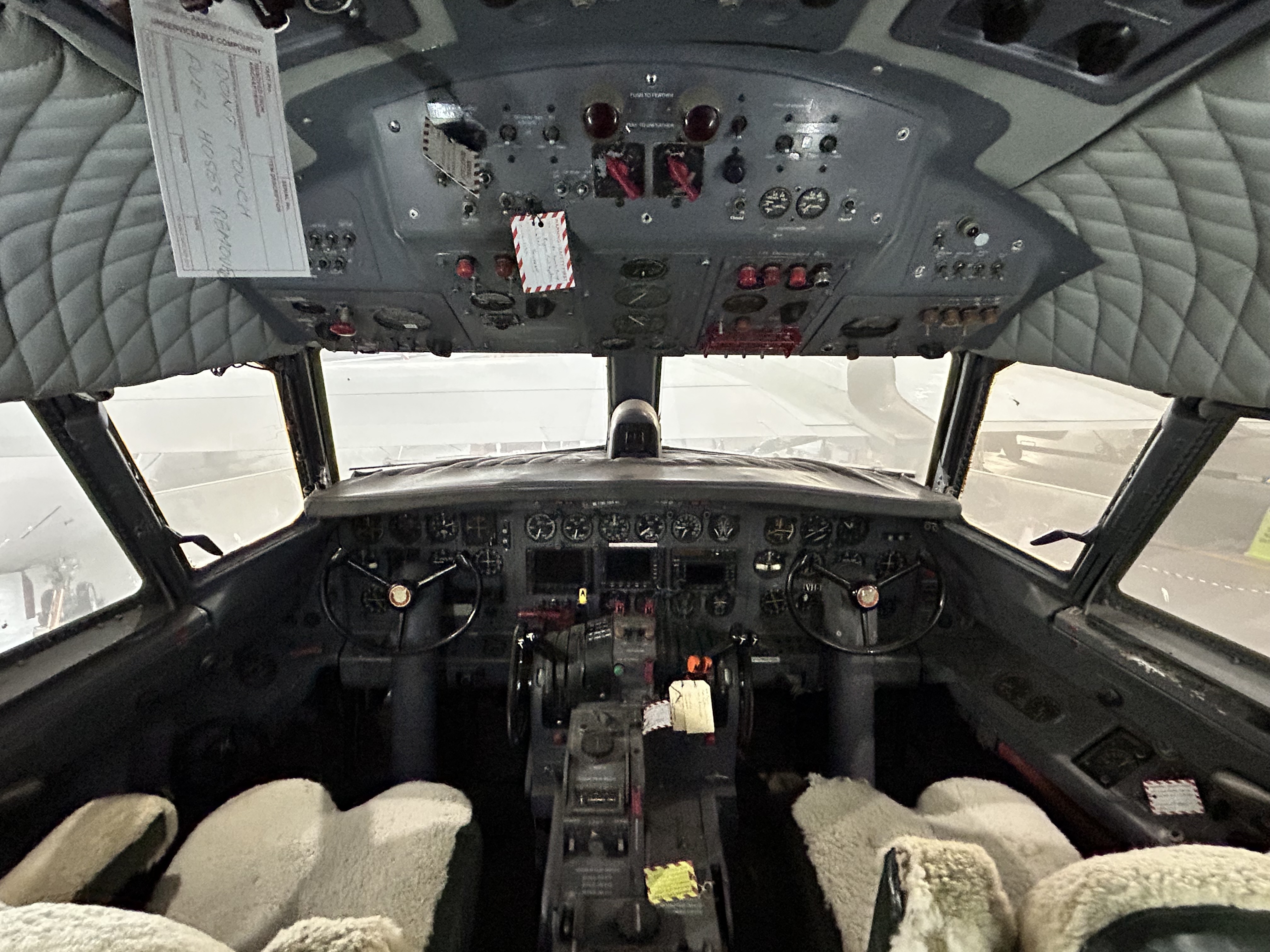


When we arrived, we were met by Peter Smith, who’d arranged the day’s tour for us and had just arrived back from the USA where he’d been dismantling the Boeing 707 that John Travolta has “donated” to the museum. It’s a big job but they hope to have it back in Australia sometime next year.
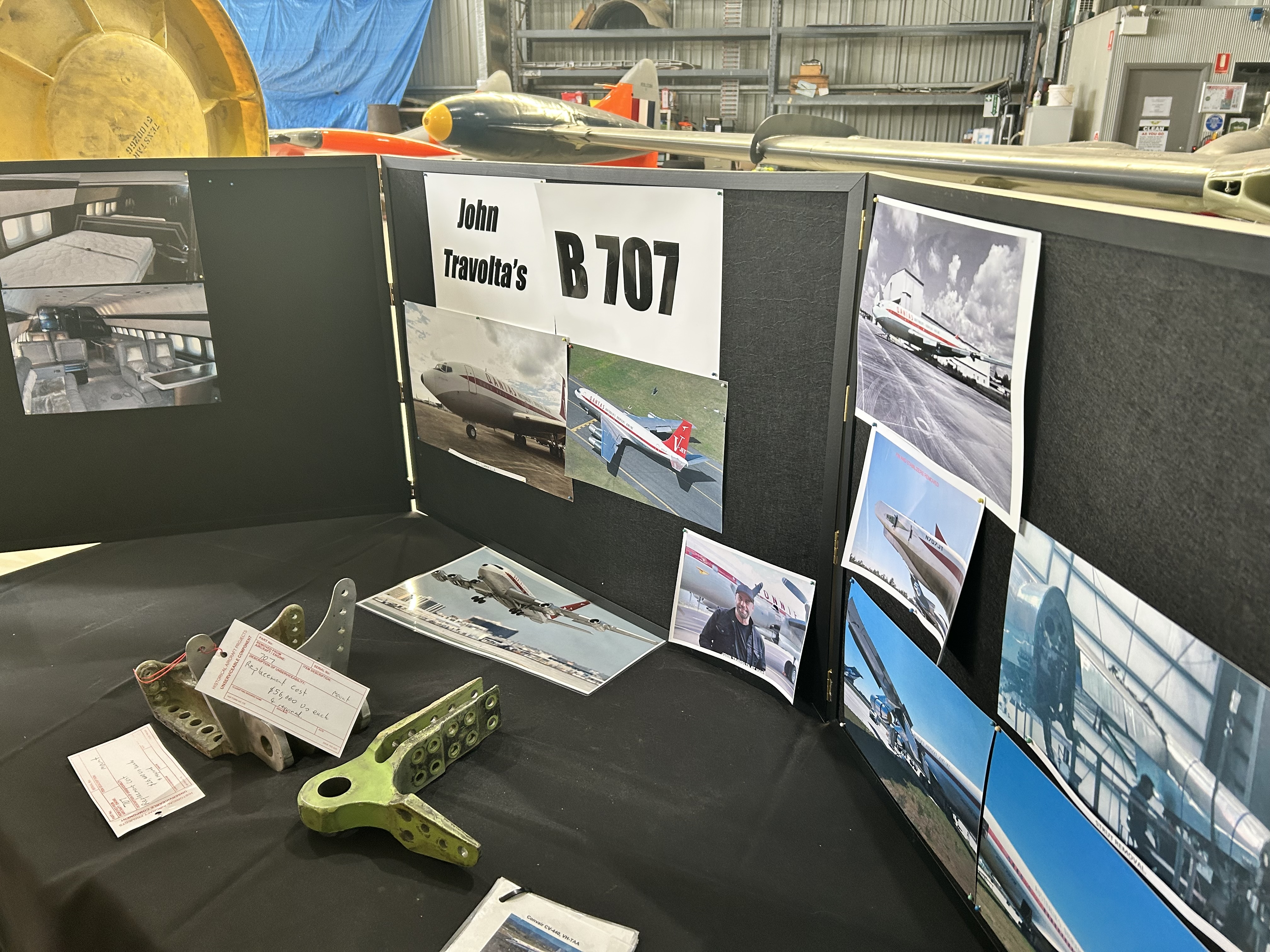
Our party was split into two groups. Peter led one and Steve led the other. What followed was a full-blown tour of the whole collection of restored and operating aircraft.

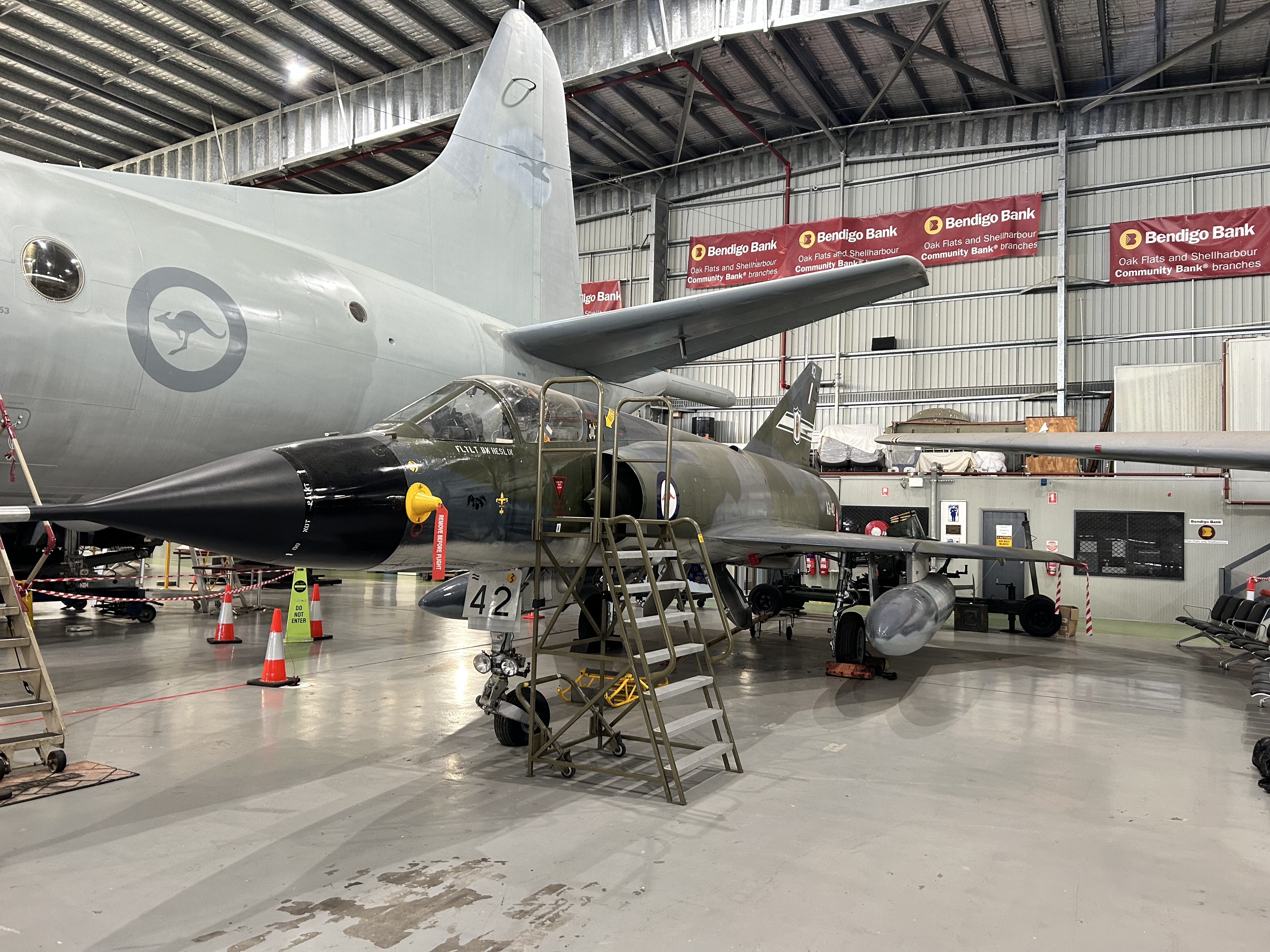
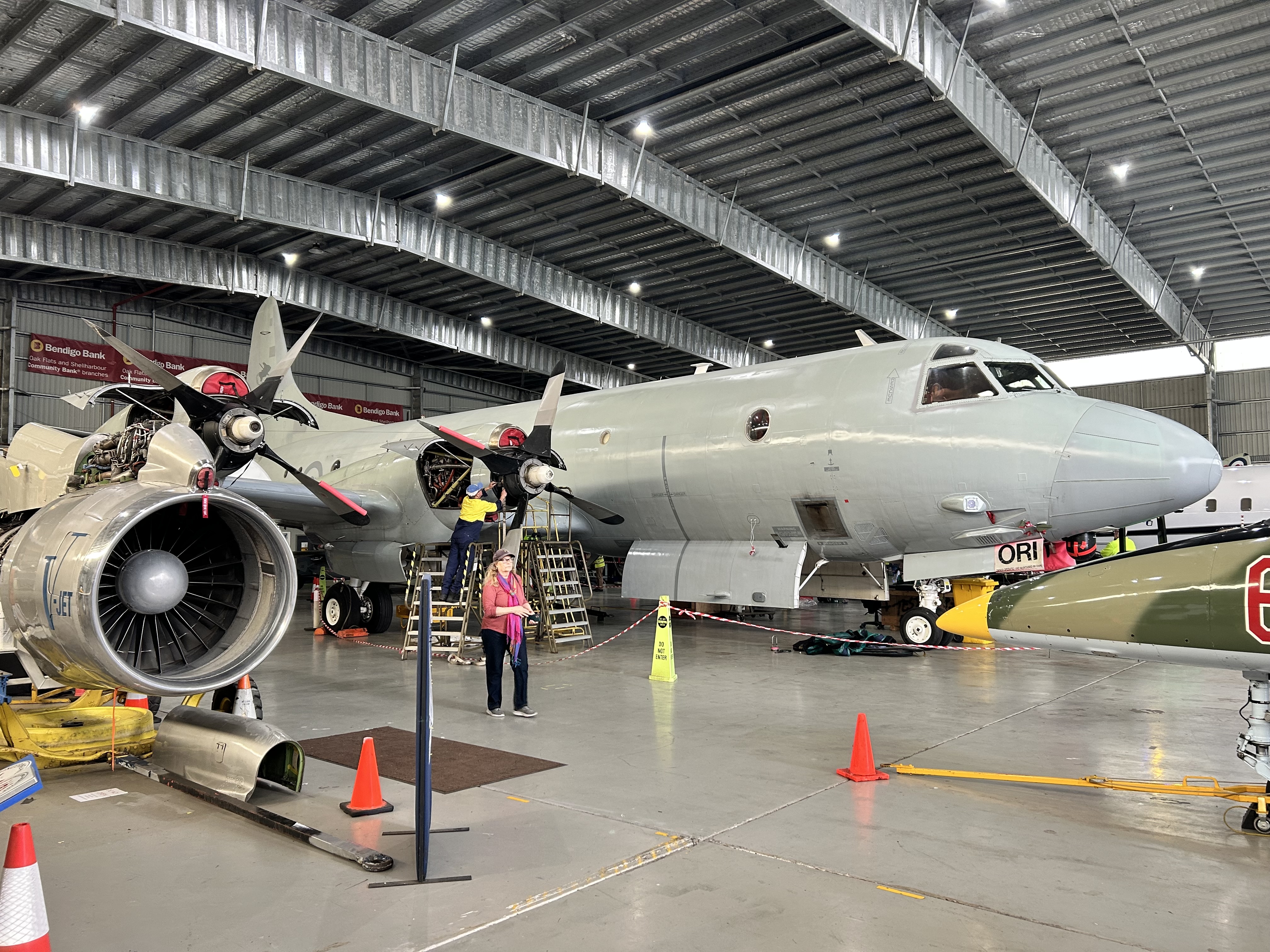
Two hours in we broke for lunch at the airport terminal cafe and then continued at 1pm for another two hours. What a day!
That evening was a quieter affair as we discussed the different routes we’d take to Cessnock the next day. Some would fly via Katoomba in the Blue Mountains while others would fly via the Richmond RAAF base.
On Wednesday 24th the weather indicated winds of up to 40 knots over the Blue Mountains so we could expect to encounter turbulence and mountain waves if we were flying too low. So, I planned for 6500ft and we took off, climbing over Dapto to almost that level before heading west towards Mittagong.
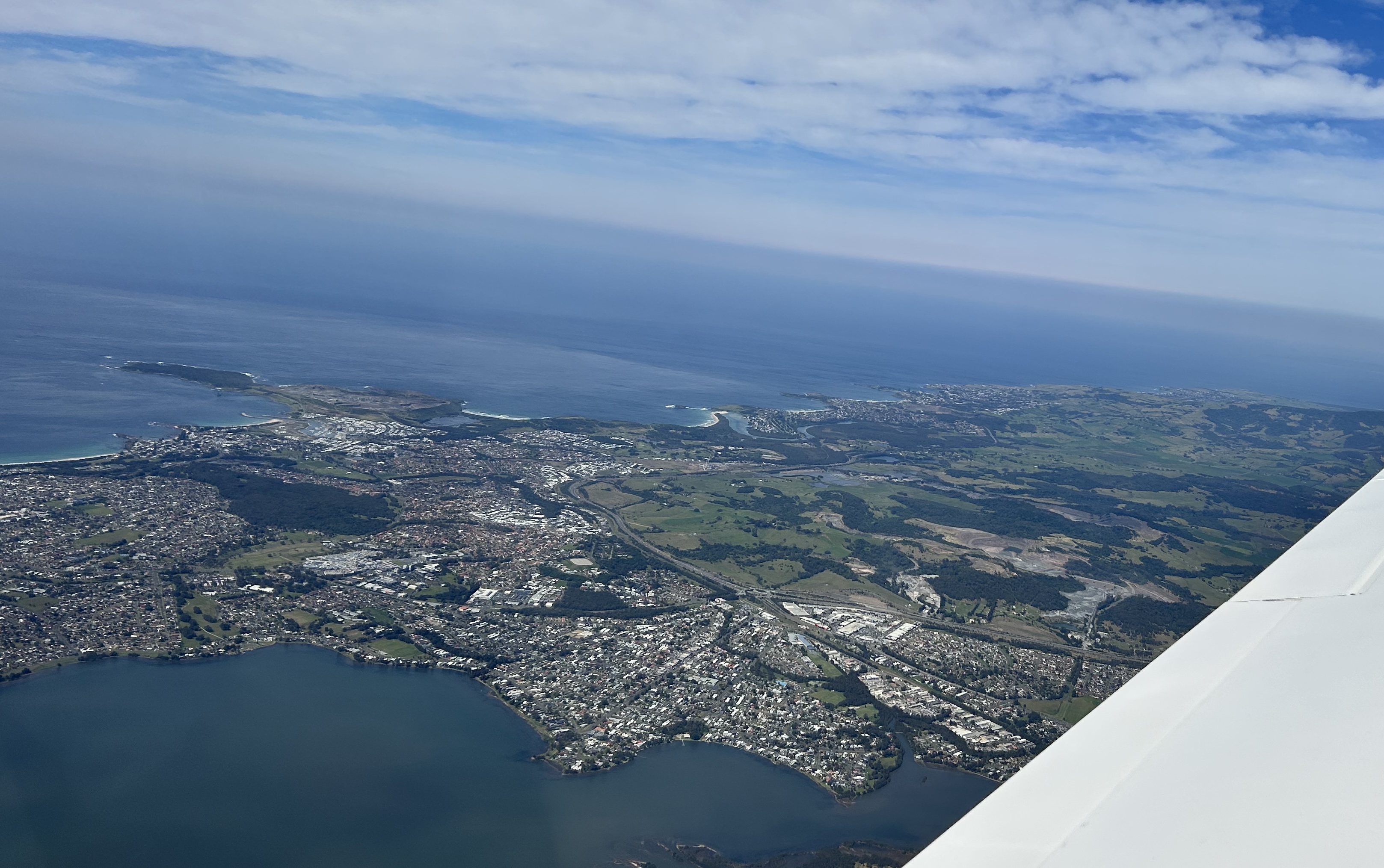
Turning north at Mittagong we flew over the Blue Mountains, with just a little bit of turbulence caused by the wind blowing over the peaks below us.
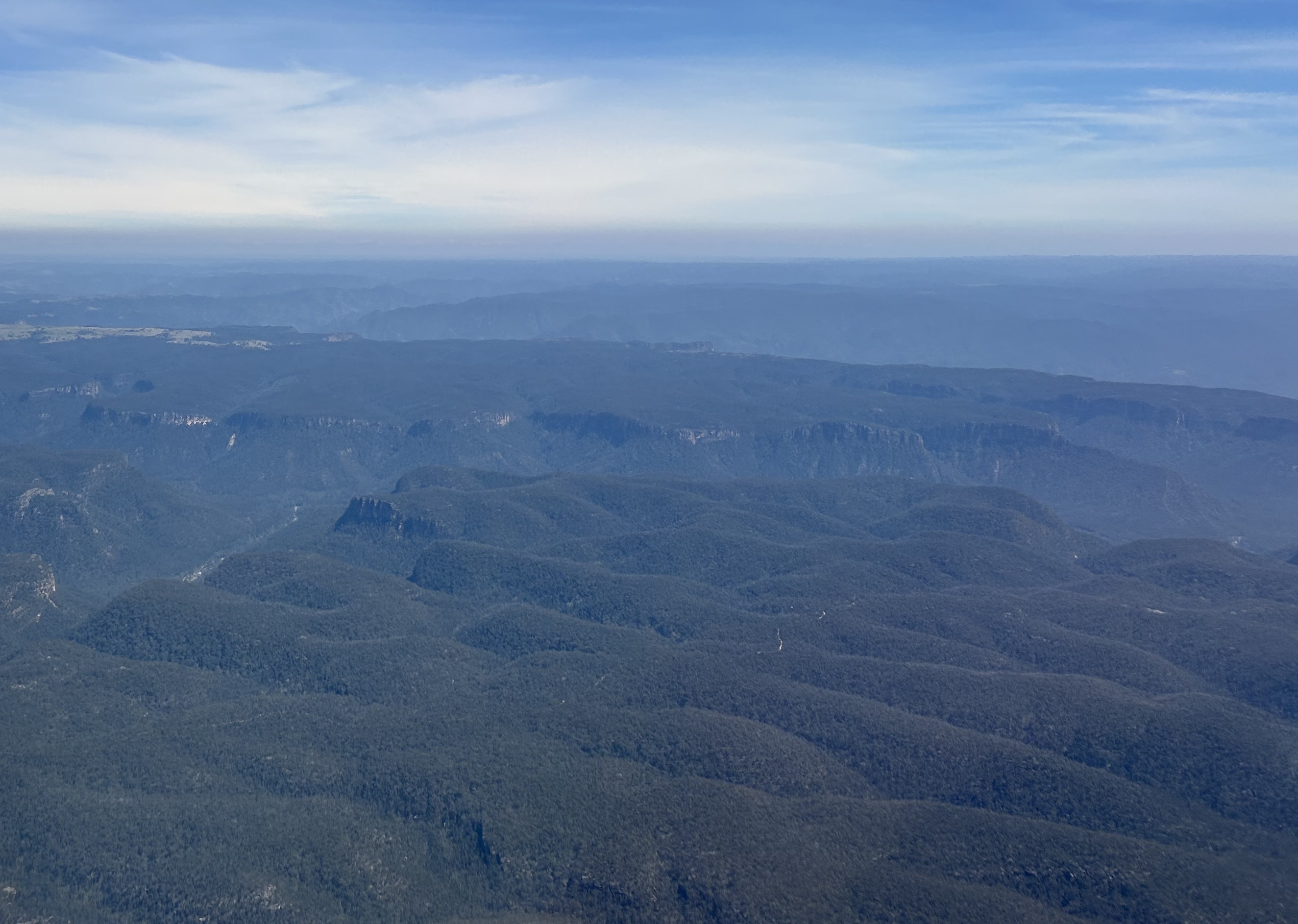
At Katoomba we tried, and failed, to spot the Three Sisters (but you may be able to spot them on the photo (thanks Sam). It was a bit bumpy but still a very scenic flight.
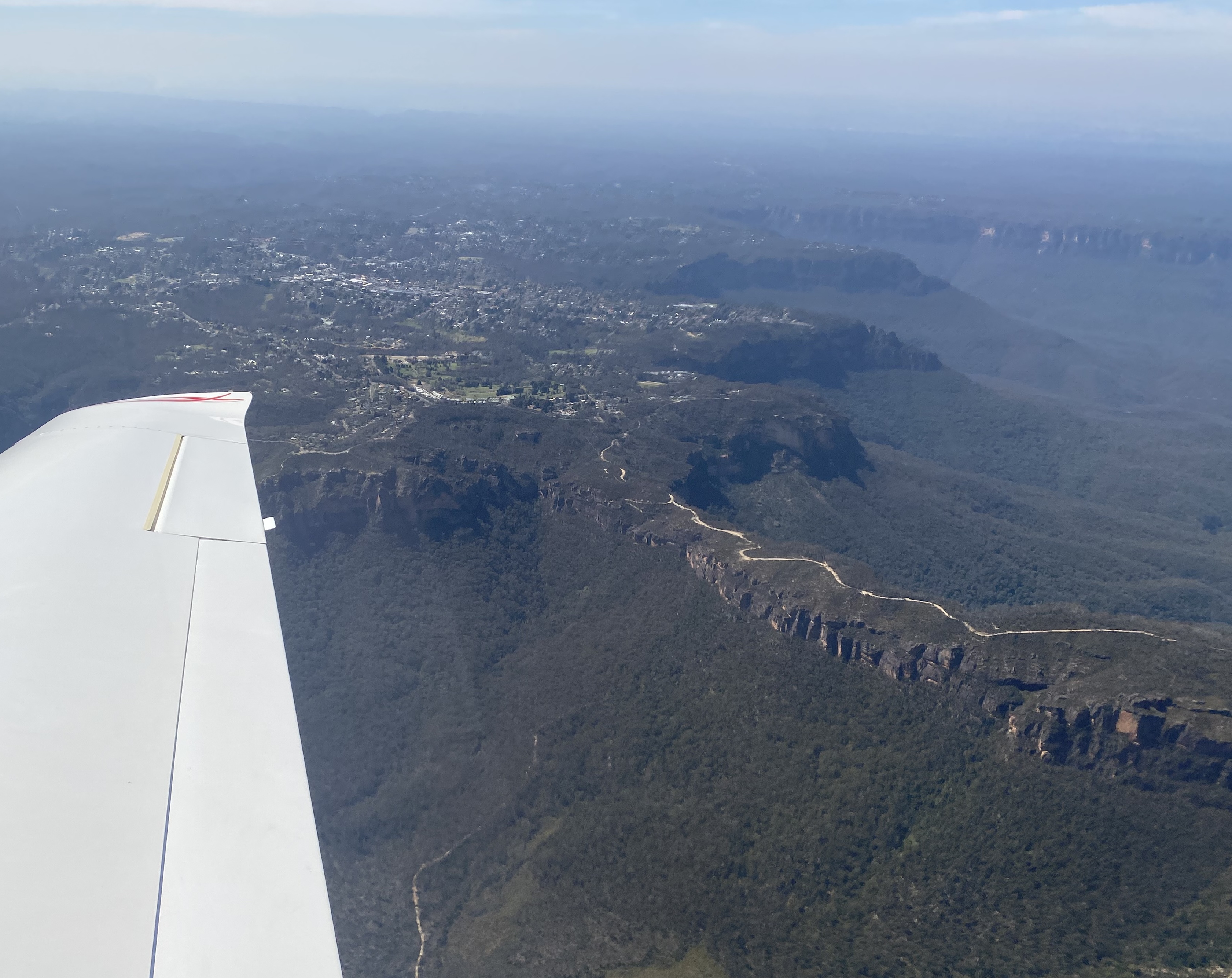
Tracking for Putty we continued over the Blue Mountains and were amazed at the extent of wilderness that is located so close to Sydney. The inhospitable country of the dividing range west of Sydney forms a real barrier and it became clear to us why it took the early explorers so many years to find a way through to the western plains.
Descending though the turbulence into Cessnock in the Hunter Valley we heard a bit of traffic that could have led to some conflicts but Mike was on the radios making sure that everyone else knew where we were and what our intentions were while we had some idea of what the other pilots were up to.
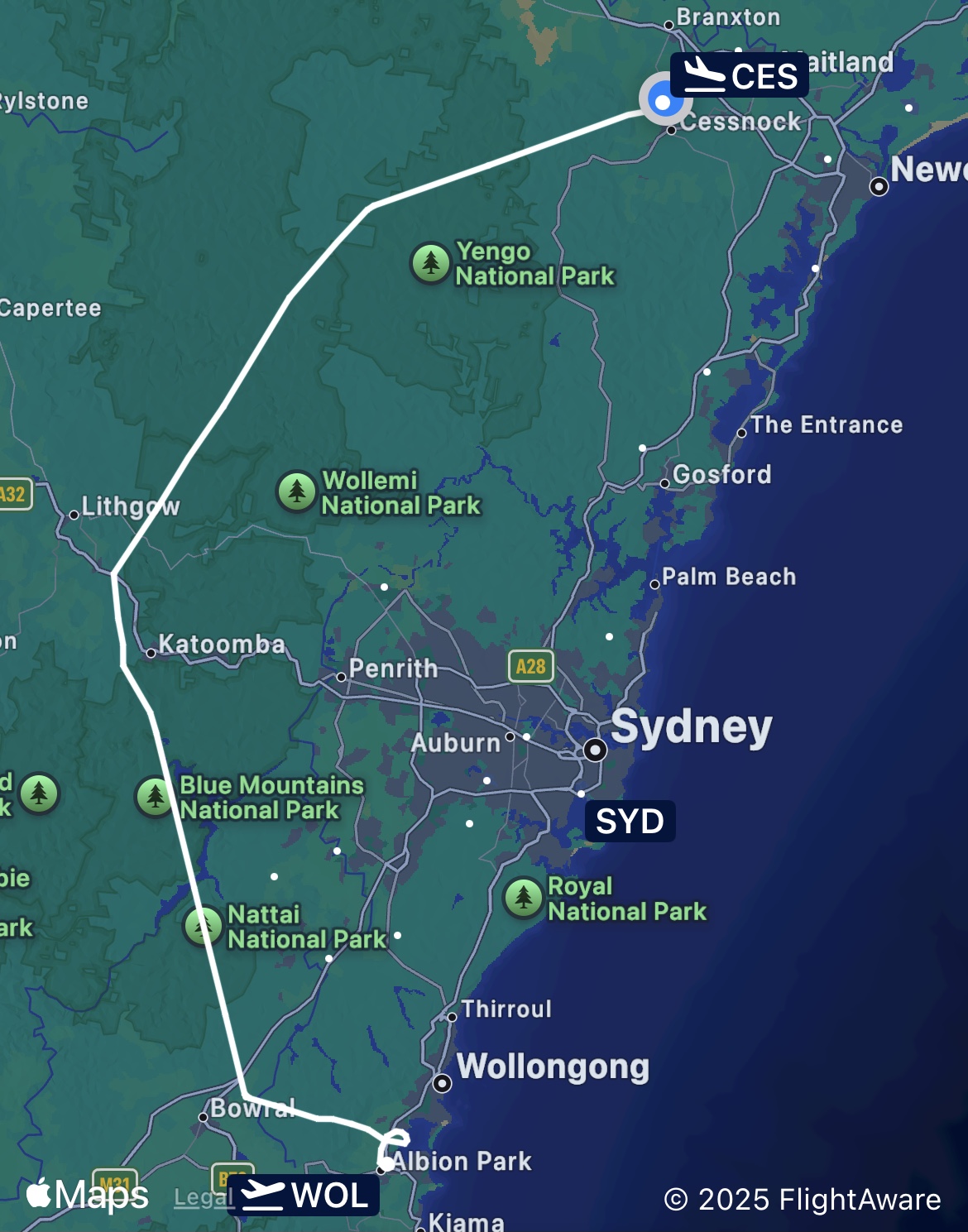
On approach there was a bit of turbulence and I decided to go around which was inconvenient given that there were already four other aircraft in the circuit or wanting to join it. But it is what it is and when you don’t like your approach/landing you just go around. The second approach was much smoother and we landed successfully. We’d made a booking at Peterson House Restaurant (thanks for the tip Len) about 20 minutes’ walk from the apron, and at 1pm we were sitting down to some glasses of local wine and what was undoubtedly the best meal I’d had in a long time.

At 3pm we were transported to the Rydges Hunter Valley Resort, just across the road from the airport, where we spent two nights. It was great accommodation, a bit more upmarket than the Oaks in Shellharbour with a massive pool with kids water play area, an “adults only” lap pool, its own brewery, golf course, spa, conference rooms, tennis and pickle ball courts.
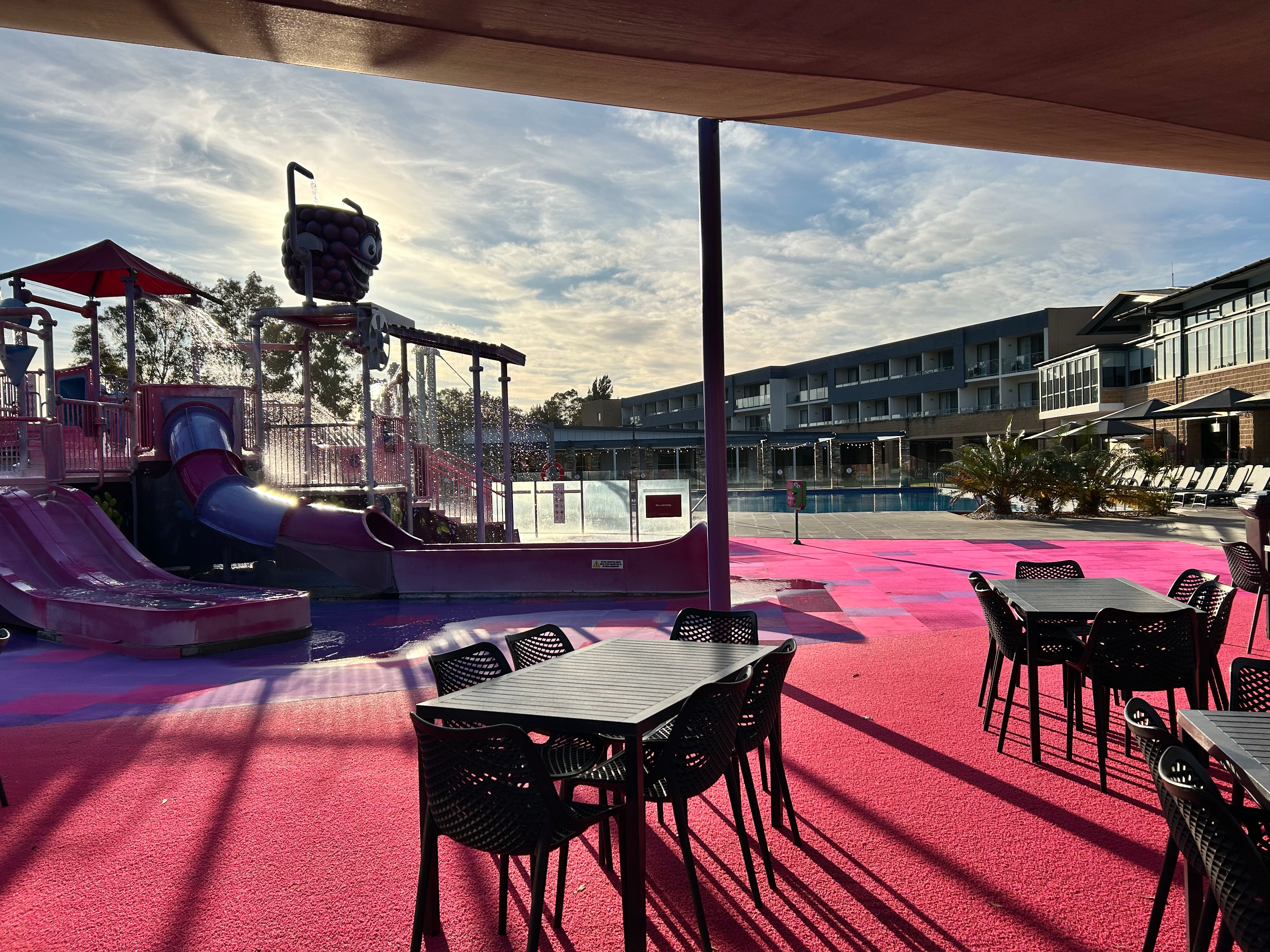
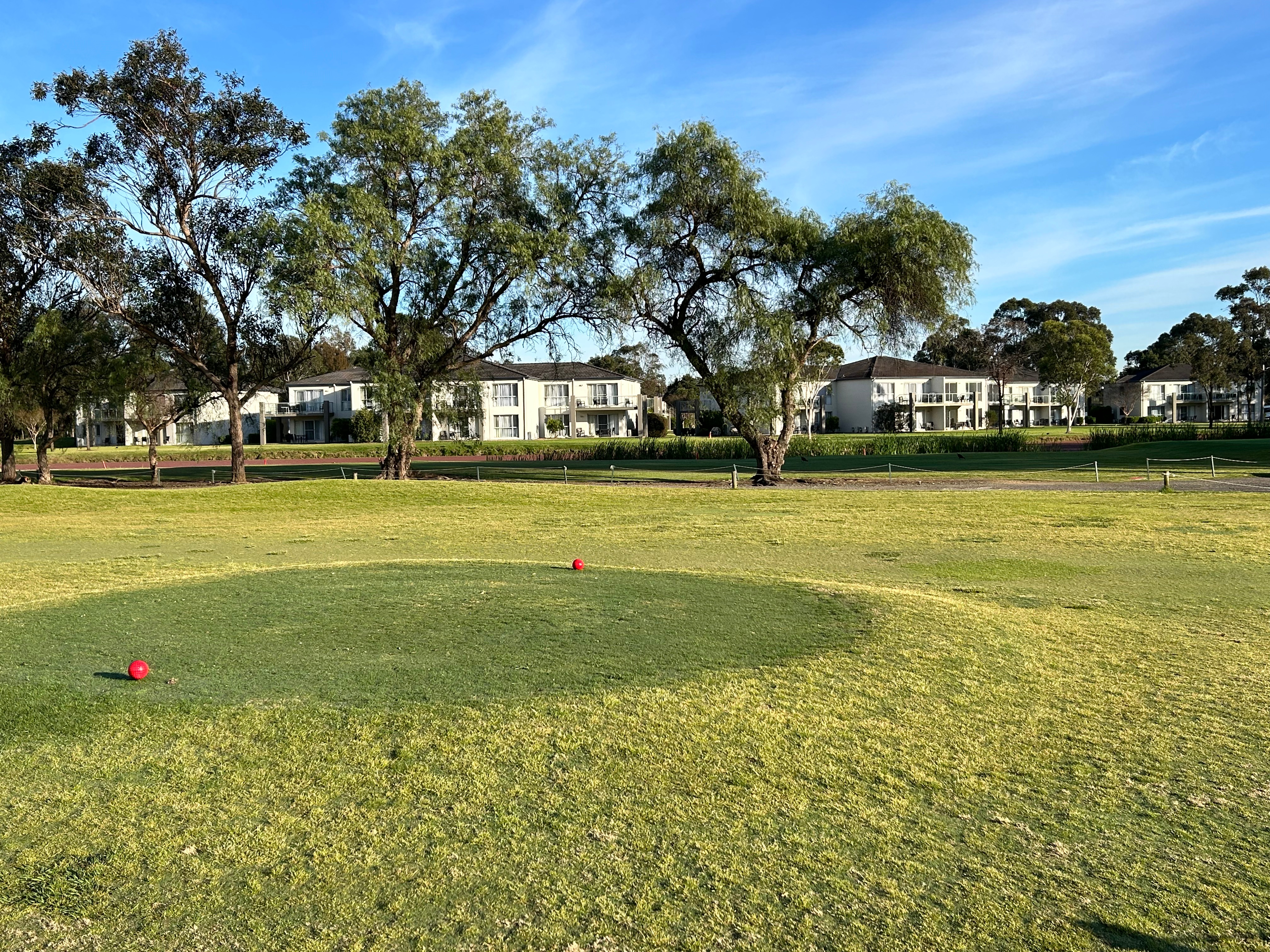
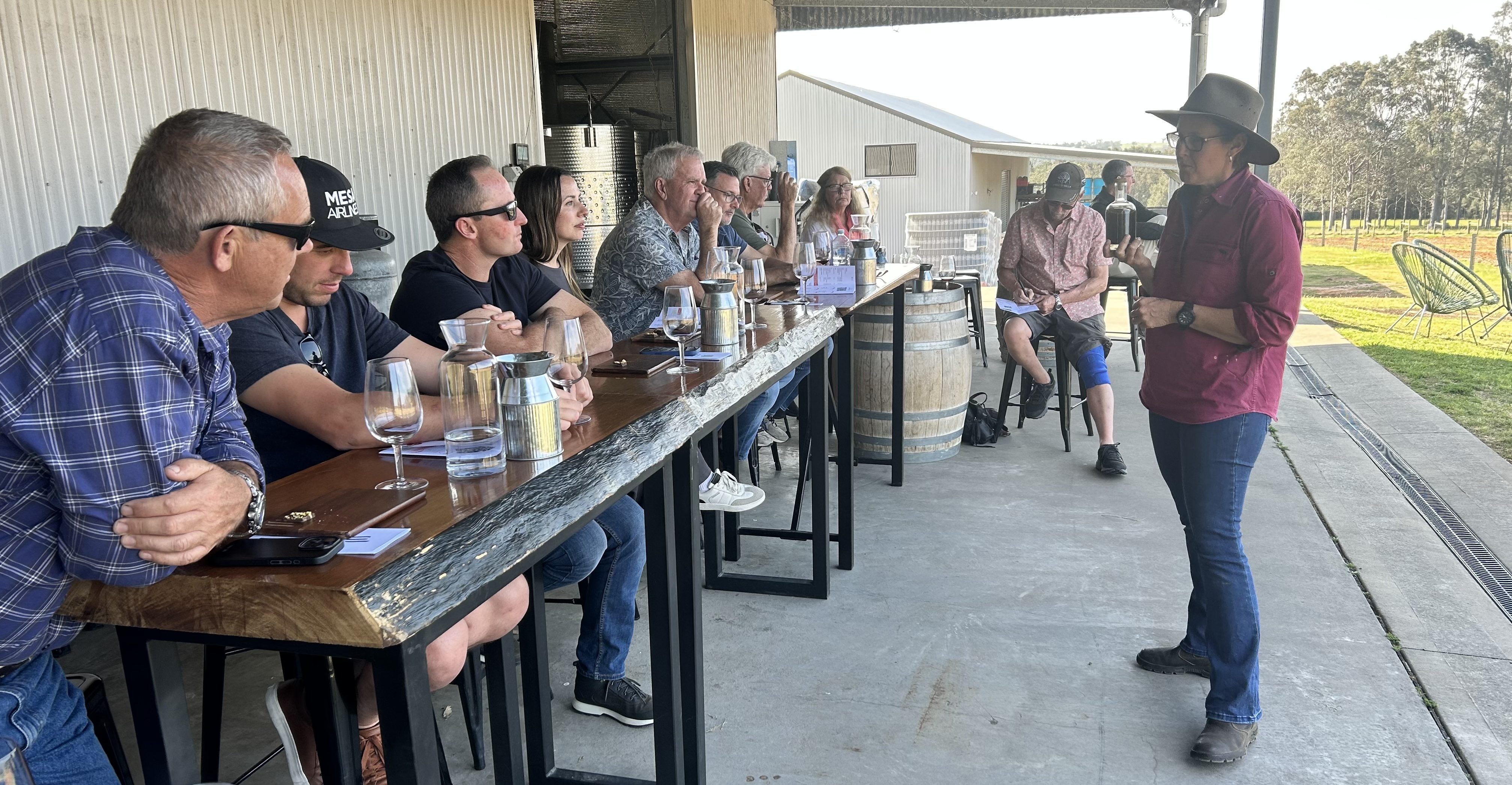
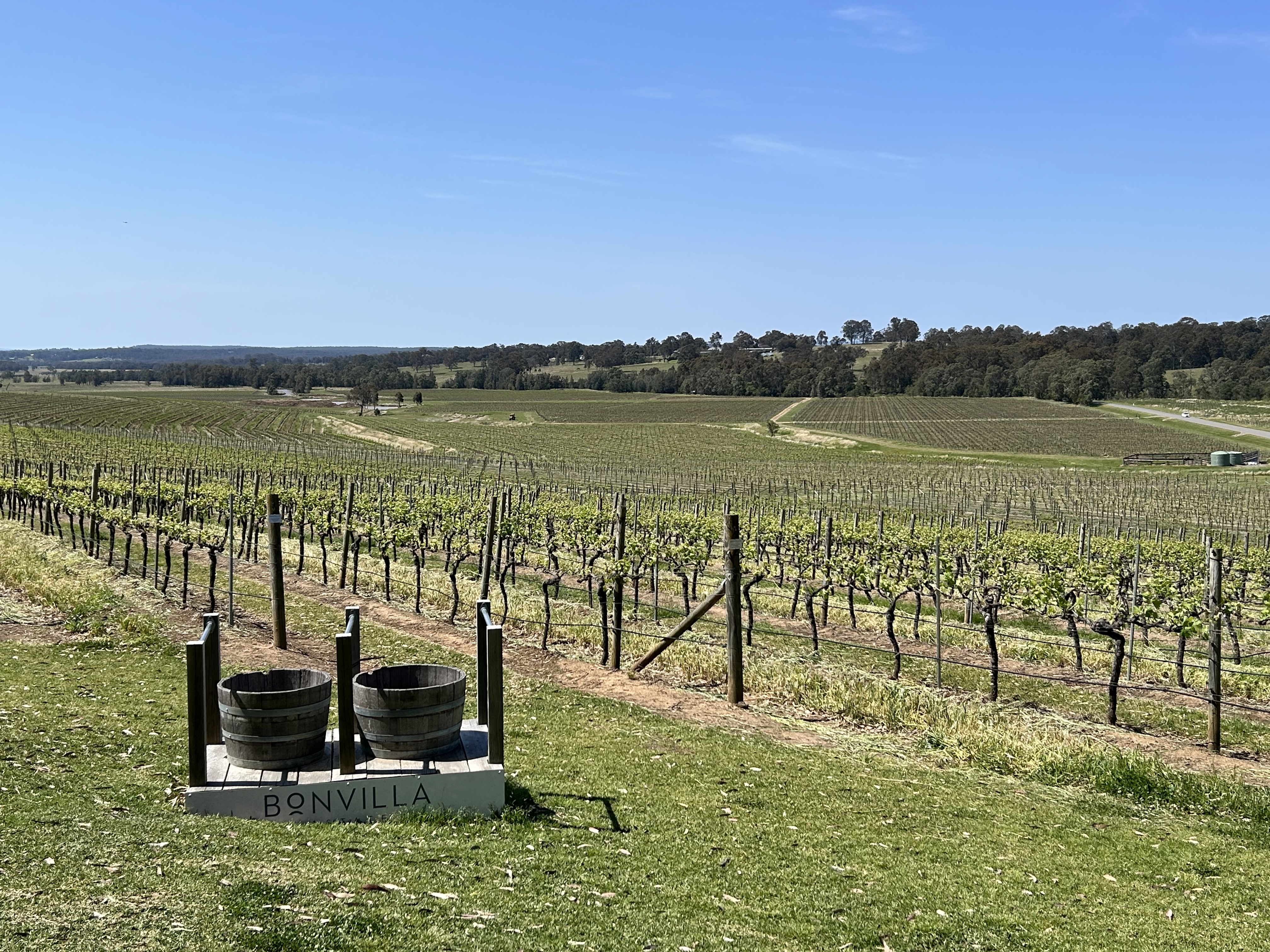
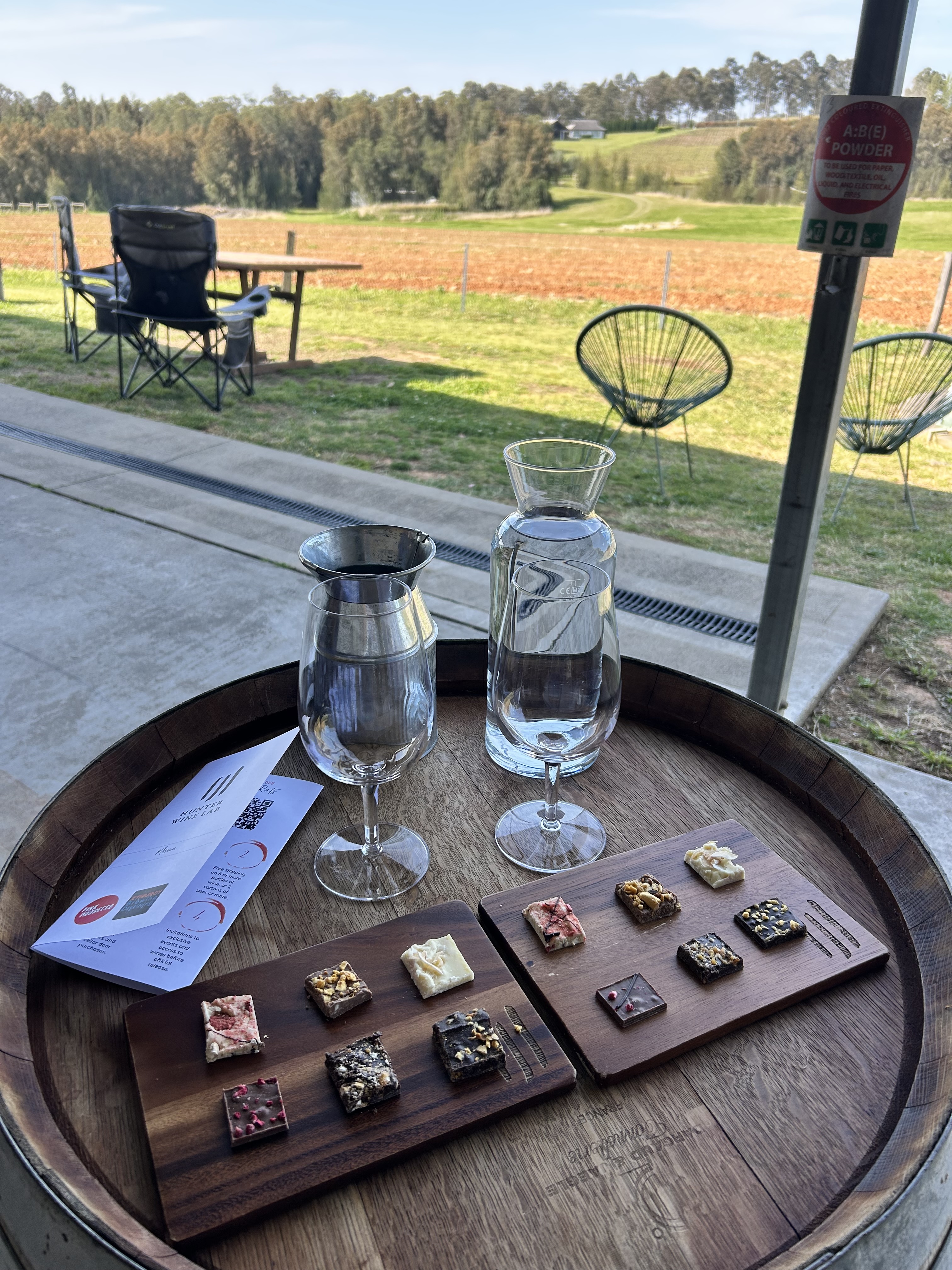
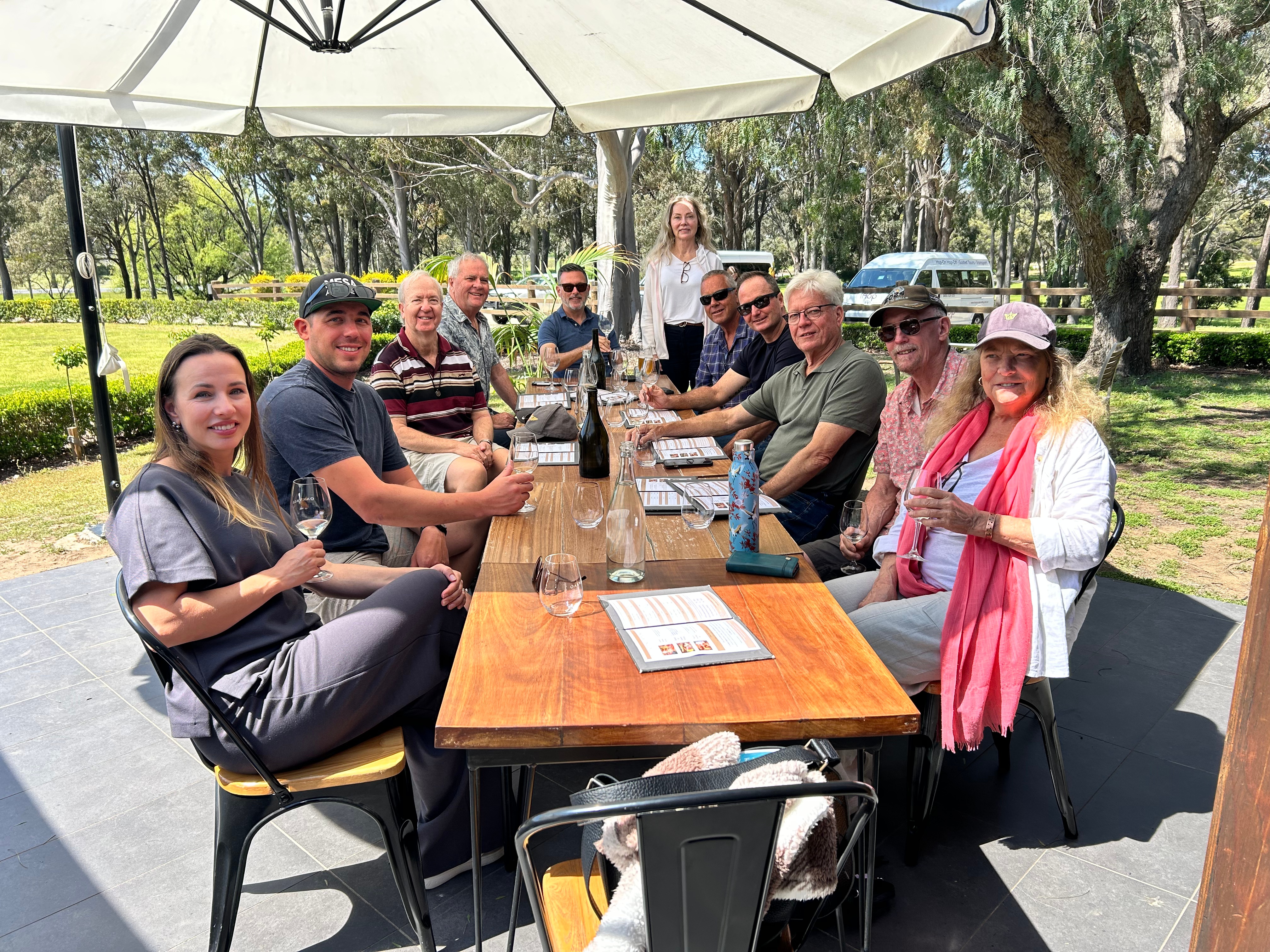
Thursday was a chance to sample the Hunter Valley wines on a winery tour in a bus. It was a lovely day enjoying the views in the sunshine of the Hunter Valley.
Friday 26th September it was time to head for home so we checked out early and were taking off from Cessnock by 9am. This time I elected to go IFR at 7000ft but first had to obtain a clearance to fly through the Williamtown RAAF controlled airspace. So we tracked towards Scone for about 10 minutes after take-off until the clearance became available and then turned and flew direct to Kempsey.
On this leg Louise Hoey had joined us, as her pilot Garry had decided to part company with the rest of the company and head for Rylstone Airpark where he’d meet his brother. So, with an extra passenger we couldn’t load more than 180 litres of fuel due to the weight limitations and had to stop at Kempsey to top up the tanks. A practice RNP approach led us straight in on RWY04.
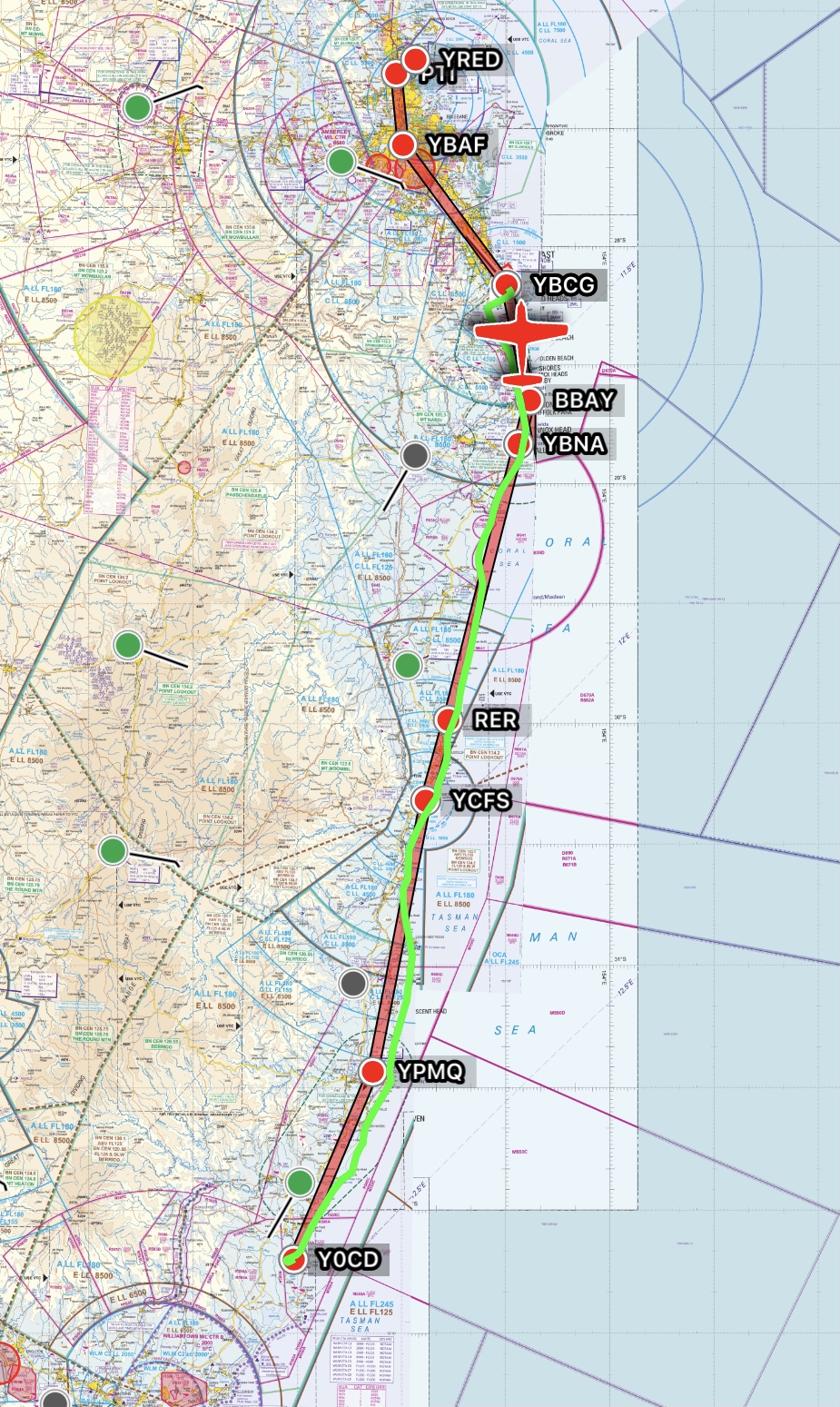
Mike flew the last leg from Kempsey to Redcliffe via Coffs Harbour to Ballina and Byron Bay.
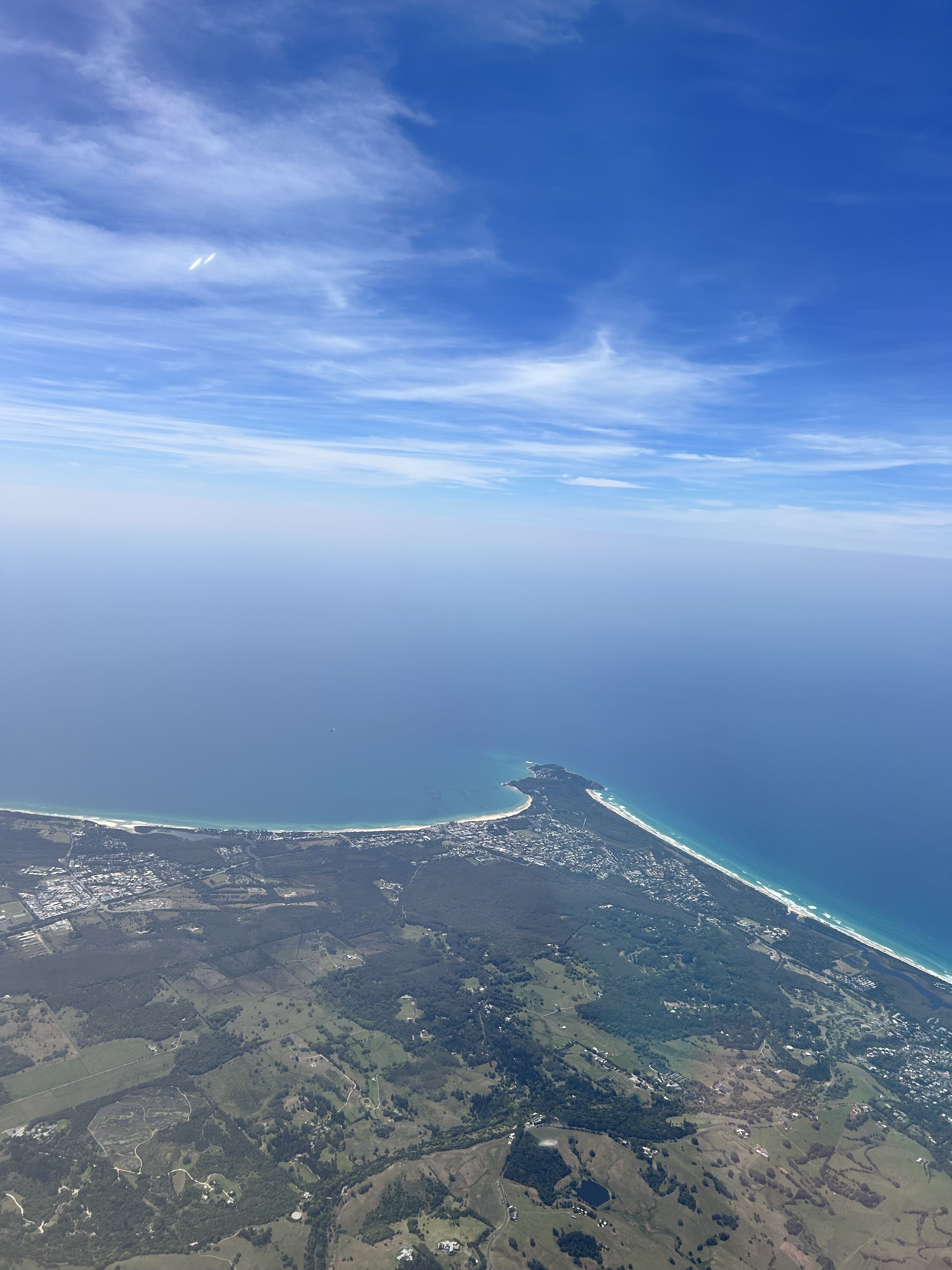
From there we flew over Pottsville and Tweed Heads.
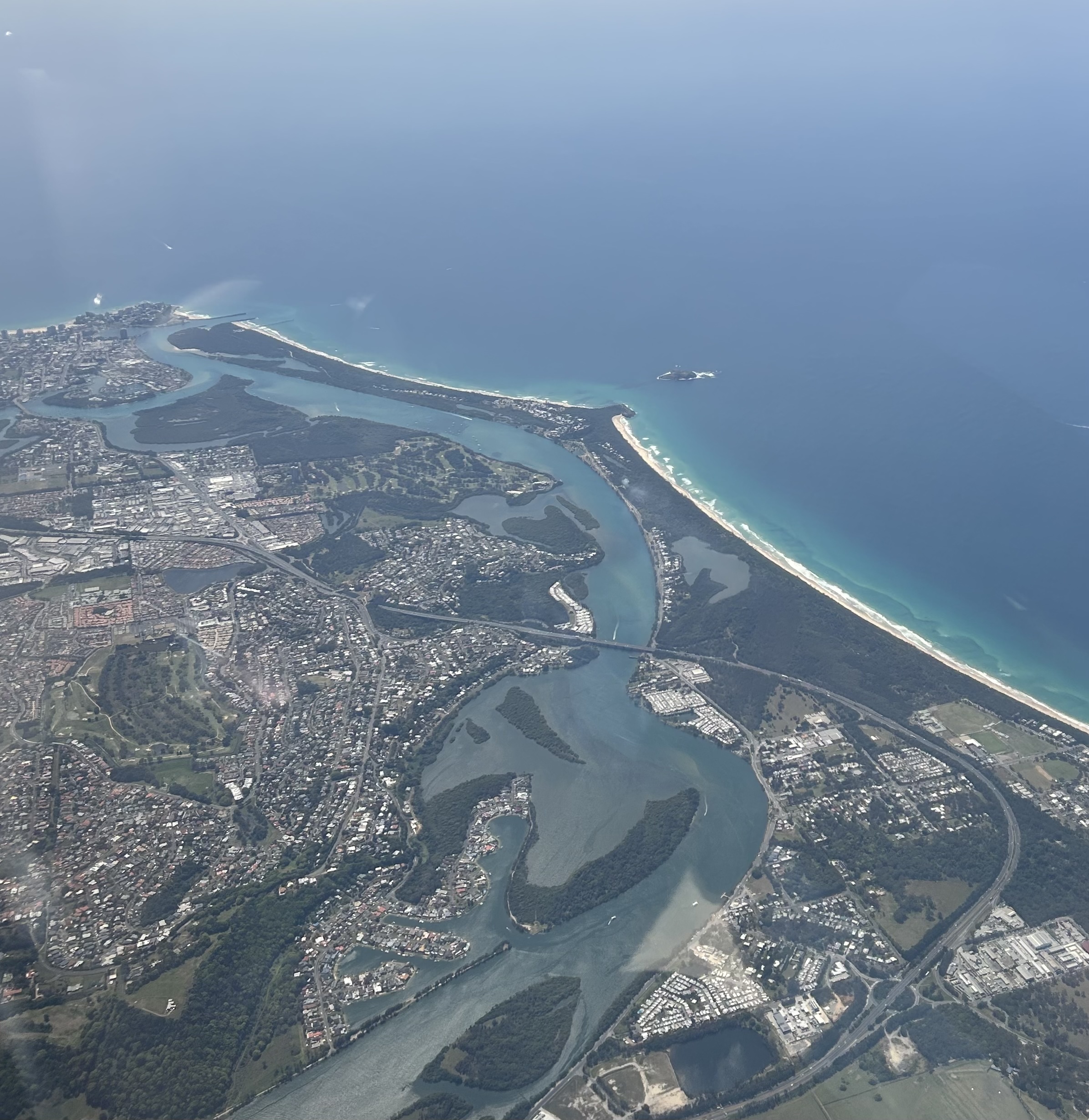
A few minutes later we were over the Broadwater at the Gold Coast.
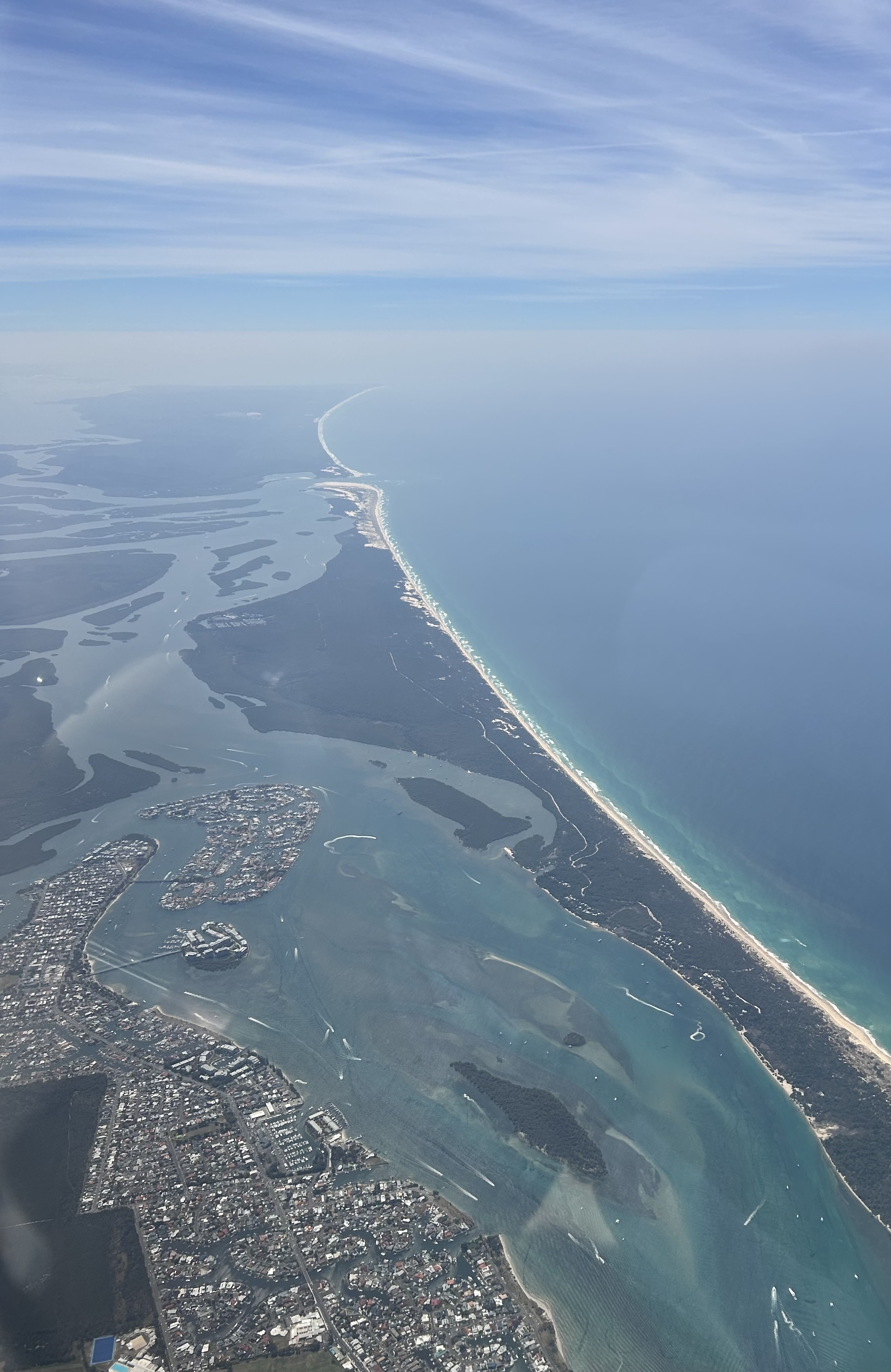
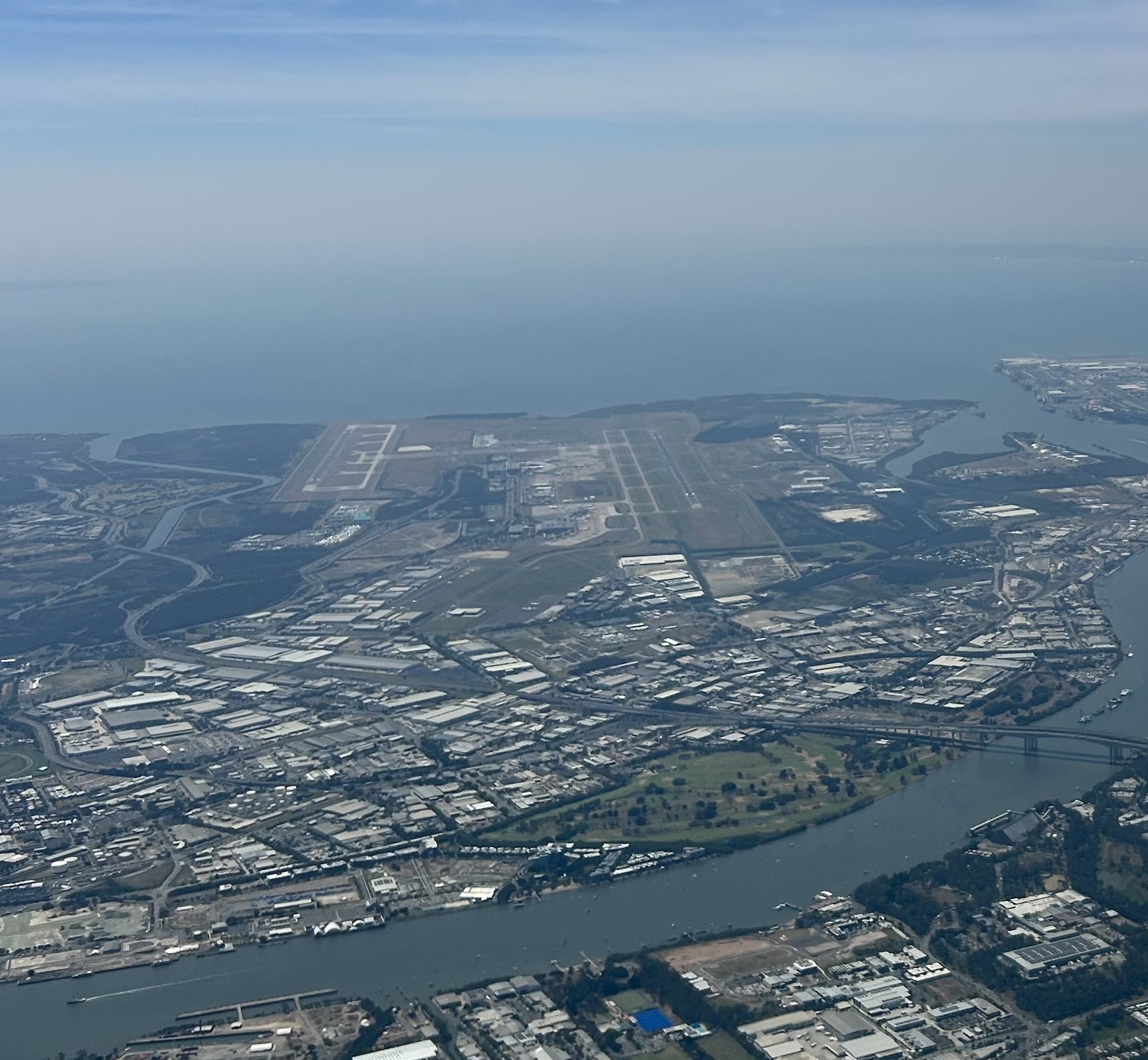
ATC cleared us to fly directly over the Brisbane CBD with view to the coast and Brisbane International Airport.
At 12 noon we touched down and put MSF away in the hangar. The end of another great flyaway.
 PrivatierAir