
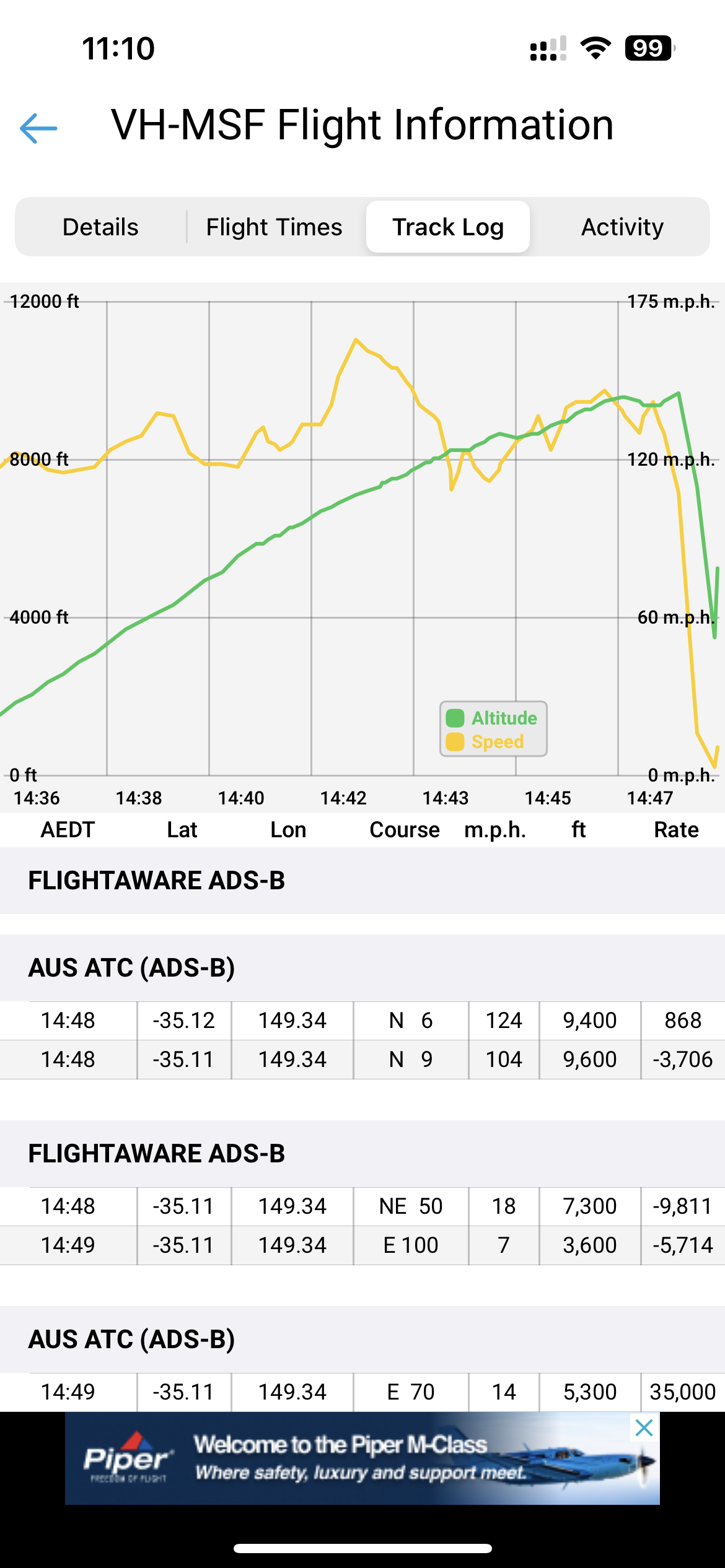
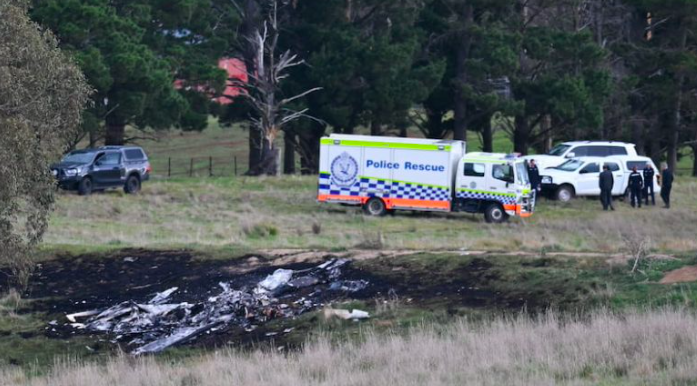
Friday 6th October 2023 seemed like a normal day. I drove out to Redcliffe to prepare for the monthly aeroclub barbecue. We needed a new bottle of gas for the barbie so I went down to Bunnings to pick one up. On my return to the club Paul Smeath was standing outside the clubhouse looking a bit strange. “Did you hear about MSF?” he asked. “No, what about it?” “It crashed near Canberra with all killed”. What? He was serious. Mike Cahill’s plane MSF, that I had flown for hundreds of hours, had indeed crashed. It had fallen from 9500ft in 60 seconds with one of our club members, and three of his grandchildren on board. All killed. The aircraft was incinerated.
What would you do in such a situation? I went into denial, tried to pretend it hadn’t happened and carried on with the barbecue in a bit of a daze. Some of the attendees had also heard. Others were blissfully unaware so why not let them stay that way? For tonight at least. Mike Cahill had been on his way to the club when he received the call from the police and was now heading home. I wouldn’t hear from him for a few days. He needed time to process what had happened. As we all did. Time to question what could have gone wrong, what could anyone have possibly done to prevent this tragedy?
I spent the next two weeks in a bit of a stupor. Not sure how I should react when people asked me what had happened. Eventually I decided it was best to explain to anyone who was really interested what I thought was the most logical explanation of what could have happened. It may not be right but I had to try to rationalise it. Could it happen to us? How could I avoid getting into a similar situation? How could I otherwise get back into another light aircraft? And take family and friends with me?
It sounded like an icing encounter to me. The flight tracker app showed they climbed out of Canberra to 9500ft and he’d obviously turned on the auto pilot. The flight tracks were too straight to be hand flown. He would have been in controlled airspace as he climbed and would have been given headings to fly by ATC. There were a couple of turns as they climbed and then when they were reaching about 9000ft the track appeared to weave, ever so slightly. Not straight any more. Then it made a sudden 180 degree turn before falling from the sky.
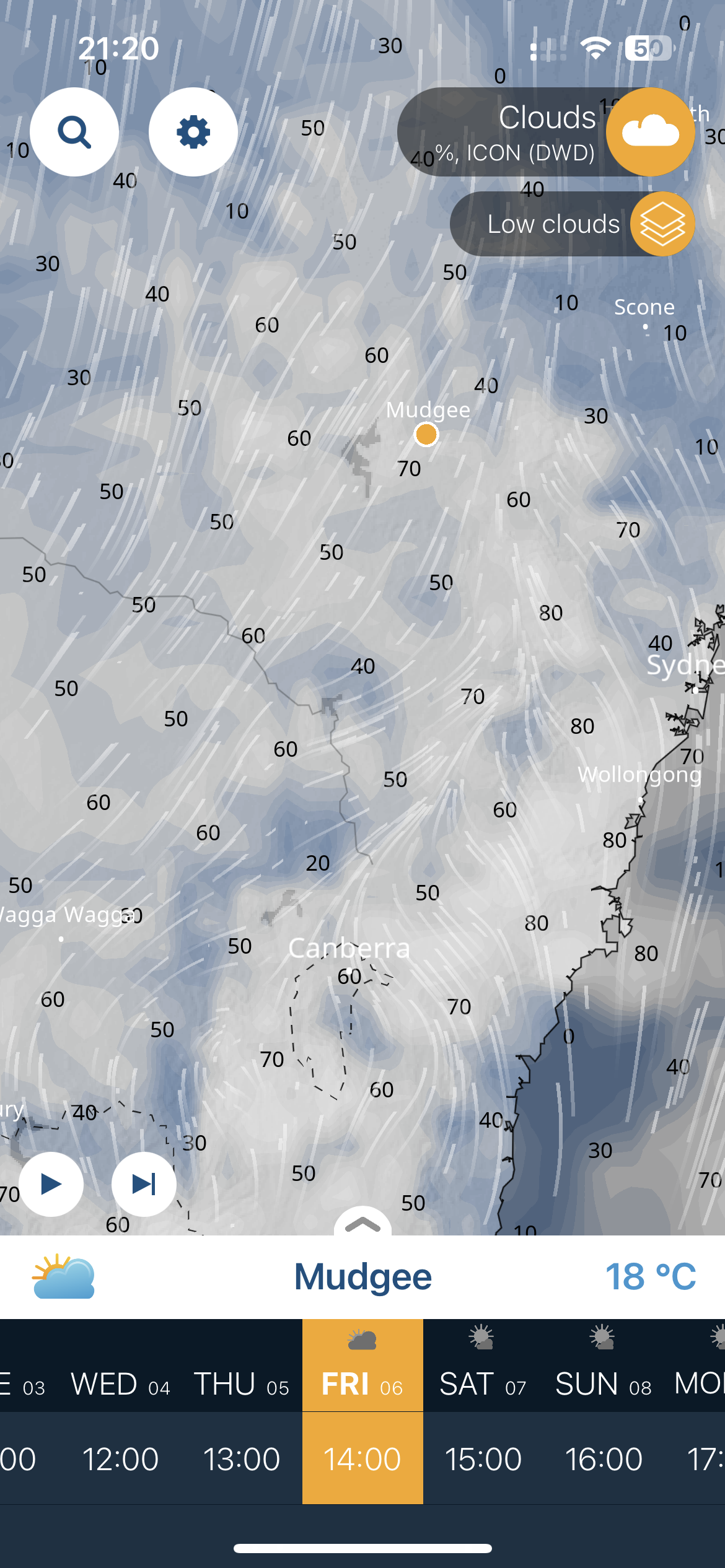
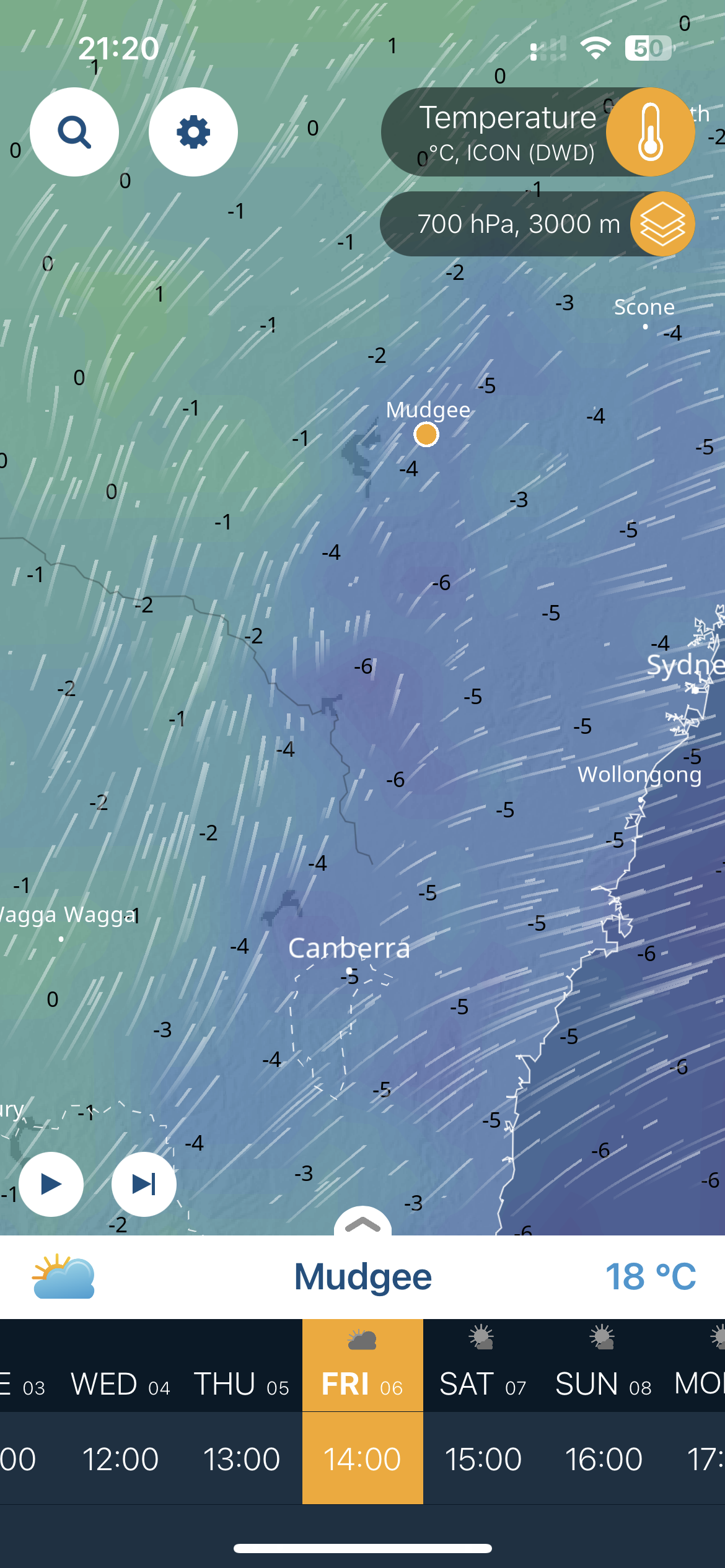
The Ventusky weather model that I use for weather forecasting (and which is not 100% dependable) shows how the weather was in the previous 24 hours. That day it showed that the temperature at MSF’s location and altitude at the time of the accident was -5C and that there was 50-70% cloud around. That reminded me of a podcast I’d listened to in 2019. It told the story of a Cirrus that had crashed due to suspected tail plane icing in the Rocky Mountains. I looked it up again and listend to it intently. There was a second podcast recorded a week or so after the first in which an aviation meteorologist explained how icing occurs and how quickly it can occur. It’s well worth a listen:
https://aviationnewstalk.com/podcast/111-sr22-icing-accident-and-tailplane-stalls-ga-news/
It turns out that -5C is probably the middle of the band for clear ice, the most dangerous sort of ice for airframe icing. Clouds can contain supercooled water droplets that are liquid at -5C but freeze on impact on flight surfaces and can quickly build up a layer of ice that significantly changes the shape profile of the wings and tailplane and increases the stall speed considerably. The thing that keeps aeroplanes flying is the aerodynamic shape of the wing. If that shape changes even slightly the resultant lift reduces significantly. Flight into known icing (FIKI) conditions are banned for that reason for aircraft like MSF that don’t have any anti-icing equipment on board. So the question was why would our friend have flown that high if the temperatures were in the icing range and there was cloud about?

My mind went back to my only icing encounter so far. I hadn’t had my instrument rating very long. I was PIC and was flying with Mike and Sigi from Redcliffe to Cessnock in the Hunter Valley in 2018. We were flying IFR over the Barrington Tops at 8000ft in IMC conditions, going in and out of cloud. All was going well. We had another 30 or so minutes flight time to our destination. Mike received a text from Rebecca Penny (from Cirrus) who had flown into Cessnock ahead of us. She wrote that the conditions in Cessnock were atrocious. Low ceiling of 8/8 cloud and rain. We may have to make a stopover at Scone where it appeared to be clear. Suddenly Mike said “I reckon I can see some ice forming on the wing”. I thought back to the graphical area forecast I’d checked that morning. The freezing level was forecast to be greater than 10,000ft in Brisbane but down south it was 8000ft. What was the outside air temperature probe saying? Four degrees! That’s too close for comfort. We had to descend to warmer air. Mike called ATC and said we were descending to our lowest safe altitude of about 6600ft. As we descended the temperature rose to about 7 degrees and the ice started to melt. But as we went further south the temperature started to decrease again. We could see clear air between the clouds out west near Scone so decided to head that way but before we were able to notify ATC of our intentions we burst out of the cloud and were in clear air again. We could see the landscape below us and could descend to an altitude where the ice would melt completely and no further ice would form as were were no longer in cloud.
I was fortunate in that case to have had Mike keeping an eye out for me. If Mike hadn’t been there it may have well ended differently. Since that day the freezing level is the first thing I look at on the graphical area forecast. It’s not often a problem in Queensland but it can be and you have to be sure, especially if you’re flying further south.
Recent model Cirrus aircraft are fitted with autopilots with an FLC (Flight Level Control) button for climbing and a VS (Vertical Speed) button for descending. An FLC button ensures that you maintain a set airspeed as you climb, so your vertical speed will decrease as you get higher and the air becomes less dense. A VS button maintains a constant vertical speed as you descend. MSF was an early model Cirrus and the autopilot wasn’t fitted with a FLC button for climbing. All it had was a VS (Vertical Speed) button. The VS can be used for climbing but the pilot has to monitor the airspeed and ensure they stay above the stall speed as they climb, reducing the vertical speed setting if necessary.
I can see how someone who is used to flying in Queensland and northern NSW could possibly overlook the freezing level on the Graphical Area Forecast as I did. As MSF didn’t have an FLC button, the airspeed would have decreased gradually as it climbed out of Canberra. He could have been distracted by the excited children and, having set the VS on the autopilot for a steady climb rate to 10,000ft, may not have noticed the airspeed decaying or the build up of ice on the wings, resulting in the stall speed gradually increasing to meet the ever receding airspeed.
Once it did stall, a sudden wing drop could have led to a spin. The only action to do in that situation is pull the CAPS handle. This would deploy the airframe parachute that is standard on every Cirrus and the plane could then float to the ground under the parachute. They’d land fairly gently and all would survive even if the plane may be a write off.
So why didn’t our friend pull it then? Maybe he had a medical incident such as a heart attack due to the sudden stress and wasn’t able to use the necessary force. Maybe he was too slow due the shock factor. That could happen to anyone. It could have happened to me. There but for the grace of God…
In the weeks following the initial 2 weeks of recovery from the shock of the accident I focussed on trying to get back flying again. I decided it was best to first have some flights with an instructor, as a bit of insurance and to “chase away the demons”. So first was a “check flight” with Brendan Power in IVW, one of the IFR rated 172s at Redcliffe, the one I usually hired for practising night circuits. We did a few daytime circuits on a sunny day with emergency drills thrown in, landing without power, flapless landings and the like. That all went well. Then it was a more challenging IFR flight with Adam Starr in a brand new Cirrus SR22G6 from Archerfield to Warwick and back with a night component and a couple of hand flown instrument approaches under the “hood” with partial panel (just to make it more challenging). They were not ideal but introduced some very useful lessons that you should only learn when a good instructor is sitting next to you. The 25 knot crosswind on the night landing into Archerfield didn’t help either. After arriving a bit high on the initial approach I did a go around and circuit. My original plan to fly a few night circuits was cancelled due to the wind and we called it a night after the first, somewhat hard, landing.
I decided I definitely needed some more lessons in the G6 to become familiar with the Perspective Plus avionics suite before I hired one to fly solo. However, I did feel confident enough to fly IVW again so got back to hiring aero club planes once again.
October 2025 – ATSB Investigation Conclusions
I wrote that first part of this post shortly after the accident, when all the thoughts and emotions were fresh in my mind. It was cathartic. Helped me deal with the thoughts that sometimes kept me awake at night. I parked it though, leaving it as a draft, wondering whether to post it or not, and deciding I’d wait until the final ATSB report was published.
Two years have passed since the accident and Mike has bought a new Cirrus and we have all moved on, but are still very cognisant of the accident. The ATSB took over two years to investigate. There were limited radio communications between the pilot and the ATC to analyse and no “black box” and not even much of the aircraft left to examine but the ATSB did have detailed weather data from the BOM and the flight tracker data from the aircraft’s ADSB transponder. On 6th October 2025 they published their final report. It summarises their findings as follows:
“The ATSB found that the flight track data showed that, at about 8,000 ft, the aircraft had begun to deviate from its flight track, with heading, altitude and airspeed deviations. Those deviations coincided with reports from ear witnesses located below the aircraft’s flight path of sounds consistent with engine surging.
The data also showed that the aircraft had a high rate of climb (up to 1,500 ft/min) coupled with a low and decreasing airspeed, which led to an aerodynamic stall and rapid descent. Recovery actions from the aerodynamic stall did not occur and the Cirrus aircraft parachute system was not deployed in-flight. It was also noted that no radio calls were received from the pilot to indicate there was a problem prior to the stall.
VH-MSF was not fitted with an anti-icing system and was prohibited from operating in icing conditions. Moderate icing conditions were forecast along the aircraft’s flight path from 7,000 ft to 10,000 ft when in cloud. It was likely that the aircraft had encountered icing conditions prior to the aerodynamic stall. However, the ATSB was unable to determine if these conditions were sufficient to have adversely affected the aircraft’s performance and/or handling.
The ATSB considered several scenarios to establish the reason for the deviations in flight track, subsequent stall and absence of recovery actions. These included in-flight icing, pilot incapacitation and possible aircraft issues. However, due in part to a significant post-impact fire, which limited the collection of evidence, the circumstances preceding the stall and impact with terrain could not be determined.
Although it could not be established that icing contributed to the accident, operating in these conditions in aircraft that are prohibited from doing so increases the risk of a loss of control event leading to an accident. Aircraft flying through cloud in sub-freezing temperatures are likely to experience some degree of icing. A pilot can reduce the chance of icing becoming an issue by selecting appropriate flight routes, remaining alert to the possibility of ice formation and knowing how and when to operate de-icing and anti-icing equipment if fitted.”
The accident was traumatic for all involved, not least of all for the family of those killed, and it affected many of us at the aeroclub who’d known the pilot and flown with him. We need to learn from mistakes however and, as a result of the accident, I gained an appreciation of the serious dangers of icing and certainly avoid going anywhere near cloud when temperatures are less than 5 degrees positive. I also keep a close lookout for ice formation when flying in IMC if the temperature is slightly warmer. Something that I should have done as soon as I started to fly under the instrument flight rules.
The ATSB report is online at https://www.atsb.gov.au/publications/investigation_reports/2025/report/ao-2023-045
 PrivatierAir