
I’m Philip. I’m a metallurgical engineer who probably should have been a professional pilot. My father was a private pilot and I always loved the idea of flying since my first experience at 4 years of age but it was too expensive while I was a student and then I was working in Germany for 8 years where it seemed even more out of reach and then after returning to Australia with a growing family and lots of international travel (where I could at least fly in planes even if I wasn’t the one flying them) it was all too difficult. Finally, after working for a few decades for a variety of international companies I decided in 2010 at age 50 that it was “now or never” and did my first flight out of the Redcliffe Aero Club north of Brisbane. That experience confirmed my passion for aviation and I started working towards my private licence.
I obtained my Private Pilot Licence (PPL) in May 2015 at Redcliffe after almost 5 years of training. That may seem a long time for some but with full time work and lots of associated international travel (often 30% of the year) it took me a while to work my way through the syllabus.
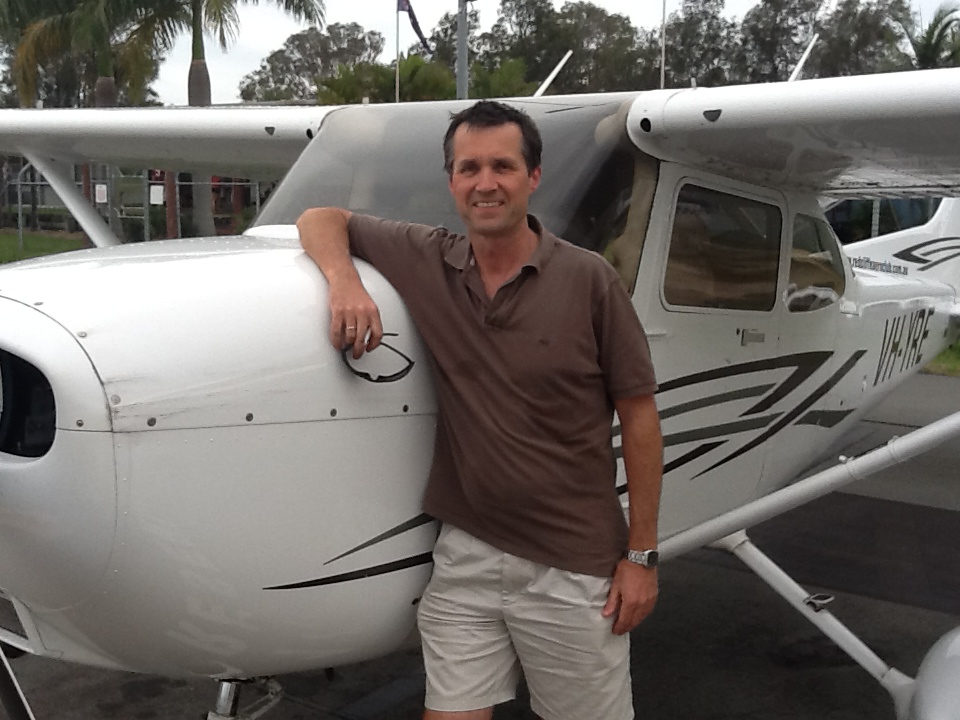
I had my GFPT licence, the first stage (now known as Restricted Pilot Licence), within about 18 months of my first flight in 2010 but the PPL stage with the navigation component took longer. And hey it all costs money so it was a matter of plugging along and making steady headway while not breaking the bank. I remember practising endless circuits at Redcliffe and training flights over Bribie Island and the Glasshouse Mountains (superb places to learn to fly) and being amazed by a friend who told me he’d flown from Archerfield to Caloundra. The ability to fly cross country and through controlled airspace seemed really difficult at that stage. However I remembered my initial thoughts of how I’d never be able to land the plane on “that little bit of tarmac down there” and realising I’d mastered that so knew it couldn’t be that difficult. When I was retrenched from my job in 2014 following a takeover I decided that was a great opportunity to complete the PPL so did a three week theory course at Bob Tait’s school in Redcliffe so that I could pass the CASA PPL examination and then completed the series of cross country “navs” required to prepare for the practical test. I sat the practical test in May 2015 and passed.

All of the flying to that point had been in Cessna 172s that are the basic trainers that many people learn in but are not so good for long distance flights. So I soon did an endorsement for a Cessna 182 with a variable pitch propeller and retractable undercarriage endorsement to make long distance flights faster and more comfortable. With the aim on progressing from Visual Flight Rules (VFR) to Instrument Flight Rules (IFR) so that I could fly through cloudy weather and at night (giving me more flexibility on long distance trips) I then started studying for my private instrument rating (PIFR), firstly with attendance at Bob Tait’s school again for the theory (IREX). Thanks to Bob I passed the exam first time.
Next came a series of instrument flying lessons at the aero club in the simulator and a G1000 glass cockpit C182 VH-ROC. By October 2016 I’d passed my PIFR.
Next came a series of lessons in a Cirrus SR20 and SR22 with Adam Starr of Starr Aviation at Archerfield. The Cirrus is even better suited to long distance travel than the C182, cruising at 165 knots. It is a modern carbon fibre body aircraft with its own inbuilt ballistic parachute. If the engine fails, you pull the chute and the whole aircraft descends under a canopy to the ground. What could be better? A youtube video of a parachute deployment over the Pacific in 2015 appears below. It was taken by a Coast Guard who had been notified of a fuel starvation problem by the pilot, a ferry pilot on his way to Hawaii. The pilot of the SR-22 aircraft that ran out of fuel was saved after ditching his aircraft 253 miles northeast of Maui. He was able to deploy the aircraft’s airframe parachute system and safely exit the aircraft into a life raft.
The aeroclub didn’t have any Cirrus aircraft so I had planned to hire one from Archerfield but coincidentally Mike Cahill from the aero club just happened to import an SR22 from the USA and agreed to let me hire it directly from his company. So, with access to a Cirrus and an instrument rating I was now able to fulfil my dream of flying to interesting places all around Australia. As I wrote at the time “Who knows where this will lead? One thing for sure is that there are plenty of places and airspaces to explore in this big land of ours.”
My “partner in crime” in all this is my amazing wife Sigi, who supports my flying ambitions and joins me on our longer trips away.

She also thinks the Cirrus with the in-built airframe parachute is the way to go. She was the one who, in 2018 once I’d passed my PIFR and obtained a couple more endorsements, suggested I do my Commercial Pilot Licence (CPL) as well. Not that I want to fly commercially but it made sense to go that bit further to improve my skills and knowledge level to make flights safer and more professional for my passengers. Given that I”d already started flying Angel Flights for angelflight.org.au I also wanted to be more proficient about flying with passengers who are complete strangers. Learning about the human factors involved in carrying them seemed a good idea. So, I did the 7 theory exams in 2019 and then in 2020 did the practical training, culminating in obtaining my CPL in March 2021.
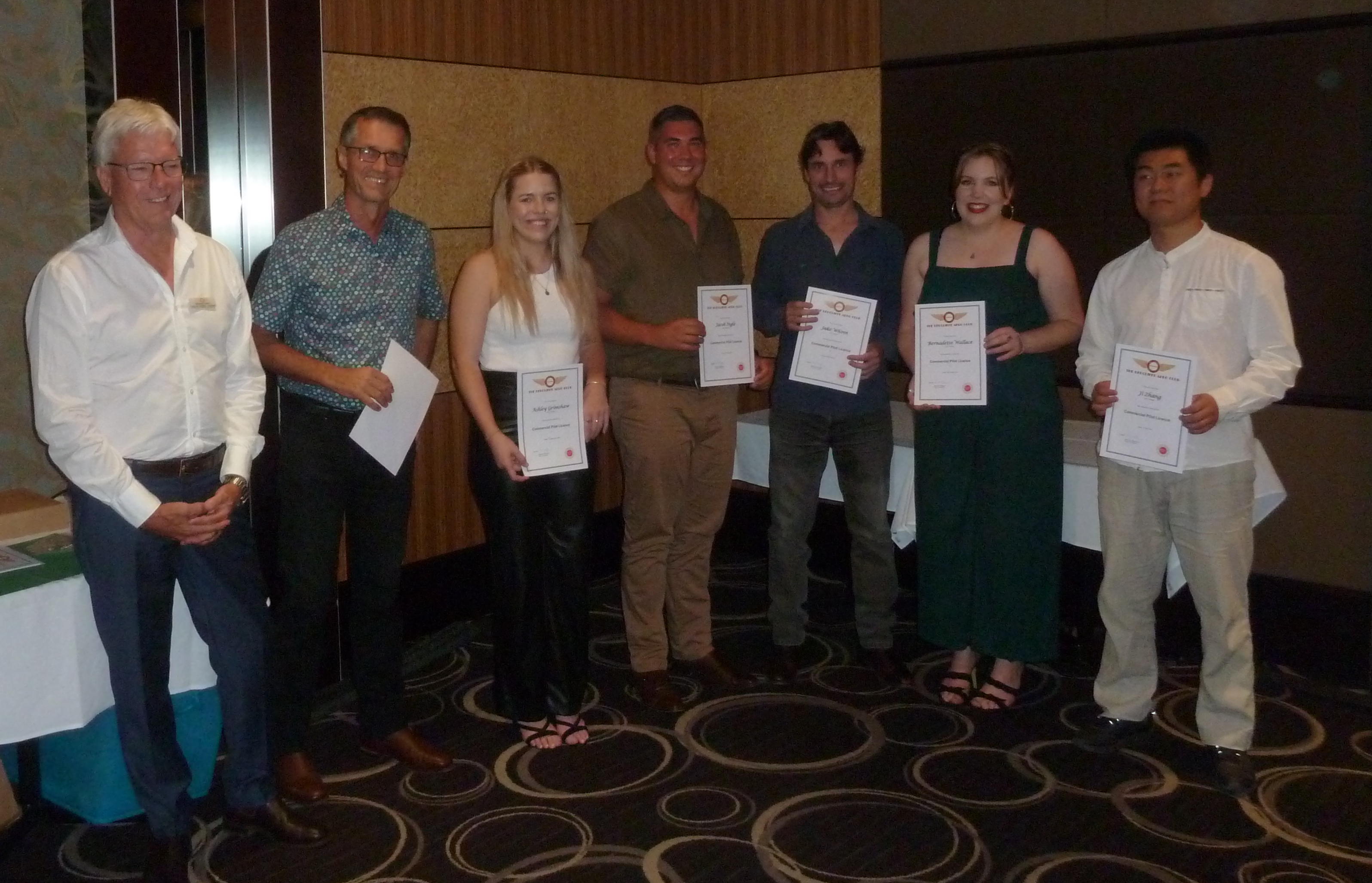
Then in 2025 Sigi and I moved from Brisbane to Pottsville in northern New South Wales, where I joined the Murwillumbah Aero Club and started flying out of there and the Gold Coast International Airport.
Together, and with friends and family (and the occasional Angelflight passenger), we’ve flown around most of the eastern half of Australia as well as to the Red Centre and the Kimberley in the north west. I’ve also flown with instructors in New Zealand, the USA, Germany and Austria.
I hope you enjoy reading about our adventures as we continue to venture into the blue.
http://www.redcliffeaeroclub.com.au
http://www.starraviation.com.au
https://cirrusaircraft-aunz.info
 PrivatierAir